When you purchase through the links on my site, you support the site at no extra cost to you. Here is how it works.
When it comes to mxing bass, drums, vocals, and guitar, it can get messy fast because you might have great individual tracks and yet the mix still can feel someow crowded, flat, or harsh. A lot of that comes down to how well each instrument is shaped before you start making the bigger mix decisions.
That’s why I like having a few dedicated plugins around that are built with certain sources in mind.
In fact, good channel strip can be incredibly useful, but specialized tools can make certain jobs much easier when you already know what needs fixing.
With that being said, I’d like to share with you some of the best plugins for mixing bass, drums, vocals, and guitar. Those would be SSL Channel Strip 2, FabFilter Pro-Q 4, SSL VocalStrip, are all worth knowing, and there are several more below as well, let’s go!
1. SSL Channel Strip 2
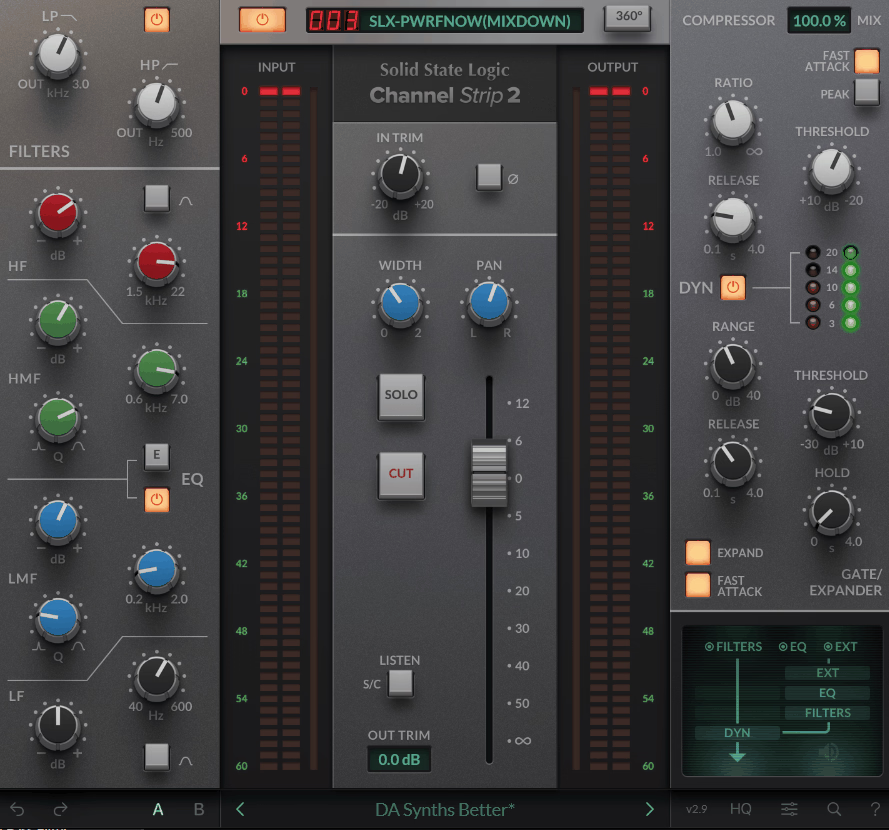
A full channel strip still makes a lot of sense when you want to do several jobs without constantly jumping between plugins.
SSL Channel Strip 2 gives you that familiar console-style workflow, with the EQ and dynamics sections working together in a way that encourages you to make decisions quickly. For bass and guitars especially, I like being able to make broad tonal moves and then immediately tighten the dynamics without breaking the flow of the mix.
What makes it more interesting is the way the processing can interact. The EQ can be switched between different SSL-style curve behaviors, and you can also use the EQ and filters as part of the dynamics sidechain.
Main features:
- E Series & G Series EQ Curves
The EQ can move between two different SSL-inspired character sets, so you’re not locked into one response.
That gives you a little more freedom when you’re deciding whether a bass, guitar, or vocal needs a broad musical adjustment or something with a slightly different contour.
- Sidechain-Aware EQ
- Independent Compressor and Gate/Expander
In addition, the dynamics section is split into separate compression and gate/expander processing, which makes it more useful on sources that need both control and cleanup.
On drums, that can help tighten up spill, while guitars and bass can benefit from more focused dynamic shaping.
2. FabFilter Pro-Q 4
There are plenty of EQ plugins I like, but Pro-Q 4 is the kind of tool that can quietly end up across half a session. What really stands out to me is how quickly it lets you move from a normal EQ workflow into much more targeted cleanup.
Bass can be shaped without wrecking the sub range, guitars can be controlled when certain notes jump forward, and vocals can be treated with a lot of precision without making them sound processed.
The biggest attraction for me though is the combination of traditional EQ work and advanced dynamic behavior.
You can work dynamically, match tonal balances, grab parts of the spectrum, and make more surgical decisions when a static cut just isn’t enough. It’s one of those plugins where the extra depth is there when you need it, but you don’t have to overcomplicate a simple mix move.
- EQ Sketch
You can draw an EQ shape directly into the display and let the plugin turn that into actual bands. For broad tonal shaping, it’s incredibly fast, and it gives you a more visual way to get from “this area needs fixing” to a usable curve without building everything one band at a time.
- Dynamic EQ With Spectral Control
That said, Pro-Q 4 can react dynamically depending on what is happening in the signal, which is ideal when a problem only appears on certain notes or phrases. I would use this kind of processing when a vocal gets sharp only on specific words or when a bass guitar suddenly becomes too heavy on a few notes.
- Vintage Character Modes
When perfectly clean digital EQ feels too sterile, the vintage-style modes let you move toward a more colored response.
That can be useful on guitars and drums when you want the EQ move itself to become part of the tone instead of sounding completely neutral.
- EQ Match and Spectrum Grab
These tools can speed up the process of identifying tonal difference
3. SSL VocalStrip 2
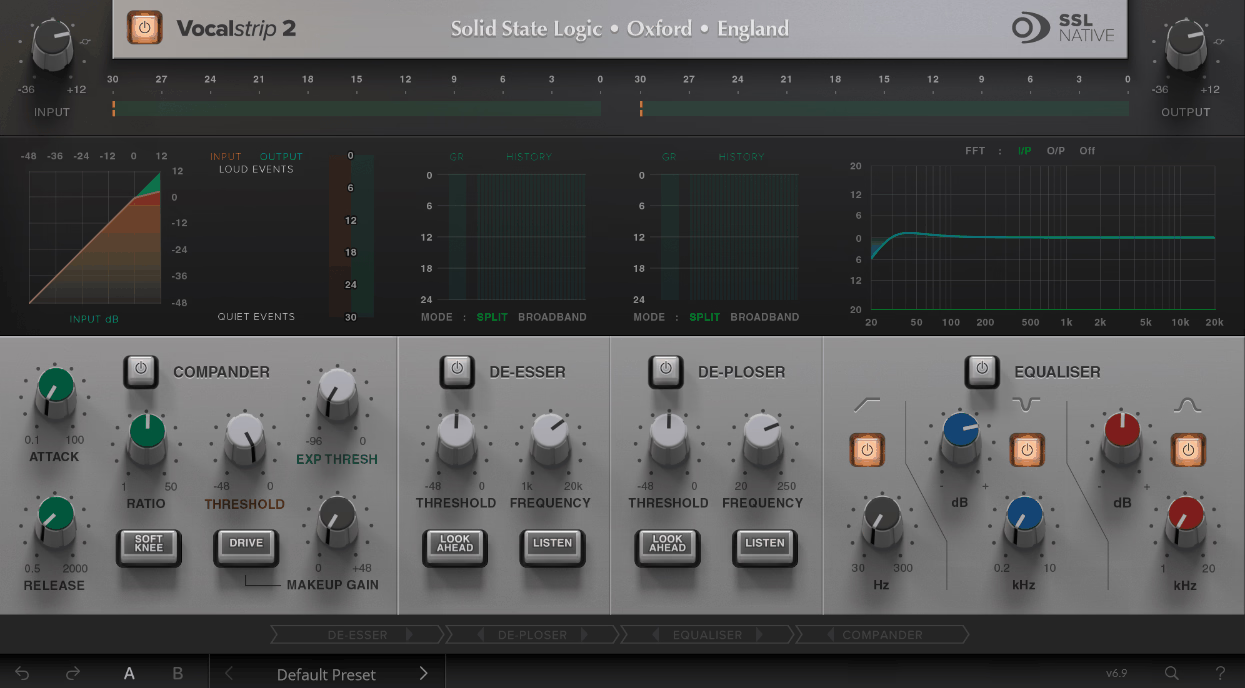
SSL VocalStrip brings several of the problems you routinely deal with on voices into one place, including harsh sibilance, plosives, inconsistent dynamics, and tonal shaping.
The processing is organized around the way a vocal actually behaves, so you can work through the common trouble spots without building a chain from scratch every time. For quick vocal cleanup, that can save a surprising amount of time.
The de-esser and de-ploser sections use the signal itself to identify problematic vocal behavior, making them more responsive than a simple static cut
- Air Band and SSL-Style Tone Shaping
The upper range can be opened up with dedicated air shaping, which can help a vocal feel more present without simply piling on high-shelf EQ. Used carefully, this is the kind of move that can help a voice sit forward in the mix while keeping the body intact.
- Compander Processing
The dynamics section combines compression with downward expansion, giving you a way to bring the vocal under control while also keeping quieter sections from becoming unnecessarily messy
4. FabFilter Pro-C 3
Compression gets much more interesting once you stop thinking of it as simply “turning down peaks.” Pro-C 3 gives you a broad selection of compression behaviors, so the same basic source can be made tighter, smoother, more colorful, or more aggressive depending on the style you choose.
For me, that makes it especially useful across guitars, bass, drums, and vocals because I don’t have to force one compressor character onto every track. There are also deeper options under the hood for shaping how the detector reacts, and those controls can be incredibly helpful when you want compression to follow the groove of the performance.
- 14 Compression Styles
The range of styles is one of the main reasons this compressor can cover so much ground. You get distinct approaches including Versatile, Smooth, Vari-Mu, El-Op, Upward, and TTM, which makes it easier to match the compressor behavior to the source instead of trying to make every track behave the same way.
- Character Section
Pro-C 3 can introduce analog-style saturation, coloration, and drift as part of the compression process. That means you can use the plugin for tonal character as well as dynamics, which is something I find particularly useful when a clean compressor response feels a little too plain.
- Flexible Sidechain EQ
The sidechain offers a lot more than basic filtering, with multiple EQ bands and different filter shapes. You can shape what the compressor hears without necessarily changing what the audience hears, which is extremely useful on kick-heavy bass lines and bright vocal performances.
5. Eventide Quadravox
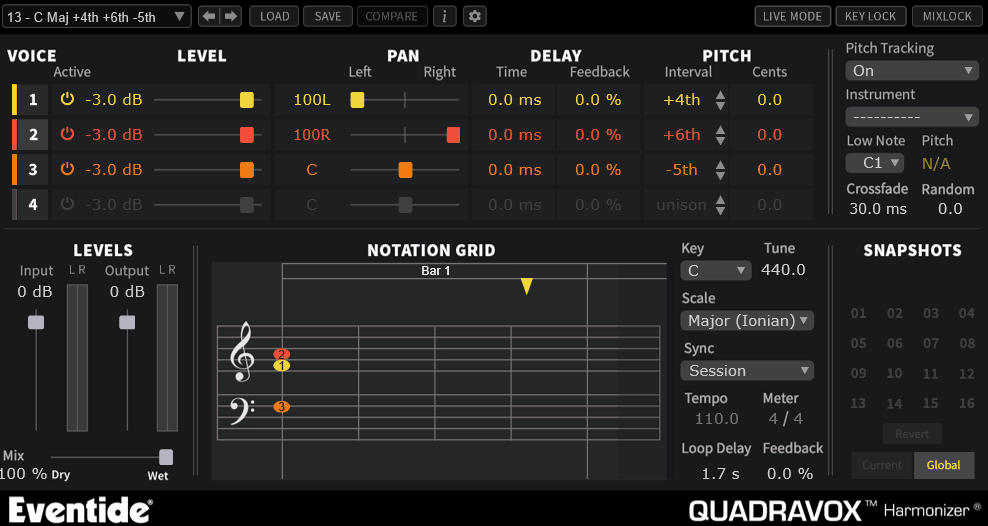
Quadravox takes things in a different direction because it’s not about traditional corrective mixing. It is a four-voice diatonic pitch shifter that can turn a single vocal or guitar part into a much larger musical texture.
Basically, you can use it to build harmonies, create layered responses, or simply add something unusual to an otherwise straightforward arrangement.
The notation-style pitch and timing grid is a big part of why it’s approachable. You don’t have to treat it like a mysterious effect and hope for the best. Instead, you can think musically about where each generated voice should go. For guitars and vocals, that can be a fun way to get beyond the standard chorus-and-delay routine.
- Four-Voice Diatonic Pitch Shifting
Here, each voice can be set to a different musical interval, allowing a single source to produce a multi-part harmonic texture. That makes it particularly useful when you want the effect to sound intentionally musical instead of like an obvious pitch-shift trick.
6. SSL Guitarstrip
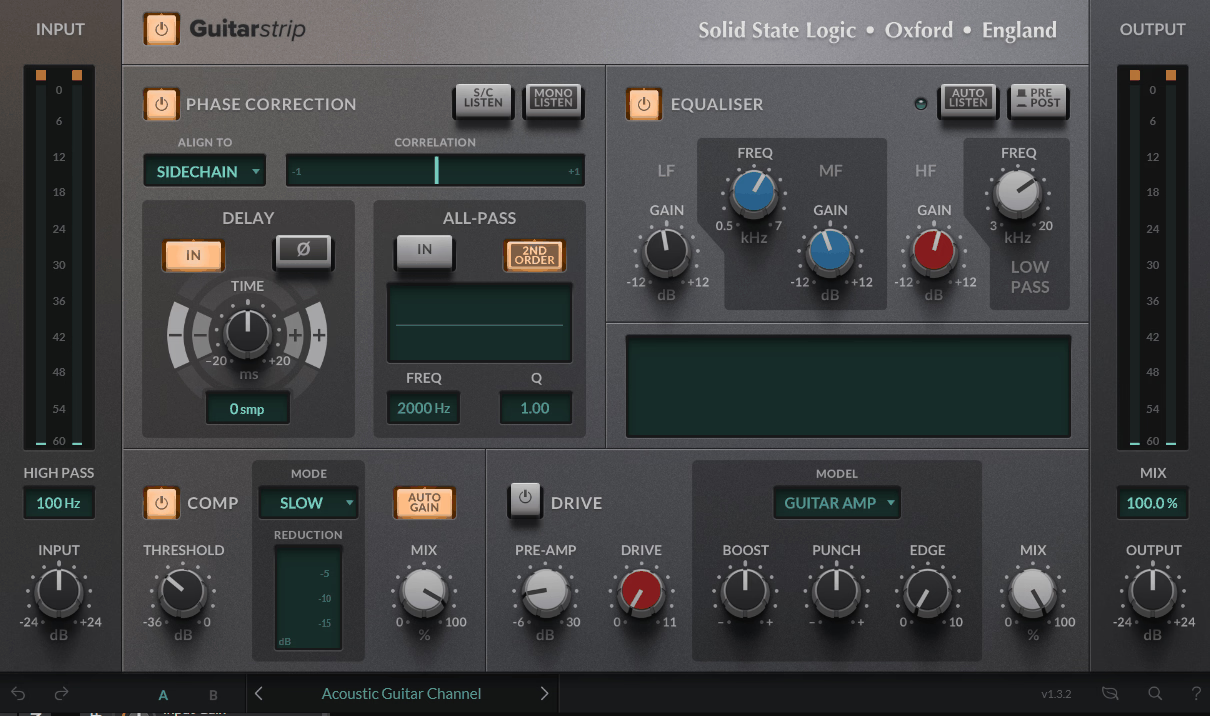
Guitar mixing can become surprisingly time-consuming because amp tone, compression, EQ, and phase can all affect the final result.
SSL Guitarstrip puts those jobs together in a focused chain designed specifically around guitar processing, which makes it much easier to get from a raw guitar track to something mix-ready.
- Guitar and Bass Amp Models
The Drive section includes two amp-style models, one built around guitar and another aimed at bass. That gives you a quick way to push a clean or recorded part toward a more amp-like character without having to build an entirely separate amp-sim chain.
- BOOST, PUNCH, EDGE and SHAPE Controls
These controls let you move the modeled amp response into noticeably different tonal areas without getting lost in a giant amp-sim interface
- Five Guitar-Focused Compressor Presets
Instead of treating compression as one generic setting, the plugin gives you several tailored starting points. That can speed things up when you need a controlled guitar rhythm section, a more sustained lead, or something with more punch.
7. Soundtoys SuperPlate
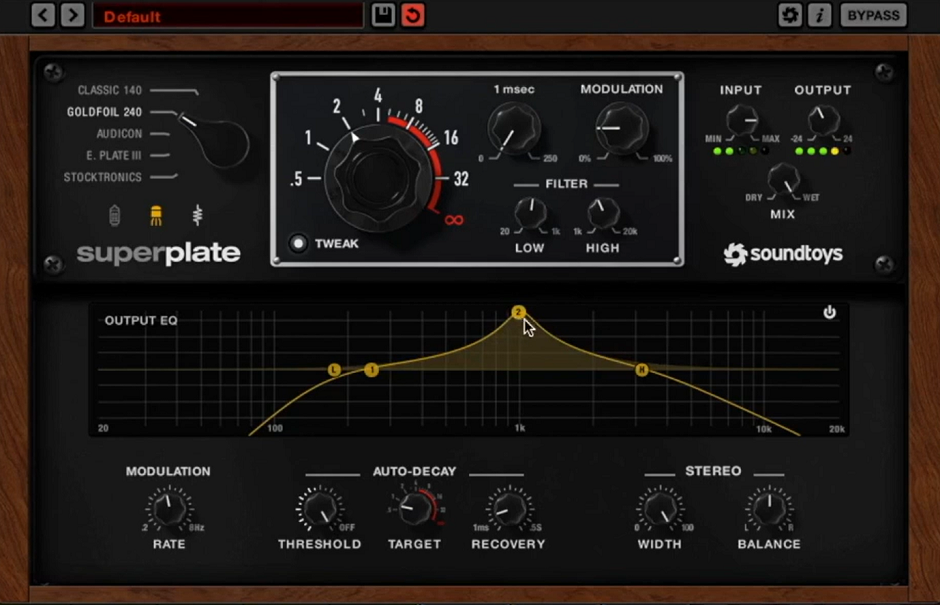
A good plate reverb can do a lot for vocals, guitars, drums, and even certain bass textures, but SuperPlate becomes more interesting once you start exploring its different plate personalities.
It is based around classic plate designs, yet it gives you several distinct models that can move the effect from smooth and polished to more obviously colored.
In fact, I particularly like using plate reverbs when I want an instrument to feel larger without pushing it too far back in the room.
SuperPlate also gives you a few tools for shaping how the decay behaves, so you can create space that responds to the source instead of simply adding the same tail all the time.
- Five Distinct Plate Models
You get models inspired by EMT 140, EMT 240, Audicon, Stocktronics RX4000, and EcoPlate III, each with its own tonal personality. It can be useful because plate-style reverb can sound dramatically different depending on the design being emulated.
- Tube, Solid-State and Clean Preamp Modes
The preamp stage gives you three different flavors before the reverb itself does the rest of the work
8. Pulsar Vocal Studio
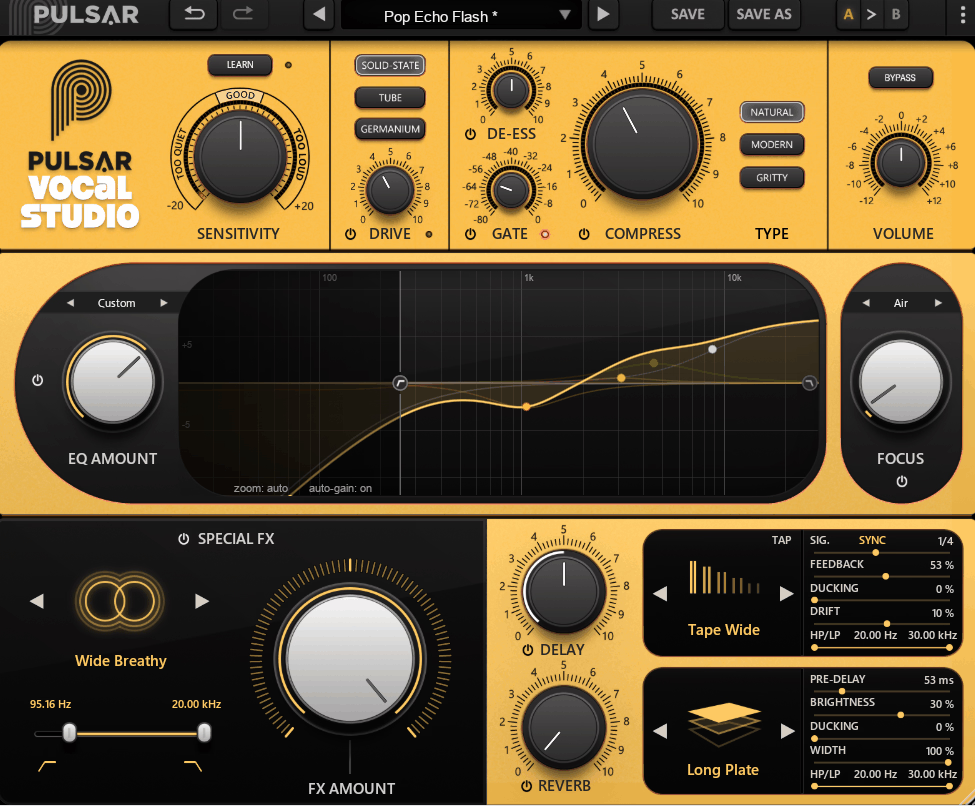
Pulsar Vocal Studio takes the idea of vocal processing and pushes it into a much more character-focused direction.
Instead of giving you one compressor and a couple of simple tone controls, it brings several dynamic stages together in a push-pull style architecture, with additional sections for de-essing, saturation, EQ, delay, and reverb.
The appeal here is that you can move a vocal from fairly restrained to highly produced without building a giant chain. I’d especially look at it when the goal is a vocal that needs to feel larger, more polished, or more deliberate in the context of a modern production.
- 11 Special FX
The Special FX section includes creative treatments such as Classic Chorus, Ultra Large, and Wide Octave
- Push-Pull Dynamic Architecture
The vocal dynamics are arranged as a sequence of multiple stages that work together to create a more controlled and stable performance. Instead of relying on one compressor to do everything, the processing can spread the work across the chain in a more deliberate way.
- Integrated Delay and Reverb
Having ambience built into the same workflow can be surprisingly useful for quick vocal production. You can shape the source, add character, and then build a sense of space without immediately reaching for several additional effects.
9. SSL Drumstrip
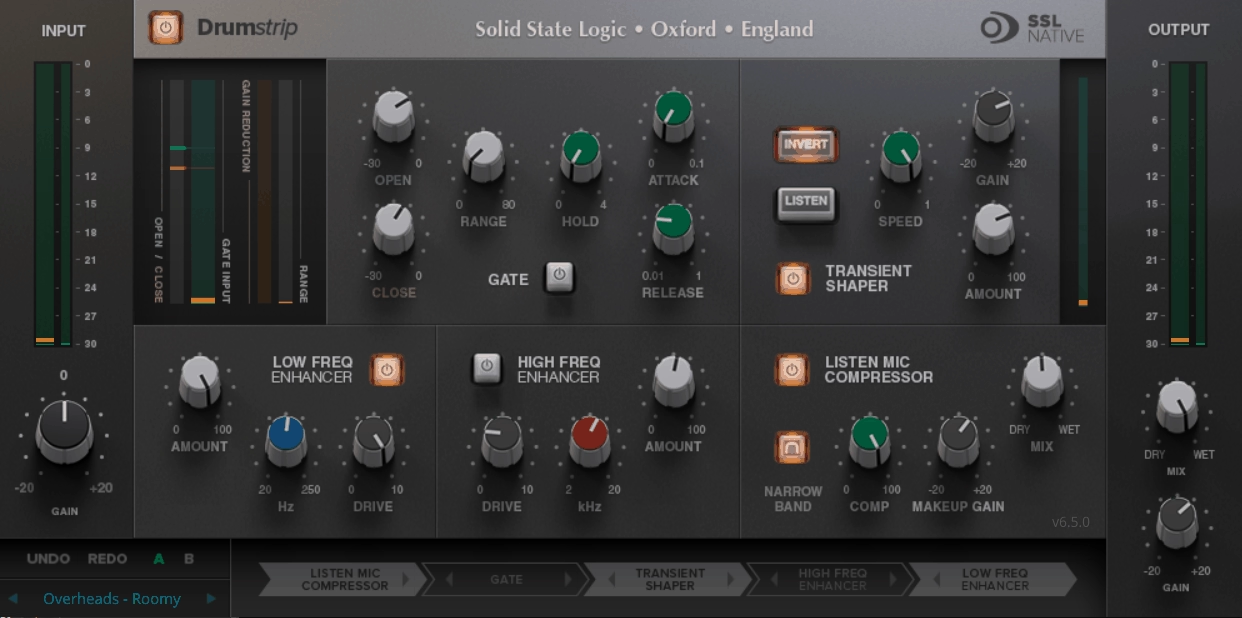
Drums are often where a little focused processing can make a huge difference. SSL Drumstrip is designed around that idea, bringing several tools together that are specifically useful for transient control, gating, frequency enhancement, and compressed drum character.
The transient section alone makes it worth considering, especially when a recorded kit has the right performance but needs more definition. Add in the dedicated gate, frequency enhancers, and Listen Mic Compressor, and you have a processor that can take a fairly ordinary drum track and push it toward a more finished sound without requiring a giant chain.
- Dedicated Drum Gate
Instead of treating gating as a generic dynamics job, Drumstrip gives it a dedicated section aimed at drum material. This can be particularly useful for cleaning up close mics and reducing unwanted spill while keeping the kit feeling natural.
- HF and LF Enhancers
The separate high- and low-frequency enhancement sections give you a more focused way to emphasize the parts of the kit that need attention
- Listen Mic Compressor
The Listen Mic Compressor is one of the more characterful parts of the strip, and it can bring that smashed, aggressive drum sound into a track quickly.
You can also switch it into full-range behavior when you want to use that compression approach more broadly.
- Flexible Processor Order
The ability to rearrange the five processing sections means you can choose how the drum signal moves through the strip. That can make a noticeable difference when, for example, you want the compressor to react to a shaped signal instead of the completely raw drum.
10. Waves CLA-2A
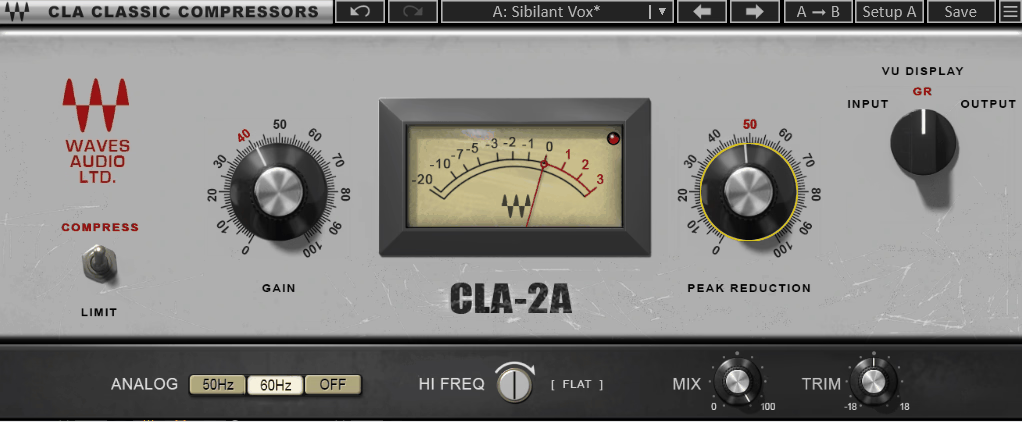
The CLA-2A is a very different kind of compressor from something fast and surgical.
It is based around an electro-optical tube design and is particularly good at giving instruments a smoother, more relaxed kind of dynamic control. Vocals are an obvious fit, but I also like what it can do to bass and certain guitar parts that need to feel more even without becoming overly compressed.
One of its strengths is how it behaves when you lean into it. You can compress fairly hard and still end up with a natural-feeling result, which is one reason this style of compressor remains useful decades after the original hardware became a classic.
- Electro-Optical Tube Character
The core sound comes from a classic optical compression design paired with tube circuitry, giving the processing a softer and more musical personality
- Limiter Mode for Extra Sustain
Switching into limiter behavior can help a guitar or bass part feel longer and more sustained
- Tube Harmonic Saturation
The modeled tube behavior adds more than just compression
11. PSP InfiniStrip
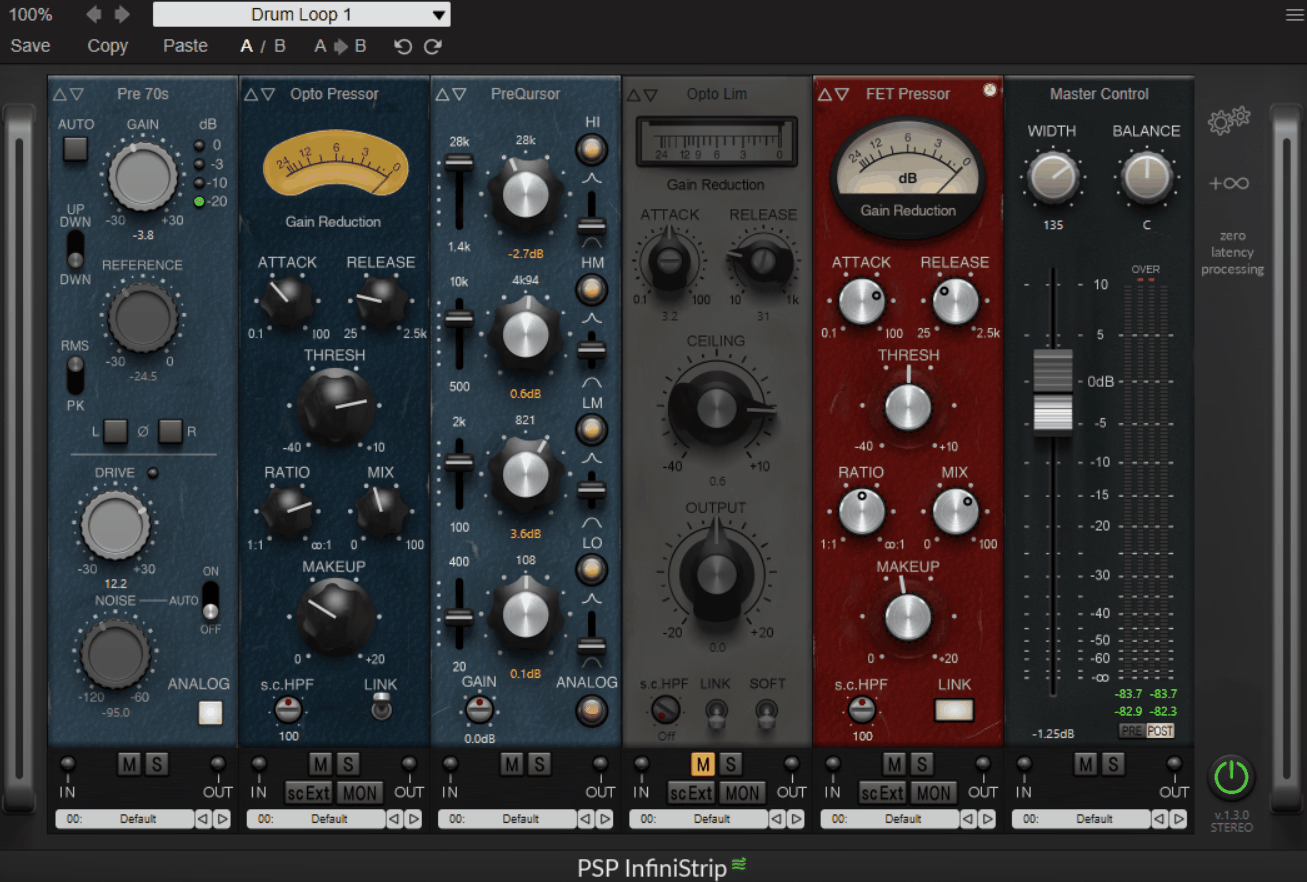
InfiniStrip is built for people who like having a lot of channel-processing options available without committing to one fixed signal path.
It combines more than 30 processors across multiple module types and lets you build a strip around the actual source, which makes it particularly useful when one track needs a little more than a standard channel plugin can offer.
That said, you get:
- 30+ Processors Across Multiple Module Types
The sheer range is the headline feature, but what matters is how different the modules are. You can move between dynamics, tone, enhancement, preamp coloration, and specialized processing without treating every source as if it needs the same processing recipe.
- Seven Dedicated Slots
The layout gives you a strong framework for building a conventional channel while still leaving room for unusual processors. That balance makes it useful when you want a repeatable workflow but still like having the freedom to customize individual tracks.
- Multiple Compression Personalities
The compressor section includes different approaches such as Opto Pressor, FET Pressor, VCA Pressor, and Old Timer, giving you several distinct dynamic behaviors in one environment. That makes it easier to pick a compressor type that fits the source instead of trying to force the same response everywhere.
- Multiple Preamp Generations
The preamp choices are inspired by different eras and designs, including valve, transformer-based, transformerless, and nonlinear ADC approaches. Used carefully, these can change the character of a vocal, bass, drum, or guitar before you even get into the main dynamics processing.
Freebies
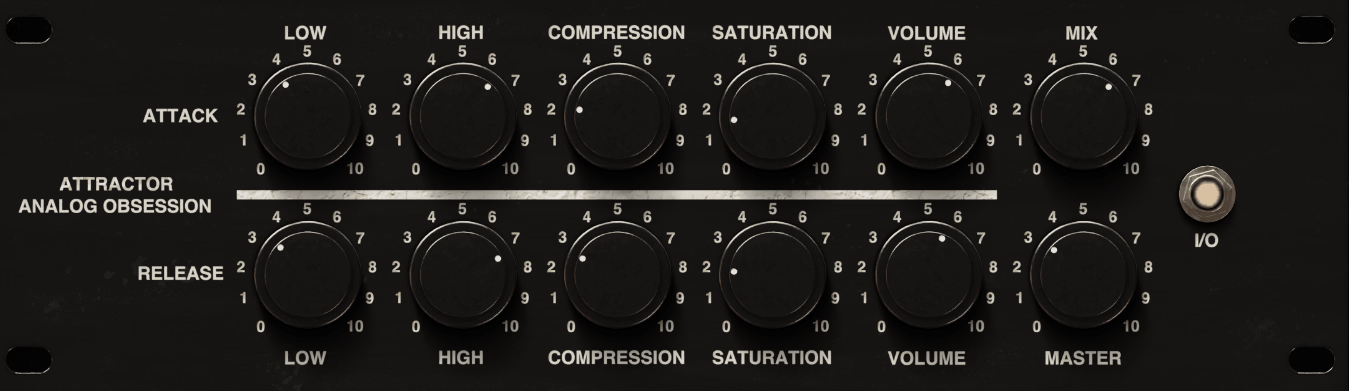
Analog Obsession CHANNEV
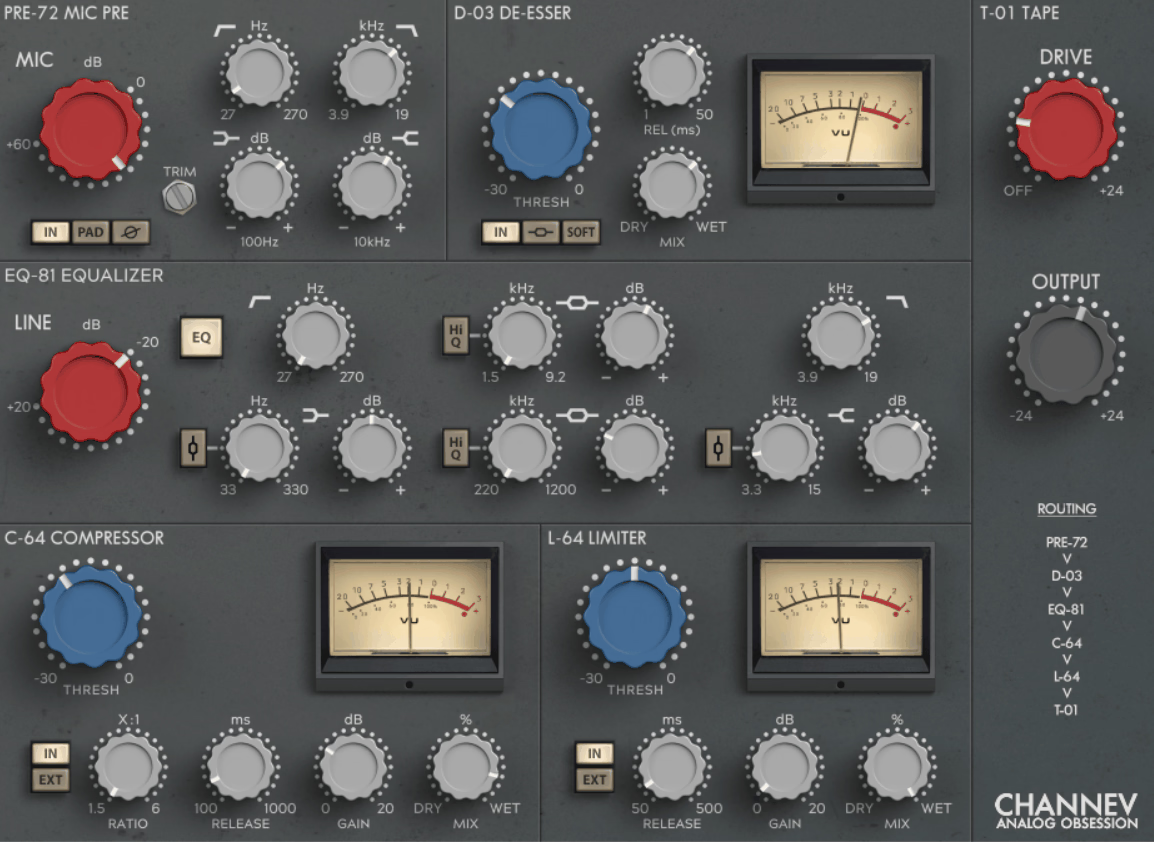
CHANNEV brings a lot of classic channel-strip thinking into one plugin, with a mic preamp, de-esser, line amp, EQ, compression, limiting, and tape-style saturation. It is especially appealing when you want some analog-flavored shaping without building a chain from several different processors.
The four-band 81-style EQ is one of the more useful parts of the design, while the compression and limiting sections give you a way to move from gentle control into more obvious coloration. The ability to use separate external sidechains for the dynamics stages also gives it more flexibility than you might expect from a free channel strip.
- 81-Style Four-Band EQ
The EQ is built around a classic console-style layout with variable frequency choices and additional shaping options, making it practical for everything from broad guitar tone changes to more focused vocal work.
- 2264-Style Compression and Limiting
The dynamics section is based around a classic FET-style design approach and gives CHANNEV a more characterful response than a completely transparent compressor.
- Tape Saturation
The saturation section adds another layer of tone shaping, which can be useful when a clean track feels too sterile and needs a little density and harmonic character before it hits the rest of the mix chain.
Analog Obsession LOADES
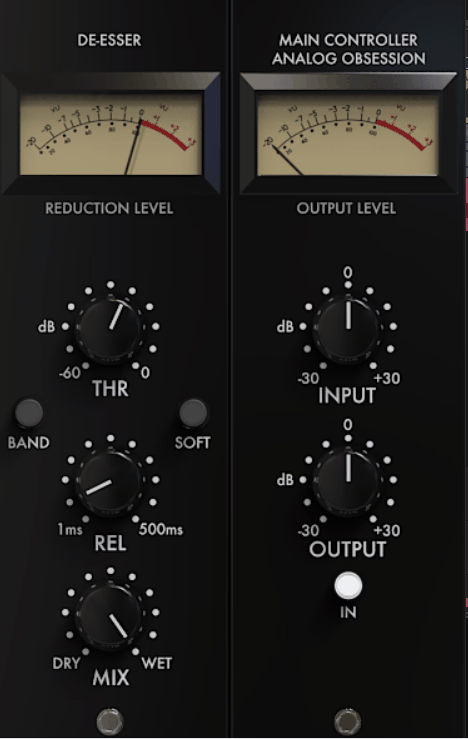
With this one, you get preamp processing, de-essing, gating, EQ, and compression, which can make it a handy first-stage processor for vocals and other detailed sources.
LOADES is simply another channel-strip style option, but its layout is especially useful when you want to handle common cleanup and dynamics jobs in one place.
- Shelf and Bell De-Essing Modes
The de-esser can work with either shelf-style reduction or a more focused bell-shaped response. That gives you a useful choice between broad control and narrower treatment depending on how the source is behaving.
- Hard and Soft De-Essing
The two de-essing modes let you choose how aggressively the processor reacts. On a naturally bright vocal, a softer approach can keep the performance intact, while the harder mode can be useful when the sibilance is particularly stubborn.
Slate Digital Fresh Air
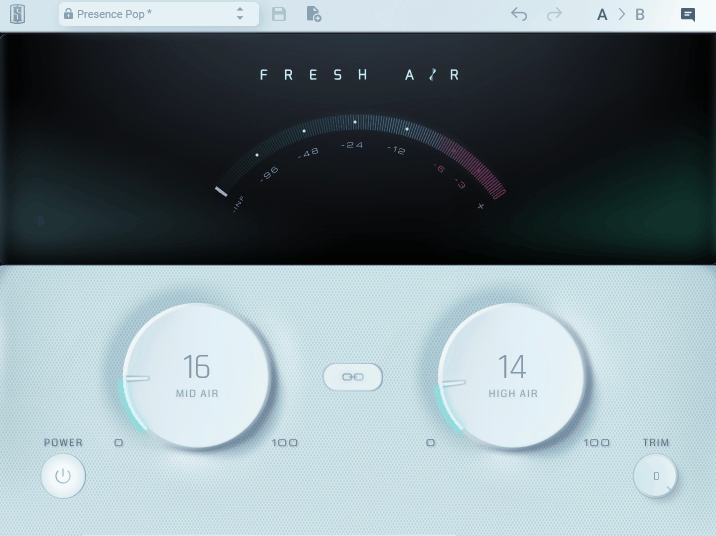
This plugin basically focuses on the upper frequencies, using parallel processing inspired by classic noise-reduction and exciter techniques to add brightness and perceived detail.
The reason I think Fresh Air works so well on vocals is that you can get a sense of openness without relying entirely on a conventional EQ boost. It can also help dull guitars, overheads, and other sources that need a little more apparent detail.
- Mid Air and High Air
The two main sections focus on different areas of the upper spectrum. Mid Air helps bring out presence and clarity, while High Air pushes further into the highest region for a more obvious sense of openness.
- Parallel Processing Approach
The effect is designed around parallel treatment, which helps it add brightness without simply behaving like a large static high-frequency boost. That makes it easier to get a noticeable result while keeping the original character underneath.
Variety of Sound Density MKIII

Density mkIII is the kind of free compressor that can surprise you once you start experimenting with how it responds to a source. It has a strong focus on stereo behavior, VCA-style coloration, and program-dependent timing, giving it more depth than the typical basic free compressor.
For drums and buses in particular, I think it can be a useful alternative when a clean compressor feels too ordinary. The different stereo modes and low-frequency protection also give you more control over how the processor reacts to a dense mix.
- Three Stereo Modes
Density mkIII can work in L/R, Stereo, and Mid/Side configurations, giving you different ways to manage the stereo image. This makes the compressor much more adaptable on drum groups, instrument buses, and wider mix elements.
- VCA Color Stage
The VCA Color section adds harmonic character alongside the gain-control behavior. Used lightly, it can add a little density; pushed harder, it becomes part of the overall tone rather than just a background processing stage.
- Program-Dependent Timing
Some timing presets use program-dependent release behavior, allowing the compressor to respond differently depending on what is happening in the source. That can be useful when fixed timing starts sounding too mechanical.
- Relax Control
Relax gives you another way to soften the behavior of the compressor when the standard response feels too eager. I like controls like this because they can make the difference between a processor that sounds musical and one that simply sounds overworked.
TDR Nova
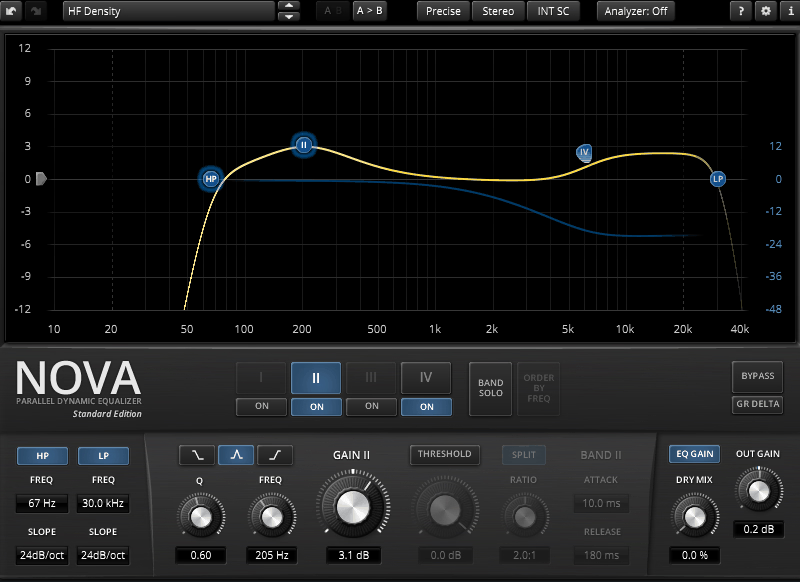
It sits omewhere between a conventional EQ and a dynamic processor, which makes it one of the more versatile free tools on this list. It gives you a familiar EQ workflow, but the bands can also respond dynamically when specific frequencies become too strong.
That said, it can work well on vocals, guitars, and bass where the problem isn’t present all the time. With TDR Nova, you can tame a harsh frequency only when it jumps forward, control a boomy region only on certain notes, or use the dynamic section as a more focused alternative to broad compression.
- Dynamic EQ Architecture
Each EQ band can also behave dynamically, which means you can move from static tone shaping into frequency-selective control without adding another plugin.
That is particularly useful when a vocal or guitar has isolated resonances that do not need constant reduction.
- Frequency-Selective Compression and Expansion
Nova can compress or expand specific regions of the frequency spectrum, giving you more control over how an instrument reacts dynamically. You can use that for cleanup, detail enhancement, or a more creative tonal movement.
- Parallel Dynamic Section
The parallel structure helps blend dynamic processing in a way that can feel more controlled and less destructive.
Hey, I’m Vil, I started this site to help you find the best audio plugins covering various categories including synths, pianos, strings, and effect tools of all sorts as well. I pick these plugins based on various criteria so it best matches the actual topic.