When you purchase through the links on my site, you support the site at no extra cost to you. Here is how it works.
The best preamp plugins all do the same basic job: they add color and character to your signal before anything else in your chain gets a chance to shape it, whether you’re tracking live or reamping after the fact.
Every plugin on this list adds some kind of tonal color whether that’s transformer saturation, tube warmth, or the specific harmonic fingerprint of a piece of vintage console gear. The nine picks below cover guitar, drums, and vocals across a wide range of vintage flavors, from meticulous circuit-level emulations to more general-purpose character tools.
I’ll also cover four excellent free options at the end, since a great preamp plugin doesn’t have to cost anything. Whether you’re chasing the punch of a British console, the growl of German tube gear, or the clarity of a boutique Class-A design, I’ve tried to include something here for every kind of source.
1. Waves Scheps 73
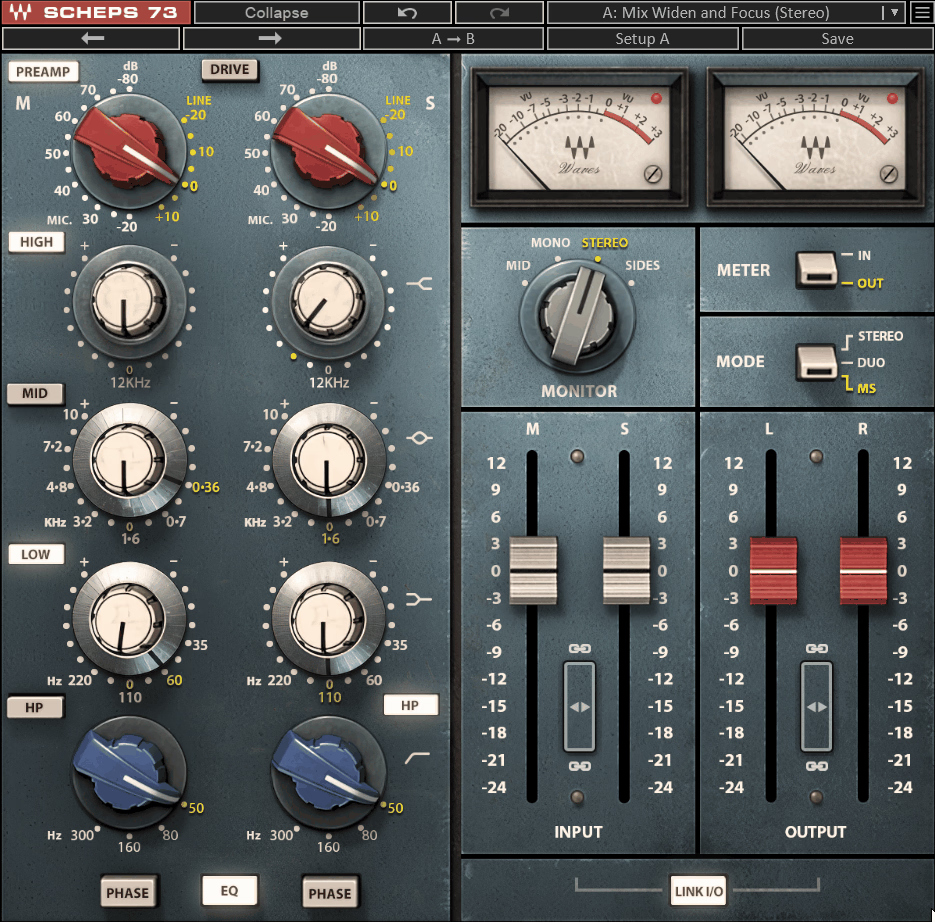
The EQ and preamp section of a vintage Neve 1073 console has shaped more classic records than almost any other piece of studio gear in history.
Waves worked directly with Grammy-winning mixer Andrew Scheps to build the Scheps 73, modeling the original’s Marinair transformer down to the way it saturates under pressure.
To me, what makes this plugin stand out is how the preamp and EQ interact, since pushing the Pre-Amp control into Drive mode changes how the whole EQ section responds. Honestly, that interaction is the real magic of the 1073 design, and Waves captured it really well.
- Marinair Transformer Modeling
The plugin recreates the harmonic distortion and saturation behavior of the original 1073’s Marinair transformer, with a Pre-Amp control that ranges from -20 to +10 dB on line level or down to -80 dB on mic level. I’ve found that pushing this control past unity is where the character really starts to show up, well before you’d call it distorted.
- Low and Midrange Bands
The low shelf offers four selectable cutoff points, while the midrange bell covers seven, including a rare 10 kHz band pulled from the original 1073 schematics that only ever shipped on the obscure 1078 channel strip. I’d recommend starting with the midrange band on vocals, since that’s where this EQ’s character is most obvious.
- Mid-Side Matrix
Independent mid and side processing lets you EQ the center and the stereo width of a signal separately, a feature the original hardware never had.
- Drive Mode
Activating Drive pushes the preamp into a more aggressive saturation state, adding thicker harmonic content on top of the EQ’s natural coloration.
2. Soundtoys Radiator
Motown engineers used the Altec 1567A mixer for decades before diehard collectors started hunting it down as a source of authentic tube saturation. Radiator recreates that hardware in plugin form, modeling the dual-stage tube input channel along with its simple but effective two-knob EQ.
Plugin keeps the original’s bass and treble tone controls intact instead of adding a modern multiband EQ on top, since that simplicity is a huge part of the Altec sound. On the flip side, the plugin gives you something the original hardware never offered: the ability to blend processed and dry signal for easy parallel saturation.
- Dual Drive Tube Input
The core of Radiator is a two-stage tube input channel modeled after the Altec 1567A, capturing the saturation and harmonic behavior of both the input and output amplifier stages. I noticed that pushing both stages together gets you a noticeably different, more complex texture than driving just one.
- Two-Knob EQ
Bass and treble controls mirror the original hardware’s famously simple tone-shaping section. I feel like this restraint is actually a strength, since it forces quick decisions instead of getting lost in a deep EQ curve.
- Included Little Radiator
Radiator ships with Little Radiator, a simplified single-stage tube preamp modeled on the related Altec 1566A, along with a Bias switch for a choppier, lo-fi edge. One thing I’ve noticed is that Little Radiator works especially well when Radiator itself feels like too much processing for a subtle source.
3. Arturia TridA-Pre
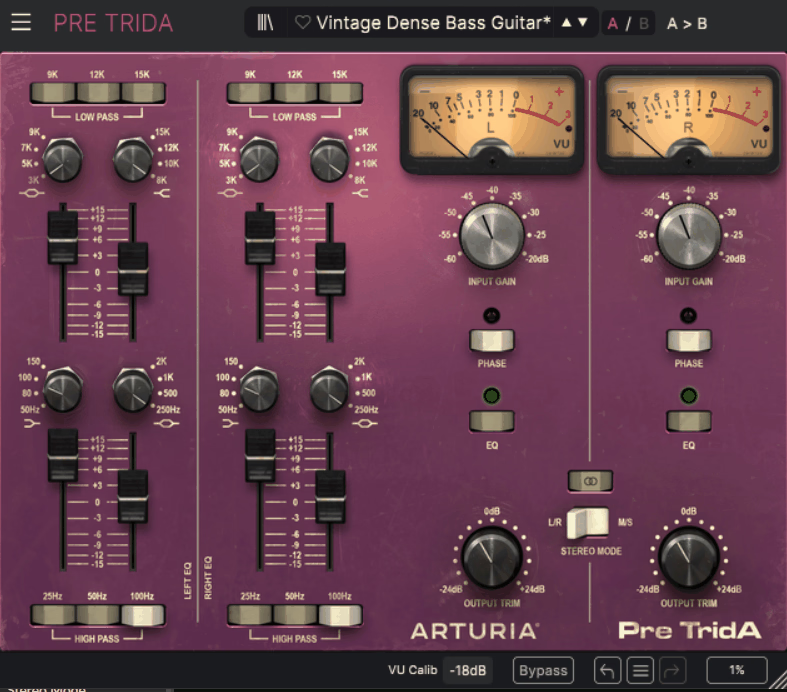
Trident Studios in London’s Soho district recorded some of the biggest names in pop music history, from The Beatles to Queen, largely thanks to the character of its A Range console. TridA-Pre is Arturia’s software recreation of that console’s preamp and EQ section, built using the company’s TAE (True Analog Emulation) technology.
I have to say the EQ section is where this plugin really earns its reputation, since the four-band design faithfully reproduces the original’s selectable frequencies and generous gain range. Personally, I think the combination of preamp coloration and that specific EQ voicing is what separates TridA-Pre from more generic channel strip plugins.
- Four-Band EQ
Low shelf, low-mid, high-mid, and high shelf bands each offer four selectable frequencies and up to 15 dB of cut or boost, calibrated to match the original A Range’s specification. What I like about it is that these bands can be adjusted independently on the left and right channels or linked together for stereo work.
- Combinable Filters
Low-pass and high-pass filters, each with three frequency settings, can be combined to create curves the original console’s engineers used for creative shaping instead of simple cleanup. Stacking both filters produces some genuinely unusual, musical tone shapes you wouldn’t get from a standard high-pass alone.
- TAE Modeling Foundation
The entire plugin runs on Arturia’s TAE engine, the same core technology behind the company’s synth emulations, applied here to recreate the A Range’s nonlinear behavior.
- Continuous Input Gain
A continuously adjustable preamp stage offers up to 40 dB of gain, letting you push the circuit from subtle coloration into harmonically rich analog distortion.
I’d recommend riding this control interactively with the output trim, since that’s how engineers originally used the hardware to shape tone.
4. UAD Helios Type 69 EQ and PreAmp
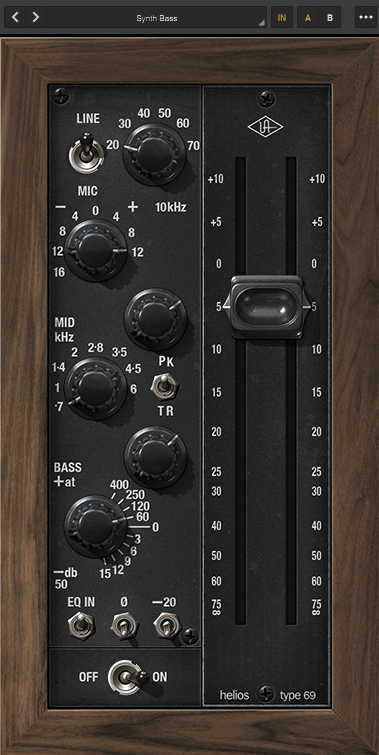
Led Zeppelin, Pink Floyd, and Bob Marley all passed through a Helios Type 69 console at some point, whether at Olympic Studios in London or inside the Rolling Stones’ mobile rig. UA’s plugin is an end-to-end circuit emulation built from two original Olympic-era “golden units,” including the coveted Lustraphone transformer-based mic preamp.
I must say this is the only preamp on the UAD platform built as a true “triple-amp” circuit capture, which gives it a noticeably more complex, layered character than a single-stage emulation. On Apollo interfaces, Unison technology mirrors the hardware’s exact impedance and gain-stage behavior in real time, so you’re not just adding a plugin after the fact.
- End-to-End Circuit Emulation
UA’s engineers modeled the custom-made, feedback-style 70 dB input section from two original Olympic-era units, along with the complete Lustraphone mic input transformer. I noticed that this depth of modeling is exactly why the plugin holds onto its midrange growl even when you’re pushing it hard.
- Passive Three-Band EQ
The original hardware’s bold, aggressive three-band EQ has been rebuilt from the ground up, complete with the inductor saturation behavior that keeps extreme moves sounding musical instead of harsh.
- Unison Technology
On Apollo audio interfaces, Unison mirrors the Type 69’s line and mic preamp impedance, gain-stage sweet spots, and circuit behavior in real time. This is the closest you can get to tracking through the actual hardware without owning it.
- Artist Presets
The plugin ships with presets contributed by working mix engineers, including J.J. Blair, Chris Coady, and Jacquire King. What stands out to me is how differently each preset approaches the same circuit, which is a genuinely useful starting point when you’re not sure where to begin.
5. Rhodes Vari-Amp
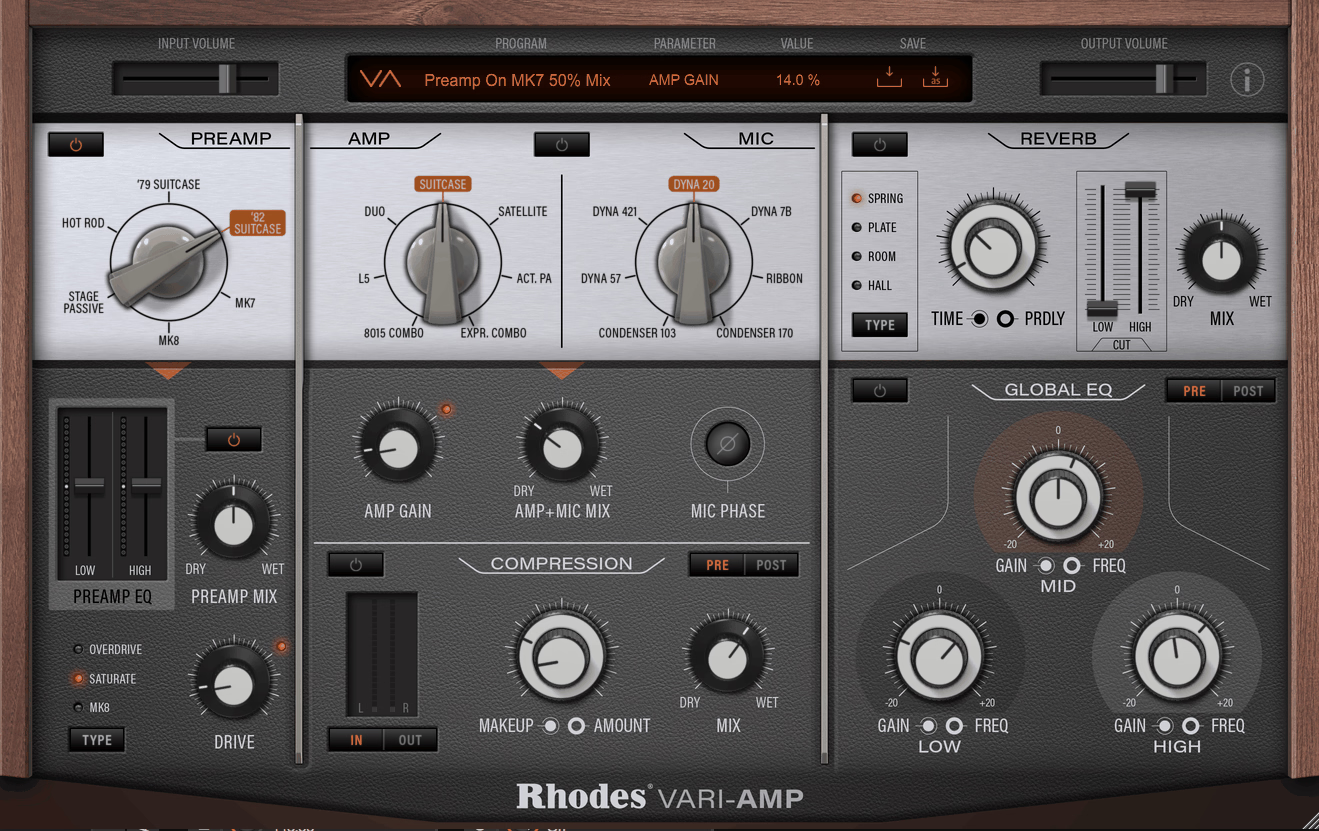
Keyboardists have chased the specific tone of vintage Rhodes preamps for decades, and Rhodes Music finally built a plugin around six of the most sought-after circuits from its own back catalogue. Vari-Amp pairs those preamps with a hand-picked selection of amplifier and microphone models, spanning classic hardware from the MK1 ’79 Suitcase all the way through the modern MK8.
I feel like the dual-module architecture is what makes this plugin so flexible, since the Preamp and Amp/Mic sections each get their own independent dry/wet blend control. Honestly, that separation means you can dial in subtle preamp coloration without committing to a full amp and mic chain, or go all the way for a completely reimagined tone.
- Six Classic Rhodes Preamps
Each preamp circuit is modeled from a specific era of Rhodes hardware, from the MK1 ’79 Suitcase and its hot-rodded variants through to the modern MK8, each with its own EQ topology and harmonic character. I’d say the tonal spread here is wider than I expected going in, since these preamps genuinely don’t sound like variations on one circuit.
- Amp and Mic Pairings
A curated set of amplifier models, including the Rhodes Suitcase Cabinet and Rhodes Satellite, pairs with a selection of dynamic, condenser, and ribbon microphone emulations. Each amp and mic pairing blends continuously with the dry signal, so you’re never locked into an all-or-nothing setting.
- Three-Mode Drive Circuit
Based on the MK8 preamp and extended with additional overdrive and saturation options, the Drive circuit runs from subtle warmth to genuinely expressive distortion. Continuously variable wet/dry mix here preserves clarity even when you’re pushing the drive fairly hard.
- Global Reverb Module
A global reverb module rounds out the signal chain for final ambience and spatial depth, a feature most preamp plugins skip entirely. In my opinion, the reverb here works best as a subtle finishing touch instead of a primary space-building tool, which keeps it from fighting with whatever else is already in your mix.
6. Slate Digital FG-76 (part of collection)
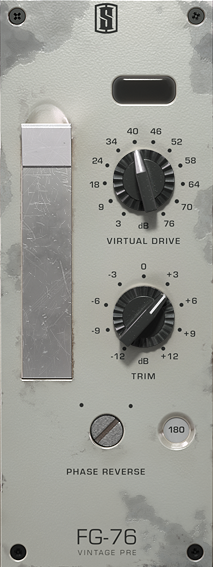
German tube preamps have a reputation for a thicker, more colored low end than their British counterparts, and that’s exactly the territory Slate Digital built the FG-76 to cover. It’s modeled after a vintage German tube preamp and runs as a module inside Slate’s Virtual Mix Rack, alongside its British-voiced sibling the FG-73.
I like how the plugin visualizes its own saturation, since the Bulb indicator lights up the moment you cross into audible coloration and gets brighter as you push further. To be honest, that kind of visual feedback makes gain staging a lot less guesswork-based than most saturation plugins.
- Vintage German Tube Circuit
The FG-76 module recreates a classic tube preamp circuit prized for its thick, colorful tone, with bottom-end saturation that’s particularly flattering on bass guitar and kick drum. I’ve found that this preamp adds noticeably more low-mid weight than a typical clean digital gain stage.
- Virtual Drive Control
This control simulates raising the input gain while automatically lowering internal output trim, so you can dial in saturation without constantly readjusting your levels. On the left side of the knob you get subtle color, and I’d say the right side gets you into genuinely full-on distortion territory.
- Saturation Bulb Indicator
A glowing bulb visually tracks how much saturation is being applied, starting to light up at the first point of coloration and brightening as input level or Virtual Drive increases. It’s quite useful for matching saturation levels across multiple tracks by eye instead of by ear alone.
7. NEOLD V76 U73
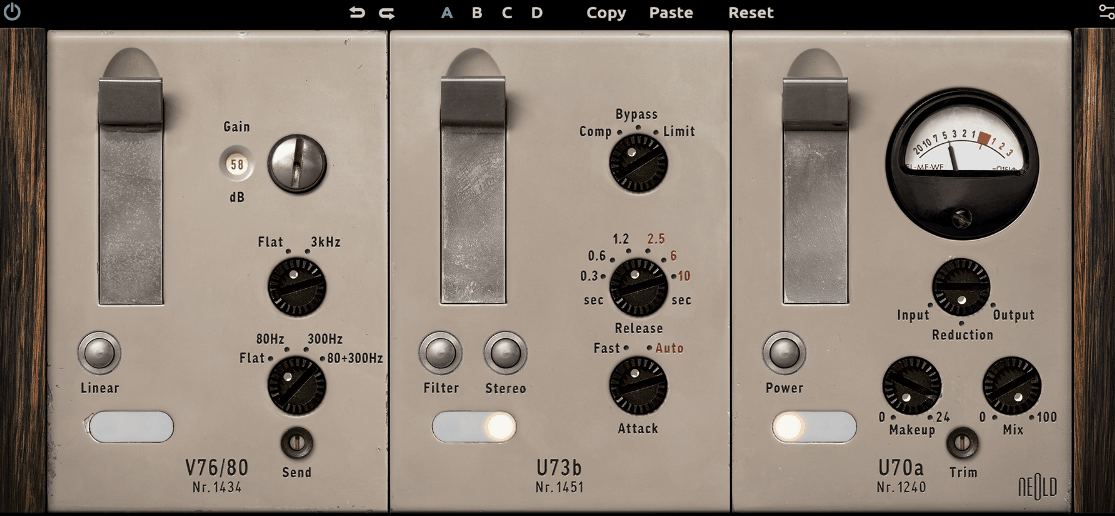
The German government reportedly gave nearly unlimited funding to develop the Telefunken V76 preamp in the 1950s, and the results earned it a permanent place in high-end studios ever since. V76U73 pairs that preamp with the U73 variable-mu compressor, nicknamed “The German Fairchild” for the density it brings to a mix.
I must say the combination of these two circuits in series is what makes this plugin special, since running a signal through both devices transforms it even before you touch a single knob. Actually, that’s true to how the original hardware was used in mastering chains throughout Europe until the U73 was discontinued around 1980.
- V76 Preamp Section
An adjustable gain control pairs with low and high-cut filters that band-limit the signal between 40 Hz and 15,000 Hz, matching the original hardware’s characteristic frequency response .This band limiting is a huge part of the V76’s identity, not just an incidental filter.
- Linear Mode
Deactivating the integrated band limiting switches the preamp into full-range Linear mode, letting you capture the V76’s tube character without its traditional frequency restrictions. I’d recommend this mode when you want the harmonic flavor without narrowing your source’s tonal range.
- U73 Variable-Mu Compressor
The compressor section offers a fixed 0.5 ms Fast attack or a program-dependent Auto attack, alongside six release times ranging from 0.3 to 10 seconds. What I like about it is how the three longest release settings stay program-dependent, so the compressor keeps breathing naturally with the material.
- Compensated Gain Staging
A compensated gain control produces harmonic saturation without sudden level jumps, which keeps the tonal shift smooth as you push the input harder. I’ve found this makes the V76U73 much easier to dial in quickly compared to preamps that require constant output trim adjustments.
- Sidechain and Stereo Modes
A sidechain filter, resizable GUI with four comparison layouts, and a stereo mode selector round out the plugin’s modern conveniences. The sidechain filter alone is worth knowing about, since engaging it around 100 Hz keeps the compressor from overreacting to heavy low end on bass or kick.
8. Tone Empire EDYN
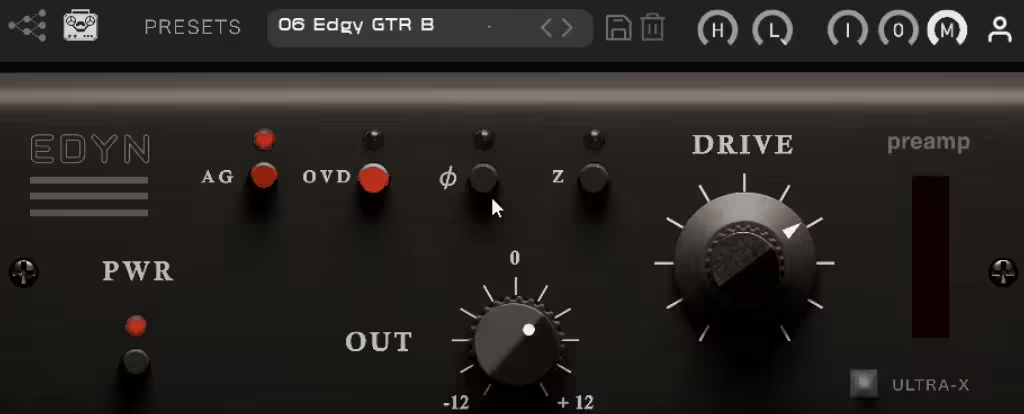
A discrete transistor circuit can behave very differently from a tube one, trading some of that soft compression for faster transient response and a punchier midrange. EDYN models exactly that kind of preamp, built around the sheen of a classic American console circuit from the 1960s and 70s.
I feel like the low-end authority is what stands out most here, since this topology was built to handle bass-heavy material without losing definition. On the flip side, it’s just as capable on vocals and drums, where that fast transient response translates into snap and presence instead of harshness.
- Discrete Transistor Topology
The core circuit is modeled after a bold, punchy American console preamp known for fast transients and deep low-end authority. This topology adds harmonic richness in a very different way from tube saturation, leaning more toward density than warmth.
- Bold, Punchy Midrange
Midrange clarity and dynamic impact are emphasized throughout, which helps sources cut through a busy mix without needing additional EQ. I’d say this is the plugin’s signature strength, and it’s most obvious on anything that needs to sit forward instead of blending into the background.
- Smooth Transient Handling
Drums and vocals keep their detail and snap even under fairly aggressive drive settings, without turning brittle or harsh. What stands out to me is how well this plugin handles fast transient material specifically, since a lot of saturation plugins soften attacks more than they should.
- Z-Impedance Control
A dedicated Z-Impedance parameter lets you shape how the preamp’s input stage reacts to your source, a level of control usually reserved for far more elaborate preamp emulations. It genuinely changes the character instead of just tweaking level.
- Ultra-X Processing Quality
The plugin’s Ultra-X mode supports sample rates up to 192 kHz for pristine fidelity when tracking or mixing at high resolution. I’d recommend engaging this if your session allows it, since the extra headroom is noticeable on sources with a lot of high-frequency detail.
9. UAD Manley Tube Preamp
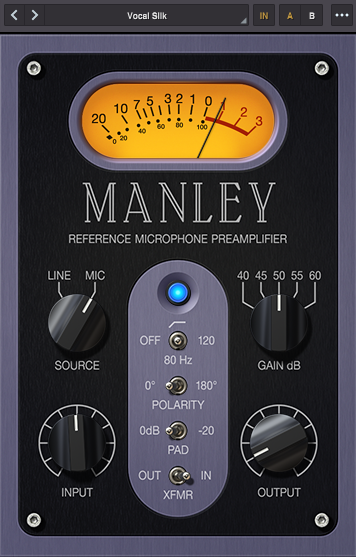
Clarity without sacrificing warmth is an unusual combination for tube gear, which is exactly what made Manley’s Class-A mic preamps a modern studio staple. UA’s Manley Tube Preamp plugin models every stage of that overbuilt circuit, right down to how negative feedback shapes the sound.
I’ve found that the GAIN control here works differently than most preamp plugins, since it doesn’t just add volume, it adjusts negative feedback within the circuit itself. Because of that, GAIN functions more like a color control, while INPUT and OUTPUT are what you’d actually use to manage your levels.
- All-Tube Amplifier Circuit
The plugin faithfully models Manley’s Class-A tube gain stage, reproducing the open, detailed sheen the hardware is known for on vocals, bass, and acoustic instruments. I love how transparent this stays even when you’re pushing it fairly hard, which isn’t always true of tube emulations.
- Unison Technology
On Apollo audio interfaces, Unison technology lets you track in real time “through” the Manley circuit, actively controlling the interface’s preamp impedance and gain staging to match the hardware. I appreciate that this works just as well for mixing engineers without Apollo gear, since the plugin still sounds excellent running purely in the box.
- Artist Presets Included
The plugin ships with presets contributed by prominent Universal Audio artists, accessible directly through the UAD preset browser. I’d say these are a genuinely useful starting point, especially if you’re still getting a feel for how the feedback-based GAIN control behaves.
Freebies:
1. Analog Obsession PREDD

Abbey Road’s REDD.51 console used a valve mic/DI module later reissued commercially by Chandler Limited as the REDD.47, a preamp famous for tracking and mixing The Beatles. PREDD is Analog Obsession’s free emulation of that exact circuit, following the original’s layout closely enough that anyone who’s used a REDD.47 will recognize it immediately.
I have to say it’s remarkable that a plugin this detailed costs nothing, especially given how closely it mirrors the layout and behavior of gear most people will never get their hands on in real life. Personally, I think this is one of the strongest arguments for checking out Analog Obsession’s whole catalogue if you haven’t already.
- REDD.47 Circuit Modeling
PREDD emulates the valve mic/DI preamplifier found on Abbey Road’s REDD.51 console, later made more accessible through Chandler Limited’s commercial reissue. The GUI follows the original hardware’s layout almost exactly, right down to where each control sits.
- Mic and DI Circuit Paths
A MIC/DI switch routes your source through genuinely different circuit paths, not just a level adjustment, depending on whether you’re tracking a microphone or a direct input. I’d recommend the DI setting on bass specifically, since that circuit path captures a surprising amount of low-end character.
2. Luxora Audio Vocal Preamp
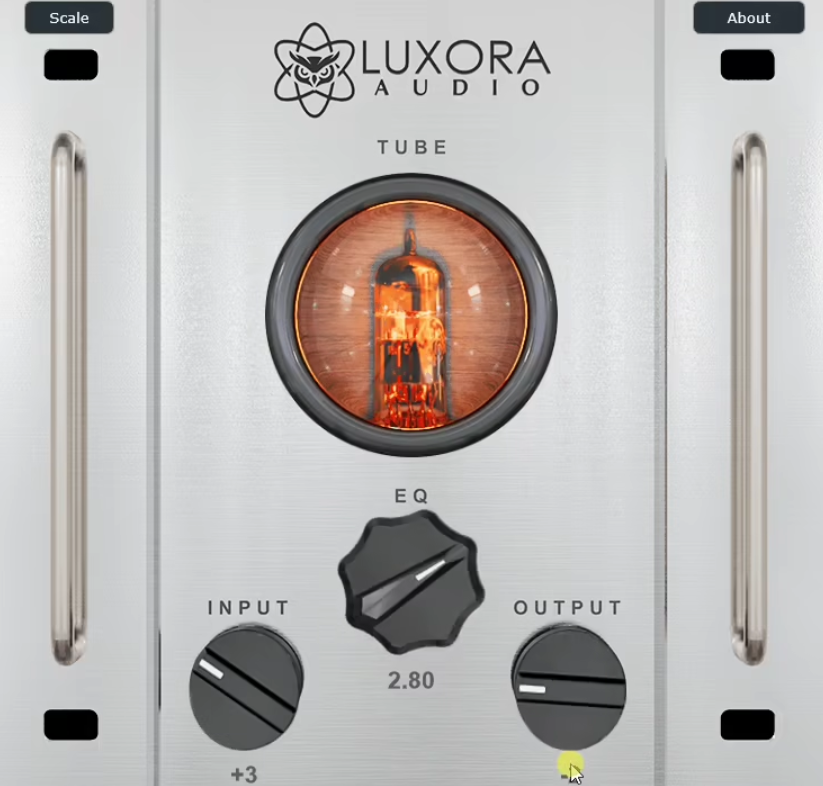
A single knob rarely does this much work, but Luxora Audio built its free Vocal Preamp around exactly that idea. The plugin combines one-knob saturation modeled on 12AX7 tubes from the 1970s through the 1990s with an optional, separately tunable EQ section.
I like how the saturation stays musical even at higher input levels, since a lot of free saturation plugins start sounding harsh well before you’d want them to. Honestly, even with the EQ section completely bypassed, the plugin still delivers a distinct, vintage-leaning harmonic character on its own.
- One-Knob Saturation
A single control drives saturation inspired by vintage 12AX7 tubes, adding vibrant, organic color and wide headroom without demanding a deep understanding of gain staging. This simplicity actually makes the plugin faster to use than most paid saturators, since there’s nothing to overthink.
- Analog Warmth, Digital Precision
The plugin blends an analog-modeled signal path with modern digital precision, aiming for a hybrid character instead of a strict vintage recreation.
3. Analog Obsession MPReq
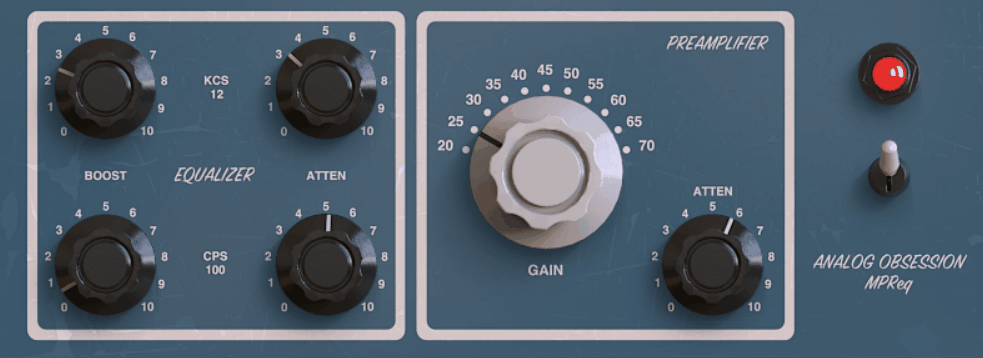
Program equalizers built into vintage mic preamps rarely get much attention next to their more famous standalone EQ cousins, but they carry plenty of character in their own right. MPReq models exactly that kind of circuit, pairing a vintage mic preamp with a Pultec-style two-band program equalizer.
I’d say the preamp section alone is worth the download, since the gain-compensated saturation knob does that classic Pultec-adjacent trick better than plugins costing considerably more. Actually, this is one of Analog Obsession’s more understated releases, but it’s held up remarkably well since it first came out.
- Vintage Mic Preamp Section
The GAIN control offers 20 to 70 dB of mic preamp gain, fully emulated from a 1960s circuit, with an ATTEN control handling output level after the EQ stage. I’ve found that this preamp alone adds a noticeable amount of character even before you touch the EQ section.
- Pultec-Style Two-Band EQ
Fixed frequency points at 100 Hz and 12 kHz let you boost and cut in a classic program EQ style, emulated from a famous hardware unit with its own tube gain stage. The low band especially has that unmistakable Pultec-adjacent boost-and-cut interaction that makes bass and low mids feel bigger without getting muddy.
4. Analog Obsession PreBOX

Eleven distinctly different preamp circuits in a single free plugin sounds almost too good to be true, but that’s exactly what PreBOX delivers. Analog Obsession rebuilt this preamp and distortion box from scratch, modeling everything from mic-style circuits to line-level tape color options.
I must say the variety here is the real selling point, since each of the eleven models has its own distinct transient response and dynamic behavior. On the flip side, frequency response stays fully linear across every model, which keeps the tonal differences from ever feeling like an accident of poor design.
- Eleven Preamp Models
Selectable circuits include Humptone, SS Nine, Tape Color, Rosenrot, New 81, F2Bam, Quad Core, A10M, 15A66, Fairy, and Vacuum76, each with a distinct character. I’d recommend working through a few of these on the same source, since the differences are much more obvious in direct comparison than in isolation.
- V76-Style Filtering
Selectable high-pass options at FLAT, 80 Hz, 300 Hz, or a combined 300+80 Hz setting, along with a FLAT or 3 kHz low-pass, are based on the same filter circuit found in the Telefunken V76 preamp. These filters work identically across all eleven preamp models, so you’re not relearning the interface every time you switch character.

Hey, I’m Vil, I started this site to help you find the best audio plugins covering various categories including synths, pianos, strings, and effect tools of all sorts as well. I pick these plugins based on various criteria so it best matches the actual topic.