When you purchase through the links on my site, you support the site at no extra cost to you. Here is how it works.
Most of the bass you hear on a finished record is not coming from one sound. More often, there is a clean DI keeping the fundamental solid underneath a mic’d cabinet, with the two blended until you get both weight and definition.
That is why I look for something different in a bass amp plugin than I would in a guitar amp plugin. DI blending, crossover splits, cabinet choices, microphone placement, power-amp behavior, and the ability to keep the low end intact all matter much more.
The plugins below take very different approaches to the job. Some recreate one specific piece of hardware and give you a finished recording chain.
Others are full rig-building environments where you can move microphones, swap cabinets, and build your own signal path. I have grouped them by what they are actually good at, because a vintage flip-top and a parallel distortion processor solve completely different problems.
I also included one free option at the end that I think is far more capable than its price suggests.
1. Brainworx bx_bassdude
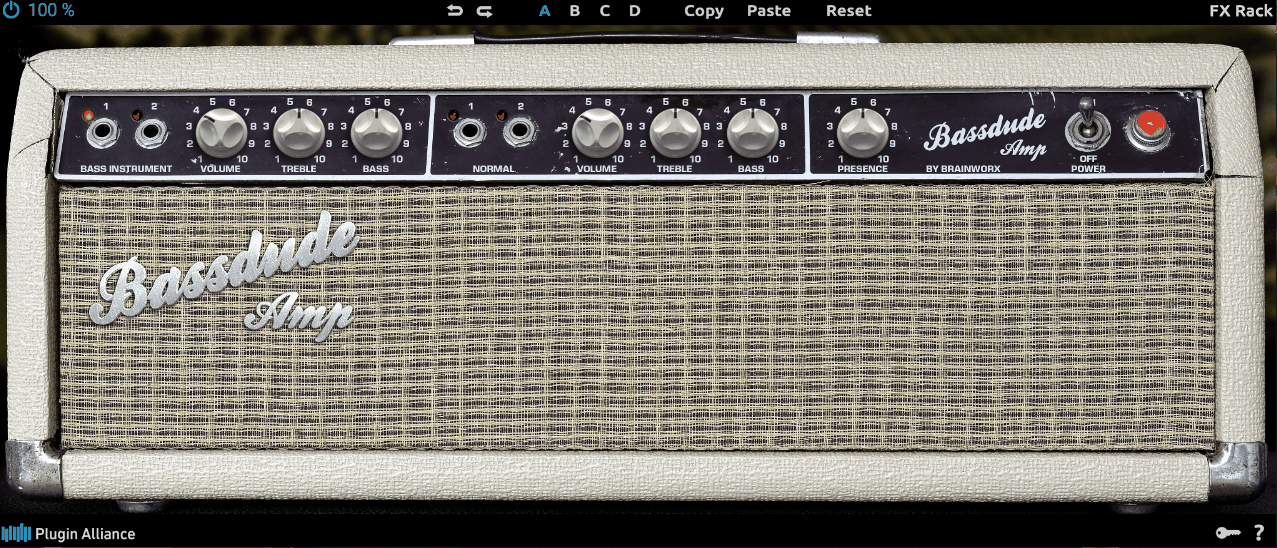
The amp behind Brainworx bx_bassdude has an interesting history. It was designed as a bass amp, then became popular with guitarists too, and that crossover is a big part of why its sound still works so well today.
Brainworx modeled an early-1960s blonde piggyback design, including the separate head-and-cabinet format. What I like here is how much the character changes as you turn the volume up.
You get:
- 35 Recording Chains
Instead of making you build the recording chain yourself, Brainworx gives you 35 impulse-based chains covering cabinets, microphones and outboard gear captured through a real Neve console. The later addition of three bass boxes with their own impulse responses and presets is important because it gives the plugin more practical bass options than the original concept suggests.
- Blonde Piggyback Circuit
Everything starts with one specific early-1960s amp, so you get a much more focused character than you would from a generic “vintage bass” model. The interesting part for me is the transition from clean to overdrive.
The useful range is fairly narrow on the volume control, so even small adjustments can change the attitude of the bass.
- Instrument and Bass Channels
You get separate Instrument and Bass Instrument inputs. The switch changes more than gain staging, with the low-mid balance and top end moving to suit the instrument.
That means you can start shaping the bass from the actual amp voicing instead of compensating for a guitar-oriented model afterward.
- Gate, Filters and Lo-Fi Delay
- Power Amp Simulation and Power Soak
The modeled power section feeds a Power Soak, so you can push the output tubes harder and then pull the level back down. That is one of those features I find genuinely useful.
You can get the compression and saturation associated with a driven tube amp without having to turn the entire track into a volume problem.
2. Ampeg B-15N by Brainworx
There are bass tones that you can identify before the notes have even finished ringing. A Precision bass with flatwounds, played softly, through a B-15-style circuit is one of them.
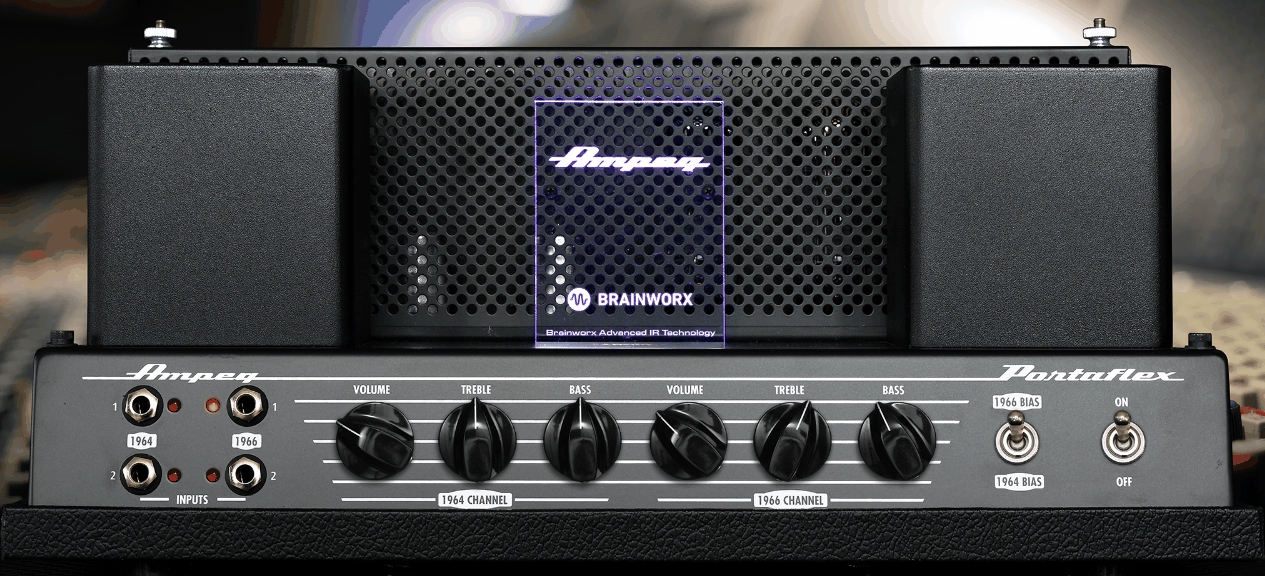
That is the appeal of Ampeg B-15N by Brainworx. The original hardware became deeply associated with the bass sound of the 1960s and 1970s, and Brainworx modeled the dual 6L6 power section and Baxandall EQ that help define it.
What I really like is that you are not getting one generic B-15 tone. There are two separately modeled circuits, and you can hear the difference as soon as you switch between them.
The 1964 version is a 25-watt cathode-biased design that feels softer and more forgiving. The 1966 moves to a 30-watt fixed-bias design with more headroom and a stronger midrange presence.
For me, that makes the choice pretty simple. Start with the 1964 when you want warmth and softness for soul, jazz, or gentler playing.
Move to the 1966 when you need the bass to stay more assertive under stronger picking or a heavier arrangement. The fixed cabinets may sound restrictive compared with a modular rig, but there is a benefit: you can often get to a mix-ready sound in a few minutes rather than spending half an hour moving microphones around.
- 1964 and 1966 Channels
The two circuits are modeled separately, including their bias behavior. I would use the 1964 for softer playing, vintage soul, jazz, and parts where you want the bass to feel rounded and forgiving.
The 1966 is the easier choice when you need more headroom and midrange definition.
- 42 Recording Chains
You get four cabinet choices: the matching Ampeg 1×15, an 8×10, a 4×10, and an alternative 1×15. The chains are available in both flat and desk-EQ versions.
I find that useful because you can start with a relatively neutral recording chain or immediately reach for something already shaped for a mix.
- Brainworx FX Rack
The rack adds a noise gate, Tight and Smooth filters, Power Soak, and a horn on/off control. I particularly like having the horn switch available because it changes how much string attack and finger detail you hear from the cabinet without forcing you into a separate EQ.
3. IK Multimedia AmpliTube 5
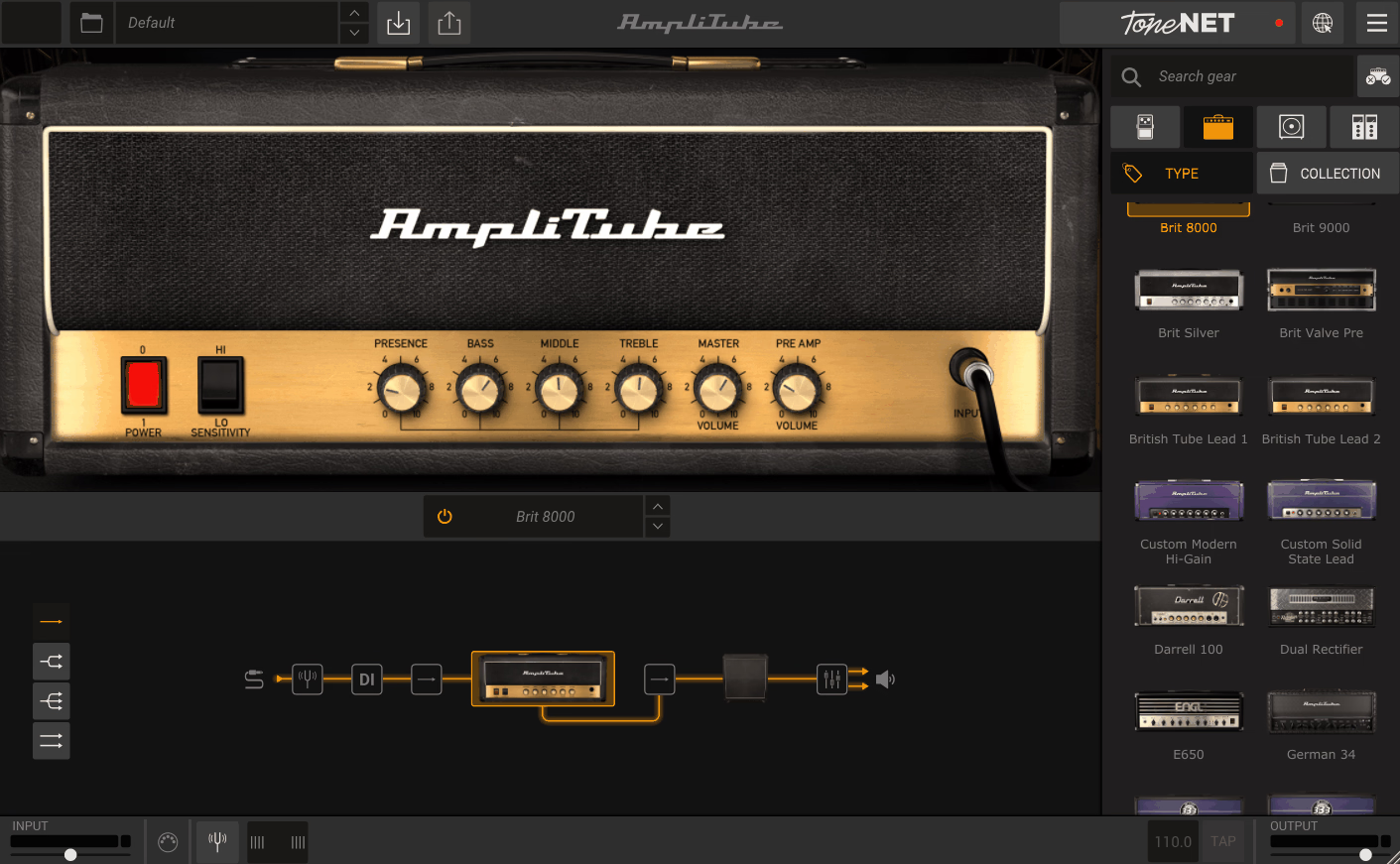
Cabinet realism is where I usually pay the most attention when judging an amp plugin. An amp can sound convincing, but if the cabinet and microphone stage feel static, the whole thing can still sound like a plugin.
That is the area where IK Multimedia AmpliTube 5 takes a different approach. Its VIR, or Volumetric Impulse Response, system uses a large number of measurements to model the behavior of a speaker across a physical space.
IK states that this includes 600 impulse responses per speaker, with 1,200 for a two-speaker cabinet and 2,400 for a four-speaker cabinet, contributing to more than 143,000 measurements across the system.
- VIR Cabinet Section
The VIR system gives you much finer control over microphone position than a conventional fixed impulse setup. You can move across the cabinet and hear the tone change gradually, which makes it easier to find the sweet spot between weight, attack, and room character.
With more than 100 cabinets re-measured, the approach applies across a large part of the AmpliTube library.
- Flexible Signal Chain
AmpliTube supports up to 57 simultaneous models, including series, parallel, and wet-dry-wet routing, as well as a blended DI alongside the amp path. For bass, that last part is the key.
You can keep a clean DI underneath the amp without building the setup manually with multiple tracks.
- Ampeg SVX Collection
The SVX collection includes the BA-500, B-15R, SVT-Classic, and SVT-4PRO, along with six cabinets and eight bass-focused effects. You get coverage from vintage flip-top territory to modern high-power Ampeg sounds, all inside one environment.
- New Mixer with Studio Effects
The mixer lets you combine cabinets, microphones, and DI, with 19 mixing effects derived from T-RackS. That means you can do some of the final EQ and dynamics work without immediately sending the bass through another chain of plugins.
4. Overloud TH-U
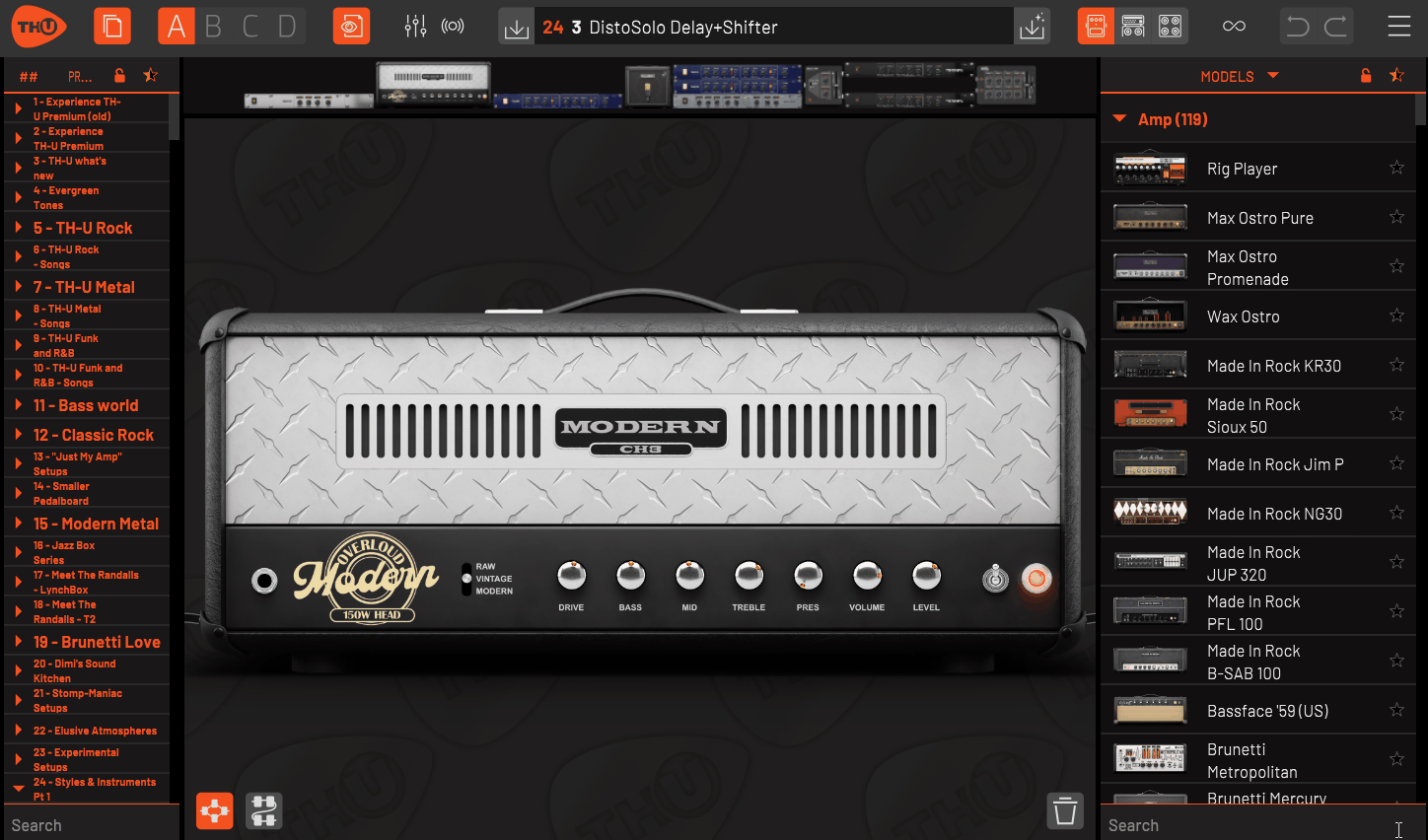
If you only need one bass sound, a dedicated amp emulation can be the easiest route. The problem starts when you are working on several projects and every one of them wants a different bass character.
That is where Overloud TH-U makes more sense to me. I don’t think of it as one bass amp plugin.
I think of it as a platform that happens to include a bass section. The core package includes three bass amplifiers, two bass cabinets, a bass graphic EQ, a bass tuner, and bass-oriented presets.
- Rig Player Captures
Rig Player captures complete signal chains rather than just the amp stage. You can find rigs covering hardware from Aguilar, Ashdown, Darkglass, Noble, Portaflex, SWR and Trace Elliot, which gives you a much broader palette than the core amp count suggests.
I particularly like this approach for boutique preamp sounds, where the character of the entire rig can matter just as much as the amplifier itself.
- Bass-Specific Components
You get a dedicated bass graphic EQ and bass tuner as part of the package. Neither sounds revolutionary, but those little conveniences add up when you’re trying to work quickly.
You don’t have to leave the plugin every time you need to tune or make a bass-specific low-mid adjustment.
- Four-Microphone 3D Matrix
The cabinet section can use a four-microphone 3D matrix, letting you position microphones in front of or behind the cabinet and adjust their angle and stereo placement. Because the system uses Fluid Convolution, you can move the microphones continuously rather than jumping between a fixed set of snapshots.
That is a big deal if you prefer to treat the virtual cabinet more like a real recording session.
- Amp Tweak, Tube Swapping and Variac
TH-U also lets you change the modeled preamp and power amp tube types and simulate a variac. I would not obsess over these controls, but they can be genuinely useful when an amp feels slightly too stiff or too loose.
5. Aurora DSP Mammoth
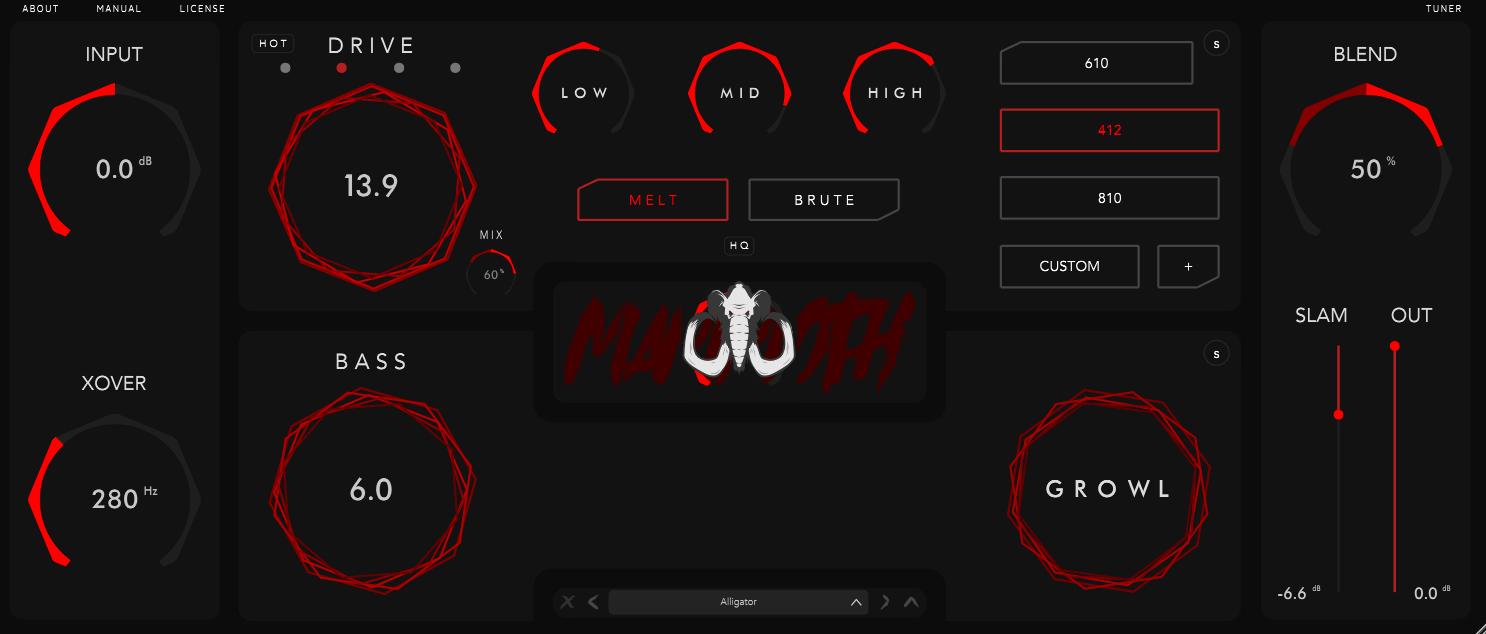
Distortion is one of the easiest ways to make a bass sound exciting, and one of the easiest ways to destroy the low end at the same time.
Aurora DSP Mammoth solves that problem by splitting the signal before the heavy processing. You can keep the lower band clean while pushing the upper band into distortion, which is essentially a built-in version of the parallel bass technique many producers would otherwise build manually.
You can move the crossover from 20Hz to 800Hz and control the blend between the bands. That is why I see Mammoth as particularly useful for metal, djent, aggressive rock, and heavy electronic music.
You can get ridiculous amounts of upper-bass distortion while the fundamental underneath still behaves like an actual bass instrument. The drive section also gives you four distinct flavors rather than one generic distortion circuit.
- Parallel Two-Band Architecture
The crossover happens before the drive stage, which means the clean lower band can survive while the upper band gets pushed much harder. This is one of the most useful things you can do with a distorted bass.
You don’t have to choose between a clean foundation and aggressive character. You can have both at the same time.
- Four Drive Voices
The four channels cover different hardware-inspired flavors: Green goes toward a classic bass preamp, Red is based around a V4-style head, Purple takes inspiration from an AC30 bass head, and Blue moves toward a B7K-style preamp.
- Tone Stack, Melt and Brute
The main tone controls center around 100Hz, 500Hz, and 1600Hz, which are useful places to shape a distorted bass. Then you get the Melt and Brute voicings.
Melt rounds the sound out, while Brute makes it more aggressive and forward. When I’m working quickly, those two modes are often more useful than making tiny EQ changes.
- Bass Maximizer and Slam
The Bass control applies parallel compression to the low band, letting you reinforce the foundation without flattening the distorted upper part. Slam then acts more like a final glue stage, helping the finished tone sit together when the bass needs to compete with a dense arrangement.
6. Ampeg SVT-VR
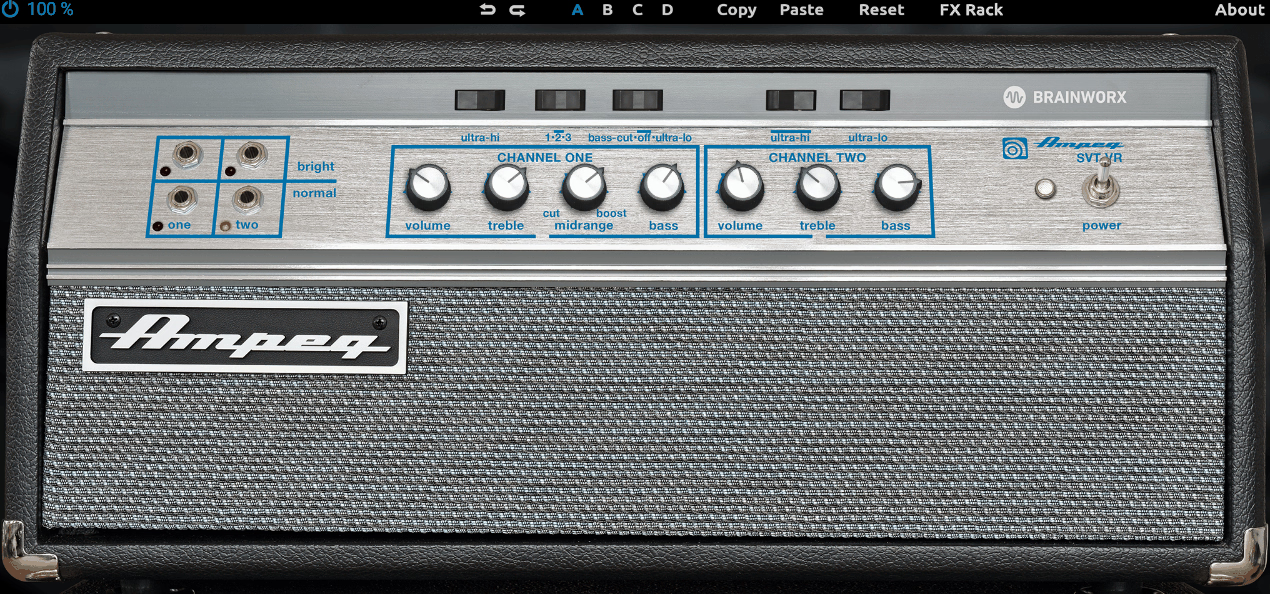
Sometimes you don’t want a polite bass tone. When a track needs the bass to feel physically large, aggressive, and unmistakably present, Ampeg SVT-VR is one of the first places I would go.
Brainworx modeled the original 300-watt all-tube SVT design, including the power section, preamp, inputs, rocker switches, and cabinet recording behavior. You get two channels across four inputs, just like the hardware.
Channel One gives you a three-band EQ with a selectable mid frequency, while Channel Two keeps things simpler with a two-band EQ. I actually find Channel Two surprisingly useful for tracking because you can get close to a finished sound without spending ages making decisions.
The big personality shift comes from the Ultra Hi and Ultra Lo switches. These don’t behave like tiny EQ adjustments. They change the way the amp presents the bass, and you can hear the difference immediately. This is the amp I would reach for when the bass needs to sound huge under guitars, drums, and distorted layers.
- 300-Watt All-Tube Model
The preamp, power section, and rocker switches are modeled together, so increasing the input gain changes the harmonic content rather than simply turning up a distortion effect. The result is that familiar combination of big low end and midrange growl that makes an SVT so useful in rock.
- 23 Recording Chains
The recording chains were captured through a Neve VXS72 console with vintage microphones and boutique outboard gear
- FX Rack and Power Soak
The rack includes a noise gate, Tight and Smooth filters, Power Soak, and a horn switch. The Power Soak is the feature I care about most here.
7. Native Instruments Guitar Rig 7 Pro
You don’t necessarily need a dedicated bass amp plugin just because you record bass. If you also work with guitars, synths, drums, vocals, and sound design, I can make a good case for using one flexible platform instead.
That’s where Guitar Rig 7 Pro becomes attractive. You get 26 amps and cabinets plus 115 effects and tools, so bass is only one part of a much larger ecosystem.
The bass-specific model worth knowing is Bass Rage, a 300-watt all-tube design built using NI’s ICM approach. I find it more naturally responsive to playing dynamics than some of the older models in the collection.
The bigger advantage, though, is everything around it. You can keep your bass amp, compressor, filter, lo-fi processor, pitch effect, and other processing in the same rack instead of building a long chain across several plugins.
- Bass Rage Amp Model
Bass Rage is a 300-watt vintage tube bass amp with a matching cabinet and a direct-to-room slider. The default sound is big and fairly polished, so you can usually start writing with it immediately rather than spending time getting the amp to sound usable.
- Control Room Mic Mixing
The cabinet section gives you eight microphones, each with its own fader. That lets you blend different perspectives instead of choosing one fixed microphone position. If you want more low-end weight, favor the darker positions. Need more articulation? Bring up a brighter mic instead. It is a very practical way to shape the balance between fundamentals and string detail.
- Cabinet Impulse Response Loader
You can also load your own IRs, with factory content from 3 Sigma Audio, Bogren Digital, cabIR, Kohle Audio Kult, Lancaster Audio, and Ownhammer available in the collection. That means you can move beyond the modeled cabinets when you already have an IR library you trust.
- 115 Effects and Tools
This is where Guitar Rig becomes much more than a bass amp simulator. You can use compressors, filters, stompboxes, signal modifiers, lo-fi effects, and other modules on the bass path.
I especially like the lo-fi side because it gives you ways to turn a clean DI into something more textured without relying on the amp model for all the character.
8. Softube Amp Room Bass Suite
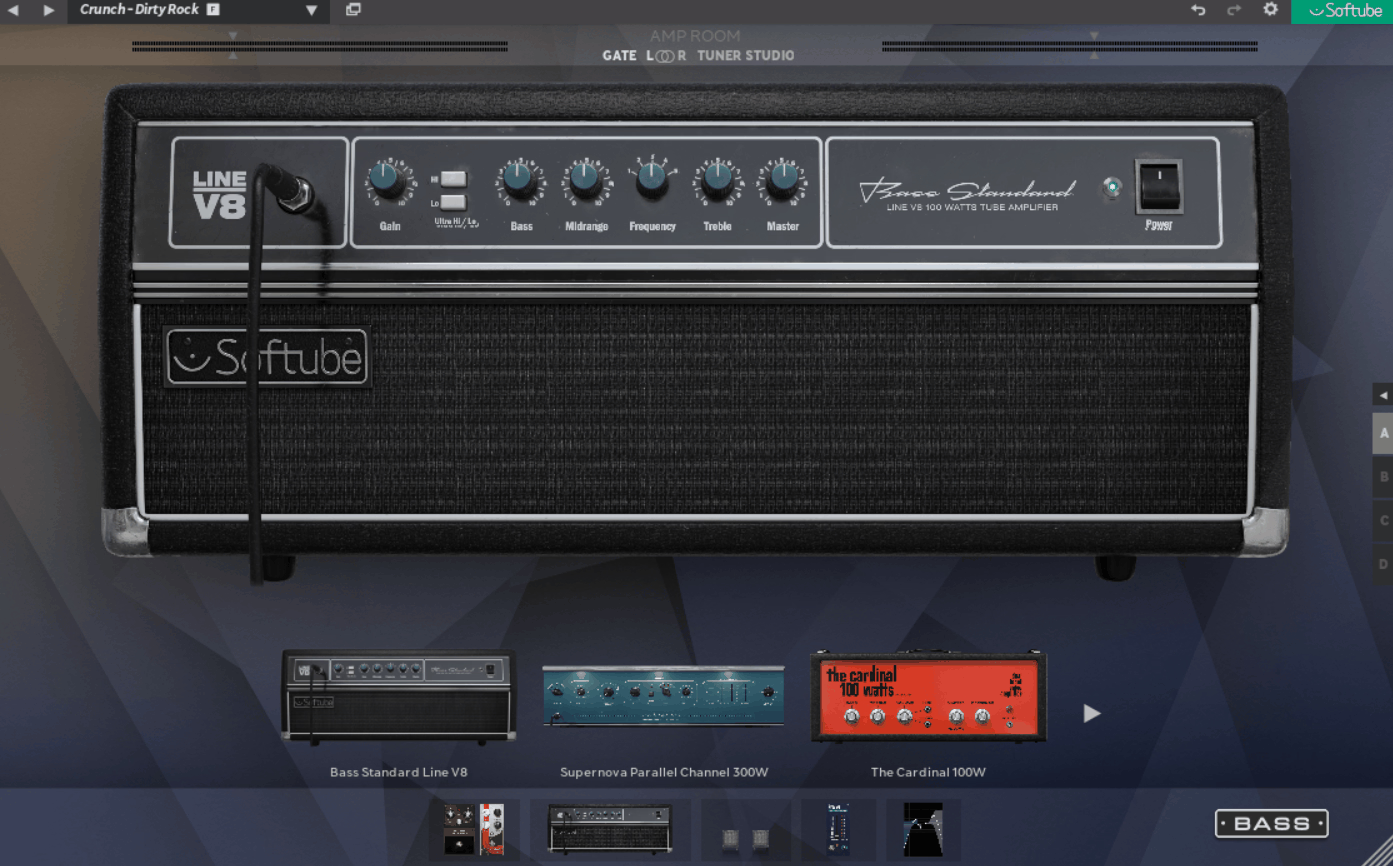
A lot of modular amp plugins make you choose between speed and control. You either get a fast “pick an amp and go” workflow, or you get so much flexibility that getting to the first usable tone becomes a project in itself.
Softube Amp Room Bass Suite tries to solve that with two modes. Suite Mode gives you curated setups for fast results, while Studio Mode opens up the deeper routing and editing options.
- Three Amps Plus a DI
The three amps cover different eras and design approaches, and you also get a dedicated Direct Input DI. The DI includes EQ controls taken from Softube’s Focusing Equalizer, including low cut, high cut, and a tone control that moves from thin to fat.
That means you can build a complete bass chain without automatically needing another EQ plugin after the amp.
- Five Cabinets
The cabinet list includes: Bass Standard Line 8×10, Bass Standard 1×15, Solid 1×15, Pacific ’59 BM 4×10 and Marshall 1960 4×12
The 4×12 might seem strange at first on a bass plugin, but it can be surprisingly useful when you want a distorted upper-mid character rather than a full-range bass cabinet sound.
- Custom IR Loader and Producer Packs
- Moveable Microphones
The cabinet section uses IR-based modeling with movable microphones and seven microphone options.
- Ten Bass Pedals
You also get 10 bass pedals, including compression, octave, chorus, EQ, autowah, distortion, and more aggressive effects such as Wild Boar, Trollegater, Doom Chvrch, RMS 63, and Kraft.
This is one of the reasons I like keeping effects inside the same environment. On bass, the order of compression, EQ and distortion can completely change the way the part feels.
- Studio Effects and Utilities
The platform also includes Softube RoomIR, American Class A 55 EQ, American Class A 25 Comp, and a broader collection of effects and utility modules. That can save you a surprising number of plugin slots on a bass track.
9. Gallien-Krueger 800RB
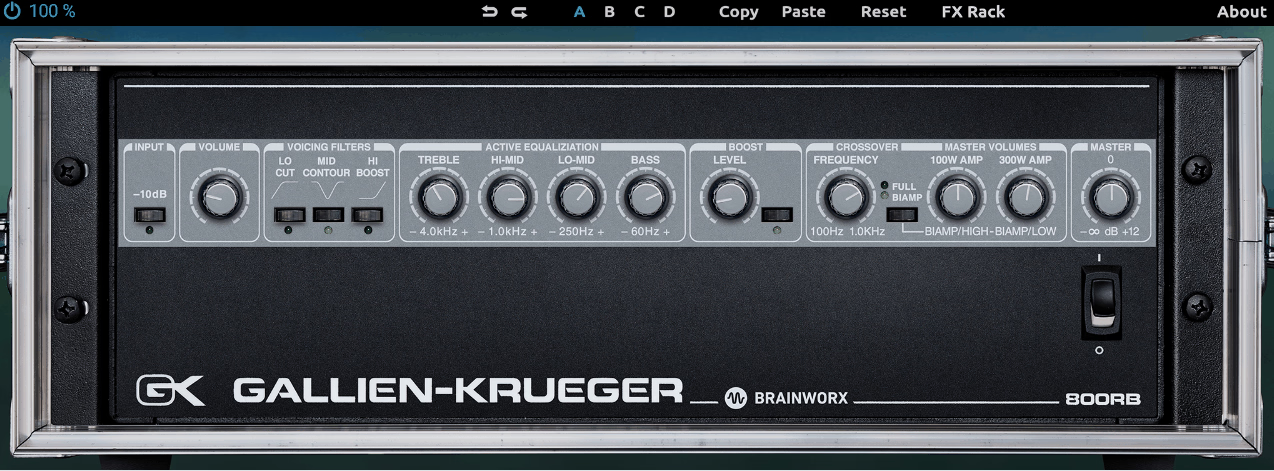
If you like clean bass that still has presence and attitude, the Gallien-Krueger 800RB is one of the most interesting plugins in this group.
The hardware, introduced in 1982, became known for its clean and transparent sound and for an unusual architecture: the low and high frequency ranges were driven by separate power amps. Brainworx modeled that architecture rather than simplifying it into one ordinary bass amp.
You get a 100-watt amp and a 300-watt amp, each with its own master volume, with an adjustable crossover deciding what goes to each section. That gives you a very practical way to keep the fundamental clean while letting the upper part of the bass become more aggressive.
- Bi-Amp Architecture
The two power amps operate in parallel, with the crossover determining the split. You can keep the low band clean and let the upper band add bite, then balance the two master levels until the bass has exactly the amount of grind you want.
It is one of those setups that sounds complicated until you use it. Once you hear what the crossover is doing, the workflow becomes very intuitive.
- Two Recording Chain Modules
Each amp has its own chain module, and each module provides 64 recording chains. That means you can use a different cabinet, microphone, and outboard setup for the low and high sections rather than treating the entire bass as one recorded source.
- Four-Band Active EQ
The active EQ gives you four bands instead of a basic three-knob stack. I find the extra control useful when fitting bass around a specific kick drum because you can move one part of the spectrum without reshaping the entire sound.
10. Ampeg V-4B by Brainworx
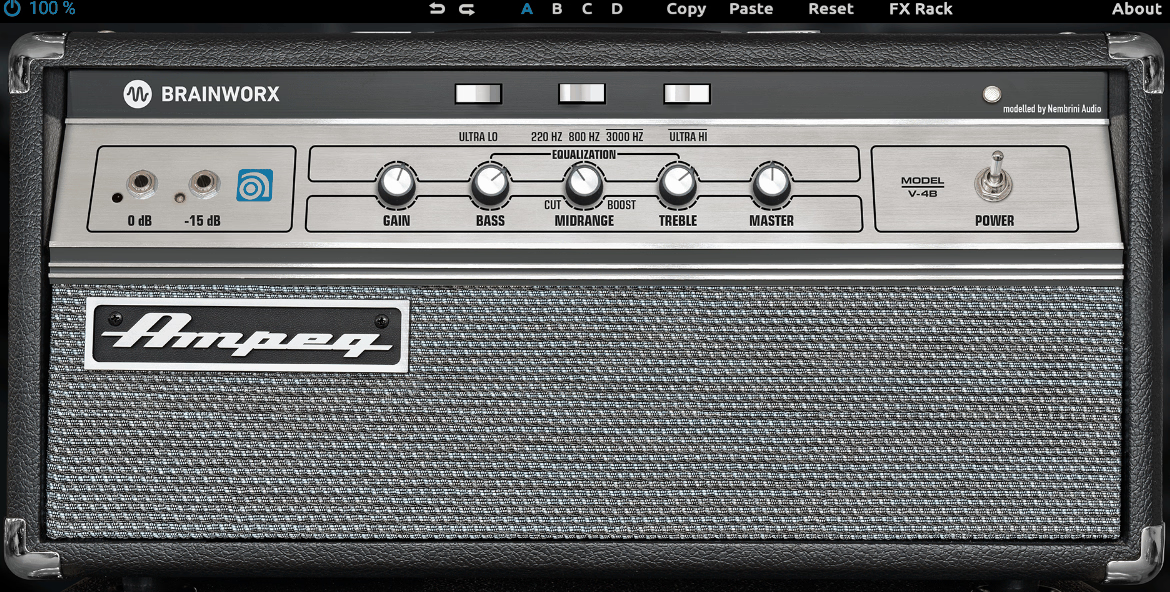
There is a point where a 300-watt SVT-style amp is simply more bass amp than the song needs. When I want the familiar Ampeg character but prefer the saturation to arrive sooner, I reach for Ampeg V-4B by Brainworx.
The amp is based around a 100-watt design that shares the SVT family resemblance but has a smaller power section. That changes the amount of headroom available, which makes it easier to get driven tones without needing to run the amp nearly as hard.
I particularly like that on rock, country, and gritty pop tracks. You can get a little more hair and compression while keeping the overall level under control.
The interface is also straightforward: three-band EQ, selectable mid frequencies, Ultra Lo, Ultra Hi, separate gain and master controls, and two input levels.
- 100-Watt All-Tube Circuit
The plugin models the preamp and power section together, using 6L6 tubes to create gentle compression as the amp is driven. A useful trick here is to push the gain and pull back the master.
That gives you more of the driven character without simply making the entire bass track louder.
- 65 Recording Chains
You get 4×10 and 8×10 cabinets captured through a Neve VXS72 console, along with classic microphones and boutique outboard. With 65 recording chains, there is enough variety here that I don’t immediately feel the need to reach for a third-party IR.
- Power Soak and Horn Switch
The Power Soak reaches down to -20dB, allowing you to drive the amp harder while keeping the final level manageable. The rack also includes a noise gate, Tight and Smooth filters, and a horn switch for changing the amount of high-frequency cabinet detail.
11. Overloud Mark Studio 2
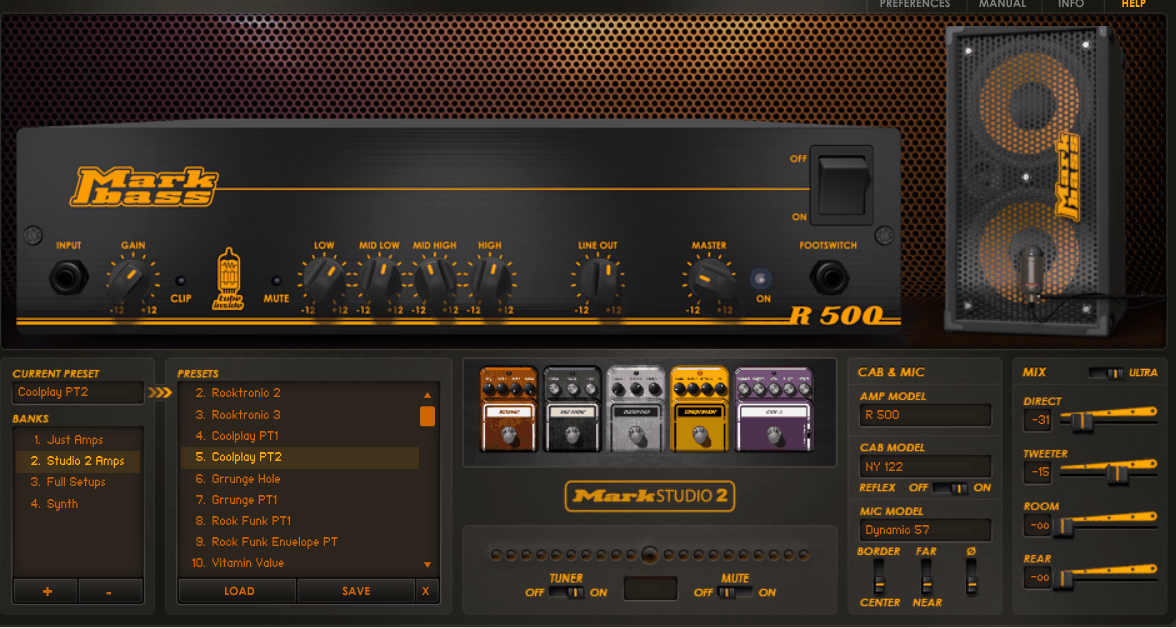
Ampeg gets most of the attention in bass amp software, but that can make you forget how many players build their sound around Markbass hardware instead. For modern jazz, fusion, funk, and session work, that can be a significant gap.
Overloud Mark Studio 2 fills it with a dedicated Markbass environment rather than trying to squeeze those sounds into a general-purpose bass plugin.
- Six Markbass Heads
The collection covers solid-state, hybrid, and tube designs. The TTE500 and Little Mark Tube are useful when I want some extra warmth, while the R500 gives you a faster, cleaner response that works particularly well for slap and funk.
- Nine Cabinets
The cabinet choices include rear-ported 1×15 and 2×15, front-ported 4×10 and 6×10 models, the 1×12 Traveler, 4×8 New York, 2×12 New York, and sealed 8×10. Because the port behavior is part of the captured sound, you get more useful low-end variation than simply choosing between different cabinet sizes.
- Multi-Microphone Capture
You can capture the woofer, tweeter, and port and blend them. I would pay particular attention to the tweeter level. That control has a large effect on how much finger noise, pick attack, and string detail survives once the bass is surrounded by other instruments.
- Three-Way Output Balance
The output stage gives you three main sources to blend: the Direct plugin input, Line Out, and Mic Output.
- Ultra Bass Control
Ultra Bass extends the low-frequency response with a voicing designed around the Markbass hardware. It can be especially useful on five-string basses, where you want the lowest notes to feel full without simply boosting the entire bottom end.
- Full Bass Pedalboard
The pedalboard includes octave, envelope filter, bass chorus, distortion, and compression. I would spend some time with the factory presets here because the interaction between the pedals and the individual Markbass heads is part of the appeal.
You can often get further by changing the amp-and-pedal combination than by adding more EQ.
Freebie:
lostin70s Bass Deluxe
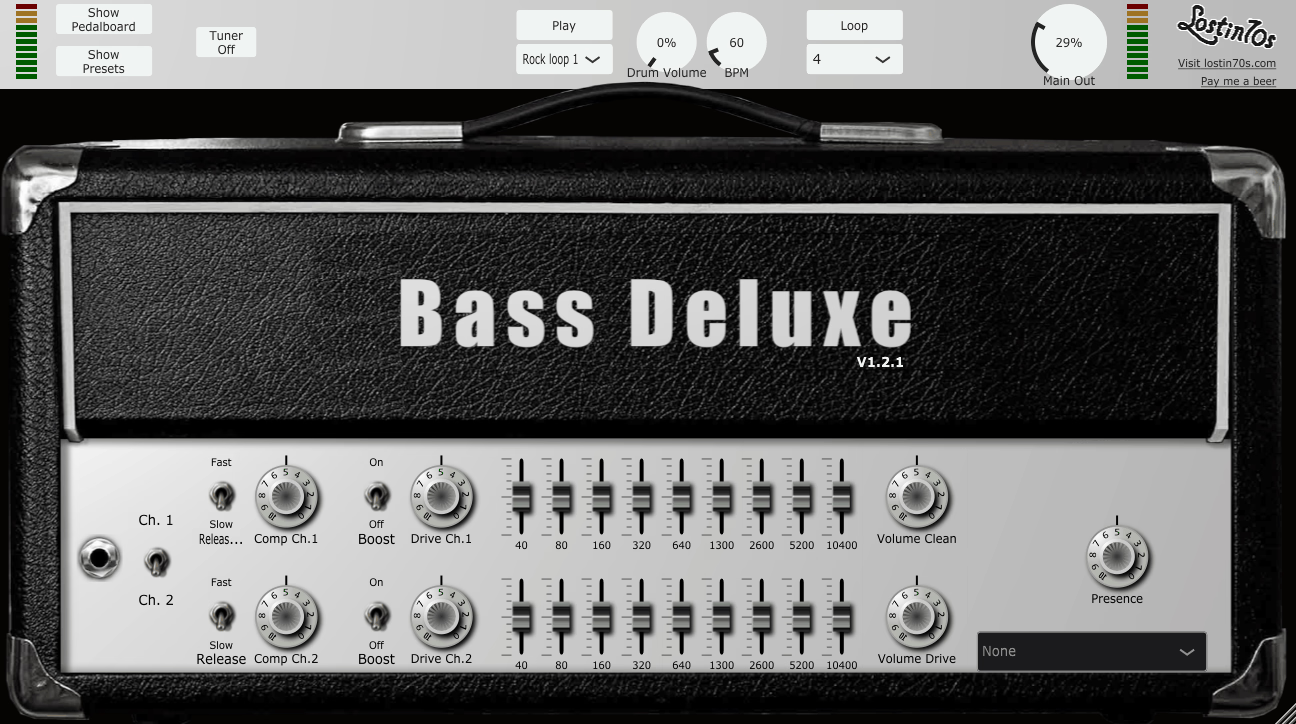
Free bass amp plugins often give you the basics: one channel, one cabinet, a few tone controls, and not much else. lostin70s Bass Deluxe is much more generous than that.
You get two independent channels, each with its own compression and drive controls plus a 9-band EQ. The plugin is designed around bass-specific distortion, amplification, and compression rather than simply adapting a guitar amp model.
For a free plugin, that is already a lot! The biggest limitation is also pretty easy to understand: the two channels are alternatives rather than true parallel paths. You can’t run one clean and one dirty simultaneously inside the plugin.
- 9-Band Equalizers
Each channel gets a 9-band EQ, which is unusually flexible for a free bass amp plugin. You can make specific cuts around problem areas such as 200Hz or 400Hz without immediately adding another EQ plugin.
- Four Cabinet Models
The cabinet choices cover 1×15, 4×10, and 8×10 designs. The 1×15 gives you the warmer vintage direction, the 8×10 delivers a bigger rock sound, and the 4×10 is probably the safest all-round starting point.
- Six Pedalboard Effects
You also get six pedal effects, including a Tone Drive designed specifically for bass. That alone makes the plugin more useful than many free alternatives.
You can add some dirt and shaping without turning the setup into a chain of separate freeware plugins.
Hey, I’m Vil, I started this site to help you find the best audio plugins covering various categories including synths, pianos, strings, and effect tools of all sorts as well. I pick these plugins based on various criteria so it best matches the actual topic.