When you purchase through the links on my site, you support the site at no extra cost to you. Here is how it works.
When I look for the best metal plugins, I want a good mix of tools rather than ten plugins doing the same job. I look for guitar amps and effects, virtual guitars and basses, drum instruments and vocal processors that cover different parts of a metal production.
That is what this list is built around. You will find complete guitar rigs like Neural DSP Archetype: Gojira X and Softube Amp Room Metal Suite, along with focused tools such as Bogren Digital Krimh Drums, Shreddage 3 Jupiter and Gamma Vocal Suite.
There is more to it too, including specialized options like Klirrton Grindstein and Ugritone KVLT Drums II. That said, I would start with Neural DSP Archetype: Gojira X because it gives you a lot to work with in one place.
1. Neural DSP Archetype: Gojira X
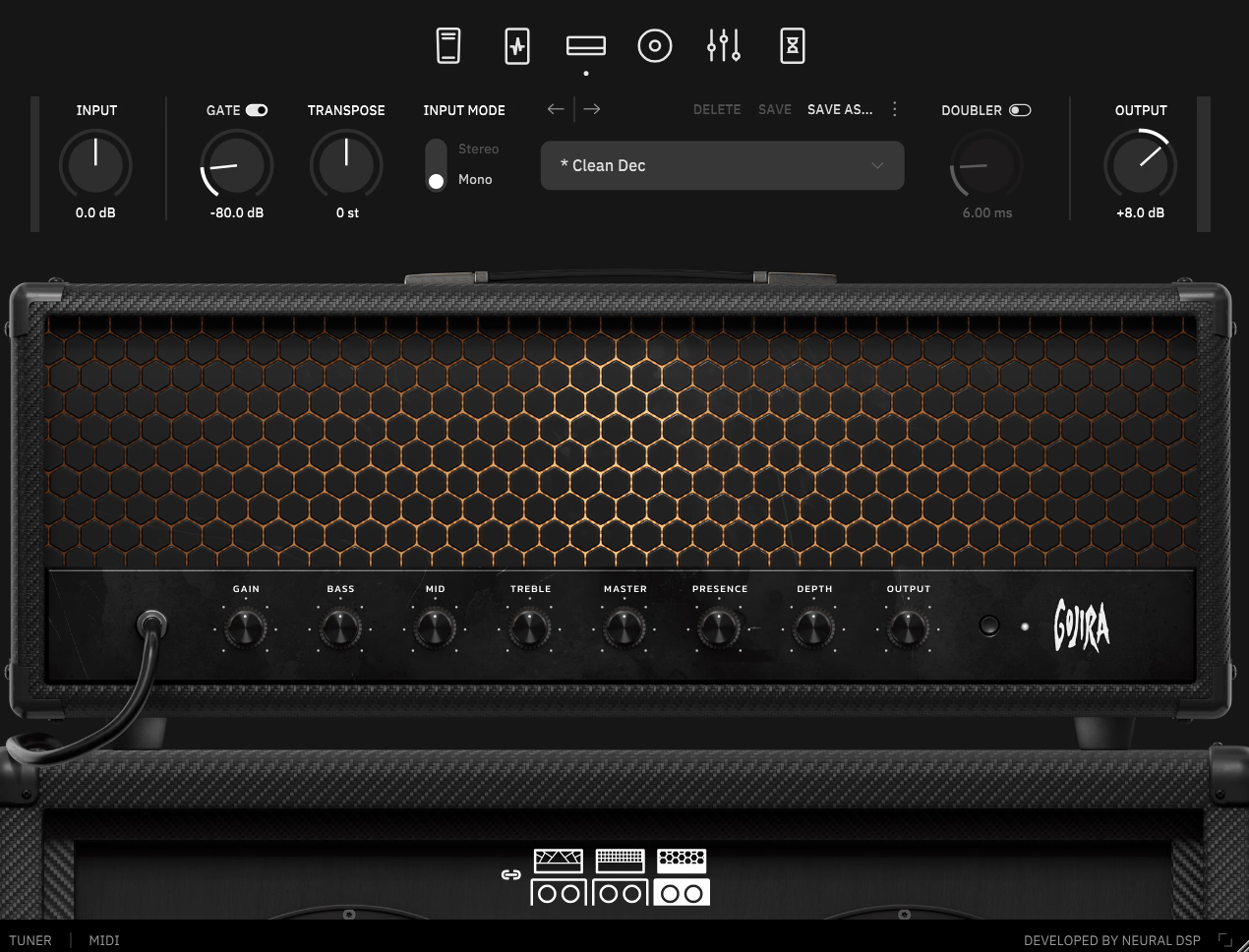
Neural DSP Archetype: Gojira X gives you three amp models, a programmable pitch section, built-in pedals, cabinets, EQ and time-based effects in one place. The second generation arrived in January 2024, and the update went well beyond a visual change.
What makes it useful is that the different sections solve several of the problems that show up when you are writing modern metal guitar. You can tighten the front end, build the amp tone, shape the cabinet and add the pitch effects without immediately opening another chain.
- Three Amp Models
Clean stays controlled when you turn it up without becoming brittle. Rust has a wide gain range, so you can move from a thick crunch into heavier distortion without the amp suddenly changing character. Hot is the obvious starting point for modern rhythm guitar, especially when you want high gain without losing note definition.
I would start with Hot for tight rhythm work, then move to Rust when you need more movement in the gain range. Clean is useful when the arrangement needs to step away from the main distorted sound without leaving the plugin.
- WOW Pitch Shifter
The WOW pitch shifter is MIDI programmable and has three modes, so you can place exact intervals on exact notes in the riff.
That matters because a programmed pitch effect is much easier to control than trying to sweep a pedal into place and hoping the timing works. You can write the interval into the riff, automate it precisely and repeat the same movement later without having to recreate the performance.
- Pre Amp Pedals
The preamp section gives you overdrive, distortion, phaser and chorus before the amp. The useful one for me is the overdrive, because tightening the front end is still one of the simplest ways to make a low-tuned rhythm guitar behave.
You can also use the phaser and chorus when the guitar part becomes cleaner or more atmospheric. That keeps the same rig useful across different sections instead of forcing you to change the whole chain for every arrangement change.
- Nolly Cabinet IRs
The cab section gives you hundreds of impulse responses recorded by Adam “Nolly” Getgood, with six virtual microphones, movable positions and support for your own IRs.
The Link and Unlink controls are practical when you want to keep one cabinet fixed while switching between the three amps. You can change one part of the rig without changing everything else, which makes comparison much easier.
- EQ And Time Effects
Every amp has its own nine-band graphic EQ, so you can keep one channel focused on rhythm and open another up for leads without constantly rebuilding the same processing.
The delay has tape saturation, while the reverb stays relatively dark and includes shimmer. That gives you ambience without automatically pushing the heavy guitar into a bright wash.
2. Ample Sound Ample Metal Eclipse
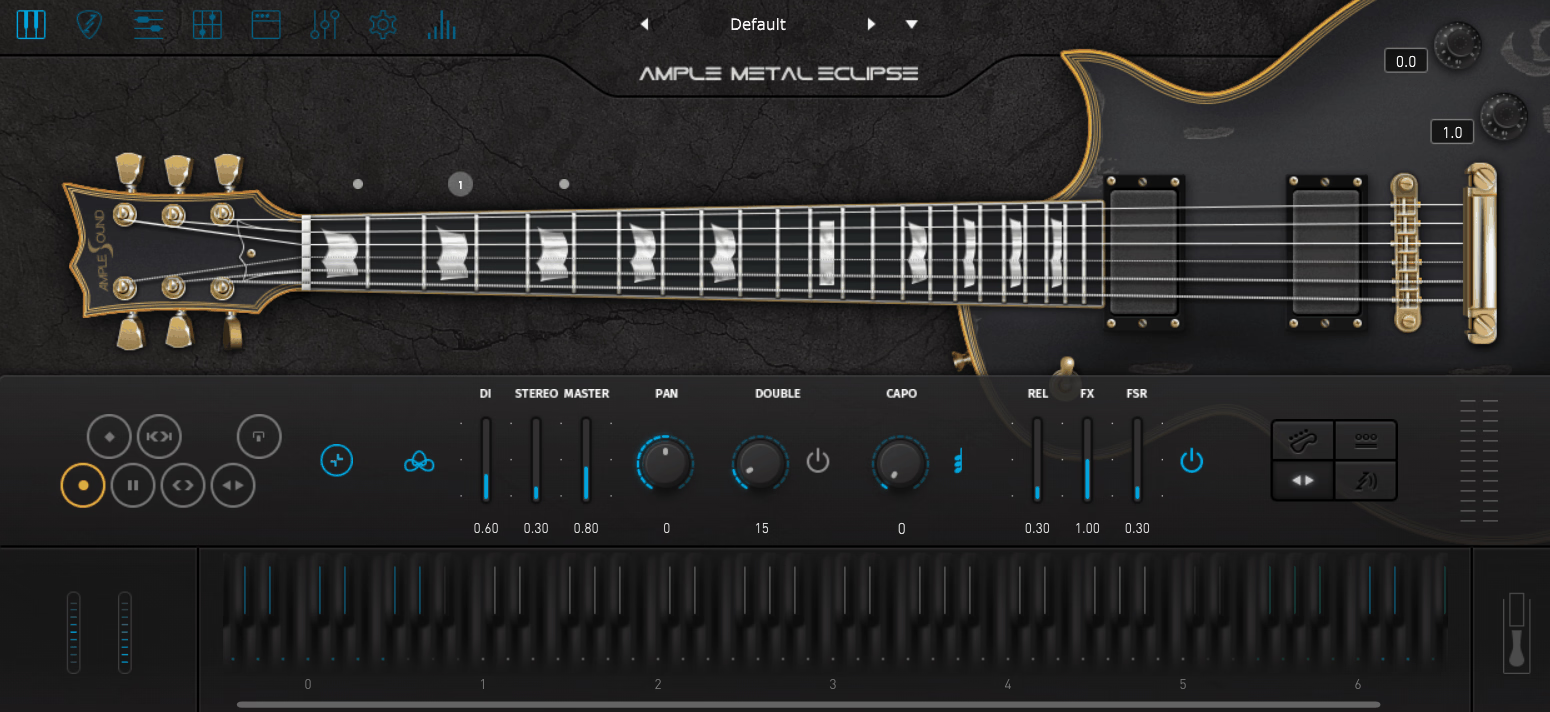
Ample Metal Eclipse solves a problem that comes up constantly with virtual guitar: a piano roll lets you write something that a real guitarist could not physically play.
The library is based on the bridge pickup of an ESP Eclipse I and is aimed at metal, metalcore, progressive metal and djent. It supports drop tuning down to C1, so you can cover the low register without relying on heavy pitch manipulation.
- Ten Articulations
There are ten main articulations across a 4.6 GB sample set, including sustain, palm mute, natural harmonic, hammer-on and pull-off, legato slide, slide in and out, pop, pinch harmonic and tap.
You also get a Polyphonic Legato and Slide Smoother, along with authentic left-hand performance noises. Those details matter because the little physical sounds are often what make a sampled guitar stop feeling like a clean MIDI sequence.
- String Visualization System
The most interesting feature here is Riffer 4.
It shows the strings inside the piano roll, prevents impossible polyphony on a single string, and assigns fingering intelligently. You can write the riff while the system takes the physical limitations of a real guitar into account.
That solves one of the biggest problems with MIDI guitar: being technically correct is not the same thing as being physically playable.
- Riffer 4 Dual Views
Riffer 4 also lets you switch between piano roll and guitar tab.
Tab makes some fingering decisions much easier to see, so you can move between the two views depending on what you are trying to fix instead of doing everything from the piano roll.
- Strum Note System
The Strum Note system treats the notes inside a chord as one gesture. You can edit strum timing, velocity movement and legato behavior together.
That is closer to how a guitarist actually plays. A chord is one physical movement, not six unrelated MIDI notes, and the editing system reflects that.
- Amp And FX Rig
The amp section includes seven heads, including Metal Double, Metal Treble, Lead 800 and Jazz 120, with eight cabinets and eight microphones per cabinet.
You also get 8-band EQ, compression, delay and convolution reverb, while Tab Reader 4 can import Guitar Pro files from GP3 through GP8 with fingering and articulations preserved.
3. Softube Amp Room Metal Suite
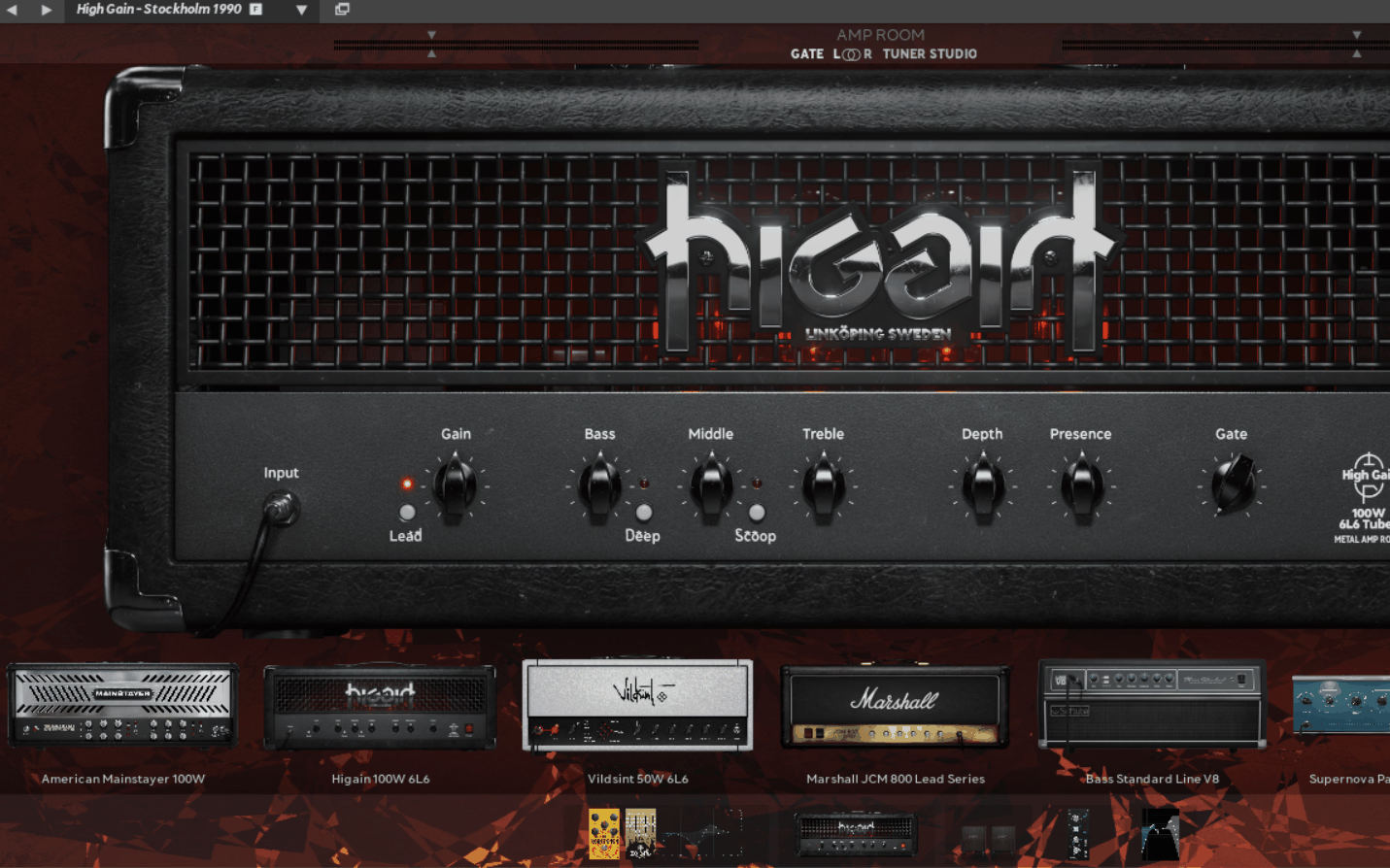
The main advantage of Amp Room Metal Suite is not one magical amp model. It is the fact that you can keep multiple high-gain options in one environment.
You may want four very different rhythm tones in a session, but loading four separate plugins, matching their levels and rebuilding pedal and cab chains gets old quickly. That is a workflow problem, and the suite deals with it directly.
- Four Amp Models
Vildsint 50W 6L6 is the modern metal option, with three channels, two built-in boosts and enough low-end weight for downtuned guitars. Higain 100W 6L6 has more mid punch and stays articulate when the gain goes up.
American Mainstayer 100W gives you a crunch channel and a higher-gain option, while the Marshall JCM800 Lead Series lets you move between tighter overdrive and looser vintage distortion depending on the preamp and master settings.
You can cover very different guitar parts without changing the entire setup.
- Metal Voiced Cabinets
The cab section includes American Oversized 4×12, MUG 4×12, German Viper 4×12, Higain Vintage 4×12, Marshall 8412 4×12 and a British Closed 2×12, all with movable microphones.
The 2×12 is more useful than it may look. You can use it for a thinner, more focused rhythm layer when a second 4×12 would simply add more of the same low-mid information.
- Ten Pedals
There are ten pedals, including Kleen 22 Clean Boost, Tube Overdrive, EQnäs, Rökstenen, ODR, Integrated Preamplifier, Wild Boar, Trollegater, Doom Chvrch and Kraft.
I would spend most of my time with the boosts and overdrives because that is where the practical work happens. You can tighten the guitar before it hits the amp, then use the more extreme distortion pedals when you want to create part of the aggression before the amp stage.
- Suite And Studio Modes
Suite Mode gives you curated combinations when you want to get moving. Studio Mode opens the deeper controls once you know what needs to change.
That is a sensible way to handle a large system. You can start with a complete setup and then work backward through it instead of building every chain from an empty rack.
- Seven Mic Options
The microphone options and movable positions let you move between a dark, close-miked rhythm tone and something more open.
You also get a custom IR loader and eight IR Producer Packs, which matters when you already have cabinets you like and want to keep them part of the same workflow.
4. Bogren Digital Krimh Drums
Programmed metal drums usually give themselves away in the same two places: repeated snare hits and machine-gunned double kicks.
That is why I care more about how a drum library handles repetition than about how impressive one isolated sample sounds. A great snare still sounds fake if the same hit fires ten times in a row.
That is the problem Bogren Digital Krimh Drums is designed around. The kit was played by Kerim “Krimh” Lechner of Septicflesh and recorded by Jens Bogren at Fascination Street Studios. The sounds are also mixed inside the instrument, so you are not starting with a large collection of raw samples that still need to be turned into a usable kit.
- The Recorded Kit
The two Tama Star 22 x 18 kicks give you genuine alternation instead of one sample repeating. You also get plastic, felt and old-head beater variations, which gives you another way to change the attack without changing the whole drum.
The snares are a Tama Kenny Aronoff Signature 14 x 6.5 and a Pearl UltraCast 14 x 6.5, with main hits, off-center hits, flams, no-wire hits and sidestick available.
Five Tama Star toms range from 10 x 8 to 18 x 16, with clear and coated head samples.
- Twelve Meinl Cymbals
The twelve Meinl cymbals cover two chinas, two hi-hats, a 20-inch MB8 Heavy Ride, and crashes from 17 through 20 inches.
I like the different crash sizes because they give you some separation when you stack accents. A 17-inch crash and a 20-inch crash do not occupy the same space, so you can build a denser part without turning every accent into the same wash.
- Bogren Presets And Grooves
There are 13 presets made by Jens Bogren, which is useful because you are hearing an actual mix decision rather than a neutral sample set waiting for you to solve.
You also get more than 100 MIDI grooves and fills played by Krimh. I would use those as starting points, especially for fills and transitions, because the phrasing is convincing enough to give you a real performance to work from.
- Trigger Samples And One-Shots
The plugin includes trigger samples for kick and snare, and you can drag your own one-shots into it when you need another layer.
The shells are also available as TCI and WAV samples with round robins, velocity layers and multiple mic options intact. That gives you a way to use the same recorded material outside the main instrument when your workflow calls for it.
5. XLN Audio Addictive Drums 2 Progressive Metal
This one asks more from the toms, ghost notes and dynamic changes than a straight blast-heavy arrangement does. The drums have to carry movement without losing the weight that keeps the production feeling like metal.
XLN built the Progressive Metal ADpak around Waltteri Väyrynen of Opeth, using his own Pearl Reference Pure kit. It was released in April 2026 as the first new ADpak of the year.
- Dual 22 Inch Kicks
The two 22-inch kicks are important because Addictive Drums 2 has an Alternating kick function that changes between the drums in rapid patterns without requiring you to rewrite the MIDI.
That takes care of one of the easiest ways to expose programmed double-kick work. You can keep the part exactly as written and let the instrument introduce the variation.
- Two Signature Snares
The two 14 x 6.5 snares are steel and brass. The steel gives you more attack and clearer ghost-note definition, while the brass is fuller and warmer.
I would rather have two genuinely different snares like this than a dozen options that all land in roughly the same range. You get a clear choice between articulation and weight.
- Melodic Tom Setup
There are four toms and a gong drum, and the kit is voiced around dynamic, melodic playing rather than only impact.
The gong drum is especially useful when you want a progressive fill to sound composed. You can use it as a musical accent instead of simply adding another tom hit to make the fill longer.
- 48 Producer Presets
You get 48 producer presets from people including David Castillo, Jaime Gomez Arellano, Thomas “Plec” Johansson, Lawrence Mackrory and Waltteri Väyrynen.
I like having these available because you can judge the kit in the context of an actual production before you spend time building your own mixer settings.
6. Impact Soundworks Shreddage 3 Jupiter
Virtual guitars tend to fail for one of two reasons. The sample coverage is too shallow, or the library gives you so many articulations that programming the instrument becomes its own job.
Impact Soundworks Shreddage 3 Jupiter keeps the focus on a seven-string guitar tuned to drop A, recorded entirely as DI so you can shape the final amp and cabinet sound yourself.
- Complete Articulation Set
There are more than 9,000 24-bit samples covering every string from the open note to the highest fret.
That coverage matters because you are not constantly asking a neighboring sample to cover a note that was never actually recorded. You hear the difference most clearly in low-tuned rhythm parts, where consistency between notes is more important than having a giant list of presets.
The articulation set covers sustains, power chords, palm mutes, staccatos, harmonics, pinch harmonics, tapping, tremolo, slides, vibrato, hammer-ons, pull-offs, rakes, chokes and FX noises.
- TACT Mapping
The TACT system lets you decide how the articulations are mapped and triggered.
That sounds like a small workflow feature, but it matters once you spend a lot of time writing MIDI guitar. You can build the keyswitch layout around the way you actually think rather than adapting your writing habits to the library.
- Console FX Rack
There is a built-in console with 30 effects modules, including EQs, compressors, amp stages, distortion, modulation, spatial effects and reverbs.
You can save those chains between projects and across the Shreddage range. When you are sketching a part, that lets you hear it in a believable context before you decide whether you need a more complicated external chain.
- Over 30 Cabinet IRs
The cab section includes more than 30 custom IRs with dynamic, condenser and ribbon microphone options.
That gives you enough cabinet variety to get through a lot of metal production work without immediately reaching for a separate IR library.
- 45 Tone Snapshots
There are 45 tone snapshots covering high-gain rhythm, lead and cleaner sounds.
I would use these mostly while writing. The important thing is not whether you keep the preset. It is whether it gets the guitar into the right context quickly enough for you to judge the part.
7. Audiority Klirrton Grindstein
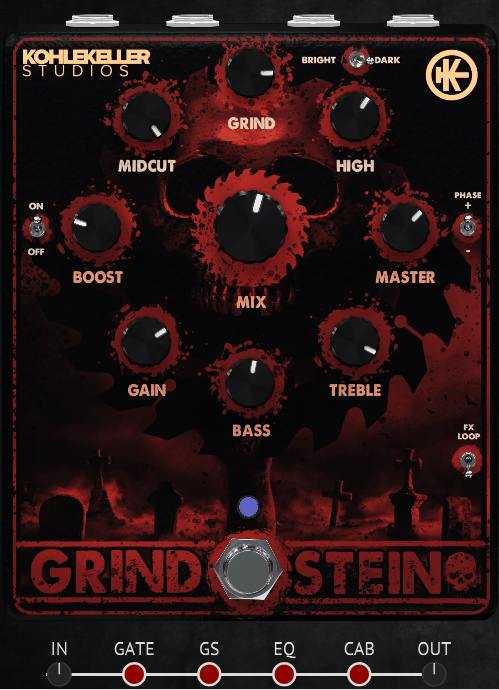
Some metal tools earn their place by covering a lot of ground. Audiority Klirrton Grindstein earns it by being much more specific.
It is an officially modeled version of the Klirrton Grindstein preamp, developed with producer Kristian Kohle of Kohlekeller Studio. The range goes from the Swedish HM-2 buzzsaw into a more 90s Florida-style transistor distortion, with tighter and fatter low end than the original hardware approach would suggest.
I like that the plugin knows what it is supposed to sound like. You are not opening it because you need another general distortion box. You are opening it because you want this particular kind of aggression.
- Schnauze Noise Gate
The Schnauze noise gate is part of the reason the sound stays usable.
With this much high-mid energy and gain, the noise between palm-muted notes becomes part of the guitar tone whether you want it to or not. A badly chosen gate can make those gaps feel loose, so having the gate integrated with the distortion circuit makes practical sense.
- Five Band Fleisch EQ
The five-band Fleisch EQ is built around the frequency areas that matter for this style, so you are not spending ten minutes searching for the right midrange point before you can actually judge the tone.
That makes it easier to control the low-end thickness, midrange scoop and aggressive top edge without turning the EQ into another separate design exercise.
- Cabs And FX Loop
There are seven speaker combinations selected by Kris Kohle, so you can get to a finished sound without immediately loading a third-party IR.
The FX loop can replace the Bottomshaker section with your own amp sim. You can keep the Chainsaw character and combine it with an amp you already trust, which makes the plugin useful beyond one narrow setup.
8. Solemn Tones Odin III
An eight-string guitar solves a range problem and creates a tracking problem. You get the notes you need, but keeping the lowest register convincing is difficult, and most producers are not going to book an entire session for a few riffs that sit below the practical range of a six- or seven-string.
Solemn Tones Odin III takes a more direct route. It was sampled from an ESP LTD SC-608 eight-string with an Evertune bridge, and that stability matters when you are asking the library to stay consistent across the lowest strings.
- Over 53,000 Samples
There are more than 53,000 samples, with every fret on all eight strings captured.
That means the library is not relying on a neighboring note being pitched to cover a missing range. On an eight-string, that level of coverage is especially useful because the low register exposes inconsistencies quickly.
- 31 Articulations
The articulation set includes down picking, up picking, alternate picking, four types of palm mute, slides, hammer-ons, pull-offs, bends, scrapes, pinch harmonics, natural harmonics, finger plucks and slaps.
The four palm-mute types matter to me because palm muting is such a large part of modern rhythm guitar. One generic mute sound does not behave convincingly across every riff.
- Full Drop Tuning Range
The instrument was sampled down to drop F and can be pitched through tunings including E standard, drop D, drop C, drop B, drop A and drop G.
The baritone scale helps keep the low notes controlled rather than turning them into indistinct low-frequency information. You notice that most when the guitar is sharing space with a dense kick and bass arrangement.
- Four Included Tones
You get a clean DI, plus amped rhythm, amped lead and amped clean tones.
I would use the DI when you already know the chain you want. The amped options are useful while writing because you can hear whether the part actually works in context without stopping to design an amp sound first.
9. GGD One Kit Wonder: Metal
GGD One Kit Wonder: Metal takes the opposite approach to many modern drum libraries.
Most large drum instruments hand you a mixer and expect you to build a sound before you can decide whether the part works. Here, those mixing decisions are largely handled for you, so you can hear a finished metal kit immediately.
The voicing targets big early-to-mid-2000s metal productions, but there is enough power to use it for newer material too. More importantly, it is flexible enough to cover a mid-tempo backbeat and a fast section without forcing you into one narrow style.
- Tama Starclassic Bubinga Shells
The shells are Tama Starclassic Bubinga, with a 22 x 16 kick and four toms ranging from 10 x 9 to 16 x 16.
Bubinga gives the toms a focused attack, which helps when distorted guitars already occupy a large part of the midrange. You get enough definition to hear the toms without automatically boosting their top end.
- Vinnie Paul Signature Snare
The Pearl Vinnie Paul Signature 14 x 8 snare is the centerpiece.
It is a deep drum, but it still cuts cleanly. You can get a strong attack without immediately reaching for aggressive high-end EQ to make it speak.
- Paiste Cymbal Set
The cymbal setup includes 14-inch Twenty Custom Metal hi-hats, 17-, 18- and 19-inch Formula 602 Modern Essentials crashes, a 22-inch Twenty Custom Metal ride, an 18-inch Twenty Custom Thin China, and 8- and 10-inch 2002 splashes.
That is enough variety for a full metal part without giving you a huge pile of cymbals that all serve the same function.
- Phase-Coherent Samples
The samples are phase coherent, which makes layering much easier, and the kit is tuned to pitch.
The tuning point becomes useful as soon as the toms are part of a dense arrangement. You do not have to spend another stage of the mix compensating for a drum that sits awkwardly against the key of the song.
- Built-In Groove Player
The built-in groove player lets you audition patterns inside the instrument.
I use features like this to test an arrangement before programming every note. You can throw a blast beat under the riff, hear whether the guitars still work, and only then decide how much time you want to spend building the final drum performance.
10. Modern Music Solutions Gamma Vocal Suite
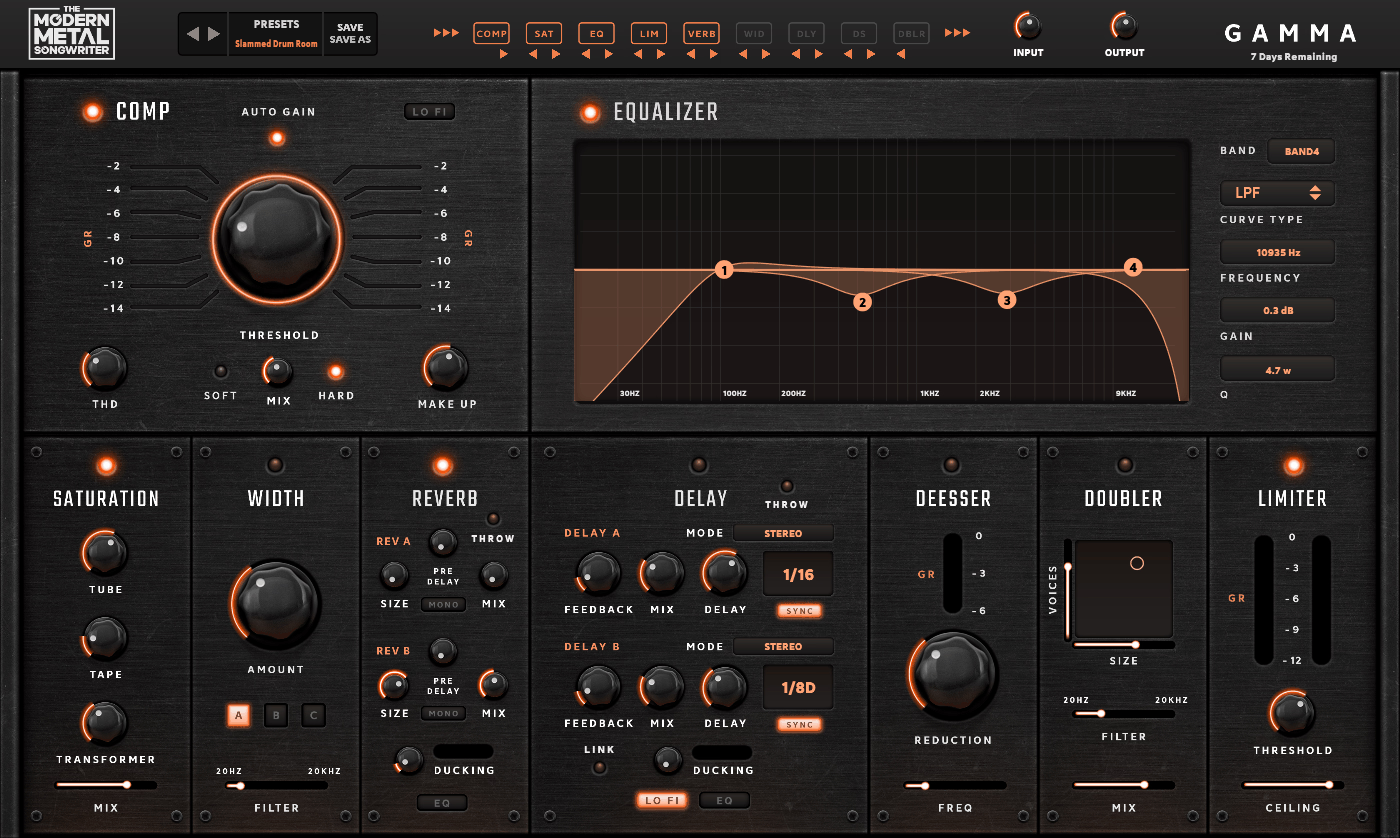
Metal vocals are difficult partly because there is no single metal vocal sound. A clean line, sustained scream and gang-vocal stack create different problems, and the processing chain that works for one can be wrong for the next.
Gamma Vocal Suite is a plugin with nine modules, where main advantage is that you can change the signal-chain order depending on the source rather than rebuilding the whole setup from separate plugins.
- Two Compressor Circuits
There are two compressor circuits, one aimed at screamed and shouted vocals and another for clean singing.
That distinction matters because those performances have very different dynamic behavior. The wrong compressor can flatten a scream into a static block or leave a clean vocal with peaks that are too hard to control.
- Hybrid Equalizer
The EQ combines analog-modeled and digital curves.
You can use broader analog shapes for overall tone and switch to more precise digital curves when one problem frequency needs attention. That makes the same EQ useful for both broad shaping and corrective work.
- Three Saturation Types
There are tube, tape and transformer saturation modes.
I use saturation here less as an audible effect and more as a way of helping the vocal remain present against distorted guitars. Turning the vocal up is not always the answer. Sometimes you only make the unpleasant part louder.
A controlled amount of saturation can add density and presence without asking the vocal to compete entirely through level.
- Doubler And Width
The doubler and three width modes are especially useful for harmonies and gang vocals.
You can build width and size inside the same chain instead of adding several more processors simply to spread the stack around the stereo field.
11. Ugritone KVLT Drums II
Ugritone KVLT Drums II covers underground metal sounds from the 80s, 90s and 2000s, including Norwegian black metal, Swedish buzzsaw sludge, Tampa death metal, Bay Area thrash and mid-90s Belgian hardcore.
The library was engineered and performed by Ron D. Rock at New Soundstakk Studios in Windsor, Ontario. It includes 12 snares, 2 kicks, 3 full tom sets and 12 cymbals, so you have enough variation to match the drum character to the style rather than forcing one snare into every production.
The snares include the Mapex Black Panther 14 x 6.5, Ludwig Black Beauty 14 x 6.5 and Mapex Warbird 12 x 5.5, with different characters ranging from tight and dry to loose and ringing.
That variety is more useful to me than a giant sample count where most of the options sound interchangeable. You can choose a snare for the style instead of EQing one drum until it vaguely resembles the right one.
- Multi-Mic Capture
The drums were recorded with separate close, FX, overhead and room channels. SM57s cover the snare and shells, U47 FETs handle the cymbals and kick, and the overheads use a stereo pair of KM184s.
That gives you control over the relationship between direct attack and room weight. You can keep the kit dry and aggressive, or open it up when the arrangement needs more space.
- Panel Based Interface
The interface is organized around individual drum panels, each with its own mix, effects and routing.
That matters because a flexible library can become difficult to use when everything is hidden behind one screen. Here, you can keep only the pieces you are working on visible and avoid turning the session into a hunt through menus.
- One-Shots And MIDI
You get more than 100 one-shot samples and can load your own WAV, AIFF or FLAC files when you need another layer or more consistency.
The included Black Metal Anthology MIDI groove library is useful as a starting point too. Blast beats are easy to describe and much harder to program convincingly, so having a believable performance to edit can save a lot of time.

Hey, I’m Vil, I started this site to help you find the best audio plugins covering various categories including synths, pianos, strings, and effect tools of all sorts as well. I pick these plugins based on various criteria so it best matches the actual topic.