When you purchase through the links on my site, you support the site at no extra cost to you. Here is how it works.
Neural DSP has a broad range of guitar, bass, and vocal plugins, covering everything from clean and edge-of-breakup guitar to modern metal, bass processing, vocal production, and experimental sounds.
Each plugin approaches its job differently, so the useful distinction is not simply which one is better, but what kind of sound or workflow each plugin is designed to support. John Mayer X focuses on expressive clean and lightly driven guitar, Mantra brings several stages of vocal processing into one workflow, and Petrucci X covers a wider range of conventional guitar sounds.
I’ve included nine plugins that cover different recording and production needs, with a focus on what each one does, how you can use it in practice, and where its more specialized approach may or may not fit your workflow.
1. Archetype: John Mayer X
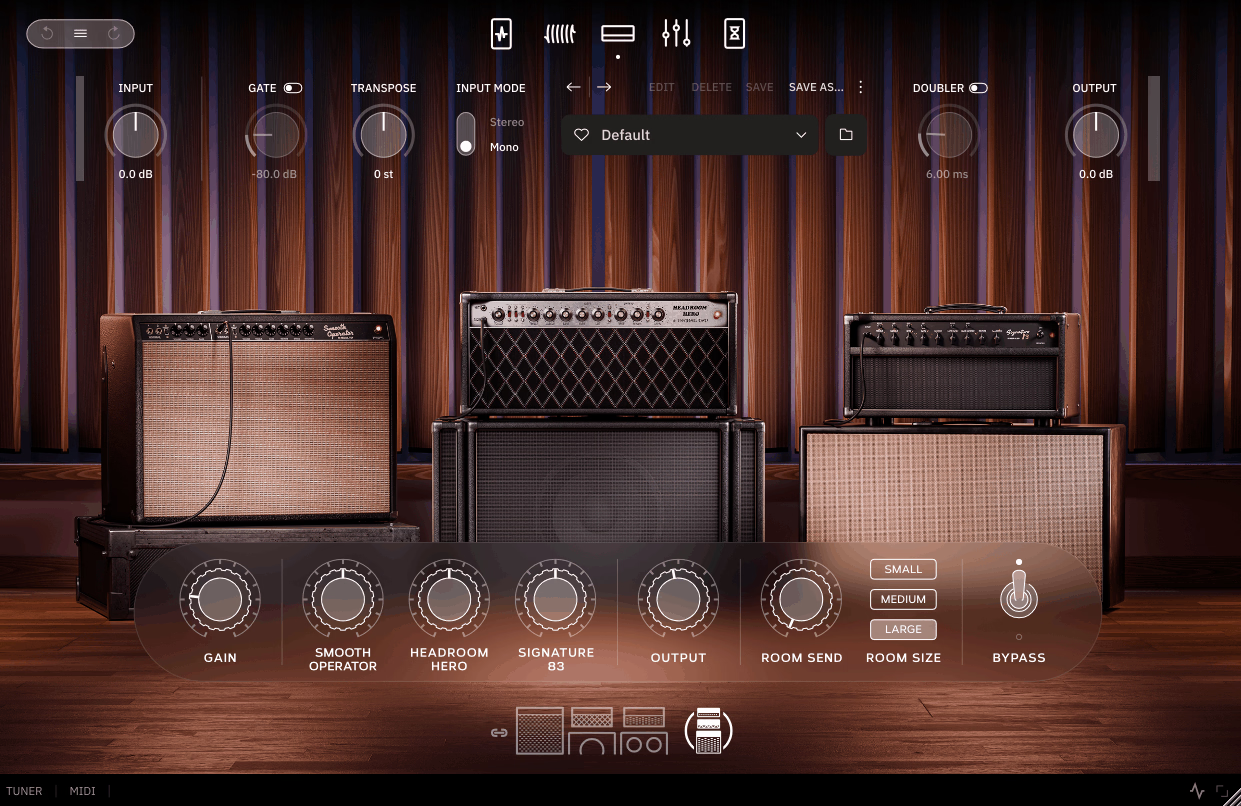
Archetype: John Mayer X is the plugin I would choose when touch, dynamics, clean tone, and edge-of-breakup response matter more than having the widest range of gain sounds. Neural DSP models three of John Mayer’s personal amplifiers: a 1964 Fender Vibroverb, Dumble Steel String Singer #002, and Two-Rock prototype Signature #83.
The important part is not simply owning three amps. The plugin recreates Mayer’s approach of running the three together in parallel, including the associated routing, cabinets, and microphones.
- Three amplifiers, plus the blend
You get the three modeled amplifiers individually, which is useful when you want to build your own chain, while the Three-in-One configuration gives you the character of the blended rig without manually balancing three separate amp chains.
I would start there rather than trying to recreate Mayer’s signal path from scratch, particularly when you want to get to a convincing wide clean sound quickly.
- A complete Mayer-style front end
The plugin is built around Mayer’s modeled signal chain and effects, with the amp, cabinet, microphone, routing, and post-processing elements designed to recreate his studio setup.
That makes this useful when you want the whole Mayer-style rig, rather than simply another clean amplifier with a few effects added around it.
- Where it works best
I would choose this for clean, blues, neo-soul, edge-of-breakup, and expressive lead parts, especially when the way the guitar responds to your picking matters as much as the amount of gain available.
It is less compelling as a general-purpose purchase because, although you can get useful driven tones from it, I would not buy it expecting one plugin to cover everything from pristine cleans to modern metal.
2. Mantra
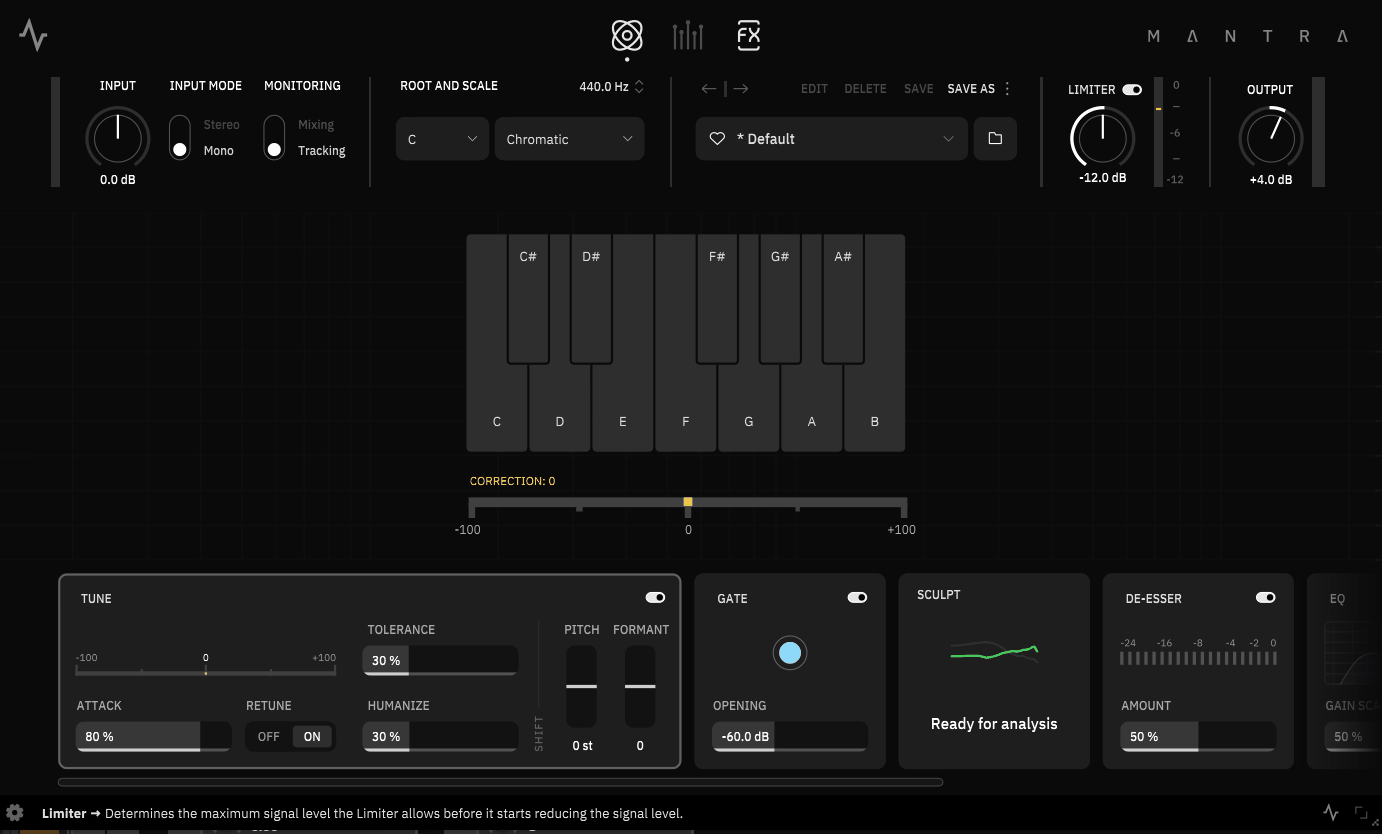
Moving onto next one, Mantra makes the most sense when you want to get a usable vocal sound quickly without building a chain from several separate plugins, particularly when you are producing your own vocals and want to move from a raw recording to something mix-ready without a long setup.
Neural DSP combines pitch correction, gate, de-essing, compression, saturation, harmonies, EQ, modulation, and spatial effects in one workflow, which gives you a practical starting point without forcing you to assemble the entire chain yourself.
- Sculpt
Sculpt analyzes the voice and microphone and automatically shapes the tonal balance, while Mixing Mode also adds dynamic spectral processing that can help you get a difficult vocal under control before you start making manual EQ decisions.
I would use it as a starting point rather than a one-button final mix, because you still need to decide how much presence, compression, saturation, and ambience actually suit the song.
- A full vocal chain in one place
Mantra includes pitch correction, gate, de-esser, EQ, compression, saturation, harmonies, delay, reverb, modulation, and a doubler, while the plugin can generate up to eight harmony voices with pitch and timing variation.
You can sketch a vocal arrangement quickly without opening several plugins, which is especially useful when you are working through ideas and do not want technical setup to slow you down.
- Tracking and Mixing modes
Tracking Mode is designed for low-latency monitoring while recording, while Mixing Mode provides higher-resolution processing for final production, and the 1.1 update also added standalone operation.
That makes the workflow useful from the moment you record the vocal through to the later stages of mixing, rather than limiting the plugin to one part of the process.
- Beyond vocals
Mantra can also be used on synths, drums, guitars, and other instruments, which makes it useful for broader production work when you want the same fast, integrated workflow on other sources.
The limitation is that dedicated processors can still give experienced mixers more control, so I see the main advantage here as speed and workflow rather than replacing every specialist plugin in a serious mixer’s toolkit.
3. Archetype: Petrucci X
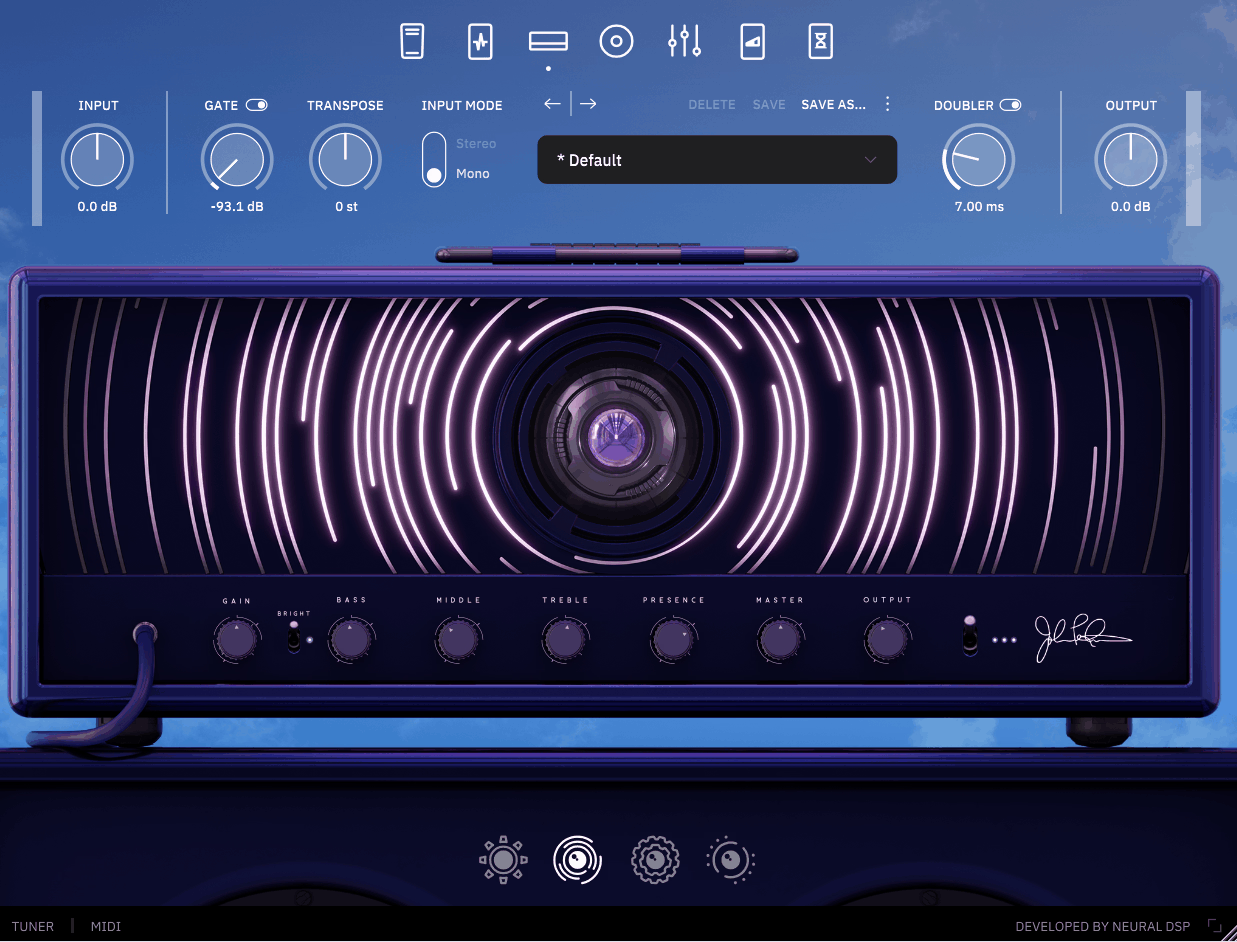
I think this is the plugin I would point to when someone says, “I only want to buy one guitar plugin,” because it can cover a wide range of guitar parts without forcing you to keep switching rigs.
The reason is the range of jobs the amp section can handle without feeling like a collection of unrelated sounds, which makes it particularly useful when you are producing a full song instead of chasing one isolated guitar tone.
In Petrucci X you get four amp sections: Piezo, Clean, Rhythm, and Lead, covering acoustic-style resonance, clean tones, high-gain rhythm, and sustained lead sounds.
- Four very different amp roles
The Piezo amp is designed around piezo pickups and acoustic-body resonance, while the other three sections cover conventional electric-guitar tones, so you can move between different parts of an arrangement without completely changing your setup.
The Rhythm section is particularly useful because its Tight, Bite, and Bass controls interact with the amp’s gain structure, rather than behaving like simple EQ controls.
That lets you change the feel of the high-gain sound before reaching for EQ, which is often a better way to solve a problem when the amp simply does not respond the way you want.
- Plenty of front-end flexibility
You get compressor, wah, overdrive, phaser/vibe, chorus, and flanger, followed by the cab section and post effects, while the cabinet system includes six movable microphones, room controls, and third-party IR loading.
I like this setup for songwriting and production because you can move between guitar parts without rebuilding the rig each time, which keeps the creative process moving when the arrangement starts changing.
4. Fortin Nameless Suite X
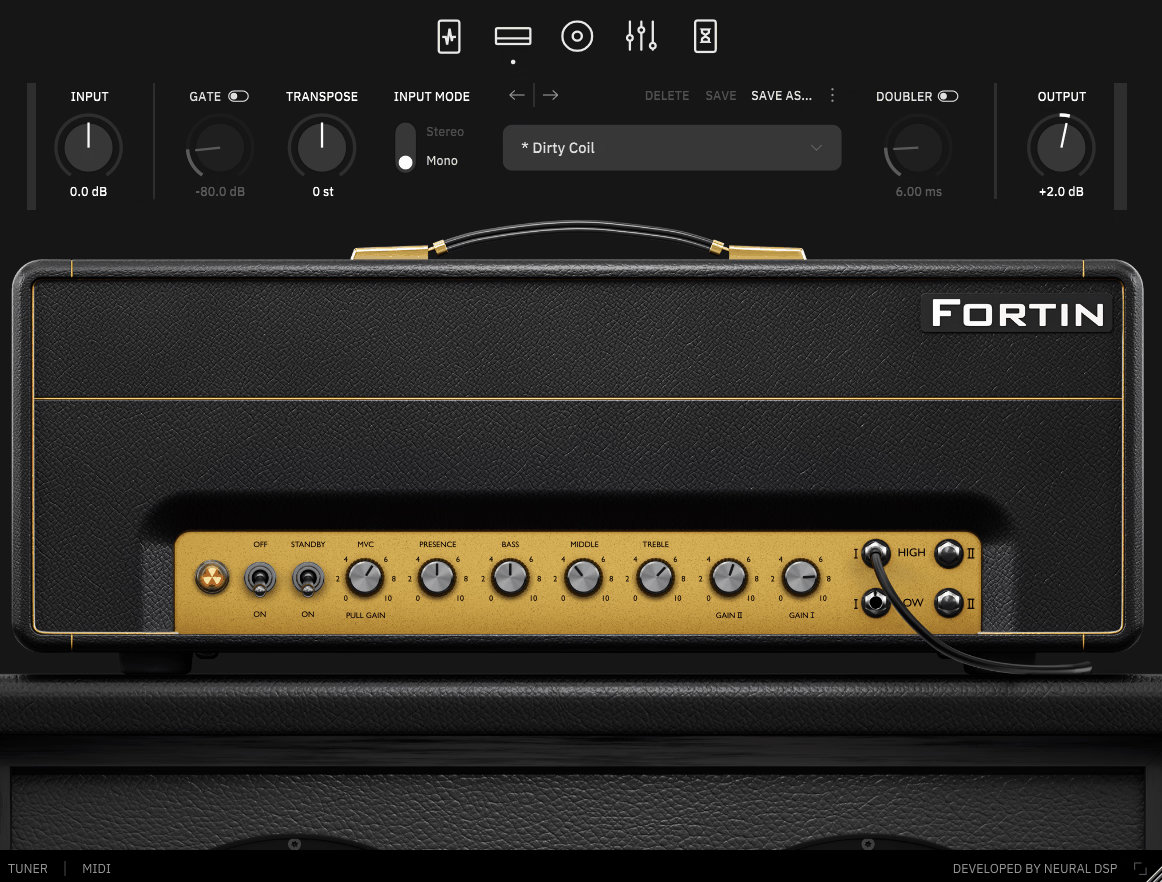
This one has one of the clearest purposes here: aggressive, tight, articulate high-gain guitar, particularly when your priority is rhythm guitar that stays defined in a dense modern mix.
Fortin Nameless Suite X is built around a single-channel 50-watt all-tube amplifier designed for extreme-metal playing, with Fortin’s Zuul gate, Hexdrive overdrive, and Grind boost forming the front end.
That focus is exactly what makes it useful when you already know you want this type of response rather than a general guitar rig with several unrelated amp sounds.
- The Fortin front end
Zuul handles gating, Hexdrive adds overdrive character, and Grind adds gain, clarity, and articulation, giving you the tools to shape the signal before it reaches the amp.
For heavy guitar, front-end processing can change the amp response dramatically, so having those controls integrated lets you shape the attack and low-end behavior before you start adjusting the cabinet.
- One amp with one job
The single-channel amp is focused on tight high gain, with no clean channel competing for space because the plugin is designed around one core sound.
That makes the decision simple because you are buying it for its high-gain character, rather than paying for features you may never use.
- Cabs, EQ, and practical extras
The X version includes hundreds of Neural DSP IRs, six movable microphones, a 9-band graphic EQ with high- and low-pass filters, delay, reverb, Transpose, Doubler, tuner, and metronome tools.
The EQ becomes especially useful once you are layering several distorted guitar parts, because a tone that sounds huge on its own can easily become difficult to fit around bass and drums.
5. Parallax X
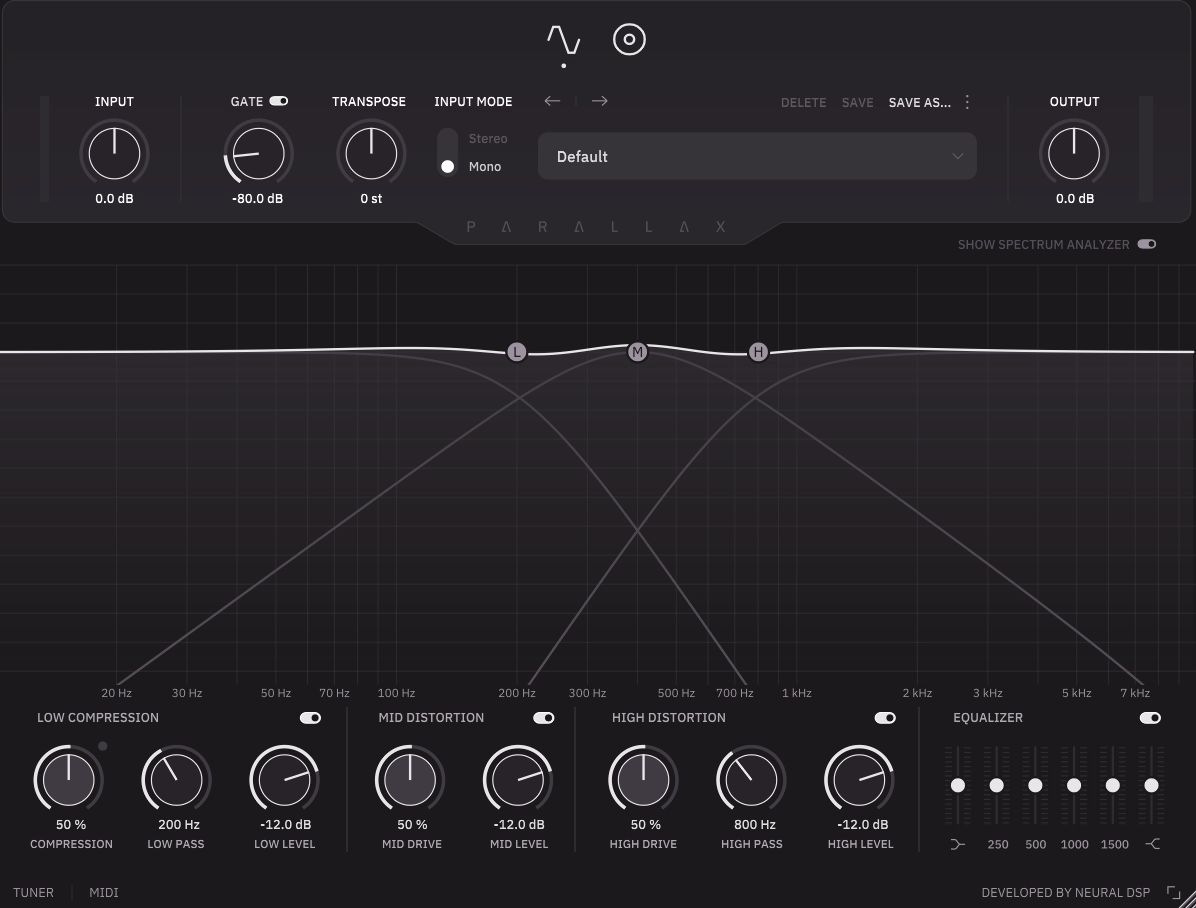
Parallax X solves a specific bass problem: how to get aggressive distortion without destroying the low end, which is particularly important when you are working with heavily distorted or downtuned bass in a dense production.
Instead of processing the entire signal the same way, Parallax separates the low, mid, and high ranges so they can be processed independently, giving you much more control over where the aggression comes from.
- Keep the bottom clean
The low band gets its own compression, which lets you control the fundamental without sending the same low frequencies into the distortion stages.
This is especially useful with downtuned, heavily distorted bass, where full-band saturation can turn the bottom end into mud and make the instrument lose its role in the mix.
- Distort the mids and highs separately
Mid Distortion adds grit and articulation, while High Distortion adds fuzz and bite, so you can make the upper part of the bass aggressive while keeping the low end relatively solid.
That is the core reason I would choose Parallax for dense mixes, because you can get the character you want from the upper frequencies without sacrificing the fundamental that tells the listener where the bass sits.
- Cabsim only where it helps
The cabinet section affects the mid and high bands, not the low band, while six movable microphones provide additional speaker control and the plugin also includes a six-band graphic EQ and Transpose function.
The result is a plugin designed around how modern bass needs to sit in a mix rather than simply making the instrument sound impressive when you listen to it on its own.
6. Archetype: Rabea X
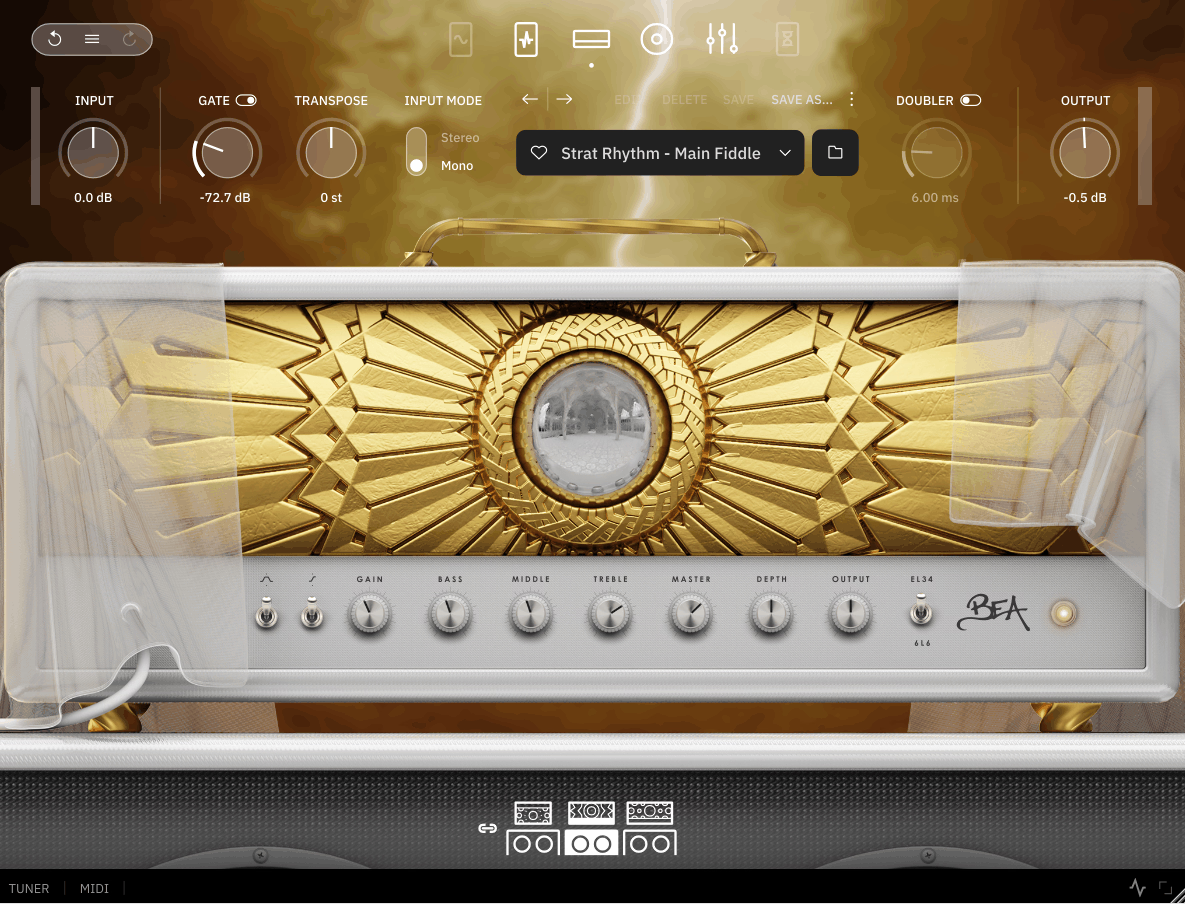
I’d pick this one when you want your guitar to do something a normal guitar plugin can’t, especially if you want synth sounds without reaching for a keyboard.
Instead of simply processing your guitar signal, Archetype: Rabea X lets you use the guitar itself to control a proper subtractive synth. Its Overlord section has dual oscillators, unison, a ladder-style filter, an arpeggiator, noise waveforms, and Glide.
The catch is that Overlord is a monosynth, so it works best when you play one note at a time. Neural DSP specifically warns that multiple notes can make the oscillators respond unpredictably, which means you’ll get better results by writing parts around its strengths rather than trying to play it like a polyphonic keyboard.
- Overlord
You get dual oscillators, unison, a ladder-style filter, arpeggiator, waveform displays, three noise options, and Glide, while the synth can also be placed before or after the other devices in the plugin for more control over how the guitar signal drives the sound.
For production, that makes it a practical sound-design tool because you can build playable synth parts directly from a guitar without treating the effect as a novelty.
- Freeze
The post-effects section includes a reverb with a Freeze function that can capture and sustain a chord, turning the guitar into a pad source that you can leave underneath another part.
I would recommend this for intros, transitions, ambient layers, and sustained textures when you want to add harmonic depth without bringing in another instrument.
- Still a guitar rig
You also get three amps, compressor, octave, fuzz, and overdrive effects, so you can still use it as a conventional guitar plugin when you are not working with the synth section.
7. Archetype: Misha Mansoor X
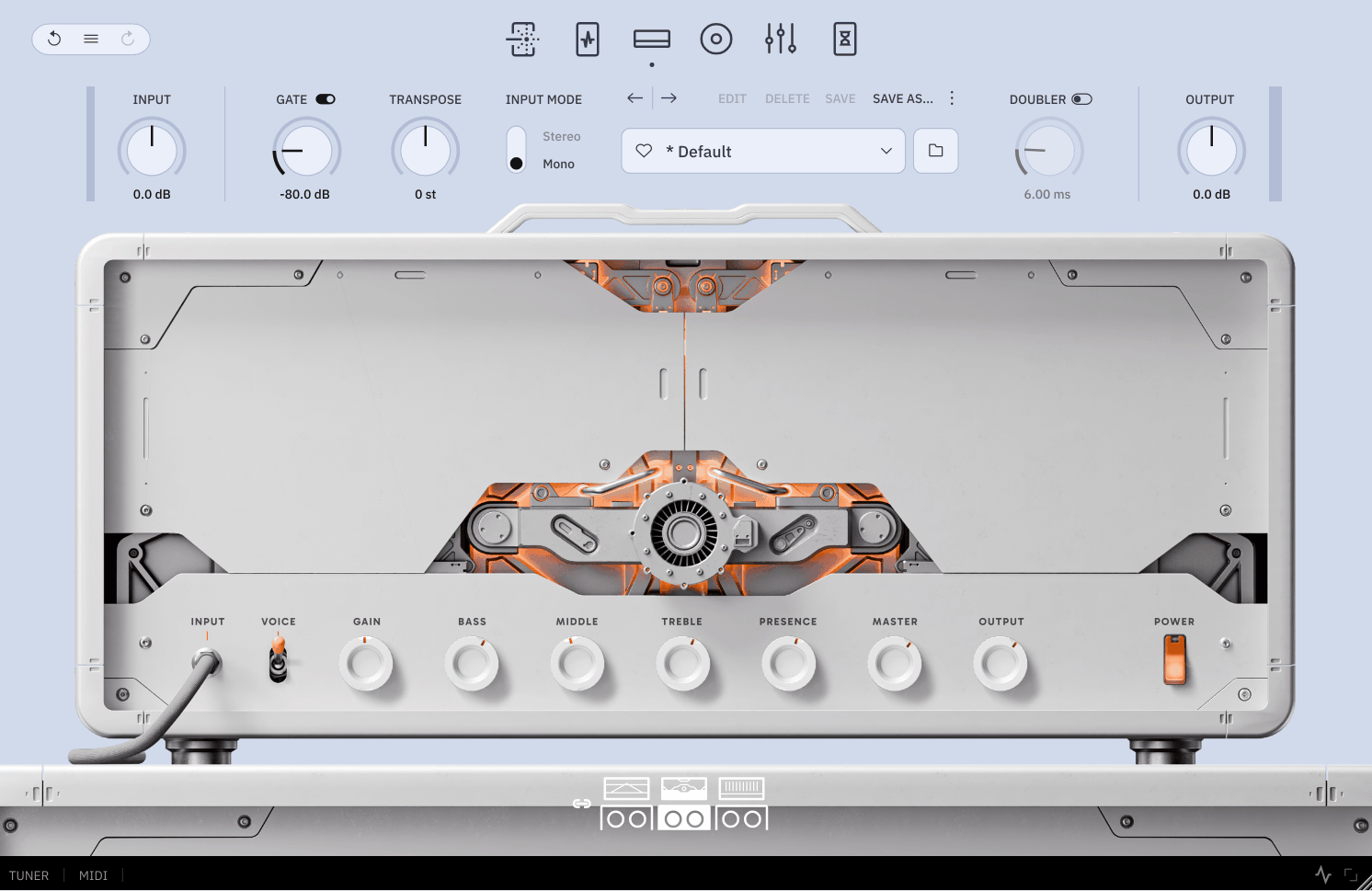
Some guitar plugins are mainly about finding the right amp sound, but this one is more interesting when you want to experiment with the signal after you’ve got the guitar feeling right.
You can start with a fairly conventional clean, rhythm, or lead setup and then push it in completely different directions. Archetype: Misha Mansoor X includes three amps, 378 cab IRs, and a collection of effects that range from familiar studio tools to much less predictable processors.
The fun part is that you don’t need an unusual guitar part to get unusual results. Laser can pitch-shift, ring-modulate, or add chorus-like movement, while Glitch chops and rearranges the guitar into stutters, textures, and rhythmic patterns.
So I’d see this less as a plugin for chasing one specific Misha tone and more as a way to make otherwise familiar guitar parts sound less familiar, whether that means adding a strange layer to a riff or completely changing what happens between sections.
- Laser
Laser combines ring modulation and pitch-shifting effects and can be controlled with an expression pedal or envelope follower, giving you a way to turn a conventional guitar line into something much more unusual.
I would use it for transitions, textures, intros, and lead effects rather than leaving it on every rhythm track, because those moments are where the extra movement is most useful.
- Precision Drive and Chaos
Precision Drive handles the familiar modern-metal tightening job, while Chaos adds a blendable, chainsaw-inspired distortion character, so you can move between disciplined rhythm tones and more deliberately aggressive effects within the same rig.
That gives you both controlled rhythm tones and deliberately strange textures, which is where this plugin becomes more interesting than a standard high-gain setup.
- A serious cab section
The cab system includes three cabinets, each with 126 IRs, for 378 IRs overall, plus seven movable virtual microphones and third-party IR loading, giving you plenty of options once the core amp sound is already working.
There are also 34 Misha presets plus 338 additional presets from artists, producers, and Neural DSP, but I would start with the amp and core tone before using the preset browser to solve a specific sound-design or mix problem.
8. Darkglass Ultimate
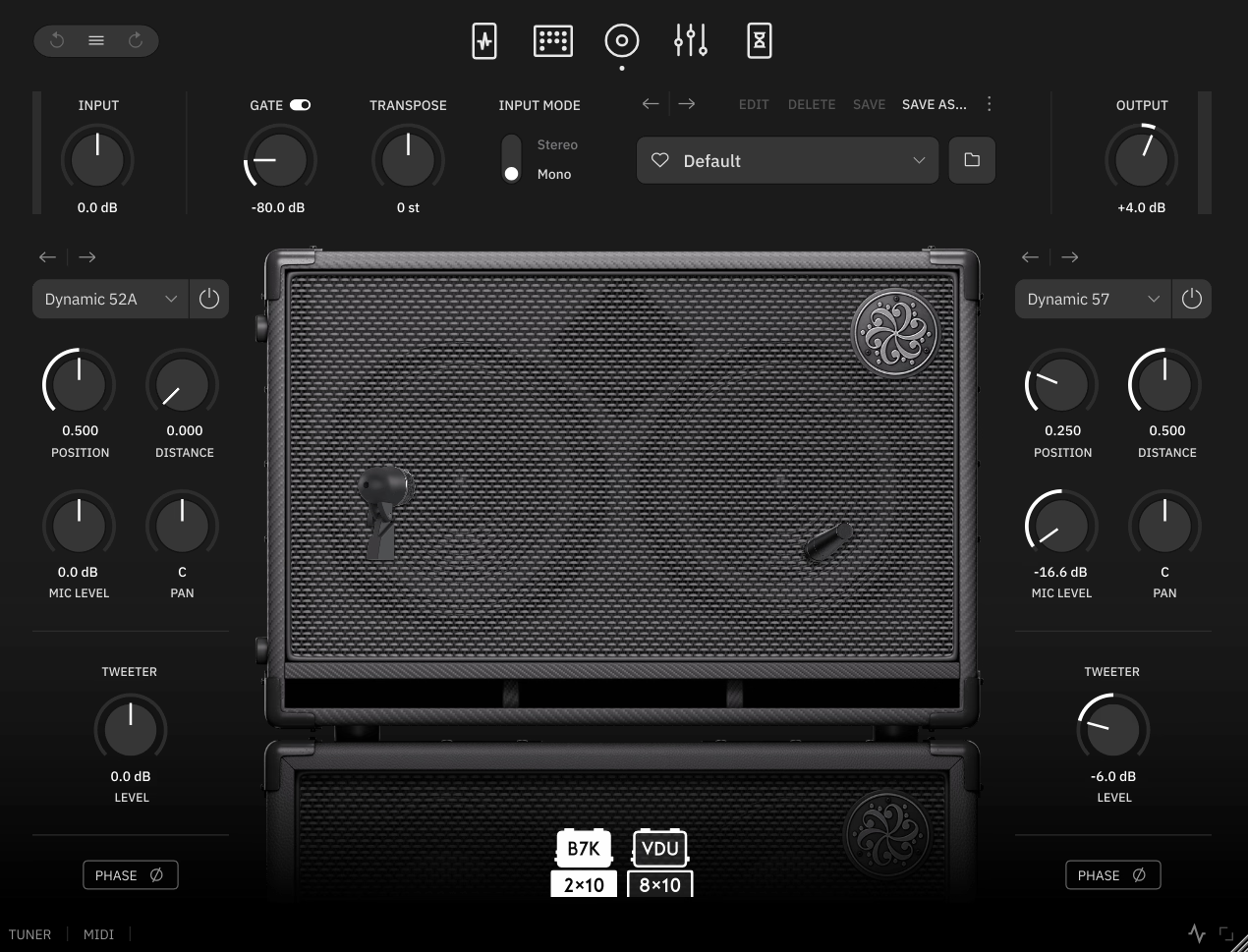
Darkglass Ultimate takes a different approach from Parallax X because it is aimed at giving you a complete bass rig rather than a specialist processing architecture, with preamps, cabinets, effects, EQ, and production tools in one plugin.
Parallax is built around parallel bass processing, while Darkglass Ultimate gives you a more conventional end-to-end chain built around the B7K Ultra and Vintage Ultra circuits.
That makes the choice fairly simple when you know whether you need specialist multiband processing or a complete bass workflow.
- Two very different preamps
The B7K Ultra is the obvious choice for aggressive modern bass, while the Vintage Ultra provides a warmer alternative, giving you two distinct directions without needing to change the plugin.
Having both means you can cover different bass characters in the same session while keeping the rest of the signal chain familiar.
- A complete signal chain
The plugin includes compressor, auto-wah, octaver, fuzz, chorus, and delay, along with the DG210C 2×10 and DG810ES 8×10 cabinets with microphone positioning, Sub Kick, and Bass Reflex options.
That gives you the main stages of a bass chain in one window, which is useful when you want to get from a DI track to a finished sound without building the rig piece by piece.
- Bass-focused finishing
The 9-band bass-focused EQ and filtering are useful once the main tone is right and you need to fit it around the rest of the mix, particularly when you need to manage the relationship between sub frequencies, low mids, and upper-mid attack.
- Parallax or Darkglass Ultimate?
Choose Parallax X when you specifically want separate low, mid, and high processing and want to keep the low end independent from the distorted upper bands.
Choose Darkglass Ultimate when you want an all-in-one bass workflow that takes you from the instrument to a finished tone with minimal setup.
Darkglass Ultimate also includes Transpose, tuner, metronome, and production-ready presets, which make it easier to use as the main bass environment for a session.
9. Archetype: Gojira X
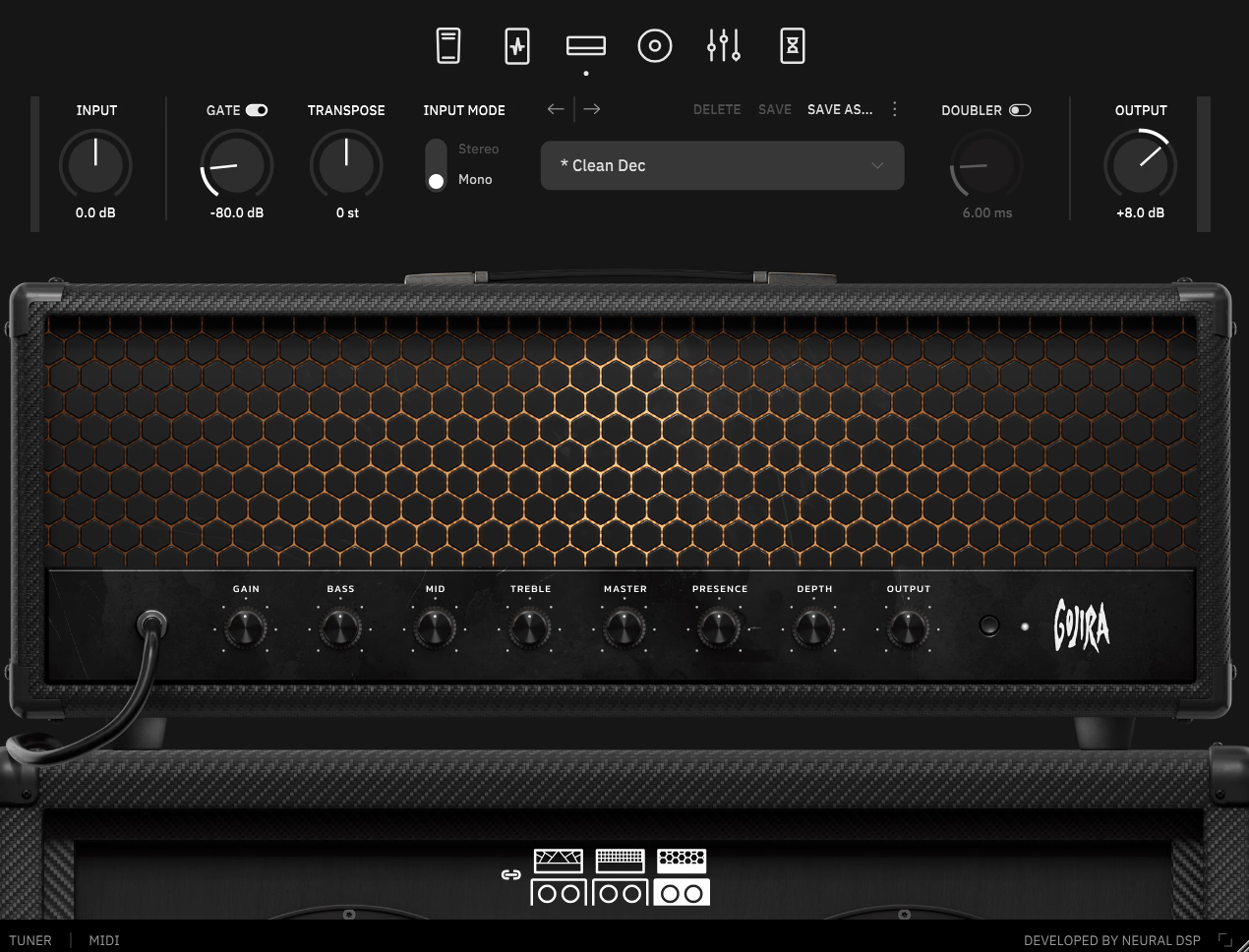
Archetype: Gojira X sits between a specialist metal plugin and a general-purpose guitar rig, which makes it useful when you need one modern-metal setup for several different guitar roles.
It has the aggressive character you would expect from a Gojira collaboration, but the three-amp setup gives it enough range for different modern guitar parts without forcing you to move to another plugin every time the arrangement changes.
- Three amps and a useful front end
The Clean, Rust, and Hot amps cover clean, medium-gain, and high-gain territory, while the front end also includes overdrive, distortion, phaser, and chorus and the cab section provides flexible microphone and IR options.
That is why I would choose Gojira X when I need one modern-metal rig for several different guitar roles, especially when the same song moves between cleaner passages, heavy rhythms, and more saturated parts.
- WOW
The WOW pedal is a MIDI-programmable pitch shifter with three modes, making it possible to automate pitch movement directly in your DAW instead of trying to recreate every performance move manually.
- OCT
The OCT pedal adds two independent octaves below the dry signal, one at -1 and another at -2, and because it is polyphonic, you can use it on full riffs rather than limiting it to single-note lines.
I would check it against the bass every time because more low end is not automatically a bigger mix, and the additional octave information can quickly compete with the bass if you use it too heavily.
Hey, I’m Vil, I started this site to help you find the best audio plugins covering various categories including synths, pianos, strings, and effect tools of all sorts as well. I pick these plugins based on various criteria so it best matches the actual topic.