When you purchase through the links on my site, you support the site at no extra cost to you. Here is how it works.
A good classical guitar plugin has to solve more than one problem. It needs to sound like a nylon guitar, but it also needs to handle the way a guitarist actually plays: changing positions, varying attack, strumming chords, and keeping repeated notes from sounding identical.
The useful question isn’t simply which plugin has the best samples. I look at which one gives you the right combination of realism, playability, control, and speed for the part you’re writing.
Some of the instruments below are built for detailed fingerstyle programming. Others are better when you want convincing accompaniment without programming every note, while a few take the guitar into cinematic or processed territory instead of trying to reproduce a traditional classical performance.
I picked them for different jobs. Ample Guitar L is the strongest all-round choice for detailed programming, Ujam SILK 2 and Session Guitarist Picked Nylon are better when you want finished performances quickly, and Sketch Nylon is the more specialized option for Latin and bossa nova rhythm work.
There are also two free instruments at the end for simpler projects.
1. Ample Guitar L
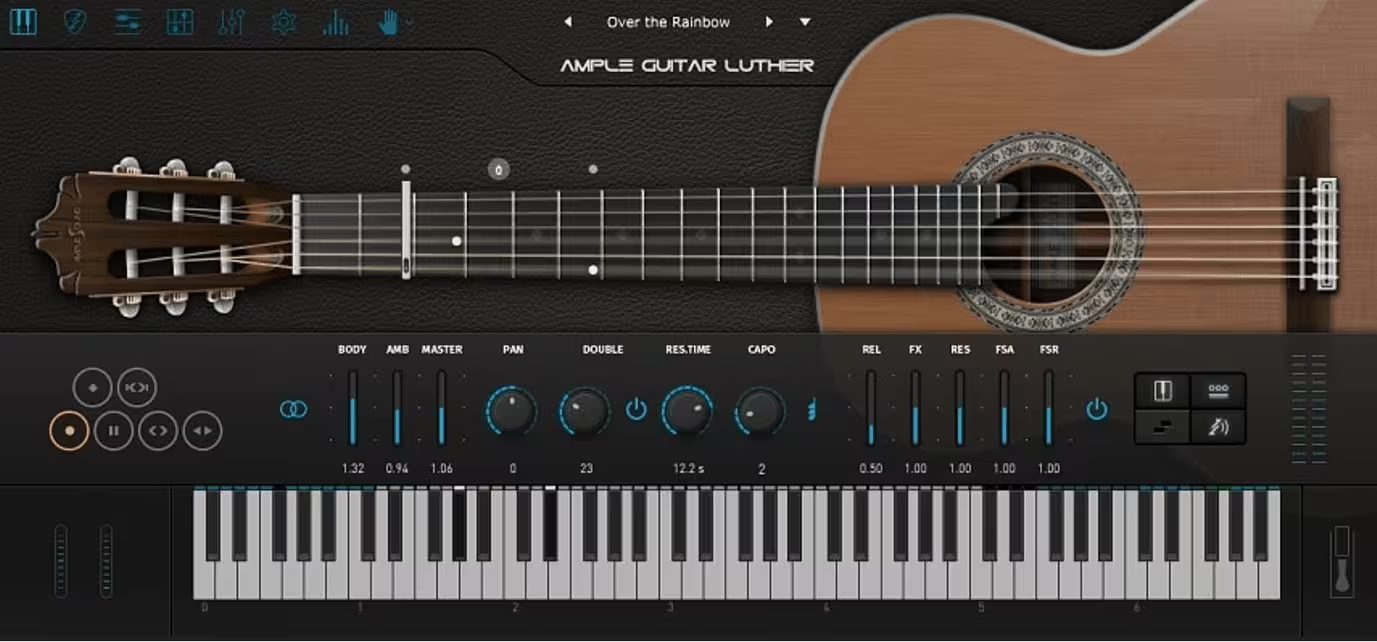
Ample Guitar L includes separate Finger and Pick libraries recorded from the same handmade Alhambra Luthier guitar, so you can choose the playing style before you start programming.
The two libraries give you different playing characters, while the deeper advantage is the programming system behind them. is built around Riffer 4, Strum Note, Capo Logic, and polyphonic legato, giving you more control over the problems that come with sequencing guitar rather than a keyboard instrument.
- Finger And Pick Libraries
The two libraries are separate recordings rather than one source being processed to behave like two playing styles. I use Finger for intimate parts where the attack needs to stay soft. Pick works better when the guitar has to cut through a denser arrangement.
- Riffer 4
Riffer 4 is a MIDI editor designed for plucked instruments. I find it useful when you’re working on fast runs, repeated patterns, or detailed phrasing because you can change the guitar part without treating every note as an isolated piano-roll event.
- Strum Note System
The Strum Note system turns the notes inside a chord into one editable object. You can then adjust the timing and dynamics of a strum in one place instead of moving every note separately.
- Tab Player Support
The built-in Tab Player reads Guitar Pro 4 through 8 files. If you already have guitar tabs, you can bring them into the instrument instead of rebuilding the arrangement as MIDI.
- Capo Logic And Legato
Capo Logic and polyphonic legato handle position changes, hammer-ons, pull-offs, and movement through chords. I pay more attention to these features when the guitar is exposed because that’s where unnatural MIDI movement becomes easiest to hear.
2. UJAM SILK 2
This one by UJAM is aimed at getting a convincing guitar performance without programming it note by note. Its Player Mode turns simple chords or notes into guitarist-style performances, while Instrument Mode gives you direct string-by-string control when you need to shape the part yourself.
That makes UJAM SILK 2 useful when you want to move between fast songwriting and detailed editing without changing instruments. It also uses a guitar recorded specifically for the instrument rather than carrying one over from the original SILK.
- Player Mode And Instrument Mode
Player Mode handles the performance for you. Feed it chords or single notes and it generates strummed or picked phrases.
Instrument Mode gives you direct control over the strings, notes, and articulations. I would use Player Mode for a quick rhythm part and switch to Instrument Mode when you need the guitar to follow a specific melody, voicing, or arrangement.
- Open Chords
The chord system uses guitar-friendly voicings rather than treating the input like a keyboard chord. That helps when you’re writing progressions quickly because the resulting guitar part follows playable shapes instead of simply stacking the MIDI notes you entered.
- 40 Stompbox Emulations
SILK 2 includes 40 stompbox models. I use these when the nylon guitar needs to move into more produced territory, while for a traditional classical sound I’d keep the processing light.
- 75 Finisher FX Modes
The Finisher FX section goes further into sound design, with effects ranging from subtle processing to more obvious transformations.
I treat it separately from the stompboxes: the pedals shape the guitar sound, while the Finisher is useful when you want the guitar itself to become part of the production texture.
3. Audiofier Micron Nylon
Its four-layer engine combines guitar recordings and processed sources, with an XY pad for blending them. An Arpeggiator, Step Volume, and randomization controls push it further toward sound design rather than conventional guitar programming.
Audiofier Micron Nylon is the one I would reach for for cinematic, ambient, and electronic work rather than a conventional solo-guitar part.
- 4-Layer Engine With XY Morphing
The four layers are blended from the XY pad rather than controlled only with separate level faders. You can move between different sources while a part is playing, which makes the pad useful for automation and live sound shaping.
- Real And Piezo Sources
Micron Nylon combines microphone recordings with piezo sources processed through impulse responses. The mic source gives you the more natural starting point, while the piezo side adds a more direct and processed character.
I usually start closer to the mic side and bring the piezo source forward when I need more edge.
- Built-In Arpeggiator
The built-in Arpeggiator creates rhythmic patterns from the instrument without requiring a separate sequencer. I find it useful when the guitar is functioning as a rhythmic texture rather than a conventional accompaniment part.
- Randomization
The randomize function creates new combinations from the available sources. I use it when I need a starting point quickly and don’t already have a specific guitar sound in mind.
4. Native Instruments Session Guitarist Picked Nylon
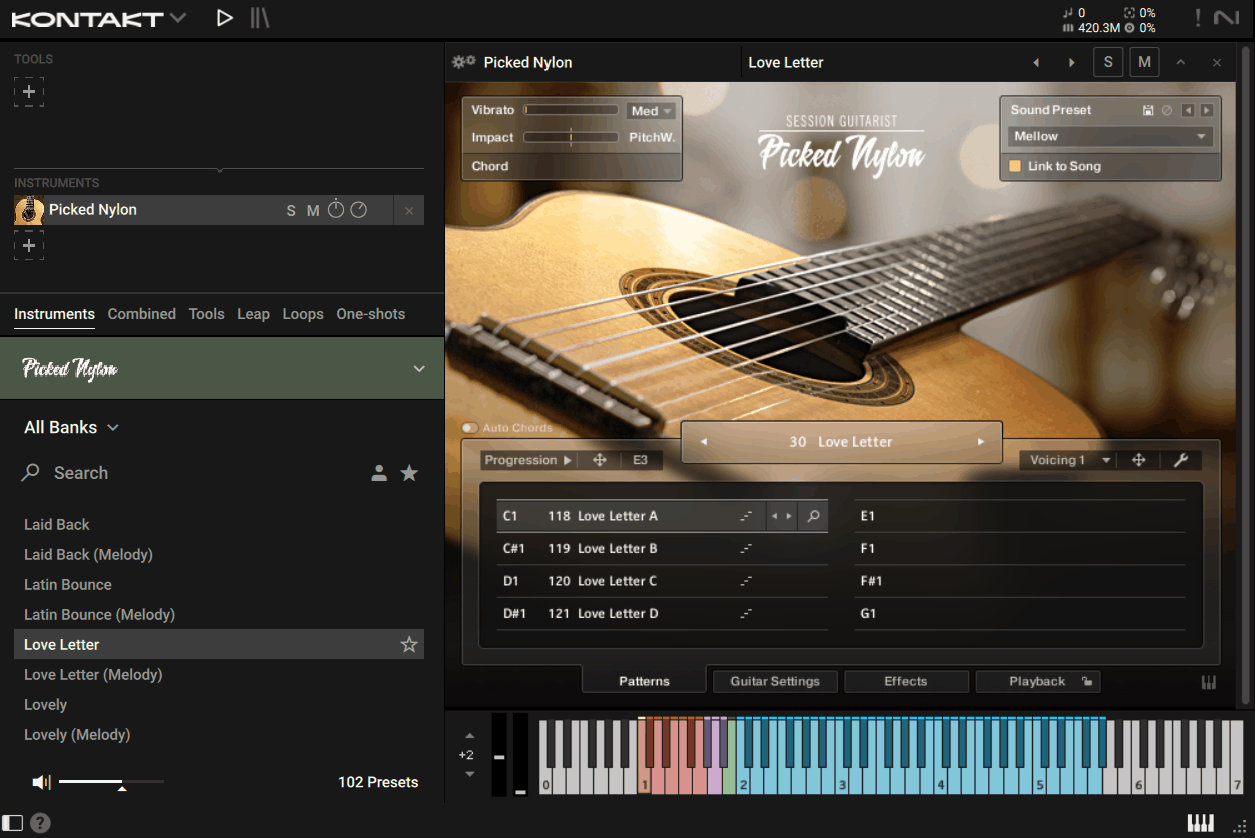
Picked Nylon is built around ready-to-use guitar performances and uses a handcrafted nylon-string guitar by luthier Lisa Weinzierl, recorded through six microphone positions.
In addition, it includes sympathetic resonance, algorithmic fret noise, player-breath details, 201 patterns, 49 full-song arrangements, and a separate melody instrument.
- Six Microphone Positions
Picked Nylon was recorded through six microphone positions, with three available for real-time blending. You can move between different perspectives inside the instrument without building a separate mix around the source.
- Sympathetic Resonance And Fret Noise
The instrument uses modeled sympathetic resonance and fret noise to add small performance details. I find these most useful on exposed parts, while in a dense arrangement the overall voicing and performance have a much larger effect on the result.
- 201 Patterns And 49 Songs
The 201 patterns and 49 full-song arrangements are organized by genre. You can start from a complete rhythm idea and build the arrangement around it instead of programming the entire part from scratch.
- Dual Instrument Design
The separate melody instrument handles custom guitar lines outside the pattern system. It supports monophonic and polyphonic playing, vibrato modes, and a voicing generator, so you can use the same library for accompaniment and melodic parts.
5. Spitfire Audio Soft Nylon Guitar
Composer Mike Georgiades chose the smaller instrument rather than a full concert classical, and the scripting is built around reproducing its playing behavior. That gives it a more specific role than a general-purpose classical guitar library. Spitfire Audio Soft Nylon Guitar is the one I would look at for quiet and exposed parts rather than arrangements that need a larger, more assertive guitar.
- Small-Bodied Guitar Source
The smaller guitar produces a softer and less formal character than a full concert classical. I find that useful for intimate accompaniment, softer ballads, and parts where a larger guitar would take up too much space.
- Real-Time Playability
The instrument is designed for live MIDI input, so you can perform parts and clean them up afterward rather than programming everything from the start. If you prefer to record a take and edit it, this workflow makes sense.
- Free MIDI Pack
The downloadable MIDI pack includes 163 patterns and pieces covering several guitar styles, with MP3 previews. You can use the material for writing or as a reference for how the instrument’s patterns behave.
6. Sketch Samples Sketch Nylon
Sketch Samples Sketch Nylon is the one I would choose primarily for the rhythm material rather than the sheer number of sampled articulations.
For Latin and bossa nova production, this library takes a much more specialized approach than the other instruments here. It includes 1,968 playable chords, 41 accompaniment types, and five styles: Samba, Bossa Nova, Baiao, Choro, and Frevo.
The guitar itself uses Takamine guitars recorded through microphones and a piezo pickup system, with 14 articulations and two round robins per note.
- 14 Articulations With Round Robins
The library includes tirando and apoyando with five velocity layers, mute and flageolet with four, and vibrato with three, with two round robins per note. That gives repeated notes more variation and gives you more control over how the guitar responds to velocity.
- 1,968-Chord MIDI Pack
The chord library is the main attraction here. I know from programming this style that Latin guitar voicings can take a long time to build manually, so starting from ready-made chord patterns leaves you more time to work on the arrangement.
- 12 Convolution Reverbs
Each patch includes 12 convolution reverbs and EQ. You can use them to shape the guitar before adding external effects.
- Adjustable Mic And Piezo Blend
The microphone and piezo levels can be adjusted after recording. You can keep the guitar warm and natural or push it toward a more direct sound without changing the part itself.
7. OTS Evolution Honey Nylon
This library is based on a Spanish-made classical guitar recorded entirely fingerstyle.
One of the defining details of Honey Nylon is the preserved preroll from the finger contacting the string before the note sounds.
It also includes an Evolution engine, strumming patterns, articulation mapping, and a large collection of samples. It’s the one I would reach for when I want an intimate fingerstyle character with plenty of performance detail.
- 12,600 Samples
The library contains more than 12,600 samples, covering sustains, palm mutes, natural harmonics, string slaps, and body hits. That gives you enough articulation depth for more detailed parts without relying on one sustain sample throughout.
- Fingerstyle-Only Recording
Every articulation comes from a fingerstyle performance. That gives the library a consistent character across the instrument and makes it a natural fit for intimate fingerstyle parts.
- Preroll Detail Preserved
The preserved preroll is most useful on quiet and exposed passages. You may barely hear it once the guitar is inside a dense mix, but I find it useful when I want the beginning of a note to feel less cleanly cut.
- Evolution Engine With Presets
The Evolution engine provides strumming patterns, articulation mapping, and factory presets. I would start with the presets and move into articulation mapping when you know how you want the guitar to respond.
8. OTS Evolution Modern Nylon
OTS Evolution Modern Nylon is particularly useful when the guitar has to stay clear inside a fuller arrangement. It uses a hybrid playing technique: the lower strings are picked while the higher strings are played with the fingers. That gives the low end more definition while keeping the upper register softer.
- Hybrid Pick-And-Finger Technique
The lower strings get the attack of a pick while the higher strings retain a fingerstyle character. You can hear the advantage on parts that move across a wide range, where an entirely fingerstyle guitar can lose some definition in the lower register.
- Adjustable Pick Position
The pick position can move from near the neck toward the bridge. Moving it changes the brightness and attack, giving you another way to shape the sound before reaching for EQ.
- Built-In Stompboxes And Amp Modeling
The built-in stompboxes and amp/cab modeling can push the guitar toward pop, rock, and other processed sounds. I would keep these effects subtle when the part still needs to read as a natural classical guitar.
- Strum Engine With Keyswitches
The strum engine uses keyswitches for up and down strokes while you hold a chord. That gives you direct control over the strumming pattern rather than triggering a finished performance.
Freebies:
1. Heavyocity Foundations Nylon Guitar
This free instrument combines a nylon guitar recording with an ambient string texture in a simple two-channel mixer. That gives you more than a basic nylon patch without requiring a deep commercial guitar library.
The two sources can be blended independently, so you can keep the guitar dominant or bring the texture forward for more atmospheric parts. Heavyocity Foundations Nylon Guitar is the one I would use when you want a quick nylon sound with some extra character built in.
- Two Blendable Sound Sources
The guitar and texture layers have separate levels. You can keep the guitar dominant for a conventional nylon sound or bring the texture forward for more atmospheric parts.
- Gate And Arpeggio
The built-in gate and arpeggio functions can turn either source into rhythmic patterns. I use them for quick sketches when I don’t want to build the same processing chain manually in the DAW.
- Envelope And Master FX
Punch, Delay, and Reverb provide basic shaping and ambience. You can get a usable writing sound from the instrument, while a finished mix will usually need additional processing.
2. DSK Guitars Nylon
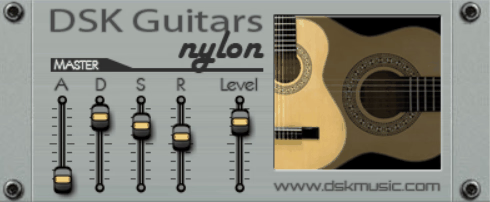
This is a simple instrument with a small control set rather than a deep sample engine. There are no complex articulations or performance systems to configure, so you can load it, set the envelope and level, and start writing. That keeps it useful for quick sketches, background parts, and sessions where CPU or load time matters. DSK Guitars Nylon is the one I would keep around when simplicity and speed matter more than articulation depth.
- Velocity-Responsive Playing
The instrument responds to playing velocity, so softer and harder notes produce different levels of attack. If you need a basic accompaniment part, that adds some dynamic variation without additional articulation programming.
- ADSR And Level Controls
The main controls are ADSR and level adjustments. There’s little to configure, which keeps the instrument quick to use.
- Built-In Reverb
The built-in reverb gives the guitar some immediate space. I would normally replace or supplement it with a dedicated reverb in a finished production.
- Light On CPU
The instrument is lightweight compared with large sampled guitar libraries. You can use it for quick writing, older systems, or background parts where a deep articulation set isn’t necessary.
Hey, I’m Vil, I started this site to help you find the best audio plugins covering various categories including synths, pianos, strings, and effect tools of all sorts as well. I pick these plugins based on various criteria so it best matches the actual topic.