When you purchase through the links on my site, you support the site at no extra cost to you. Here is how it works.
I would say that spring reverb has a pretty distinct sound, so the differences between plugins often come down to how they handle the metallic resonance, decay, movement, and that characteristic boing. Some aim for a more convincing hardware-style response, while others push the effect further and treat it more like a sound-design tool.
Today, I’m covering Waves Magma Springs, AudioThing Springs, Arturia Rev SPRING-636, Softube Spring Reverb, Physical Audio Dual Spring Reverb, and some more paid ones plus four free plugins at the end.
Let’s take a look at the best spring reverb plugins and what the market has to offer right now. Rather than giving every plugin the same generic rundown, I’ll focus on what makes each one worth considering. Let’s go!
1. Waves Magma Springs
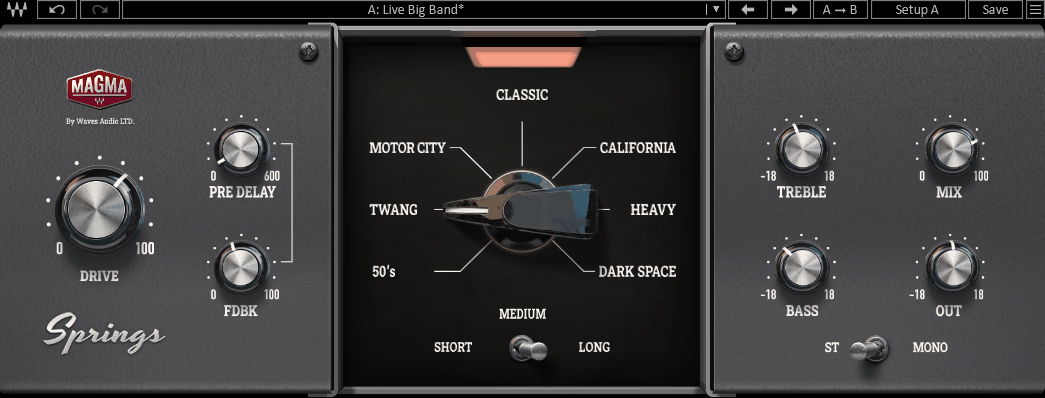
Waves Magma Springs is less about recreating one specific piece of spring hardware and more about giving you seven distinct spring characters in one plugin.
I like that because you’re not stuck with a single response and a handful of controls to reshape it. Each model gives you a different starting point, ranging from relatively controlled and usable to more pronounced spring movement and resonance.
If you want spring reverb on a guitar, synth, vocal, or drum sound, you can quickly move through the models and find a character that fits instead of trying to make one spring work for everything.
You get:
- Seven Era-Specific Spring Types
Instead of naming models after hardware, Waves named them after sounds: 50’s for melancholic Memphis blues, Twang for that Tele-into-Vox tone, Motor City for soul and R&B, Classic, California for bright 60s and 70s vocals, Heavy, and Dark Space for dub. I like that you’re choosing a vibe first and a tank second.
- Magma Tube Drive
Actually, the Drive control runs the signal through Waves’ Magma tube circuit before it hits the springs
- Three Spring Lengths
On top of that, you get three selectable spring lengths that affect the decay character independently of the seven spring types, which gives you a second axis of control most single-flavor spring plugins don’t offer.
2. AudioThing Springs
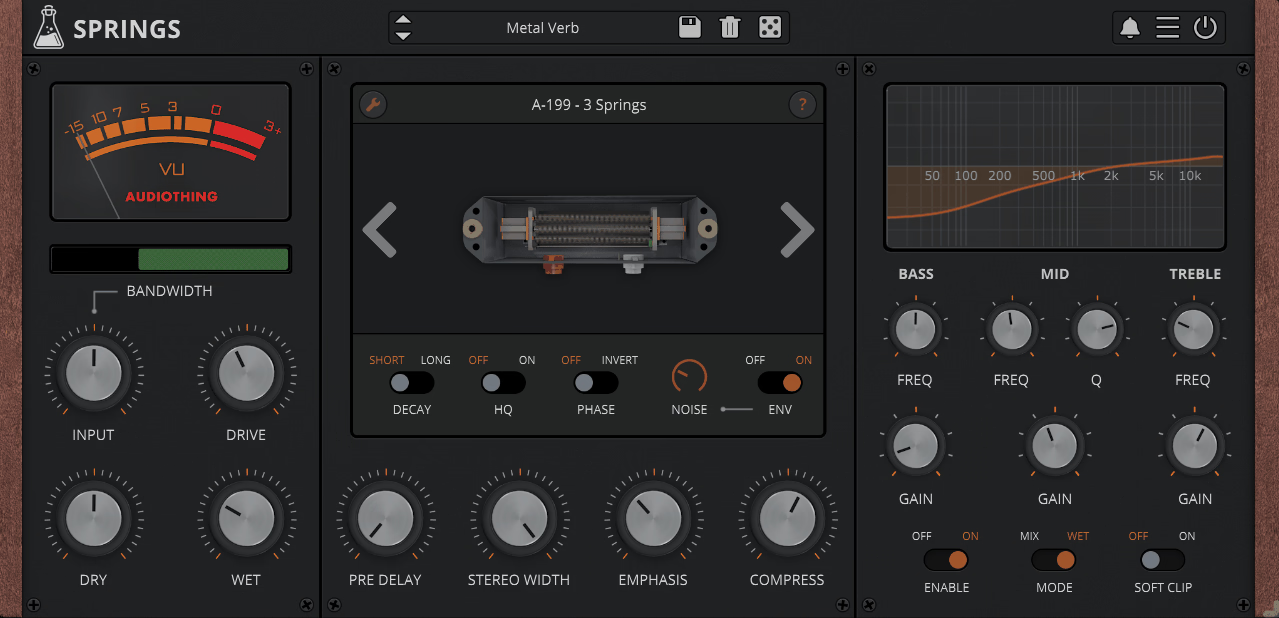
AudioThing Springs covers more spring hardware in one plugin than almost anything else on this list, with 19 modeled spring units ranging from a long six-spring pipe down to a tiny battery-powered single-spring box. I think that range is the entire pitch here: in fact, you’re not locked into one company’s take on the sound.
- 19 Spring Models From Convolution and Modeling
I have to say, AudioThing built each model using a combination of convolution and physical modeling rather than picking one method, and you can genuinely hear the difference between the huge six-spring pipe units and the tiny compact tanks.
- Baxandall EQ With a Mid Band
In addition, Springs pairs the reverb with a Baxandall EQ, the same interactive tone-stack circuit found in classic guitar amps, and adds a third Mid band with Q control that the original two-band Baxandall design never had.
- Bandwidth Control on the Input
A dedicated Bandwidth control lets you filter the signal before it hits the spring emulation, which I’d recommend for taming boomy or overly bright tanks without touching the post-reverb EQ at all.
3. Arturia Rev SPRING-636
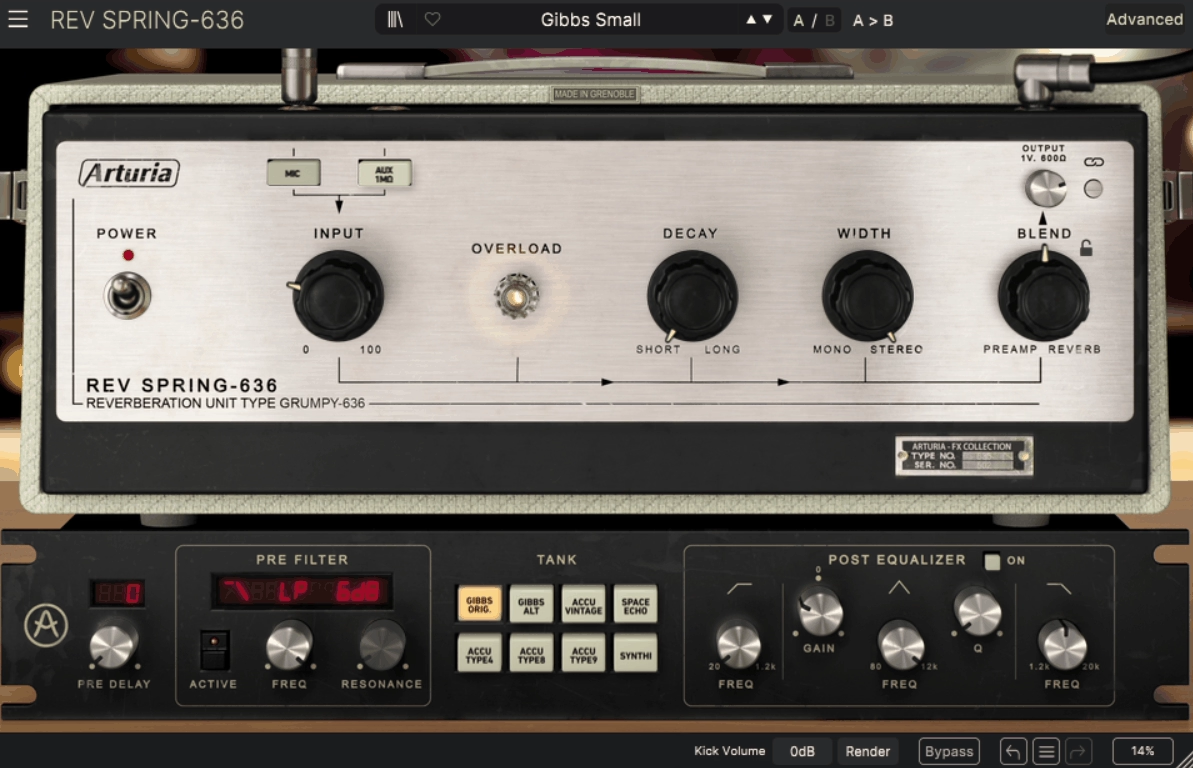
The first thing I notice about Arturia Rev SPRING-636 is how quickly it can turn a reverb into part of the sound rather than something sitting quietly in the background. The Grampian 636’s spring response has a fairly strong personality, so even modest settings can leave a noticeable metallic tail behind guitars, vocals, keyboards, or drums.
I tend to find spring reverbs most useful when I don’t try to make them behave like normal room or plate reverbs. With this one, the rougher character is the point.
It works particularly well when you want the decay to have some attitude, whether that’s a short splash around a dry sound or a much more obvious dub-style wash. You can keep it relatively restrained, but I think Rev SPRING-636 is at its best when you let some of that mechanical character come through.
- Germanium Preamp Drive
I like how a germanium-powered dual preamp lets you push the input hard for a crunchy, musical distortion that’s baked into the reverb path itself, not bolted on as a separate saturation stage.
- 8 Swappable Spring Tanks
On top of that, you get 8 different spring tank models, spanning stage classics, guitar amp tanks, and rare vintage units, all switchable without reloading the plugin.
- Real-Time Length and Width Morphing
Overall, I like that you can adjust reverb length, width, and the dry/wet blend on the fly without the artifacts that plague a lot of algorithmic reverbs when you change parameters mid-decay.
4. Softube Spring Reverb
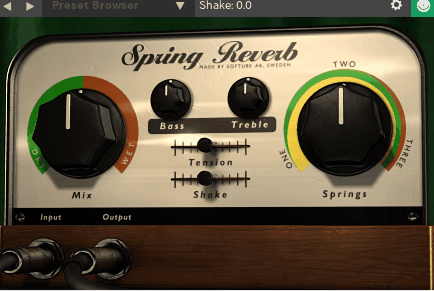
Softube Spring Reverb puts a lot of its appeal in how playable the effect is. Instead of treating spring reverb as a static effect that you set once and leave running, it gives you controls that make it easy to deliberately push the springs into more exaggerated territory. The standout is the Shake control, which recreates the unstable, rattling response you get when a physical spring tank is disturbed.
I find that especially useful for transitions and sound-design moments. A normal spring tail can add character in the background, but the Shake control can turn the reverb itself into an audible event. It’s the kind of feature I’d reach for when a clean reverb feels too predictable and I want a quick burst of movement without having to build the effect from automation and additional processing.
- Automatable Shake Control
Actually, the Shake parameter can be fully automated, which I think is genuinely unique among spring plugins and opens up dramatic build effects that a static spring reverb just can’t produce.
- Continuously Adjustable Spring Count
I like that, instead of a fixed switch, the Springs knob lets you dial continuously between 1 and 3 springs, so you can land on textures between the usual discrete steps.
- Tension-Driven Character Shift
The Tension control changes spring character from slow and smooth to quick and harsh, and paired with the Springs knob, it’s the main tool for reshaping the entire personality of the reverb.
5. Physical Audio Dual Spring Reverb
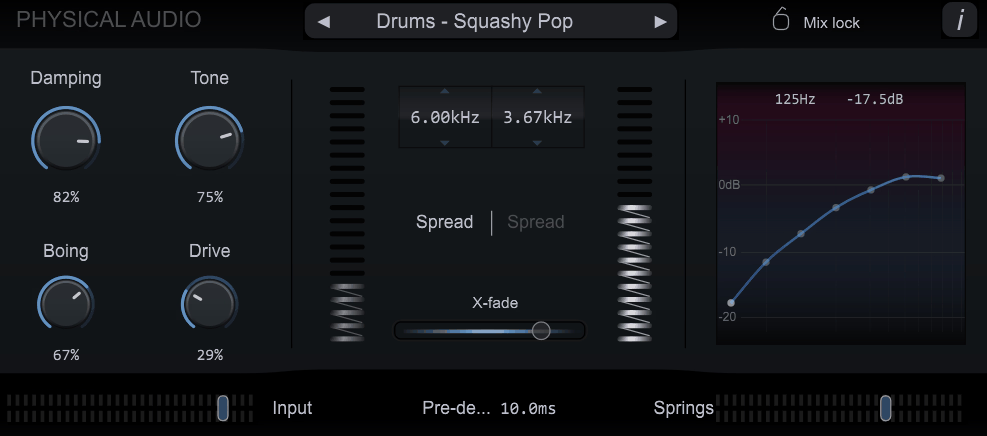
Sampling a hardware unit only gets you so far, since a recording can’t respond differently when you push it into territory the original device never visited. I’d say a physics simulation can, and that’s exactly the philosophy behind Dual Spring Reverb, which is, as far as I know, the first plugin to actually model wave propagation through helical springs using the underlying physical equations, with no samples involved at all.
- True Physical Modeling, No Samples
Because the engine simulates the actual physics of a vibrating spring rather than approximating a recorded sound, you get spring behavior that no impulse response library could reproduce, including combinations that don’t exist in any real hardware.
- Two Independently Configurable Springs
Each of the two springs has its own echo time and chirp cutoff frequency controls, and you can set the chirps to spread out over time for increasingly chaotic textures.
- Remarkably Low CPU Load
I was surprised by how light this runs given how deep the modeling goes. You can stack multiple instances without the CPU hit you’d expect from a real-time physics simulation.
6. Klanghelm TENS
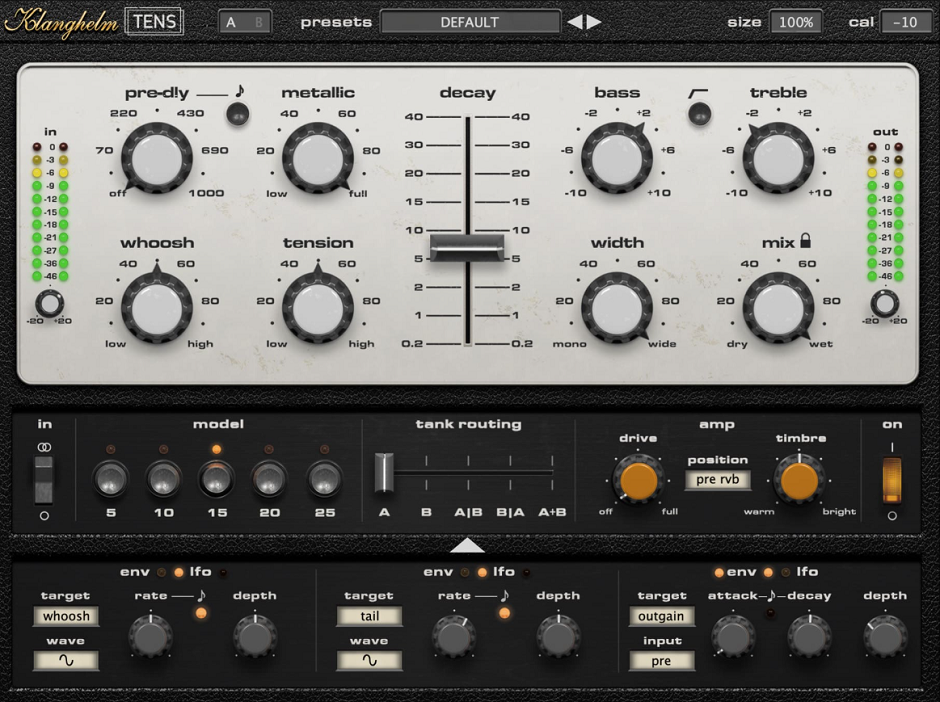
Klanghelm modeled TENS after a completely different lineage: a series of high-end studio spring units from an Austrian manufacturer active from the early 1970s into the early 1980s, built on a patented design that etched and deformed the coil wire itself.
I think that’s why TENS sits closer to a plate reverb than anything else on this list.
- Plate-Adjacent Density
Basically, because of that unusual coil design, TENS produces highly diffused reverb with almost none of the boing or chirp artifacts typical of guitar-amp spring units, landing somewhere between classic spring and plate reverb.
- Extensive Modulation Section
In addition, you get chorus, vibrato, tremolo, and phaser-style effects all built from the same modulation section, which I found genuinely useful for turning a static reverb tail into something that moves.
- Envelope Follower for Ducking
Honestly, a built-in envelope follower lets you duck or dynamically shape the reverb based on the input signal, a feature you almost never see bundled into a spring reverb plugin.
- Decay Up to 40 Seconds
As a result, TENS pushes decay time up to 40 seconds, far beyond anything a physical spring tank could ever produce, which opens the door to ambient and sound-design uses well outside the plugin’s studio-hardware origins.
7. Teletone Audio Silver Spring
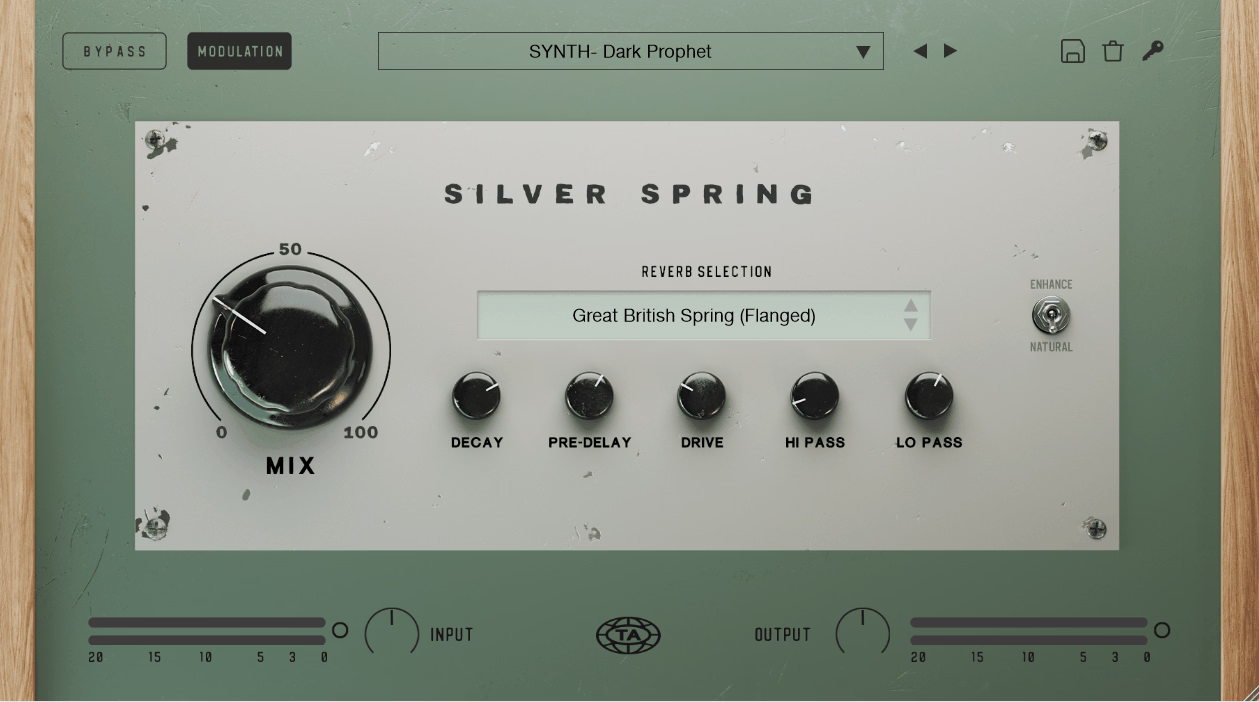
With 17 different analog spring units sampled, Silver Spring is useful when you want to compare spring characters without loading a collection of separate reverbs. The plugin organizes those sounds into five families, giving you a more manageable way to move between different types of spring response.
I like that setup because spring reverb can be surprisingly difficult to choose by description alone. Two springs can both technically do the same job but feel completely different once they’re on a guitar, vocal, or synth.
Silver Spring makes that comparison part of the workflow, so I can quickly audition different characters and decide which one actually fits the source instead of committing to the first spring sound that seems close enough.
- 17 Units Organized Into 5 Families
In general, grouping the models into families instead of a flat list makes it faster to find a starting point, whether you want a tight amp-style splash or a lush, mod-soaked ambient wash.
- Artifact-Free Decay
Honestly, I’ve run into plenty of IR-based reverbs that glitch or click when you change the tail length mid-mix. Silver Spring’s decay control stays clean through the whole range, which matters more than it sounds like once you’re automating it.
- Pre-Reverb High and Low Pass Filters
I like that the filters sit before the reverb rather than after it, letting you carve out mud or harshness from the source signal before it ever reaches the spring tank.
8. Boz Digital Labs ReCoil
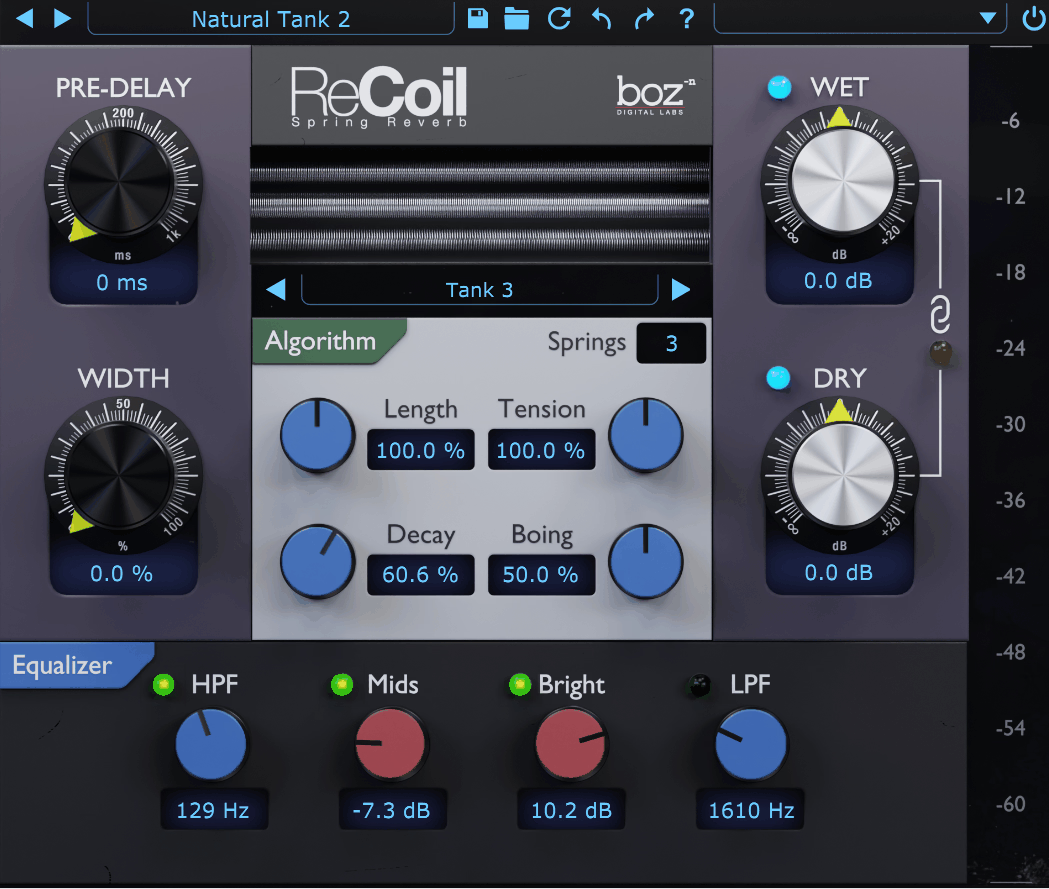
Real spring tanks have a habit of sounding a little unpredictable, and that’s part of what makes them interesting.
You get the familiar metallic splash and resonance, but the physical behavior of the springs also gives the effect a character that cleaner reverbs don’t really have. Boz Digital Labs ReCoil takes that basic character and makes it much easier to work with inside a modern mix.
I find that useful when I want a spring sound with more control over how it sits in the track.
Rather than treating the effect as a fixed piece of vintage gear, I can shape the response to suit the source and keep the parts of the spring sound that actually add something. It’s a practical approach if you like the character of real springs but don’t want their physical limitations getting in the way.
- Stereo Spring Reverb
Traditional spring tanks are almost universally mono. Actually, ReCoil breaks that by panning each spring independently, giving you a naturally wide reverb image that no physical tank could produce.
- Algorithmic and Impulse Modes in One Plugin
You can switch between an algorithmic mode built for maximum tweakability and an impulse-based mode built for maximum realism, which I think covers both ends of what people actually want from a spring reverb.
- Unconventional Spring Sources
Honestly, beyond standard reverb tanks, ReCoil models slinkies, door stops, and other genuinely unusual spring-like objects, which makes it worth keeping around purely for sound design.
9. Eventide Spring
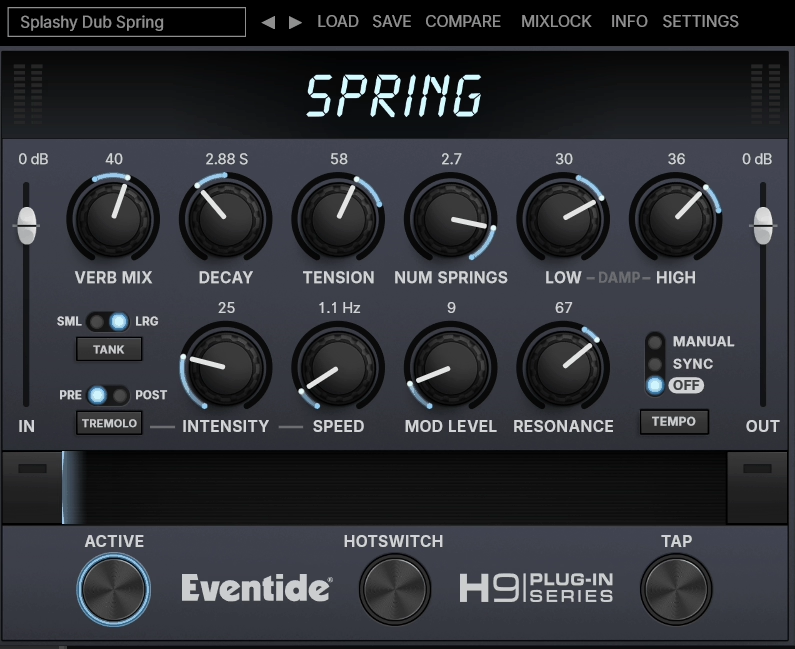
A spring reverb doesn’t have to stay in the background. Eventide Spring is particularly interesting when the reverb itself becomes something you actively shape, with the algorithm originating from Eventide’s H9 hardware and a much deeper set of parameters available in the plugin.
That extra control gives the effect a much wider range than the stereotypical spring sound. It can stay fairly restrained or become a deliberately exaggerated texture, which makes it useful on sources where a conventional spring would feel too predictable. I especially like that flexibility for sound-design work, where the reverb doesn’t necessarily have to sound like a spring at all times.
- Decay Up to 20 Seconds
Eventide pushed the maximum decay well past what any real spring could physically sustain, which I think turns this from a strictly vintage tool into something usable for ambient and cinematic work too.
- The Ribbon Controller
Honestly, a programmable ribbon strip lets you morph smoothly between two completely different parameter setups in real time, which is a genuinely unusual amount of expressive control for a reverb plugin.
- Pre or Post Tremolo Routing
I like how the built-in tube-amp-style tremolo can sit before or after the reverb, and switching the order changes the character dramatically, similar to flipping that same routing on a vintage Fender amp.
- Resonance on the High Damping Frequency
On top of that, a dedicated Resonance control adds a subtle chorus-like shimmer right at the high damping frequency, giving the reverb an edge that plain damping controls elsewhere don’t offer.
10. u-he Twangstrom
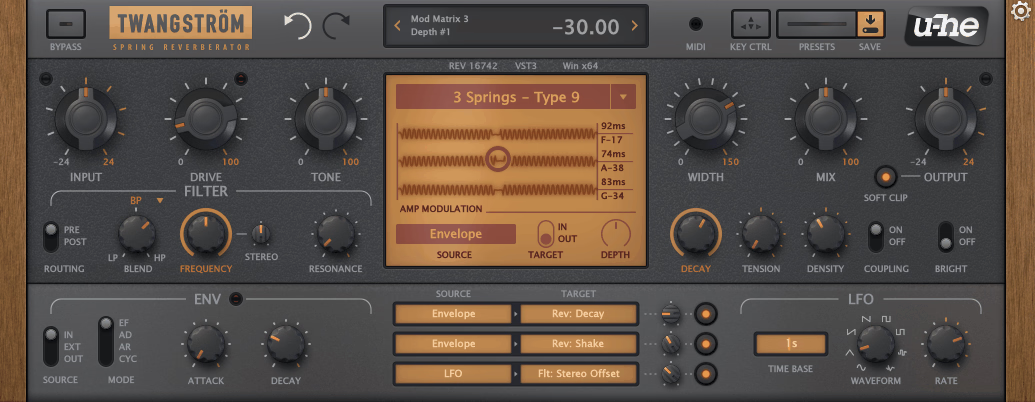
u-he Twangstrom is built for treating spring reverb as a sound-design instrument. Instead of stopping at the reverb itself, it gives you multiple spring models along with processing and modulation options that let you push the effect far beyond a conventional spring tail.
The plugin grew out of the spring module used in u-he Bazille, with two additional tank models developed for Twangstrom.
The drive, filter, envelope, and modulation matrix make it possible to reshape the springs into much more unusual textures.
That opens it up to everything from unstable, distorted ambience to rhythmic or heavily modulated effects, making Twangstrom considerably more versatile than a straightforward spring emulation.
- Physical Modeling, Not Impulse Responses
Basically, Twangstrom simulates the actual physics of wave propagation through a spring rather than working from recordings, so every parameter is genuinely controllable in real time down to the sample level.
- The Twang Shake Control
A dedicated Twang parameter lets you shake the modeled springs manually or via modulation, and I found that automating this subtly brings the whole reverb to life in a way a static setting never does.
- Full Modulation Matrix on a Reverb
In other words, between the multimode filter, four-mode envelope, eight-waveform LFO, and general-purpose mod matrix, Twangstrom can behave more like a rhythmic sound-design instrument than a conventional reverb effect.
11. SSL SpringVerb
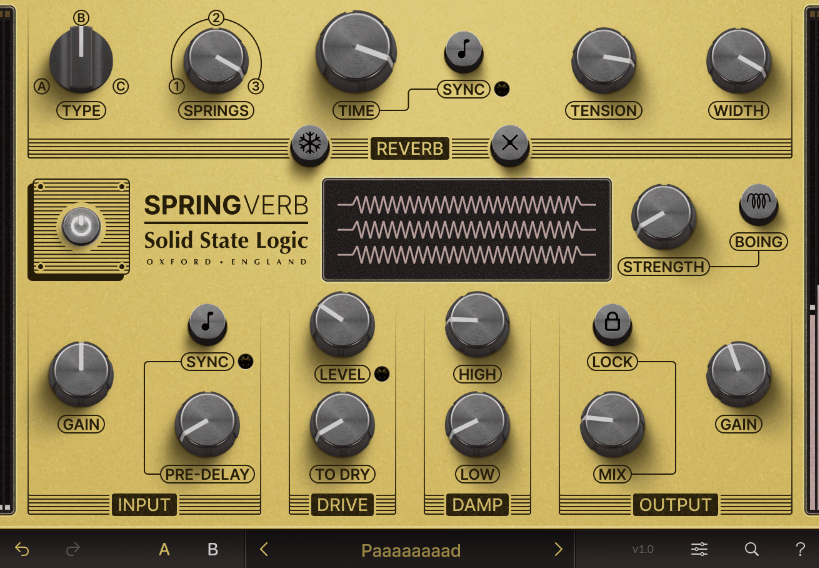
From what I can tell, SSL entered the spring reverb space relatively recently, and rather than just cloning one classic tank, they built SpringVerb around three distinct spring characters, including one modeled specifically on the dub-style tank associated with King Tubby and Lee Scratch Perry. I like that they didn’t just chase one classic sound and call it done.
- Interactive Spring Tank Visualization
The onscreen spring tank actually reacts to your settings in real time, expanding or contracting visually as you move the Tension control, which I think makes the plugin faster to dial in by ear and eye together.
- Boing Button With a Strength Knob
I love how a dedicated Boing button triggers the classic chaotic resonance of a physically struck spring tank, with a Strength knob controlling how aggressive that burst gets.
- Freeze Function
Freeze holds the current reverb tail indefinitely, turning SpringVerb into a texture generator rather than just an effect, which is a feature you rarely see on a plugin this focused on vintage character.
- Intelligent Ducking
Lastly, built-in ducking reduces the reverb level automatically whenever the input signal is active, keeping the spring character present without letting it wash out the source.
12. Pulsar Primavera
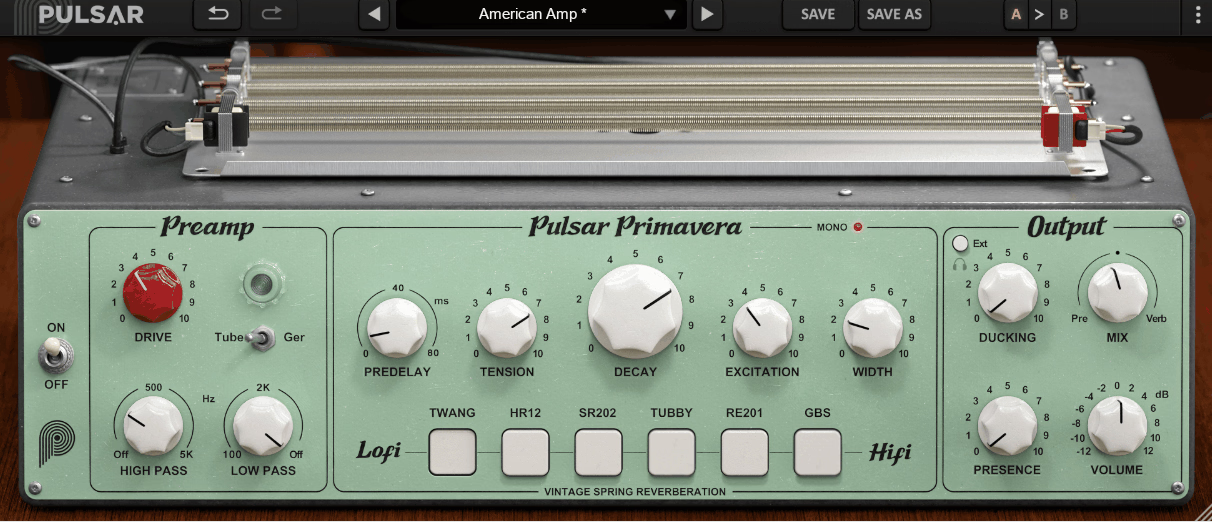
Pulsar Audio built Primavera as a genuine 6-in-1 answer to that problem, modeling the electronic and mechanical behavior of six different classic tanks using real-time physical modeling instead of static impulse responses.
I think that modeling choice is what lets the tension and excitation controls follow you into territory a sampled reverb never could.
- Six Modeled Tanks Including Great British Spring and Tubby
In general, the six models span Great British Spring, HR12, SR202, RE201, Tubby, and Twang, covering everything from clean vocal-friendly sounds to the gritty dub character associated with King Tubby.
- Excitation Control
Excitation dynamically triggers the sound of exploding or struck springs as your audio passes through, and I like that this can be driven by the source material itself rather than needing a separate manual trigger.
- Dual Saturation Modes
You can switch between Germanium and Tube saturation, modeling a transistor dub preamp and a harmonically rich tube circuit respectively, and I’d say that changes the reverb’s grit character substantially depending on genre.
- Spring Tension as a Sound Design Tool
Because Primavera is modeled rather than sampled, the Tension control genuinely restructures the spring’s physical behavior in real time, not just its tone, which I think is what separates it from convolution-based alternatives.
Freebies
BPB Dirty Spring
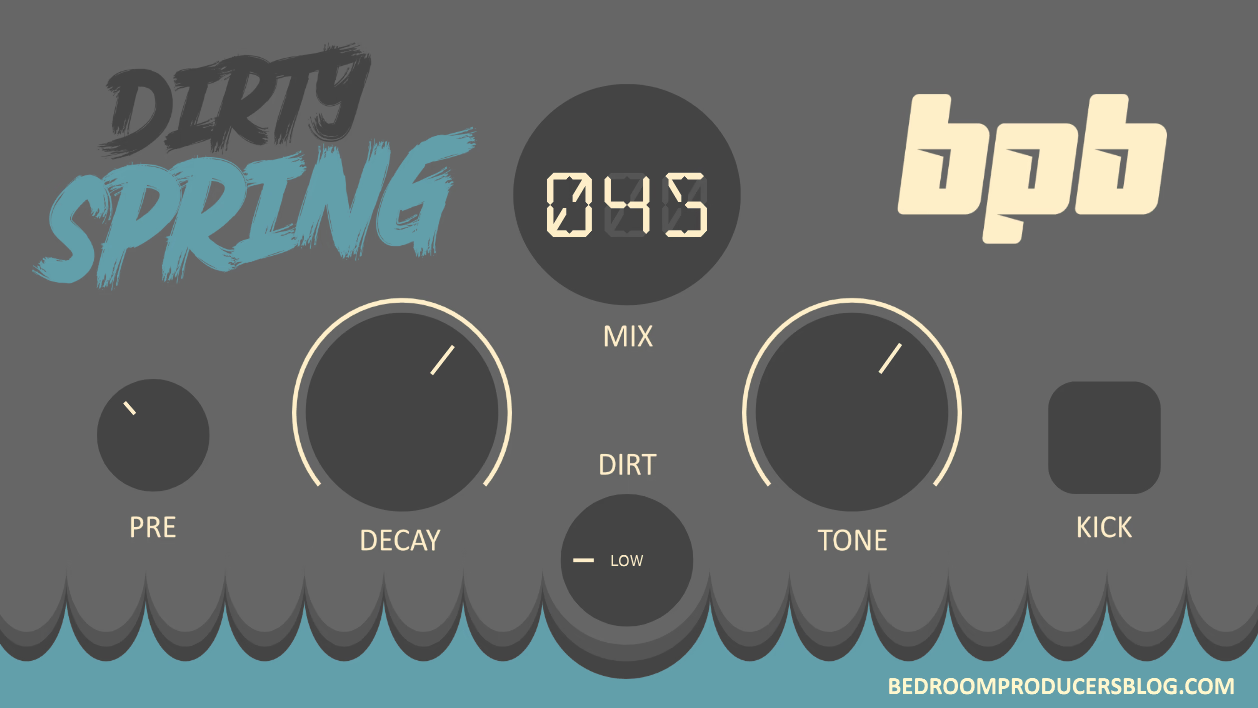
If a clean spring reverb feels too polished, BPB Dirty Spring takes a much rougher route. I like that the plugin combines its spring effect with a built-in bitcrusher on the wet signal, so the reverb can be degraded and dirtied up as part of the effect rather than requiring another plugin afterward.
That makes it particularly useful for lo-fi textures, gritty delays, distorted vocals, and rougher electronic sounds where a pristine spring tail would feel out of place.
The bitcrusher changes the role of the reverb quite a bit: instead of simply adding space, the effect can become a deliberately degraded layer that adds its own texture to the source.
- Built-In Bitcrusher on the Wet Signal
Multiple bitcrushing modes range from subtle grit to fully over-the-top digital destruction, and I’d recommend trying it on sampled drums specifically, since it can turn a plain spring tail into an 8-bit-style texture.
- Kick Button for Instant Auditioning
I like that a dedicated Kick button simulates physically hitting the hardware tank, letting you preview the spring character instantly without needing to route audio through it first.
Klanghelm TENS Jr.
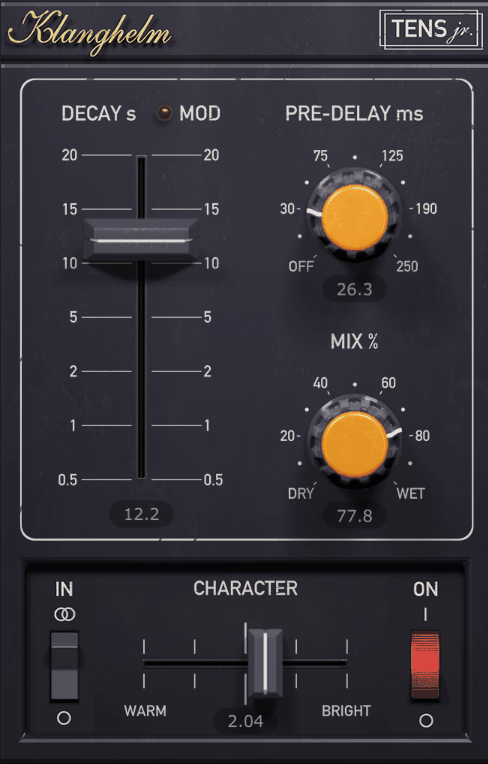
A free spring reverb can be useful simply because it gives you a particular sound without asking you to buy the full version. TENS Jr. is built around Model 5, Tank A from Klanghelm’s TENS, so the plugin isn’t trying to represent the entire range of the paid version. That makes it a straightforward way to get one of TENS’s specific spring characters for free. T
- One Real Tank, Not a Generic Approximation
You’re getting an actual model pulled from the paid plugin rather than a simplified stand-in, which I think makes this one of the more honest “free version” offers in the spring reverb space.
- Stereo Output From a Single Tank
On top of that, unlike the mono hardware it’s modeled after, TENS Jr. outputs in stereo, and its decay range extends from 0.5 to 20 seconds, well past what the original unit could do.
Lostin70s Devil’s Tube Spring
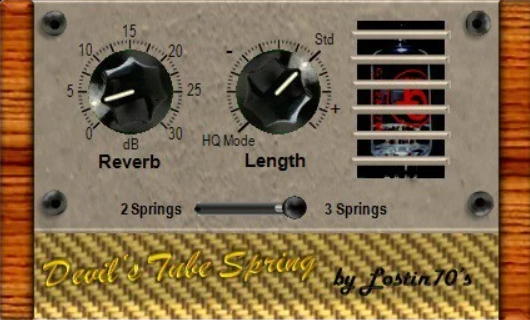
What caught my attention with Devil’s Tube Spring is that its spring character comes from recordings rather than a simulated mechanical model. Lostin70s built the plugin around 38 collected and cleaned spring impulse responses, using convolution to reproduce the behavior captured from those real spring sources.
That gives the plugin a different foundation from a modeled spring tank. Instead of calculating the spring response, it works from a library of recorded responses, which makes the collection itself an important part of the sound. For anyone who likes comparing different spring textures, that approach can be more interesting than a single fixed emulation.
- 38 Selected Spring Impulses
Basically, rather than modeling one unit, the plugin draws from a library of 38 spring reverb impulse responses, giving you access to a genuinely wide tonal range for a free convolution-based tool.
- Adjustable Impulse Size for CPU Tradeoffs
I’d say you can tune the impulse response size, which affects both the perceived complexity of the reverb and how much CPU it demands, so lighter settings stay usable even on modest machines.
Fuse Audio Labs VREV-666
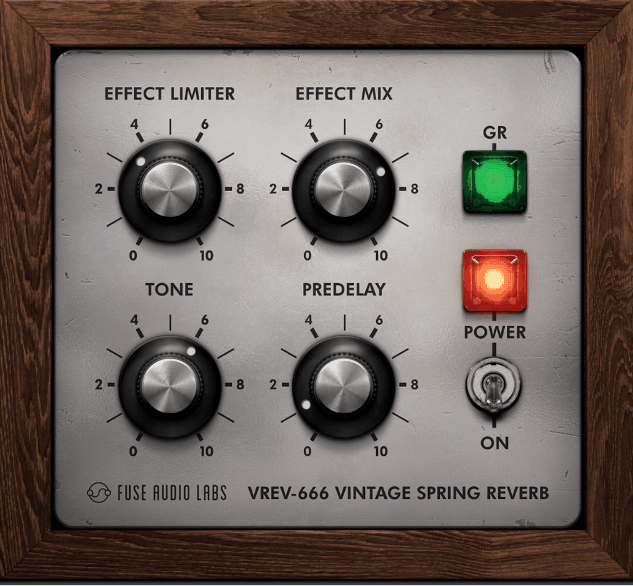
Sometimes a reverb works better when it doesn’t give you ten different ways to change its personality. VREV-666 has a very specific, old-school character tied to the Grampian 666, a rare 1960s spring reverb originally developed for the BBC. The original hardware is now extremely scarce, with only a handful of surviving units.
That makes this a nice option when the usual spring plugins feel too deliberately “vintage.” There’s a particular sense of simplicity to the 666 sound, and I like using effects like this when the reverb needs to contribute a recognizable texture without becoming another complicated sound-design layer.
It also happens to be free, which makes experimenting with such an obscure piece of gear practically effortless.
- Built-In Limiter for Chirp-Free Overloads
I like that a musical limiter built around the character of a light bulb circuit tames peaks that would otherwise cause the spring tank to chirp and overload, a problem the original hardware had no way to prevent.
- 150ms Pre-Delay Added to the Original Design
Honestly, the real Grampian 666 offered nothing beyond a level knob, so Fuse Audio Labs’ addition of a pre-delay up to 150ms and a tone EQ targeting the spring’s bass resonance genuinely extends what the original hardware could ever do.

Hey, I’m Vil, I started this site to help you find the best audio plugins covering various categories including synths, pianos, strings, and effect tools of all sorts as well. I pick these plugins based on various criteria so it best matches the actual topic.