When you purchase through the links on my site, you support the site at no extra cost to you. Here is how it works.
Let’s discuss some of the best opto compressor plugins that are available including both paid and free picks.
When it comes to opto compression, it has a specific appeal: it reacts to your signal in a way that feels musical, which is exactly why it’s stayed a go-to choice for vocals and bass long after other compressor types took over most of the mixing chain.
Some of these plugins stick close to a specific piece of vintage hardware, while others take the general opto concept and push it into territory the original circuits actually never touched.
Here are few worth knowing up front: Shadow Hills OptoMax, Softube OPTO Compressor, UAD Teletronix LA-2A Tube Compressor, Waves CLA-2A, and Brainworx bx_opto, plus several genuinely capable free options toward the end. Full breakdown of each one is below, so you can figure out which fits the source you’re working on, but now let’s dive in!
1. Shadow Hills OptoMax
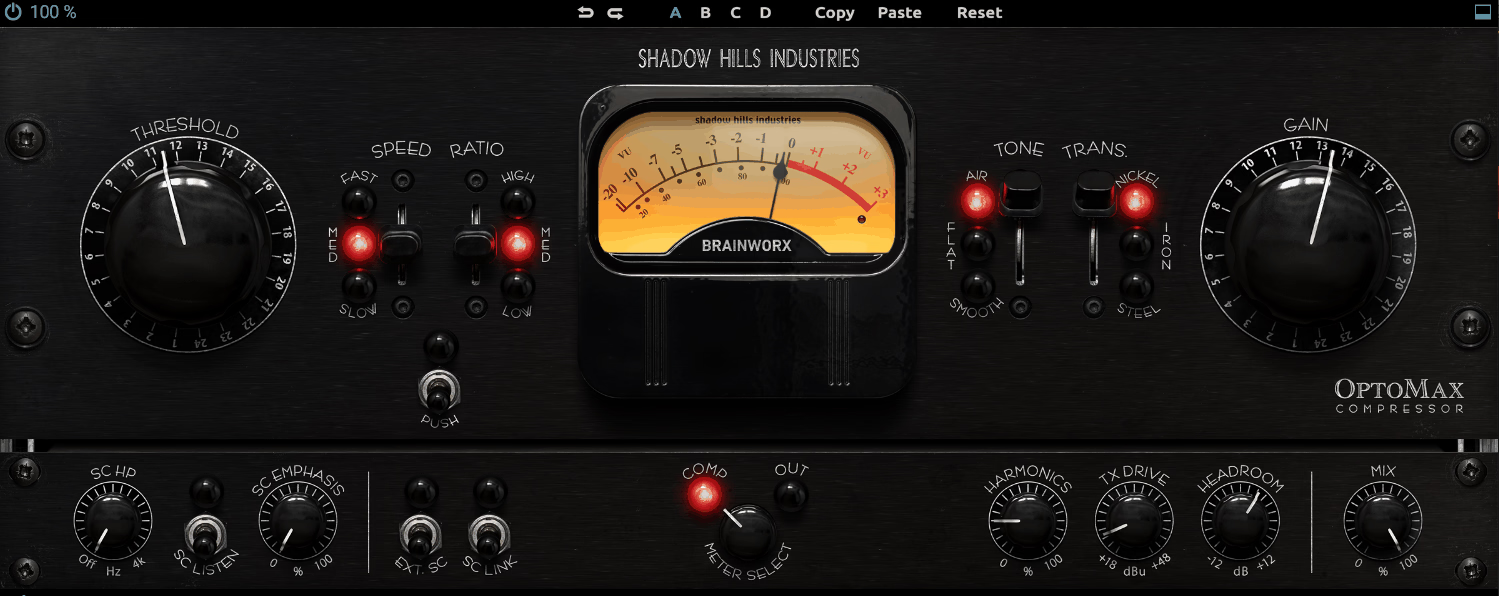
The Shadow Hills Mastering Compressor built its reputation on pairing a VCA stage with a completely separate optical circuit. Brainworx isolated it, rebuilt it as OptoMax, and pushed the design well past what the optical section could ever manage while still living inside the original hardware.
At first glance, this looks like a standard opto compressor, but the Ratio control and Slow/Med/Fast Speed settings give you a level of timing precision the original hardware’s optical section never offered on its own.
- Push Mode
Push mode switches the behavior to limiter-style, ultra-fast timing for aggressive, modern compression, which is a genuinely different animal from the smooth, blooming character opto compressors are usually known for.
- Nickel, Iron, and Steel Transformer Modes
You can switch between the three transformer colorations pulled from the original Mastering Compressor, and each one changes the harmonic flavor of the compression in a noticeably different direction.
2. Softube OPTO Compressor
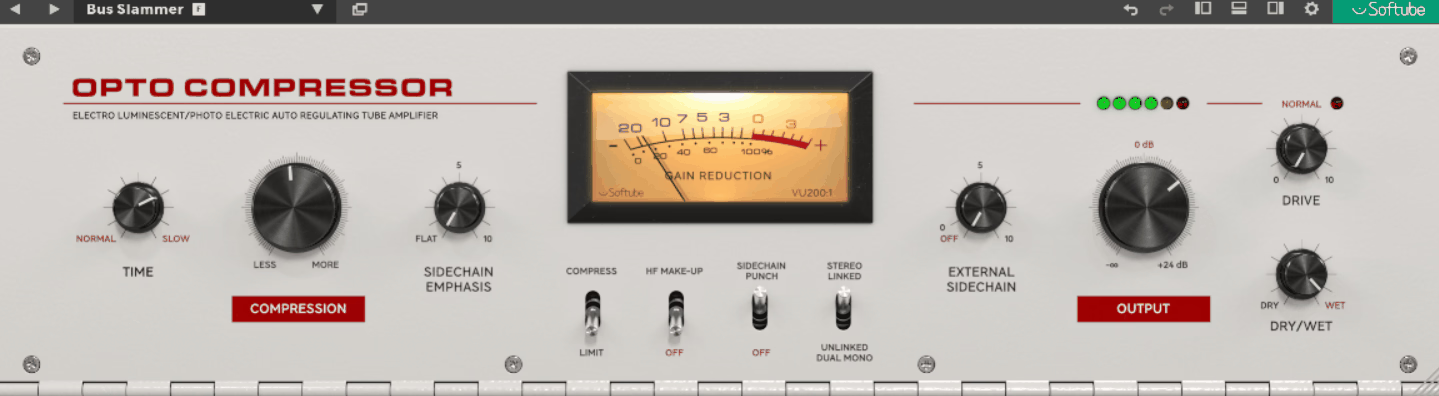
The appeal of this compressor is how little it seems to interfere with the source. Softube OPTO Compressor is based on the early-1960s T4 Opto Cell design, giving it that gradual, unobtrusive kind of compression where the performance can feel more settled without sounding obviously processed.
What makes it more practical than a straight vintage recreation is the combination of tube character and modern mixing controls as you can get that smooth optical response while still having the flexibility expected from a current plugin, so it works just as well for shaping a vocal or bass as it does for adding a bit of old-school movement to a track.
- High Frequency Make-Up
This is the standout feature for me. HF Make-up dynamically reduces high-frequency compression as gain reduction occurs, functioning almost like a built-in dynamic EQ that most opto plugins simply don’t offer.
- Independent Drive Control
Drive lets you dial in distortion and character completely separately from the amount of gain reduction, which I found useful since the original hardware never let you decouple those two things.
- Stereo Link Switching
You can toggle between linked Left/Right gain reduction and Unlinked Dual Mono mode, giving you independent compression per channel when a source genuinely calls for it.
3. NEOLD U2A
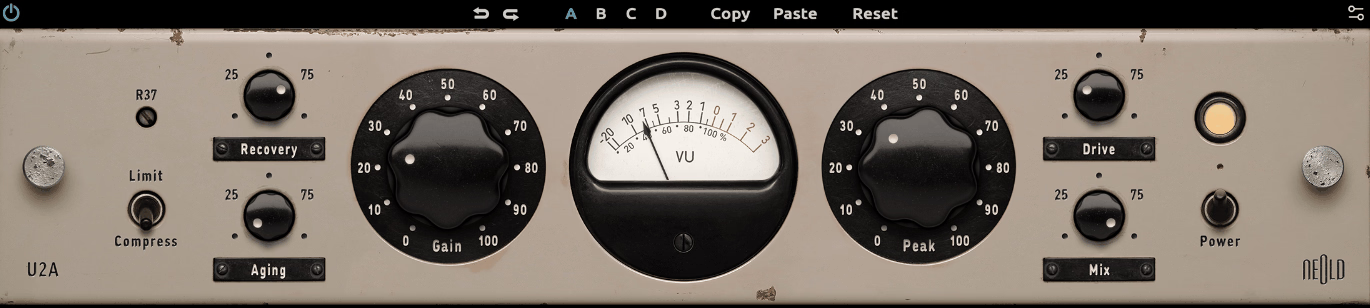
NEOLD U2A is particularly interesting when you want optical compression to contribute tone as well as gain reduction.
The plugin is based around the family of LA-2A-style hardware units, but instead of locking you into the response of one particular unit, it lets you move through a range of characteristics with a single control.
That can be useful when a vocal, bass line, or instrument is sitting in the right place dynamically but still feels a little too plain. A small change in the U2A’s character can alter the way the source feels without requiring a completely different compressor, which makes it easy to use as a final tone decision rather than just another dynamics processor.
- The Aging Knob
I love that a single Aging knob lets you continuously blend between the behavior of a freshly serviced unit and a well-loved vintage one..
4. UAD Teletronix LA-2A Tube Compressor
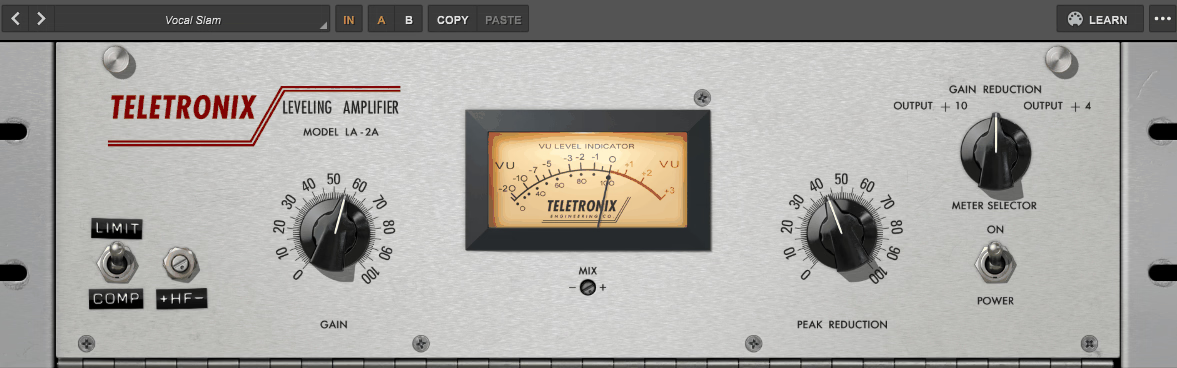
Universal Audio effectively owns the Teletronix name today, which puts them in a unique position: nobody else can put out an LA-2A plugin with this level of access to the original engineering notes and hardware variants.
Their Leveler Collection bundles three separate historic versions, each one carrying its own distinct sonic personality. That’s what separates this from most other LA-2A emulations on the market.
- Three Historic Hardware Versions
The Leveler Collection includes the LA-2, LA-2 Gray, and LA-2A Silver, each modeled from a genuinely different era of the hardware with its own distinct sonic personality.
- Apollo Real-Time Tracking
Running on Apollo interfaces, you can track vocals or guitar directly through the plugin at near-zero latency, hearing the compression shape the performance as you play instead of only after the fact.
5. Waves Renaissance Compressor
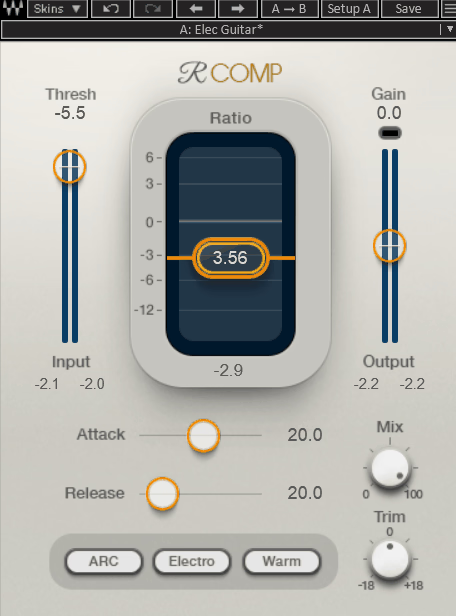
The C1 Compressor/Gate and L1 Ultramaximizer came from very different corners of Waves’ processing lineup, yet technology from both ended up contributing to this compressor.
Waves RComp therefore isn’t trying to preserve the behavior of a particular vintage circuit; its identity comes from combining ideas that were already proven in other Waves processors.
That gives the plugin a useful middle ground. It can handle straightforward compression without feeling overly specialized, but there’s enough flexibility to push it harder when simple leveling isn’t enough. I think that makes more sense as its selling point than pretending it belongs to the same category as a traditional hardware emulation.
- Opto and Electro Behavior Modes
A single Behavior switch flips between vintage opto-style timing and a faster, more modern electro-style response, letting one plugin cover two genuinely different compression personalities.
- Auto Release Control
Waves’ ARC technology adapts release timing automatically based on program material, which I think is what lets this plugin achieve unusually high RMS levels without sounding squashed.
- Upward Expansion Below 1:1
Set the ratio below 1:1 and the compressor flips into upward expansion, emphasizing transients and attack rather than taming them, a trick most opto-style plugins don’t offer at all.
6. Slate Digital Custom Opto Compressor
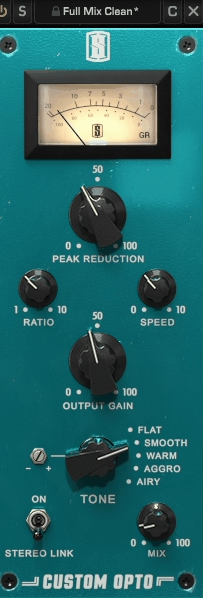
The Tone control is probably the first thing I’d reach for here. It changes the way the compressed signal sits tonally, which gives Custom Opto Compressor a useful extra dimension beyond the familiar 2A-style compression underneath it.
That makes the plugin less of a “set it and forget it” opto compressor. The classic smooth optical response is still there, but the added timing controls let the compression react differently depending on the material. A vocal can stay rounded and controlled, while a bass or instrument can be made more assertive without abandoning that basic opto character.
- Five-Way Tone Selector
Flat, Smooth, Warm, Aggro, and Airy modes each reshape the compression’s harmonic character substantially, and I’d say this Tone knob is the plugin’s actual headline feature.
- VMR Rack Integration
Custom Opto lives inside Slate’s modular VMR rack, so you can chain it directly with EQs and saturators, and pair it with the more traditional FG-2A for a genuine one-two combination.
7. Brainworx bx_opto
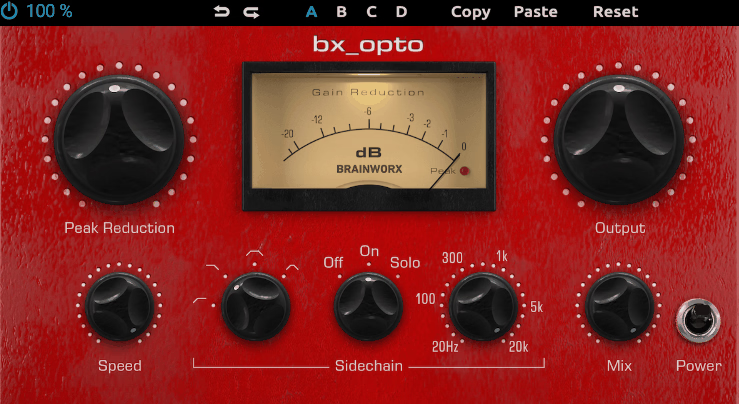
Every optical compressor’s character comes down to how its Light Dependent Resistor reacts to changing light intensity, and Brainworx spent years studying that behavior across several different legendary units before building bx_opto.
Instead of settling on one hardware reference, they combined the most desirable quirks and anomalies from multiple classic circuits into a single plugin. I think that’s why bx_opto sounds distinct from any one specific vintage unit you could name.
- Variable LDR Speed Control
A dedicated Speed knob adjusts how quickly the Light Dependent Resistor recovers, giving you release-time control that hardware opto compressors have historically lacked entirely.
- Four-Type Sweepable Sidechain Filter
The sidechain filter sweeps from 20Hz to 20kHz across high-pass, low-pass, and two band-pass modes, which is genuinely more flexible than the sidechain filtering on most competing opto plugins.
- Preserved Slow Attack Character
bx_opto keeps the inherently slower attack time that defines optical compression, which I think is why it stays musical and detailed even under heavier settings.
8. IK Multimedia Opto Comp
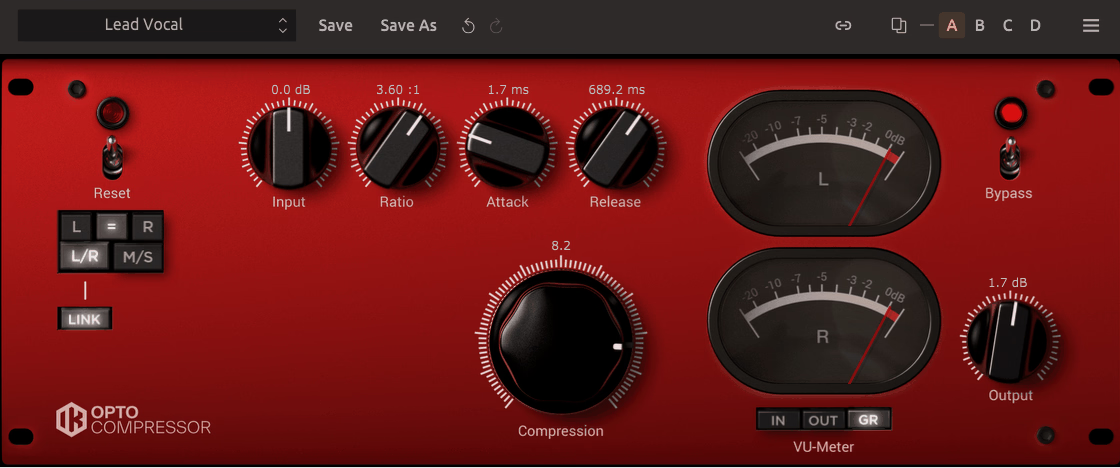
Optical compression can be surprisingly useful when the source already has the tone you want. IK Multimedia Opto Comp uses an electro-optical attenuator and photoconductive cell, with the input signal controlling light intensity that determines the amount of gain reduction.
The design was modeled with low distortion and minimal coloration as specific goals, rather than treating those qualities as secondary. That makes it a good fit for situations where the compressor needs to control dynamics while leaving the original tone largely alone.
It’s a particularly sensible choice for sources that are already well-balanced and simply need a smoother, more consistent level.
- Transparency by Design
Where other opto plugins lean into harmonic character, this one is built to preserve tonality
- DSM and SCC Modeling
IK’s proprietary modeling technologies aim for extremely accurate digital reproduction of the analog hardware’s behavior, down to how the circuit actually reacts to different input levels.
9. Overloud COMP LA
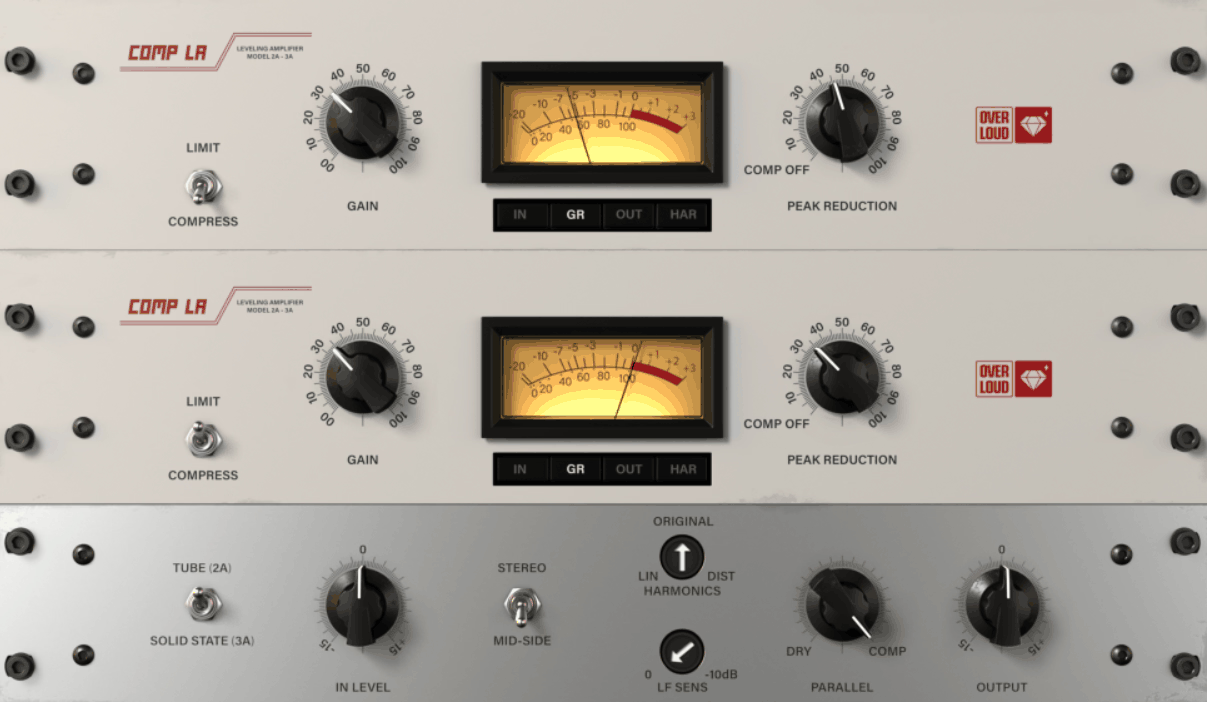
I would reach for Overloud Comp LA when I want optical-style compression without committing to the behavior of just one classic design.
The plugin gives you separate LA-2A and LA-3A-inspired modes, so you can choose between a more relaxed response and a tighter, more assertive one depending on how much control the source needs. That makes it particularly handy for vocals, bass, guitars, and other tracks where the character of the compression matters as much as the gain reduction itself.
- 2A and 3A Modes in One Plugin
The 2A mode delivers a warmer, harmonically richer tone from its tube-powered design, while 3A offers a faster attack and cleaner, more transparent response, and I like having both without needing two separate plugins.
- Hyper-Realistic Dual-Stage Release
The release curve genuinely mimics the photo-cell’s natural two-stage behavior, roughly 70ms for the first half and up to 5000ms for the second, which is a level of release-curve accuracy most emulations skip entirely.
- Built-In Mid-Side Processing
You can compress the Mid and Side channels separately without an external matrix, which opens up parallel and spatial compression tricks the original hardware simply can’t do.
10. ACME Opticom XLA-3
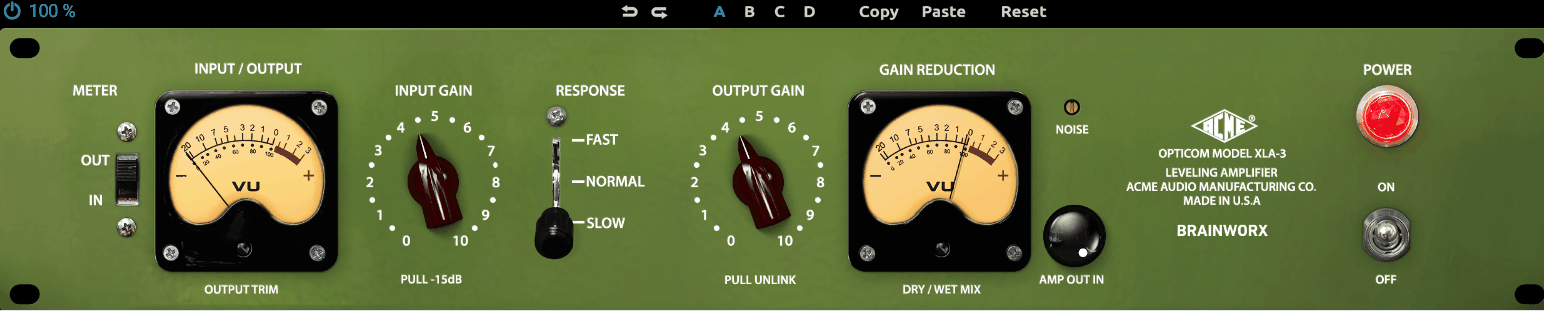
Some compressors are useful because they stay out of the way, while ACME Opticom XLA-3 is more interesting when you want the compression itself to become part of the sound.
The plugin recreates the character of ACME Audio’s XLA-3, with three distinct compression modes that give you different shades of punch, thickness, and grit. I’d consider it when a clean, polished opto compressor feels too restrained and the track needs a little more attitude from the dynamics processing.
- Three Switchable Compression Curves
Fast, Normal, and Slow settings each produce a genuinely different envelope response, ranging from clean leveling all the way to dirty, smashed compression, all from the same circuit.
- Amp Mode
I think this is the plugin’s most unusual feature: Amp Mode adds harmonic color and grit to a signal without touching the dynamics at all, functioning as a saturation stage in disguise.
11. Waves CLA-2A
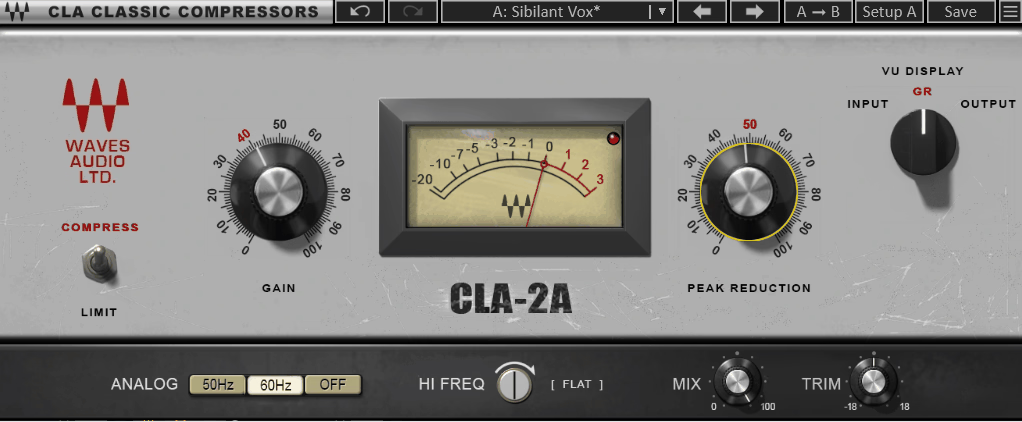
The appeal here is less about versatility and more about having a compressor with a very specific sonic identity. Chris Lord-Alge’s longtime use of his own LA-2A gave Waves a particular reference point for the modeling, rather than simply recreating the general behavior of an optical compressor.
Waves CLA-2A also includes Chris Lord-Alge’s personal presets designed around vocals, bass, guitars, and drums, which makes it easy to get close to a useful result before making your own adjustments.
- Sidechain Frequency Filter
A dedicated sidechain filter lets you shape which frequencies trigger the compression, useful for keeping low-end content from over-triggering gain reduction.
- Auto Makeup Gain
Auto Makeup Gain automatically balances output level against input, which I’d recommend leaving on if you just want fast, reliable results without manually riding the Gain knob.
12. Tone Empire OptoRed
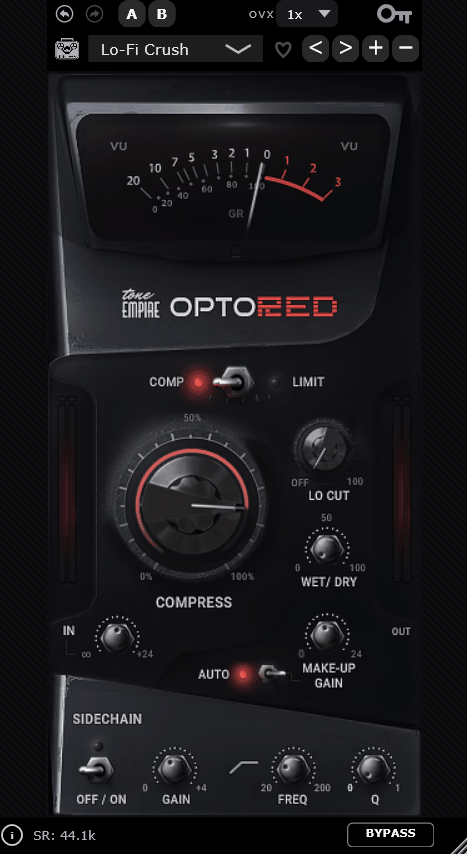
Tone Empire launched their Enhanced Classics series specifically to solve one problem: they wanted a genuinely accurate 1:1 emulation of a classic American tube optical compressor as the starting point, then room to build past the original hardware’s limits from there.
OptoRED became the first release in that series, and it shows in how deliberately restrained the coloration stays throughout. I like that this feels like a design decision, especially next to warmer, more colored compressors like the ACME or Overloud entries above.
- Built-In Sidechain Circuit and Lo-Cut Filter
The Lo-Cut filter is designed specifically for tracking, removing unwanted low frequencies from the sidechain while keeping latency low enough for real-time monitoring.
- Deliberate Transparency
Unlike plugins that lean into tube coloration, OptoRED is built to stay invisible and let the source material speak for itself, which matters most when you’re processing something that already sounds good and just needs leveling.
- Auto Gain and Comp/Limit Switching
Auto gain handles level compensation automatically, and a Comp/Limit switch moves between a gentler ratio and a much steeper one, extending the design well beyond vocals and bass into drums, synths, and full mixes.
Freebies
Niviem OPT4
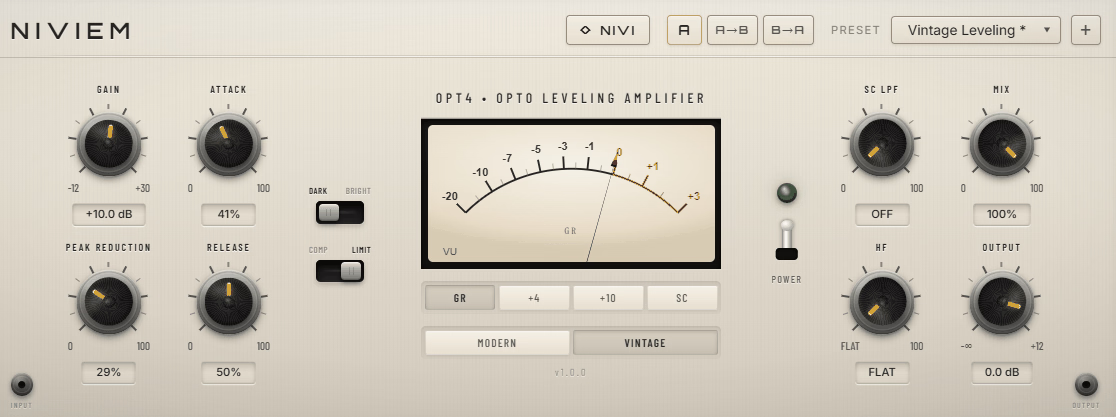
Well, I’ll admit I didn’t expect a free plugin to go this deep into circuit modeling. Niviem’s OPT4 is a circuit-accurate emulation of the 1965 Teletronix LA-2A, built around a genuinely modeled T4 opto cell rather than a generic approximation of the sound.
- True Feedback Compression Topology
The sidechain monitors the output signal in a true feedback loop, complete with EL panel threshold modeling, a CdS photoresistor gamma curve, and a program-dependent memory effect baked into the release behavior.
- Modern/Vintage Opto Response Switch
Modern mode gives you clean, punchy compression from factory-fresh transformers, while Vintage mode adds warm, saturated coloration from aged transformer modeling, all in a free plugin.
- Dark/Bright Tube Tone
A switchable 12AX7 and 12BH7 tube stage lets you choose between restrained warmth and hotter, more present harmonic character, on top of the authentic two-knob Peak Reduction and Gain core.
BPB Dirty LA
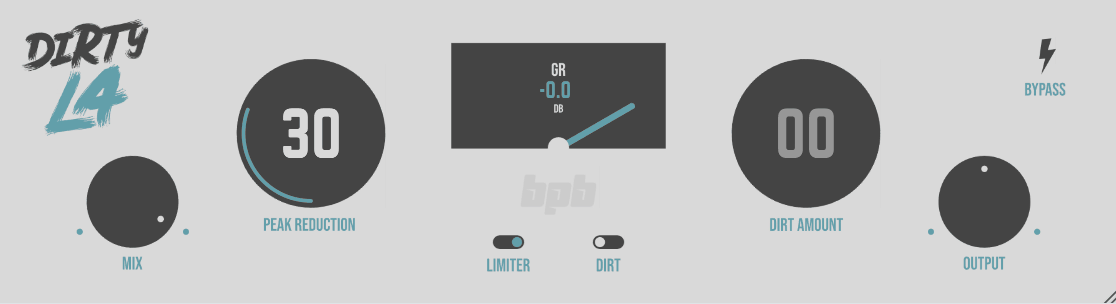
BPB Dirty LA isn’t trying to be an exact clone of any single hardware unit. Instead it pulls inspiration from several classic limiting amplifier designs and blends them into one streamlined, musical-sounding compressor.
- Built-In Dirt Saturation
A dedicated Dirt algorithm adds smooth saturation that warms and boosts the signal while gently taming transients, and it can be switched off entirely if you want the compression to stay transparent.
- Parallel and Limiter Modes
The Mix knob enables easy New York-style parallel compression on drums, while flipping to Limiter mode gives you a faster, higher-ratio response that works well as mix-bus glue.
Analog Obsession LALA
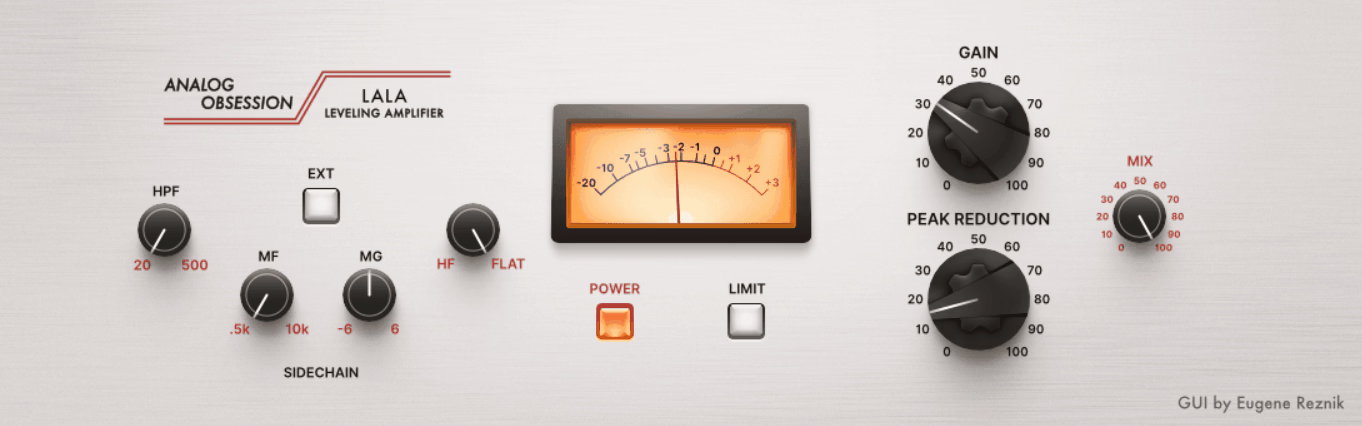
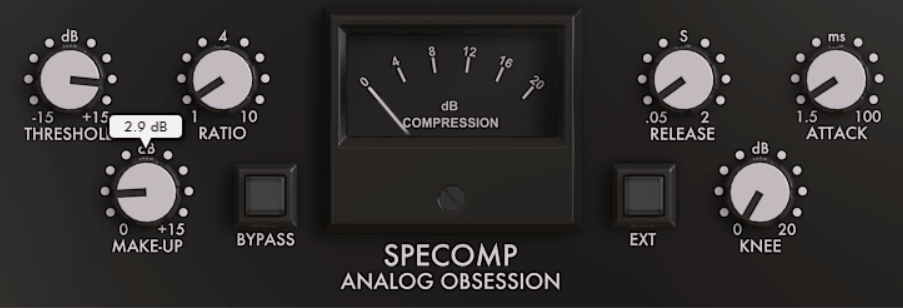
Analog Obsession recreates the familiar optical compression behavior and then expands on it with controls that go beyond what you would find on the original hardware. The built-in sidechain shaping is particularly useful, since it lets you influence how the compressor reacts to the incoming signal rather than simply accepting the detector behavior of the vintage design.
I also like that this makes Analog Obsession LALA more adaptable than a strict hardware recreation. You can use its smooth leveling character for vocals, bass, guitars, or other sources, while the extra sidechain control gives you more room to shape the response around the material.
- Three-Band Filter Sidechain
A high-pass filter cuts low end from the sidechain entirely, while separate MF/MG and HF/FLAT controls set compressor sensitivity across the mids and highs, essentially an enhanced version of the original unit’s R37 setting.
ADHD Levelling Tool
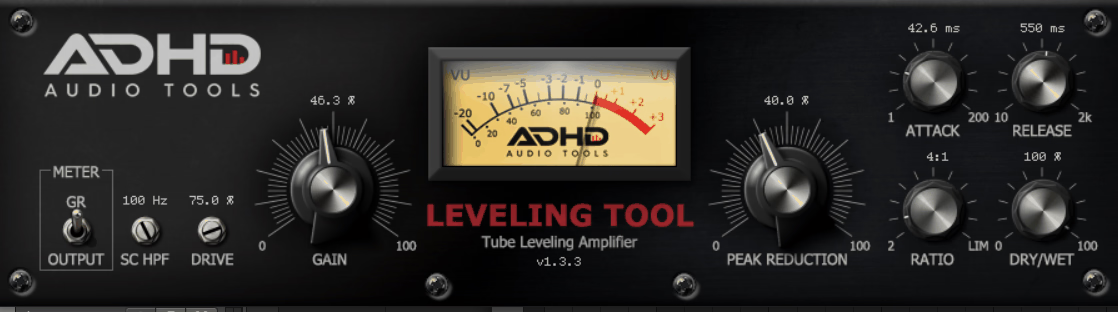
I’d recommend this one when a traditional LA-2A-style workflow feels too fixed and I want more freedom to shape the character.
Instead of limiting the experience to a handful of controls, ADHD Levelling Tool gives you considerably more influence over how its leveling behavior responds, making it easier to tailor the compression to different sources and production styles.
- Sidechain High-Pass Filter
A built-in sidechain high-pass filter keeps low-frequency content from over-triggering the compressor, reducing unwanted pumping on bass-heavy sources.
- Rotary Drive Control
A dedicated Drive knob dials in tube saturation independently of the compression settings, running through 4x oversampling and 64-bit internal processing for a cleaner result than the CPU cost would suggest.

Hey, I’m Vil, I started this site to help you find the best audio plugins covering various categories including synths, pianos, strings, and effect tools of all sorts as well. I pick these plugins based on various criteria so it best matches the actual topic.