When you purchase through the links on my site, you support the site at no extra cost to you. Here is how it works.
Bass distortion gets difficult when you need aggression without losing the fundamental. Heavy saturation can make the instrument louder in the mids while weakening the low end, so the bass ends up fighting the kick and guitars instead of supporting them.
That said, Darkglass Ultimate is built around that problem, with the B7K Ultra and Vintage Ultra preamps, bass-focused effects, two Darkglass cabinets, custom IR support, and a 9-band EQ. I’ve used this type of setup on modern rock and metal bass, and the useful part is how quickly you can get from a clean DI to a tight, mix-ready distorted sound.
- B7K Ultra and Vintage Ultra preamps
The B7K Ultra gives you a tighter, more aggressive distortion, while Vintage Ultra delivers a smoother and warmer drive. Having both makes it easier to cover different levels of bass saturation without changing plugins.
- Dual cabinet section
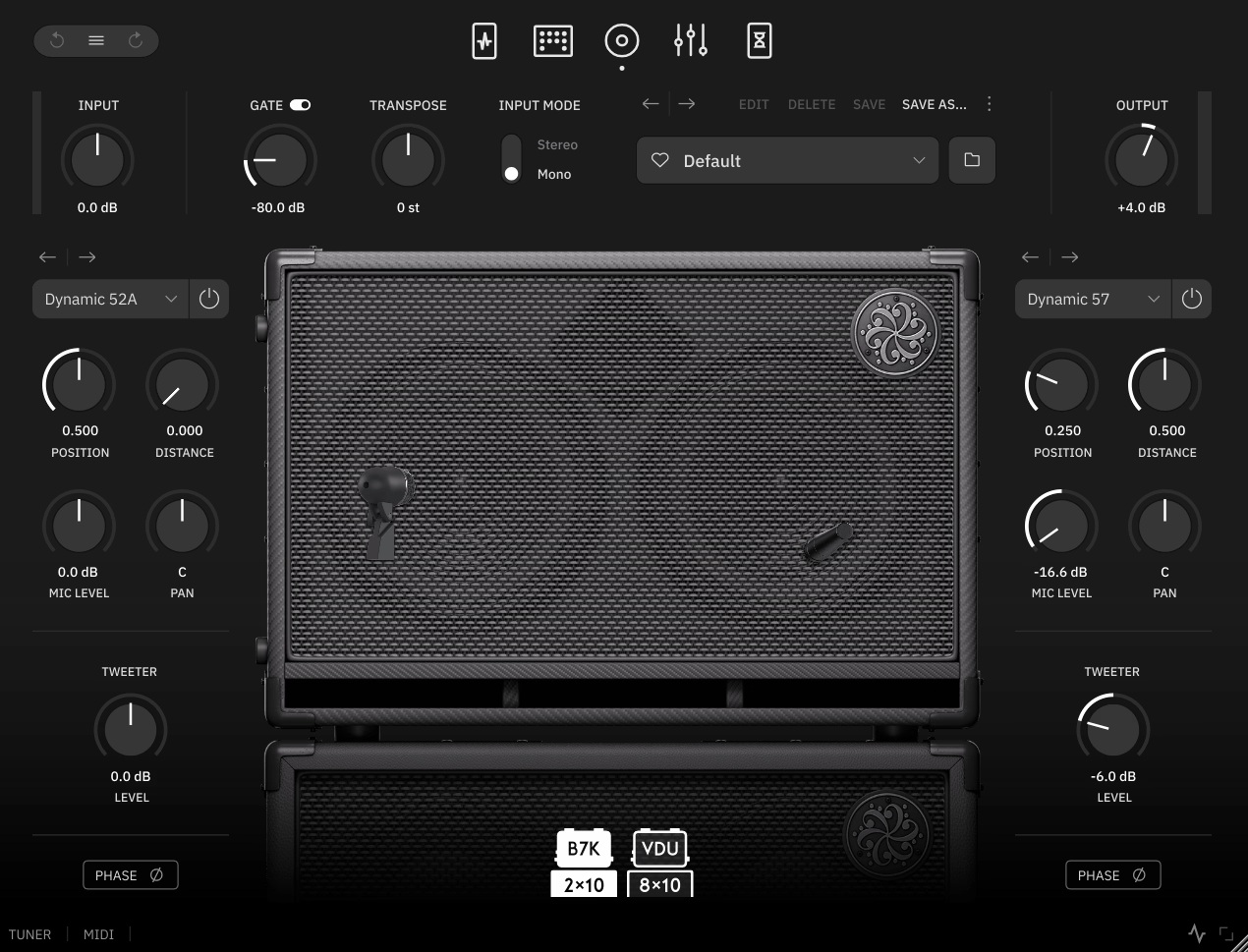
The DG210C 2×10 and DG810ES 8×10 give you different balances of tightness, weight, and impact, with microphone positioning and a Bass Reflex option.
- Bass-specific signal chain
You get compressor, Auto-Wah, Octaver, Fuzz, chorus, delay, reverb, cabinet simulation, and a 9-band EQ, so the main bass-processing tasks are covered in one place.
- Third-party IR loader
You can load your own bass cabinet impulse responses, which becomes useful when you already have IRs that work with your tuning or bass.
B7K Ultra and Vintage Ultra
The B7K Ultra is the first place I’d go for modern metal and progressive bass. Grunt and Attack let you decide what the distortion stage receives, which means you can tighten the low end or preserve pick definition before increasing the gain.
I use Attack when a pick-driven part starts losing articulation and Grunt when the distorted tone needs more body. Those small adjustments can change how the bass sits under the guitars more effectively than simply adding more Drive.
Vintage Ultra takes a smoother approach. It still gives you plenty of saturation, but the response is less aggressive, which suits hard rock or cleaner bass parts where you want some grit without the full B7K character.
Blend and 9-Band EQ
Distorted bass often sounds exciting on its own and then loses too much low-end weight in the mix. The Blend control lets you keep part of the clean signal underneath the processed sound, so you can retain the fundamental while adding the harmonics that make the bass easier to hear.
I usually start around the middle and adjust while the kick and guitars are playing. If the bass has enough grind but feels thin, bringing the clean signal back usually works better than boosting the low end.
The 9-band EQ is more useful once the amp and cabinet are already working. I use it to clean up low mids, add some presence, or make space around the kick without changing the underlying character of the distortion.
Cabinets and IRs
You get the DG210C 2×10 and DG810ES 8×10 cabinets, each giving the preamps a noticeably different response. I normally reach for the 2×10 when the bass needs tighter definition and the 8×10 when I want more size and impact.
The microphone controls give you another way to shape the recorded tone, and the Bass Reflex option can add more low-frequency weight to the larger cabinet. I would check that against the kick before keeping the extra sub energy.
If you already own bass IRs, the custom IR loader is one of the more useful features in the package. You can keep the preamp character while changing the cabinet response, which saves you from having to compromise around the factory options.
- DG210C 2×10
A good choice for tight attack and controlled low end, especially when the arrangement already has a lot happening below the guitars.
- DG810ES 8×10
Useful when the bass needs more size and low-end authority in a dense arrangement.
- Custom IRs
Bring in your own impulse responses when you need a different speaker character or already have a cabinet library that suits your bass.
Effects and Noise Control
The effects cover the main jobs around the preamp, including compression, Auto-Wah, Octaver, Fuzz, chorus, delay, and reverb. I usually use compression before the preamp when the source is uneven and keep the rest of the effects fairly restrained.
The Octaver can be useful on cleaner bass sounds, but I would be careful with it once the distortion is heavy. Extra sub energy can quickly interfere with the kick, so lowering the Blend or adjusting the arrangement is often a better solution than simply turning the octave down after the fact.
For high-gain sessions, the noise gate is important between phrases. I keep the threshold conservative so the gaps become quieter without cutting the decay of low notes.
Transpose, Tuner and Workflow
Transpose can shift the bass up or down by up to an octave, which is useful when testing different arrangements without replaying the part. The tuner also stays available inside the plugin, so you can handle quick tuning checks without leaving the session.
The preset browser is useful for auditioning tones, while Global Lock can keep selected settings unchanged as you browse. I find that particularly handy when comparing presets because I can change the character without losing the input or output setup I’ve already dialed in.
Where I Use It
Modern metal is the clearest fit. The B7K Ultra gives you enough harmonic density to keep the bass audible beside heavily distorted guitars, while Blend helps preserve the low-end foundation that the distortion alone may obscure.
I also use Vintage Ultra when the bass needs less aggression. You can keep the drive moderate and let the amp, cabinet, and EQ provide the character, which gives you a smoother option without leaving the same workflow.
- Modern metal
Use B7K Ultra when tight low end, aggression, and articulation all need to survive in the same bass track.
- Progressive and hard rock
The controlled midrange and drive work well when bass has to stay present through dense guitar arrangements.
- Warmer bass tones
Vintage Ultra is better suited to smoother saturation and rounded character when the B7K response is too aggressive.
A Practical Workflow
I would start with preamp gain and Blend, not the EQ. Get the balance between the clean fundamental and distorted harmonics working first, then use Grunt and Attack to shape the bass before adding more processing.
For the Blend control, I usually start around 50/50 and adjust while the kick and guitars are playing. More clean signal brings back low-end weight, while more processed signal adds harmonic presence, so the right balance depends on how dense the arrangement is.
Once the preamp is sitting properly, move to the cabinet and microphone. A different speaker or mic response can solve problems that another EQ boost would only mask, especially when the bass feels too boomy, bright, or undefined.
I would also try both cabinets before making major EQ changes. The DG210C 2×10 tends to keep the sound tighter, while the DG810ES 8×10 can give you more size and weight, so I choose between them based on what the rest of the mix is already doing.
Finish with the 9-band EQ and post effects, but keep the adjustments fairly broad. If the bass disappears on smaller speakers, I would look at midrange presence around the guitars before adding more low end, since extra sub information can easily make the mix heavier without making the bass easier to hear.
Where It Falls Short
The main limitation is tonal focus. Darkglass Ultimate is built around driven bass, so I would not choose it as my first option for pristine jazz, upright bass, or completely neutral studio tones.
The effects are useful for everyday processing, but they are not intended to replace specialist plugins. When delay, modulation, compression, or reverb becomes a major creative element, dedicated effects still give you more depth and control.
Cabinet variety is another constraint. The two supplied cabinets are useful, and the IR loader expands the options, but you will need your own IRs if you want a much broader speaker selection.
Pros and Cons
Pros
- Two distinct preamps
B7K Ultra gives you tight, aggressive drive, while Vintage Ultra covers a smoother and warmer sound without changing the overall workflow.
- Useful bass shaping
Grunt, Attack, Blend, and the 9-band EQ give you direct control over weight, definition, and harmonic balance.
- Flexible cabinet options
Two Darkglass cabinets, microphone controls, Bass Reflex, and custom IR support give you useful control over the final response.
- Complete bass rig
Compression, Octaver, Fuzz, modulation, delay, reverb, tuner, and transpose cover most everyday bass-processing jobs in one plugin.
Cons
- Specialized character
Its strongest sounds are built around driven modern bass, so cleaner applications may call for another tool.
- Limited factory cabinets
You get two main cabinet options, so custom IRs become important when you need more variety.
- Effects have practical limits
The built-in processors work well for standard tasks, but dedicated effects offer more depth when creative processing becomes a major part of the sound.
Verdict
To me, Darkglass Ultimate by Neural DSP makes sense when the bass needs to stay aggressive without becoming difficult to hear. B7K Ultra handles the tight, modern side, Vintage Ultra covers a smoother drive, and the Blend, Grunt, Attack, EQ, and cabinet controls give you enough range to fit either sound into a real mix.
I would especially look at it for modern metal, progressive, and hard rock, where distorted bass needs to hold onto its low-end foundation while still cutting through dense guitars. You can also use the cleaner side of the plugin for less aggressive material, although that is not where it has the biggest advantage.
If you regularly spend time trying to make distorted bass sound tight, heavy, and articulate, the focused workflow can save you a lot of work but if you mostly record clean or lightly processed bass, a more versatile bass platform will likely give you more for the same investment.

Hey, I’m Vil, I started this site to help you find the best audio plugins covering various categories including synths, pianos, strings, and effect tools of all sorts as well. I pick these plugins based on various criteria so it best matches the actual topic.