When you purchase through the links on my site, you support the site at no extra cost to you. Here is how it works.
Virtual guitar instruments have a credibility problem in metal production. Attack transients feel wrong, articulations switch obviously between samples, and palm mutes sound like someone recorded a guitar through a mattress.
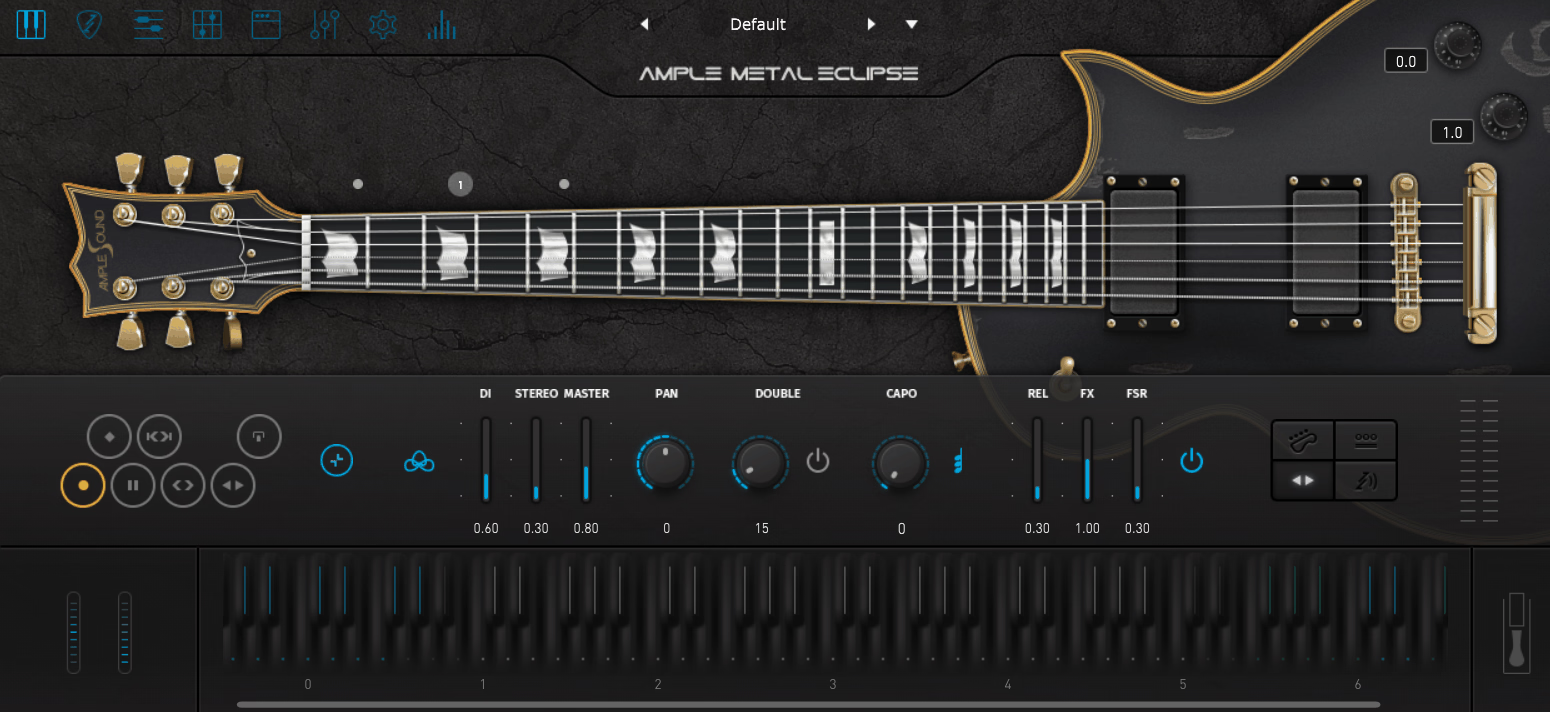
Ample Metal Eclipse is Ample Sound’s most refined metal guitar instrument, built around a multi-sampled 8-string electric guitar with a sample library and articulation system deep enough that results hold up in professional metal production. I’ve used it across metal, djent, and progressive sessions, and here’s the honest verdict on whether it works for metal musicians specifically.
Does it sound metal enough?
The library captures the guitar across up to 8 velocity layers per articulation with up to 6 round robin alternates per note. Those numbers matter for metal where fast repeated patterns expose shallow sample libraries immediately. On a fast palm mute pattern where a single-sample instrument produces obviously identical cycling hits, the round robin variation produces enough subtle difference between strikes to read as a performed part.
The 8-string range extends down to low F# at standard tuning with sampled content at each tuning position and not pitch-shifted from a single standard tuning. That distinction is critical because pitch-shifted extended range samples lose the string tension character that makes low-register riffing physically convincing, and you’ll notice the difference on heavily downtuned material immediately.
Palm mutes and articulations
Palm muting is where most virtual guitar instruments fail metal musicians, and it’s where Eclipse earns its credibility. The palm mute articulations are sampled at multiple muting pressures from lightly muted through to completely dead, covering the full character range from tight percussive rhythms to loose sustained mutes.
I use lighter pressure articulations on rhythm passages that need note definition through the mute, and tighter pressure articulations on syncopated patterns where the mute should be nearly silent between hits.
Beyond palm mutes, Eclipse covers over 30 articulations including sustain, natural harmonic, pinch harmonic, slide, hammer-on, pull-off, vibrato, tremolo picking, and dive bomb. Pinch harmonics and dive bombs specifically are what most competing instruments skip, and having them as sampled articulations makes a meaningful difference on metal parts where those techniques define the character of a riff.
The auto-articulation system detects playing patterns and switches articulations automatically, triggering hammer-on and pull-off samples on overlapping MIDI notes and alternate picking samples on fast repeated notes. For the most part the auto-switching is accurate enough, though technically demanding passages occasionally need manual override.
Here’s what the articulation system covers:
- Over 30 articulations including multiple palm mute pressure levels, pinch harmonics, dive bombs, slides, hammer-ons, pull-offs, and tremolo picking
- Auto-articulation switching from MIDI pattern detection with manual override per note
- Legato detection triggering hammer-on and pull-off samples on overlapping MIDI notes
- Tunings from standard through drop A with sampled content at each position and not pitch-shifted
Djent and extended range
The per-string Poly Legato system is the feature that separates Eclipse from competing instruments for djent specifically. Most virtual guitar instruments apply global legato behavior uniformly across all strings.
Eclipse models it at the per-string level, producing multi-string legato passages with the timing and dynamic variation between strings that reflects real playing. On complex legato lines, that per-string variation is what makes the result sound like guitar technique.
The bend system covers pitch bends up to 2 full steps with adjustable bend speed and vibrato depth per note. The pitch wobble and harmonic content of the bend reflects real string behavior and not a simple pitch interpolation, which matters on expressive djent lead playing where bends need to feel physically motivated.
Programming tools
The Chord library stores custom voicings mapped to single MIDI notes with factory voicings for common metal chord shapes across standard, drop D, drop A, and extended range tunings. Having pre-mapped voicings that trigger with single notes significantly reduces the overhead of building rhythm parts in extended tunings.
The Tab reader imports guitar tablature and converts it to MIDI playback, which I find useful for quickly auditioning how a riff sounds through Eclipse without manually programming each note. On complex metal parts with multiple articulations this saves real time, and you can use it as a starting point and refine the articulation assignments manually from there.
The Strummer engine generates strumming patterns from chord input across up to 8 strings with adjustable strum speed, direction, velocity, and timing variation. Less central to metal production where most rhythm playing is picked, but useful on clean intro passages and arpeggiated sections where it produces more organic results than quantized individual note programming.
The amp situation
Eclipse includes a built-in amp simulation voiced for the 8-string range with low-end tightness that prevents sub-bass frequencies from becoming muddy. It’s functional for sketching and arrangement work, and nothing more than that.
For finished metal productions, routing Eclipse through a dedicated amp sim via the direct output is a practical necessity. The tonal difference between the internal amp and something like Neural DSP on the same guitar part is large enough that you should budget for a dedicated amp sim alongside Eclipse from the start. Factor that additional cost in before buying.
- Direct output routing
Bypassing the internal amp and routing through a dedicated amp sim produces results meaningfully more convincing than the internal amp on finished productions. I use the direct output as my default on any session where the guitar tone matters to the final result.
- Internal amp for sketching
Fast and usable for quick arrangement work where you need to hear the part in context without setting up external routing. I switch to dedicated amp processing before any serious mixing work begins.
Pros and cons
Pros:
- Palm mute pressure levels
Multiple sampled muting pressures covering the full character range from tight and percussive to loose and sustained is the most practically valuable feature for metal production. No competing instrument handles palm mute variation with the same granularity, and it’s what makes the difference between a rhythm part that sounds programmed and one that sounds played.
- 8 velocity layers with 6 round robins
The sampling depth produces dynamic and repetition variation that holds up on fast, technically demanding metal parts. You’ll notice the difference on fast alternate picking patterns and repeated palm mute hits where round robin variation prevents the mechanical cycling that gives programmed guitar away.
- Extended range with sampled tunings
Sampled content at each tuning position down to low F# produces convincing low-register character that pitch-shifted alternatives don’t replicate, and you can move freely across the full 8-string range without the tonal inconsistencies that pitch-shifting produces at extreme positions.
Cons:
- Built-in amp ceiling
Not competitive with dedicated amp simulation for finished metal production. You need to budget for a dedicated amp sim alongside Eclipse, and that’s a real additional cost worth knowing about before you buy.
- RAM demands
The sample library produces a significant RAM footprint at full quality settings. On systems with less than 16GB of RAM, loading time and memory management become practical constraints on larger sessions, and you’ll need to manage the sample streaming quality settings actively.
- Auto-articulation on complex passages
Handles most standard metal playing patterns correctly but requires manual override on technically demanding passages with unusual articulation combinations. For producers working on complex material, that manual override adds programming time on the parts where you most want the auto-switching to just work.
Verdict
For metal musicians, Ample Sound Metal Eclipse is genuinely capable enough to be a primary guitar instrument in a production context. The sampling depth, palm mute pressure levels, per-string poly legato, extended range coverage, and articulation breadth produce results that competing instruments don’t consistently match on the specific playing techniques that define metal guitar.
The conditions are the built-in amp, the RAM demands, and the total cost including a dedicated amp sim. Factor all three in before buying. If your setup accommodates them, Eclipse earns its place in a serious metal production workflow and delivers results I haven’t matched with other virtual guitar instruments on the same material.
Hey, I’m Vil, I started this site to help you find the best audio plugins covering various categories including synths, pianos, strings, and effect tools of all sorts as well. I pick these plugins based on various criteria so it best matches the actual topic.