When you purchase through the links on my site, you support the site at no extra cost to you. Here is how it works.
There’s a reason the 1176 keeps getting emulated over and over again. No other compressor design does quite the same thing to a signal. The FET circuit grabs transients faster than any other topology, the transformers add harmonic weight, and the Class A amplifier stages introduce a warmth that makes everything passing through it sound more alive.
I‘ve tried to count how many 1176-style plugins exist and honestly lost track somewhere around thirty.
In this article, I’m covering the best FET compressor plugins that I think are worth your time, from premium options with deep feature sets to free tools that punch well above their weight.
Whether you’re smashing drum rooms, taming vocals, or just running signal through the circuit for color, one of these will fit your workflow.
1. Pulsar 1178
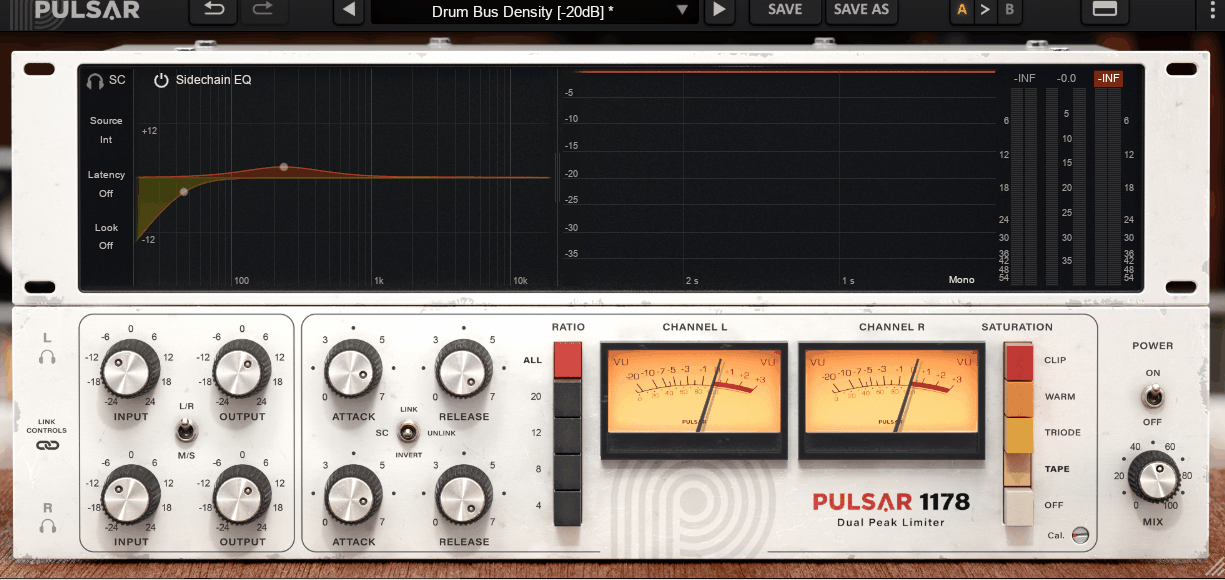
Most 1176 emulations aim for the original UREI 1176LN. Pulsar Audio went after its less common sibling, the 1178, which shares the same FET gain reduction circuit but sits in a dual-channel rackmount chassis with a cleaner, more transparent signal path.
The result is a compressor plugin that retains the speed and aggression of FET compression but sounds noticeably more refined than most 1176 emulations. I would reach for it when I want FET behavior without the mid-heavy coloration that some 1176 plugins push hard.
Pulsar didn’t stop at a faithful recreation. They layered in a full sidechain EQ, a four-mode saturation stage, and metering that actually helps you make better decisions.
- Four Saturation Modes
An optional saturation stage offers Tape, Warm, Triode, and Clip modes, each with its own harmonic character. Tape adds gentle compression alongside the harmonics while Triode introduces tube-style warmth. Clip provides hard limiting for aggressive transient control.
These modes sit independently from the compressor circuit, so you can use the 1178 purely for saturation by dialing the compression back to zero. I use the Warm setting on vocals at low amounts more often than I use it for actual compression.
- Look-Ahead & Look-Behind
Unlike analog hardware where compression happens as the signal arrives, Pulsar lets you shift the compressor’s response forward or backward in time by up to 10 milliseconds.
Look-ahead catches transients before they hit the detector, giving you tighter control without increasing the attack speed. Look-behind deliberately delays the compression response, creating interesting effects where the transient passes through uncompressed before the gain reduction engages.
This feature doesn’t exist on any hardware 1178 and it’s one of the most creative controls I’ve found on a FET plugin.
- Mid/Side Processing
Individual attack and release controls for each channel can be toggled between stereo linked and Mid/Side mode.
In M/S, you can compress the center image aggressively while leaving the stereo field more open, or vice versa. For drum buses and mix buses, this gives you spatial control that a standard stereo compressor can’t offer.
- Sidechain EQ
A built-in parametric EQ on the sidechain lets you shape what the compressor reacts to without affecting the audio output.
High-pass the sidechain to prevent kick drums from triggering excessive gain reduction, or boost a narrow band to make the compressor more sensitive to specific problem frequencies. You can monitor the sidechain signal directly, which takes the guesswork out of setting it up.
2. Softube FET Compressor Mk II
Softube has been modeling analog gear for over two decades, and the FET Compressor Mk II is a ground-up rebuild of their earlier version.
What sets Softube’s approach apart is that they modeled the entire unit, not just the gain reduction circuit. That means the input and output transformers, the Class A amplifiers, the bias differences between individual transistors, and the specific distortion characteristics of every stage in the signal path are all part of the emulation.
I use this one when I want a FET compressor that sounds unquestionably like a real piece of hardware. The character is aggressive and forward, especially when you push the input stage into distortion.
It’s not a clean compressor and it’s not trying to be. The All-Buttons-In mode on this thing is one of the most convincing I’ve heard in software.
- Dual Drive Modes
The Mk II separates the circuit’s coloration into two independent drives: FET drive and Transformer drive. You can use them individually or stack them.
FET drive adds the aggressive, brittle harmonic content associated with pushing the gain reduction stage. Transformer drive introduces a rounder, warmer saturation from the iron-core output stage. Being able to blend these independently gives you a range of tones from subtle warmth to outright distortion.
3. Overloud Gem Comp76
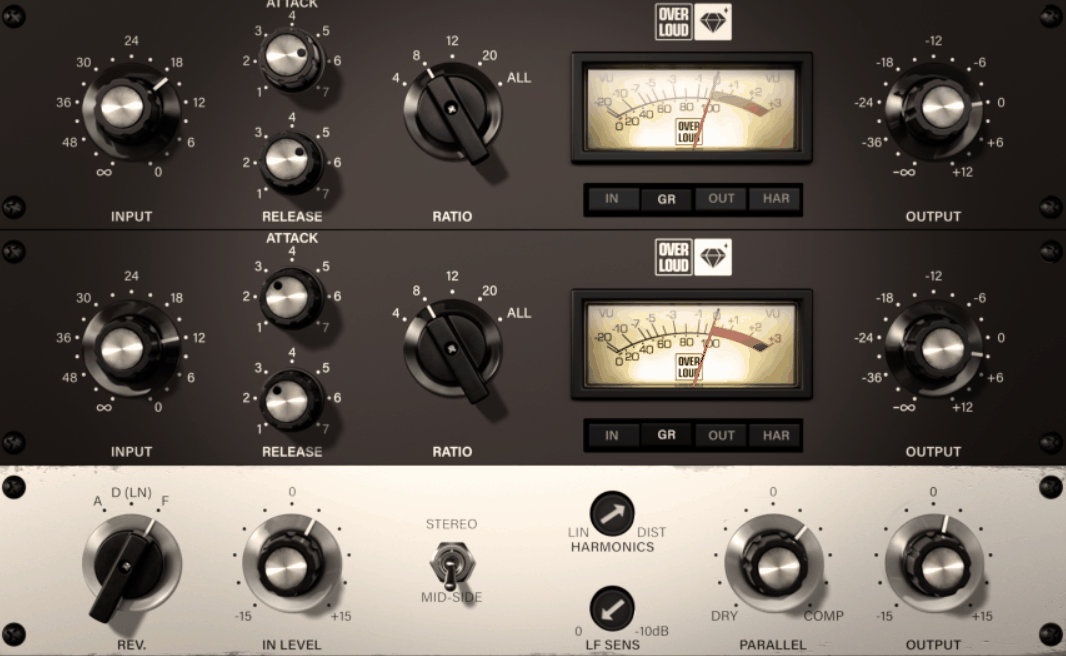
Overloud went deeper than most developers by modeling not one but three different hardware revisions of the 1176, each with meaningfully different sonic characteristics, all brought together in the Gem Comp76.
Rev. A is the oldest and warmest, with a higher noise floor and richer harmonic content. Rev. D is the low-noise version that became the studio standard, while Rev. F is the most recent, delivering a cleaner, more transparent sound. Having all three in one plugin gives you genuine tonal variety without needing to buy separate emulations.
- Three Hardware Revisions
Rev. A gives you a vintage character with harmonic richness and a slightly colored noise floor that adds texture. Rev. D is cleaner and tighter, suited to sources where you want FET speed without heavy coloration.
Then, Rev. F is the most transparent of the three, ideal for mastering and mix bus applications where you want control without obvious processing. Switching between revisions on the same source reveals how much the 1176’s sound changed across its production history.
- Harmonics Control
A dedicated Harmonics knob adjusts the amount of harmonic distortion independently from the compression settings. This means you can add the warm, saturated character of the circuit without engaging any gain reduction at all.
I use this feature to run signals through the Comp76 purely for color, especially on bass guitars and keyboards where a touch of harmonic content helps them sit in a mix.
- Low-Frequency Sensitivity
A sidechain low-cut filter lets you reduce the compressor’s sensitivity to bass frequencies. On drum buses, this prevents kick drum hits from causing the entire bus to pump.
4. Arturia Comp FET-76
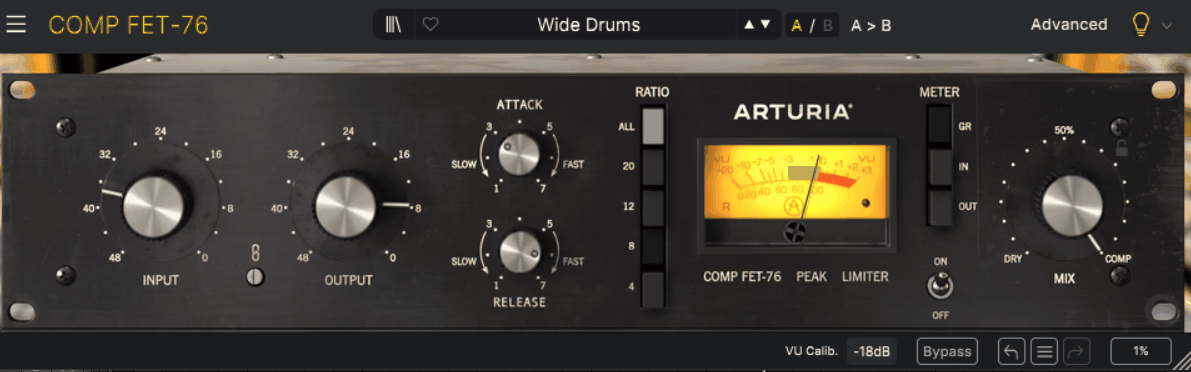
Arturia’s approach to hardware emulation has always leaned toward expanding what the original can do while keeping the core character intact. The Comp FET-76 follows this philosophy exactly.
The main panel looks and operates like a standard 1176, but an Advanced panel drops down to reveal features that fundamentally change what you can do with this compressor. If you tend to want more control than most 1176 plugins offer, this is where I’d point you.
Arturia uses their TAE (True Analog Emulation) technology to model the original circuit, including the ultra-fast 20-microsecond attack that defines the 1176’s transient behavior. The plugin sounds aggressive and punchy in the way you’d expect, but the extended feature set means it doesn’t have to be a one-trick pony.
- Time Warp
This is the feature that keeps me reaching for the FET-76 over other options. Time Warp adds a pre-delay to the compression envelope, essentially letting you shift when the compressor begins reacting relative to the incoming signal. Nudge it toward Snap and transients get caught earlier.
Push it toward Loose and the initial transient passes through before gain reduction kicks in. The effect on drums is dramatic and I haven’t found this exact control on any other 1176 emulation.
- Five Detection Modes
The Advanced panel offers five sidechain detection modes including Stereo, Dual Mono, Mid/Side, and two additional creative options.
M/S detection lets the center and sides trigger the compressor independently, which is particularly useful on stereo drum overheads or full mixes where you want different compression behavior on the center image versus the width.
5. Slate Digital FG-116
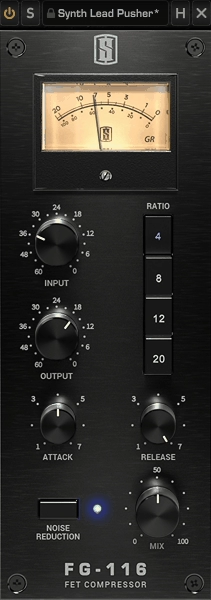
Slate Digital built the FG-116 Blue Series around the specific blue-striped Rev A units that command the highest prices on the secondhand market. But they didn’t stop at one emulation.
The plugin includes four distinct circuits: two vintage recreations with slightly different tonal characters, and two modernized versions that take the FET architecture in new directions. It runs inside Slate’s Virtual Mix Rack framework, which means it sits alongside other VMR modules in a single plugin instance.
What I like about the FG-116 is that each circuit genuinely sounds different. Vintage Circuit 1 has the classic mid-forward push that made the blue-stripe units famous.
Vintage Circuit 2 is modeled after a refurbished Rev A with slightly different component aging. The two modern circuits have different attack characteristics that make them suited to specific applications. You’re essentially getting four FET compressors for the price of one.
- Four Circuit Variations
Vintage 1 delivers the warm, harmonically rich upper-midrange character with softer highs and lows. Vintage 2 is based on a different individual unit with its own unique aging characteristics.
Modern 1 has a slower attack that works well on close drum mics, letting transients punch through before the compression engages. Modern 2 is brighter and more aggressive. Switching between them on the same source is one of the fastest ways to explore different FET tones.
- Preamp Mode
Shift-clicking the attack parameter bypasses the compression entirely and lets you use the FG-116 purely as a FET preamp stage.
The circuit coloration, transformer harmonics, and input/output stage saturation remain active while the gain reduction circuit is disabled. I use this trick on guitar buses when I want the 1176 color without any dynamic processing.
6. Plugin Alliance Lindell 7X-500
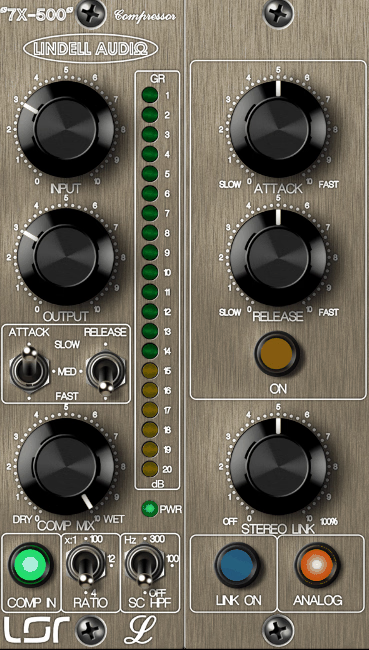
The Lindell 7X-500 models a 500-series format FET compressor designed by Lindell Audio, which gives it a slightly different sonic footprint than plugins based on the original rackmount 1176.
The 500-series form factor means a different transformer design and a tighter signal path, which translates to a compressor that’s punchy and direct without the thicker coloration of full-sized 1176 units. If you find some 1176 plugins too heavy-handed on the harmonic content, this one offers a more focused alternative.
I tend to use the 7X-500 on individual tracks rather than buses because its character works best when applied to a single source. It’s particularly good on snare drums and electric guitars where you want fast transient control and a bit of bite without the lower midrange buildup that some 1176 emulations produce.
- THD Control
A Total Harmonic Distortion knob adjusts the amount of harmonic coloration independently of the compression settings. Turn it up and the signal gets progressively dirtier with even and odd harmonics. Keep it low for a tighter, more controlled sound. This separates the color from the dynamics processing in a way the original hardware doesn’t allow.
7. IK Multimedia Black 76
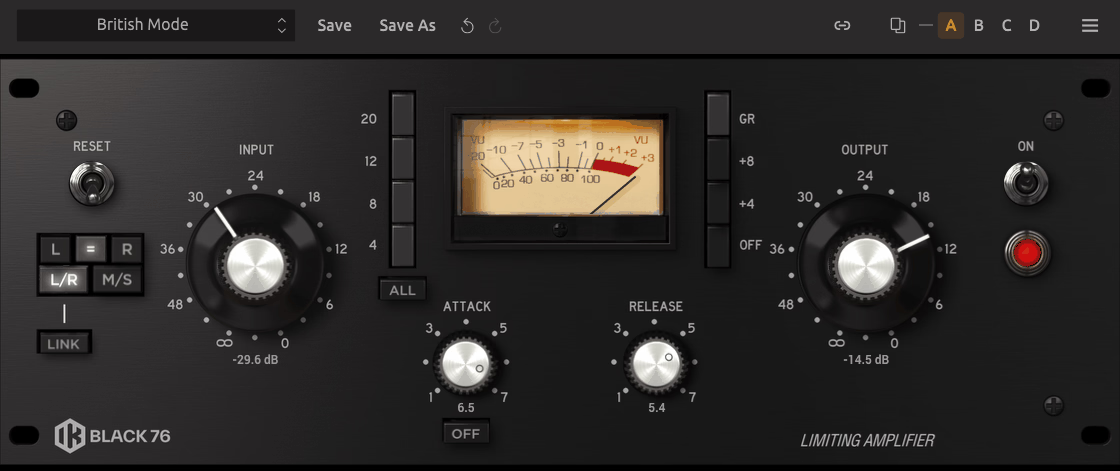
IK Multimedia’s Black 76 is part of their T-RackS mastering and mixing suite, and it models the blackface revision of the 1176, which sits somewhere between the warm early units and the cleaner later versions. The Black 76 has a punchy, forward sound that works well on sources where you want the compressor’s character to be audible in the mix rather than transparent.
I’ve found this plugin particularly effective on vocals and bass guitar, where the midrange push of the blackface circuit helps the signal cut through without needing additional EQ. It’s a straightforward emulation without a lot of bells and whistles, which is sometimes exactly what you want when you’re mixing fast and don’t need a dozen extra parameters to think about.
- Dual Stereo Linking
The Black 76 offers switchable stereo link modes that change how the two channels interact. Linked mode keeps gain reduction consistent across the stereo field.
Unlinked mode lets each channel compress independently, which creates a wider, more dynamic stereo image at the cost of potential center-image shifting. On drum overheads, unlinked mode produces a more exciting, dimensional sound.
- T-RackS Integration
Running inside the T-RackS shell lets you chain the Black 76 with other T-RackS processors in a single plugin instance. You can build complete channel strips or mastering chains without loading separate plugins.
The processing order is drag-and-drop, so putting the FET compressor before or after an EQ is just a matter of moving modules around.
- All-Buttons-In Mode
The famous limiter mode where all four ratio buttons are engaged simultaneously is faithfully recreated. On the Black 76, this mode produces an aggressive, heavily saturated compression that’s great for parallel drum processing or destroying room mics in the best possible way. The character in this mode is distinctly different from the standard ratios and adds significant harmonic content to whatever you run through it.
8. Overloud Gem Comp670
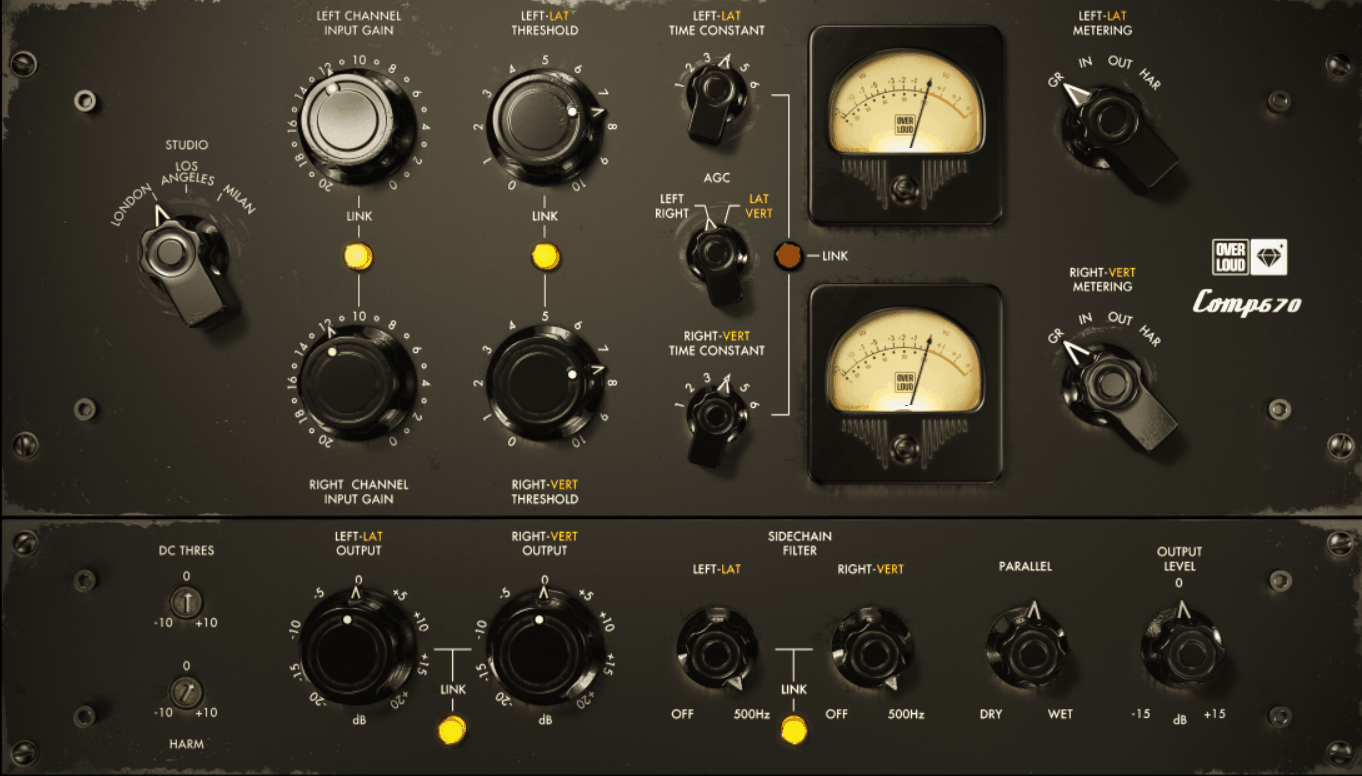
The Gem Comp670 is actually a Fairchild 670 emulation, not a FET compressor. I’m including it here because Overloud designed it as a companion to their Comp76, and many producers use both together in their FET/tube compression workflow.
The Comp670 gives you the warm, slow, tube-based compression that pairs beautifully with the fast, aggressive character of a FET compressor.
If you’re building compression chains where an 1176-style plugin handles the transients and a Fairchild-style plugin adds glue and warmth, the Comp670 is worth looking at as the other half of that equation.
It uses the same 4th-generation DSP engine as the Comp76 and models the complete tube amplifier and transformer path of the original hardware. On mix buses and mastering chains, the combination of Comp76 into Comp670 produces results that are genuinely hard to distinguish from high-end analog processing.
- Six Time Constants
The original Fairchild’s six fixed attack/release time constant settings are faithfully reproduced, each creating a different dynamic envelope. Position 1 is the fastest and most aggressive. Position 6 is the slowest and smoothest.
The interaction between these time constants and the program-dependent behavior of the tube circuit produces compression curves that no FET compressor can replicate.
- Lateral-Vertical Mode
The Comp670 reproduces the original hardware’s Lat/Vert processing, which compresses the sum and difference signals instead of left and right channels. This allows you to process the center image and stereo width independently, which is incredibly useful for mastering and mix bus applications.
9. UAD 1176 Classic Limiter Collection
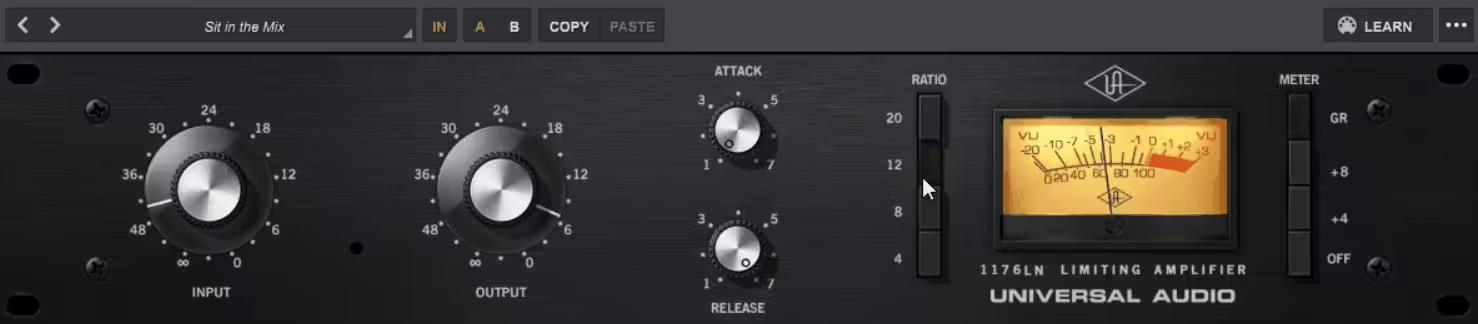
Universal Audio’s 1176 Collection includes three separate plugins: the 1176LN Rev. A, the 1176LN Rev. E, and the 1176AE Anniversary Edition. UA modeled these from specific hardware units in their own collection, and the attention to revision-specific behavior is noticeable.
The Rev. A has the thickest, most colored sound. The Rev. E is cleaner with less harmonic distortion. The Anniversary Edition sits somewhere between, with a modern refinement that makes it versatile across different sources.
These run natively on your Mac or PC and also accelerated on Apollo interfaces and UAD-2 hardware. I won’t pretend the UA emulations are drastically better than every other option on this list, but they consistently deliver a quality that holds up against any competing plugin. If you’re already in the UA ecosystem, these are the FET compressors to use.
- Three Revision Models
Each revision captures genuinely different circuit behavior. Rev. A adds the most color and saturation, making it ideal for sources that benefit from harmonic warmth. Rev. E is tighter and more controlled, suited to applications where you want FET speed without heavy coloration. The Anniversary Edition blends characteristics from across the 1176’s history into a single design that works well as an all-rounder.
- Low-Noise Circuit Modeling
UA’s modeling captures the subtle differences in noise floor, bias voltage, and transistor behavior between revisions. These micro-details contribute to the way each revision handles transients, releases, and harmonic buildup differently. On quiet sources like acoustic guitar or room mics, the difference between revisions is genuinely audible.
10. Waves CLA-76
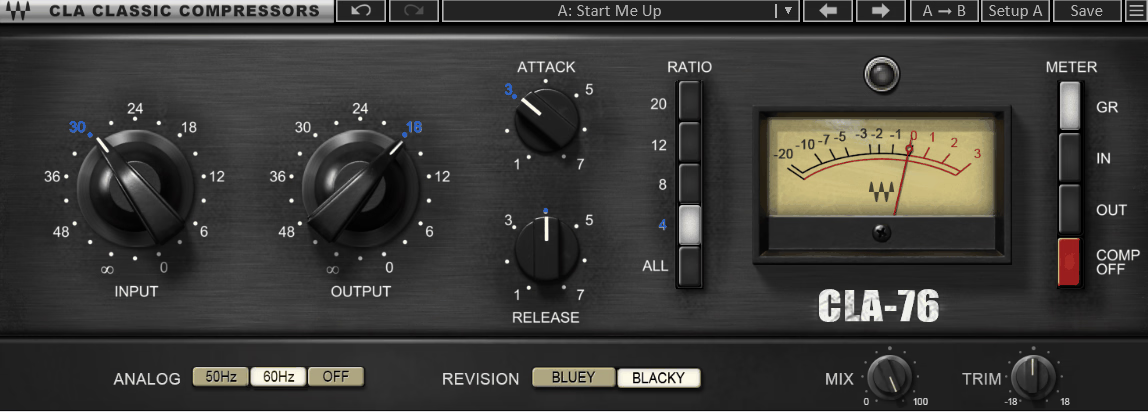
The CLA-76 is one of the longest-running 1176 emulations in the plugin world, and it’s still on a lot of people’s channel strips for good reason.
Waves modeled two versions: the Blacky (based on the blackface revision) and the Bluey (based on the blue-stripe Rev A). Both are available in a single plugin with a toggle between them, giving you two distinct FET characters without leaving the interface.
The CLA-76 doesn’t have the deep feature sets of newer competitors like the Pulsar 1178 or Arturia FET-76. What it has instead is speed, simplicity, and a sound that millions of mixes have been built on.
I still load it when I want to work fast and don’t need sidechain EQ, mid/side processing, or saturation stages. Sometimes the right tool is the one that stays out of your way.
- Bluey vs. Blacky
Bluey delivers the warm, mid-forward character of the blue-stripe Rev A units with richer harmonic content and a slightly softer high end. Blacky is punchier and tighter, with more presence in the upper frequencies and a faster, more aggressive transient response. Having both in one plugin covers the two most sought-after 1176 tonal characters.
- Analog Behavior Modeling
Waves captures the program-dependent release behavior that makes real 1176 units musical rather than mechanical. The release time changes dynamically based on the incoming signal level, which creates a natural pumping and breathing effect that static compression can’t replicate.
On vocals, this program-dependent behavior is what makes the CLA-76 feel like it’s working with the performance rather than against it.
- Ultra-Low Latency
The CLA-76 introduces effectively zero latency, which makes it practical for tracking with compression applied in real time. If you record vocals or instruments through your DAW and want to hear FET compression while performing, this is one of the few options that won’t introduce monitoring delay.
Freebies:
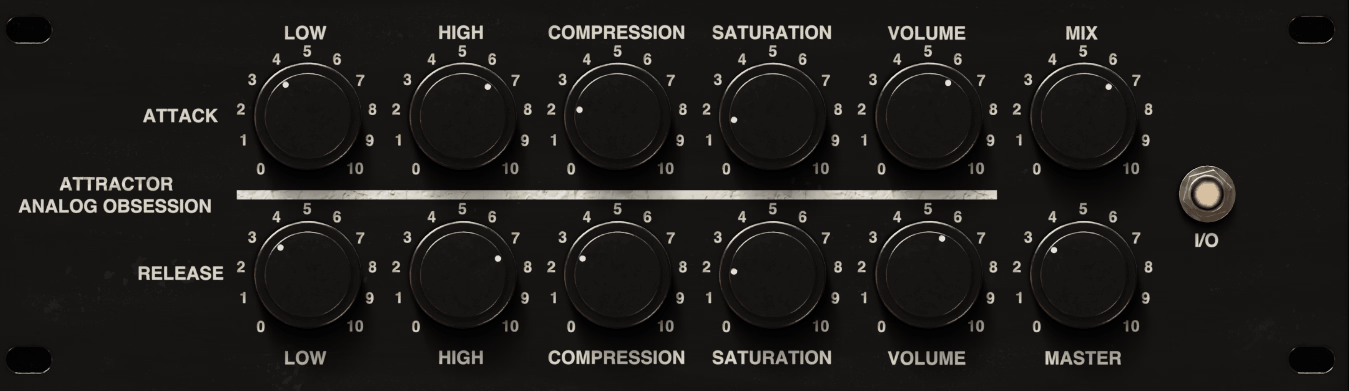
Analog Obsession FetCB
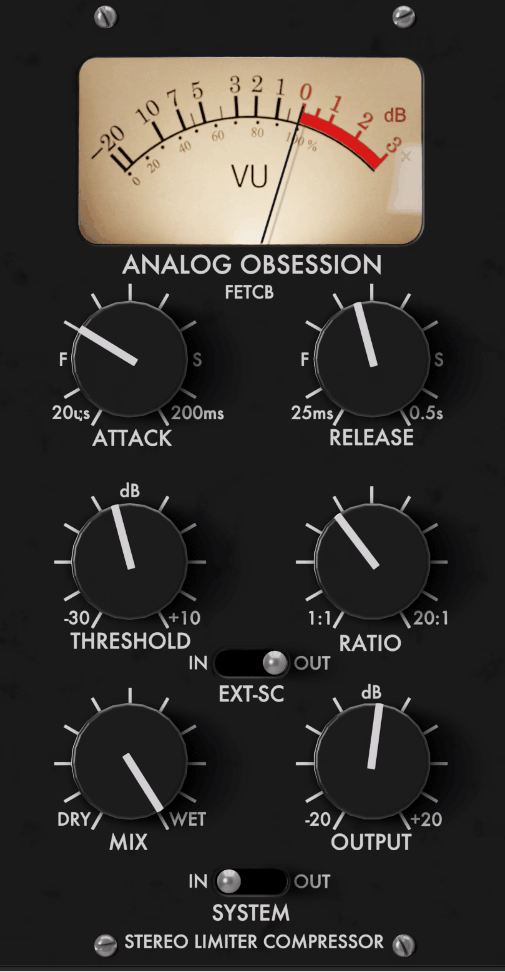
Analog Obsession consistently releases free plugins that compete with paid options, and FetCB is one of their best. It’s modeled after a 1970s British FET limiter/compressor, which gives it a different sonic fingerprint than American-voiced 1176 clones.
The digital version replaces the original hardware’s fixed threshold design with a dedicated Threshold control, making it significantly more versatile in a DAW environment.
You get attack from 20 microseconds to 200 milliseconds, release from 25 ms to 500 ms, ratio from 1:1 to 20:1, an external sidechain input, a mix knob for parallel compression, and 4x oversampling engaged by clicking the Analog Obsession logo. The interface is resizable from 50% to 200%.
For a free plugin, the feature set is genuinely impressive, and the sound holds up against paid options that cost ten times what you’d donate to Analog Obsession’s Patreon.
Analog Obsession FET Bundle
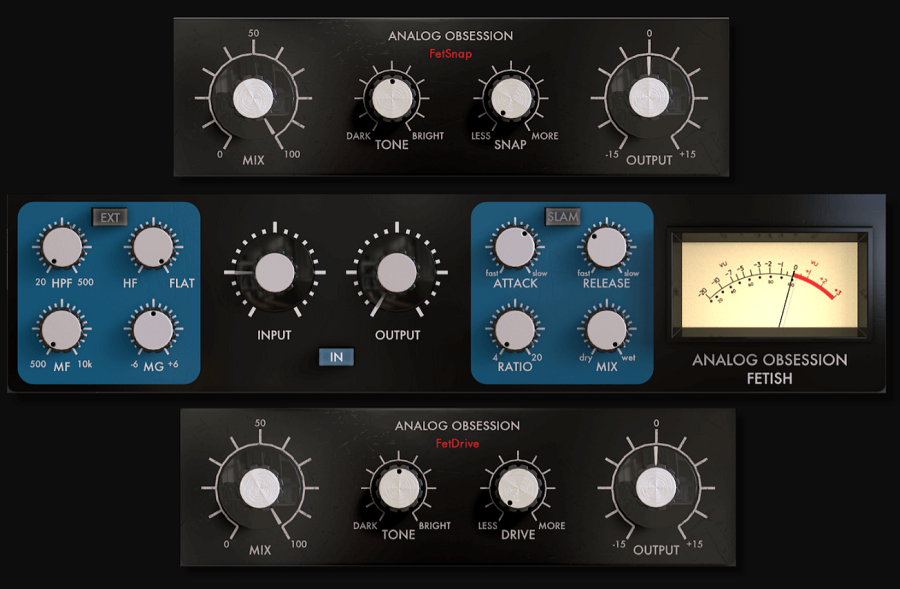
Beyond FetCB, Analog Obsession offers several other free FET-style compressors including FETISH, a more traditional 1176-inspired design with discrete circuit modeling, super-fast attack, selectable ratio buttons, and input/output stage distortion.
The developer also offers COMPER, a multi-mode compressor that lets you combine FET, VCA, and Opto compression modes in a serial configuration, effectively giving you multiple compressor topologies in a single free plugin.
Running the FET mode on COMPER at a 1:1 ratio adds harmonic coloration from the modeled transformers without any gain reduction, which is a trick I use constantly on mix buses.
All of Analog Obsession’s plugins are available through their Patreon page as free downloads with optional donations. They support VST3, AU, and AAX on both macOS (Intel and Apple Silicon) and Windows.

Hey, I’m Vil, I started this site to help you find the best audio plugins covering various categories including synths, pianos, strings, and effect tools of all sorts as well. I pick these plugins based on various criteria so it best matches the actual topic.