When you purchase through the links on my site, you support the site at no extra cost to you. Here is how it works.
Pop, R&B, and soul production often comes down to getting the right sounds in the first place. A good electric piano can make a chord progression feel instantly more musical. The right bass can give a track its groove without needing much processing. Drums, synths, vocals, and effects all need to work together without losing the warmth and character these genres are known for.
This list focuses on plugins and sample libraries that are useful for those specific needs. You’ll find instruments for keys, bass, drums, and synths, along with vocal tools, effects, and mixing plugins that work well in pop, R&B, and soul. Some are designed with these styles in mind, while others are general studio tools that happen to work particularly well for them.
The goal is simple: practical tools that help you get the sounds these genres call for, whether you’re producing modern R&B, polished pop, or a more traditional soul track.
1. Arturia Memory V
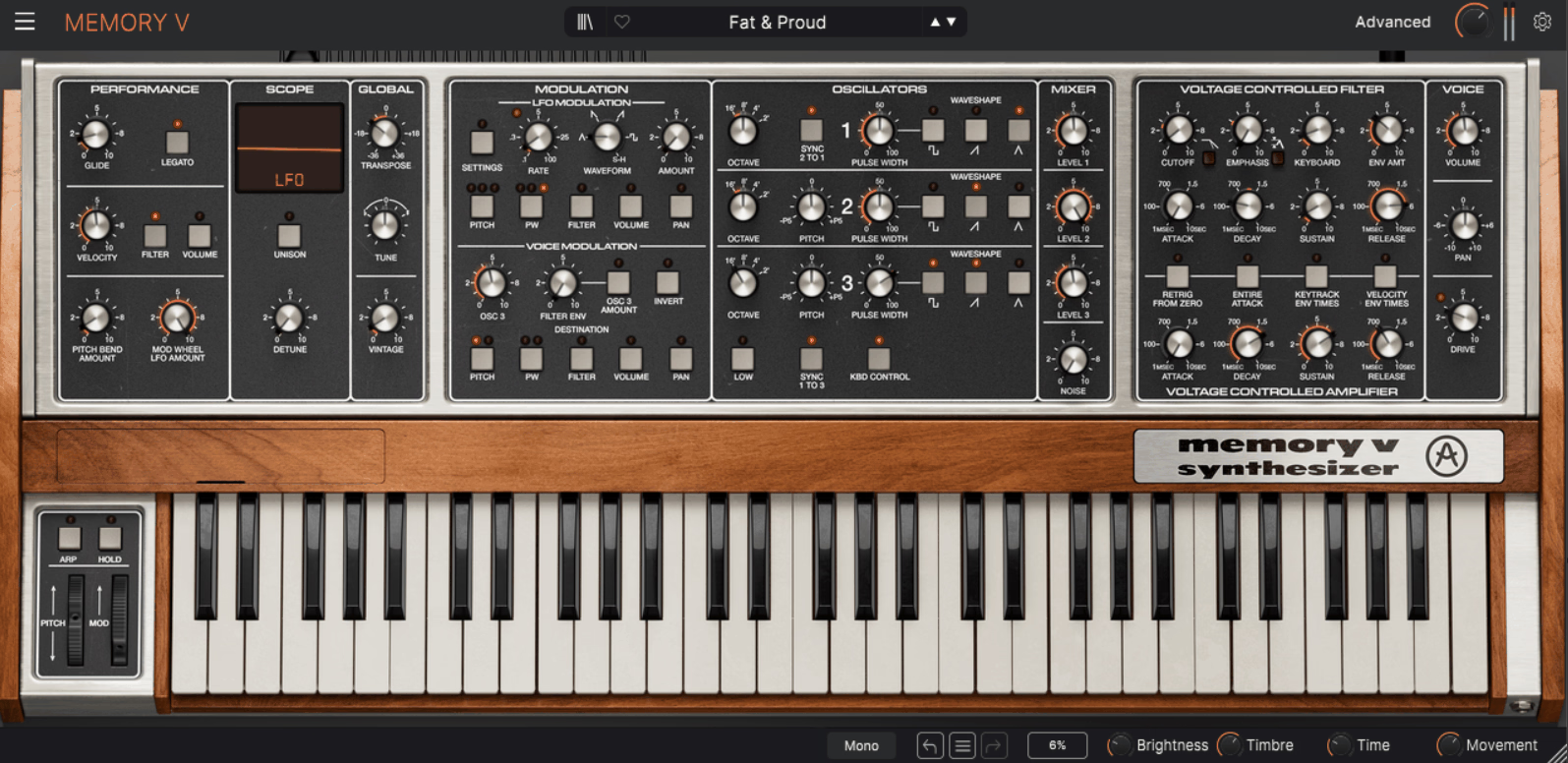
Arturia Memory V recreates the Moog Memorymoog, a 6-voice polyphonic synthesizer from 1982 with three oscillators per voice and a full Moog ladder filter per voice. The Memorymoog’s lush, warm polyphonic pads and chord textures have appeared on R&B and soul records for decades, and Memory V gives you access to that specific sound without the maintenance headaches of the original hardware.
I’d say Memory V earns its spot on this list because the polyphonic Moog character is something modern pop and R&B productions keep coming back to. The three-oscillator-per-voice density creates chord textures with a warmth and complexity that lighter synths don’t match, and the ladder filter adds a smooth, musical resonance that feels emotional rather than technical. For lush pad layers and warm synth stabs in soul and R&B production, this is the place to start.
- Three Oscillators Per Voice
Each of Memory V’s six polyphonic voices runs three independently tunable oscillators, producing the dense, warm harmonic texture that the Memorymoog is known for. For R&B and soul, the three-oscillator density per voice creates chord stacks with a richness that lighter synths simply don’t achieve.
I noticed that detuning the three oscillators subtly produces natural chorusing that fills the stereo field without needing a separate widening plugin. In fact, even small detuning amounts across three oscillators produce a far warmer result than heavy detuning across two.
- Per-Voice Moog Ladder Filter
Memory V gives each voice its own independent 24 dB/octave ladder filter, meaning each note in a chord is filtered differently rather than sharing a single filter across all voices. I love how this produces a breathing, dimensional polyphonic sound rather than the static feel you get from synths with one shared filter.
In R&B production, that character makes the difference between a pad that sits flat in the mix and one that feels alive. On the flip side, synths that share one filter tend to squash the dynamic variation between chord notes.
- Voice Programmer
A per-voice editor lets you adjust tuning, filter cutoff, and envelope settings individually across all six voices, and the micro-variations you create give the polyphonic sound an ensemble-like quality. For soul and R&B chord stabs where each note needs its own character, this level of per-voice control makes the patch feel genuinely performed.
- Poly-Mod Section
Memory V’s Poly-Mod routes oscillator and envelope signals to modulate pitch and filter cutoff, producing animated, FM-like textures from the polyphonic architecture
3. ujam Beatmaker IDOL
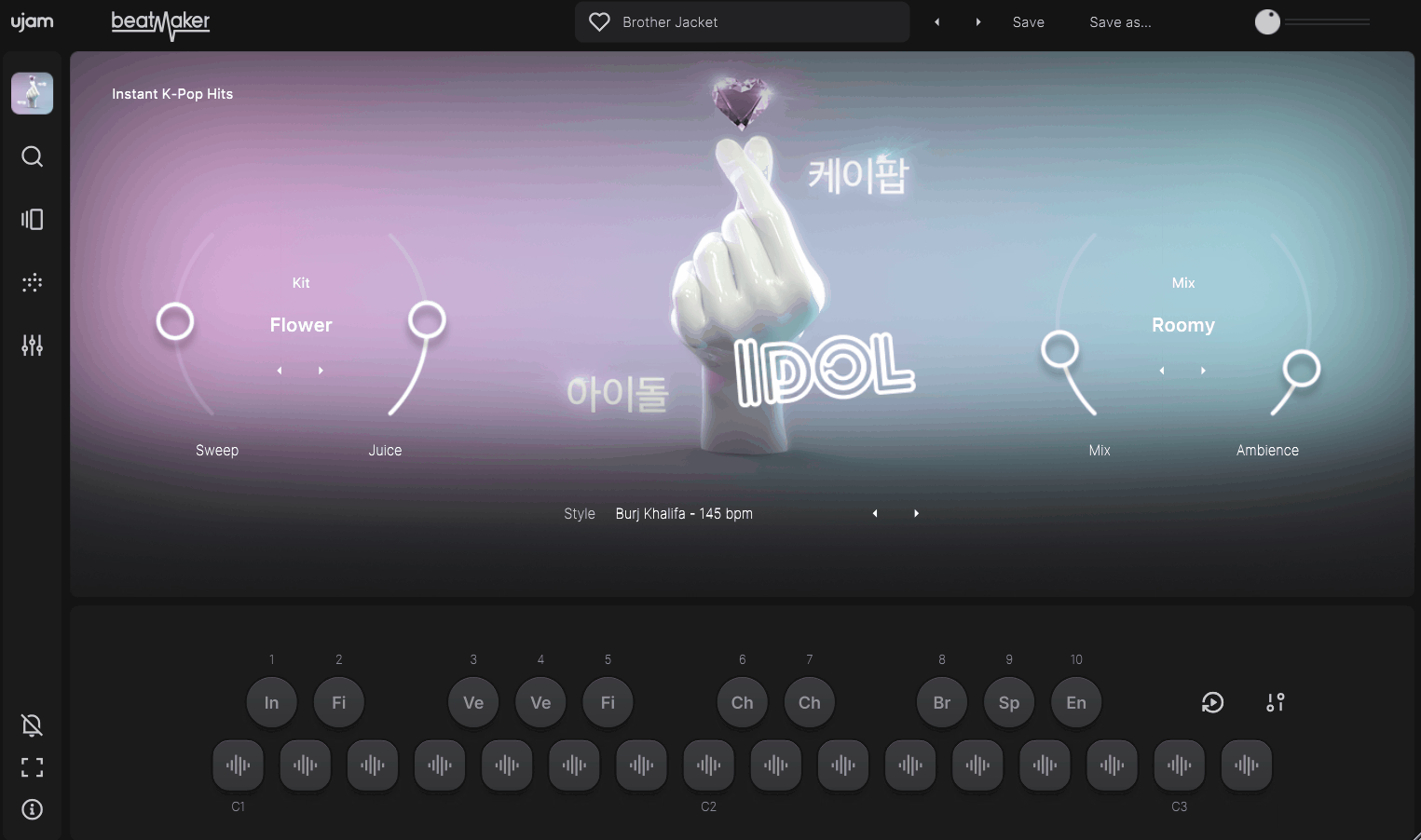
Pop drums need to sound polished without sounding robotic, and that balance is harder to hit than it looks. ujam Beatmaker IDOL is one of the most practical options available for pop production, covering the kind of polished, clean, contemporary drum sounds that show up in commercial pop with a phrase-based approach that generates complete drum performances from simple input.
I like how IDOL handles the gap between programmed and performed drum sounds. The humanization and phrase variation system produces the subtle imperfections that keep the drums from sitting stiff in a pop mix. Because of this, you get drums that feel professional without needing to hand-program every hit.
- Pop-Focused Drum Library
IDOL’s samples are recorded specifically for pop production with the bright, punchy, carefully processed drum sounds that contemporary pop requires. The kits cover a range from intimate, dry acoustic sounds to wide, present drum tones with room ambience, and the character is consistently modern and commercial.
For the most part, the drum quality is production-ready out of the box. I noticed that the sounds sit in a mix without needing the processing that raw drum samples typically demand.
- Phrase-Based Performance
Complete drum performances generate from chord input or beat selection, with fills, variations, and transitions produced automatically from phrases drawn from real drummer recordings. The timing and groove feel natural rather than quantized.
- Style & Complexity Controls
High-level controls for style, complexity, and intensity adjust the drum pattern character without editing individual hits. You can shift from sparse, minimal patterns to dense, driving grooves with a single slider.
The controls keep the focus on songwriting rather than programming. From what I can tell, these macro-level adjustments cover about 80% of the tweaking you’d normally do by hand-editing MIDI velocity and timing.
- Finisher FX
A single-knob effect system with multiple multi-effect modes processes the entire drum performance for character and texture. IDOL’s Finisher adds everything from subtle room enhancement to aggressive processing in a single control.
I’d say the Finisher is what takes IDOL from “decent drum sounds” to “production-ready drum tracks.” At the end of the day, the finishing processing is what makes the difference between drums that sound like samples and drums that sound like a record.
4. Arturia Stage-73 V
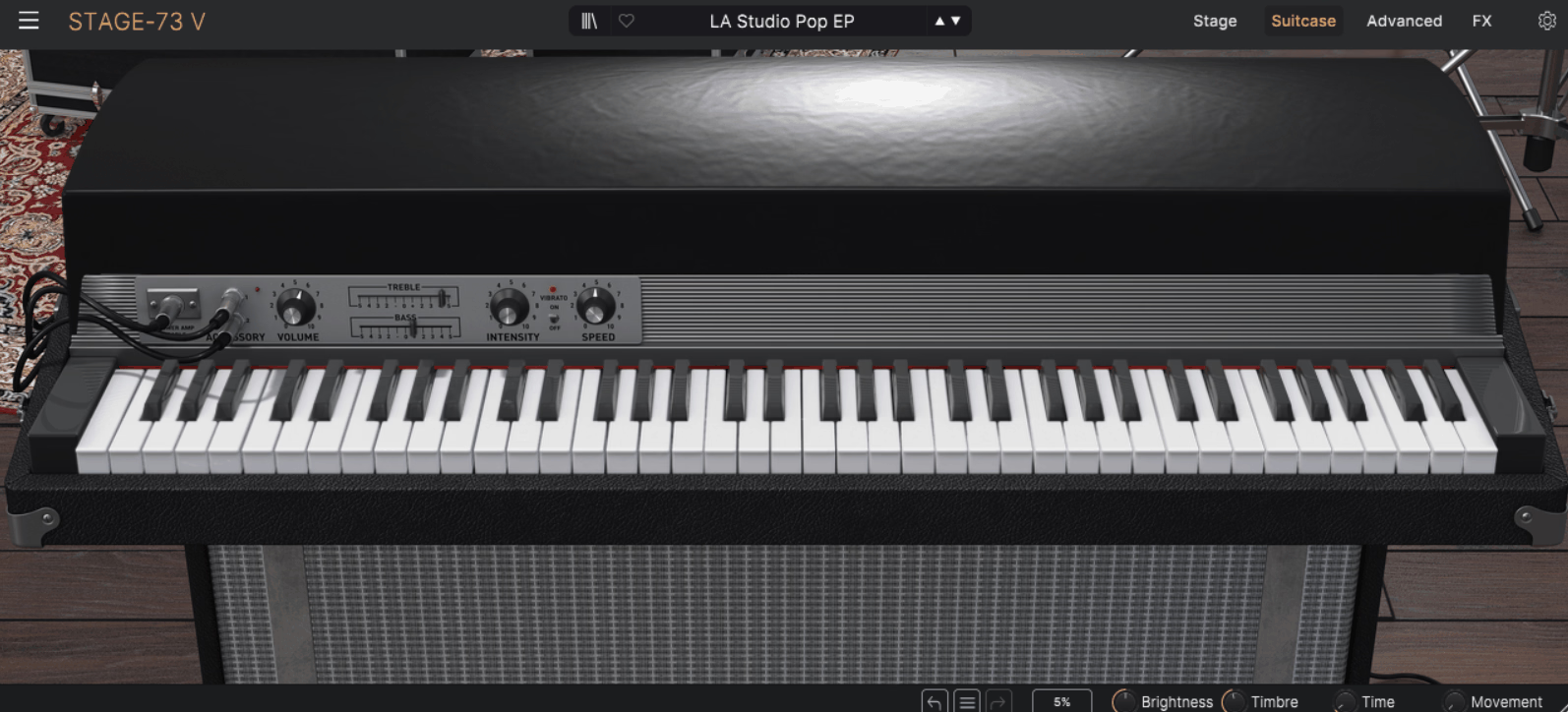
Arturia Stage-73 V models the Fender Rhodes Stage 73 electric piano, the instrument whose warm, bell-like tones and subtle tremolo defined the sound of 1970s soul and has been essential to R&B production ever since. The sound that’s on more soul and R&B records than any other keyboard instrument starts here.
At first glance, you might think a Rhodes emulation is a Rhodes emulation, but I realized early on that the quality differences between electric piano plugins are huge and immediately audible on an A/B comparison. Stage-73 V captures the specific tine resonance, pickup proximity effect, and key behavior of the original in a way that cheaper emulations miss. The tremolo circuit in particular sounds right, with the specific waveshape and rate that the original hardware produces.
- Tine & Pickup Modeling
Stage-73 V’s physical model captures the mechanical behavior of the tines, dampers, and pickup proximity effect of the original Stage 73. The pickup proximity effect changes the tone as the tine oscillates closer to and further from the pickup, and it’s what gives the Rhodes its characteristic bloom and warmth on longer notes.
I found that without accurate modeling of this interaction, the instrument sounds flat and lifeless. That distinction is exactly what you hear when comparing Stage-73 V against less detailed alternatives.
- Tremolo Circuit
The modeled tremolo replicates the waveshape, depth range, and stereo panning behavior of the original amp’s tremolo circuit. The Rhodes tremolo is one of the most recognizable effects in soul music, and Stage-73 V’s implementation captures the specific character that distinguishes it from generic LFO-based tremolo.
Personally, I think the tremolo alone justifies choosing Stage-73 V over less detailed emulations. Sort of like how a real Leslie speaker sounds different from a generic rotary effect, the Rhodes tremolo has a specific waveshape that generic plugins don’t reproduce.
- Multiple Pickup Configurations
Different pickup height and position settings change the tonal character of the instrument in ways that mirror real hardware maintenance. Some settings produce the brighter, more bark-heavy tone of a well-maintained modern unit. Others produce the darker, more honky tone of a vintage instrument that hasn’t been serviced in a decade.
- Amp & Speaker Emulation
A full amplifier and speaker cabinet simulation includes models of the specific amps the Rhodes was commonly run through
5. Native Instruments Soul Sessions
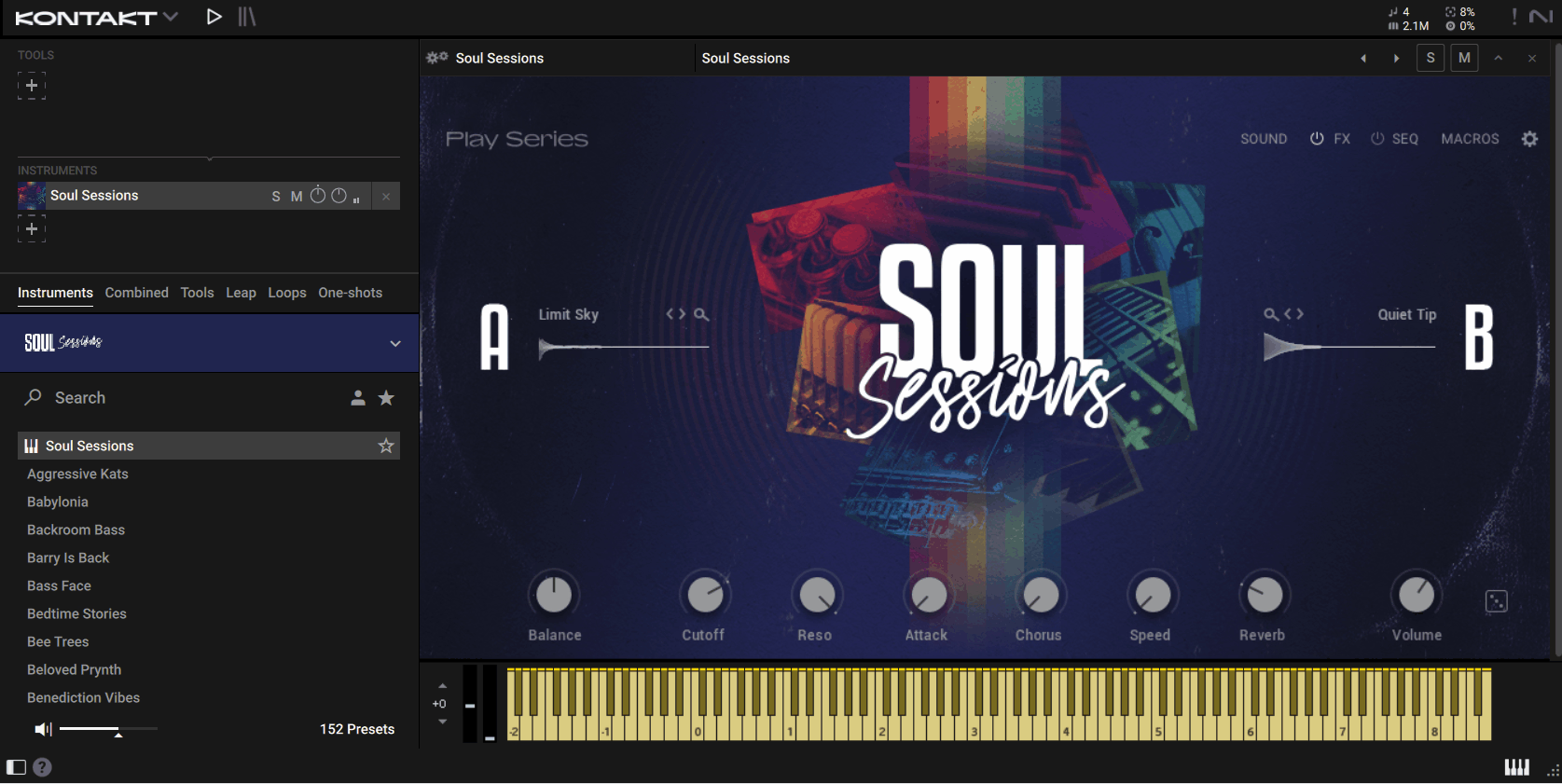
Native Instruments Soul Sessions captures soulful vocal textures, harmonies, and atmospheres designed specifically for R&B and soul production. The library includes solo voices, background vocal stacks, breath textures, and choral elements with the warm, intimate character that soul music demands, and the instruments are playable from a keyboard rather than just being one-shot samples.
I believe Soul Sessions fills a gap that general vocal libraries miss. Most vocal sample collections are designed for electronic music with heavily processed, stylized sounds. Soul Sessions is designed for acoustic, organic, genre-specific soul and R&B vocal textures that sound like real session singers.
- Live Vocal Performances
Soul Sessions draws from real soul singer performances with the phrasing, vibrato, and tonal character of the genre baked into the recordings. The vocal quality sounds authentic to soul and R&B production because it was recorded with those specific aesthetics in mind.
If you ask me, the performance quality is what sets this apart from general vocal libraries. The singers understood the genre, and that understanding comes through in the phrasing and delivery in a way that programming can’t replicate.
- Background Harmony Stacks
Pre-recorded background vocal arrangements in different voicings and ensemble sizes give you one of the defining elements of soul production as a playable instrument. You can layer a full backing vocal sound from a MIDI keyboard without hiring session singers.
I’d say the harmony stacks are the most immediately useful part of Soul Sessions. At a first glance, they might seem like glorified samples, but the ensemble variation and voicing options make them far more flexible than static recordings.
- Playable Vowel Sustains
Sustained vowel tones (ooh, aah, and variations) respond to MIDI velocity and aftertouch for expressive, dynamic vocal pads. The sustained vowels work as emotional background elements in soul and R&B, filling the mid-to-upper frequency space with the warmth that string pads don’t provide.
- Breath & Texture Layers
Breath sounds, consonants, and vocal textures add realism and intimacy to vocal layers. These incidental sounds are what make a vocal performance feel present and human, and having them available as separate layers lets you control how much realism to add.
Perhaps the most overlooked element of vocal production is the breath between phrases. Soul Sessions gives you independent control over these details, which is why the vocal textures it produces feel more alive than standard vocal sample packs.
6. ujam VOXCRAFT
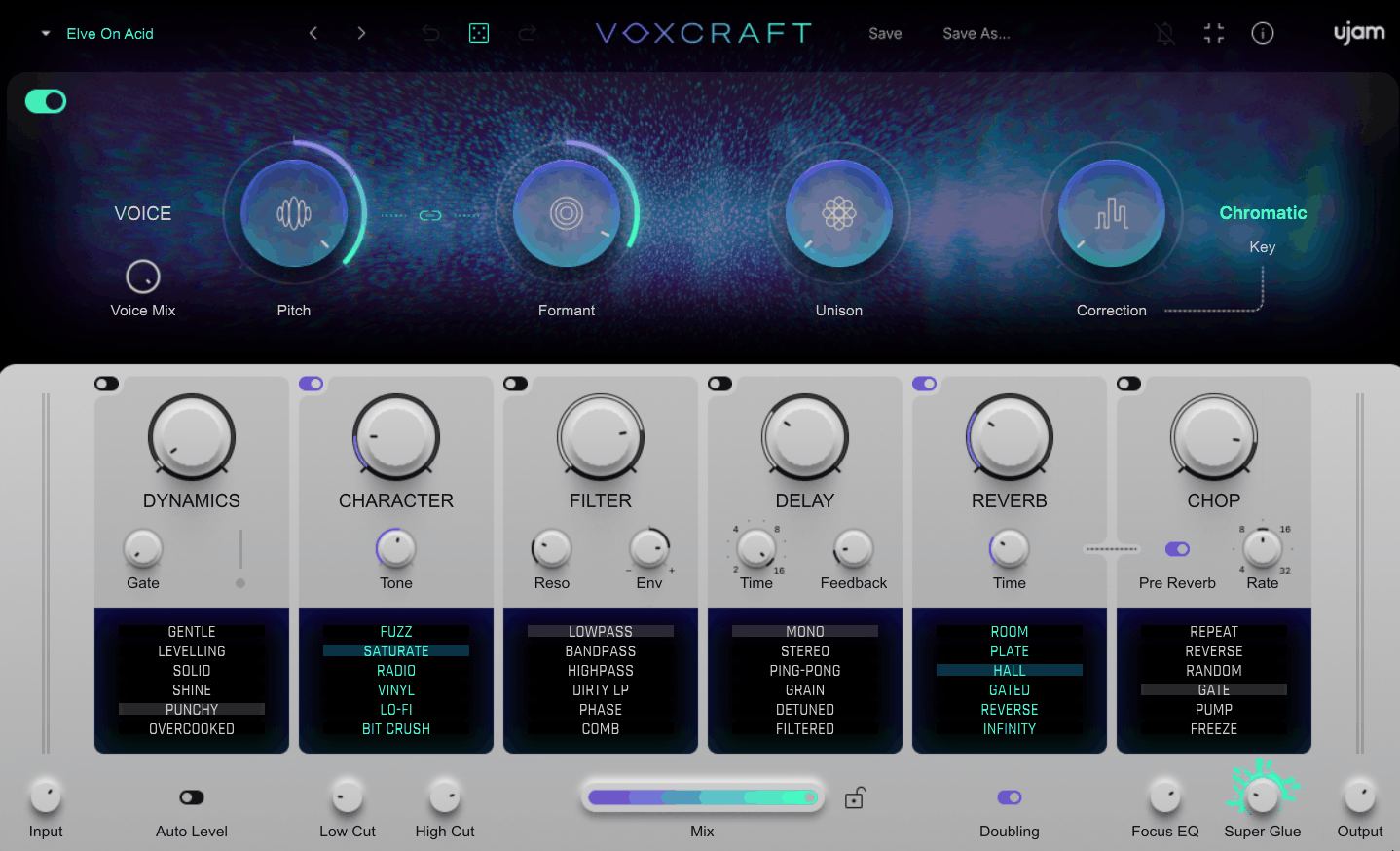
Creative vocal processing in modern R&B and pop is as much about texture as it is about clarity. ujam VOXCRAFT transforms standard vocal recordings into textural, processed sounds using three effect engines that work independently or together, covering everything from subtle vocal enhancement to fully transformed vocal textures.
I appreciate how VOXCRAFT approaches this by giving you three distinct processing engines rather than a single vocal effect chain. That said, the Character engine is where I spend most of my time, because it produces the specific harmonic texture that adds depth to R&B vocals without making the processing obvious.
- Three Independent Effect Engines
VOXCRAFT runs Character (harmonic and tonal texture), Rhythmizer (tempo-synced rhythmic effects), and Finisher (polished multi-effect chains) either together or individually. Running all three produces complex, layered vocal processing, while using them individually gives you focused, specific effects.
The three-engine approach means VOXCRAFT covers both subtle enhancement and dramatic transformation. I’d say the combination of all three on a background vocal layer produces the most interesting results, because the engines interact with each other in ways a single-chain processor can’t replicate.
- Character Engine
VOXCRAFT’s Character engine adds harmonic richness and tonal coloring to vocal recordings using multiple processing modes. I’m a big fan of how it adds subtle harmonic excitement that makes vocals sound more present and interesting without obvious processing.
In R&B production, this kind of tonal enhancement is what separates a flat vocal from one that sits confidently in the mix. Basically, Character does the work of two or three subtle processing plugins in a single module.
- Rhythmizer
A tempo-synced effect system chops, gates, and modulates the vocal signal rhythmically, producing the stutter, chop, and filter effects that contemporary R&B and pop uses as rhythmic vocal elements. The results lock to your DAW’s tempo for tight, musical rhythmic processing.
For sustained vocal notes and held backing vocals, the Rhythmizer adds rhythmic interest that keeps the vocal active in the arrangement. On top of that, automating the Rhythmizer settings across song sections creates dynamic vocal effects that evolve with the track.
- Finisher Module with 60+ Modes
Over 60 multi-effect modes transform vocals with a single knob, and each mode is a carefully calibrated combination of effects rather than a single processor. VOXCRAFT’s Finisher modes range from subtle, polished processing to dramatic transformation.
For pop and R&B where you want to process vocals quickly without setting up a multi-plugin chain, the Finisher handles it in one place. I have to say, the variety across 60+ modes means you’ll find options for everything from gentle warmth to full vocal redesign.
7. NI Session Guitarist – Electric Ruby Deluxe
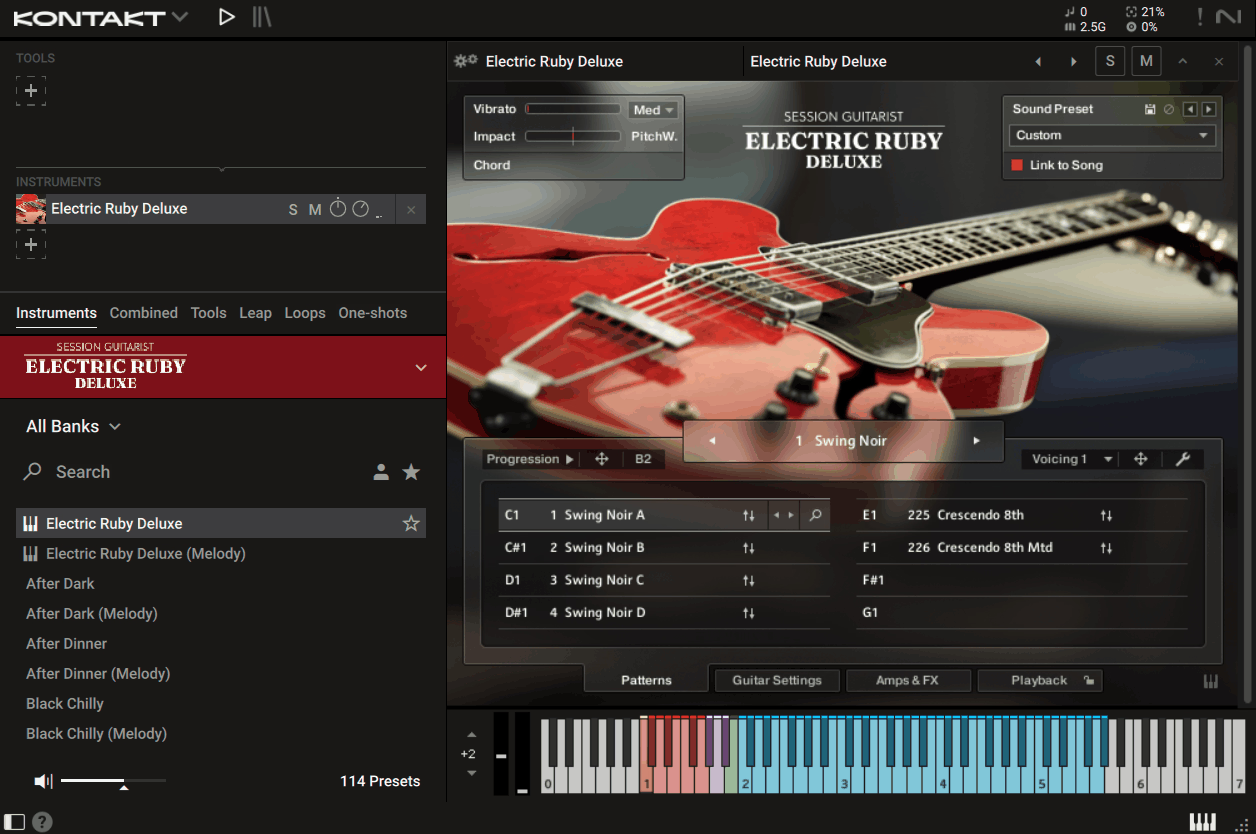
Electric Ruby Deluxe captures the clean, versatile Fender-style electric guitar sound that’s essential for pop and soul production, with a phrase-based performance system that generates realistic rhythm guitar parts from chord input. The Ruby character is bright, clear, and articulate, making it the right tool for the clean rhythm textures and melodic interjections that pop and soul guitar parts typically require.
I think what makes Electric Ruby Deluxe useful for this genre specifically is how it handles the clean and lightly overdriven territory that soul and pop guitar lives in.
The guitar sounds professional and controlled, not aggressive or distorted, which fits the genre’s polished aesthetic. I found that most pop and soul guitar parts fall within what Electric Ruby Deluxe covers, and the phrase system makes programming convincing rhythm guitar fast.
- Phrase-Based Performance Engine
Electric Ruby Deluxe generates realistic rhythm guitar performances from MIDI chord input, with phrases drawn from real guitarist recordings. You play chords and the engine produces complete strumming patterns, picking arrangements, and rhythmic guitar textures.
- 100+ Styles Covering Pop, Funk, and Soul
Over 100 styles cover pop, funk, soul, ballad, and contemporary R&B rhythm guitar approaches, and the phrases within each style provide enough variation to avoid repetition over a full song length. The variety means you can find a style that matches the feel of any pop or soul track.
I’d say the style library is Electric Ruby Deluxe’s biggest practical advantage. In the long run, having 100+ starting points means you spend less time programming and more time writing, which is exactly how a guitar instrument should work for non-guitarists.
- Chord Recognition
Advanced chord recognition responds to your MIDI input and selects the appropriate voicing and strumming pattern for each chord change. The recognition system handles complex chords including sevenths, ninths, and extensions that are common in R&B and soul harmony.
8. XLN Audio RC-20 Retro Color
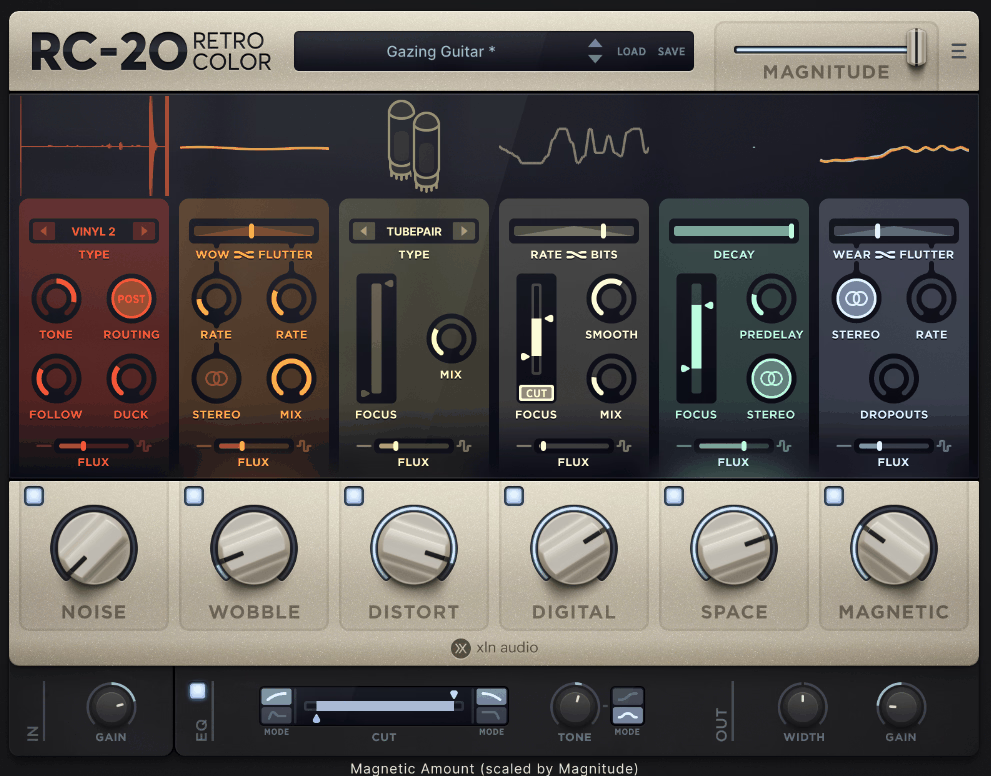
Modern pop and R&B productions can sound too clean, too perfectly quantized, too flawlessly produced without something to warm them up. Analog warmth, noise, wobble, and vintage character are what you need to bridge that gap. RC-20 Retro Color handles it through six independent effect modules that each add a different type of lo-fi or analog coloring.
Honestly, this is a plugin that’s easier to hear than to describe. Adding subtle amounts of RC-20’s Magnetic and Wobble modules brings back the kind of analog imperfection that makes music feel like it came from real physical equipment. I’d say it’s worth having even if you only use it at 10 to 20% strength on most tracks.
- Wobble Module
RC-20’s Wobble adds pitch instability and tape flutter that gives sustained sounds an organic, breathing quality. For R&B and soul where pad sounds, electric pianos, and vocal layers should feel warm and alive, the wobble adds subtle animation that pure digital synthesis lacks.
At low settings it’s barely perceptible, but the difference when you bypass it is immediately clear. I realized that this module on an electric piano track is kind of the secret ingredient that makes the sound feel vintage without being obviously processed.
- Magnetic Module
RC-20’s Magnetic models the behavior of magnetic tape including saturation, high-frequency softening, and low-end thickening. On the mix bus or individual tracks, the Magnetic module ties elements together with the cohesive warmth that analog tape provides naturally.
I like how it handles the high frequencies especially. Instead of just rolling off the top end, it softens transients in a way that sounds like natural tape compression rather than an EQ cut.
- Distort Module
Harmonic saturation ranges from subtle enhancement to obvious grit, and for R&B production where instruments need to sound full and present without feeling harsh, RC-20’s Distort adds the harmonic density that makes sounds sit forward in a mix. The character is warm and musical rather than aggressive.
That said, I wouldn’t push the Distort module into heavy overdrive territory on most R&B material. Its strength is the subtle end of the range, where it adds density and presence without changing the fundamental tone of the source.
- Digital Module
Bitcrushing and sample rate reduction provide the lo-fi, degraded textures that contemporary R&B and pop production uses on specific elements. Some modern R&B specifically targets a lo-fi aesthetic, and the Digital module provides that degradation with enough control to keep it musical.
9. Native Instruments Session Horns Pro
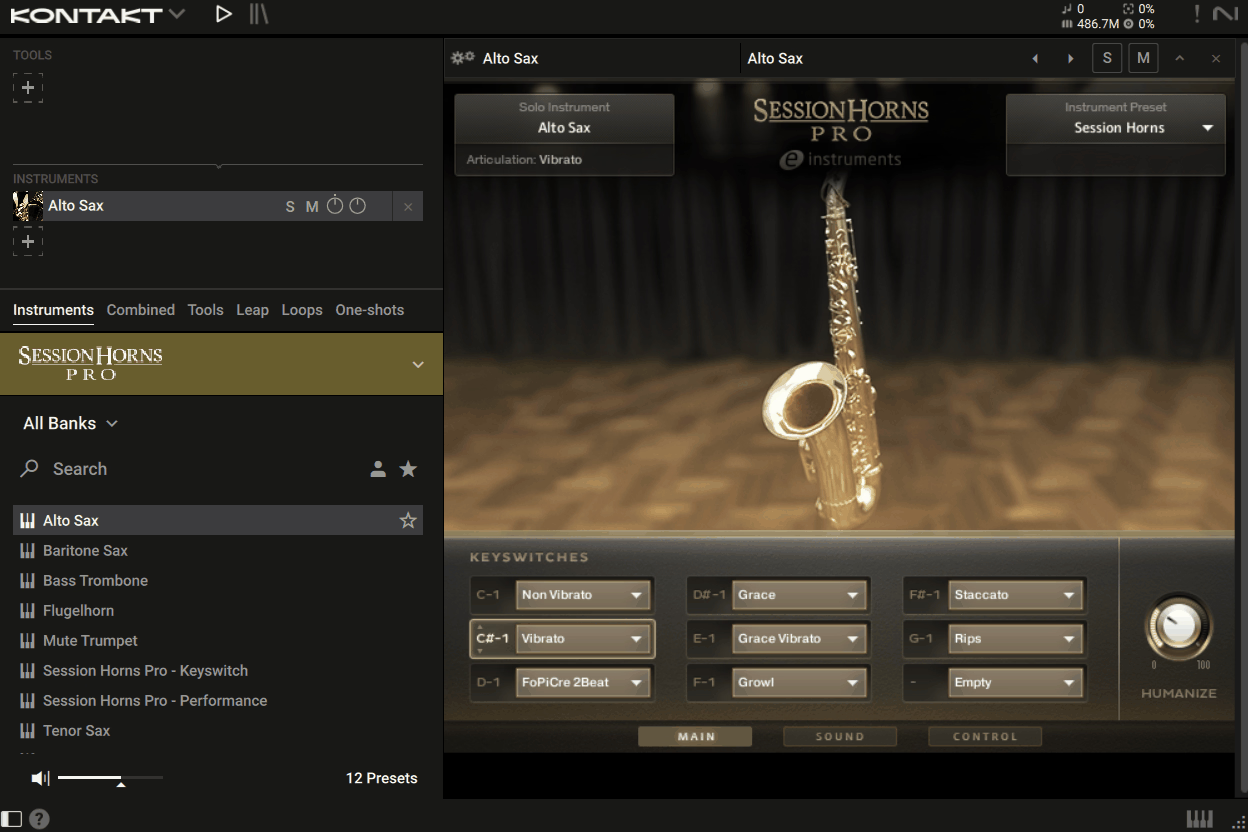
Horn sections are one of the defining elements of soul and R&B production. Session Horns Pro is the most comprehensive horn library available for the genre, with a 27 GB sample library covering trumpet, flugelhorn, alto sax, tenor sax, baritone sax, tenor trombone, bass trombone, and tuba as individual instruments alongside pre-configured ensemble arrangements.
What stands out to me is the R&B/Soul style arrangement presets. When it comes to programming a convincing horn section without specialized arrangement knowledge, the style presets handle the voicing, articulation, and timing in a way that sounds like a real section rather than single notes layered manually. I’d say Session Horns Pro is worth the investment specifically if horn arrangements are a regular part of your production style.
- Pre-Configured Ensemble Arrangements
Ready-to-play horn section configurations come in various ensemble sizes and voicings, covering R&B/Soul, Pop, NuJazz/Funk, Latin, Reggae/Ska, and Indie styles. Session Horns Pro handles the complex voicing that makes horn sections sound professional, and selecting a style preset immediately gives you a convincing section.
For producers without formal horn arrangement training, the presets are genuinely educational. I found that studying how the presets voice common chord progressions taught me more about horn writing than any textbook.
- Phrase-Based Articulations
Pre-recorded phrases cover the specific short stabs, long notes, falls, shakes, trills, and glissandos that horn arrangements use, all recorded at multiple tempos and velocities. The phrases sound like a real section because they are, capturing the group timing and articulation that makes a horn section feel cohesive.
I appreciate how the phrase system handles what’s genuinely hard to fake by stacking individual horn samples manually. In general, the ensemble timing and breath coordination between instruments is what gives horn phrases their characteristic punch and swagger.
- Arrangement Intelligence
Session Horns Pro analyzes your chord input and suggests appropriate chord voicings for the horn section. For producers without formal horn arrangement training, this system prevents the common mistake of voicings that sound wrong for the genre, like wide spread voicings that would be difficult or impossible for real players.
- Dorian Scale Adjustment
A specific option adjusts chord tones to the Dorian scale, which is the modal choice that gives soul and R&B harmony its characteristic sound. This genre-specific adjustment shows that Session Horns Pro was developed with knowledge of how these genres actually use harmony.
Perhaps the most telling sign of a well-designed genre instrument is when it includes options that only make sense if you understand the genre. The Dorian adjustment is exactly that kind of feature, and it’s something you won’t find in general-purpose orchestral libraries.
10. FabFilter Pro-R 2
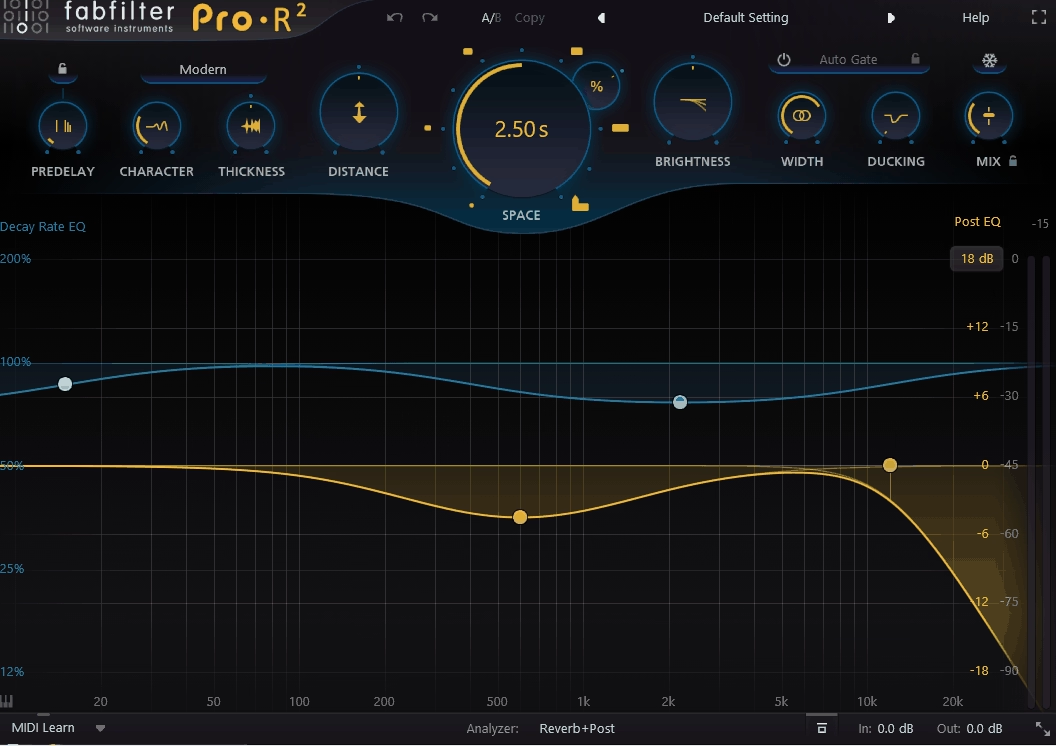
Reverb in pop and R&B mixing needs to add space without muddying the dense arrangements these genres demand. Visual clarity and parametric precision are what set one reverb apart from generic alternatives. FabFilter Pro-R 2 delivers both through the standout decay rate EQ, a drawable curve that determines how quickly different frequencies fade within the reverb tail.
In my opinion, Pro-R 2 is the right reverb for pop and R&B mixing because it gives you the precise control needed to keep reverb present without filling the frequency range the mix already occupies. The decay rate EQ lets you roll off the low frequencies of the reverb tail specifically, which keeps the reverb audible in the highs and mids without adding low-end accumulation. For R&B mixes where the low end is critical, this frequency-selective decay control keeps the reverb working with the mix rather than against it.
- Decay Rate EQ
Pro-R 2 lets you draw a curve that controls how quickly different frequencies decay within the reverb tail. You can make the low-mid frequencies fade quickly while the highs sustain longer, preventing reverb buildup in the frequency ranges the bass and kick already occupy.
For R&B mixes where the low end is critical, this frequency-selective decay control is the feature that keeps the reverb musical. I would say this single capability separates Pro-R 2 from every reverb that offers only a single damping knob for the entire frequency range.
- Space Visualization
A real-time display shows the reverb decay behavior across the frequency spectrum as it evolves, making it immediately clear how adjustments affect the tail. The visualization speeds up the reverb calibration process in dense pop and R&B arrangements.
I must admit the visual feedback changed how quickly I dial in reverb settings. Where I used to spend minutes tweaking by ear alone, the display lets me identify exactly where decay energy is concentrated and adjust accordingly.
- Post-EQ on Reverb
A full parametric EQ applied after the reverb processing handles final tonal shaping without affecting the dry signal. For pop vocals where the reverb should add air and dimension without brightness, the high-cut on the post-EQ handles the tonal refinement.
Having the EQ integrated into the reverb plugin eliminates the need for a separate instance on the reverb return. In the end, the fewer plugins in the signal chain, the cleaner the workflow and the easier it is to make adjustments later.
11. NI Glaze 2
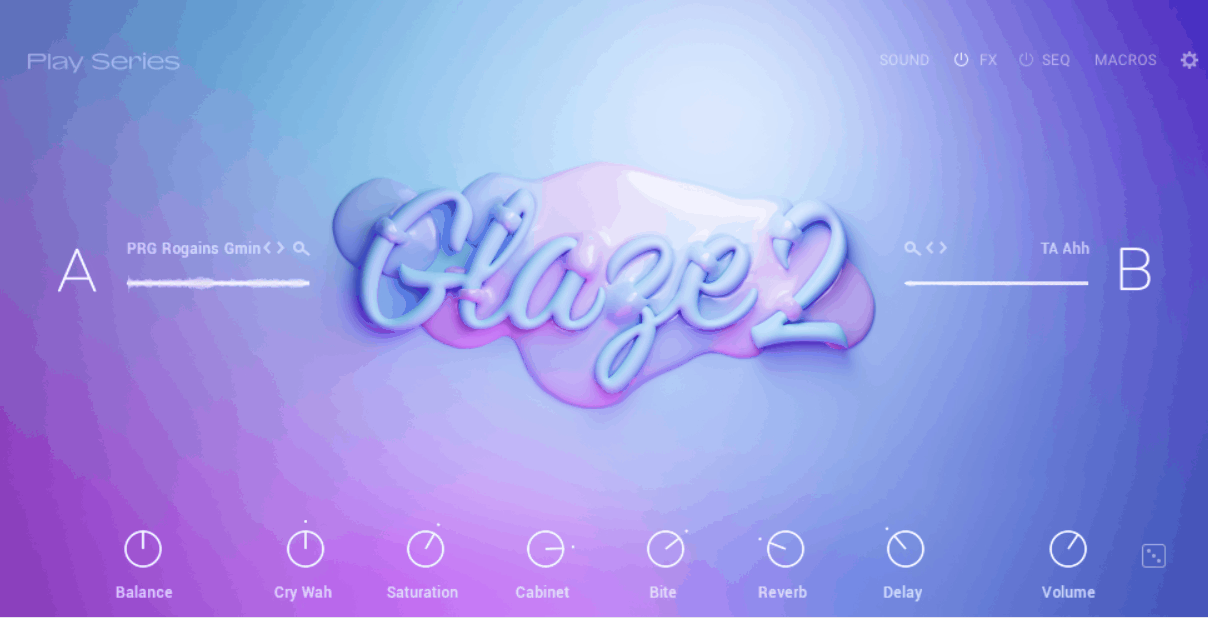
NI Glaze 2 is a vocal instrument built in Kontakt for pop and hip-hop productions, centered on chord presets that turn your keyboard input into full vocal harmonies, talkbox-influenced textures, and shimmering pads. The library provides a modern, contemporary pop vocal character with the kind of gleaming, stacked harmony sound that’s become a signature of current pop production.
I found Glaze 2 most useful for those specific harmonic texture moments in pop productions where the vocal needs to expand from a single voice into something wide and ambient. At the same time, the talkbox-influenced tones add a contemporary R&B flavor that works well for modern pop-soul hybrid productions. Right off the bat, the chord presets let you create full harmonic textures from single notes.
- Chord Presets
Pre-configured harmonic chord voicings convert single-note MIDI input into full vocal harmonies, and each chord preset produces a specific harmonic arrangement. Glaze 2’s chord system means you can create elaborate vocal harmony stacks from simple keyboard input without programming individual voices.
I think the chord presets are the fastest way to add lush vocal harmony textures to a pop production. Switching between presets changes the tonal and intervallic character of the texture instantly, which makes A/B comparison between voicing options effortless.
- Talkbox Textures
Vocal sounds influenced by vocoder and talkbox processing define a specific R&B and pop aesthetic that’s been prominent across major releases of the last few years. Glaze 2’s talkbox tones add the formant-shifted, robotic-but-human character that sits at the intersection of electronic processing and organic vocal quality.
I’d say the talkbox tones are the most distinctive feature in Glaze 2. If anything, they add a contemporary R&B flavor that no other vocal instrument in this list provides.
- Shimmering Pad Layers
Processed vocal textures produce wide, ambient, glimmering pads rather than distinct voice sounds, working as atmospheric elements in pop arrangements. The pad character is distinctly vocal in origin but functions as harmonic atmosphere rather than foreground vocal content.
I like how the pad layers fill a space in the arrangement that neither synth pads nor vocal stacks occupy on their own. Basically, they add emotional texture without competing with the lead vocal or the harmonic instruments.
12. Bouquet
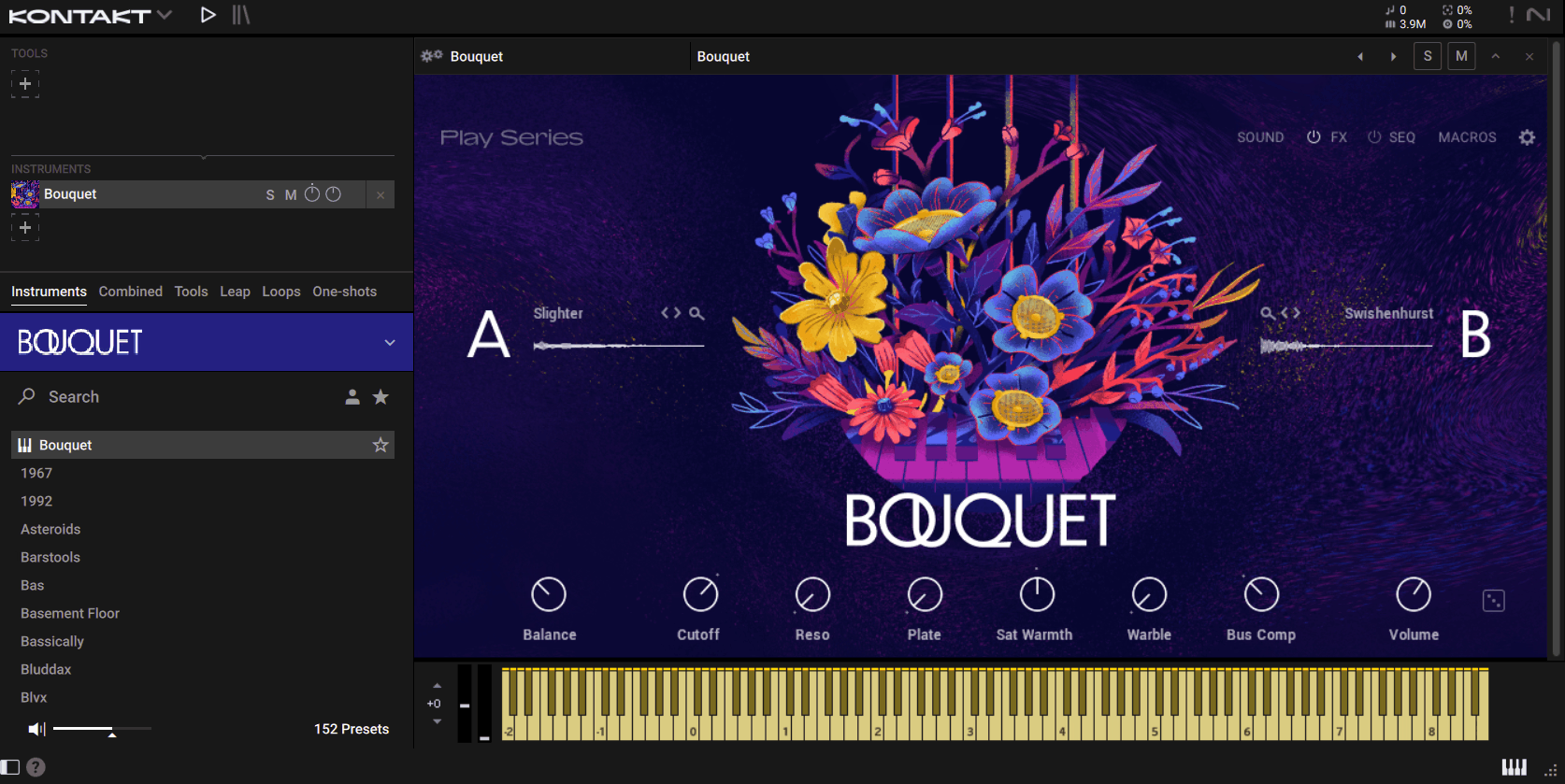
Grammy-winning producer Snipe Young, whose credits include Dr. Dre, Beyonce, Justin Bieber, and many others, brings real genre expertise to R&B sound design. The collaboration resulted in an instrument with 151 editable presets covering analog synths, keys, organs, guitars, basses, and pads. All the sounds are voiced for the warm, melodic, emotional character of modern R&B.
That genre-specific voicing is what makes the presets immediately useful rather than generic. Bouquet is a Kontakt Play Series instrument where the co-development with a working producer shows in every preset.
- Co-Developed with Snipe Young
Bouquet’s 151 presets were created with genre-specific expertise from a producer who has worked extensively in R&B and pop at the highest level. The preset quality reflects real production knowledge, meaning the sounds are voiced for how R&B productions actually use them, not for what sounds impressive in a demo.
From my perspective, you can hear the difference between presets designed by a working producer and those designed by a sound designer without genre context. The Snipe Young collaboration gives Bouquet a musical quality that generic R&B libraries lack.
- Dual Sound Source Engine
Each preset has A and B sound sources that you blend and shape from the Sound Editor, controlling tuning, filter, pan, and envelope for each layer independently. The layering depth gives you enough tonal variety from a single preset to serve multiple production needs.
I found that blending the two sources at different ratios produces surprisingly different characters from the same preset. As a result, each of the 151 presets effectively offers a range of sounds rather than a single fixed timbre.
- 16-Step Sequencer
A built-in 16-step sequencer with six assignable macros generates rhythmic patterns and adds movement to any preset. Bouquet’s sequencer can drive any parameter, turning static chord sounds into evolving, rhythmic textures that add groove and energy.
I’m a big fan of running the sequencer on pad presets to create rhythmic backgrounds. In addition, the sequencer works well for creating the arpeggio-like key patterns that contemporary R&B uses as harmonic rhythm elements.
- 144 Sound Sources
Drawing from 101 multi-samples and 43 wavetables, Bouquet’s raw material combines the organic warmth of acoustic recordings with the precise harmonic control of synthesis. The combination means presets have both natural texture and synthetic precision.
At the core of it, the sound source variety is what gives Bouquet its range. Not to mention, having both sampled and wavetable sources available means the presets can cover territory from realistic instruments to purely synthetic textures within the same plugin.
13. ujam Virtual Guitarist SPARKLE 2
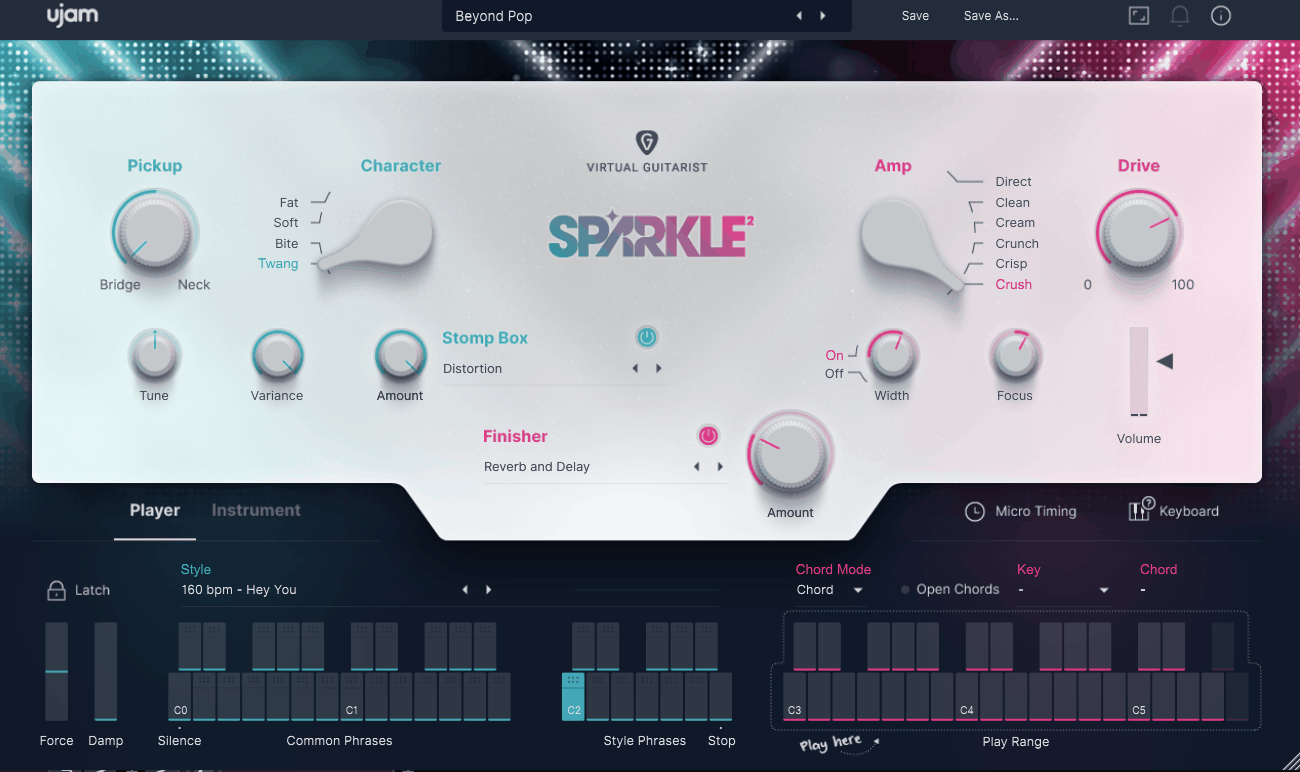
Clean, versatile single-coil electric guitar is the foundation of pop, funk, and indie production. SPARKLE 2 was recorded with a customized vintage guitar capturing the bright, bell-like character of Telecaster, Stratocaster, and Jaguar style guitars, and the Player mode generates realistic rhythm guitar performances from chord input.
I’d say SPARKLE 2 is one of the most useful guitar instruments for pop production because it covers the specific clean and lightly overdriven territory that the genre requires. The guitar character is polished and professional without being aggressive, and the 60 Finisher FX modes let you add post-amp processing that takes the performance from raw to finished in a single step.
- 350+ Phrases in 30+ Styles
A phrase library of 350 musical phrases organized into 30+ styles covers pop, funk, soul, indie, and contemporary electronic contexts. The style variety means you can find a guitar character and playing approach for almost any pop or R&B track.
The phrase count provides enough variation to avoid patterns repeating obviously across a full song. I’d recommend auditioning several styles on the same chord progression, because the feel differences between styles can completely change the character of a section.
- Player Mode & Instrument Mode
Player mode generates automatic performances from chord input, while Instrument mode lets you play the guitar directly from your MIDI keyboard with full control over individual notes and technique. Most pop producers will spend their time in Player mode, but Instrument mode is what you reach for when you need a specific riff or melody.
I feel like having both modes in one plugin means SPARKLE 2 covers the full range of guitar needs. Conversely, most virtual guitar plugins focus on either phrase-based performance or direct playing, and having both eliminates the need for a second plugin.
- 30 Stomp Box Emulations
SPARKLE 2 includes 30 pre-amp stomp box effects that shape the guitar tone before it reaches the amp simulation, covering overdrive, fuzz, compression, chorus, and other standard guitar effects. The pre-amp placement means the amp reacts to the processed signal the way a real amp would.
I love how the stomp box order affects the final tone in realistic ways. For instance, compression before overdrive sounds fundamentally different than overdrive before compression, and SPARKLE 2 handles both approaches correctly.
- 60 Finisher FX Modes
Post-amp multi-effect chains accessible from a single knob handle everything from subtle spatial processing to dramatic sound transformations. Each of SPARKLE 2’s 60 Finisher modes is a carefully designed combination of effects rather than a single processor.
For quick finishing of guitar parts, the Finisher replaces a multi-plugin effect chain. I must say, the convenience of going from raw guitar performance to polished, mix-ready guitar with a single knob is hard to overstate on busy session days.
14. NI Ignition Keys
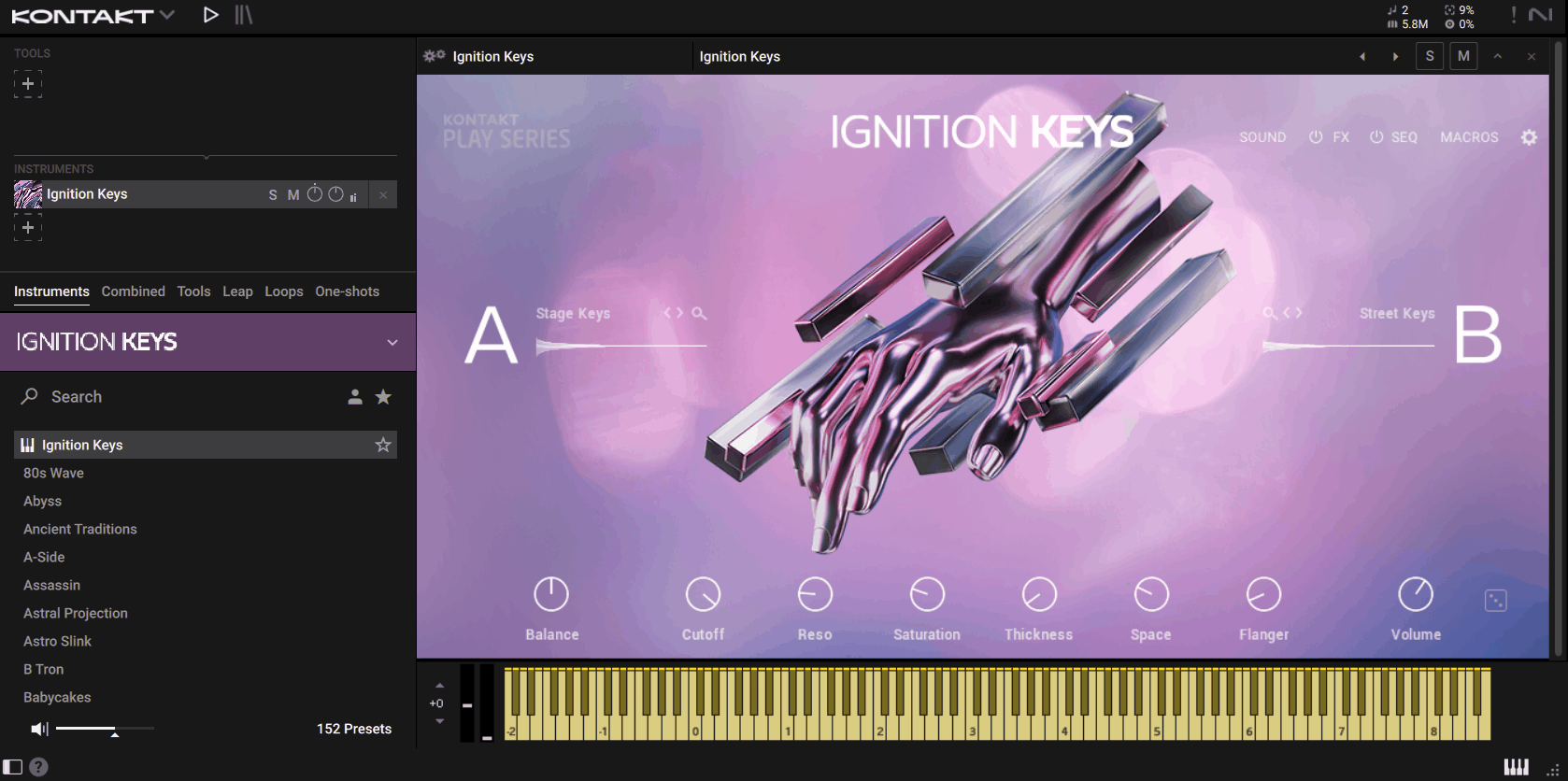
NI Ignition Keys provides ultra-modern keyboard sounds built from a combination of vintage instruments and state-of-the-art recording techniques, designed for current chart-level production. The sounds have the polished, detailed quality of professional keyboard tracks, and the library covers the specific key character that contemporary pop and hip-hop demands.
One thing I’ve noticed about Ignition Keys is how well the sounds sit in dense pop arrangements without needing additional processing. The sounds are recorded and processed to occupy their own space in the mix, which is the kind of consideration that distinguishes production-oriented libraries from general-purpose instruments.
Maybe it’s the combination of vintage source instruments with modern processing, but the key sounds from Ignition Keys tend to cut through a mix without fighting with the vocals or bass.
- Vintage & Modern Hybrid Recording
Ignition Keys builds its sounds from vintage instruments recorded through high-end modern gear for a hybrid character that has both warmth and definition. The combination produces key sounds that feel contemporary while retaining the organic quality of real instruments.
I think this hybrid approach is what gives Ignition Keys its distinctive character. In the bigger picture, sounds that feel both warm and modern are exactly what contemporary pop production demands, and the vintage-through-modern recording chain delivers that balance naturally.
- Versatile Key Character
The library covers electric pianos, synth keys, pads, plucks, and lead sounds within the pop and hip-hop context. Ignition Keys can handle most keyboard needs in a contemporary pop production without loading multiple separate instruments.
For sessions where speed matters, having this range in a single library keeps the workflow efficient. I’d say about 80% of the keyboard needs on a typical pop production fall within what Ignition Keys covers, which means fewer plugin loads and less browsing.
- Chart-Ready Sound Design
Sounds are voiced specifically for commercial pop and hip-hop production, with the brightness, presence, and impact that chart-level productions require. The sound design reflects an understanding of where these sounds need to sit in a modern mix.
From what I can tell, “chart-ready” isn’t just marketing language here. The sounds genuinely sit in a mix the way professionally produced keyboard tracks do, without needing the EQ carving and level adjustments that raw instrument recordings typically demand.
- NI Kontrol Integration
Optimized for NI’s Kontrol keyboards with labeled macro assignments and smart browsing, Ignition Keys adds a tactile dimension to keyboard performance. The controller integration means the most impactful parameters are mapped to physical controls automatically.
15. NI Melted Vibes
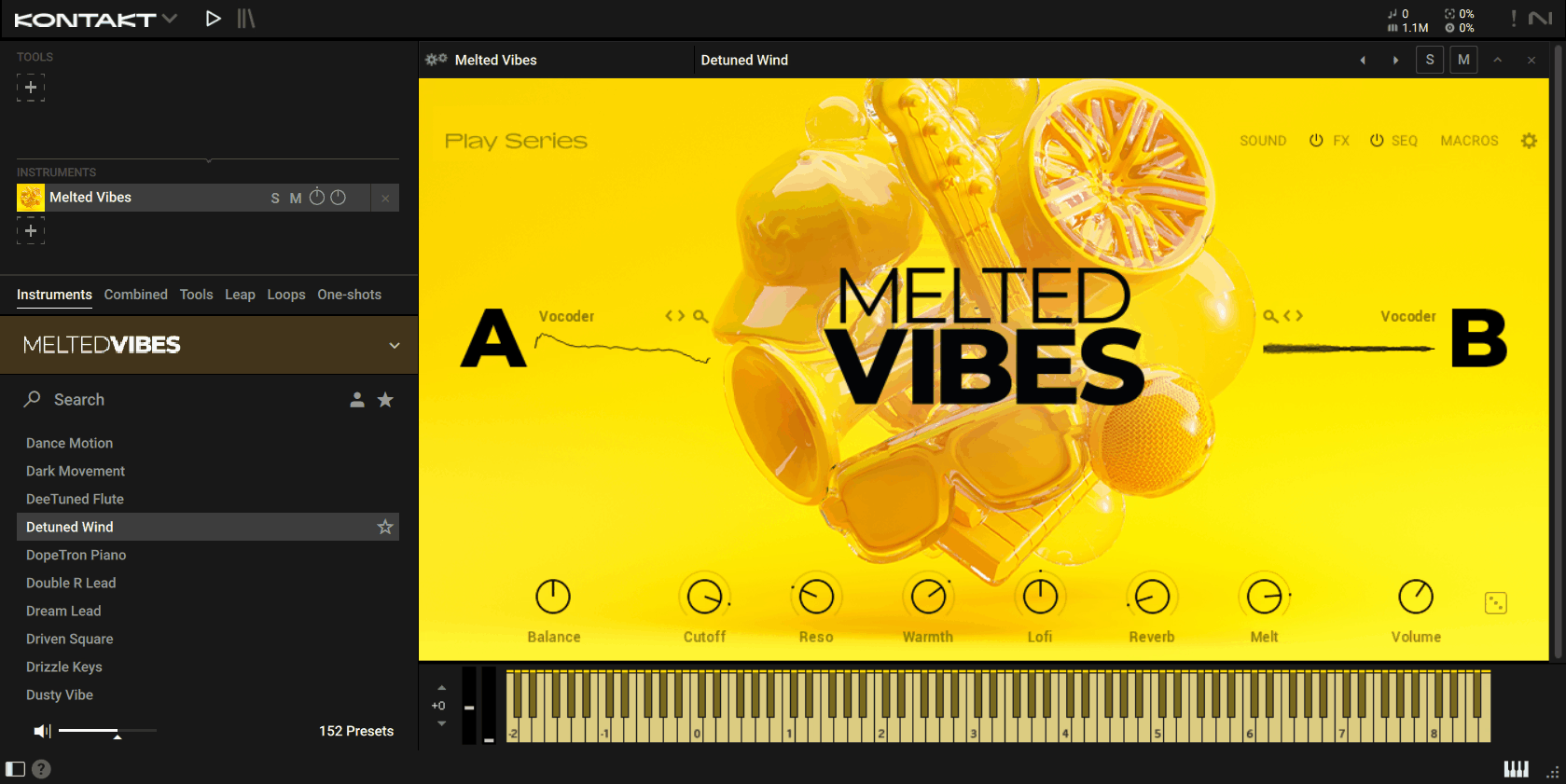
Detuned melodies, warped keys, and wonky synths for pop, trap, and R&B are the specialty here. NI Melted Vibes provides 150 tweakable presets built from pads, plucks, and keys recorded with iconic synthesizers and processed through heavy pitch manipulation, targeting the specific wavy, pitched, off-kilter character that has become central to contemporary R&B and pop production.
I feel like Melted Vibes occupies a unique space in the NI library because it specifically targets the detuned, slightly wrong-sounding aesthetic that defines current trap-influenced pop and R&B. In other words, it’s not trying to sound perfectly in tune or naturally acoustic. It’s trying to sound pleasantly warped, and it succeeds at that specific character.
- Pitch-Warped Sound Design
Melted Vibes builds its sounds around heavy pitch manipulation that produces the characteristic detuned, morphing character.
- 150 Diverse Presets
Presets cover wavy pads, detuned plucks, wonky keys, and morphing synths, all within the contemporary pop, trap, and R&B aesthetic. The preset variety covers the range from subtle detuning to dramatic warping, and the organization makes finding the right sound fast.
I noticed that the preset quality is consistently high across all 150 entries. It turns out that curating fewer, better presets is more useful than flooding a library with hundreds of mediocre options, and Melted Vibes gets this balance right.
- Inspiring Effects Chain
A built-in effects system with macro control quickly shapes the character of presets with further texture and movement. Melted Vibes’ effects are designed specifically for the warped aesthetic, adding the right kind of processing without stepping outside the sonic palette.
- Custom Macro Controls
16. ujam Beatmaker KANDY
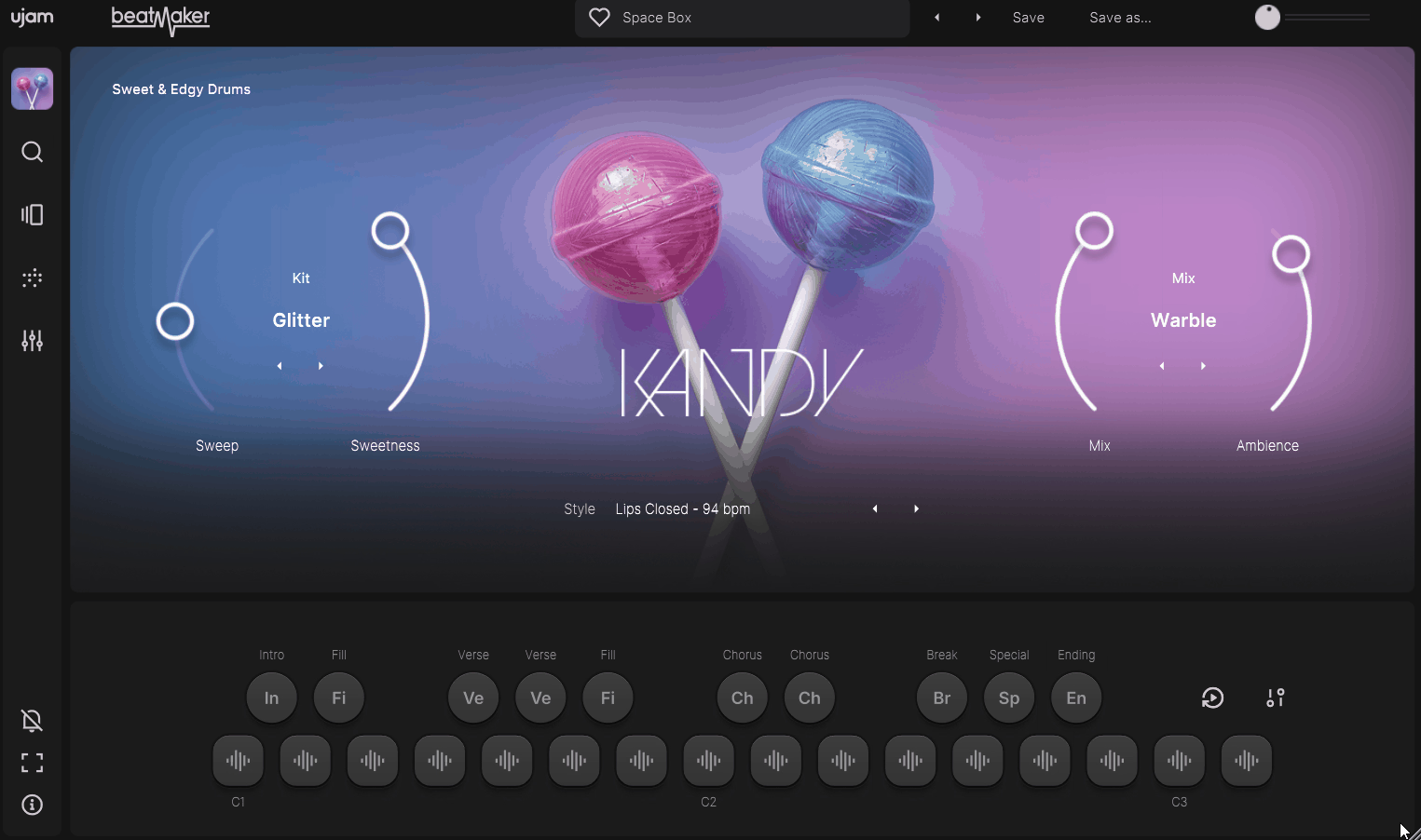
Polished, contemporary pop drum sounds with a specific clean, punchy character are what define this plugin’s territory. ujam Beatmaker KANDY covers both programmed electronic drums and acoustic-electronic hybrid sounds, and the Finisher module applies post-processing that shapes the drum character from traditional to heavily processed.
I suggest KANDY alongside IDOL rather than as a replacement, because each has a distinct character. IDOL is soulful and live-feeling. KANDY is cleaner, brighter, and more contemporary in its aesthetic. On second thought, having both in your library gives you more range than relying on either one alone for the kind of modern pop production that sits between organic and electronic.
- Contemporary Pop Drum Character
KANDY’s kit sounds are recorded and processed for modern pop production with the clear, punchy, well-defined transient character that contemporary pop requires. The sounds sit naturally in mix contexts alongside synthesized bass and electronic production elements.
I noticed that the drum quality matches the polished aesthetic of current commercial pop without sounding sterile. At the end of the day, the balance between clean and characterful is what makes KANDY’s drum sounds work across a wide range of pop subgenres.
- Phrase-Based Performance
The same phrase-based approach as IDOL generates patterns drawn from real drummer performances, producing natural timing and groove.
- Finisher Module
A single-knob multi-effect system with modes covering everything from subtle processing to dramatic drum transformation handles the finishing processing. KANDY’s Finisher takes raw drum sounds to production-ready quality in a single control.
For the most part, the Finisher modes handle the compression, saturation, and spatial processing that drums need to compete with commercially produced tracks. I’d say two or three Finisher modes will cover most of your pop production needs.
- Pattern Variation
Built-in variation changes subtle details between repetitions to prevent the drums from sounding looped. KANDY’s variation system produces the organic inconsistency of a real drummer playing the same pattern multiple times.
17. Native Instruments Session Strings Pro 2
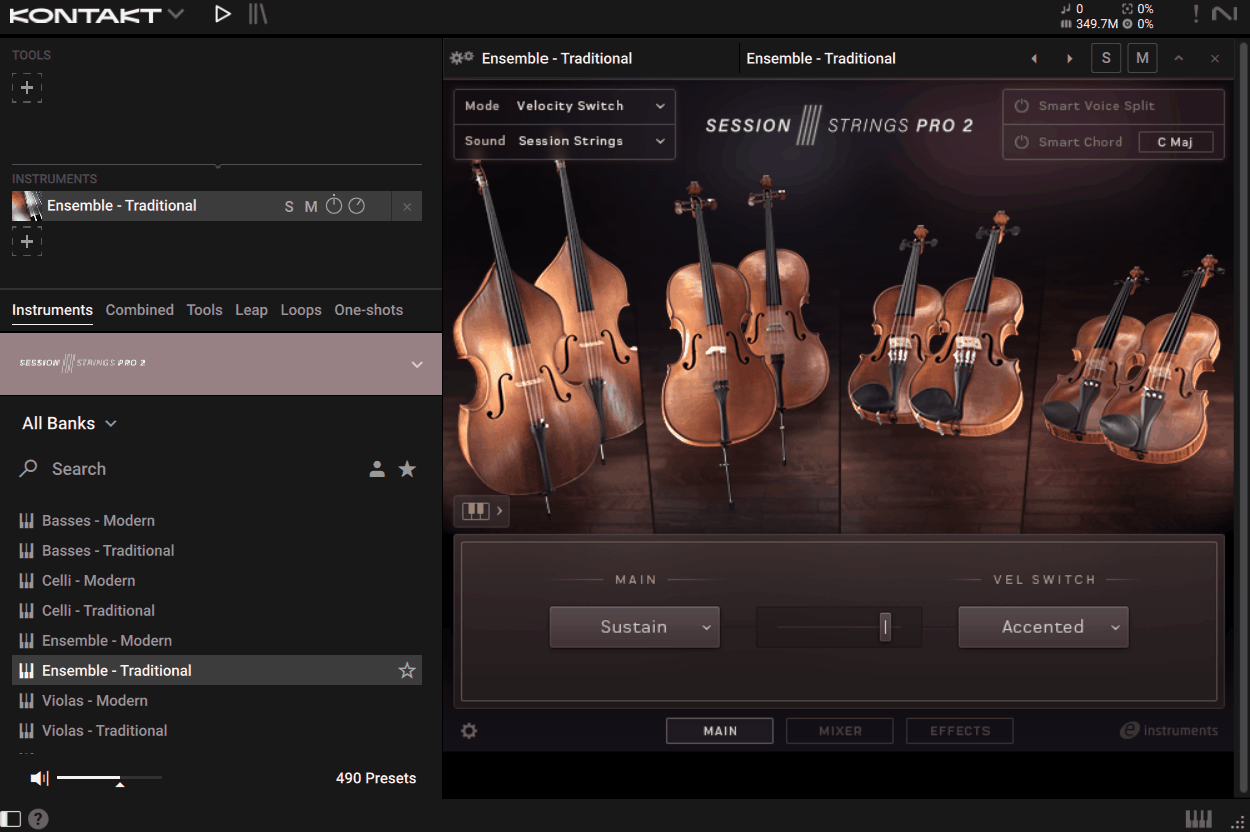
Strings appear in so many pop, R&B, and soul productions that having a dedicated string library is more practical than building string parts note by note. Session Strings Pro 2 provides solo violin, viola, cello, and double bass instruments alongside chamber and orchestral section configurations, all with extensive articulation control and the ability to create convincing string arrangements without specialist orchestration knowledge.
I appreciate how the humanization system takes care of timing and velocity variations automatically. Session Strings Pro 2 covers both the small, intimate string sounds that R&B ballads use and the lush, full orchestral textures that soul productions deploy for emotional impact. Due to the fact that the library handles both ends of that spectrum, it’s the most genre-versatile string option I’ve found.
- Chamber & Orchestral Sections
Both small chamber ensemble and full orchestral section configurations are available, and the range between them covers the full spectrum of string needs. The chamber setup produces the intimate, close string sound of a small R&B session, while the orchestral configuration produces the large, sweeping texture of a full soul production.
Having both within the same library means you don’t need separate plugins for intimate and epic string sounds. I’d say the chamber sections are the more immediately useful for R&B and soul, but the orchestral configurations come in for the big emotional moments.
- Phrase-Based Articulations
Pre-recorded ensemble phrases cover long bow, short bow, pizzicato, tremolo, trills, and harmonics, all with multiple velocity layers and ensemble variation
- Humanization Engine
Automatic timing variation, bow speed changes, and vibrato behavior introduce the natural inconsistencies of a live string section. Quantized strings that play with machine precision immediately break the illusion, which is why the humanization is the single most important feature in any string library.
2. UVI Soul Bass
When it comes to the specific low-end character that soul and R&B productions need, most general-purpose bass plugins fall short. A 1960s Fender Jazz Bass built into a modern instrument with a parallel synth layer is the concept at the core of this plugin.
UVI Soul Bass includes the electric bass sampled in detail with five playing styles, as well as a synth layer that can double or replace it with a wide selection of synthesized bass sounds, all built from 75,000 samples and hundreds of patterns.
From my experience, the Jazz Bass samples have the right warmth, growl, and mid-range presence that sits under a soul arrangement without muddying the vocals and keys. Not to mention, the built-in sequencer with MIDI drag-and-drop means you can sketch bass lines quickly, drag the MIDI into your DAW, and edit from there.
- Five Playing Styles
Soul Bass covers fingerstyle, pick, slap, pop, and muted techniques with full velocity layers and round-robin samples. The slap and pop articulations added in version 1.5 are particularly relevant for R&B, where the funky slap bass technique is foundational to the genre’s sound.
Switching between fingerstyle warmth and slap attack within the same bass line produces the dynamic, expressive character that real session bassists bring. I’d say the variety of articulations is what separates Soul Bass from sample libraries that only cover one or two playing approaches.
- Electric + Synth Dual Layer
Two parallel layers let you run electric bass and synthesized bass simultaneously within a single instance. You can blend a clean Jazz Bass with a sub-heavy synth bass beneath it, or replace the electric layer entirely with a synth bass while keeping the electric’s attack and articulation on top.
I found this layering approach produces bass sounds with both the organic feel of a real instrument and the sub-bass weight of modern R&B production. Which is why I reach for Soul Bass when the track needs low-end warmth that a pure synth bass can’t deliver.
- Pattern Sequencer with MIDI Export
Hundreds of built-in bass patterns cover a wide range of soul, R&B, and funk styles, and you can audition them while adjusting the sound, then drag directly into your DAW as MIDI. The patterns serve as references for how real bass players approach these genres.
I’d recommend the pattern library even if you prefer programming your own lines. At the very least, hearing how a session bassist phrases a soul bass line teaches you something about the genre’s rhythmic vocabulary that you won’t get from a piano roll.
- Hand Position Control
An adjustable hand position simulates where along the string the bassist is picking, changing the tone and attack character in a way that mirrors real playing technique

Hey, I’m Vil, I started this site to help you find the best audio plugins covering various categories including synths, pianos, strings, and effect tools of all sorts as well. I pick these plugins based on various criteria so it best matches the actual topic.