When you purchase through the links on my site, you support the site at no extra cost to you. Here is how it works.
Rock production has its own set of demands that other genres do not always share. Drums need weight and believable room interaction, guitars need physical amp character, bass has to stay locked with the kick, and effects need to create dimension without softening the performance.
For that reason, I focused this list on tools that solve specific problems found in guitar-driven productions rather than filling the list with generic processors that could belong to any genre. The 20 plugins below cover drums, guitars, bass, amp simulation, phase, compression, saturation, EQ, resonance control, reverb, delay, transient shaping, and stereo width.
What matters most to me is whether a plugin changes something meaningful about the finished record. A feature can look impressive on paper, but I’d rather include a tool because of a distinctive modeling approach, a useful performance system, a particular processing architecture, or a sound that is difficult to reproduce somewhere else.
1. XLN Audio Addictive Drums 2
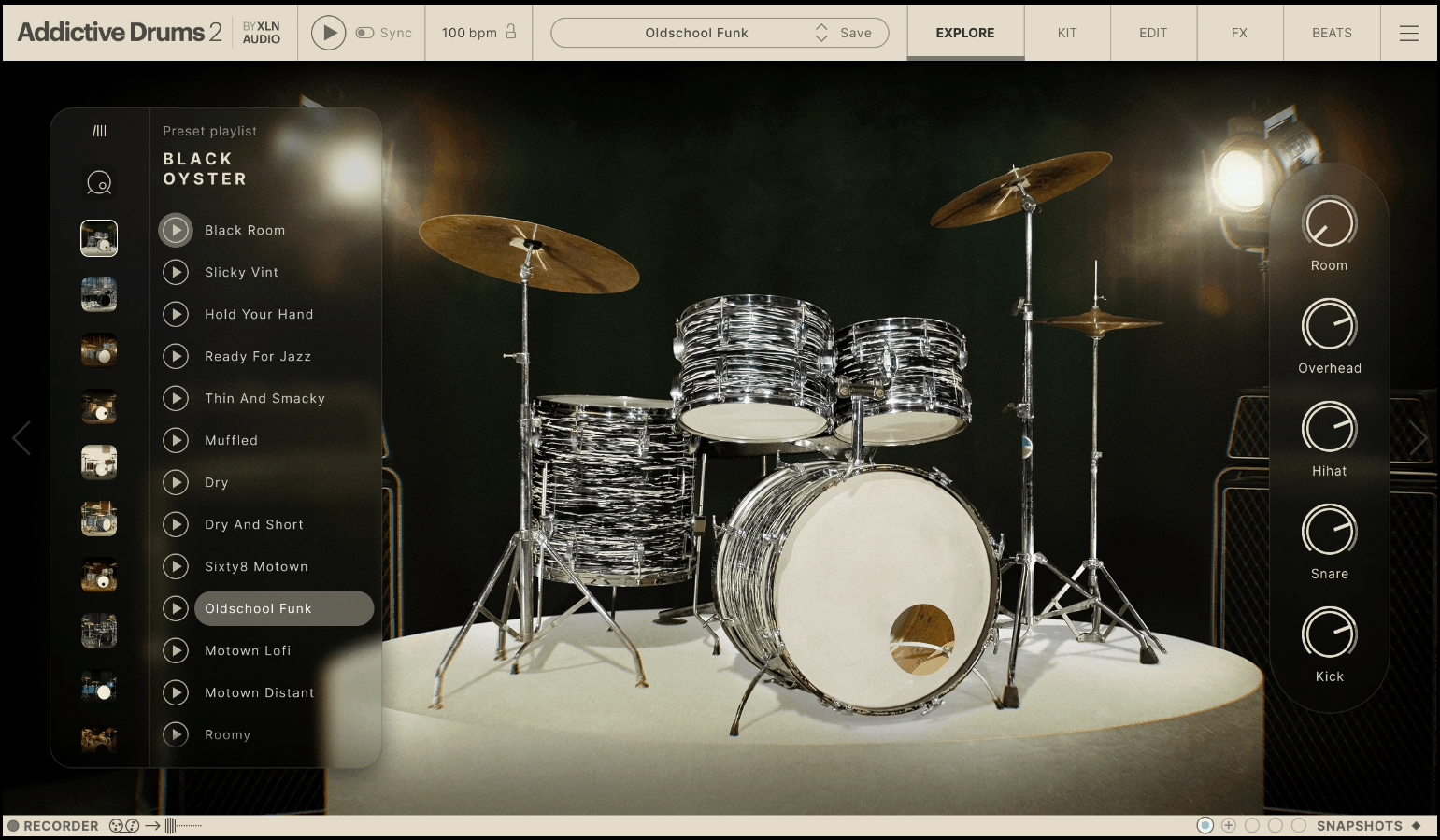
Recorded drum character is often where rock productions either start to feel convincing or immediately reveal their programmed nature. XLN Audio Addictive Drums 2 gives me a useful combination of multichannel drum recording, pattern transformation, detailed kit behavior, and the ADPak expansion system, so I can build the sense of a real kit occupying a physical recording space.
From my experience, the room perspective matters almost as much as the close microphones when the goal is a bigger rock sound. I can keep the close mics relatively focused for a tight arrangement, then bring in the room captures when the chorus needs more size and movement.
- Multichannel Mic Recording
- Beat Transformer
Another standout is Beat Transformer, which reshapes a groove through velocity-range compression or expansion, accents, timing randomization, and velocity randomization. Instead of replacing the pattern, I can keep its identity while making it busier, more controlled, or slightly less mechanically precise.
- Layered Sample Architecture
The instrument uses extensive velocity layering and alternating samples, while also allowing Trigger kit pieces to be layered with the main sampled drums. That combination gives me two different ways to add realism: natural variation from the main recordings and additional one-shot material when a particular drum needs extra weight or attack.
For rock, that becomes especially useful when a snare needs to hit harder without replacing its natural room interaction. I can reinforce the transient while keeping the original recorded ambience intact.
- Beats + Fills Library
The internal MIDI library provides beats and fills in different styles, giving me actual performance material instead of just a collection of drum samples. I can browse for a groove that already has believable velocity movement and then adapt it to the song.
It’s useful when I want the foundation to feel played before I start editing individual hits. Rather than beginning with a completely empty MIDI track, I can start with a performance that already has a drummer-like shape.
- Individual Kit-Piece Effects
Every channel has built-in processing including EQ, compression, distortion, transient shaping, tape saturation, reverb, and delay sends, which becomes more meaningful when it is applied individually to the recorded kit pieces.
- ADPak Expansion Ecosystem
The ADPak system expands the core instrument with different drum kits, studios, microphones, and MIDI material. That means a new expansion can change the recording perspective and source character rather than merely offering another variation on one existing kit.
2. Toontrack EZdrummer 3
Songwriting sits at the center of EZdrummer 3, which is built around turning an initial rhythmic idea into a structured drum performance. Song Creator, Tap2Find, Bandmate, Edit Play Style, and the Song Track workflow are the features that make the instrument especially relevant for rock writers.
At first glance, the workflow looks simpler than fully manual drum programming. Once I start arranging sections, though, the combination of groove discovery, arrangement generation, performance editing, and MIDI manipulation gives me considerably more depth than a basic loop browser.
- Tap2Find + Step Sequencer
Tap2Find lets me enter a rhythm and search the MIDI library for matching performances, while the updated workflow also incorporates a step-sequencer approach. That makes it possible to search from a rhythmic idea rather than starting from a genre folder and hoping something happens to fit.
- Song Creator
The Song Creator is designed to take an existing groove idea and turn it into a more complete drum track. Instead of treating the verse, chorus, and transition as unrelated MIDI clips, the tool helps build a structured performance around the song.
- Edit Play Style
One of the more interesting performance features is Edit Play Style, which lets me make real-time changes to the feel, timing, and performance characteristics of an existing groove. That gives me another way to change a drummer’s behavior without manually moving every MIDI event.
- 7 Core Kits
The core EZdrummer 3 library contains seven drum kits, along with additional snares, kicks, and cymbals, giving the main instrument a defined set of source sounds before the EZX expansions are added. The core library was recorded by producer and mixer Michael Ilbert, which also gives the main kits a particular recorded-studio character.
That number is useful because it describes an actual source collection rather than a meaningless count of presets. Seven strong kits with different personalities can be more valuable than hundreds of barely distinguishable kit variations.
3. Ample Guitar LP 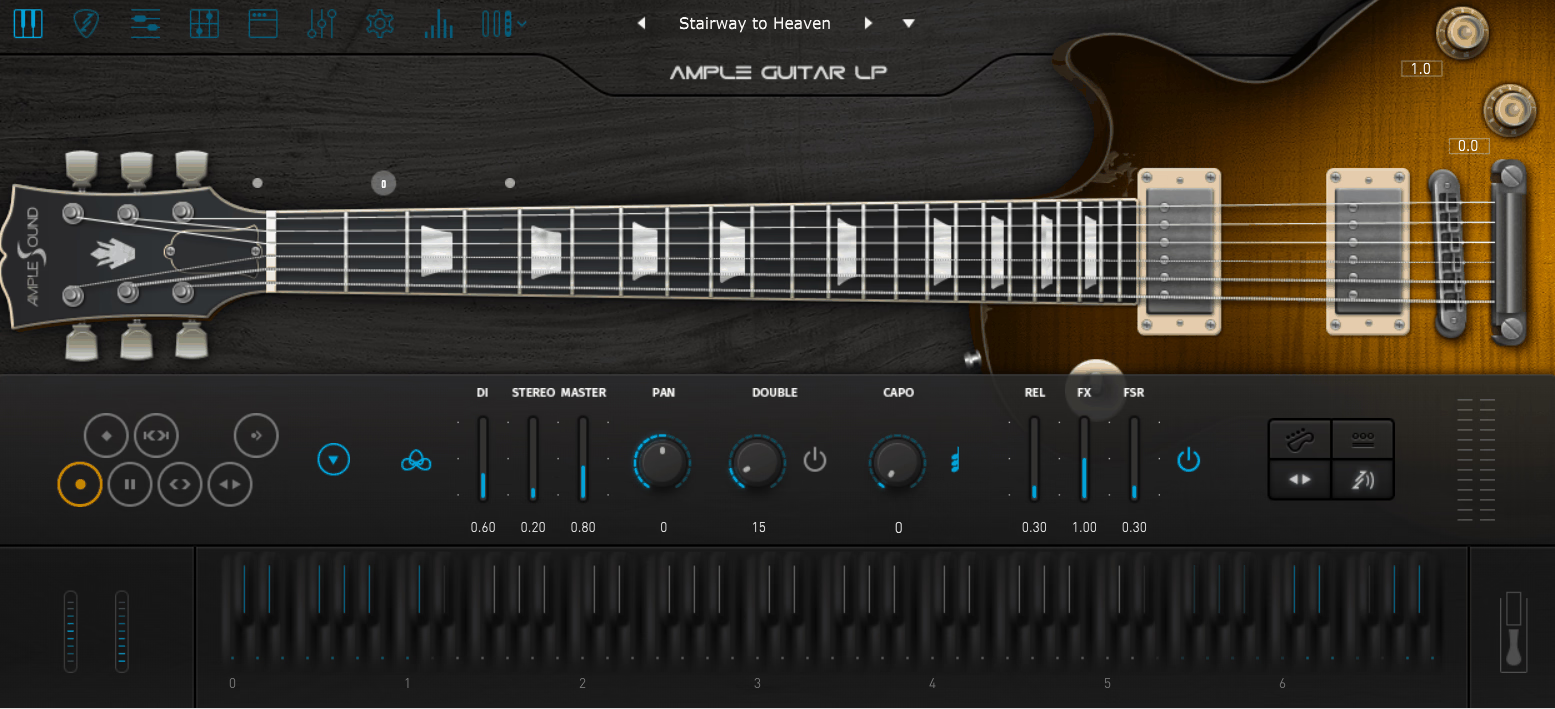
Few instruments are more immediately associated with rock than a Gibson Les Paul, and Ample Guitar LP focuses on that identity through a sampled Gibson Les Paul 1958 Reissue. The library contains 6,128 samples, three pickup positions, and 11 articulations, while Version 4 adds a 1959 Reissue fingerstyle library, Riffer 4, and Tab Reader.
What I like is how the bridge pickup responds once the guitar is pushed through a driven amp. The combination of thick low mids, controlled highs, and compressed attack makes it particularly effective for rhythm parts that need weight without overwhelming the rest of the mix.
- 3 Pickup Positions
The Neck, Bridge, and Both positions give me three genuinely different tonal roles rather than cosmetic variations. Bridge provides the tightest and most aggressive response, neck moves toward warmth, and the combined setting fills in the middle.
For rock arrangements, I tend to think of these as arrangement decisions rather than simple presets. One position can anchor the riff while another can make a lead or sustained chord occupy a softer part of the spectrum.
- 11 Articulations
Supporting the main guitar tone is an 11-articulation system covering sustain, palm mute, natural harmonics, pinch harmonics, hammer-on, pull-off, legato slides, staccato, pop, and dead notes. Those techniques add the physical details that separate a convincing guitar performance from a sequence of repeated pitched samples.
Once the instrument is distorted, those differences become even more obvious. A tightly palm-muted riff and an open sustained chord can use the same basic notes but still feel like completely different performances.
- Riffer 4
For deeper programming, Riffer 4 works with guitar-specific concepts such as string selection, fret position, pattern generation, and physical playing constraints rather than treating the guitar like a generic keyboard instrument. That makes the MIDI more compatible with the way a guitarist would actually move around the instrument.
I found that especially helpful for riffs that cross several strings or use repeating chord shapes. The result usually needs less manual correction because the part already follows a more believable physical route.
- Tab Reader: GP3–GP8
When the starting point is notation, Tab Reader imports Guitar Pro files from GP3 through GP8 and preserves the string and fret information needed to perform the part correctly. That makes it useful for covers, transcriptions, and arrangements that already exist in tab form.
In fact, the positional information can matter more than the raw MIDI pitches alone. The same note can sound different depending on where it is played on the guitar, and the instrument can reflect that distinction.
- Double Guitar Mode
For immediate width, Double Guitar mode layers two performances with subtle tuning and timing differences. That creates a result much closer to double tracking than simply copying one MIDI region and moving the duplicate slightly.
I like using that when a rhythm part needs to feel thicker without building two independent performances from scratch. It is not identical to recording two real takes, but it gets much closer than a basic duplicate-and-pan technique.
- 6 Amp Models + 8 Microphone Options
The integrated guitar chain includes six amp models and eight microphone options, giving me a useful way to audition the instrument through an amplified signal while I am still programming it. Hearing the part through gain is important because the raw instrument can make some articulations feel very different from how they behave in a mix.
I usually move to a dedicated amp simulator when the final cabinet and microphone details need more attention. Even so, the internal system is valuable because it lets me evaluate articulation, gain, and source tone together.
4. Ample Guitar VC
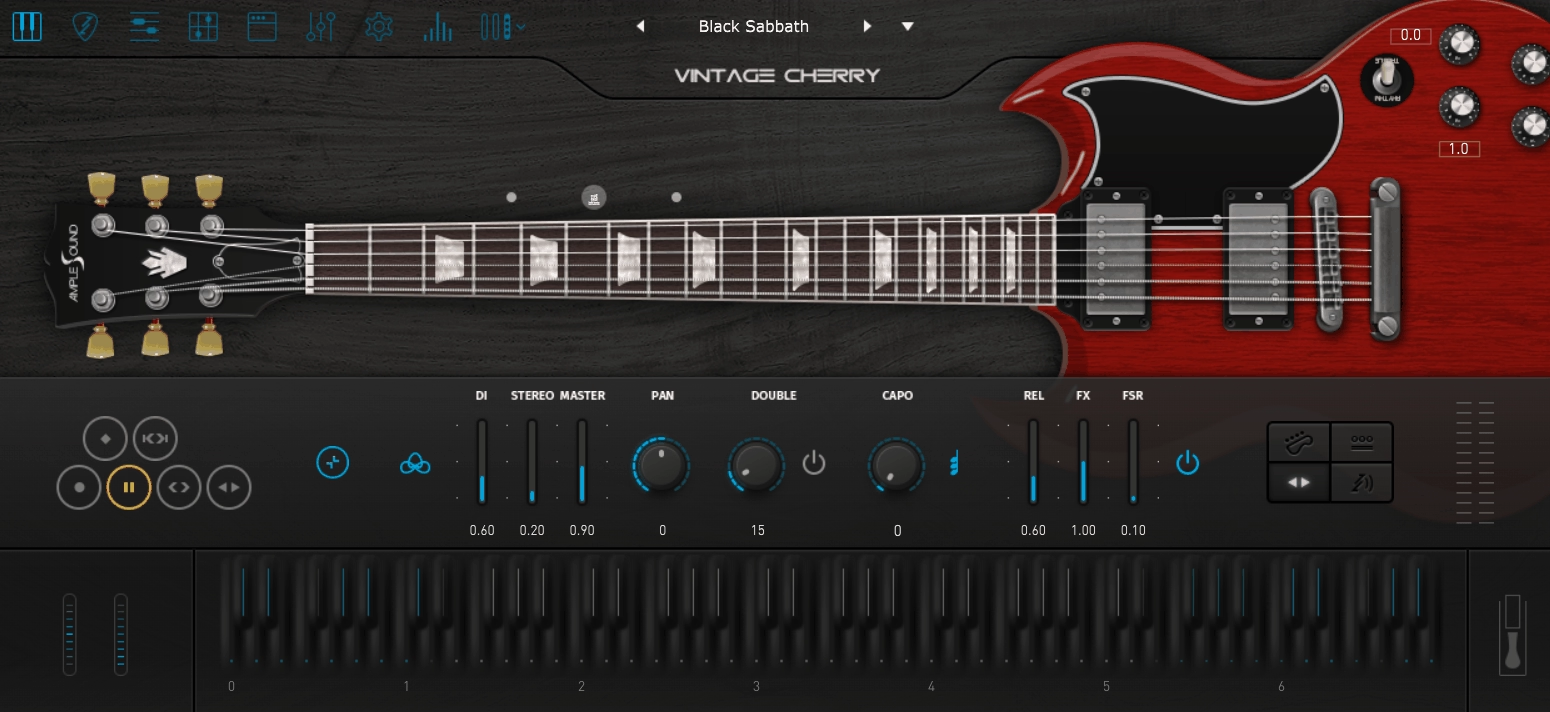
The instrument includes separate Neck and Bridge sample libraries, giving me two distinct tonal positions rather than one static guitar voice. The bridge is useful for tighter riffs and power chords, while the neck position gives sustained parts more body.
That means I can change the guitar’s role within the song without switching instruments. The tonal difference is large enough to help separate rhythm and lead passages.
Ample Guitar VC recreates a Gibson SG ’61 Vintage with the leaner body response and stronger upper-mid bite associated with the instrument. That makes it especially useful when distorted rhythm guitars need to stay readable in a dense arrangement.
From my perspective, the VC occupies a different role from the Les Paul rather than simply offering another guitar with different presets. The SG’s more immediate attack can help riffs cut through without relying on excessive top-end EQ.
- Gibson SG ’61 Vintage
The main attraction is the raw attack and brighter midrange of the SG source. That character can give power chords and hard-rock riffs more definition once gain and speaker coloration are added.
I also like that the emphasis comes from the source itself. Instead of making a darker guitar artificially brighter, I can start with a guitar that naturally carries more of the bite the arrangement needs.
- 10 Articulations
The VC provides 10 articulations, including sustain, palm mute, natural harmonic, hammer-on and pull-off, legato slide, slide in, slide out, pop, pinch harmonic, and dead note. That gives the sampled SG enough technique changes to move naturally between aggressive rhythm and expressive playing.
For instance, a muted power-chord pattern has a completely different envelope from an open chord even when the pitch content barely changes. Being able to switch between those behaviors inside one performance keeps the MIDI much more expressive.
- Riffer 4 String Intelligence
The Riffer system is designed specifically for plucked-string instruments, with attention to string assignment and physical playing behavior. That lets the MIDI follow a more believable guitar path instead of treating every pitch as an abstract keyboard note.
In practice, this is particularly useful when a riff crosses several strings or contains awkward intervals. The physical constraints can help prevent the robotic jumps that often appear in manually programmed guitar MIDI.
- Authentic Left-Hand Performance Noises
The VC includes authentic left-hand performance noises, giving the instrument another layer of physical detail beyond the pitched samples. Those sounds can appear as part of the performance instead of simply sitting on top as a repetitive noise loop.
That is subtle, but it becomes more noticeable after distortion. Small fret and hand noises can help connect one guitar note to the next.
5. Ample Guitar SC
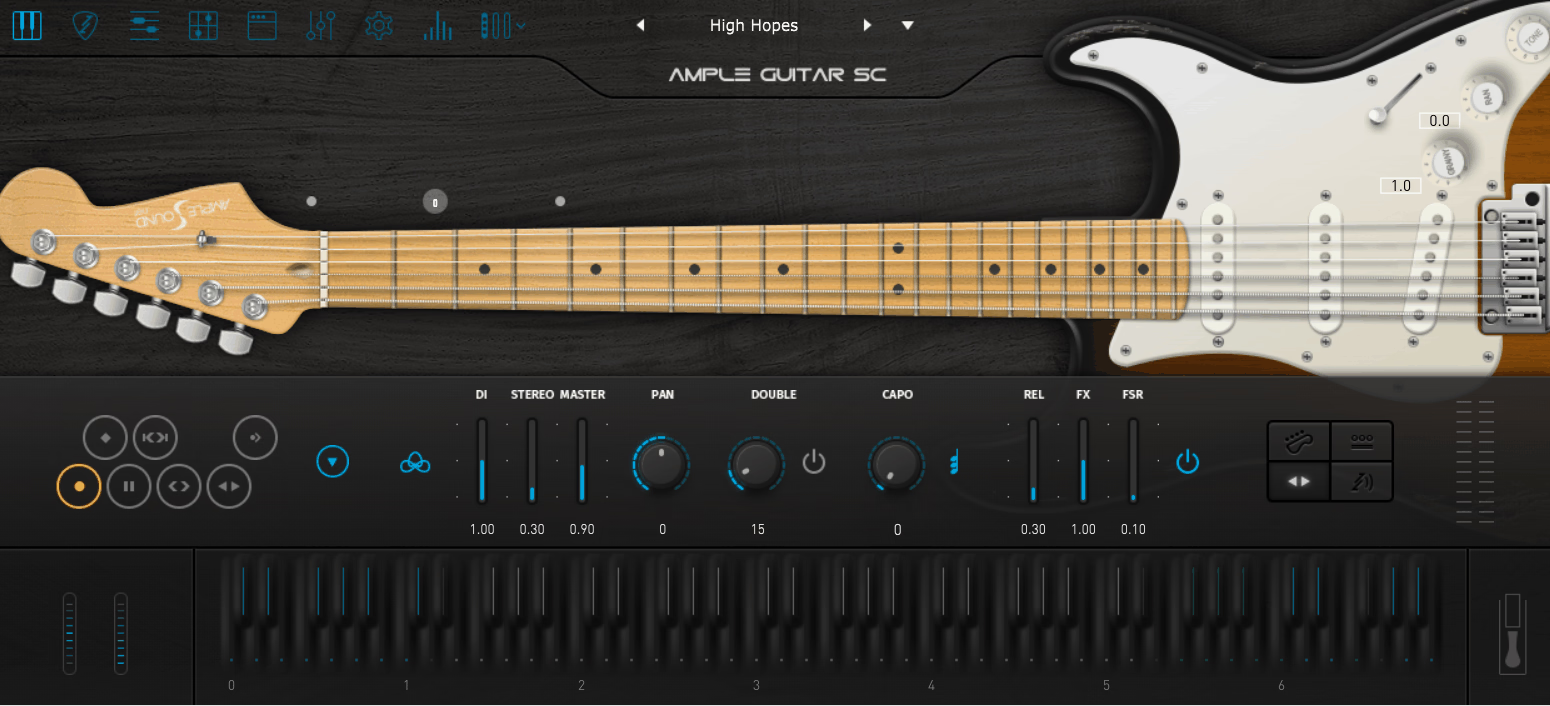
Bright guitar parts need a different source, and Ample Guitar SC recreates a 50th Anniversary Fender Stratocaster with the single-coil articulation associated with that design. This makes it especially useful for blues-rock, alternative, clean rhythm, and arrangements where individual notes need to remain clearly separated.
One of the strongest parts of the instrument is the choice between four pickup positions. I find the in-between settings particularly useful because their hollow, scooped character can change the role of the guitar without adding a new instrument.
- 4 Pickup Positions
The Bridge, Bridge+Middle, Middle+Neck, and Neck positions provide clearly different responses, including the familiar hollow character of the in-between settings. That gives me access to tones that a humbucker-based guitar simply cannot reproduce in the same way.
A clean verse can benefit from the more hollow Position 2 or Position 4, while the chorus can move into the brighter bridge pickup. Because of that, pickup selection can become part of the arrangement rather than just part of the tone setup.
- 28 Strumming Styles Per Chord
The strumming engine contains 28 playing styles per chord, giving it a substantial range for syncopated and funk-influenced rhythm guitar. Those styles become especially effective when paired with the in-between Strat pickup positions.
For example, I can use one of the muted rhythmic styles to establish the groove and then manually tighten the important accents around the drums. That gives me the speed of pattern generation while keeping the finished part specific to the song.
- 11 Articulations
The guitar includes 11 articulations, providing sustain, palm mute, harmonics, slides, legato techniques, and other performance variations. That gives the instrument enough expressive range to change playing technique inside a single MIDI performance.
Maybe the biggest advantage appears when the guitar changes role inside a song. One performance can move from delicate picked notes into harder rhythmic playing without needing a separate instrument for every section.
- Riffer 4 Guitar-Aware Editing
For detailed programming, Riffer 4 retains the guitar-aware approach of treating notes according to their string and fret position. That makes it easier to create realistic fingerings rather than simply arranging pitches vertically in a piano roll.
In addition, the system is useful when a riff depends on a particular physical position. The same pitch can be approached differently depending on the string and fret, and that affects how convincing the virtual guitar feels.
6. Ample Bass P
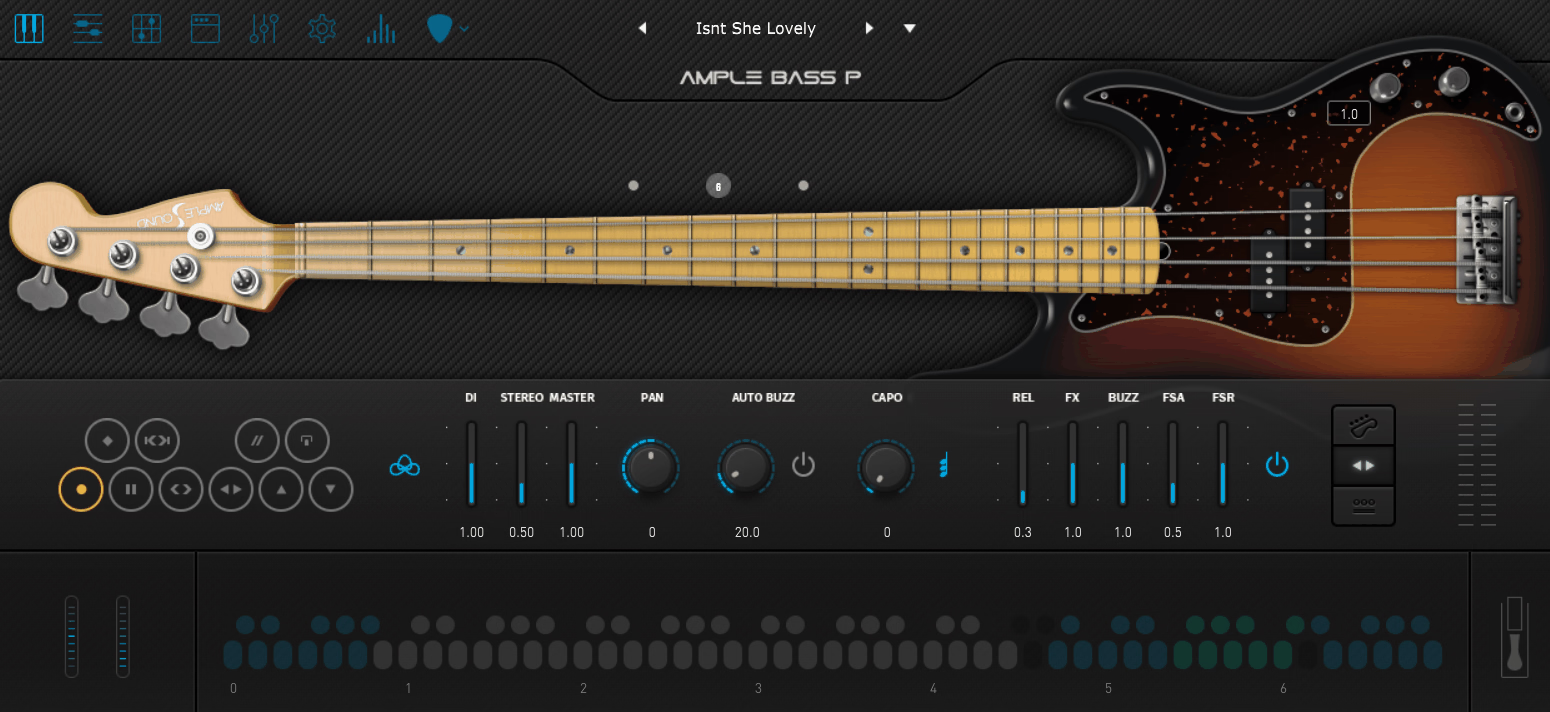
Rock bass often benefits from a focused source, and Ample Bass P recreates the Fender Precision Bass with the tight low-mid character that has made the instrument such a dependable rock foundation. The instrument includes an extensive articulation system and guitar-aware MIDI composition tools built around the sampled bass.
For the most part, I think of the Precision as the straightforward option when the bass has to remain audible beneath dense distorted guitars. Its focused response gives me enough midrange definition without automatically competing with the rhythm-guitar wall.
- Fender Precision Source
The main sound comes from a sampled Fender Precision Bass, giving the instrument the focused low-mid response and punch associated with the classic split-coil design. That source makes more sense for rock than a generic bass sample because the instrument already occupies a useful tonal position beneath distorted guitars.
- Fingerstyle Library
The dedicated Fingerstyle library provides the primary playing character for the instrument, preserving the nuances of a picked or finger-plucked string performance rather than treating the bass like a sustained synth. That makes the attack and note decay much more useful for conventional rock playing.
I find that especially effective when the bass has to follow the drummer closely. The natural attack gives the kick-and-bass relationship something physical to lock onto.
- Riffer 4 Bass Composition
The integrated Riffer 4 system is adapted to bass and provides a way to build parts around actual string and fretboard behavior. Rather than simply writing pitches, I can work toward a bass line that looks and behaves more like something a bassist could physically perform.
That is useful on lines containing repeated notes and position changes. The MIDI can remain musical while also respecting the physical limitations of the instrument.
- 13-Part Articulation System
The expanded articulation system includes sustain, palm mute, natural harmonic, hammer-on and pull-off, legato slide, slide in, slide out, slap, pop, tap, accentuated, repeat note, and dead note. Those techniques give the bass considerably more performance vocabulary than a basic sustain-and-release library.
For rock, the value is not using all of them constantly. A few carefully chosen muted notes, accents, slides, or dead notes can communicate a real performance far better than endlessly adjusting MIDI timing.
7. Ample Bass J
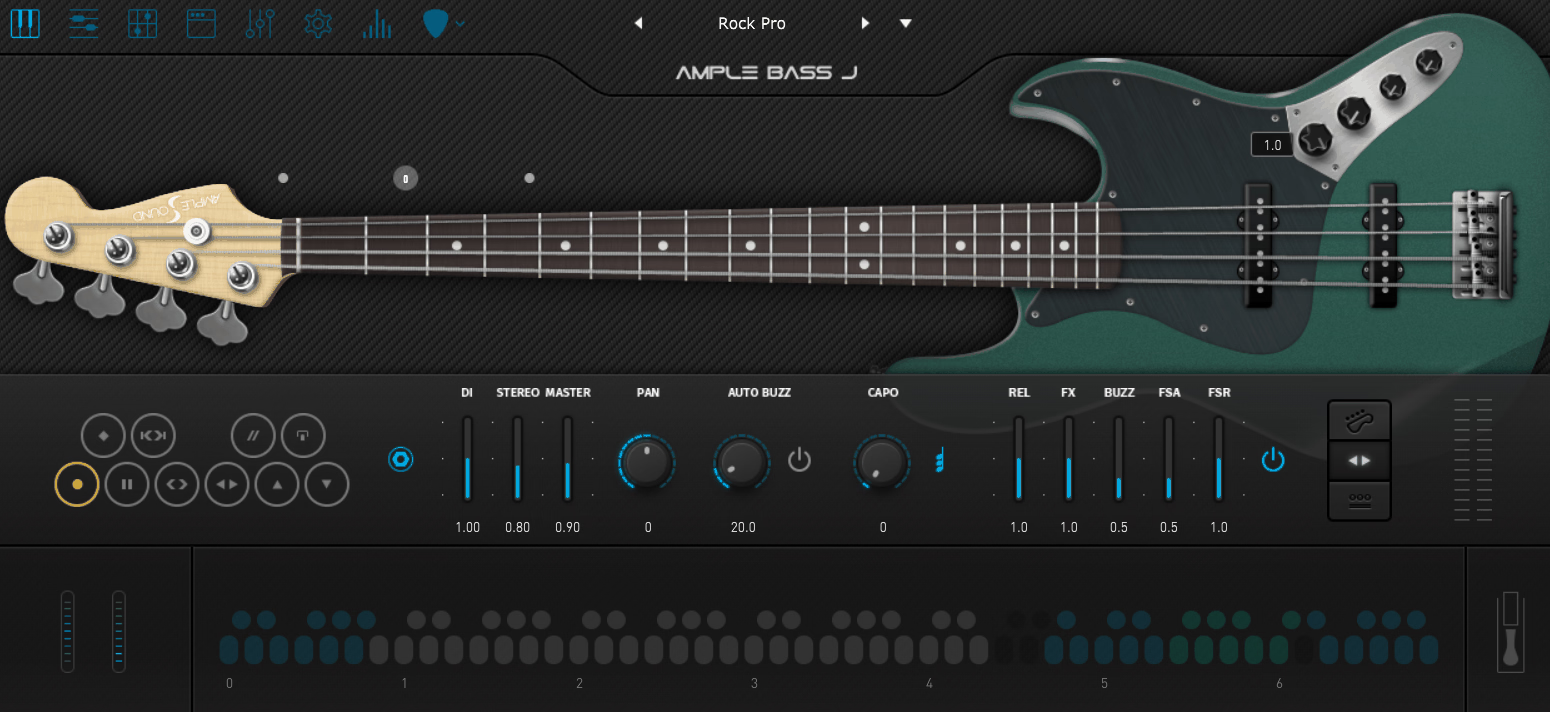
A Jazz Bass brings a broader and more articulate response, and Ample Bass J recreates a Fender Jazz Bass John English Masterbuilt with its characteristic bass voice. The instrument includes both Fingerstyle and Pick libraries plus a 13-articulation performance system.
I like that difference in progressive, alternative, funk-rock, and melodic rock because the bass can become a more active musical voice. The bridge pickup brings extra growl and definition, while the neck pickup contributes warmth and body.
- John English Masterbuilt Source
The source is a Fender Jazz Bass John English Masterbuilt, which gives the sampled instrument a distinctive high-end source rather than another generic J-Bass approximation. That matters when the bass is expected to remain articulate through compression, saturation, and dense guitar arrangements.
From what I can tell, the detailed source becomes especially useful once the bass is driven. A richer original signal gives the processing more harmonic information to work with.
- Fingerstyle + Pick Libraries
The instrument includes Fingerstyle and Pick libraries, giving me two clearly different performance approaches rather than simply changing a tone control. Fingerstyle provides a rounder front edge, while the pick approach supplies more attack and definition.
That distinction is useful when the same song contains both restrained and aggressive sections. I can change the physical playing style rather than trying to create every variation with EQ and compression.
- 13 Articulations
The library contains 13 articulations, including sustain, palm mute, natural harmonic, hammer-on and pull-off, legato slide, slide in, slide out, slap, pop, tap, accentuated, repeat note, and dead note.
That gives me a much broader performance vocabulary for rock bass lines. A muted note, repeat note, or short slide can alter the groove in a way that another static sample never could.
- Riffer 4 Dual Views
Riffer 4 provides Piano Roll and Guitar Tab views, with a string visualization system designed to support physically realistic plucked-string writing. It can also retain fingering and articulation information when MIDI is imported or exported.
In other words, I can edit the bass from both the conventional MIDI perspective and the physical-instrument perspective. That is much more useful for realistic bass programming than simply having another piano-roll editor.
- Hundreds of Riffs
The Riffer workflow includes hundreds of bass riffs designed as starting material for composition. That makes the library useful even when I do not want to build the entire bass line from an empty MIDI region.
I can take one of those ideas, change the notes and rhythm, and adapt it around the guitars. The starting performance provides movement that would otherwise take considerably longer to program.
- Drop Tuning to B0
The instrument supports drop tuning with a lowest note down to B0, which gives it enough range for heavily downtuned rock and metal arrangements.
8. IK Multimedia MODO BASS 2
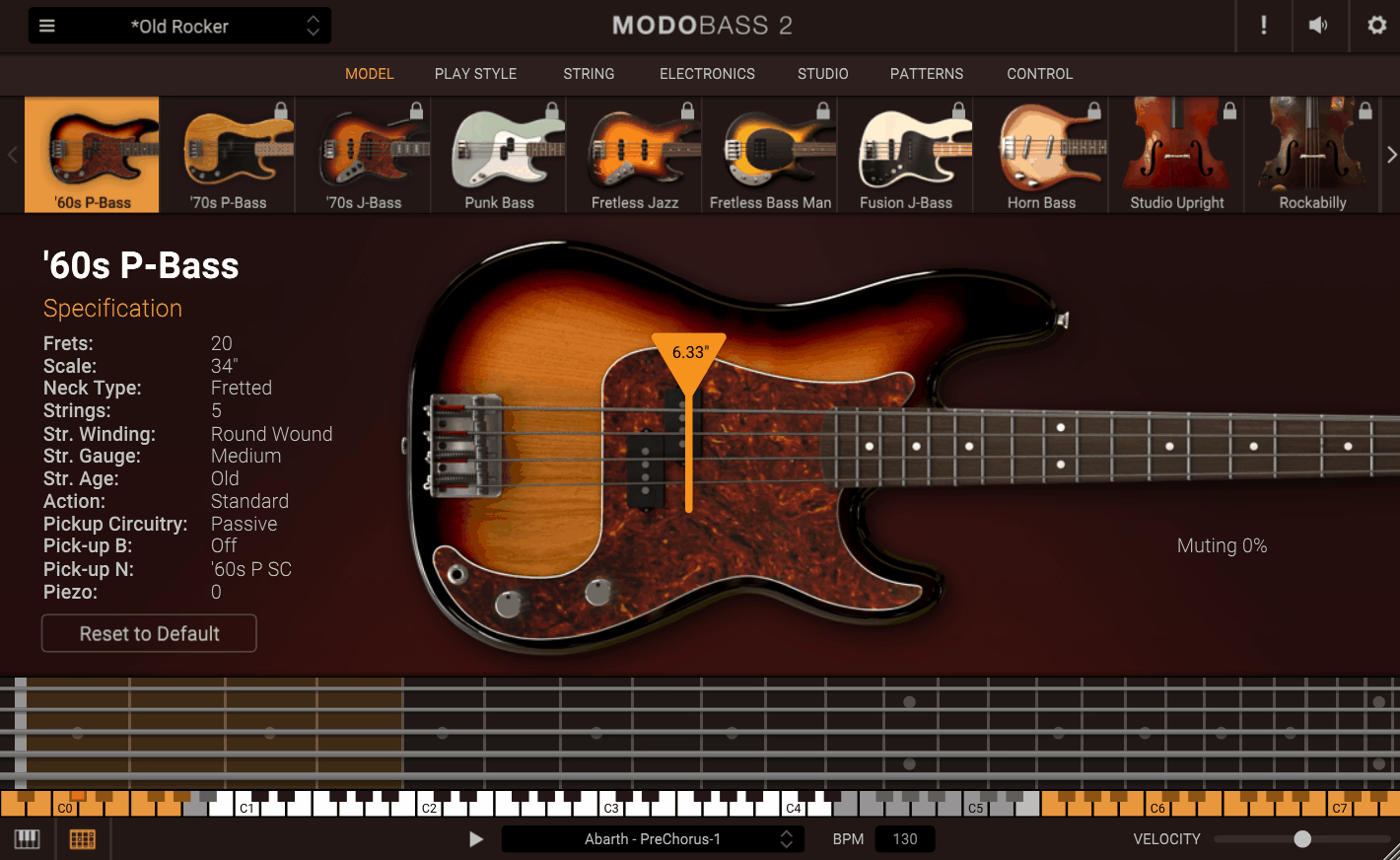
Physical modeling takes a different approach to realism, and MODO BASS 2 builds its sounds from real-time modal synthesis, modeled strings, body, electronics, playing position, and performance behavior. The current full version includes 22 bass models, including electric, fretless, and double-bass instruments.
That becomes especially useful when the performance contains subtle changes in articulation and physical behavior. Fret buzz, release noise, string movement, and slides can be treated as consequences of the modeled performance rather than simply being swapped in from separate recordings.
- 22 Bass Models
At the center is a collection of 22 modeled basses, including the original 14 models plus eight additions such as fretless, upright, and specialized bass designs. That is a meaningful number because each model changes the simulated instrument rather than simply loading another preset on one sample source.
The selection ranges from classic electric basses to more unusual instruments, so I can use the same MIDI performance to compare genuinely different physical sources. That makes the model library much more flexible than a fixed sample-based bass.
- Real-Time Modal Synthesis
The core engine uses real-time modal synthesis without samples being used to create the sound, modeling the physical behavior of the instrument instead. That allows performance variables to affect the generated note continuously rather than switching between prerecorded samples.
Because of this, I can make changes to the instrument itself and hear the response immediately. The approach is particularly useful when I want a bass line to react naturally to playing changes.
- Full Instrument Customization
MODO BASS lets me modify strings, neck, body, electronics, string number, scale, tuning, gauge, construction, action, and age
- Hand Position Control
The instrument models the actual playing position of the bassist’s hand and allows that position to be automated or controlled
- 22-Model Pattern Ecosystem
The Patterns section adds a large collection of performed bass grooves that can be browsed by genre, song section, length, time signature, and other musical criteria. Those patterns were performed by professional bass players and can be used as complete grooves or as starting points for new parts.
That gives me an alternative to programming every note manually. I can start from a believable bass performance and reshape it around the guitar riff.
- 7 Stomp Effects + 2 Bass Amps
The integrated amp section includes two classic bass amplifiers, while the stomp section provides seven bass effects including octaver, distortion, chorus, compressor, delay, envelope filter, and graphic EQ.
I would not choose MODO BASS because it happens to contain effects. The important point is that the signal path lets me hear the physically modeled instrument through a complete bass rig while retaining the ability to route the sound into AmpliTube for additional processing.
9. SSL Guitar Strip
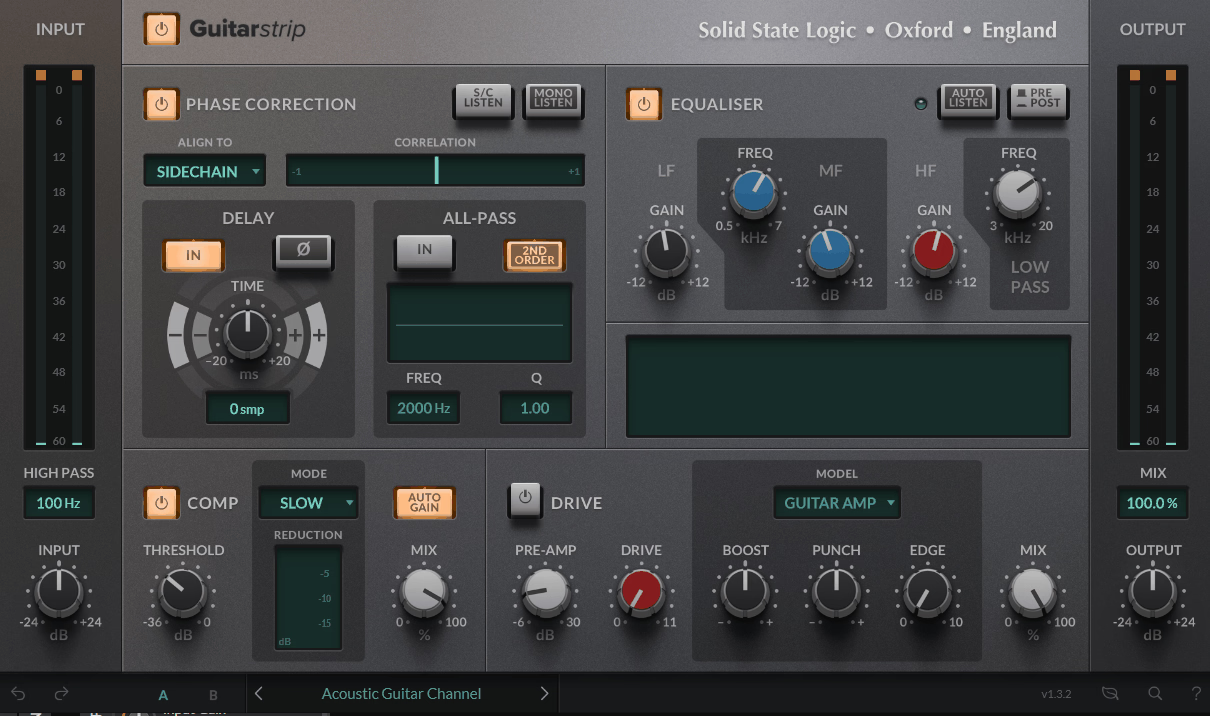
Rather than functioning like another generic channel strip, SSL Guitar Strip is centered on guitar and bass workflows with dedicated Drive, EQ, Compressor, and Phase Correction processing. That makes the plugin particularly relevant when a rock session contains DI signals, amplifier recordings, multiple microphones, or combinations of all three.
The feature that matters most to me is the phase section because phase problems can destroy low-end reinforcement before EQ becomes useful. When two recordings are meant to behave like one source, alignment can be more important than another tonal processor.
- Phase Correction with 3 Alignment Modes
The Phase Correction module provides multiple routing approaches, including Sidechain, Left Channel, and Right Channel modes, plus correlation metering. That gives me different ways to align a guitar or bass recording depending on whether I am working with an external reference or a stereo source.
- Allpass Phase Correction
The module includes an Allpass filter with unity gain for frequency-dependent phase correction. That gives me a way to work on phase relationships that cannot be solved simply by moving the entire signal earlier or later in time.
For multi-miked guitar cabinets, that can be particularly useful because different frequencies can behave differently once the microphones are positioned around the speaker. The correction can therefore be more nuanced than a simple polarity flip.
- Dual Tube Drive
The Dual Tube Drive section separates guitar and bass drive behavior rather than giving both sources the same saturation model. That makes the distortion more useful as a front-end tone stage because the low-frequency requirements of bass are very different from guitar.
A clean DI guitar can gain harmonic density before it reaches another amp simulator, while the bass path can be pushed toward warmth and grit without behaving like a guitar distortion box. The source remains recognizable underneath the added coloration.
- 5 Compressor Presets
The compressor includes five dedicated response presets aimed at different guitar and bass sources, from electric lead to acoustic strumming. That is a more meaningful feature than simply listing compressor controls because the presets represent deliberately different dynamic responses.
Fast behavior can help control aggressive pick attack, while slower responses can preserve more of the natural front edge. I can then refine the selected response instead of starting from a completely generic compressor curve.
- Asymmetrical EQ Behavior
The EQ has an asymmetrical low-frequency gain response, where the amount of available boost and cut changes in a way that mirrors some hardware-style behavior. That gives the simplified three-band EQ more character than a standard textbook channel EQ.
I can use it to control low-end buildup before the drive stage or shape the final guitar tone after compression. The useful part is the way the EQ behaves rather than the mere presence of three bands.
- EQ Auto Listen
The EQ Auto Listen function automatically auditions the affected frequency range while I change the relevant EQ parameter
10. IK Multimedia AmpliTube SVX
Classic bass amplification is the focus of IK Multimedia AmpliTube SVX, which brings together officially licensed Ampeg SVT, B-15, BA-500, matching cabinets, microphone choices, and Ampeg effects. The useful part is that the different rigs represent different bass-production philosophies rather than merely providing cosmetic variations.
For me, the SVT through the 8×10 cabinet remains the central rock-bass sound because its midrange authority survives underneath heavily distorted guitars. The B-15 provides a much warmer direction when the arrangement needs roundness instead of raw aggression.
- Ampeg SVT Rig
The SVT head and matching 8×10 cabinet form the central aggressive bass rig, with the amplifier’s tube behavior providing the familiar growl that remains audible under dense guitars. That is much more specific to rock than treating the plugin as a generic bass amp collection.
When the input is driven harder, the amplifier contributes harmonic density rather than simply raising distortion after the fact. That keeps the grit connected to the amplifier’s dynamic response.
- B-15 Portaflex Rig
The B-15 Portaflex gives the package a completely different direction, moving toward a rounder and more vintage bass response. That makes it useful when the bass needs warmth and body rather than the more assertive upper-mid character of an SVT.
I like having that contrast because it gives me a real production decision. The choice becomes about the role of the bass in the arrangement rather than simply changing an EQ curve.
- Ampeg BA-500
The BA-500 provides another Ampeg amp voice between the vintage and aggressive ends of the collection. That gives the rig a different response when I want more modern definition without committing fully to the SVT sound.
- 8×10 Cabinet Character
The 8×10 cabinet is important because the cabinet contributes much of the focused midrange and controlled low end associated with the SVT sound. Multiple microphone options and placements give me another stage at which to decide how directly the cabinet interacts with the rest of the mix.
That becomes particularly useful when the guitars are already filling the low mids. A different microphone perspective can alter the balance before I reach for corrective EQ.
- Cabinet Bypass + DI/Amp Blend
The ability to bypass the cabinet and blend the direct and amped signals gives me two useful hybrid workflows. I can send the modeled head into a separate IR or cabinet stage, or keep a clean DI underneath the distorted amplifier sound.
11. Overloud TH-U
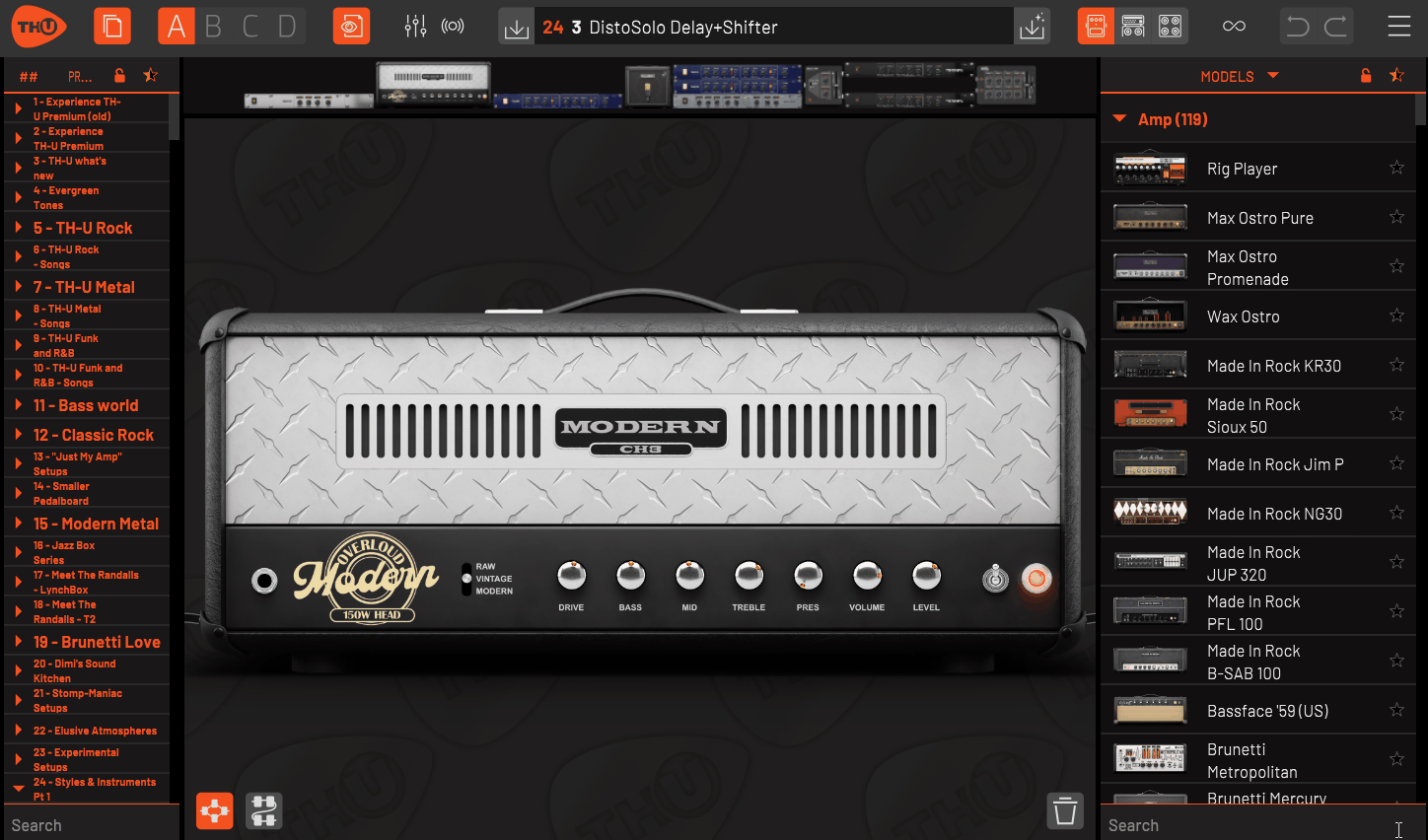
Modern guitar production often needs several amp personalities in the same song, and Overloud TH-U combines traditional modeling with neural network amp captures, dynamic speaker behavior, third-party IR support, and a large rig library. The platform contains 400+ amps, cabinets, microphones, and effects, giving it enough range to cover very different rock styles.
What I appreciate is that the breadth does not require a completely different workflow for every sound. I can move from cleaner classic tones to high-gain modern guitars while keeping the same basic virtual rig structure.
- Rig Player Neural Captures
The Rig Player uses captured amplifier behavior rather than relying only on conventional modeled component chains. That is important because the attraction is not simply the frequency response of a particular amp, but how the profiled rig behaves when the guitar signal changes.
For rock playing, that means dynamics can become part of the tone. A cleaner touch and a harder pick attack can produce noticeably different amounts of gain and compression.
- 400+ Models
The platform contains 400+ amps, cabinets, microphones, and effects, making the library broad enough to cover vintage clean, classic crunch, modern high gain, and more specialized setups. The number matters because the choice is between substantially different rig architectures rather than hundreds of tiny parameter variations.
At first glance, that amount of content can feel overwhelming, so I prefer approaching it by the role the guitar needs to play. I am much more interested in finding the right rhythm, lead, clean, or high-gain behavior than browsing endlessly.
12. Overloud Mark Studio 2
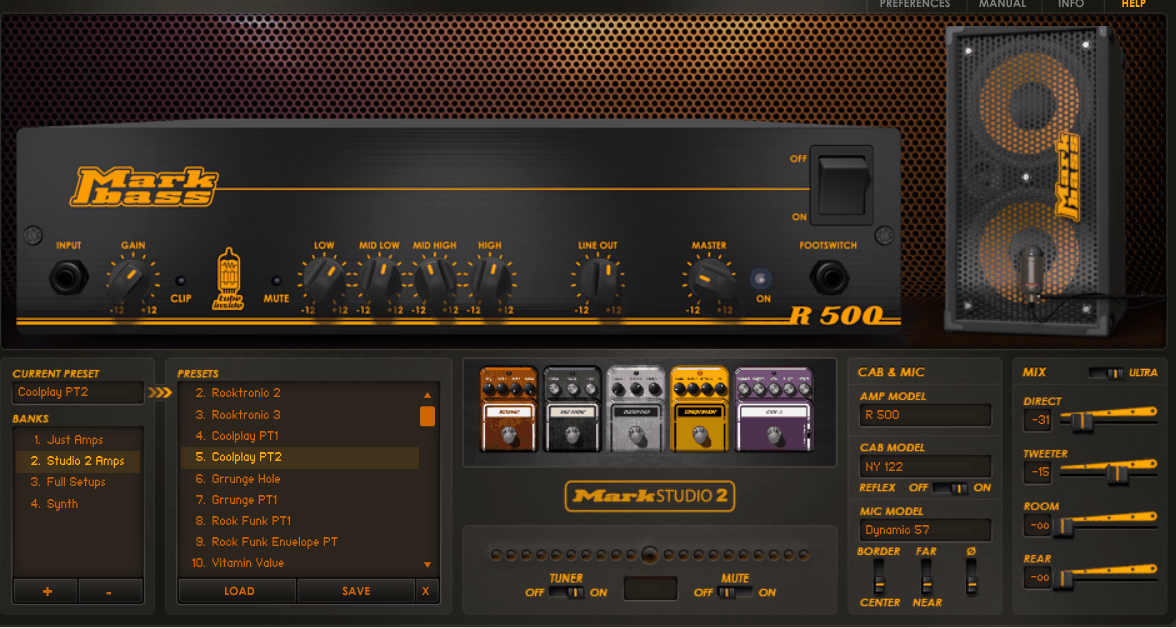
A cleaner bass approach comes from Overloud Mark Studio 2, which models the Markbass amplifier ecosystem and its solid-state and tube-hybrid designs. The current collection includes six Markbass heads, nine cabinets, six microphone choices, and a preset combination using two front microphones, giving the package substantially more source variety than a basic bass amp sim.
I think that makes the plugin particularly useful for modern rock, progressive music, and productions where the bass needs to remain detailed. Instead of using heavy saturation to create the identity, I can preserve more of the instrument’s direct articulation while still getting realistic amplifier behavior.
- 6 Markbass Amp Models
The collection includes six Markbass heads, covering models such as TA501, R500, Classic 300, TTE500, Little Mark Tube, and MoMark. That gives me several distinct amplifier behaviors rather than one Markbass tone surrounded by minor variations.
The differences matter because a modern transparent bass part can need a completely different response from a tube-oriented classic-rock line. I can make that choice at the amplifier stage rather than trying to fake it afterward.
- 9 Markbass Cabinets
There are nine Markbass cabinets, including configurations ranging from 1×15 and 2×15 designs to 4×10, 6×10, 8×10, and other compact cabinets. That gives me genuine cabinet-dependent changes in low-end behavior and midrange projection.
For rock, cabinet selection can change how easily the bass occupies space beside the kick drum. A larger cabinet voice can provide a different sense of authority from a compact cabinet with a more controlled response.
- 6 Microphone Options
The cabinet section offers six microphone choices, plus a preset combination using two front microphones. More than simply changing EQ, the microphone perspective changes which part of the cabinet’s response becomes dominant.
I can therefore shape the bass at the recording stage of the virtual chain. That helps avoid solving every cabinet problem later with broad tonal corrections.
- Tube-Compression Hardware Models
Several of the modeled Markbass heads reproduce distinctive hardware elements such as the tube compressor and tube preamp behavior found in the original designs. The TA501, for example, models a tube compressor stage, while the Classic 300 and TTE500 use different tube-oriented architectures.
That means the compression and coloration are part of the modeled amplifier rather than generic processors placed afterward. For rock, that can make the bass feel more integrated with the amplifier sound.
13. Eventide Blackhole
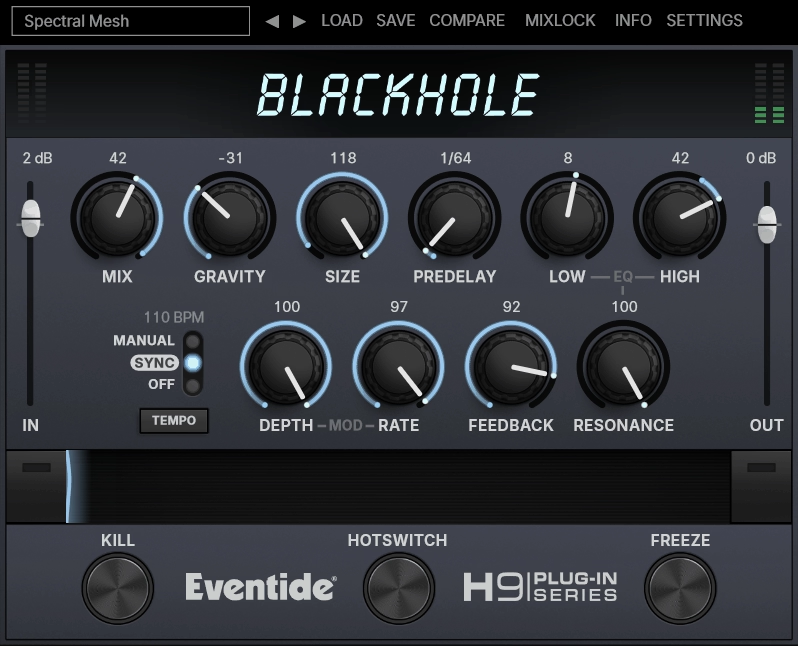
Some rock arrangements benefit from a reverb that clearly does not represent a real room, and Eventide Blackhole is built around that idea. The current plugin includes 50+ presets, the distinctive Gravity control, Mix Lock, Ribbon, Hot Switch, Kill Switch, and flexible mono/stereo operation.
What I like is that the reverb can become part of the composition rather than simply placing an instrument inside a believable room. A guitar chord can turn into a sustained texture, and a vocal phrase can bloom into something much larger than the original performance.
- 50+ Presets
Blackhole includes 50+ factory presets, covering spaces from relatively restrained ambience through enormous supernatural textures and drones. The number is meaningful because the presets demonstrate several different ways the underlying reverb can behave rather than simply showing minor variations.
I would use those sounds as references rather than treating the presets as finished mix settings. They make it easier to understand the range of the algorithm before building a space around the actual guitar or vocal.
- Gravity Control
The Gravity control can reverse the apparent direction of the reverb decay, creating a swelling behavior instead of the normal fade-away pattern. That makes it useful for transitions where the effect needs to build into the next section.
For instance, I can automate Gravity before a chorus so the ambience seems to pull the guitar or vocal forward. That gives me a transition sound that is difficult to reproduce with an ordinary room algorithm.
- Ribbon + Hot Switch
The Ribbon and Hot Switch systems can change combinations of parameters together, allowing me to move between substantially different reverb states. Instead of automating every individual knob, I can create a controlled transition between two broader sonic identities.
Maybe this is most useful for live-style automation and arrangement changes. A bridge can move toward a huge, unstable space and then return to the normal reverb behavior without requiring a new plugin instance.
14. D16 Repeater
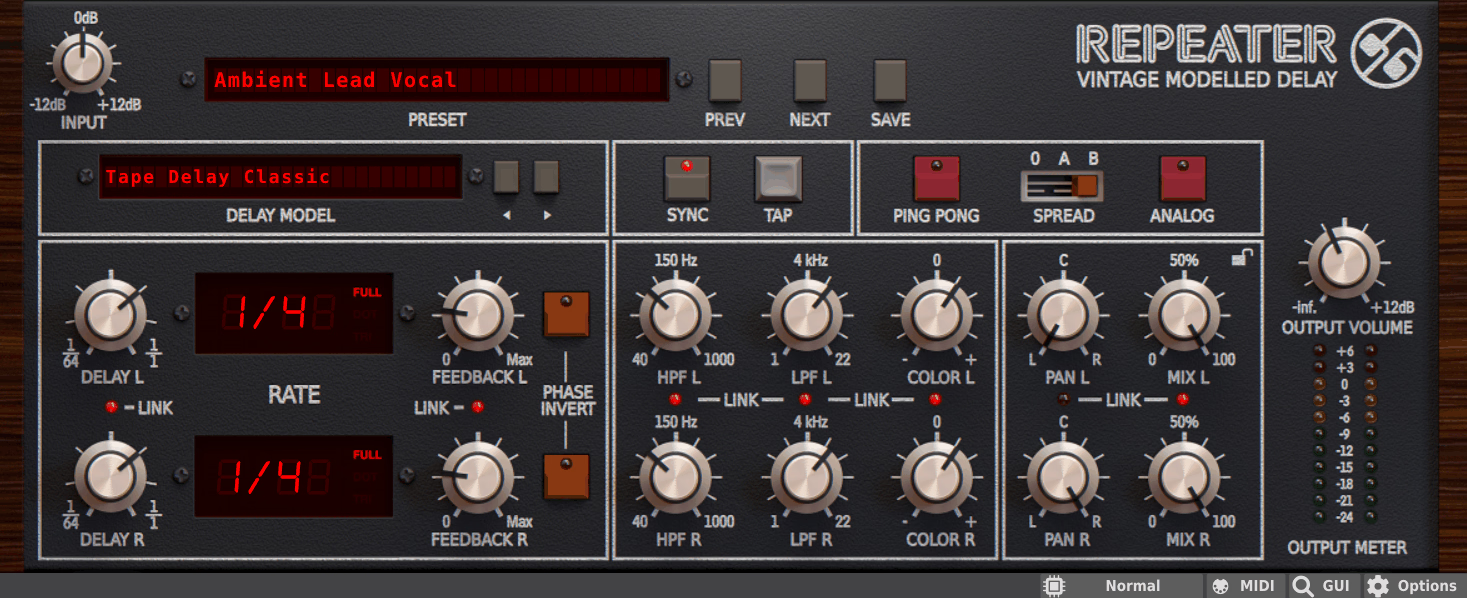
Vintage delay character can fit rock extremely well, and D16 Repeater provides six delay modes covering tape, BBD, digital, modern, ping-pong, and multi-tap behavior. Each mode changes more than timing, giving the repeats a different frequency response and sense of age.
I particularly like the way the tape and analog-inspired modes become progressively darker as the feedback continues. That allows the repeats to move behind the dry signal naturally instead of staying as bright and intrusive as the original source.
- Six Delay Modes
The six modes are Tape, BBD, Digital, Modern, Ping-Pong, and Multi-Tap, each providing a different delay personality. Tape and BBD move toward the colored behavior associated with older hardware, while the cleaner modes preserve more of the original signal’s character.
That range is more useful than simply having dozens of timing choices. I can decide whether the guitar needs warm degradation, darker analog echoes, cleaner repeats, or wider rhythmic movement before worrying about the exact delay time.
- Tape-Style Degradation
The colored modes can progressively darken and soften repeated echoes, creating a natural sense of distance as the feedback continues. This is exactly the type of behavior that makes a delay sit behind a rock guitar rather than competing with every dry note.
For example, the first repeat can remain relatively clear while later echoes become increasingly diffuse. That produces depth without needing a large amount of external filtering.
15. FabFilter Pro-C 3
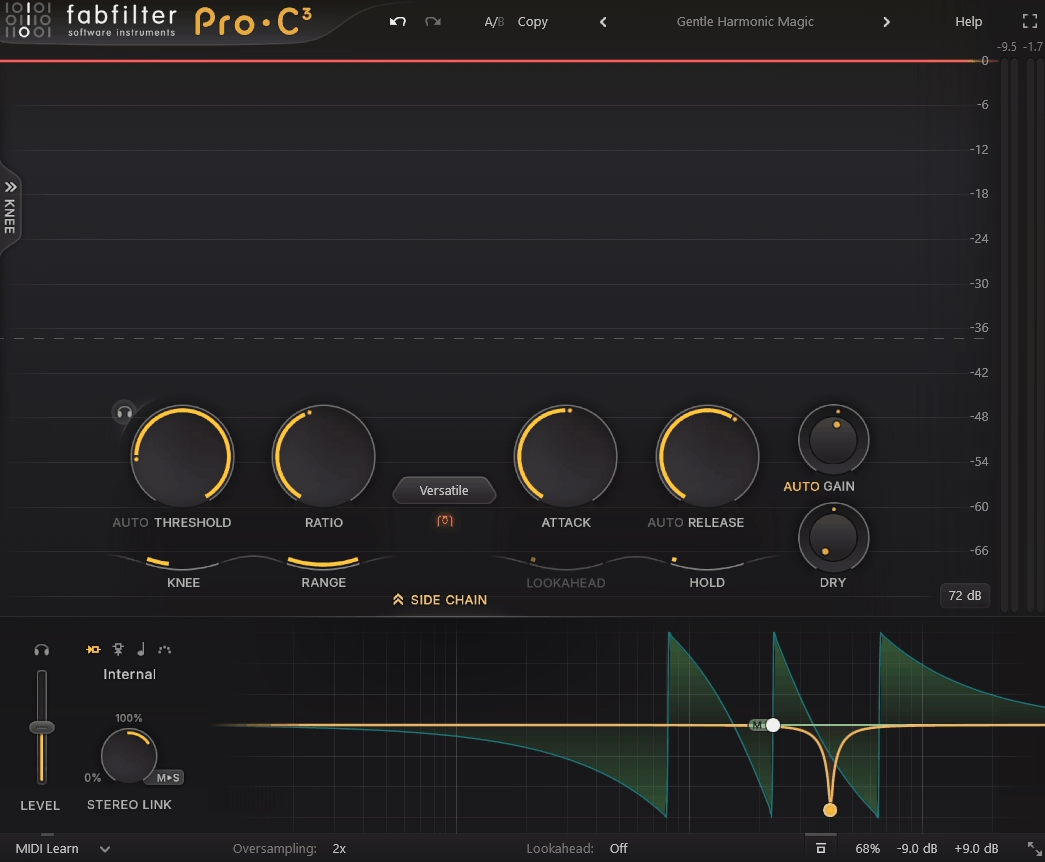
FabFilter Pro-C 3 provides 14 compression styles, along with three Character modes, six-band sidechain EQ, host tempo triggering, and up to 32x oversampling. The latest version adds six new styles, including Versatile, Smooth, Upward, TTM, Op-El, and Vari-Mu.
From my experience, that matters because rock sessions routinely require different types of dynamic control. A snare may need transient impact, a vocal may need smoother leveling, and a drum bus may need cohesion while still retaining its attack.
- 14 Compression Styles
The 14 styles are the core differentiator because they change the actual dynamic behavior rather than simply renaming presets. They range from clean and versatile responses to Punch, Vari-Mu, Opto, Vocal, Bus, Upward, and the multiband TTM style.
That gives me a much wider range of compression characters inside one processor. I can choose a response that matches the role of the source before I start fine-tuning the timing.
- 3 Character Modes
Pro-C 3 adds three Character modes: Tube, Diode, and Bright, introducing different forms of analog-style coloration alongside the compression behavior. That means I can choose both how the dynamics move and how much harmonic color accompanies that movement.
For rock, this becomes useful when clean compression is not quite enough. A little character can help a drum, vocal, bass, or guitar bus gain density without requiring a separate saturation stage.
- 6-Band Sidechain EQ
The sidechain provides a six-band EQ, letting me control which parts of the incoming signal drive the compressor. On a drum bus, for example, I can reduce the influence of the kick while allowing the snare and other drums to determine the compression behavior.
That makes the detector a real part of the sound design rather than just a technical sidechain setting. I can decide what the compressor should hear instead of simply reacting to the full-spectrum signal.
- TTM Multiband Dynamics
The TTM style combines upward and downward compression across multiple frequency bands, creating a far more unusual dynamic response than conventional single-band compression. Quiet information can be pushed upward while louder material is controlled downward, producing an exaggerated but highly controllable effect.
Maybe this is not the first style I would choose for a natural vocal or bass track. On creative drum processing, however, it gives me a genuinely distinctive behavior that goes far beyond ordinary compression.
- Up to 32x Oversampling
The current version supports up to 32x oversampling, giving me a much higher-quality processing option for demanding applications. That is more meaningful than simply saying the plugin has “high-quality processing,” because it describes an actual selectable processing architecture.
16. FabFilter Saturn 2
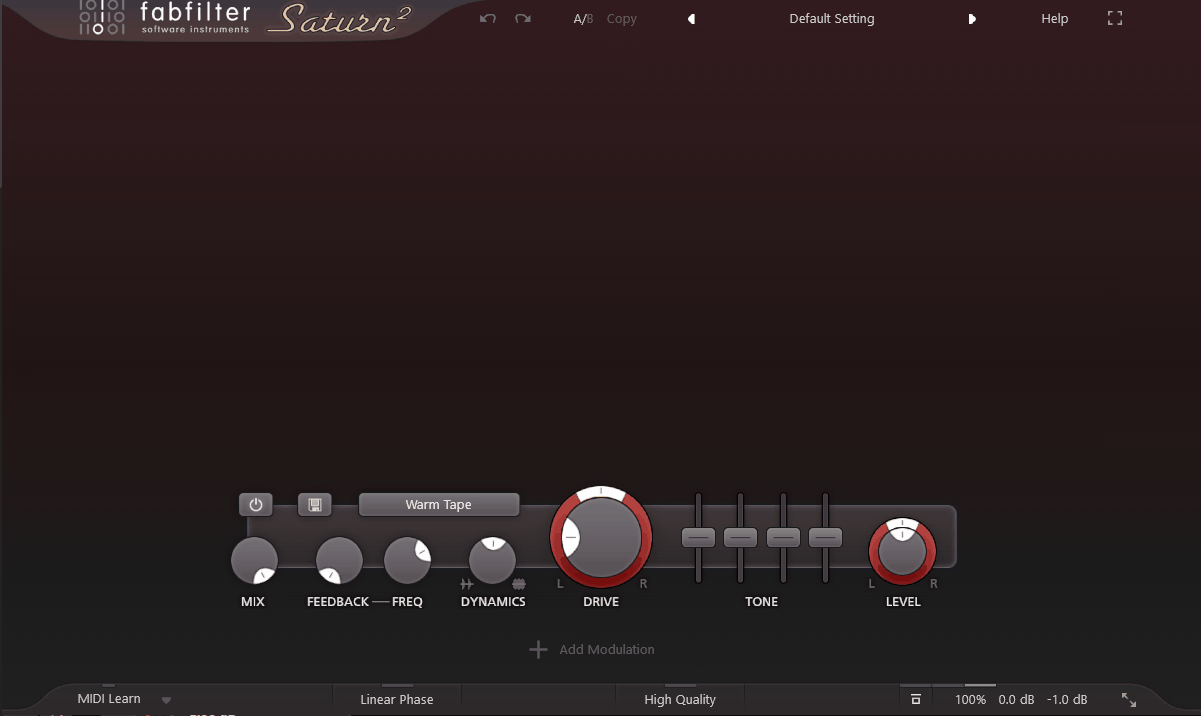
Saturation becomes considerably more flexible when it can be targeted by frequency, and FabFilter Saturn 2 combines 28 distortion styles, up to six processing bands, extensive modulation, feedback, and optional linear-phase processing in one plugin. That architecture makes it particularly useful for rock because I can add grit and density without automatically overdriving the lowest frequencies.
I think the strongest aspect is the ability to decide where the harmonic energy should appear. A guitar bus may need more aggression in the mids, while the bass foundation stays relatively clean.
- 28 Distortion Styles
Saturn 2 provides 28 distortion styles, ranging from subtle tube and tape coloration to heavier guitar-amp and bit-crushing effects. That is a meaningful distinction because the algorithms represent substantially different harmonic behavior rather than merely different amounts of drive.
For rock guitars, the amp and tube-style options can add density around the mids, while tape-style processing can give drums or buses a softer, compressed character. The source stays recognizable while the harmonic structure changes.
- Up to 6 Distortion Bands
The multiband engine supports up to six bands, with independent processing for each region. That allows me to keep the sub and low bass relatively clean while adding heavier saturation to the midrange where a guitar needs more presence.
For example, I might emphasize the 1–4 kHz region on a rhythm-guitar bus without creating the same amount of distortion below it. The exact range changes by source, but the concept remains useful across rock mixing.
- 50-Slot Modulation Matrix
Saturn 2 provides a 50-slot modulation matrix alongside its LFOs, envelopes, followers, XY controllers, and MIDI sources. That gives me a large modulation architecture for turning saturation into something that evolves over time rather than staying static.
I would use that selectively on rock material, especially when a sustained guitar or atmospheric layer needs movement. A slow change in drive or tone can add life without becoming an obvious modulation effect.
- Linear-Phase Multiband Processing
Saturn 2 can use optional linear-phase processing for its multiband crossover structure. That provides another option when I want the frequency splits to remain phase-accurate while the bands are being processed independently.
I would not use it automatically because different phase behaviors have different trade-offs. Here, it is useful when the multiband processing is doing substantial work on transient-rich material.
- 8x + 32x HQ Modes
The current Saturn 2 offers Good mode at 8x oversampling and Superb mode at 32x oversampling for high-quality processing. Those options become meaningful when the distortion is driven hard and the extra processing quality becomes audible.
For most subtle saturation, I would not need the highest mode. When I push the plugin into aggressive guitar or bus distortion, however, the higher-quality processing can become worthwhile.
17. Kirchhoff-EQ
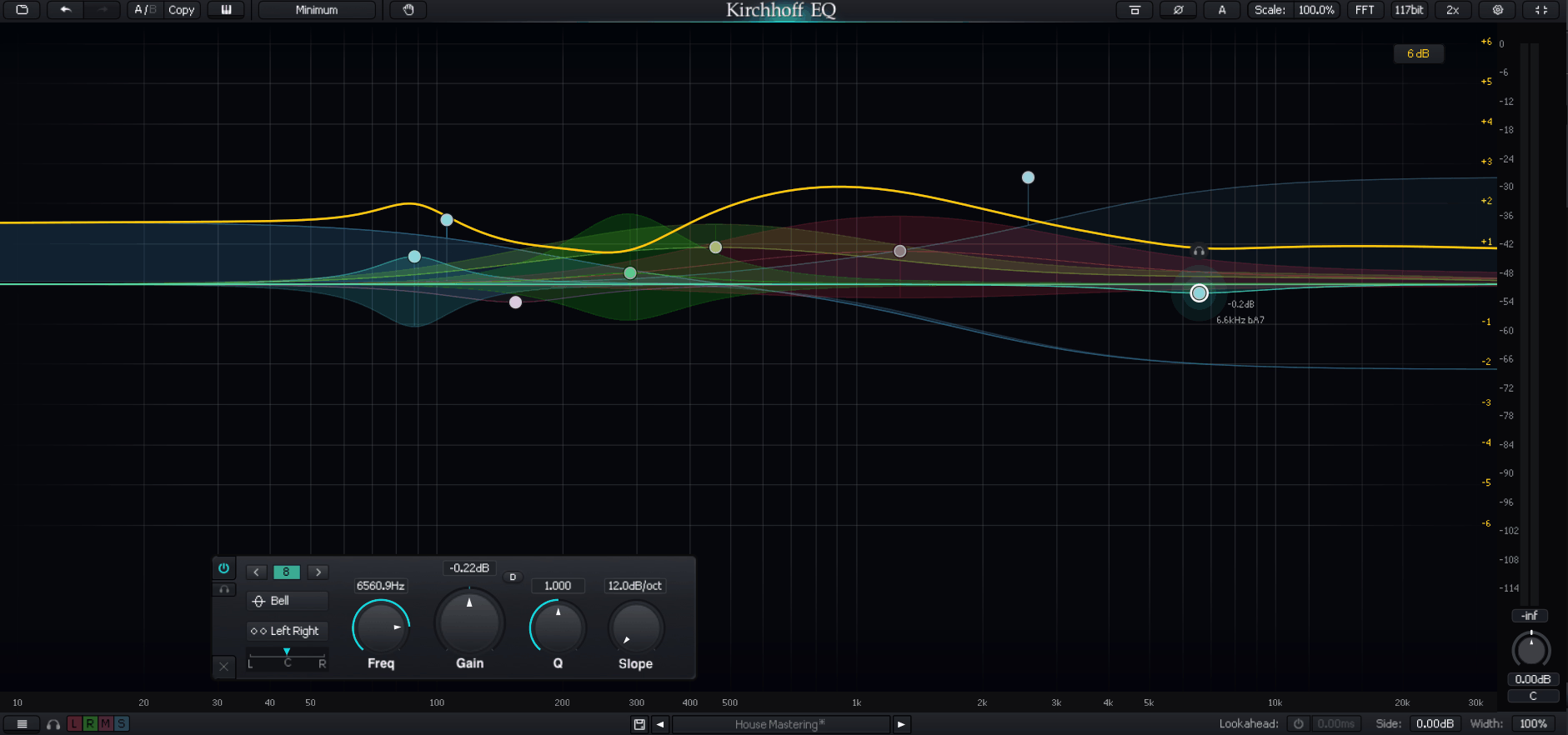
Rock mixes often have many competing midrange elements, and Kirchhoff-EQ combines high-precision digital processing with 32 vintage EQ types, 15 unique filter types, four phase modes, and more than 40 factory presets. That gives it a much broader tonal architecture than a conventional parametric EQ.
What interests me most is that the analog-style models change their behavior as the amount of boost or cut changes. That gives the EQ a more responsive character than simply selecting a static bell curve.
- 32 Vintage EQ Types
Kirchhoff-EQ includes 32 EQ types modeled from nine historic vintage hardware units, giving me a large collection of hardware-inspired responses inside one processor. The important part is that these models can be used alongside the regular digital EQ types rather than replacing them.
That makes the plugin useful when I want precision and character in the same session. I can handle a surgical correction with a clean digital curve and then switch to a modeled circuit for a broader musical lift.
- 15 Unique Filter Types
The plugin provides 15 unique filter types, including continuously variable filter shapes and slopes. That gives me more control over the actual topology of the EQ than simply choosing between a handful of fixed filter shapes.
For rock, that can be useful when I need to make a guitar brighter without giving it the same sharp digital edge as a conventional high-shelf. The filter shape becomes part of the tone rather than just a frequency cutoff.
- 4 Phase Modes
The EQ provides four phase modes: Zero-Latency, Analogue, Linear, and Mixed Phase. That gives me the ability to choose the phase behavior based on the task rather than accepting one fixed processing architecture.
For tracking, zero latency can keep the workflow responsive. During mixing, I can move toward linear or mixed phase when the phase response of a broader tonal adjustment matters more.
- Dynamic Functions on Vintage Models
Many of the vintage-inspired EQ types can also be used with dynamic processing, allowing a hardware-modeled curve to react only when the source exceeds a threshold. That gives the analog-style filters a much more flexible role than simply applying static boosts and cuts.
For example, I can use a vintage-style upper-mid curve to control a guitar only when its presence becomes excessive. The tone stays intact through normal passages while the dynamic behavior steps in during the problematic moments.
- 40+ Mixing + Mastering Presets
The factory library includes 40+ presets aimed at mixing and mastering. I care more about this number because the presets are organized around actual professional uses rather than being a huge collection of barely different starting points.
I can use those as references for the modeled curves and then reshape the frequency choices around the actual track. The presets are most useful as examples of how the different EQ architectures behave.
18. oeksound soothe3
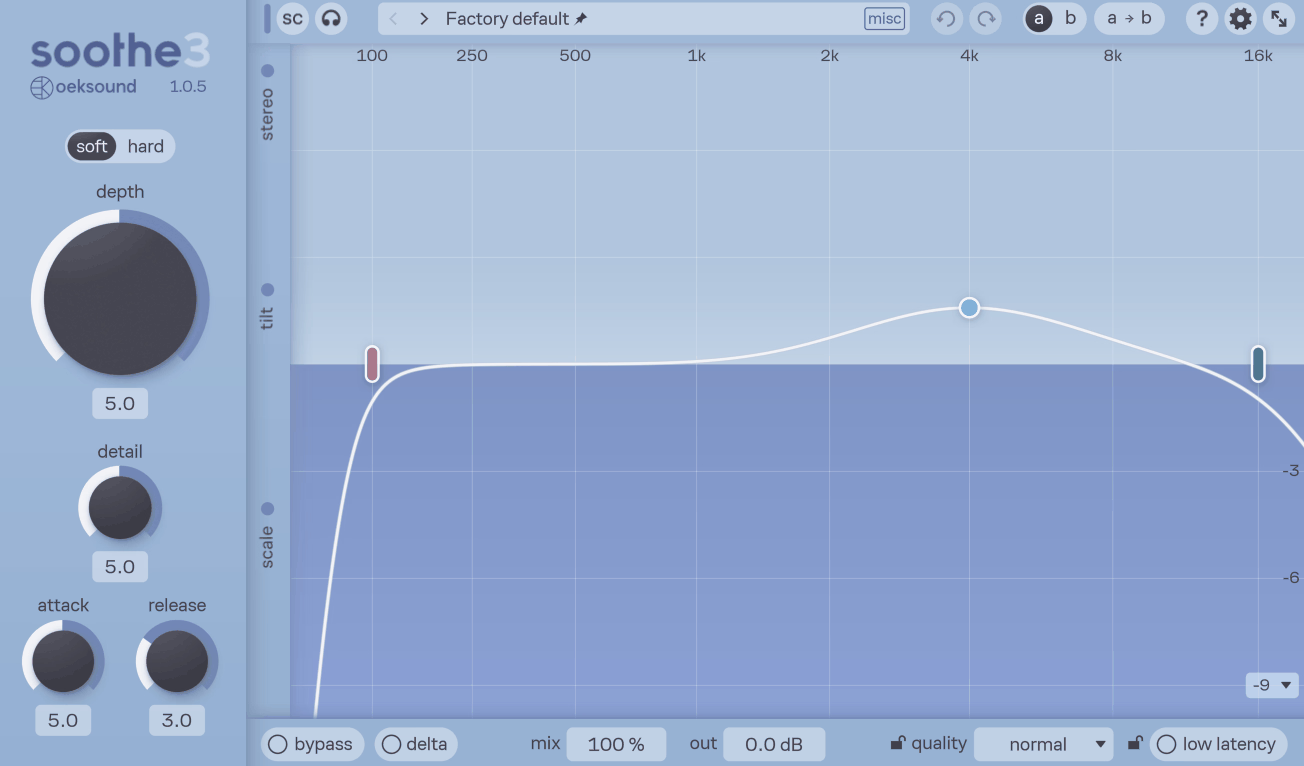
Resonance is one of the problems that can become particularly obvious when rock guitars, cymbals, and vocals are pushed hard, and oeksound soothe3 is designed to reduce harsh, ringing, boomy, or overly concentrated frequencies dynamically. Instead of applying a fixed cut, it reacts to problematic energy as it appears.
I like that approach because many rock resonance problems are highly specific to individual notes. A guitar might sound harsh only on one chord shape, a vocal can boom on particular pitches, and a cymbal can become painful only under harder hits.
- Spectral Resonance Detection
The core system identifies resonant peaks across the spectrum and responds dynamically when those frequencies become excessive. That allows the guitar or vocal to retain its natural tonal balance during normal passages while controlling the moments that become unpleasant.
For example, a distorted rhythm guitar might develop a strong upper-mid spike on one fret position. A dynamic processor can target that event without forcing the entire guitar to become darker.
- Delta Monitoring
The Delta Monitoring system lets me hear the portion of the signal being removed. That gives me a direct way to check whether the processor is targeting harshness or accidentally removing musical attack and harmonic information.
- Mid/Side Resonance Processing
19. SPL Transient Designer Plus
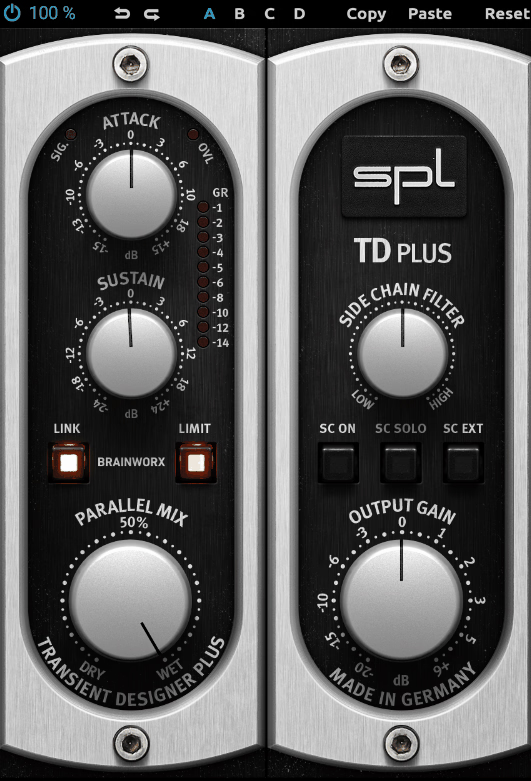
Rock drums often live or die by the relationship between attack and sustain, which is why SPL Transient Designer Plus can be more useful than simply adding another compressor. The plugin directly changes attack and sustain, while the Plus version adds soft clipping, parallel processing, and sidechain capabilities.
I like that because it lets me solve envelope problems directly. If the snare has enough body but needs more crack, I can emphasize the attack; if a tom is ringing too long, I can shorten the sustain without introducing the abrupt cutoff of a gate.
- Independent Attack Shaping
The Attack control directly increases or reduces the transient portion of the signal. That makes it possible to bring out the crack of a snare or soften an overly aggressive cymbal attack without simply turning the whole source up or down.
For rock drums, this is valuable when the tone is already correct but the physical impact is not. A transient adjustment can make the drum speak more clearly through distorted guitars without rebuilding the EQ.
- Independent Sustain Shaping
The Sustain control works on the body and decay independently from the initial impact. A tom can be made larger without making its attack louder, while a ringing room microphone can be tightened without applying a hard gate.
In fact, that distinction is one of the reasons transient processing can sound more natural than conventional dynamics processing for certain drum problems. The decay is being reshaped rather than simply switched on and off.
- Parallel Processing
Transient Designer Plus includes parallel processing, allowing me to create a heavily shaped version of the drum and blend it with the original.
- Soft-Clip Limiter
The Plus version places a soft-clip limiter after the output gain stage, preventing aggressive Attack or Sustain boosts from creating unwanted digital clipping. That is especially useful when the transient shaping is being pushed hard.
I still keep an eye on levels, but the limiter gives the processing more practical headroom. That makes stronger transient moves easier to experiment with.
20. Soundtoys MicroShift
Stereo width can add scale to a rock production without having to create another guitar layer, and MicroShift approaches that through micro pitch-shifting, time-varying delay, three widening flavors, and hardware-inspired coloration. The current version also includes the original Little MicroShift as an additional effect.
What makes it practical is that the effect does not depend on a long modulation trail. It creates the impression of width from small differences between the left and right sides, which can produce a wider image without turning the source into obvious chorus.
- 3 Hardware-Inspired Widening Flavors
MicroShift provides three different widening flavors, based on classic hardware pitch-shifting approaches associated with units such as the Eventide H3000 and AMS DMX 15-80. The three options have different stereo and tonal personalities rather than simply representing three intensity levels.
That makes the styles useful for different sources. I can choose a subtler treatment for vocals and a more pronounced effect for electric guitars without having to change the basic widening concept.

Hey, I’m Vil, I started this site to help you find the best audio plugins covering various categories including synths, pianos, strings, and effect tools of all sorts as well. I pick these plugins based on various criteria so it best matches the actual topic.