When you purchase through the links on my site, you support the site at no extra cost to you. Here is how it works.
FM synthesis is one of those techniques that can sound complicated on paper but becomes much more useful once you hear what a few operator relationships actually do. It can cover bells, electric pianos, metallic percussion, sharp digital leads, evolving textures, and the kind of aggressive FM bass that is difficult to get from conventional subtractive synthesis.
A lot of that reputation for being difficult comes from the hardware that popularized it. Programming six operators from a small display and a single data slider was never going to be the most inviting way to learn synthesis, but modern plugins have taken very different approaches to the same basic idea.
I’ve included everything from straightforward DX7-style instruments to completely open FM matrices, wavetable and granular hybrids, sample-based FM, and synths that barely resemble traditional FM at all. There are also two free options at the end for anyone who wants to explore the technique without buying another synth.
1. Waves Flow Motion
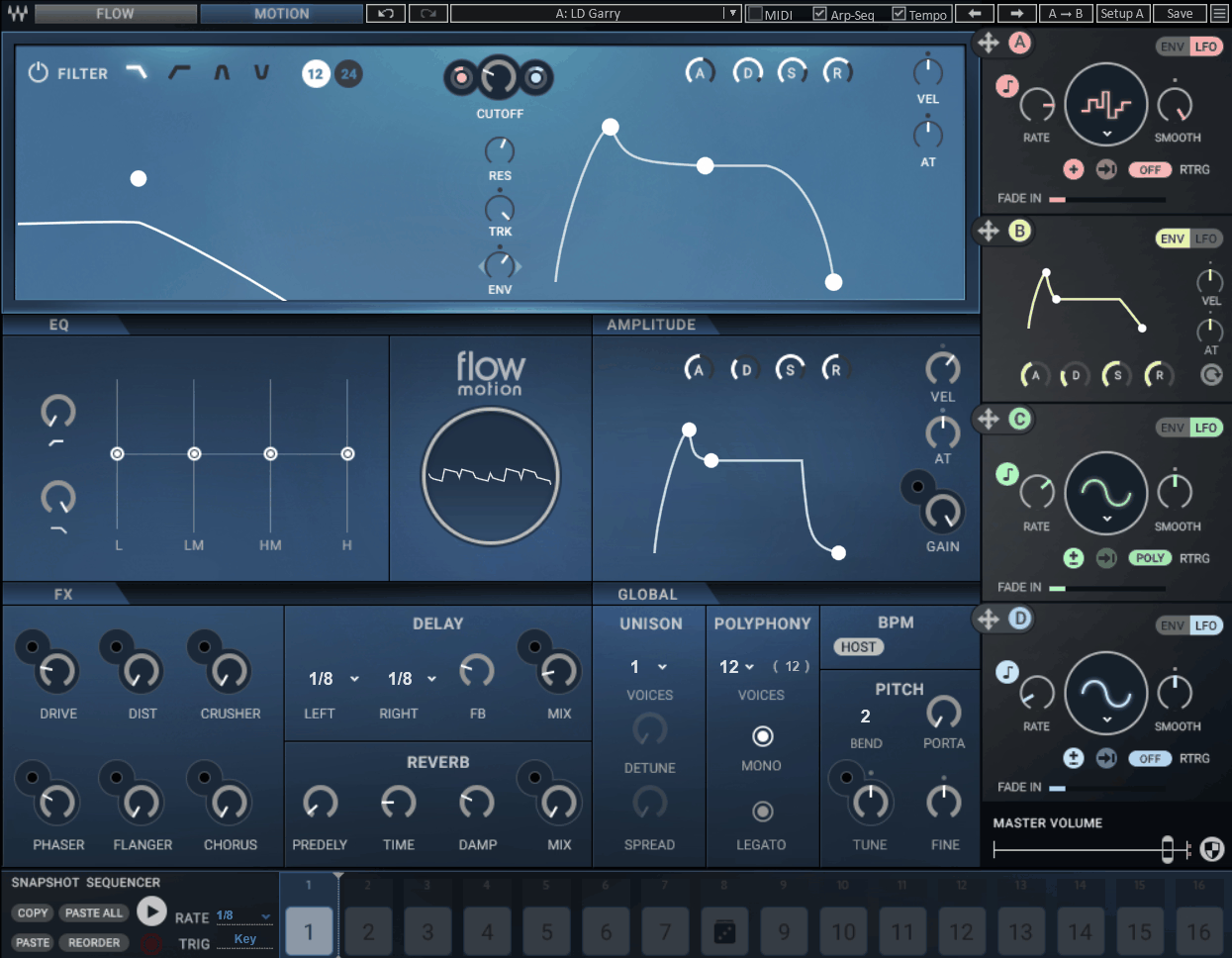
The easiest way to understand Flow Motion is to look at what it does with the FM signal path rather than treating it as another DX7-style instrument.
Flow Motion separates the synth into Flow and Motion screens, with the first built around a graphic FM modulation matrix where you can drag connections between four oscillators instead of working through a conventional numerical matrix.
The second half of the instrument makes that FM core easier to fit into an actual production. Motion adds filters, amplitude, EQ, and FX, so you can start with the harmonic character of FM and then process it much like you would a more familiar subtractive patch.
What you get:
- 1000+ Presets
The library runs past 1,000 presets including artist-designed banks, covering deep basses, screaming leads, rich pads, and the growling FX territory FM handles well.
- Graphic FM Matrix
You’re connecting four mono or polyphonic oscillators by dragging instead of typing numbers into a grid, with each oscillator carrying independent waveform and pan controls.
Four floating LFO and envelope modulators attach the same way. I like that the visual feedback is immediate, because FM goes wrong quietly and seeing which oscillator modulates which saves you from guessing at a patch that sounds broken.
- 16-Step Snapshot Sequencer
This is the feature I’d point to first. You can capture 16 different states of the entire synth and sequence between them in real time, with all 16 snapshots recallable per patch.
For instance, when you want a pad that shifts character every bar instead of sitting static under a chord progression, you’re building that movement from whole-synth snapshots instead of drawing automation for a dozen parameters separately.
- Note Sequencer and Arp
A separate 16-step note sequencer and arpeggiator runs alongside the snapshot system, so rhythmic patterns and timbral changes move independently of each other.
2. Arturia DX7 V
If what you actually want is the familiar DX7 sound, this is the most direct route on the list while still giving you considerably more control than the original hardware. DX7 V keeps the basic six-operator architecture that made the original so recognizable, then opens up the parts of the instrument that were cumbersome to reach on the hardware.
The original DX7 had six operators, 16 voices, and 32 preset locations, but its programming system was built around a membrane interface and a single data-entry slider.
Arturia’s version is much easier to work with because the important relationships are visible on screen, while the additional synthesis and performance features make it useful beyond straightforward DX7 reproduction.
- Multiple Operator Waves
The original ran on sine waves only, and here any operator generates a variety of waveforms, which I find widens the harmonic starting point considerably before you’ve modulated anything.
Each operator also gets a filter and a feedback loop, so instead of relying purely on modulation index to add harmonics you can shape each operator on its own first.
- Modulation Matrix
You’re assigning sources like the sliders, velocity, and aftertouch to a large set of destinations through a proper visual matrix.
That’s the part that turns this from a museum piece into something playable. Honestly, I think the DX7’s reputation for static, preset-driven sound came partly from how hard it was to route anything, and having aftertouch land somewhere useful changes how the instrument responds under your hands.
- Unison Mode
A unison mode stacks voices for thickness, which the hardware couldn’t do and which matters to me if you want an FM patch to sit as wide as an analog pad.
- Tempo-Synced Arpeggiator
The multi-pattern arpeggiator syncs to tempo and wasn’t present on the original at all.
- Polyphonic Portamento
Players liked the DX7’s polyphonic portamento but had to go menu-diving to use it. Here you switch it on and adjust the time directly, and I’d say that’s a small change that gets used far more often because of it.
- Onboard FX Chain
Chorus, flange, phaser, reverb, delay, EQ, distortion, and filter effects are built in, so those washed-out DX electric piano sounds come together without leaving the plugin.
3. Sugar Bytes Aparillo
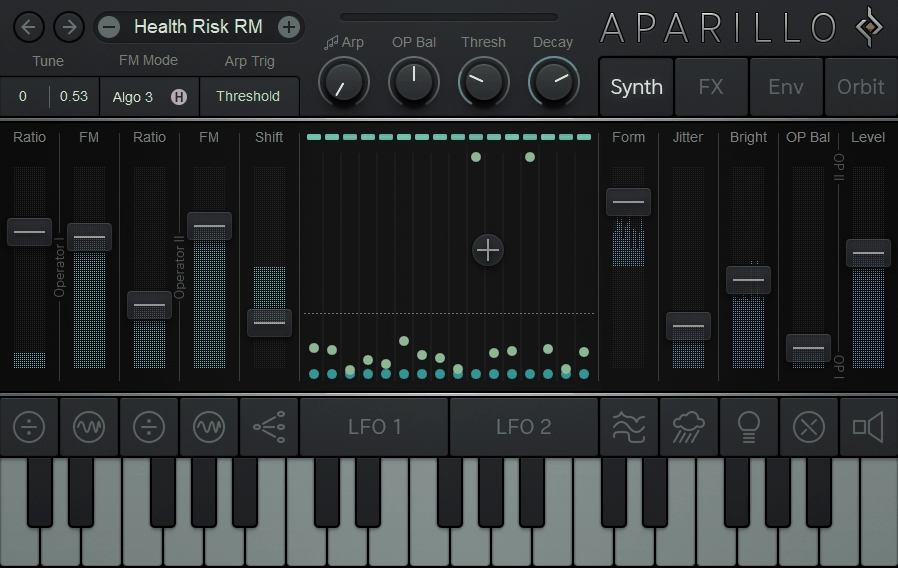
Sugar Bytes built Aparillo around two interdependent FM operators and a 16-voice engine, then focused the rest of the instrument on movement, unusual modulation, and synthetic textures.
The result makes more sense when you think of it as a sound-design instrument than as an FM replacement for a DX7. The signal passes through jitter, brightness, formant and waveshaping stages before reaching a flexible filter and spatial section, followed by auto pan, delay, and reverb.
In addition, you get around 500 handpicked presets ship with it, and for a synth this abstract I’d treat them as the entry point instead of an afterthought.
- The Orbiter
This is the control that defines the plugin. Orbiter is an XY controller measuring its distance to 15 objects, each representing a target inside the sound engine, so one hand movement morphs 15 parameters at once.
Instead of automating a dozen lanes to build a slow evolving swell for a trailer cue, you’re recording a single gesture and letting the engine work out the rest. I must say it produces results faster than any modulation matrix I’ve come across, though it also means specific settings are harder to reproduce deliberately.
- Dual Complex LFOs
Two interdependent LFOs offer FM, Gravitation, Oneshot, S+H/Quantize, and Collision modes.
Collision mode is the chaotic one, and I find it’s where the atonal, unstable textures come from. Gravitation behaves more like a physical simulation than an oscillator, which suits drones and long tails.
- Modulatable Scale Editor
The scale editor can itself be modulated, letting you stack up to 16 voices into unison spreads with unusual harmonic structures underneath.
- Spacializer
Sugar Bytes’ own addition functions as a delay, a reverb, or a pitch-controlled resonator generating an extra synth layer through wave-guide behavior.
You also get comb and vowel filters alongside the multi-mode options, and I noticed the grittier HP/BP/LP modes are aggressive in a way most FM synths avoid.
4. BLEASS Omega
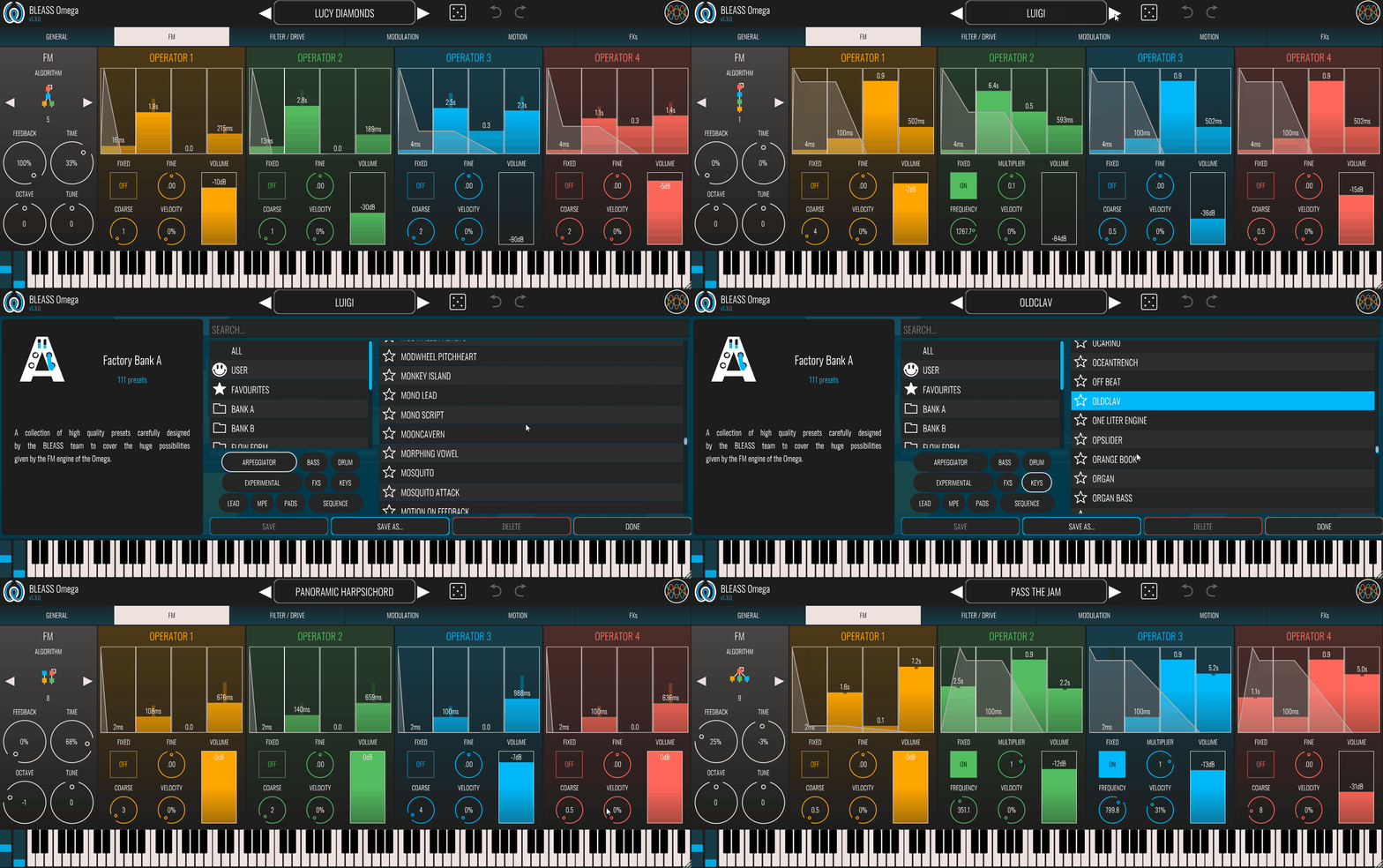
BLEASS puts all four operators on one screen and uses color coding to make the signal relationships easier to follow, so most of the important work happens without constantly moving between pages.
There are 11 FM algorithms, but Omega synth doesn’t stop at traditional operator synthesis. The waveshaper, filter, modulation system, and motion sequencer give you enough conventional synthesis tools to take an FM patch somewhere more familiar once the basic harmonic structure is working.
Main features:
- Nine-Algorithm Waveshaper
Where Omega leaves pure FM behind is the waveshaper, offering nine shaping algorithms with controls for fine-tuning the shaping function.
This adds warmth and overdrive in a way FM alone doesn’t produce. For instance, when a bass patch has the right harmonic content but feels thin against a compressed drum bus, I’d push it through the shaper to thicken it instead of rebuilding the operator ratios.
- 160+ Presets
More than 160 presets cover the classic ground: electric pianos, basses, pads, bells, and leads.
- Multi-Mode Filter
Low-pass, high-pass, band-pass, and notch modes are available, with cutoff and resonance set by dragging inside the filter visualization.
A Keyboard control determines how much note pitch affects cutoff, while a dedicated ADSR and its own Envelope amount handle filter movement.
- Motion Sequencer
The motion sequencer generates rhythmic movement for evolving textures, and that’s the feature I’d reach for when a pad needs to pulse with a track instead of sitting flat.
- Two LFOs Plus Envelope
Beyond the per-operator envelopes you get two freely assignable LFOs and a third ADSR envelope.
5. GForce Halogen FM
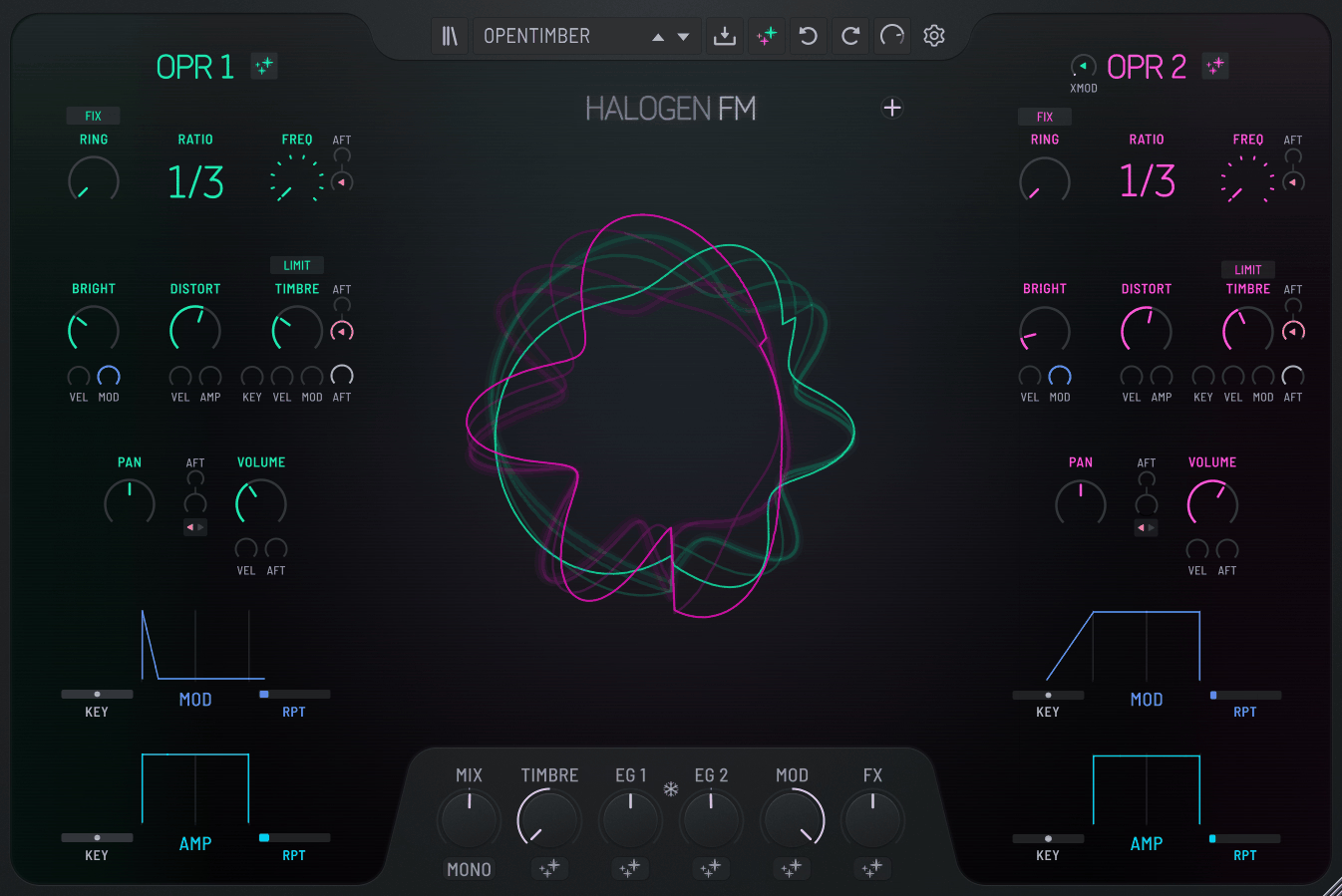
If traditional FM programming is the part that puts you off, Halogen FM takes a much lighter approach. GForce built it around just two operators, each with its own tonal character and envelopes, and put much of the emphasis on finding and shaping sounds rather than constructing complex operator algorithms from scratch.
That makes it a very different proposition from something like F.’em or FM8.
You can still get underneath the macros and work with the engine directly, but the basic workflow encourages experimentation, which is useful when you’re looking for a sound rather than trying to recreate a specific synthesis architecture.
- Halogen Spark Core
The Spark core generates patches through global and individual parameter randomization, and pressing the button produces a complete new sound with zero programming.
Instead of building a patch from an initialized state, you’re generating candidates and steering the ones you like. I find this works genuinely well for finding textures I wouldn’t have designed on purpose, and less well when you need a specific sound for a specific part.
- Five Macro Controls
Macros cover Timbre, EG1, EG2, Modulation, and FX, giving you broad control over a patch in seconds.
Full operator access sits underneath for when you want it, so I’d describe the simplicity as a default and not a ceiling.
- 320+ Presets
Over 320 presets ship with it, and for a two-operator engine that covers a lot of what the synth can do.
- Poly Aftertouch and Pitchbend
Support for poly-aftertouch and poly-pitchbend makes this more expressive than the operator count implies, especially if you’re performing instead of programming.
- Custom Reverb
A dedicated reverb is built in alongside full CC MIDI mapping and a scalable interface.
One thing worth mentioning: I’ve seen reports of higher than expected CPU load when loading patches, which is unusual for GForce plugins and may improve with updates.
6. Tracktion F.’em
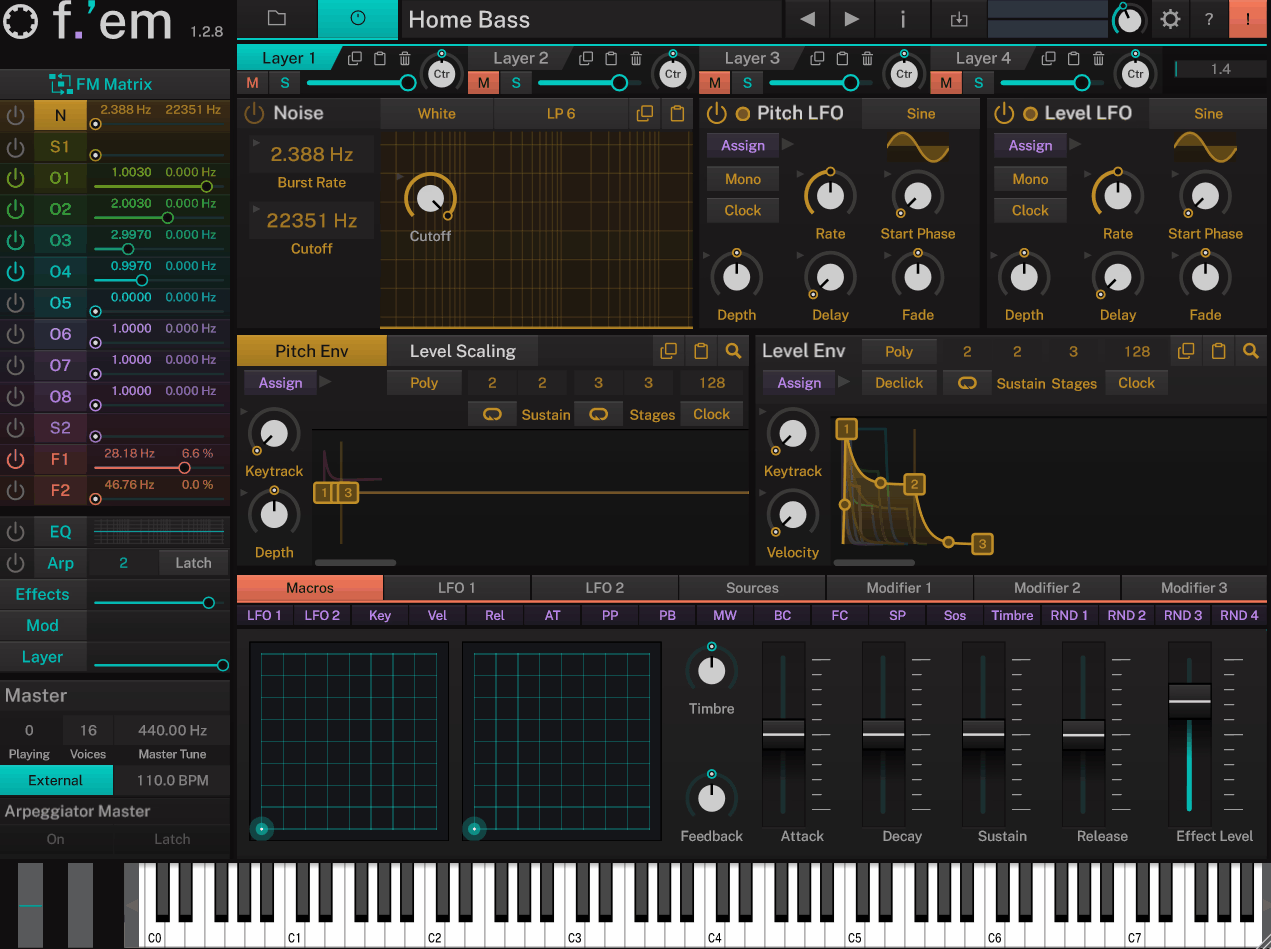
When four or six operators aren’t enough and you want to decide the routing yourself, try Tracktion F.’em. Tracktion gives you a freely configurable 11-operator matrix with no fixed algorithms, so the architecture isn’t forcing you into a predefined set of FM relationships.
It goes further than that, though. The engine combines wave operators, multisample operators, and noise, which lets F.’em move between FM, virtual analog, and sample-based synthesis.
With four layers and four effect slots per layer, it’s closer to a complete multi-timbral workstation than a narrowly focused FM instrument.
- No Fixed Algorithms
Every routing decision is yours, and the wave operators feature hard sync like analog oscillators alongside waveforms spanning sine, analog shapes, and the waves found in classic FM hardware.
- Sample Operators
Two multisample operators work differently from each other: one can frequency-modulate any other operator, while the other can be frequency-modulated by any of them.
You can load the factory library or your own material, and I think that opens genuinely strange territory. For instance, when you modulate a sampled vocal with a sine operator, you get formant movement that neither pure FM nor a sampler produces alone.
- 32-Stage Envelopes
Envelopes run up to 32 stages with tempo sync available, which is where the plugin gets interesting for rhythmic work.
I’d say this matters most for percussion and intricate sequenced parts, since you’re shaping a sound across multiple bars instead of fitting it into an ADSR and hoping.
- Flow LFOs
Two 8-step flow LFOs let you select between eight waveforms and switch-modulate them from any source, and each waveform can be freely drawn.
- Deep Modulation Matrix
The matrix holds up to 200 entries, with a separate modifier matrix carrying up to 32 modification algorithms.
Tracktion call this the plugin’s superpower and I’d agree, though it also means you can build patches you no longer understand. Macros and a quick edit panel exist for exactly that reason.
- Dual Filters
Two filters with overdrive stages route freely in series, parallel, or anywhere between.
7. Exacoustics GHOST
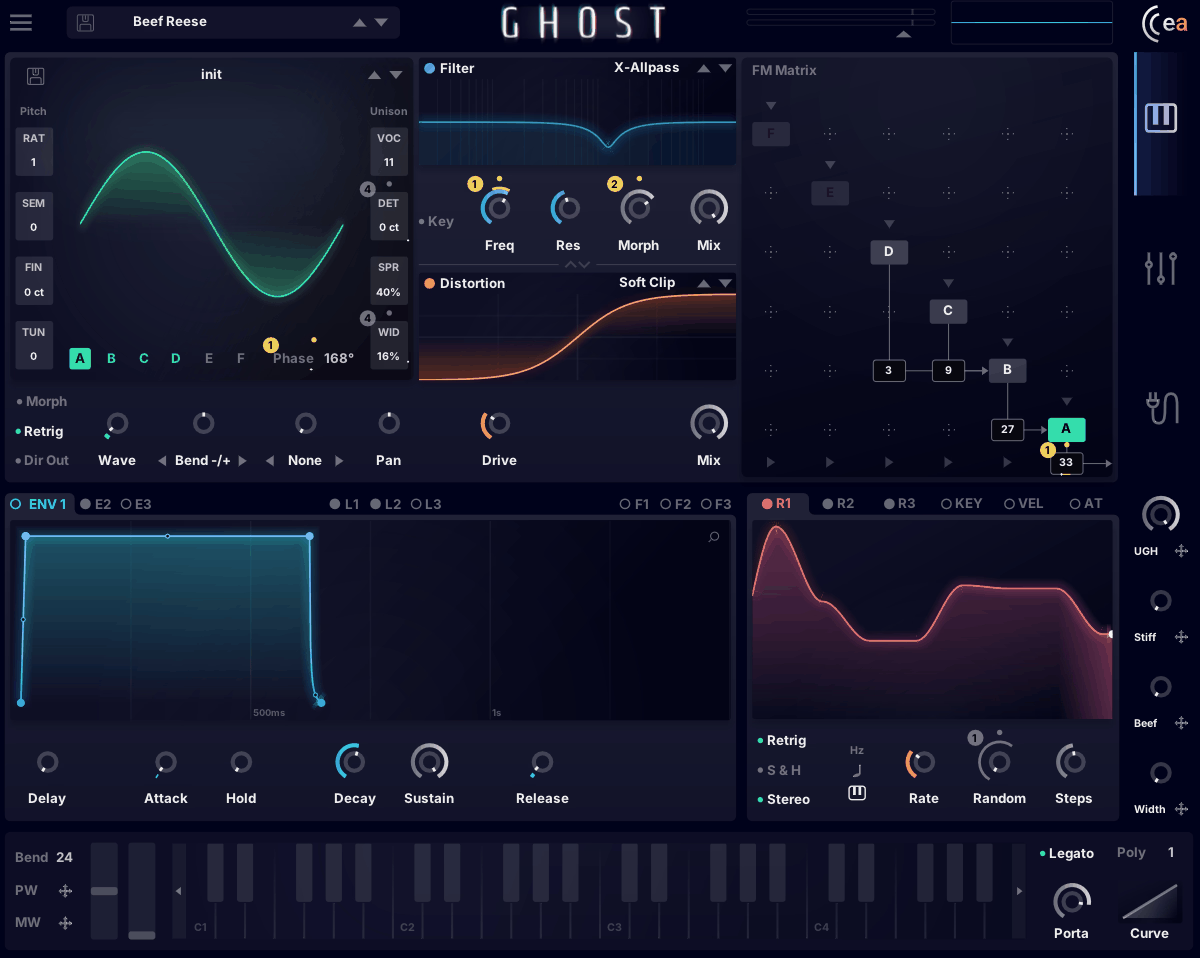
GHOST starts with a premise that changes the character of FM considerably: its six oscillators are wavetables, not conventional sine operators. Each can act as a carrier or operator, and FM feedback is available per oscillator, so the instrument can move between wavetable synthesis and much more complex FM sounds without changing instruments.
The pre-FM processing is particularly important. Because the oscillators can be filtered and distorted before they participate in FM, you’re not limited to generating harmonics from clean waveforms and processing them afterward. That makes GHOST especially interesting for aggressive basses and sound design.
What you are getting:
- Pre-FM Oscillator FX
Each oscillator carries its own filter and distortion stage, and critically, these sit before the FM stage in the signal path.
That ordering is the detail I think makes this a bass machine. Any resonance or distortion shaping you apply gets included in the FM signal itself, so instead of modulating a clean sine and dirtying the result afterward, you’re modulating something already harmonically complex.
- Eleven Distortion Shapes
The distortion list runs Soft Clip, Hard Clip, Arctangent, Hard Skew, Spaghetti, Hour Glass, Exponent, Linear Fold, two Sine Fold variants, and Bitcrush, with the filter and distortion order swappable for pre or post behavior.
- Modulatable FM Matrix
The routing boxes in the FM matrix can themselves receive modulation from the various modulation sources, so the connections between operators move instead of staying fixed.
- Stackable Effects Rack
You can load up to six instances of each effect, meaning layered EQs, stacked filters, and multiple distortions in a single chain.
I like this more than I expected to, since being able to place the same effect twice at different settings is something most synths quietly prevent.
- Learning Curve
I should be honest about the tradeoff: you need familiarity with both wavetable and FM synthesis to get value out of this, which makes it a difficult first synth.
8. KORG opsix native
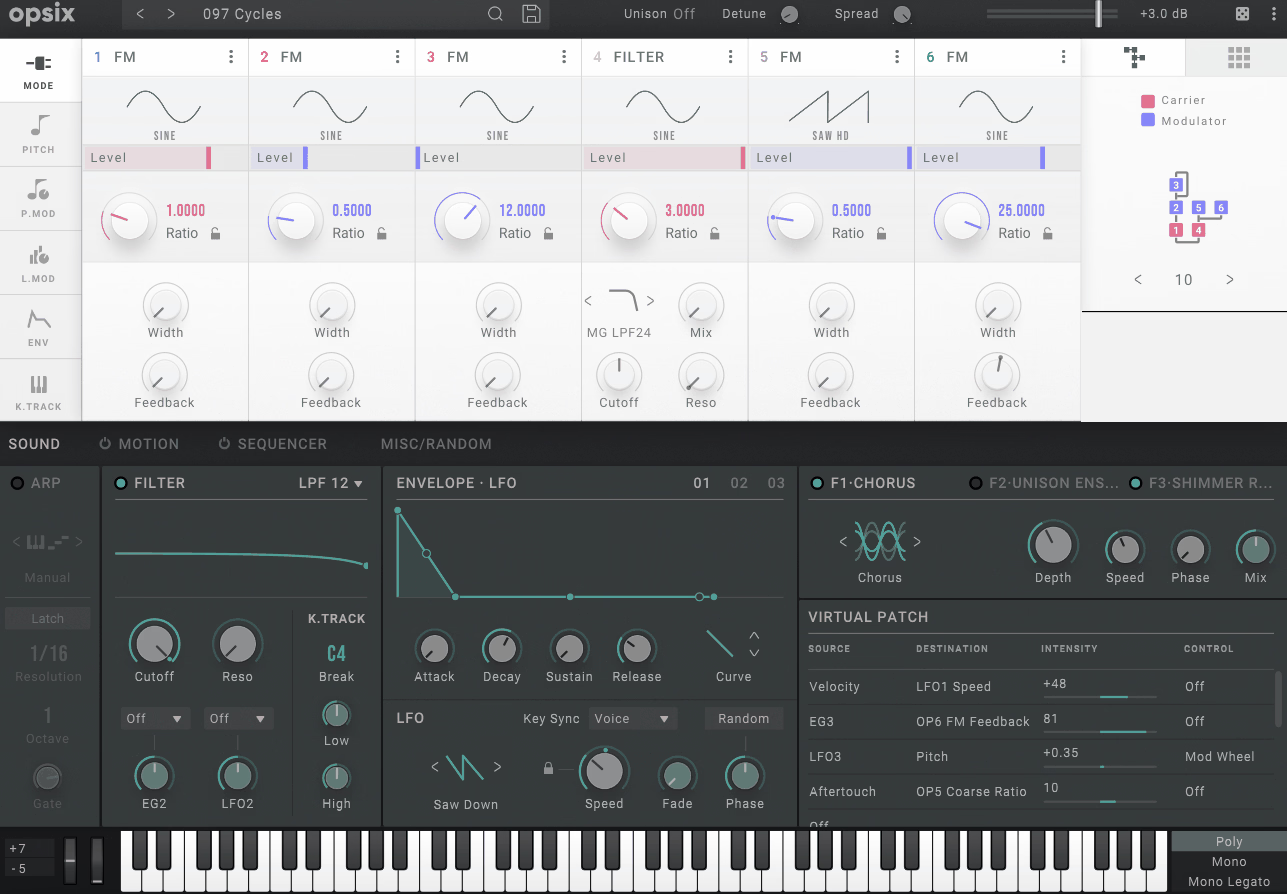
The opsix native takes one of the most useful ideas in modern FM synthesis and builds the entire instrument around it: an operator doesn’t have to remain an FM operator.
KORG’s Altered FM architecture lets you change individual operators into things such as ring modulation, filter FM, wavefolding, or effects, so you’re working with several synthesis approaches inside the same patch.
That makes it much easier to move away from the classic FM mindset when a sound needs something different. You can start with a familiar six-operator configuration, then introduce subtractive, additive, waveshaping, or other processing without rebuilding the patch in another instrument.
- Operator Mixer
Six operator level controls sit across the top with red for carriers and blue for modulators, and adjusting them changes the character of a patch dramatically and immediately.
To me this is the single best thing about the opsix concept. Instead of understanding an algorithm diagram before you can hear a change, you’re pushing faders and listening, and I’d argue that’s how most people actually learn FM.
- 40 Preset Algorithms
Forty algorithms ship with the synth alongside the ability to build your own, so the familiar routings are there when you want a known starting point.
- Randomize Function
The die icon scrambles parameters completely, and you can restrict the randomization to just the operators, the algorithm, or the sequences.
Restricting it is the part I’d emphasize, since randomizing everything usually gives me noise, while randomizing only the algorithm on a patch I already like tends to produce something usable.
- Step Sequencer
The sequencer is powerful enough to rival a groovebox, and combined with Motion recording it handles evolving parameter changes as well as notes.
- 30 Effects
Thirty effect types cover chorus, phaser, delay, and compressor alongside shimmery reverbs and KORG’s own MS-20 and Polysix filter models.
- Three EGs and LFOs
The MOD section works separately from the operators with three envelope generators and three LFOs, and patches move between hardware and plugin through the opsix Sound Librarian.
9. AIR OPx-4
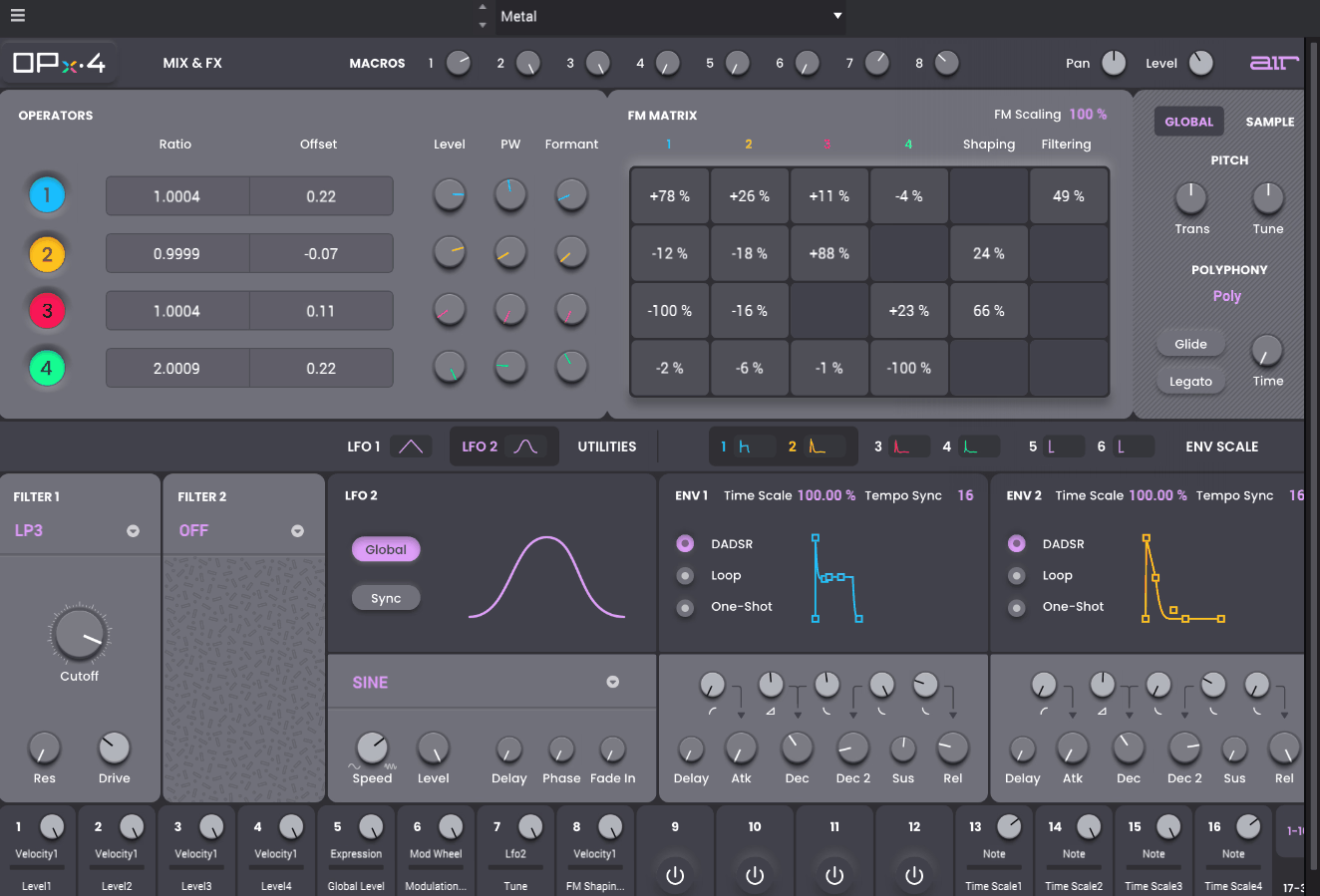
OPx-4 approaches FM from the parameter side rather than trying to make the underlying synthesis architecture less sophisticated.
Its controls use relatively descriptive terms such as pulse width, formant, FM filtering, and FM shaping, which makes it easier to understand what you’re changing without having to translate everything back into traditional FM terminology first.
Underneath that more accessible interface is a four-operator FM matrix with a separate modulation matrix. It isn’t as open-ended as F.’em, but the combination of operator shaping, filters, looping envelopes, macros, and effects gives it plenty of room for conventional synth sounds as well as FM patches.
- 23 Filter Types
A dual-mode filter path offers 23 different filter types, which I find genuinely unusual for an FM synth where filters are often an afterthought.
Instead of treating FM as a self-contained harmonic system, you’re free to build something bright and then carve it, and that suits the DX-style electric piano territory well.
- Six Looping Envelopes
Six envelopes support tempo-synced looping, and looped envelopes are what let a patch keep moving under a sustained note.
- 32-Slot Mod Matrix
The modulation matrix carries 32 slots, with two LFOs and two ramps available as sources.
I’d point out that ramps are more useful here than they sound, since a one-shot ramp on modulation index gives you that characteristic FM attack transient without touching an envelope.
- Eight Macro Knobs
Eight assignable macros put the parameters that matter for a given patch in one place, and for FM specifically I think macros earn their keep more than they do in subtractive synths.
- Insert and Global FX
Three insert FX and two global FX slots draw on 27 included AIR effect plugins, covering reverb, delay, distortion, modulation, compression, EQ, and lo-fi processing.
- Wave Looping
Wave looping and sample offset sit in the operator section, letting you build sounds with a strong attack character or continuous morphing behavior.
10. DHPlugins HALO-2
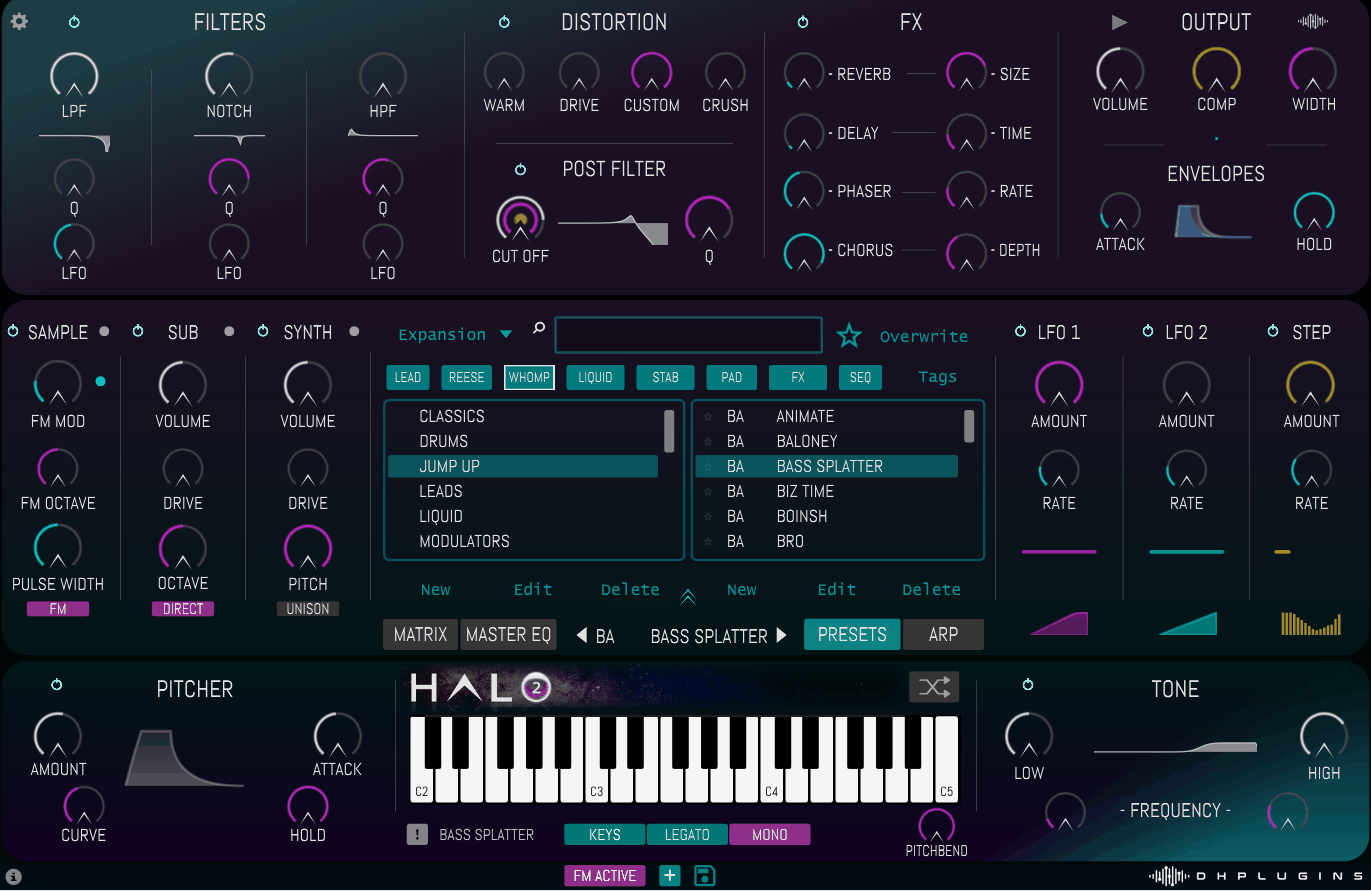
This one isn’t trying to be a traditional FM synth, and that’s exactly why I think it belongs in this list. HALO-2 instrument combines Sample, Sub, and Synth layers, with FM available on two of them, and the most interesting part is the ability to use samples as sources for FM rather than restricting the process to conventional oscillators.
The overall design is clearly aimed at bass music, with Reese basses, pads, stabs, and leads making up much of the library. If your idea of FM starts with a sine wave and ends with an electric piano, this is a very different workflow; if you work with modern bass sounds, the sample-based approach makes considerably more sense.
- Sampler FM Engine
Any sample bank or user sample can be frequency-modulated by a synth using square or triangle waveforms, by a factory sample bank, or by another user sample file.
This is the feature I’d single out. Instead of modulating oscillators, you’re using one audio file to modulate another, and it ranges from subtle movement to complete mangling depending on how hard you push. Modulating a Reese with a percussion loop gives me textures a conventional FM matrix simply can’t reach.
- Four Multi-Filters
Four multi-mode filters sit in the chain with three pre-distortion and one post-distortion, each offering six shapes including low-pass, high-pass, notch, peak, bandpass, and phase.
Each filter carries a tempo-synced LFO, and I’d say that’s how the rhythmic filtered bass sounds in the preset library are built.
- Four Distortion Modes
Warm Saturation, Amp Style Drive, a customizable waveshaper, and Crush cover the range from subtle thickening through to destruction.
- Assignable Arpeggiator
The arpeggiator assigns to any combination of the sampler, sub, or synth, and includes a random melody generator where you pick a scale and hit randomize.
Over 30 arp presets and scales ship with it, plus its own preset browser. Arpeggiating your own samples over a bed of synthesis strikes me as a genuinely unusual thing to be able to do.
- Sample Unison
A Sample and Synth Unison engine widens both layer types, alongside loop point manipulation for precise sample editing.
11. XILS-lab KaoX
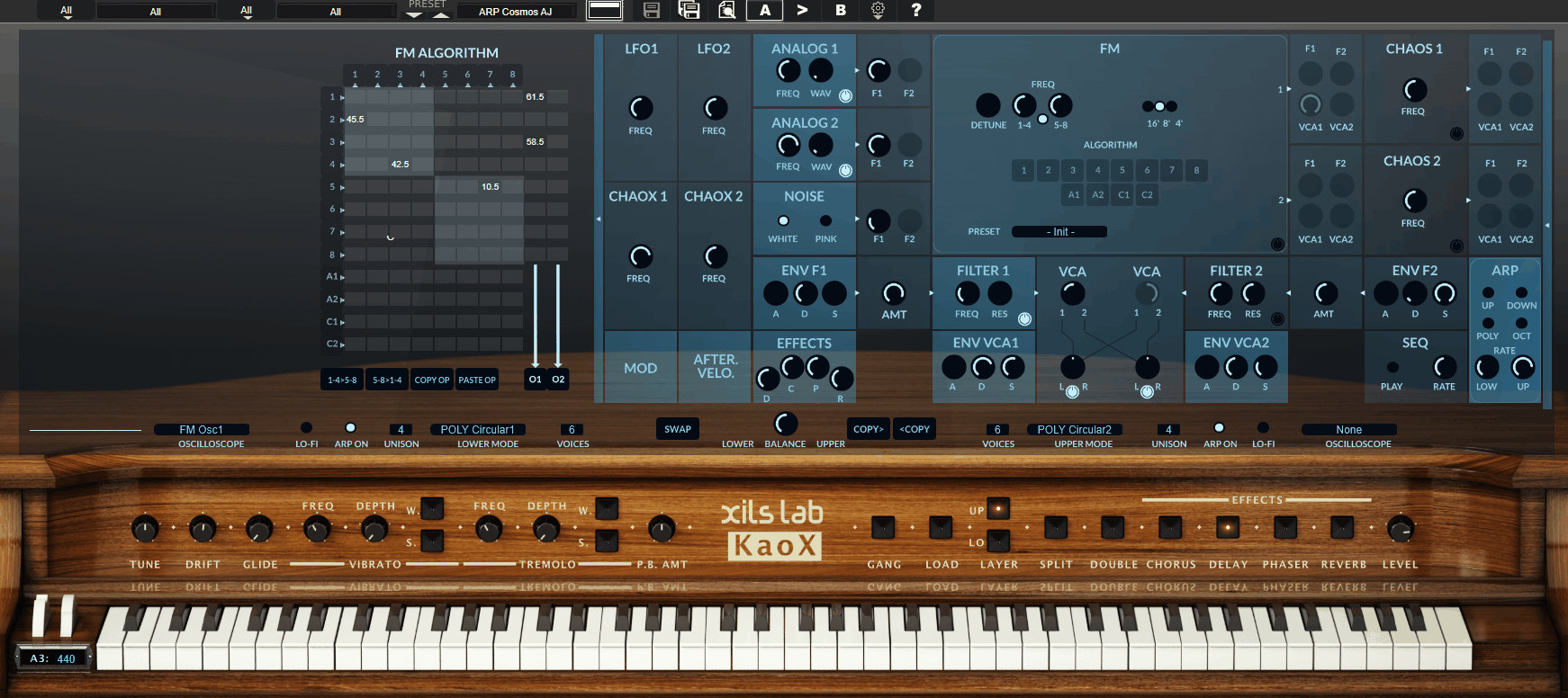
Rather than directly recreating the DX7, XILS-lab takes inspiration from the Yamaha GS-1, then expands that idea into an instrument with eight operators, analog-style oscillators, and chaotic modulation.
The architecture of it is substantial, with two independent layers and up to eight operators per FM oscillator.
The additional analog oscillators and zero-delay filters make XILS-lab KaoX less about reproducing a single historical instrument and more about combining FM with the kinds of synthesis and modulation you’d expect from a modern instrument.
- Per-Operator Depth
Each operator carries its own LFO, envelope, low-pass filter, keyboard follower, ratio or absolute frequency setting, and two user-definable external modulators.
That’s considerably more per-operator control than the hardware generation offered, and I’d argue it’s where eight operators start justifying themselves over six, since each one behaves almost like a small synth voice.
- Chaotic Oscillators
Two chaos oscillators and two chaos modulators generate the behavior the plugin is named for, producing organic timbres and what the developer calls chaotic accidentals.
Instead of an LFO cycling predictably under your patch, you’re getting modulation that never repeats exactly. For drones and evolving textures I find that valuable, though it does make patches harder to recall precisely.
- Custom FM Matrix
The FM matrix on the left of the interface lets you set operators individually and design your own algorithms, with cross-modulation available inside it alongside the classic routings.
- Four-Track Sequencer
Each of the four sequencer tracks assigns to a layer, carries independent sustain and gating, and functions as a modulation source in its own right.
- Two Arpeggiators
Two independent arpeggiator units run alongside the sequencer, which suits the split and double layer modes well.
- 500+ Presets
The library passes 500 factory presets from designers including Nori Ubukata, and to me having patches from someone who programmed the original Yamaha machines gives you a useful reference for what the engine does best.
12. Sound Particles SkyDust 3D
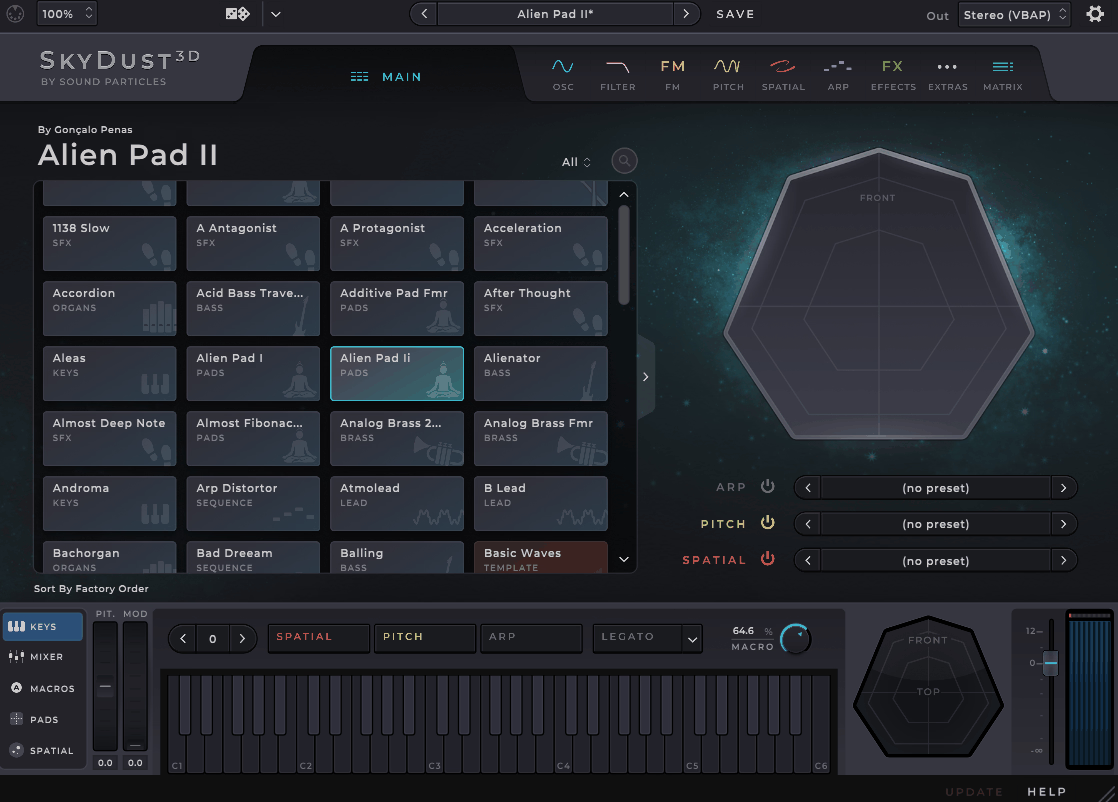
SkyDust 3D is probably the least conventional FM instrument here because its main idea isn’t really FM at all. The instrument treats space as part of synthesis, giving each note and oscillator a position in three dimensions while still allowing the oscillators to work as FM operators.
That makes it particularly relevant for sound design, game audio, immersive music, and anyone working with spatial formats. Even in a stereo project, the ability to automate position per note can become another way of separating voices or creating movement without relying entirely on filters and effects.
- Eight FM Operators
All eight oscillators work as FM operators with a dedicated FM matrix for creating custom connections between them, and you can add filters on top for hybrid results.
Instead of choosing between FM and subtractive, you’re deciding per oscillator, and that makes layering a glassy FM bell over an analog-style pad a single-patch operation.
- Per-Note 3D Position
Each oscillator holds its own 3D position per note, and you can drive that position with envelope generators, LFOs, or movement modifiers.
For instance, when you want an arpeggio where each note lands somewhere different around the listener, you’re modulating elevation and position the way you’d modulate a filter. I find this genuinely changes how I think about arrangement, since space becomes a compositional parameter instead of a mix decision.
- Sub-Presets
You can save and load parts of the synth independently, covering sequences, pitch effects, FM settings, and spatial movements.
Reusing an FM routing I liked across completely different patches is a small thing that saves real time.
- Polyphonic Sequencer
The sequencer is polyphonic with a keyboard per step, parameter sequences that change values over time, seven arpeggiator modes, and forced scale behavior so sequences adapt to major or minor.
- Anti-Alias Technology
Built-in anti-aliasing addresses the harsh artifacts aggressive FM ratios produce in digital synths, which matters more here than in most plugins given how bright the engine gets.
- Randomizer
A dice function generates random presets, and given how deep the spatial and FM sections are, I’d treat this as a legitimate way to find starting points.
13. Native Instruments FM8
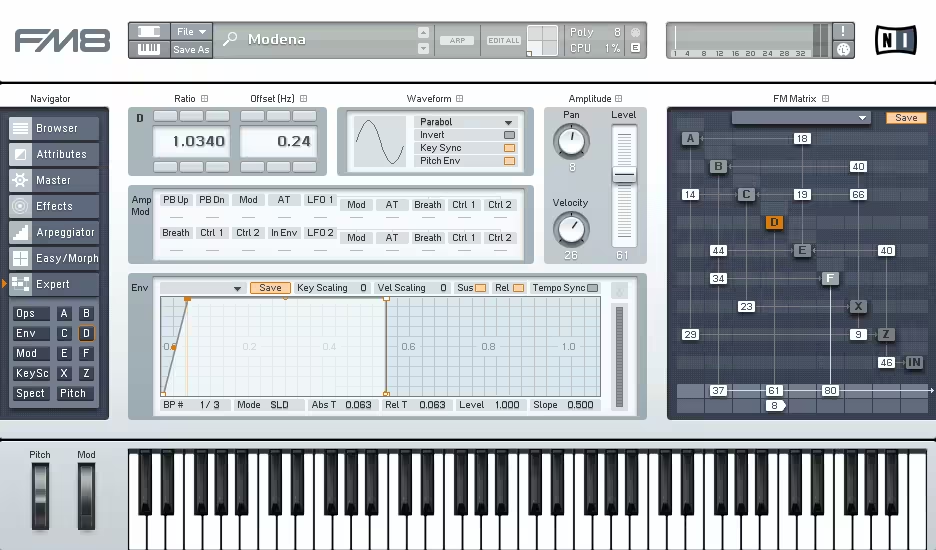
This synth has been around for years, and its basic approach still works because the matrix gives you direct control over the relationships between operators instead of forcing you to work through a fixed collection of algorithms.
With FM8, you get six general-purpose operators, additional noise and filter operators, multiple envelopes, modulation, morphing, sequencing, effects, and direct DX7 SysEx import. It is still a particularly sensible choice if you want to learn FM synthesis properly rather than simply browse presets.
- The FM Matrix
Connecting operators happens by dragging inside matrix cells to set modulation amount from 0 to 100, and any operator can modulate any other, including itself.
Instead of learning what algorithm 17 does, you’re looking at a grid showing you exactly what’s routed where. I’d say this remains the clearest FM interface anyone has built, and plenty of newer plugins have borrowed the idea.
- 32-Stage Envelopes
The graphical envelopes support 32 stages with looping and tempo sync, and they can be drawn freehand.
To me this is what lets FM8 produce evolving pads and patches that flick in and out over bars, since you’re no longer constrained to ADSR behavior at all.
- Morph Pad
The sound morphing pad crossfades between four presets with automation and MIDI control available.
For instance, when you want a lead that shifts from glassy to aggressive across a chorus, you’re morphing between finished patches instead of automating individual operator levels.
- Easy Edit Page
The Easy Edit page adjusts complex parameters through simplified macro controls, while Expert view exposes the matrix and full operator settings one click away.
- 32-Note Arpeggiator
The arpeggiator runs 32 steps with a visual pattern editor, and each note carries its own octave and transpose settings that can be specific or random.
- DX7 SysEx Import
You can load DX7 SysEx files directly, which I consider one of the more underrated features here, since it hands you decades of existing patch libraries.
- 12 Effects
The effects rack drag-and-drops 12 processors including overdrive, tube amp, talk wah, EQ, phaser, and flanger, with the library passing 1,200 presets.
14. Imaginando FRMS
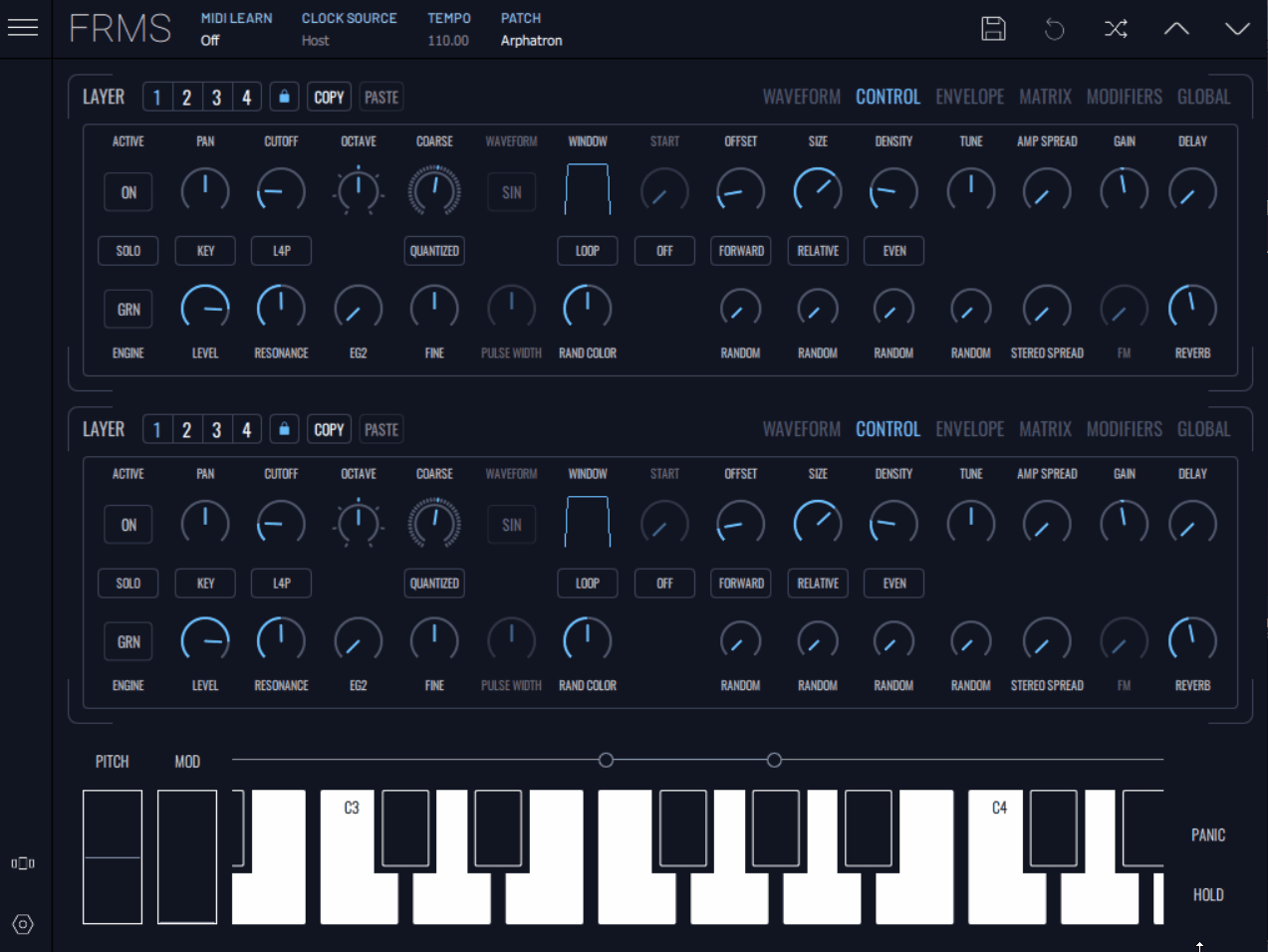
FRMS takes FM into another unusual direction by combining it with granular synthesis. Instead of feeding a conventional FM operator with a simple oscillator, you can turn its four layers into operators and use whatever those layers are producing as part of the FM process.
That makes it useful for sound design in a way a conventional FM synth isn’t.
A sampled texture can become a modulation source, a granular layer can be driven by an oscillator, and the resulting sound can then be shaped with the instrument’s own filters and modulation system.
- Layers as Operators
Each of the four layers becomes an individual operator when the FM engine is active, with eight FM modes organizing those operators into different configurations.
To me this is the whole point of the plugin. You’re not modulating sine waves, you’re modulating whatever those layers happen to be producing, and modulating a granular texture gives me harmonic movement neither technique reaches on its own.
- 20 Grains Per Layer
The granular engine handles up to 20 grains per layer, with samples loaded by drag and drop or taken from live input.
- Per-Layer Filters
Both subtractive and granular modes carry a multi-mode filter with 2- or 4-pole low-pass, 2-pole band and high-pass, and notch options, plus a pair of ADSR generators.
- Per-Layer Mod Matrix
Each layer holds an independent modulation matrix routing its own envelopes and any of the four global LFOs to that layer’s parameters.
Having the matrix per layer instead of globally keeps things manageable for me, since you’re editing one instrument at a time instead of untangling a patch-wide web.
- Five-Mode Arpeggiator
The arpeggiator offers five modes, and the performance zone at the bottom switches between standard piano keys and a hexagonal chorder for one-touch chords.
- 163 Presets
163 factory presets ship with it, expandable through eighteen expansion packs covering ambient, cinematic, acoustic, and experimental material.
I should mention the tradeoff: this one is demanding on CPU, and four layers of granular synthesis feeding an FM engine is genuinely heavy work for a processor.
Freebies:
1. Sonicbits Exakt Lite
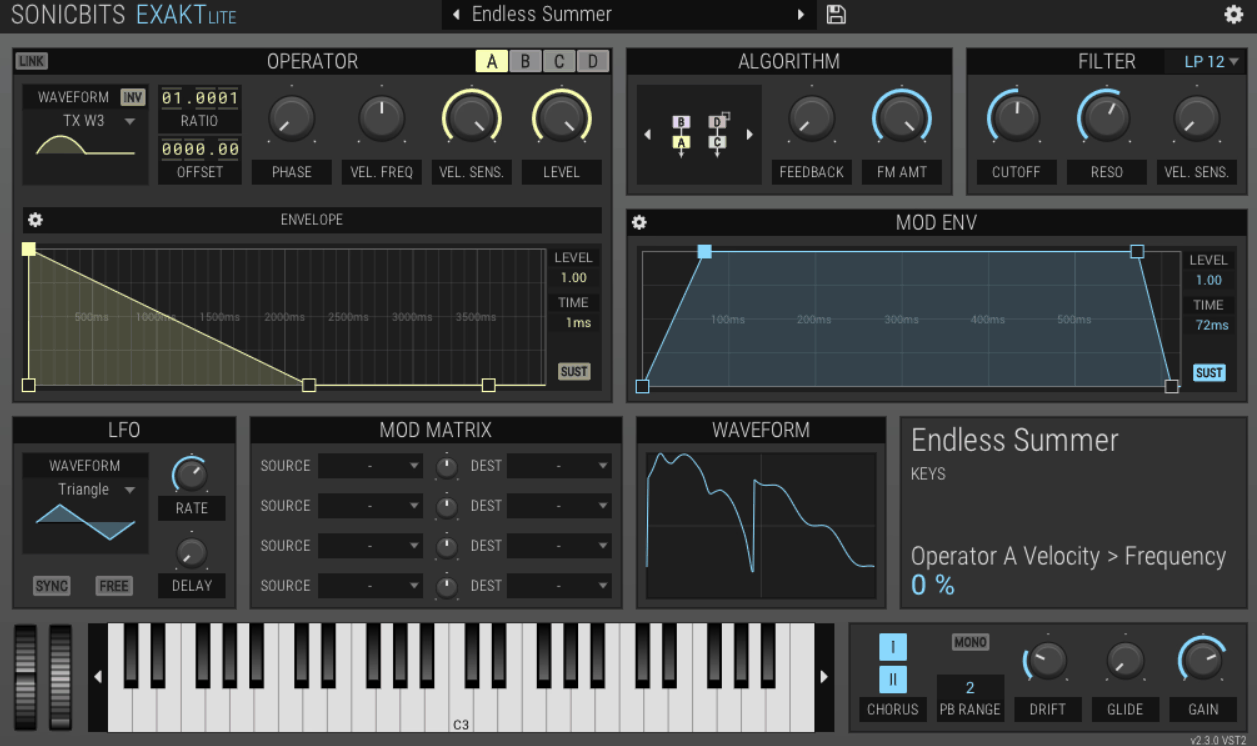
Exakt Lite takes its cues from the Yamaha TX81Z rather than the DX7, which gives it a slightly different character from most free FM instruments.
You get four operators, the classic TX81Z algorithms, and alternative oscillator waveforms that make it particularly useful for brighter and more aggressive FM sounds.
For a free synth, it covers a surprisingly useful amount of ground. I would look at it first if you want something closer to the TX81Z family of sounds rather than another basic six-operator DX7 recreation.
- TX Envelopes
Every operator carries its own amplitude envelope supporting the classic 5-point TX envelopes, modeled to mimic the hardware’s characteristics.
Instead of a generic ADSR approximating the behavior, you’re working with the envelope shape the original machine used, and I’d say that’s a large part of why the plucky attack character comes through.
- Aliasing-Free Operators
All four operators are aliasing-free, which matters because aggressive FM ratios are exactly where cheaper implementations start giving you digital grit you didn’t ask for.
- Multi-Mode Filter
A resonant filter covers low-pass, high-pass, and band-pass modes, though the formant mode from the paid version isn’t included here.
- Version 2 Improvements
The 2.0 rewrite brought a redesigned interface and workflow, four mod matrix slots, one modulation envelope, and a chorus effect.
I think the free version is generous about what it includes, and the honest limitations are the reduced matrix slots and a non-loopable mod envelope.
- Drag-and-Drop Envelopes
Envelopes edit by dragging, and the vector-based interface resizes without blurring.
2. Digital Suburban Dexed
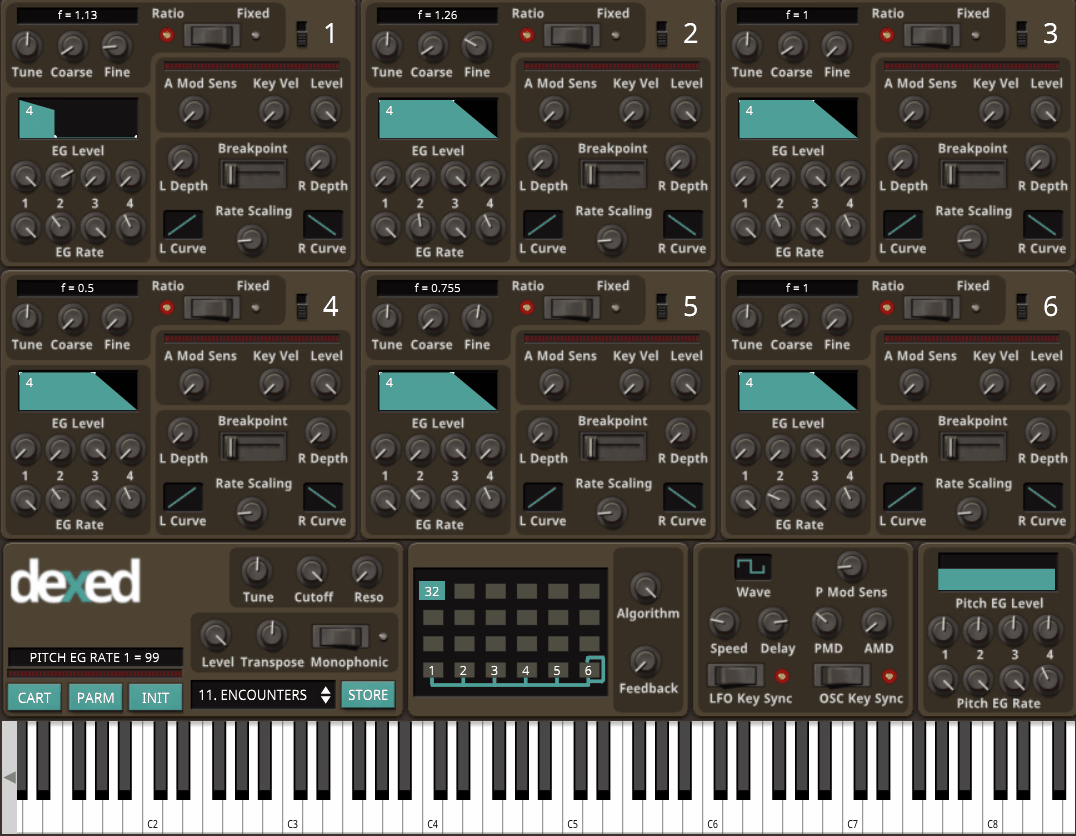
For a free, direct route into classic DX7 synthesis, Dexed remains difficult to ignore. It follows the original six-operator architecture and its 32 algorithms, while putting the parameters that were buried behind the hardware interface directly in front of you.
The SysEx functionality is particularly useful because you’re not limited to the presets that ship with the plugin.
If you have DX7 or TX7 patches you want to explore, Dexed can also function as the librarian and editor rather than simply acting as another FM synth inside your DAW.
- 144 Automatable Parameters
All 144 DX7 parameters are available from a single panel and automatable from your DAW, which is the thing the hardware fundamentally couldn’t do.
Instead of stepping through a menu with one data slider, you’re seeing every operator at once. I’d say the interface still looks intimidating, and to be fair it’s dense instead of badly designed.
- SysEx Compatibility
Full support for DX7 input and output SysEx messages including controller change means you can use this as an editor for a physical DX7 or TX7, or save single programs into separate files.
For instance, when you find a cartridge of 32 patches online, you load the whole bank and audition it inside your DAW instead of transferring anything to hardware.
- Engine Type Selector
You can switch between Modern 24-bit math, Mark I, and OPL Series 8-bit limitations, reproducing the arithmetic constraints of different FM hardware generations.
That’s a detail I appreciate more than I expected to, since the DX7’s slightly grainy quality came partly from its math limitations and cleaning that up loses something.
- Modern Additions
Beyond the original architecture you get a low-pass resonant filter, MPE support, and MTS-ESP micro-tuning.
- Per-Operator VU Meters
Each operator has a realtime VU meter showing which ones are actually active, and honestly, for learning FM I find this more useful than it sounds. Watching which operators contribute to a sound teaches you how a patch is built faster than reading an algorithm number does.

Hey, I’m Vil, I started this site to help you find the best audio plugins covering various categories including synths, pianos, strings, and effect tools of all sorts as well. I pick these plugins based on various criteria so it best matches the actual topic.