When you purchase through the links on my site, you support the site at no extra cost to you. Here is how it works.
The best Neve plugins aren’t really about copying one piece of hardware. What you’re chasing is that combination of transformer saturation, a mic preamp that gives the signal some character before you even touch the EQ, and musical EQ curves that somehow keep sounding good when you push them.
That classic combination works on almost anything. A vocal might need a little extra sheen and midrange presence, while a drum bus might need more weight, grit, and that last bit of analog glue that makes it feel finished.
There are plenty of ways to get there in a DAW, too. Some of these plugins stay very close to the original 1073 and 80 Series designs, while others take the Neve idea and add modern routing, stereo processing, multiband compression, or more detailed console modeling.
I’ve picked ten worth knowing here, including Waves Scheps 73, IK Multimedia EQ 81, UAD Neve 1073 Preamp & EQ Collection, VoosteQ Model N, and few more.
There are also three free options at the end that are surprisingly capable for plugins that don’t cost anything.
1. Waves Scheps 73
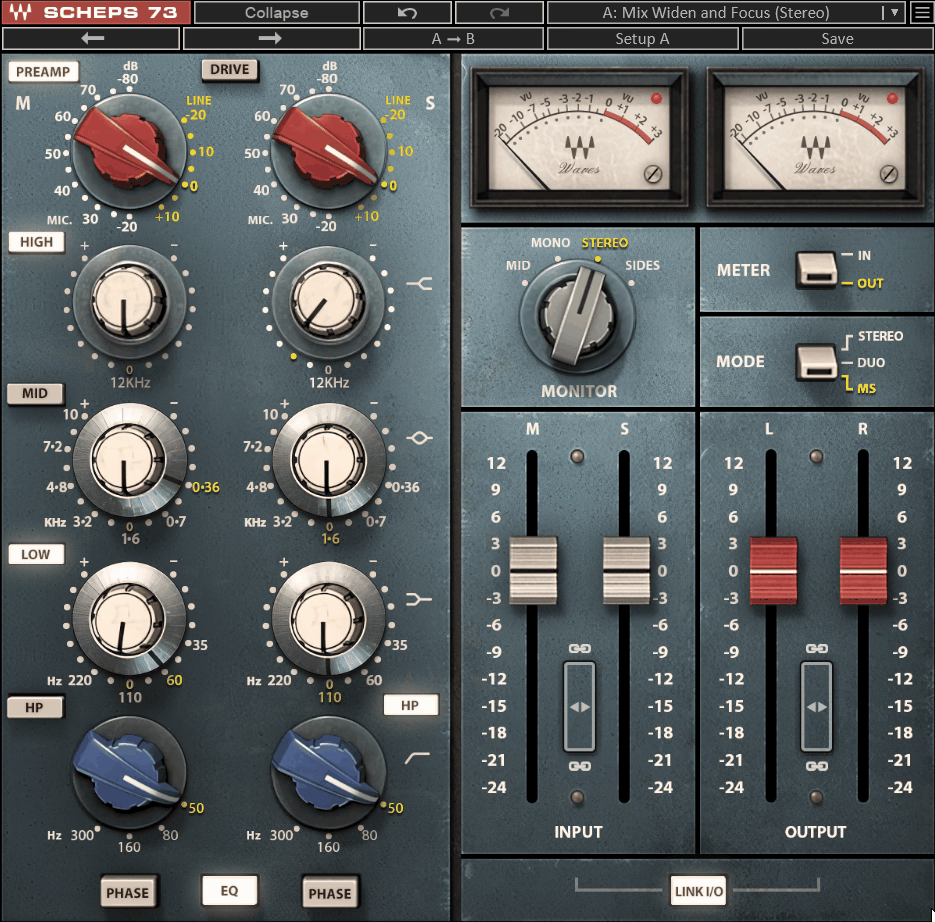
When I have a flat vocal that needs to come forward without sounding overly processed, Waves Scheps 73 is one of the first Neve-style plugins I’d reach for. Andrew Scheps was heavily involved in its design, and Waves built it around a modeled Marinair transformer and the familiar fixed 12kHz high shelf of the 1073.
What I like most is that the plugin gives you more than just the usual 1073 EQ curve. There’s an extra 10kHz midrange point, based on the less-common 1078 design, plus an independent preamp drive section that lets you add harmonic weight without having to make a huge EQ move.
That makes it useful on individual tracks, but the mid/side processing also gives it a second life on buses and stereo chains.
- Classic 1073 EQ
The top shelf stays fixed at 12kHz, just like the original 1073. Instead of hunting around for a frequency, you’re essentially choosing how much air and brightness you want to add.
- Extra 10kHz Band
The additional 10kHz band comes from the rarer 1078 circuitry. It’s a useful option when you want presence and top-end energy without reaching straight for the shelf.
- Independent Preamp Drive
The drive control is where a lot of the personality comes from. You can keep it subtle for a little warmth or push the input harder for more obvious harmonic saturation and grit.
- Mid/Side Processing
Stereo, mono, dual-mono, and mid/side routing make this more flexible than the original hardware. I particularly like having that extra control when using it on buses or a mix.
2. IK Multimedia EQ 81
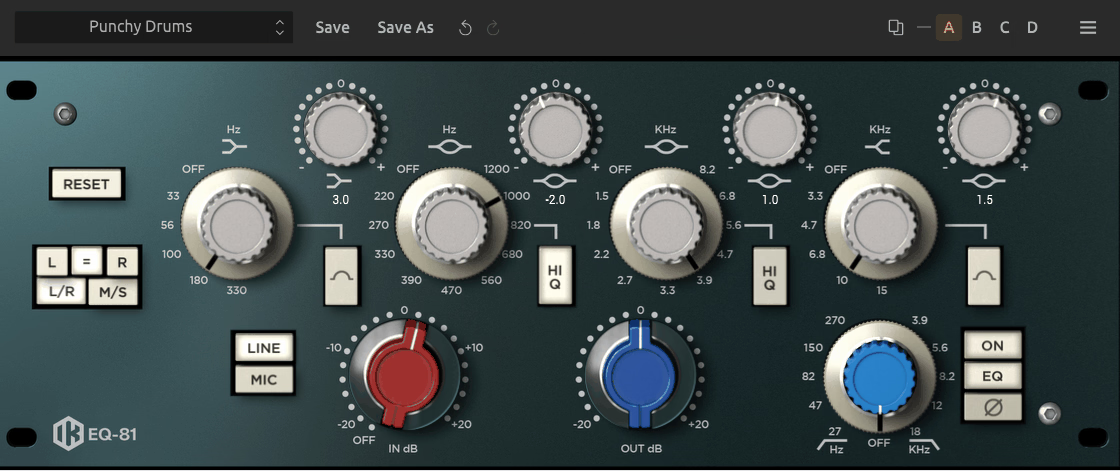
The IK Multimedia EQ 81 takes the Neve 1081 idea and gives you considerably more control than a basic three-band vintage EQ.
The first thing I notice with it is how easy it is to get from broad tone shaping to something much more focused. The two midrange bands give you plenty of room to shape a vocal or guitar, while the high-Q options let you tighten things up when a particular frequency starts causing trouble.
It still keeps that broad, musical quality I’d expect from this kind of British console EQ, so it doesn’t immediately turn into a surgical digital tool when you start making more precise moves.
- Four EQ Bands
You get high and low shelving bands plus two independent midrange peaking bands. That extra mid band makes it considerably more flexible than earlier designs.
- High-Q Mode
The midrange bands can switch to high-Q mode for narrower, more focused adjustments. The shelving bands can also be changed to peaking behavior when you need more targeted shaping.
- High-Pass and Low-Pass Filters
Separate high-pass and low-pass filters let you clean up rumble or excessive top end before the main EQ section starts doing its work.
- Analog Circuit Modeling
IK Multimedia’s DSM and SCC modeling technologies are used to recreate the nonlinear behavior of the original hardware. I find it works especially well when you make relatively small EQ moves and let the modeled circuit provide the rest of the character.
3. UAD Neve 1073 Preamp & EQ Collection
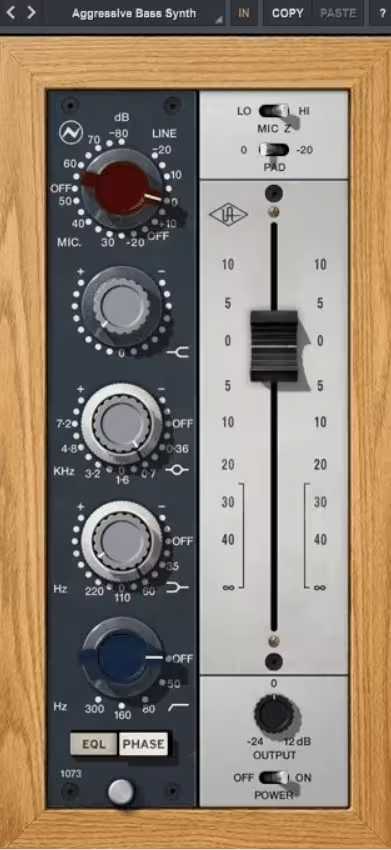
Some 1073 plugins concentrate mostly on getting the EQ curves right. UAD Neve 1073 Preamp & EQ Collection goes much further into the behavior of the original circuitry.
Universal Audio modeled the dual-stage preamp, the three-band EQ, the post-fader output amplifier, and the individual clipping stages throughout the signal path. To my ears, that makes the gain control particularly useful as a tone control rather than simply a way of making a recording louder.
At lower settings you can add a little thickness and presence. Keep pushing and the character gets much more obvious, with the preamp moving from clean coloration into rich harmonic saturation.
And then there’s Unison. When you’re using an Apollo interface, the plugin can control the real interface preamp’s gain and impedance behavior, which makes the experience much closer to actually tracking through a 1073.
- Ten Clipping Points
The plugin models ten individual clipping points throughout the original preamp and EQ circuitry. Drive those stages harder and the character of the saturation changes rather than behaving like a simple one-knob distortion effect.
- Dual-Stage Preamp
The modeled dual-stage preamp gives you a wide range of sounds, from subtle analog weight to much more aggressive saturation when you push the gain.
- Unison Integration
For Apollo users, Unison technology is a major advantage. It lets the plugin interact with the interface’s physical preamp, including gain and impedance behavior, while you’re recording.
- Artist Presets
Presets from engineers including Joe Chiccarelli, Ed Cherney, Jacquire King, and Ryan Hewitt give you useful starting points for different sources and gain-staging approaches.
4. VoosteQ Model N
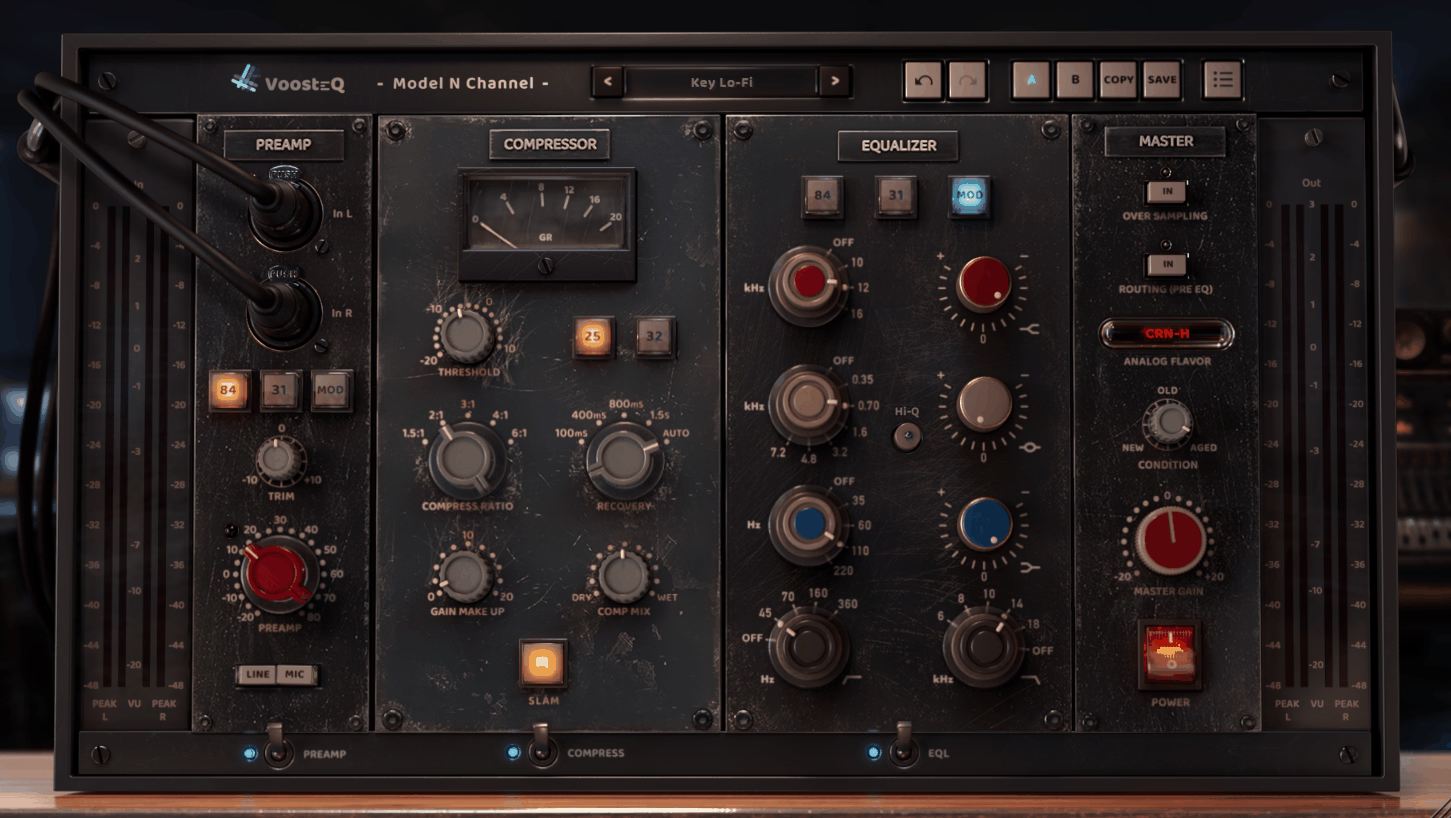
I didn’t expect VoosteQ Model N to be this flexible. Rather than locking you into one recreation of one Neve channel, it gives you three preamps, two compressors, and three EQ circuits, which works out to roughly 108 different combinations before you even start digging into the other controls.
That’s what makes it interesting.
One compressor has that familiar British diode-bridge punch that works beautifully on drums and vocals, while the other is smoother and easier to live with on bass, guitars, and keys.
There’s also a Condition control that changes the modeled hardware from relatively clean and fresh to older and more worn. The automatic gain compensation is especially useful because it makes comparing those different characters much easier without being fooled by a simple level increase.
- Three Preamps
You get three modeled preamps, each with a different harmonic response and character. Switching between them changes the feel of the signal rather than simply changing its volume.
- Two Compressor Models
The first compressor leans into a British diode-bridge sound, with a punchier response that suits drums and vocal buses. The second is more restrained and works nicely on bass, guitars, and keys.
- Around 108 Combinations
Between the preamps, compressors, EQs, and analog coloration options, there are roughly 108 combinations to explore. That gives it a lot more range than a conventional one-circuit Neve emulation.
- Console Modes
Additional console and analog flavor modes add the sound of different studio environments, cabling, and circuit behavior on top of the individual modules.
- Three EQ Circuits
Three different EQ circuits let you choose between different tonal personalities rather than relying on one fixed curve. I’d spend some time comparing them on the same source before settling on one.
5. Arturia 1973-Pre
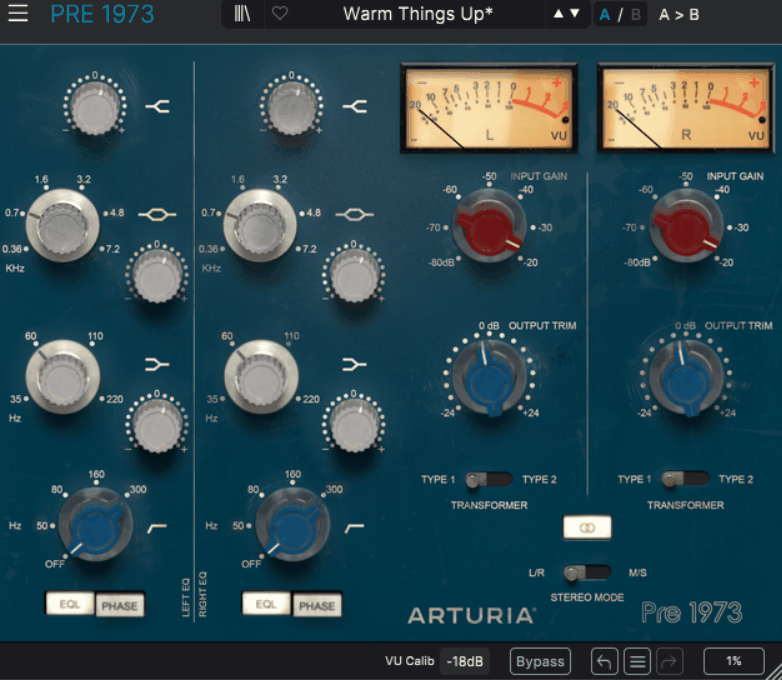
A good preamp plugin can make a track feel more finished before you’ve even opened the EQ, and Arturia 1973-Pre is built around exactly that idea.
Arturia uses its TAE modeling technology to recreate the character of a classic British preamp, and the full 60dB gain range gives you plenty of room to move from fairly clean operation into much heavier saturation.
What I particularly like here is how simple it is to get useful results. Push the input until the track starts feeling thicker, then use the EQ to finish the job. It’s not a complicated signal chain, but it covers a lot of ground.
The two transformer options also give you another layer of tone when you want to move beyond the basic sound.
- 60dB of Gain
The input gain covers a full 60dB range, taking you from clean amplification to much more obvious analog-style saturation.
- Three-Band EQ
The EQ includes a fixed 12kHz high shelf, a mid band from 360Hz to 7.2kHz, and a low band covering 35Hz to 220Hz. Each band provides up to 18dB of boost or cut.
- Two Output Transformers
You can switch between two transformer options, giving you different flavors of harmonic coloration and saturation.
6. bx_console AMEK 9099
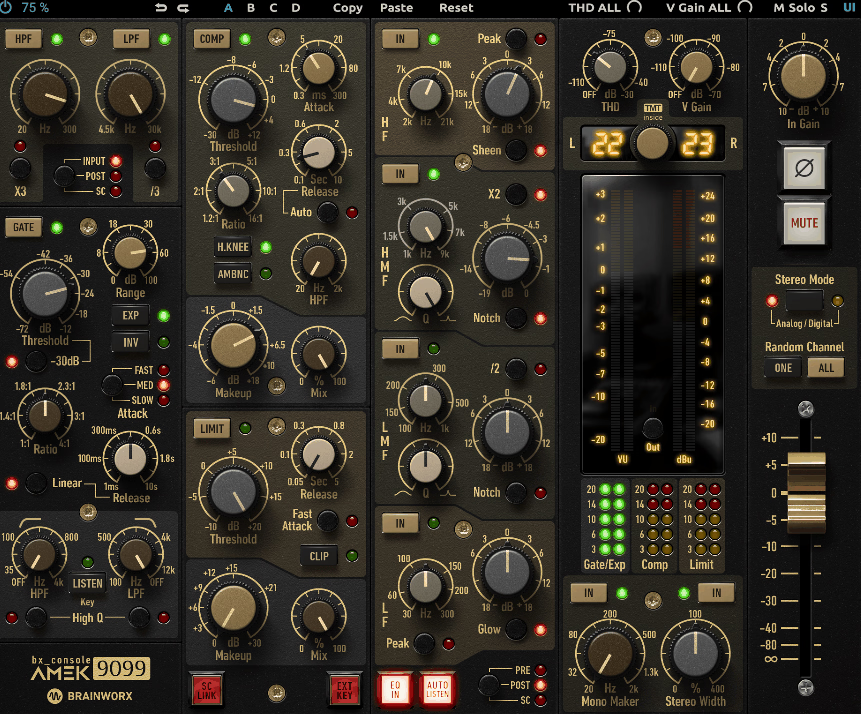
The AMEK 9098i is one of those consoles that doesn’t get talked about nearly as much as the 1073, but there’s a lot to like about its wider EQ approach and more modern dynamics section.
bx_console AMEK 9099 takes that design into a full channel-strip plugin and gives you quite a bit more flexibility than the original desk.
The EQ is probably the first thing I’d reach for. The Sheen and Glow modes let you make fairly big tonal moves without immediately making things harsh, while Notch mode gives you a more surgical option when you need to get rid of a troublesome frequency.
Then there’s the dynamics section, plus stereo tools that make the plugin useful well beyond a straightforward Neve-style channel strip.
- Sheen and Glow
The shelving bands include Sheen and Glow modes designed for smoother boosts and cuts. The parametric section also includes a Notch mode when you need narrower control.
- Full Dynamics Section
You get a complete expander, gate, compressor, and limiter, with flexible sidechain routing and plenty of control over the dynamics behavior.
- Soft Clip Limiter
The limiter includes a Clip function for controlled soft clipping. It’s handy when you want to catch peaks and add a little character without leaning entirely on conventional compression.
- Mono Maker and Width
Built-in Mono Maker and Stereo Width controls let you work on the stereo image without immediately reaching for another plugin.
7. Lindell Audio 354E
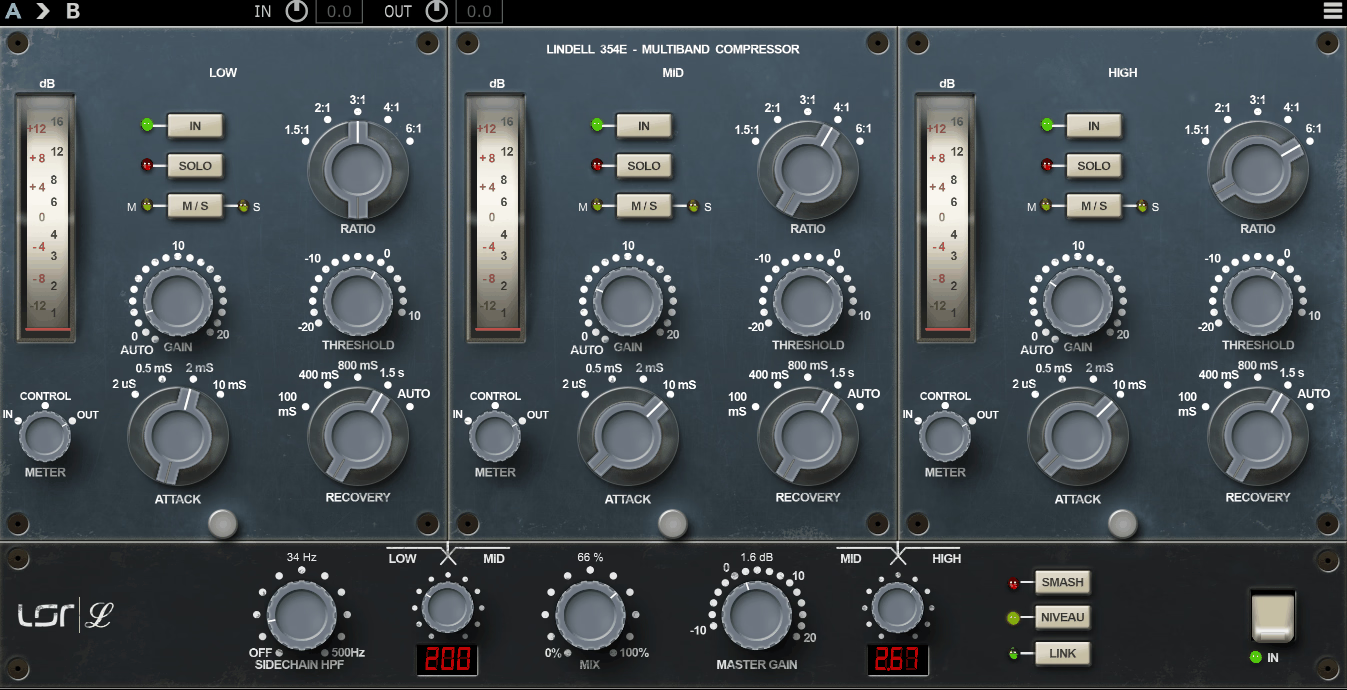
If you’ve ever liked what a good diode bridge compressor does to a drum bus, Lindell Audio 354E is worth a look.
The original Neve 2254E is known for its punchy, characterful compression, and Lindell takes that basic idea somewhere more modern by splitting it into three frequency bands.
That makes the plugin unusually useful when you want to hit the drums hard without letting the bass or top end completely dominate the detector. Adjusting the crossover points changes the response dramatically, so there’s quite a lot of shaping hidden in what looks like a relatively simple compressor.
And then there’s Nuke mode, which is exactly what it sounds like.
- Three Compression Bands
Low, mid, and high bands each have their own compression behavior, with adjustable crossovers that determine where the processing starts affecting each part of the spectrum.
- Five Ratio Settings
Ratios run from a gentle 1.5:1 up to 6:1, while the attack can get extremely fast, down to around 2 microseconds, for aggressive transient control.
- Nuke Mode
Nuke mode takes the compressor from restrained and mix-friendly into much more obvious pumping and over-compression. I particularly like it on drum rooms and rock vocals when subtle isn’t the goal.
- Niveau Filter
The Niveau filter changes the detector response in a way that can preserve low-end weight while adding more forward punch. It works especially well alongside the sidechain high-pass filter.
- Mid/Side Mode
Mid/side processing lets you compress the center and sides differently, which can be useful on stereo mixes when you need to control the edges without crushing the kick, bass, or vocal in the middle.
8. Apogee Clearmountain’s 8068
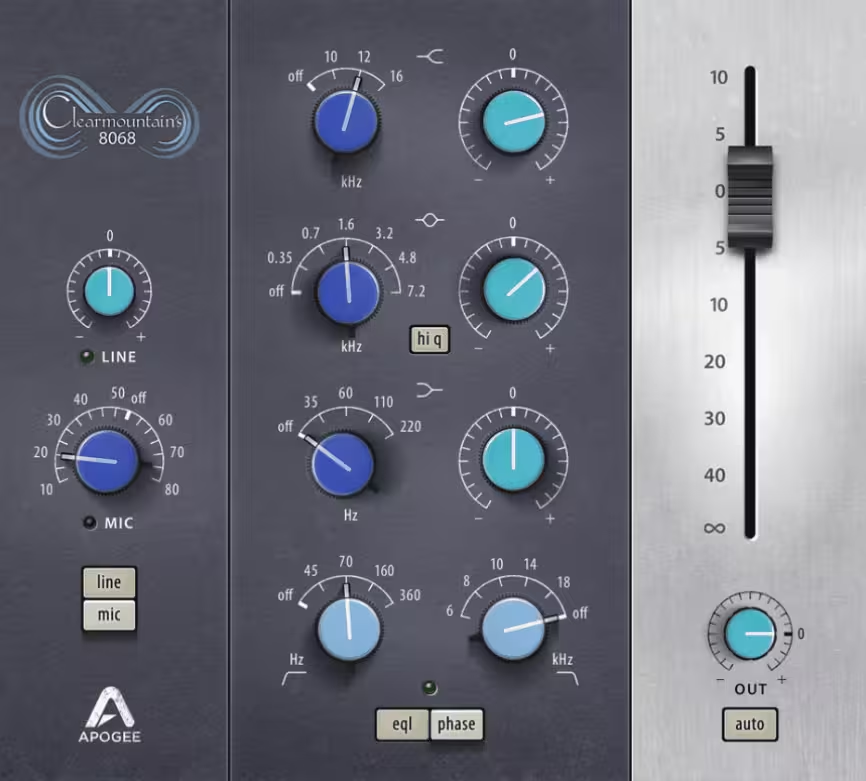
There’s something especially interesting about Apogee Clearmountain’s 8068 because you’re not getting a generic Neve-style channel strip. You’re getting a recreation of Bob Clearmountain’s own modified 8068 console from New York’s Power Station.
Apogee modeled the entire channel path, including the mic and line input stages, EQ, and fader module, so the plugin behaves more like a complete console channel rather than a collection of individual effects.
The Mic and Line modes also have noticeably different personalities. I tend to stay in Line mode for cleaner coloration, then switch to Mic when I want the input stage to become part of the sound.
- Full Channel Modeling
The plugin models the complete signal path, including the input stage, EQ, and fader module. That gives you a more complete picture of the console’s character than a simple preamp recreation.
- Three-Band EQ
The EQ offers more frequency choices than the classic 1073, with broad, musical curves that work particularly well on drums, vocals, and strings. There’s also a high-Q mode for more focused adjustments.
- Fader Module Coloration
The fader section itself contributes to the modeled harmonic character, which is something many Neve-style plugins leave out.
- Power Station Connection
The plugin recreates the modified console used by Bob Clearmountain at The Power Station, with a history tied to records by artists including Chic, Sister Sledge, and Kool & the Gang.
9. Arturia Comp DIODE-609
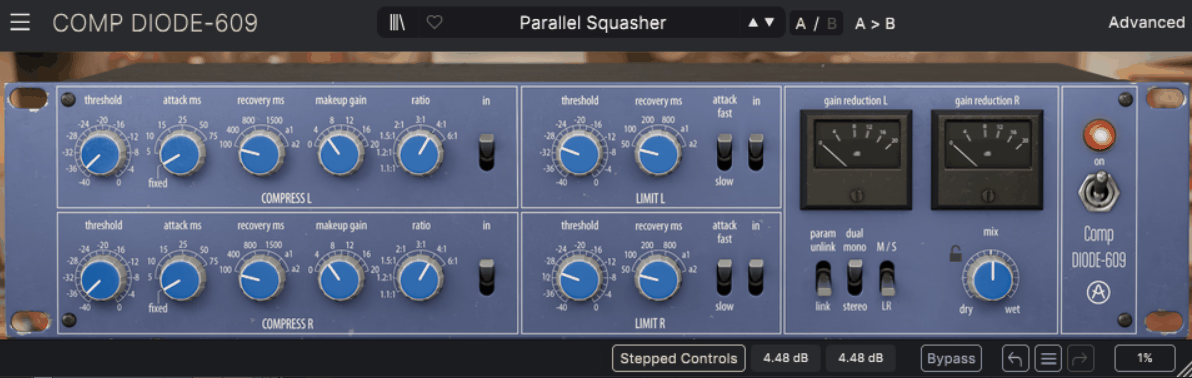
The Neve 33609 became famous for a reason. It could tighten up a mix, glue a stereo bus together, and still leave plenty of its own character behind.
Arturia Comp DIODE-609 takes that diode-bridge concept and adds a number of modern controls around it.
I especially like the way it sits on a stereo bus. It can tighten a mix without completely flattening the transients, but you can also push it harder when you want that unmistakable vintage compression feel.
The limiter section is deliberately more colorful than transparent, so this isn’t really a plugin I’d use when I want something completely invisible.
- Dual Compression Panels
Two compression sections recreate the 33609-style diode-bridge behavior, making the plugin particularly useful for stereo buses and drum groups.
- Characterful Limiter
The limiter isn’t designed to disappear. As you push it, it adds warmth and crunch rather than simply acting like a transparent peak catcher.
- Sidechain EQ
A built-in sidechain EQ, internal or external triggering, and lookahead give you a lot more control than the original hardware offered.
10. Brainworx bx_console N
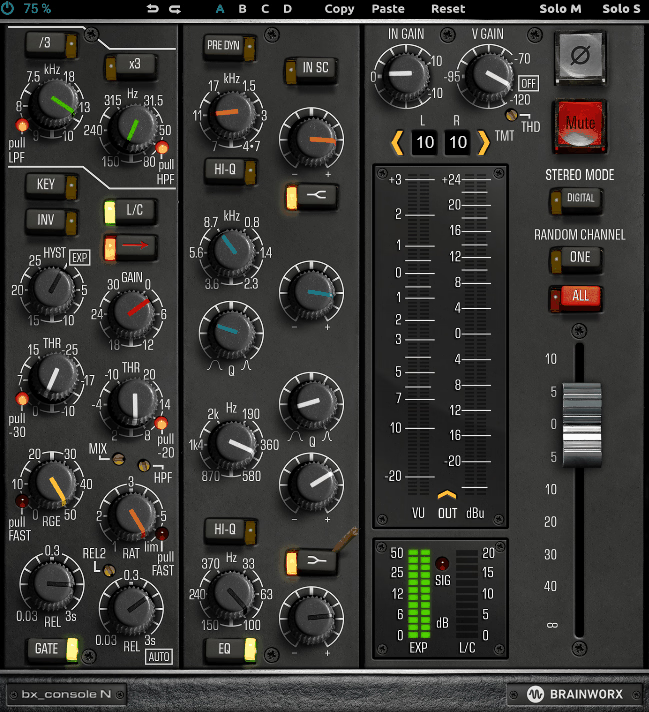
There’s a lot of history behind the console recreated in Brainworx bx_console N, and I think that’s part of what makes the plugin interesting.
The source desk sits somewhere between the older 80 Series Neve consoles and later designs, and Brainworx models 72 individual channels instead of giving you one averaged channel that sounds exactly the same every time.
That difference becomes more noticeable as you stack instances across a mix. Real consoles have tiny variations from channel to channel, and the plugin tries to preserve that behavior.
I also like the fact that the EQ remains musical when you start making fairly aggressive moves. Add the full dynamics section and per-channel saturation and it becomes much more than a simple console color plugin.
- 72 Modeled Channels
All 72 channels are modeled individually, with Tolerance Modeling Technology introducing the small differences you’d expect from real analog hardware.
- Four-Band EQ
A four-band EQ provides broad, musical shaping, while the dynamics section includes compression, limiting, expansion, and gating.
- Per-Channel Saturation
The additional saturation control lets you add harmonic coloration independently on each channel. Keep it subtle for a little console weight or push it harder when you want more grit.
Freebies
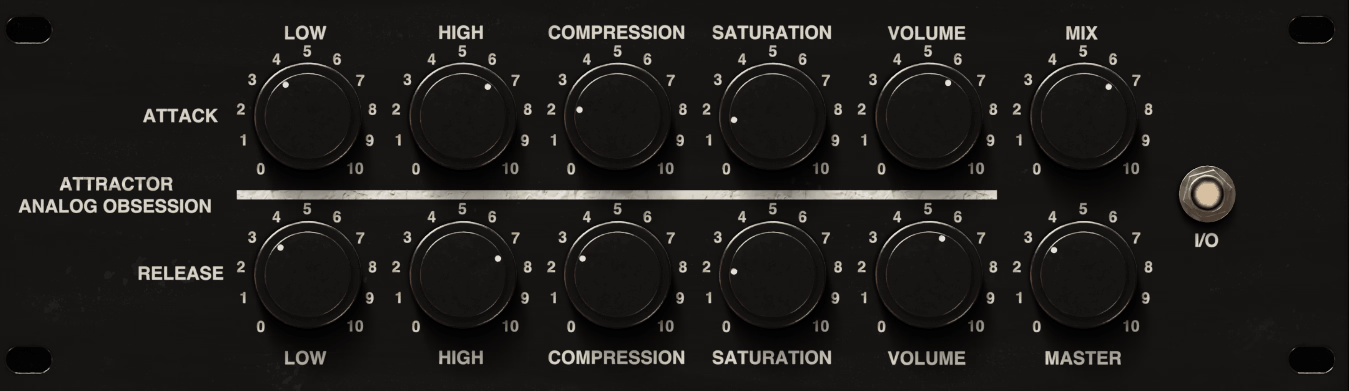
Analog Obsession CHANNEV
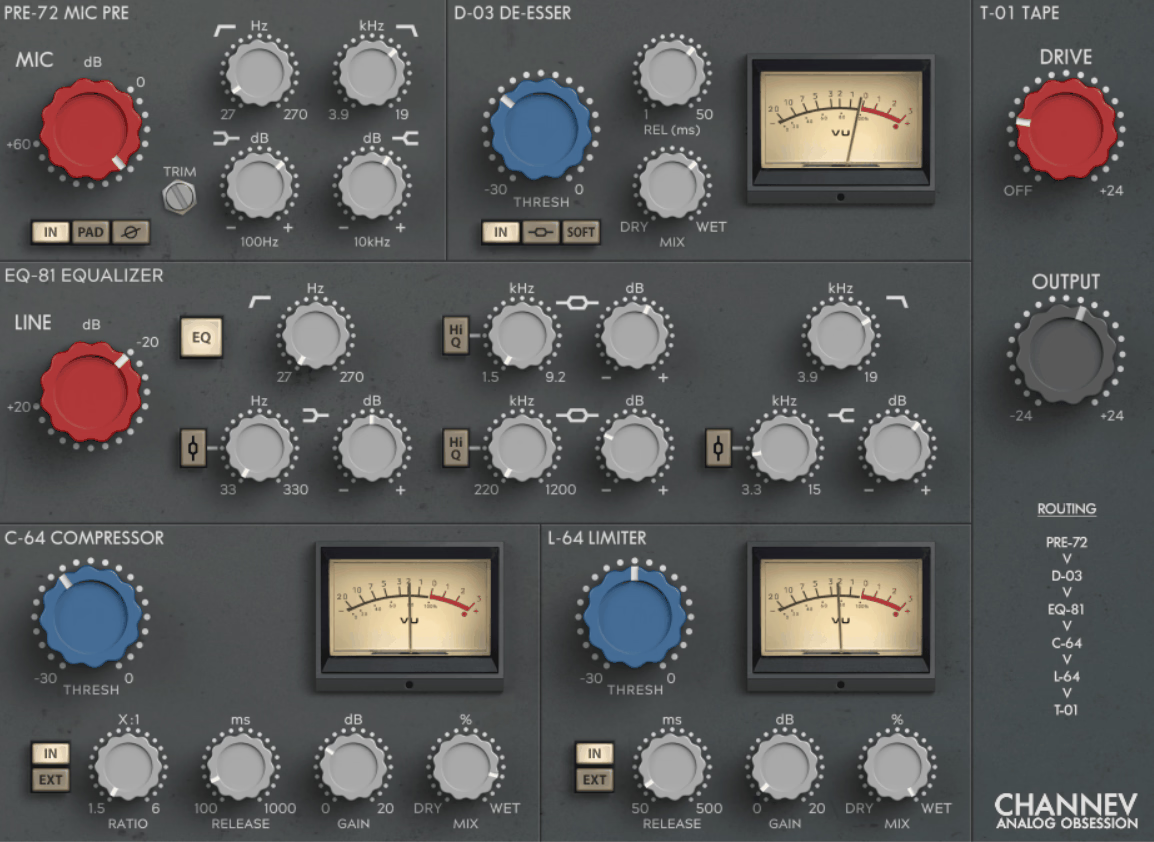
Free channel strips are usually where things get compromised. You get an EQ, maybe a compressor, and not much else.
Analog Obsession CHANNEV is different because it tries to give you an entire signal path in one plugin.
You’ve got mic preamp, de-essing, line amp, EQ, compression, limiting, and tape saturation, and the individual sections can be bypassed or routed independently.
The result feels more like a complete console workflow than a collection of disconnected effects. The 60dB preamp is especially useful if you want to add some drive before hitting the EQ and dynamics.
- Full Channel Strip
The signal chain includes mic preamp, de-esser, line amp, EQ, compressor, limiter, and tape saturation, all in one plugin.
- 60dB Mic Preamp
The preamp provides up to 60dB of virtual gain, along with pad and phase controls. A pre-EQ stage gives you additional filtering before the main processing chain.
Analog Obsession BLENDEQ
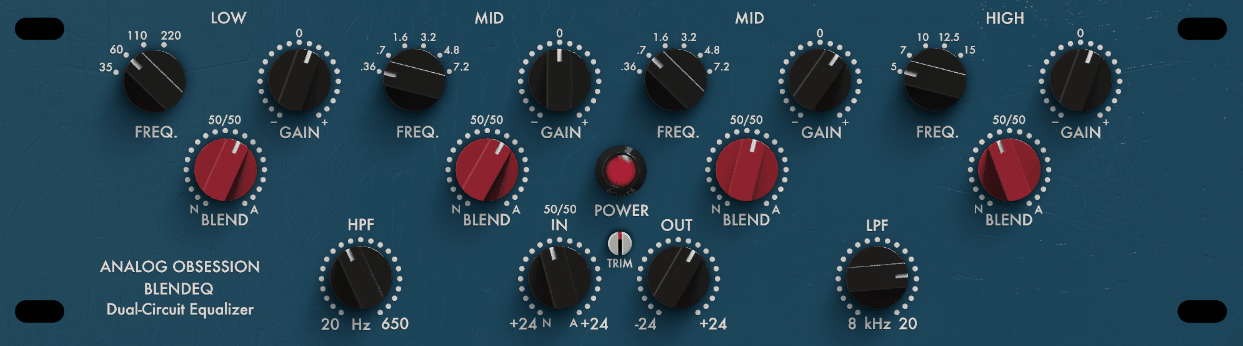
What makes Analog Obsession BLENDEQ interesting is that it doesn’t ask you to choose between two different EQ personalities.
Instead, it gives you both. The four-band EQ runs two matched circuits in parallel, labeled A and N, and you can blend between them independently on every band. The result is a surprisingly flexible free EQ, especially when you want the punch of one circuit in the lows and the smoother response of the other in the highs.
It’s one of those plugins where the blend control can become the main tone-shaping control rather than an afterthought.
- Dual EQ Circuits
Two matched circuits, labeled A and N, run in parallel across four bands. One leans toward a punchier American-style character, while the other is smoother and more Neve-adjacent.
- Per-Band Blending
Each EQ band has its own blend control, so you can choose a different balance between the two circuits for lows, mids, and highs.
- 4x Oversampling
4x oversampling keeps the processing cleaner when you’re making more aggressive EQ and saturation moves.
- Blendable Line Amp
The line amp also lets you blend the two circuit flavors, with up to 24dB of gain available depending on how you drive the input.
Analog Obsession PreBOX

Most preamp plugins give you one circuit and one sound. Analog Obsession PreBOX takes the opposite approach, giving you eleven separate preamp models inside a single free plugin.
I like it mainly as a comparison tool. You can move through the different models quickly, push each one to the same output level, and hear how differently they respond to the same source.
The fact that the input is gain compensated helps a lot here because you’re less likely to mistake a louder signal for a better-sounding one.
- Eleven Preamp Models
You get eleven different mic and line preamp models, each with its own transient response and dynamic behavior.
- Linear Frequency Response
The models keep a linear frequency response, so the differences come primarily from how each circuit reacts dynamically rather than from fixed EQ curves.
- V76-Style Filtering
Selectable high-pass and low-pass filters are based on a V76-style design and can be used across the different preamp models.
- Gain Compensation
The gain-compensated input makes it much easier to compare the different preamps at a similar output level, which is especially useful when you’re trying to decide which character fits a particular track.

Hey, I’m Vil, I started this site to help you find the best audio plugins covering various categories including synths, pianos, strings, and effect tools of all sorts as well. I pick these plugins based on various criteria so it best matches the actual topic.