When you purchase through the links on my site, you support the site at no extra cost to you. Here is how it works.
Let’s discuss some of the best passive EQ plugins that turn the unpredictable, interactive character of vintage analog circuitry into something you can actually recall, automate, and rely on inside your DAW.
A passive EQ has no active gain stage doing the work of boosting or cutting. Instead, the signal is routed through resistors, capacitors, and inductors that interact with each other in ways a digital parametric band never will, since nothing in a passive network behaves in true isolation.
I think that interaction is exactly what gives these designs their wide, forgiving curves, the kind that stay musical even when I push them well past where a surgical EQ would start to sound harsh.
Below are the passive EQ plugins I’d like to recommend, covering faithful hardware recreations as well as more modern reinterpretations of the same underlying passive principles. I’ve also included three free options at the end, in case you want to hear what this category sounds like before spending anything on it.
1. Bettermaker Passive Equalizer
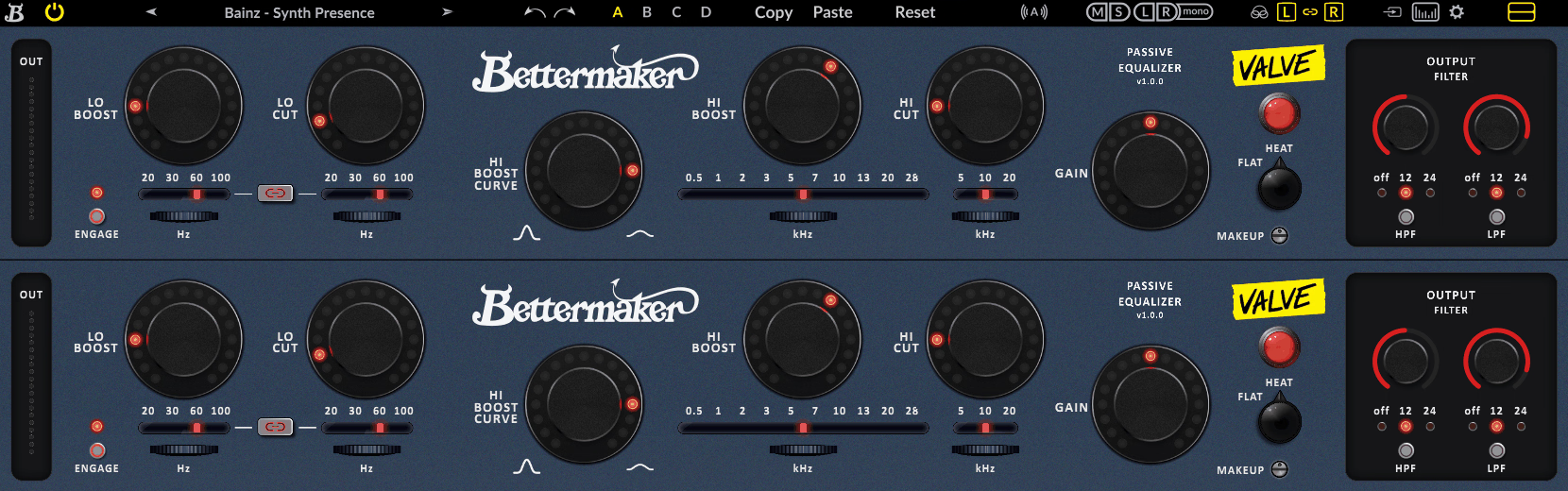
I like opening with this one because Bettermaker didn’t simply clone somebody else’s vintage unit.
What I’m hearing here is a model of their own Valve Stereo Passive Equalizer hardware, built around NOS vacuum tubes, low-noise FET-input Burr-Brown op-amps, and hand-matched inductors, and those component choices are audible in how smoothly the top end behaves under heavy boost.
The detail I noticed first with this Passive Equalizer, is the interface itself, which synchronizes vintage-style hardware controls with an optional parametric graph view, so I can work entirely by ear the old-fashioned way, or drag handles on a curve when I want visual confirmation of what I’m doing.
- Hybrid Control Interface
This is not just a resizable window. I get two genuinely different control paradigms in one plugin, letting me switch between hands-on hardware knobs and a visual parametric graph without changing what’s actually happening to the audio underneath.
- Flat/Heat Switch
Flipping this on drives the modeled tube stage harder, adding harmonic density and warmth on top of the EQ curve. I treat it as a separate creative decision from the frequency moves themselves, since I can dial in the curve first and decide how much tube color to layer on afterward.
- Interacting Lo Boost/Cut
The classic Pultec-style low-end move, where boosting and cutting the same low frequency at once produces a resonant lift with a controlled dip just above it, useful whenever I want low end that feels bigger without turning muddy.
- Digital HP/LP Filters
Separate from the analog-modeled passive stage, these give me a mastering-grade high-pass and low-pass with selectable slope, which comes in handy for surgical cleanup that the passive circuit alone was never designed to provide.
2. Knif Audio SOMA
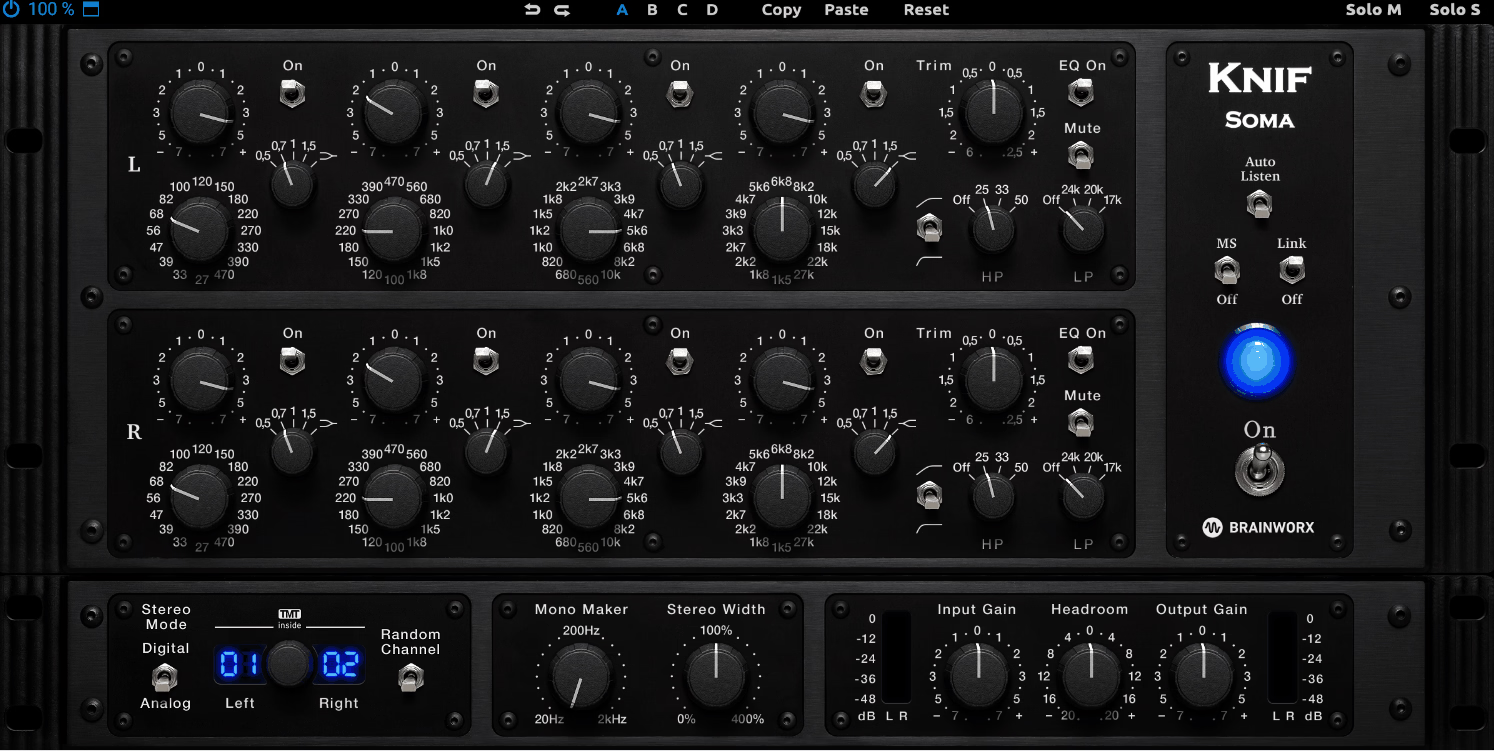
Passive tube EQs carry a well-known quirk: change the bandwidth on most of them, and the amount of boost or cut shifts unpredictably along with it, which makes precise recall genuinely difficult across a mastering session.
Knif Audio SOMA addresses this directly with something the developer calls Real Q Adjustment, and as far as I’ve found, it remains the only commercially available passive EQ that solves the problem this way. I get predictable, accurate bandwidth changes without the boost or cut amount drifting underneath me, which matters considerably when I’m mastering a project where every track needs to sound consistent against the last.
- Real Q Adjustment
The first passive tube EQ to decouple bandwidth changes from boost and cut amount, which means the settings I recall actually sound the same every time I load them back up.
- Four-Band Parametric Core
Built around Brainworx’s Tolerance Modeling Technology in partnership with hardware designer Jonte Knif, the four-band parametric section defaults to a cleaner, more restrained tone than I’d expect from a passive tube design like a Pultec or a Massive Passive.
- Independent Drive Staging
Headroom, input drive, and output drive are all controlled separately, so I can push the circuit into saturation exactly as much as I want rather than accepting whatever color happens to arrive alongside a given boost amount.
3. Pulsar MP-EQ
Most EQ emulations carry a phase problem I don’t always think about until it becomes audible: at any given moment, each frequency I touch experiences a slightly different phase shift, which is simply what happens inside an analog circuit.
Pulsar MP-EQ, formerly sold under the name Pulsar Massive, is a component-accurate model of a legendary parallel-topology passive design, and its bands don’t stack gain the way most EQs do. Because the topology is fully parallel, band gains recombine rather than accumulate, which is why I can boost several bands together on this plugin and still end up with something musical instead of a curve that sounds piled on top of itself.
- Parallel EQ Topology
Band gains recombine instead of stacking additively, which means aggressive multi-band boosts stay musical in my experience rather than piling up into an overly hyped curve.
- Linear Phase Correction
An optional post-EQ realignment stage that turns this analog-style circuit into a genuinely phase-linear EQ, something I reach for on transient-heavy material or full mix bus work where phase smearing would otherwise be audible. Pulsar describes it as a first for a plugin in this category.
- Three Output Transformers
Each transformer option imparts a different degree of harmonic saturation, letting me choose a neutral pass for mastering or something more overtly colored for tracks that benefit from extra character.
4. D16 Group Pulsatec
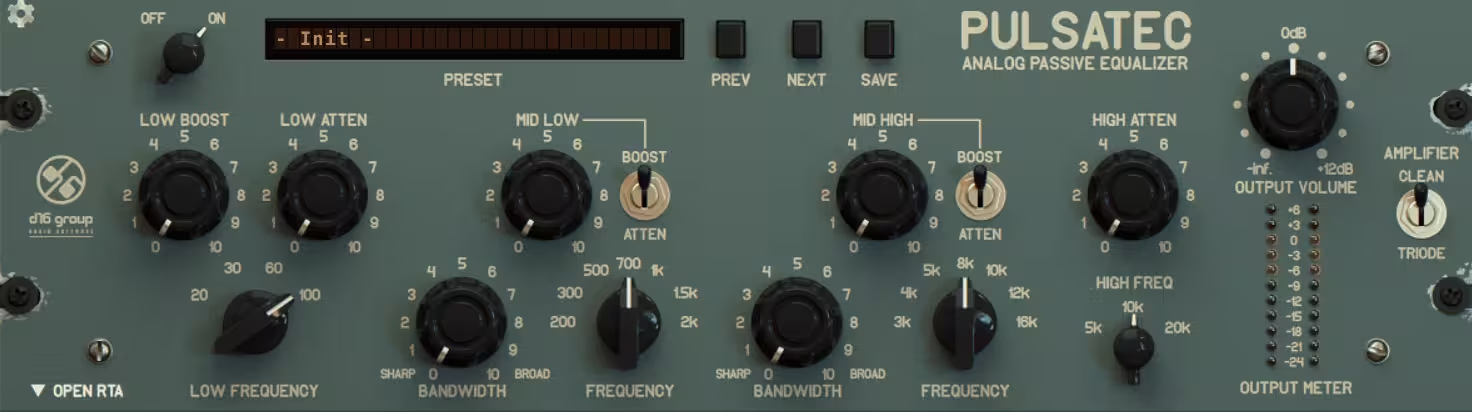
Unlike most plugins on this list, D16 Group Pulsatec isn’t tied to one specific piece of vintage hardware, and I think that’s a deliberate design choice rather than a limitation. It’s a modern take on passive EQ principles built for producers who want the character without needing to track down a particular unit’s exact spec sheet.
You still get the signature simultaneous boost-and-cut move on the low band, but D16 went further than a typical Pultec-style plugin by giving you two separate mid bands, a Low-Mid and a High-Mid, each with its own adjustable bandwidth, which is more midrange control than most passive EQ emulations bother offering.
- Dual Mid Bands
Low-Mid and High-Mid sections, each with their own adjustable bandwidth, give you midrange shaping that most passive-style plugins simply don’t offer, since classic Pultec designs skip the mids entirely.
- Real-Time Analyzer
A dual input and output display with two resolution settings, which I read as a deliberate accommodation for people who haven’t spent years mixing on an actual Pultec and want visual confirmation of what the circuit is doing to their signal.
- Clean/Triode Amp Switch
You can toggle between a cleaner amplifier character and a Triode-style voicing for more harmonic density, which lets me decide how much coloration comes from the output stage independent of the EQ curve itself.
- 8x Oversampling
Higher than what I find on several other plugins in this category, which keeps the harmonic content this circuit generates from aliasing even under fairly aggressive drive settings.
5. SPL Passeq
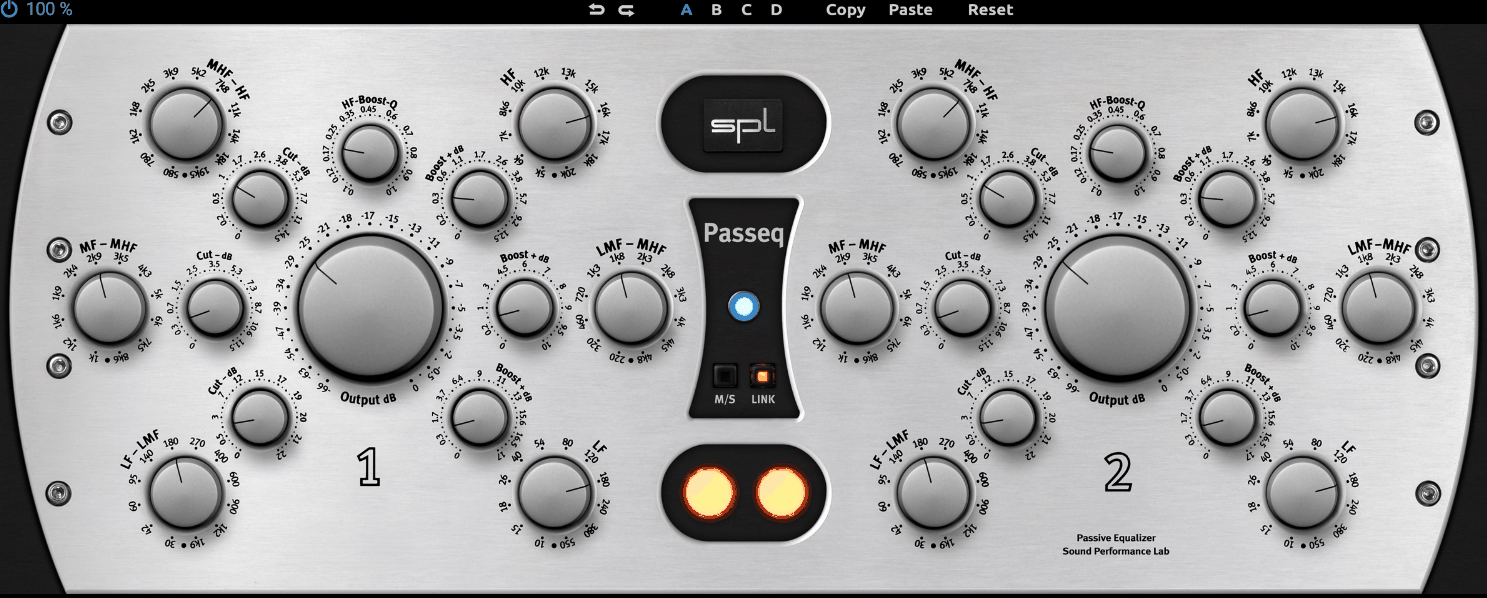
SPL Passeq offers three separate frequency ranges, each with independent boost and cut sections, and 12 switchable frequencies per band.
Because the boost and cut frequencies aren’t identical, I end up with 72 distinct frequency points per channel, which is a big part of why SPL and plenty of mastering engineers I’ve read describe this as the most powerful passive EQ system ever built.
- 72 Frequencies Per Channel
Twelve switchable points per band across three boost bands and three cut bands, with different frequency options for boosting versus cutting, giving me close to three million possible curve combinations to work with.
- Extended Air Band And Mid Cut
The high-frequency boost section now reaches up to 35kHz, and the mid cut band’s starting point has been moved down to 200Hz, both additions from the current hardware revision that I find genuinely useful on modern mixes.
- 120V Rail And Lundahl Transformers
SPL’s proprietary high-voltage circuit design behind the makeup gain stage delivers a genuinely wide 141dB dynamic range with 34dB of headroom, while Lundahl transformers on the output stage give me a punchier low end and smoother highs than I’d expect from a typical passive design.
6. Lindell EQ825
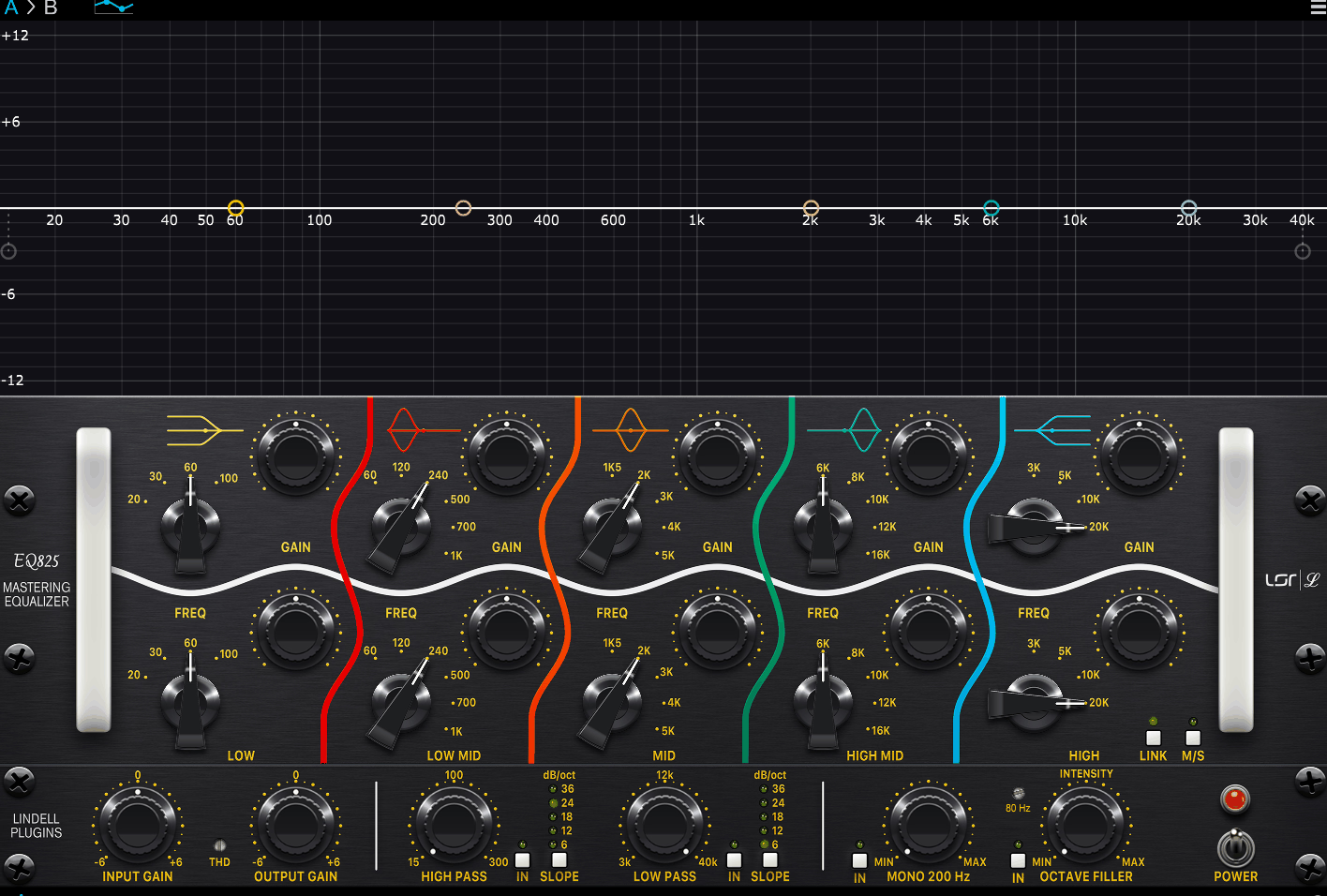
Most passive EQ plugins recreate something I could plausibly have used myself at some point. Lindell EQ825 doesn’t fall into that category at all.
The original hardware was a boutique unit built around the turn of the 2010s by a small group of audiophiles who cherry-picked the best analog components they could source, and it reportedly cost around $20,000 new, which means most engineers, myself included, have never actually had one in the room.
Lindell’s plugin recreation is likely the closest most of us will ever get to hearing that specific circuit.
- Ultra-Rare Hardware Origin
A boutique unit few working engineers have ever had access to, which makes this plugin one of the only practical ways I know of to hear what that specific $20,000 circuit actually sounds like.
- Five-Band Layout
High and low shelf filters plus three bell filters, built on discrete Class A tube circuitry with transformer-balanced signal paths throughout.
- Classic/Modern Voicing
I can switch between two different gain-control behaviors modeled from separate hardware revisions, since Lindell studied both the original stepped “cheat control” version and a later continuous-gain unit.
- 16x Oversampling Ceiling
Considerably higher than what several other plugins on this list offer, which keeps the saturation this circuit generates clean at extreme settings.
7. Slate Digital SD-PE1
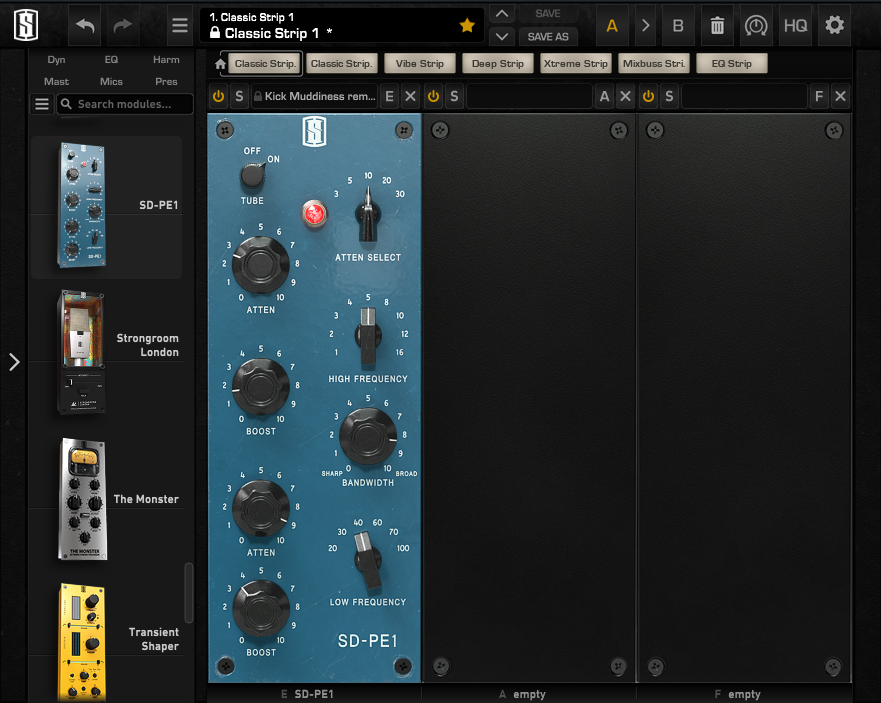
Slate Digital SD-PE1 lives inside the Virtual Mix Rack ecosystem as a module I drop into a custom processing chain alongside other VMR tools, based on a hardware unit that’s been a studio fixture since the early 1960s.
What Slate did beyond a straight recreation is extend the original’s frequency choices in both directions, and give me control behavior the hardware never had in the first place.
- Extended Frequency Range
The high-frequency shelf keeps the classic 5kHz, 10kHz, and 20kHz options but adds new 3kHz and 30kHz settings, opening up tonal territory the vintage hardware simply couldn’t reach.
- Toggleable Tube Stage
I can switch the amplifier stage on or off independent of the EQ itself, which lets me keep the tonal shaping while removing the saturation and color, without losing output level in the process.
- Stepped Plus Incremental Control
Frequency selection on the physical unit was strictly stepped, but every knob here can move in the original’s fixed detents or slide freely between them, giving me flexibility the hardware’s front panel never allowed.
- Simultaneous Low Boost/Cut
The low shelf band supports the same boost-and-attenuate-together trick that defines this whole category, delivering that resonant low-end lift with a scoop right above it.
8. Waves Abbey Road RS56
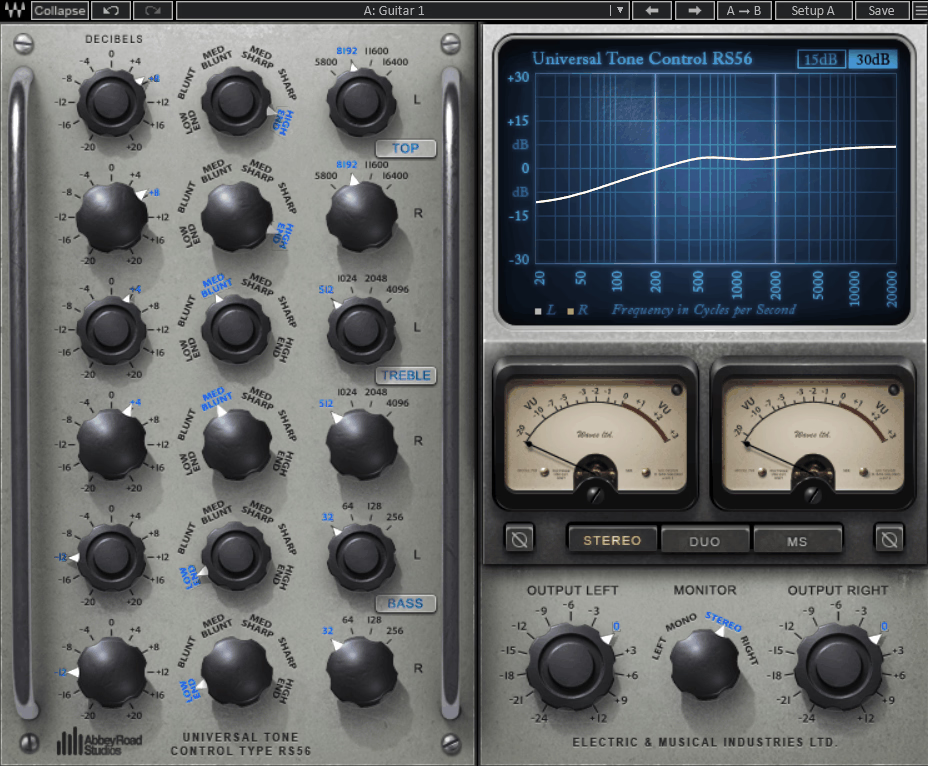
The RS56 Universal Tone Control wasn’t originally built for tracking or mixing at all. Abbey Road introduced it in the early 1950s specifically to prepare recordings for the record-cutting lathe, which is to say it was a mastering tool before mastering was really considered its own defined job.
Pop engineers at the studio later realized how much more it could do than the basic treble and bass controls on their mixing consoles, and I understand they started reaching for it constantly, earning it the nickname The Curve Bender, a name that stuck through decades of Beatles-era sessions.
- Curve Bender Origin
Built originally for vinyl mastering prep, this became a go-to tool for Abbey Road’s pop engineers because it could shape sound far more dramatically than the tone controls built into consoles of that era.
- Six Filter Types Per Band
Four peak filter variants with different bandwidths plus two shelf types give each of the three bands more flexibility than I’d expect from the simpler two-band passive designs of the same period.
- No Native Gain Stage
Historically an entirely passive circuit requiring an external V72 amplifier to restore signal level, a quirk this plugin sidesteps entirely by building in its own gain reserve.
- Extended Modern Headroom
Twenty decibels of gain reserve in fine 0.1dB steps, well beyond anything the original 1950s circuit offered, since Waves deliberately adapted it for the loudness expectations I work with today.
9. UAD Manley Labs Massive Passive EQ
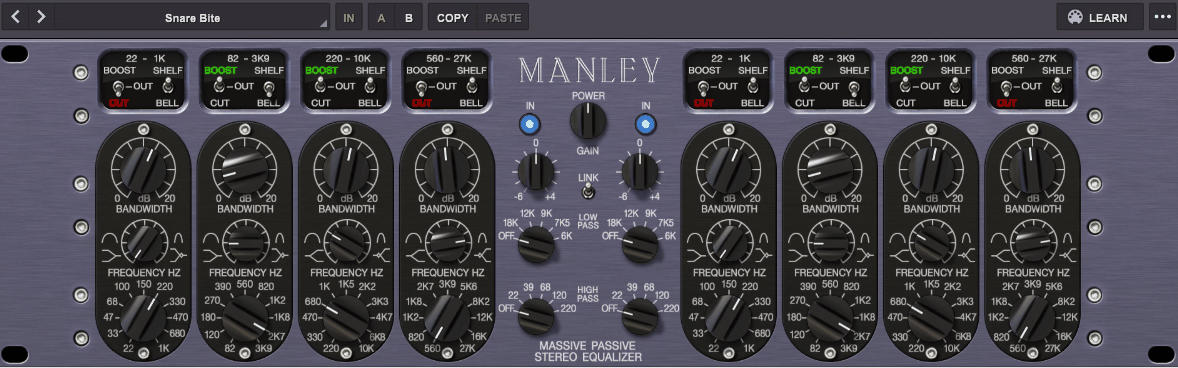
Manley built the Massive Passive EQ by pulling design ideas from several EQ philosophies at once, console EQs, parametric EQs, graphic EQs, and the classic Pultec approach, and folding all of them into one two-channel, four-band passive tube unit.
UAD spent six months modeling it and then had Manley Labs itself scrutinize the result for authenticity, which is a level of vendor involvement I don’t see on every hardware emulation.
- Standard Vs Mastering Versions
Continuous bandwidth for flexible mixing work, or 16 stepped and recallable settings when I need mastering-grade consistency across multiple songs in the same project.
- Hysteretic Behavior Modeling
Filter curves, band interdependencies, distortion behavior, and the hysteretic character of the transformers and inductors are all represented here, contributing to a smooth, slightly unpredictable character that separates this from a purely mathematical parametric EQ.
- Overlapping Frequency Choices
Every band can switch between shelf and bell shapes, and each one can be bypassed independently or set to boost or cut, with specially tuned, overlapping frequency choices across the bands so I’m never fighting an obvious gap in the spectrum.
Free Passive EQ Plugins
1. MousePlugins The Trick
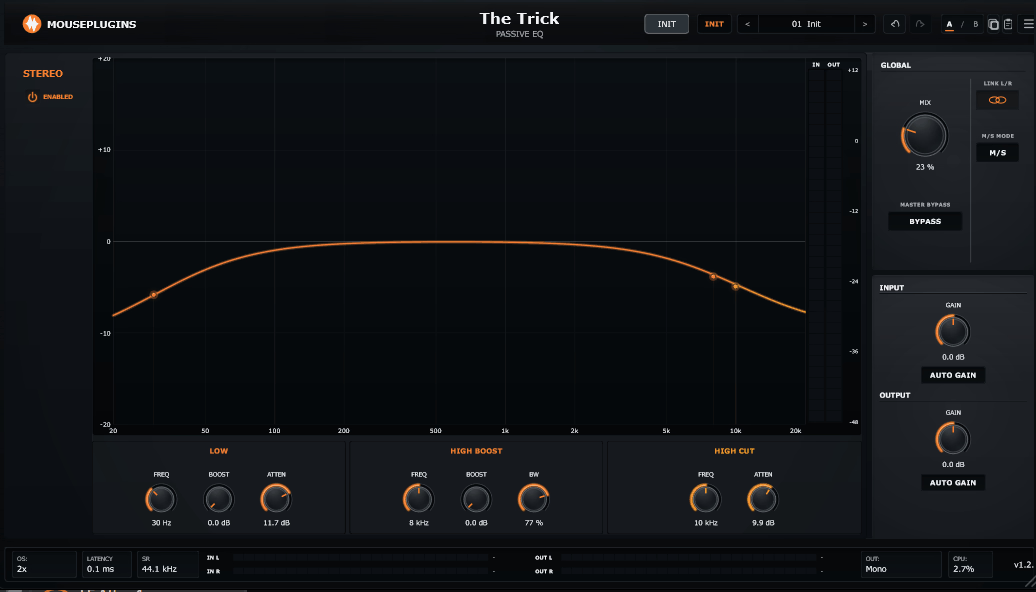
Most EQ plugins, free or paid, start from a target curve and work backward to approximate it. MousePlugins The Trick takes the opposite approach: its passive network runs as an actual Wave Digital Filter tree, meaning the resistors, capacitors, inductors, and frequency selectors of a real passive circuit are represented structurally rather than curve-matched after the fact. What I’m getting is essentially a simulated physical circuit rather than a plugin trained to sound like one.
- True Circuit-Level Modeling
Built as a Wave Digital Filter tree rather than a curve-matched approximation, meaning the underlying passive network behaves like an actual physical circuit rather than a digital shortcut.
- Dual LC Networks
The LF Boost and LF Atten controls share a single frequency selector, exactly like real Pultec-style hardware, but each one drives its own independent LC network underneath, faithfully recreating the resonant lift and scoop rather than approximating it with a simpler curve.
- Linux Support
Available for Windows and Linux as VST3 and CLAP, which puts it in a small category of passive EQ plugins that actually run natively outside Windows and macOS. It’s also a genuinely new release as of 2026, and it’s completely free.
2. Analog Obsession MAXBAX
Not every passive design traces back to the Pultec lineage, and I think that’s worth remembering when I’m choosing between plugins in this category.
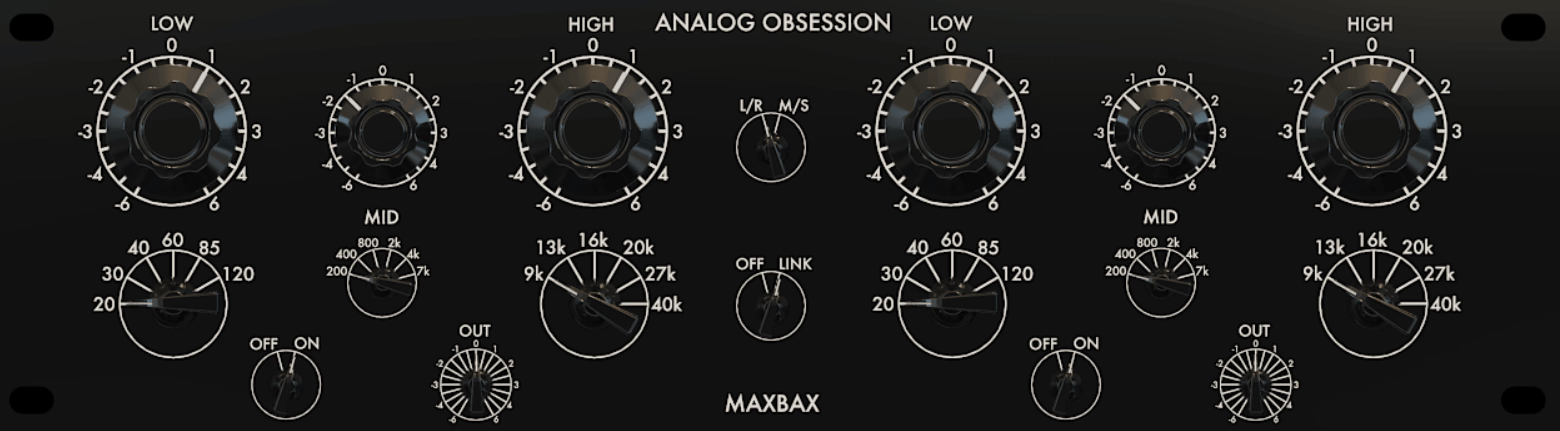
MAXBAX EQ is built around a Baxandall topology, a different and generally simpler tone-control circuit that historically shows up more in hi-fi gear and console tone stacks than in dedicated mastering EQs, and Analog Obsession added an extra mid band that classic Baxandall circuits typically don’t include at all.
- Baxandall Topology
A different passive lineage from the Pultec-style plugins elsewhere on this list, generally simpler in structure and historically more associated with tone-shaping stages than surgical mastering work.
- Fully Stepped Controls
Every frequency and gain parameter moves in fixed increments rather than continuously: the low band runs 20Hz to 120Hz across six points, the high band spans 9kHz to 40kHz, and boost/cut on every band moves in 0.5dB steps, which keeps recall exact and mimics how a real switched-component circuit would behave.
- Mid/Side Switching
Full Dual Mono, Stereo, or Mid/Side operation with a link option, giving me stereo-image control that plenty of paid passive EQs charge considerably more for.
3. PTEq-X by Ignite Amps
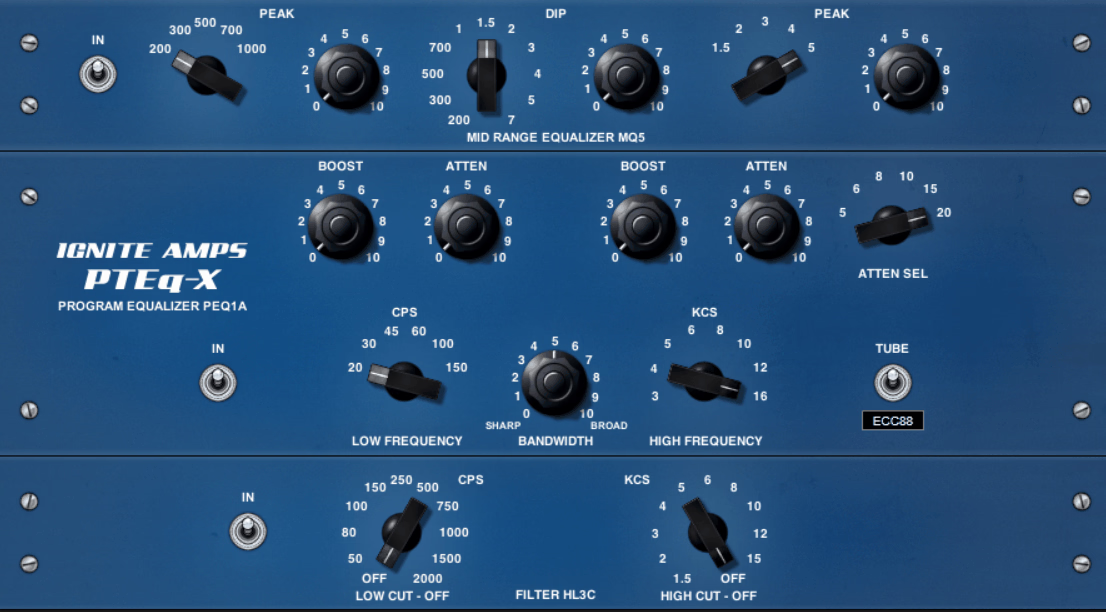
PTEq-X by Ignite Amps puts multiple vintage passive EQ modules into one plugin instead of forcing me to stack several instances, combining a classic program EQ with the simultaneous boost/cut low-end trick alongside a dedicated midrange section modeled after the companion units engineers traditionally used for that job.
- Three EQ Modules In One
Combines a program EQ with the classic simultaneous boost/cut low end alongside a dedicated midrange module, covering territory that historically required stacking two or three separate hardware units.
- Four Tube Voicings
Selectable ECC81, ECC82, ECC83, and ECC84 tube models for the gain stage, each contributing a distinct flavor of saturation to the same underlying EQ curve.
- Extended Frequency Options
A couple of extra low-frequency choices and several additional high-frequency attenuator points go beyond what the original vintage hardware offered.

Hey, I’m Vil, I started this site to help you find the best audio plugins covering various categories including synths, pianos, strings, and effect tools of all sorts as well. I pick these plugins based on various criteria so it best matches the actual topic.