When you purchase through the links on my site, you support the site at no extra cost to you. Here is how it works.
VCA circuits are behind a lot of the “glue” language you hear thrown around mixing forums, and for good reason: they react fast, they’re predictable under pressure, and they hold a mix or a bus together without turning to mush the way some other compressor types can.
Some of the plugins below stay close to one specific piece of hardware, while others combine a few different circuits into something more flexible than any single unit ever was.
Worth knowing up front: Softube VCA Compressor, Waves API 2500, Cytomic The Glue, Waves SSL G-Master Buss Compressor, and Brainworx bx_glue and few more, plus a handful of genuinely useful free options toward the end.
With that being said, let’s talk about the best VCA compressor plugins I found at the moment, with many including free trial version.
1. Softube VCA Compressor
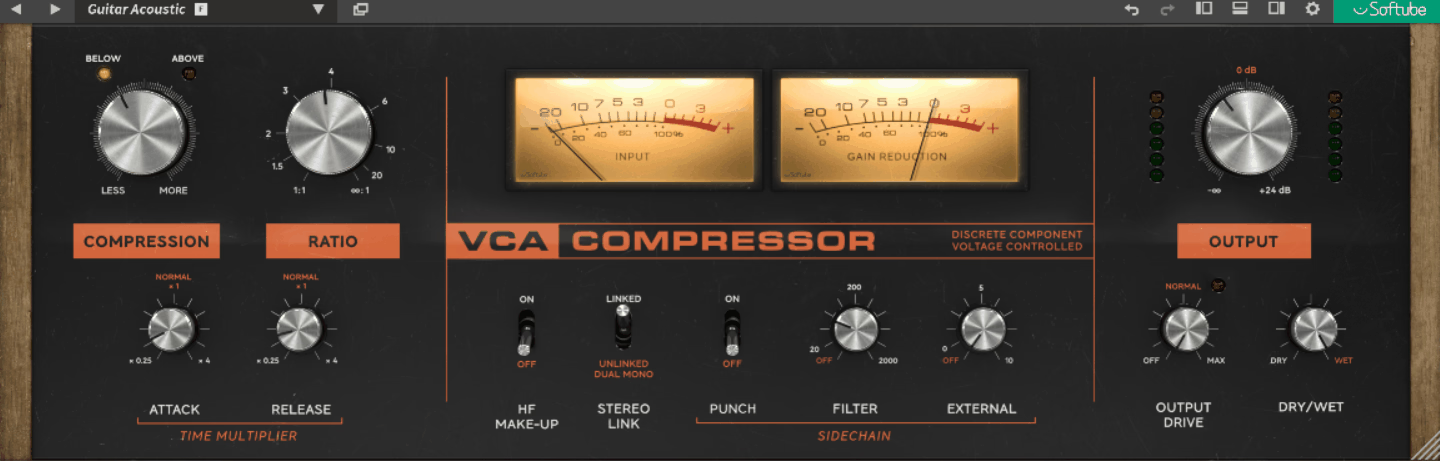
Snappy snares and aggressive drum busses were the whole point of the original dbx 160 back in the 1970s, and that’s the circuit Softube built their plugin around.
The VCA Compressor keeps things like RMS level detection and feed-forward gain reduction intact from the source hardware, along with its famed hard knee compression curve.
Around that core, Softube added a Sidechain section with punch and filter controls, a Dry/Wet knob for parallel compression, and an Output Drive stage for extra harmonic saturation. I found none of these additions get in the way of the original circuit’s character.
- Hard knee dbx 160 modeling
This plugin recreates the hard knee compression curve and harmonic gain stage character of an early dbx 160, which is part of why the original hardware is used for snappy snares and aggressive drum busses.
I found the transient response reasonably convincing, especially on sources that need a bit of grab.
- Sidechain section with Punch and Filter
The added Sidechain section includes a Punch control and a filter, plus external gain, so you can shape exactly how the compressor reacts to your source.
That said, I’d recommend using the filter to keep low end from over-triggering gain reduction on bass-heavy material.
- Stereo Link with Dual Mono mode
Here, you can toggle between Stereo Linked mode, which keeps left and right gain reduction synchronized, and an Unlinked Dual Mono mode for independent channel control.
- High Frequency Make-up and Output Drive
The High Frequency Make-up control compensates for the slight top-end loss that happens during compression, while the Output Drive knob adds harmonic saturation on the way out.
Together, they add a real sense of sheen to guitars and bass.
2. Pulsar IPA 25
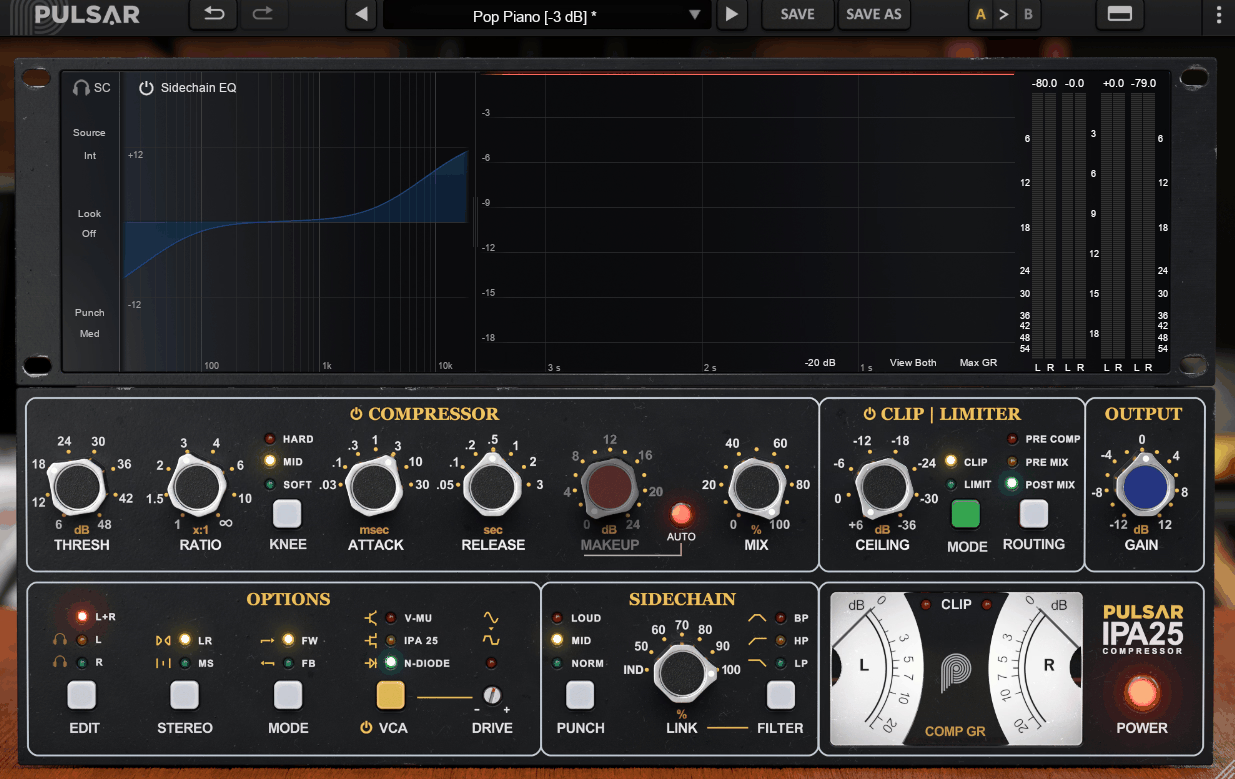
Four different gain-reduction circuits in one compressor is an unusual pitch, and that’s exactly what Pulsar Audio built into the IPA 25.
Clean VCA, the Original IPA circuit, a tube-leaning V-Mu, and a grittier N-Diode option all share the same RMS detection and timing behavior, but each colors the signal differently.
I love that you’re not locked into one fixed character the way you are with most vintage-style emulations and you also get a full visual sidechain EQ, an adaptive clipper and limiter, and M/S processing.
Other than that, you get:
- Visual sidechain EQ
A full graphical sidechain lets you see exactly what frequencies are triggering compression, which I found makes taming a boomy kick or a harsh snare more intuitive than working blind.
- Adaptive clipper and limiter
This module adds density and level without flattening transients, since the limiter only steps in on overshoots.
It’s a great safety net for pushing the compressor harder.
3. Kiive Audio XBus
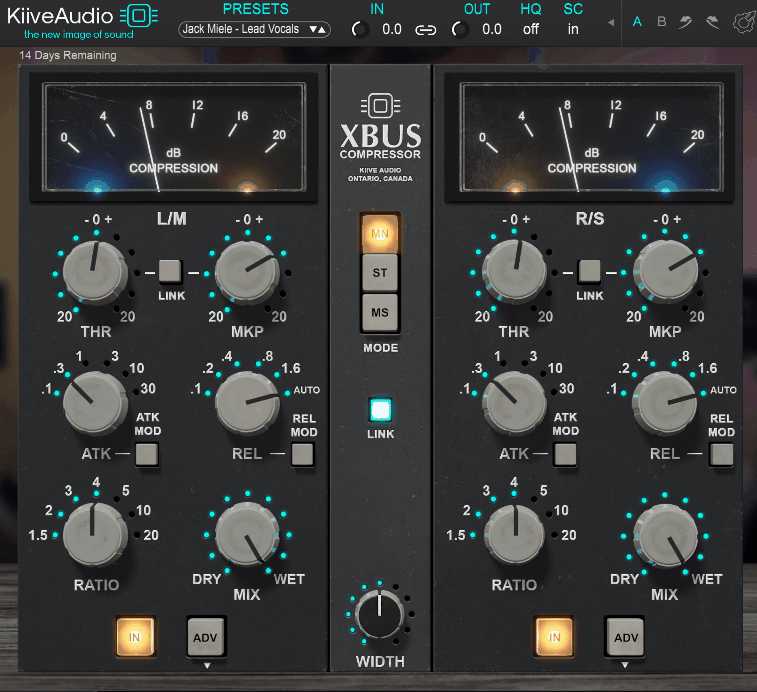
XBus blends two different circuit references into a single plugin, which isn’t something you see too often in this category. Kiive Audio built the main compressor section around classic SSL-style VCA glue, then layered in ideas borrowed from Alan Smart’s Smart Research C2 hardware.
I think that combination is what gives it a bit more bite than a straight SSL clone. It adds a CRUSH mode for FET-style gain control on top of the VCA circuit, plus a headroom knob so you can drive into the compression harder than a typical SSL-style unit allows.
- VCA glue with Smart Research inspiration
The core compressor draws from classic SSL-style VCA bus compression, blended with ideas borrowed from the Smart Research C2.
If you asked me, I would say I like that it gives XBus a bit more bite than a straight SSL clone.
- CRUSH mode
This adds FET-style gain control on top of the VCA circuit, letting you push into a grittier, more aggressive character when you want the compression to really announce itself.
- Headroom knob
This feature lets you drive into the compression harder than the original circuit would normally allow, whiccan come in handy for finding that sweet spot between clean glue and obvious pumping.
- Clean and Color modes
Switching between Clean and Color modes takes you from transparent, surgical control to rich analog saturation
- HQ oversampling
In addition, HQ oversampling option in the top menu bumps up internal processing quality, which I’d recommend engaging on final mixdown or mastering
4. Overloud Comp G
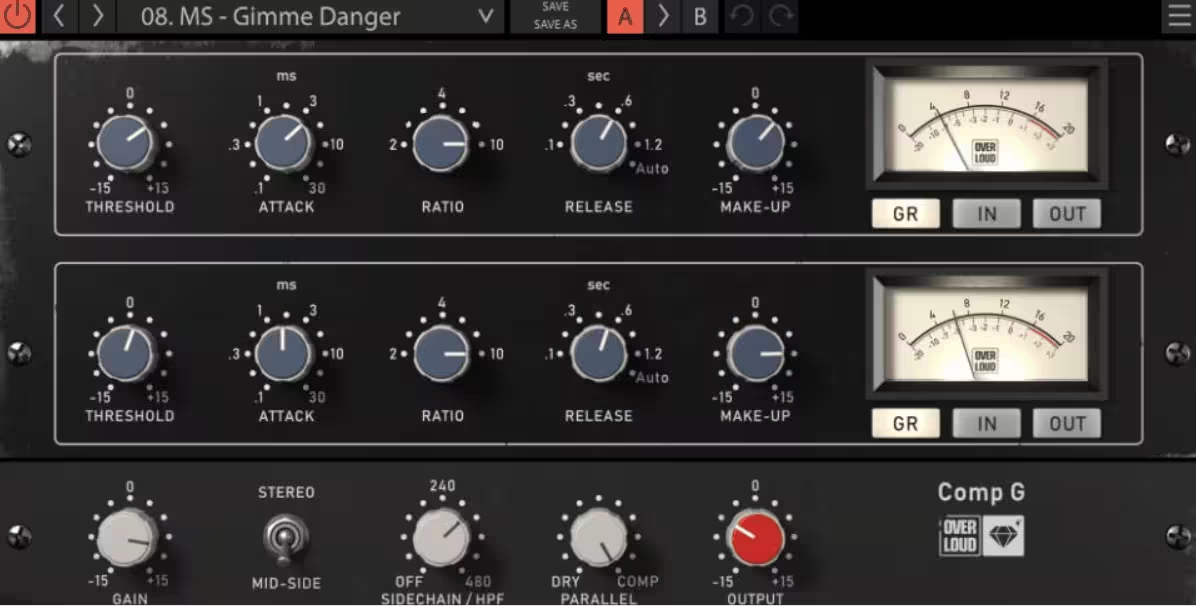
Comp G adds a handful of features to the SSL-style formula that the original hardware never had, mid-side processing, parallel compression, and a sidechain EQ among them.
It’s part of Overloud’s Gems series, built specifically for mixing and mastering work rather than general-purpose use.
I found the 4th generation DSP modeling reasonably convincing on its own, before you even touch any of the extra controls. It’s efficient too and Overloud says you can run more than 1,000 instances on a single MacBook Pro Retina.
- Mid-side processing
This is a feature the original hardware never offered, letting you compress the mid and side signals of your mix independently.
- Built-in parallel compression
A dedicated parallel compression control makes it easy to blend in heavily compressed signal without setting up a separate bus, which is a technique I’d recommend for adding punch while keeping transients intact.
- Sidechain EQ and filtering
Comp G includes filters on the sidechain circuit that the hardware never had, giving you more control over exactly which frequencies trigger gain reduction.
5. Waves API 2500
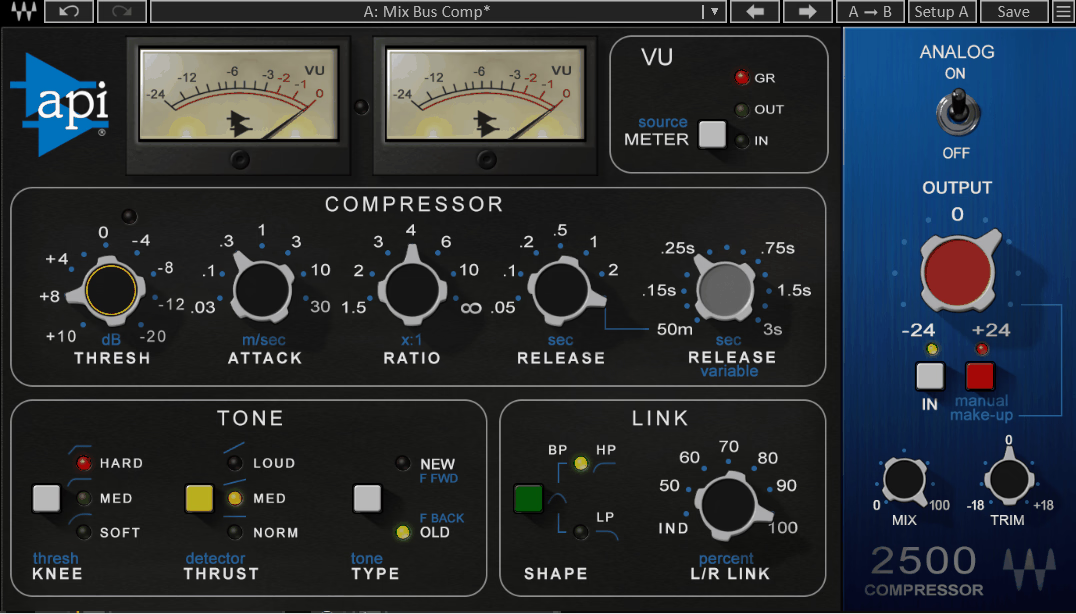
American consoles get less attention than British ones on this list, so it’s worth including the Waves API 2500 for anyone after that side of VCA compression instead. Waves built it in close collaboration with API itself, running as a dual-channel design with independent RMS detectors on each side.
That means you can unlink the channels entirely if a source calls for it. On top of that, you get feedback and feedforward compression types, three knee curves, and seven attack settings.
You get:
- 39 included presets
Contributed by well-known mixers including Steve Lillywhite and Tony Maserati
- Dual independent RMS detectors
Each channel gets its own detector, supporting the innovative linkage feature and letting you fully unlink channels when one side shouldn’t be affected by the other.
6. Arturia Comp VCA-65
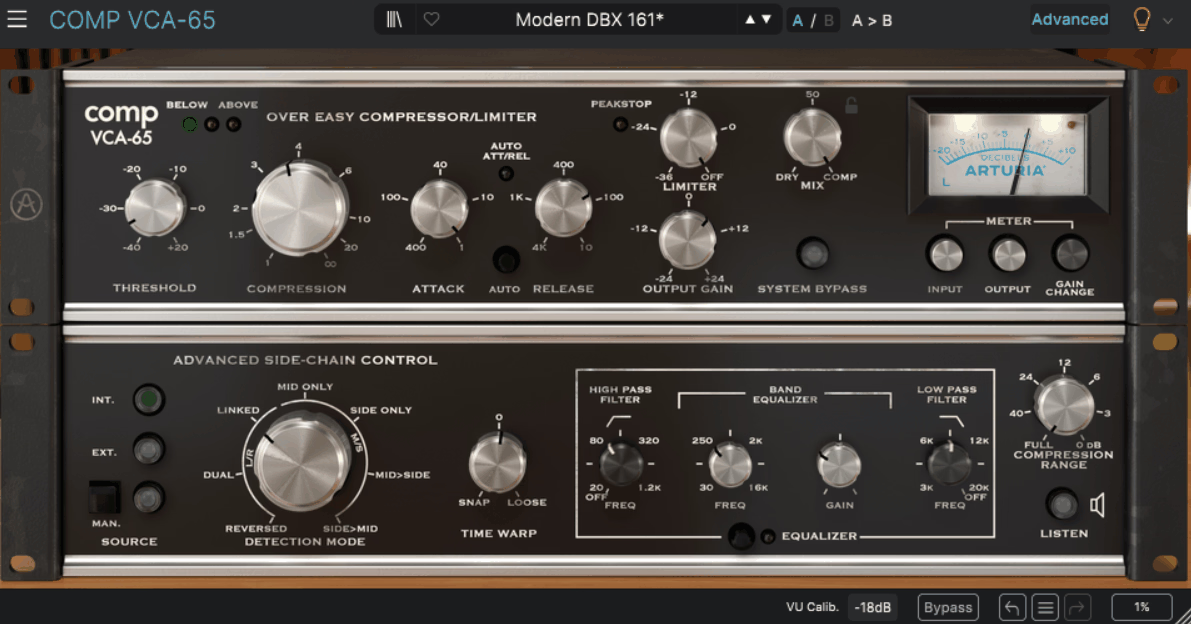
The dbx 165A took a fairly different approach from its more common sibling, the 160, favoring a tighter, more surgical sound. Arturia’s Comp VCA-65 recreates that circuit using their TAE modeling technology, capturing the fast attack and release along with the unit’s signature Peakstop limiter.
It’s known as the “Over Easy” compressor for its smooth, natural-sounding knee, which I found gives it a noticeably gentler onset than a hard-knee design. Unlike more traditional tube compressors of its era, the 165A’s RMS dynamics detection kept it cleaner and more predictable under pressure.
- Peakstop limiter
A built-in Peakstop limiter adds a touch of vintage analog crunch when things really hit hard, giving you a second layer of control beyond the main compressor.
- Internal and external sidechain with SSL-style EQ
- Faithful dbx 165A circuit modeling
Arturia’s TAE technology recreates the original electronic path, VCA and transistors included, giving you that same fast, punchy percussive character the hardware was known for.
7. UAD dbx 160
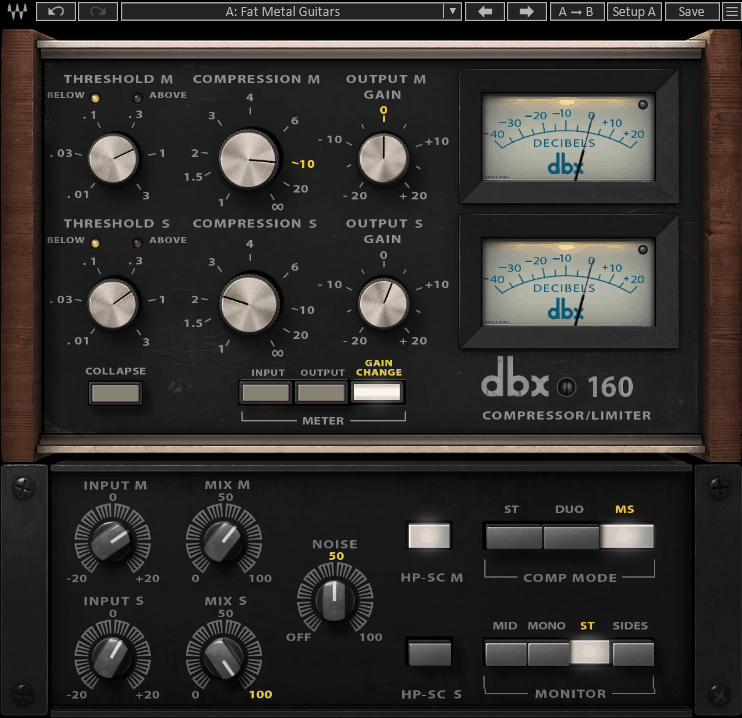
Before dbx built the more refined 165A, they made the 160, generally regarded as the first solid-state VCA compressor. UAD dbx 160 is Universal Audio’s fully licensed emulation of that hardware, and it keeps the same three-knob simplicity: Threshold, Compression, and Output Gain.
That simplicity hides a firm, often radical compression character, full of nonlinearities you won’t find in cleaner, more modern VCA designs and I like how fast that makes it to dial in aggressive settings without overthinking things.
- First solid-state VCA compressor emulation
This plugin captures the quirky, grabby sonics of the very first VCA compressor design, full of nonlinearities that give it a sonic personality genuinely different from cleaner, more modern VCA circuits.
- Fat compression on synths, bass, and drums
In addition, I found this compressor especially effective at adding that grabby, low-end glue and old-school character to synths, bass guitar, and full drum busses.
8. Waves SSL G-Master Buss Compressor
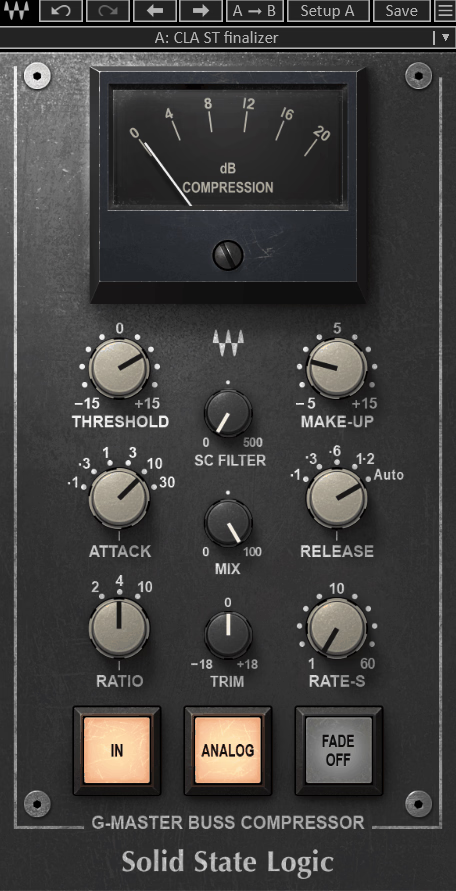
SSL built this compressor directly into the center section of the 4000 G console, so it was sitting on the master buss of a lot of sessions whether engineers reached for it deliberately or not.
Waves modeled that circuit for the SSL G-Master Buss Compressor, aiming to capture the punchy, cohesive character that made it a common choice for finishing a mix.
- Stereo bus glue character
I found this plugin particularly effective at that classic punchy, cohesive sound on drum busses and full mixes alike, without needing a huge number of parameters to get there.
- High-Pass Sidechain
The sidechain filter lets me keep low-frequency energy from driving the compressor as heavily.
I find this quite helpful on full mixes, because a big kick or bass hit can otherwise trigger too much gain reduction and make the entire mix dip unnecessarily. A high-pass sidechain helps me keep the low end punchy while the compressor works more on the rest of the mix.
- Makeup Gain
Once compression lowers the overall level, the Makeup Gain control lets me bring the output back up for a more useful comparison
- Mix Bus, Drums, and More
Although I think of this first as a mix-bus compressor, I wouldn’t stop there. You can put it on drum groups, instrument buses, vocals, or other grouped tracks when you want several elements to react together.
Personally, I think the sweet spot is when you hear the bus becoming more connected and controlled, but you can still turn the compressor off and immediately notice that the mix feels a little less finished.
9. SSL Native Bus Compressor 2
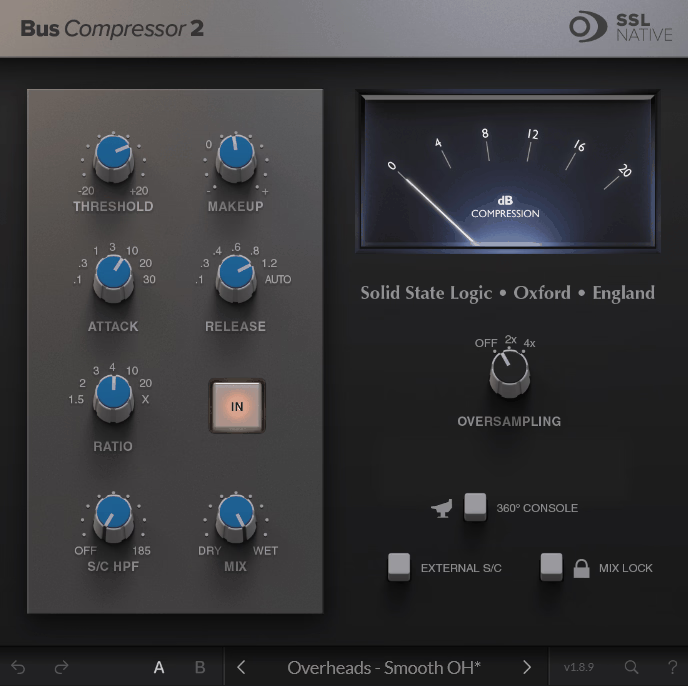
SSL makes its own plugin version of this circuit rather than leaving it entirely to third parties, and that’s what the SSL Native Bus Compressor 2 is. It’s the official version of the center section compressor from the 1980s G Series console, a circuit that’s been used on a lot of recordings over the years.
I think there’s something reassuring about using a plugin built by the same company that built the hardware. It’s a simple unit with a simple purpose, making complete mixes sound bigger, with more power, punch, and drive, without compromising clarity.
This version 2 adds new Attack, Release, and Compression ratio options for extra flexibility, plus an inbuilt wet/dry control and a switchable sidechain high-pass filter.
- Official SSL circuit modeling
As the officially licensed plugin, this captures the exact behavior of the 1980s G Series center section compressor
- Expanded Attack, Release, and Ratio options
In addition, it adds new timing and ratio values beyond the original hardware’s fixed steps, giving you more flexibility for individual sounds and subgroups, not just full mixes.
- Switchable sidechain high-pass filter
This keeps low-end energy from over-triggering the compressor, which I’d recommend engaging on anything with a prominent kick or bass part.
- Selectable oversampling
10. Brainworx bx_glue
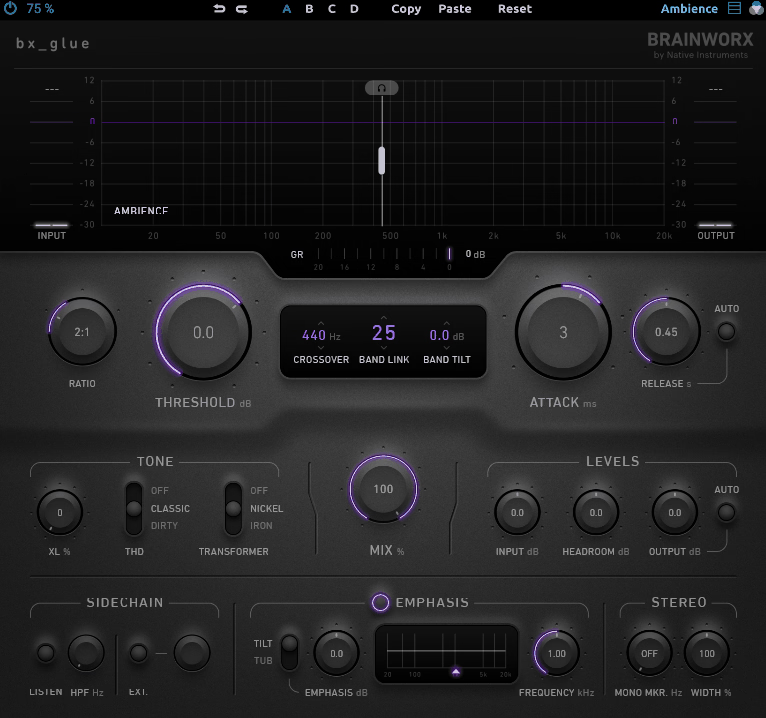
Splitting a bus compressor into two frequency bands isn’t the usual approach for this style of circuit, but that’s what Brainworx did with bx_glue. It’s a dual-band VCA compressor inspired by British bus compressors of the 1980s, letting you treat bass and treble content somewhat independently.
That technically makes it a simple multiband compressor, though I found two bands is usually all you need for useful low-end and high-end separation on a mix bus.
- VCA Character Matching
Brainworx designed the Tone section to let me recreate the character of almost any VCA compressor, with ratios ranging from 2:1 up to 10:1.
You can also choose between Classic and Dirty THD modes, then add either Nickel or Iron transformer coloration. I’d say this makes bx_glue much more flexible than a single-character VCA emulation.
- XL Saturation
The XL control takes the plugin beyond compression and adds adjustable saturation, from subtle thickening through much more obvious coloration
- Internal + External Sidechain
bx_glue lets me blend an external sidechain signal with its internal detector, rather than forcing me to choose one or the other
- Detailed metering
Input, output, and gain reduction meters give you a genuinely clear picture of what’s happening at every stage, which I appreciate on a compressor this flexible.
11. Cytomic The Glue
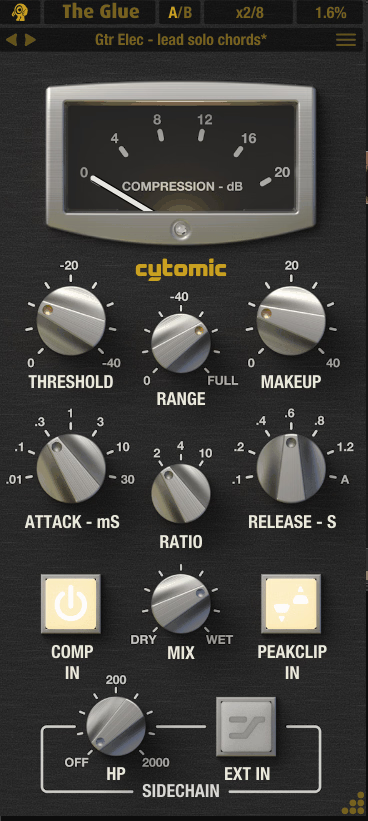
Cytomic released The Glue back in 2009, and it’s held up well enough that people still compare newer plugins against it. It’s an analog-modeled compressor based on a cross between the E and G series SSL 4000 buss compressor, built as a feedback design with a dual-diode envelope follower.
Cytomic used the same class of circuit-simulation thinking found in component modeling tools, then optimized it to run as a real-time plugin. It’s not a one-knob “vibe” processor either, since it adds Mix, Range, a sidechain high-pass filter, and a built-in clipper, none of which the original hardware had.
- Cross between E and G series SSL circuits
Rather than picking one hardware revision, Cytomic modeled a blend of the E and G series SSL 4000 buss compressor behavior, which I feel gives The Glue a slightly more versatile character than a single-unit clone.
- Built-in oversampled clipper
I’d recommend not overlooking this feature. The clipper handles transients well and adds a layer of control most bus compressors leave out entirely.
- Sidechain high-pass filter and stereo link
A soft sidechain high-pass filter keeps low end from over-triggering compression, while stereo linking can be opened down toward dual mono for independent channel behavior.
12. IK Multimedia Bus Compressor
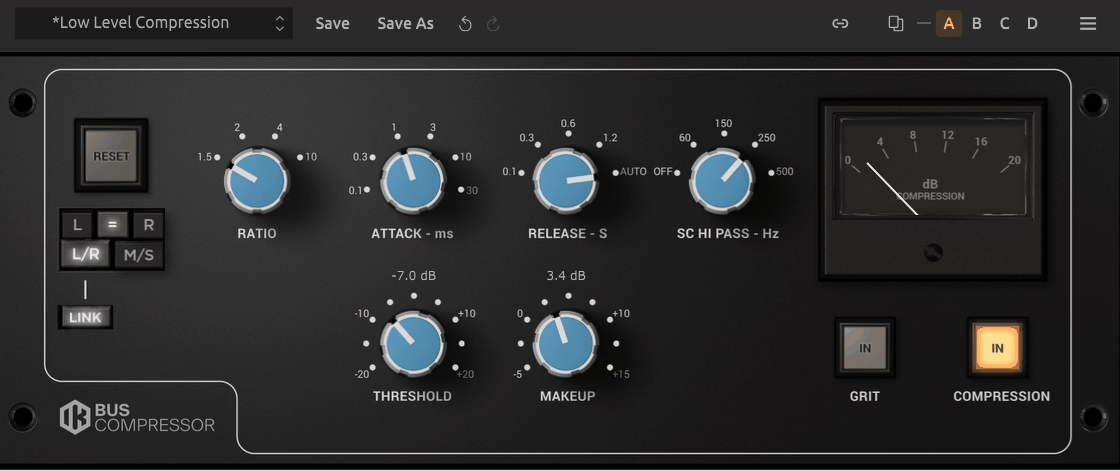
IK Multimedia modeled this one component by component, right down to the detection circuit, compression curve, and soft knee behavior of the original hardware. The T-RackS Bus Compressor is based on the mix bus VCA-type compressor found on British large-format consoles from the 1980s, the circuit behind what’s often called the “glue effect.”
It’s included in T-RackS 5 MAX and Total Studio 3 MAX, and it’s also available as a standalone module. On top of the standard controls, you get a Grit switch that adds subtle second-harmonic distortion to emulate an out-of-calibration hardware unit, plus Mid-Side processing.
- Meticulous VCA circuit recreation
IK modeled the detection circuit, compression curve, and soft knee behavior component by component, aiming for a close reproduction of that classic British “glue effect.”
- Grit switch
This adds subtle second-harmonic distortion to emulate the sound of a slightly out-of-calibration hardware unit, a character many engineers actually favor for extra warmth and texture.
- Extended Ratio and Threshold range
Compared to the original hardware, this plugin offers an extra ratio value and extended threshold range, giving you more headroom to push the compression further than the vintage unit allowed.
- Mid-Side processing
Freebies:
Psycho Circuitry miniVCA
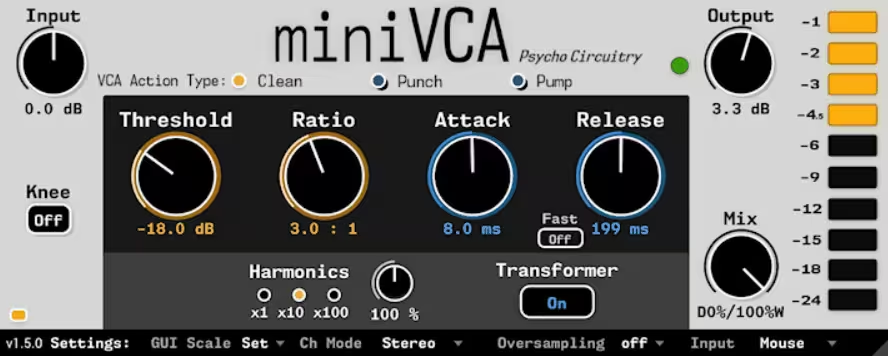
No email signup, no nag screens, nothing beyond the download itself, that’s the pitch behind miniVCA. It’s a peak-based VCA-style compressor with three feed-forward action modes, along with a fairly robust harmonics section that goes from subtle to extreme.
It’s the little sibling to the paid miniVCA+, but it shares the same core action modes and saturation system. You get oversampling and a switchable transformer output stage, though it’s limited to a single natural harmonics mode compared to the paid version’s three.
- Three feed-forward VCA action modes
These letting you shift the compressor’s personality without reaching for a different processor entirely.
- Harmonics and saturation system
A built-in harmonics section adds coloration on top of compression, and to me, it sounds capable of going from barely-there warmth to noticeably extreme character.
- Oversampling included
Analog Obsession BUSTERse
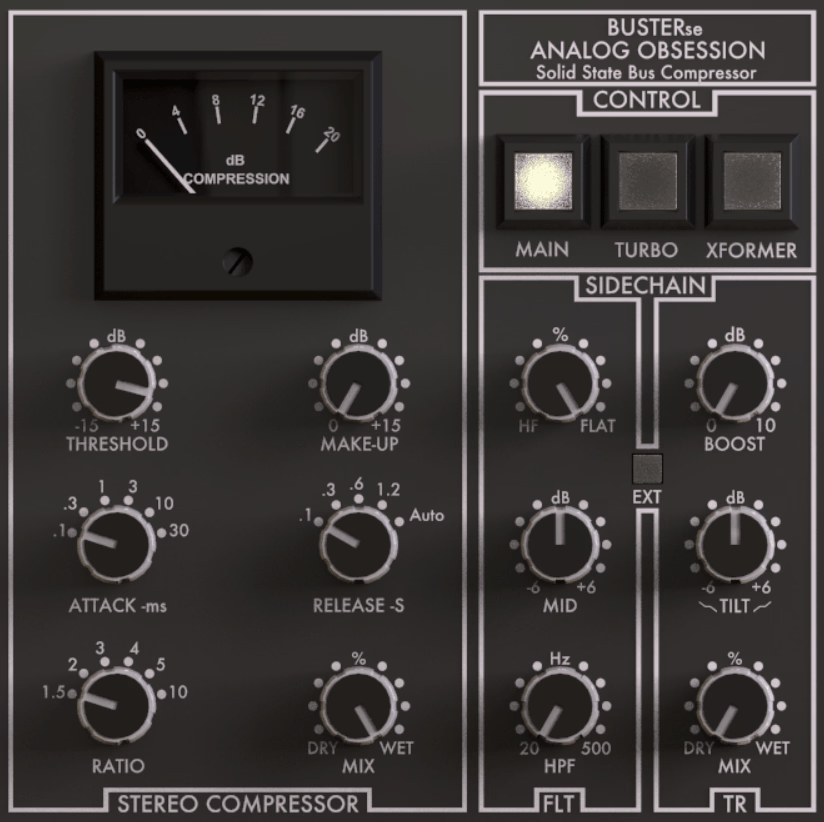
BUSTERse builds on an earlier free plugin from the same developer, simply called Buster, and adds a handful of extras on top of the usual SSL-style control set. Threshold, Attack, Release, and Ratio run from 1.5:1 to 10:1, alongside a Make Up gain knob and a Mix control for parallel compression.
But the main additions here are Turbo mode that lets the compressor affect the whole signal range instead of just the mids, and an XFORMER mode which swaps in transformer-balanced I/O for extra character.
- Classic SSL-style controls
- Turbo mode
Switching this on lets the compressor affect the entire signal range rather than focusing mainly on mid frequencies, which I found gives it noticeably more bite on full mixes.
- XFORMER mode
Engaging this swaps the input and output circuitry for a transformer-balanced path, changing the impedance and overall character of the compression.
ViatorDSP Bedroom Comp MkII
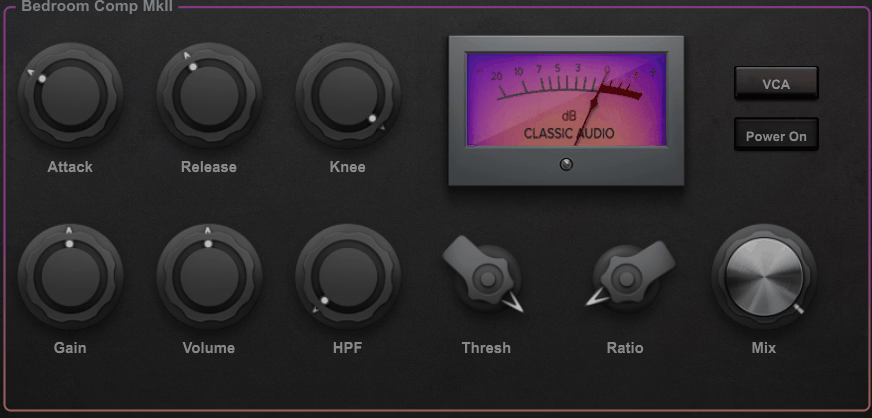
Switching between VCA and Opto compression styles in the same plugin isn’t something most free compressors offer, but that’s the core idea behind ViatorDSP’s Bedroom Comp MkII.
It’s priced as “pay what you like,” which means you can genuinely download it for free if that’s what you choose. You get adjustable Attack, Release, Threshold, Ratio, Input Gain, and Output Gain, plus an integrated highpass filter and a Knee control that modulates the threshold-to-ratio relationship in a non-linear way.
- Switchable VCA and Opto models
A single toggle takes you from fast, surgical VCA compression to smoother, more vintage-leaning Opto behavior, which I found genuinely useful for covering two different compression styles in one free plugin.
Sender Spike SN01-G
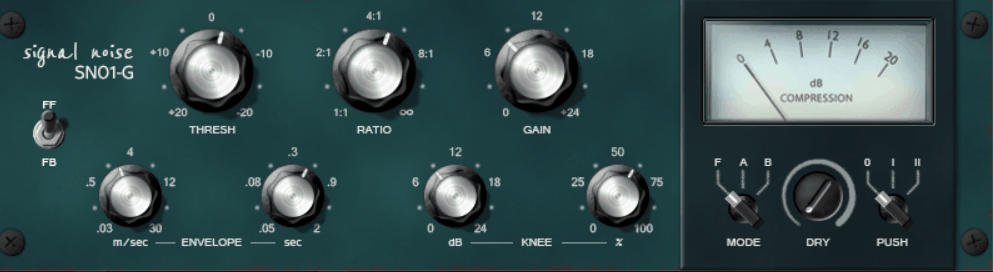
Threshold on SN01-G runs all the way from +20 dB down to -20 dB, which is a wider range than most of the compressors on this list, free or paid. It’s a VCA-style bus compressor directly inspired by classic API and SSL circuits, built for that same kind of buss glue without much CPU overhead.
Ratio goes anywhere from 1:1 up to a true brick-wall infinity, and attack times reach down to 0.03 milliseconds. There’s also an adjustable knee width up to 24 dB, an optional Push mode for more extreme compression, and a dry/wet control for parallel compression on the fly.
- Built-in Push mode
What this feature does is it pushes the compressor into more extreme territory for those moments when you want obvious, aggressive glue

Hey, I’m Vil, I started this site to help you find the best audio plugins covering various categories including synths, pianos, strings, and effect tools of all sorts as well. I pick these plugins based on various criteria so it best matches the actual topic.