When you purchase through the links on my site, you support the site at no extra cost to you. Here is how it works.
This time, I will talk about Vari-Mu compressors. When it comes to utility, they are a good choice when you want smooth compression, subtle saturation, and bus glue without making the processing sound obvious. They work particularly well on mix buses, vocals, drums, bass, and instruments where you want to control dynamics while keeping the source natural.
The plugins below cover different approaches, from detailed hardware emulations to more flexible Vari-Mu designs and hybrid processors.
That being said, I am focusing on plugins like Pulsar VM-COMP, Rockruepel COMP.TWO, IK Multimedia Dyna-Mu, Arturia Comp TUBE-STA, and several more, followed by two free options.
1. Pulsar VM-COMP
Pulsar VM-COMP is designed around the idea that a Vari-Mu compressor is more than its gain-reduction curve. What I want to say is that the interaction between tubes, transformers, and control circuitry affects how the compressor reacts, especially when you push it beyond gentle bus compression.
That is where Pulsar’s Topology Preservation Technology comes in. You can mainly notice the difference on a busy mix bus, where the compression can feel connected to the musical content instead of behaving like a generic envelope being imposed over the whole mix.
You get 16 factory presets covering different compression applications, giving you quick ways to hear how the compressor behaves across different sources before shaping your own settings.
- 4x Oversampling
Also, VM-COMP supports up to 4x oversampling, giving the modeled processing a higher-resolution path.
Higher oversampling makes the most sense when you are pushing the compressor harder or using it near the end of a mix, while lower settings are more practical when CPU is the priority.
- Topology Preservation Technology
Instead of modeling only the compression curve, the plugin models the interaction between the tubes, transformers, and control circuit.
- On-Screen Sidechain EQ
The sidechain EQ lets you draw the trigger curve directly on screen, which I find more intuitive than hunting through several unlabeled controls when the compressor needs to react less to low end or focus on a particular part of the spectrum.
- Look-Ahead and Look-Behind
In addition, VM-COMP gives you both look-ahead and look-behind timing options. Look-ahead lets the compressor react before a transient, while look-behind can leave more of the transient intact and bring the gain reduction in afterward.
2. Rockruepel COMP.TWO
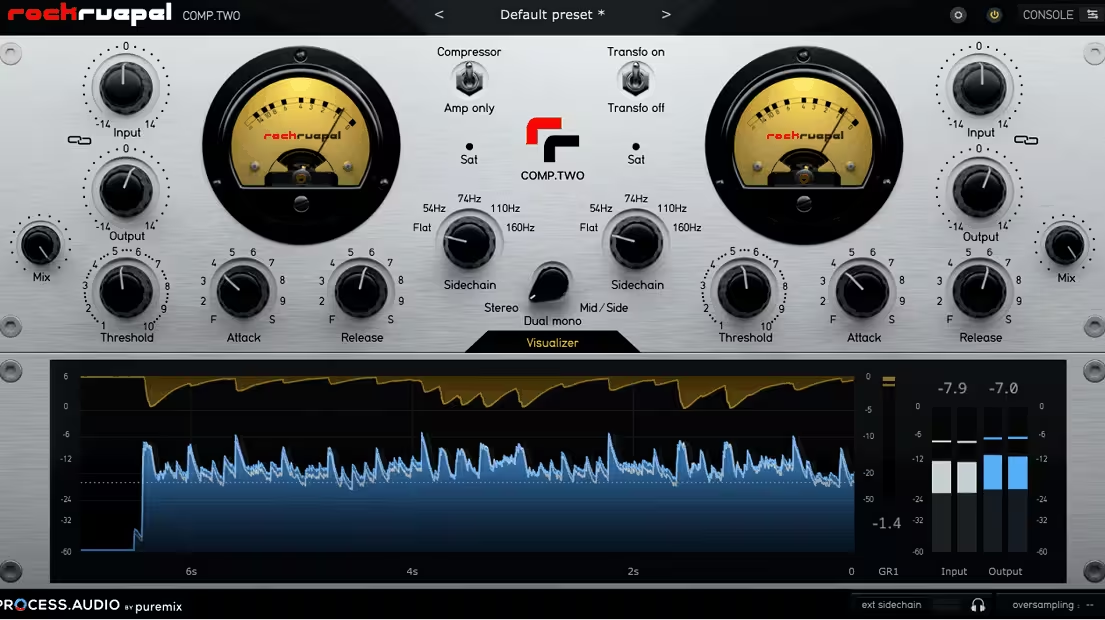
Rockruepel COMP.TWO is based on an all-tube design developed by German engineer Oliver Gregor over many years. The interesting part is that you can bypass the compression circuit and run the signal through the tubes and transformers for coloration alone, making the plugin useful as both a compressor and a tone stage.
That makes COMP.TWO more flexible than a conventional Vari-Mu compressor. I often see the Amp Only mode as one of its most practical features because you can add character without changing the dynamics.
- Lots of Presets
COMP.TWO includes more than 80 presets covering different instruments, buses, and mixing situations
- Up to 16x Oversampling
The plugin supports up to 16x oversampling, giving you a higher-resolution processing path when you are pushing the tube and transformer stages harder
- Mid/Side Processing
- Amp Only Mode
The compression circuit can be bypassed so you are left with the tube and transformer path. I find this somehow useful when you want saturation, thickness, or harmonic character without adding noticeable gain reduction.
3. IK Multimedia Dyna-Mu
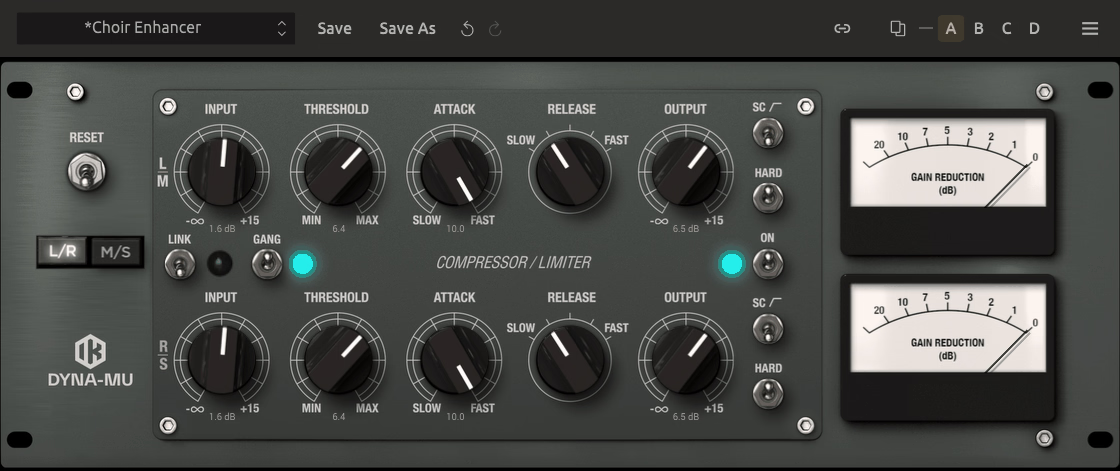
IK Multimedia Dyna-Mu keeps the controls unusually straightforward. You get the main input, threshold, attack, release, output, and a HARD switch that moves the compressor from a gentler 1.5:1 ratio to a firmer 4:1 response.
Dyna-Mu is designed to fit inside a broader T-RackS workflow rather than demand constant attention. It is the sort of compressor you can set, listen to in context, and move on.
- Independent GANG and LINK Controls
GANG determines whether both channels are processed together, while LINK controls how their sidechain detection is related. Separating those functions gives you more control than a single stereo-link switch.
- 100 Hz Sidechain High-Pass Filter
Also, the dedicated sidechain switch introduces a 100 Hz high-pass filter into the detector path, which can be very useful when the kick or bass is making the compressor pump more than you want because it reduces the low-frequency influence while keeping the rest of the signal glued together.
- L/R and Mid/Side Operation
In addition, Dyna-Mu supports both L/R and Mid/Side operation, so you can process the center and sides differently when the mix needs more control over its stereo balance.
4. Arturia Comp TUBE-STA
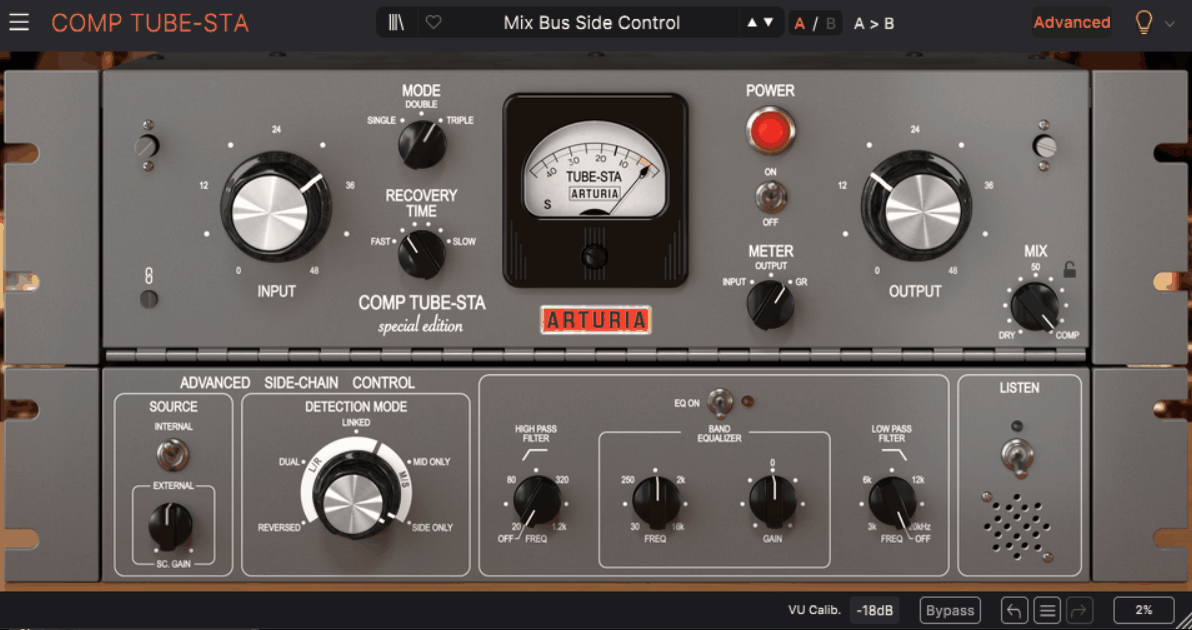
The original Gates STA-Level used a very different workflow from a conventional compressor because there was no normal threshold control. Arturia Comp TUBE-STA preserves that idea, so the input level becomes part of how you drive the compression which makes it feel different from a modern digital compressor even before you touch the extra controls. I find it particularly good when a vocal, bass, drum bus, or instrument needs smooth leveling with some tube character rather than surgical dynamics control.
- Up to 4x Oversampling
- 5 Detection Modes
Comp TUBE-STA provides five detection modes, changing how the compressor decides when to respond and allowing the same settings to behave differently depending on the source.
5. Tone Empire LA Créme
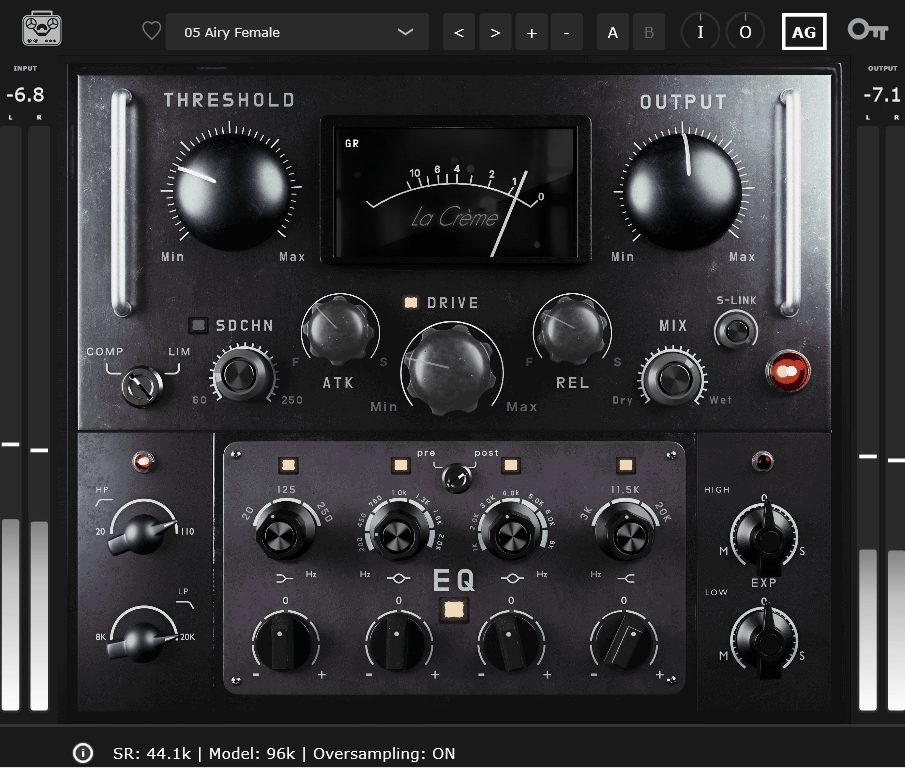
Tone Empire LA Créme takes a broader approach than a conventional Vari-Mu compressor. Alongside the compression stage, you get a 4-band EQ and 2-band stereo expander, so the plugin can cover several parts of a channel or bus chain.
The compression itself uses a neural modeling approach and I would look at it when you want the Vari-Mu stage plus some additional shaping without stacking several separate processors.
- 3 Compression Modes
LA Créme gives you three compression modes, each changing the response of the dynamics section. That gives you a practical way to move between smoother leveling and more noticeable compression without rebuilding the rest of the chain.
- Presets
The plugin includes more than 80 presets for different instruments, vocals, buses
- 3 Stereo Modes
You get three stereo processing modes, giving you different ways to handle the relationship between the center and wider material. I find this handy on buses where the source already has a strong stereo image and standard left-right processing feels too blunt.
- Neural LSTM Modeling
LA Créme uses Neural LSTM modeling trained from hardware recordings at 96 kHz and it gives you another character to compare against conventional Vari-Mu emulations.
- Repositionable EQ Stage
The 4-band EQ can sit before or after the compressor, changing whether you shape what hits the tubes or use the EQ as a finishing stage.
6. Lindell MU-66
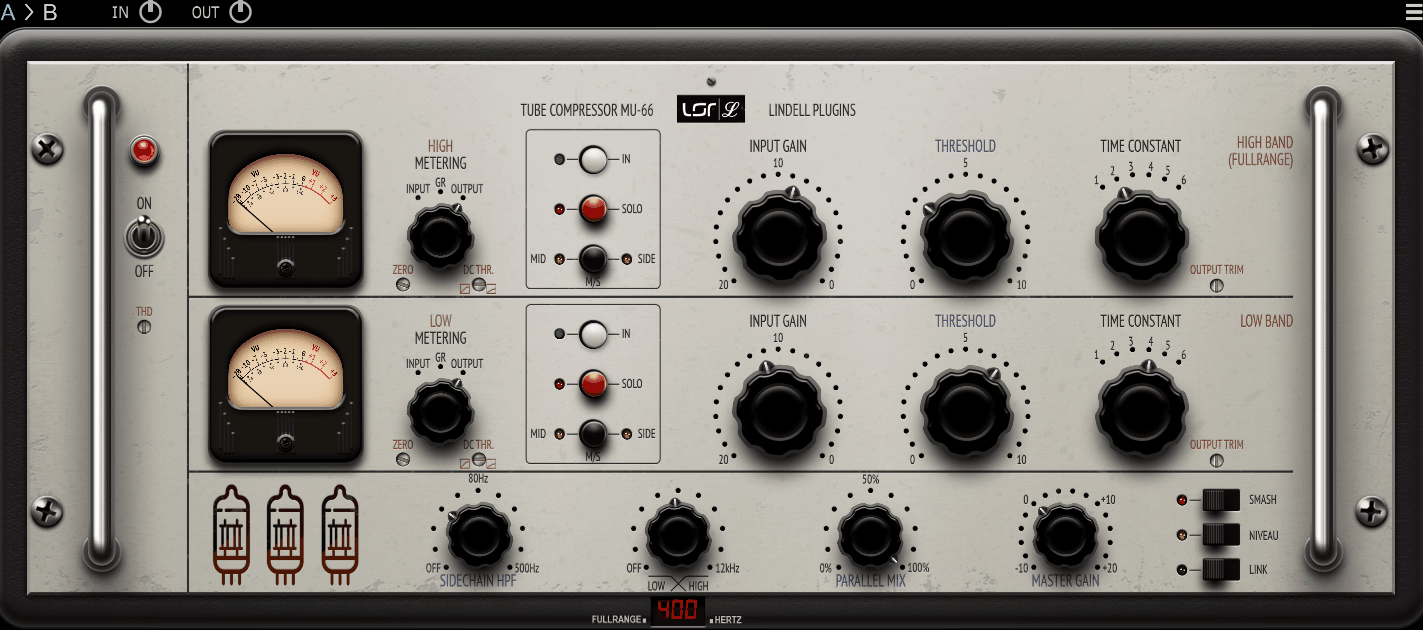
Lindell MU-66 takes Vari-Mu compression into two frequency bands, allowing the low and high ranges to be compressed separately. That makes it particularly useful when the low end is causing too much gain reduction across a full mix.
I would recommend this when a normal single-band Vari-Mu gives me the tone I want but the dynamics are being controlled too broadly. In addition, splitting the spectrum lets you keep the bottom end under control without asking the rest of the mix to react in the same way.
- 4 Compression Modes
MU-66 gives you four compression modes, allowing you to change the overall character without rebuilding the entire chain.
- True Dual-Band Vari-Mu
The adjustable crossover divides the signal into two independently compressed bands. You can let the low frequencies receive stronger gain reduction while keeping the upper range relatively open, or reverse that relationship when the material calls for it.
- SMASH Overload Mode
SMASH turns the compressor into a much more aggressive processor, especially when driven hard from the input. I would use it on drum rooms, rock vocals, bass, and sound-design buses where distortion is part of the goal.
7. Tone Empire FireChild
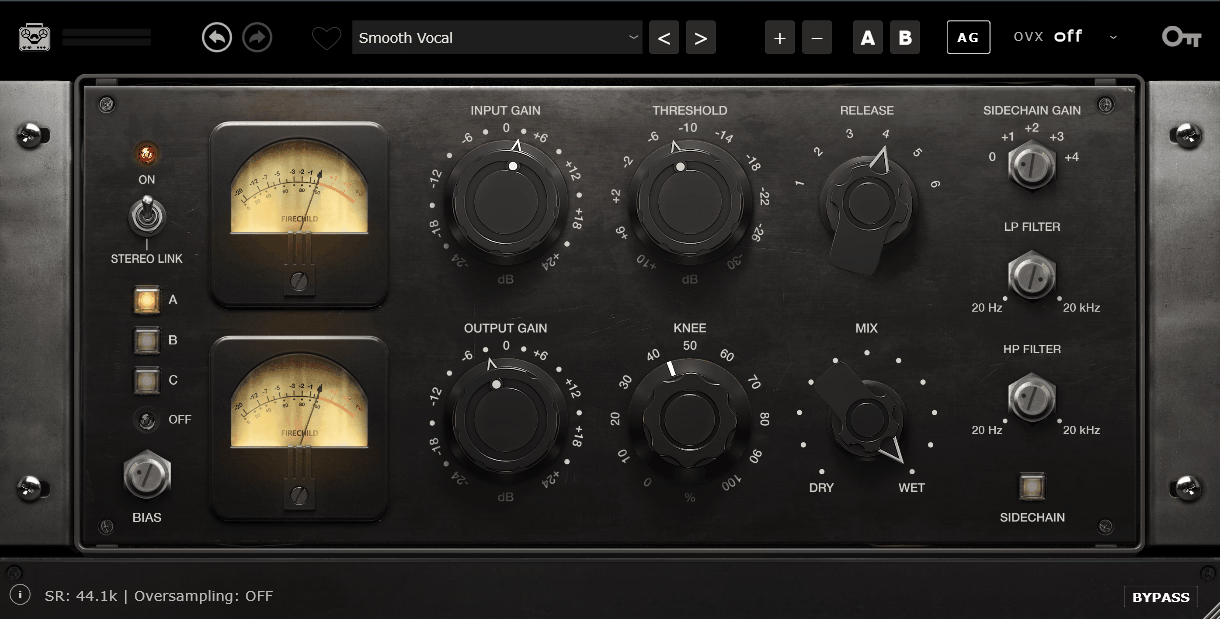
Most Vari-Mu plugins give you one main circuit and ask you to get everything from it. Tone Empire FireChild instead puts four tube compressor circuits inside one plugin.
It’s great because it gives you more room to match the compressor to the source. I find the ability to compare four characters without changing instances useful on mix buses and drums.
- Many Presets
You get lots of presets covering vocals, drums, bass, guitars, buses, and other sources. They make it easier to hear what the different models are suited for before you start dialing in your own settings.
- 4 Compressor Modes
As mentioned, FireChild offers four compressor models, each based on different tube hardware
- Four Hardware Circuits in One Plugin
You can switch between four different hardware-inspired compressor circuits in one instance. For me, that is the biggest reason to keep FireChild around because one model may sit comfortably on a mix bus while another has the attitude a drum bus needs.
- Multi-Stage Convolution Sampling
The hardware is represented across multiple gain and compression stages rather than one fixed impulse. That helps the character change with the operating level instead of remaining a static convolution layer.
8. Audified U73b
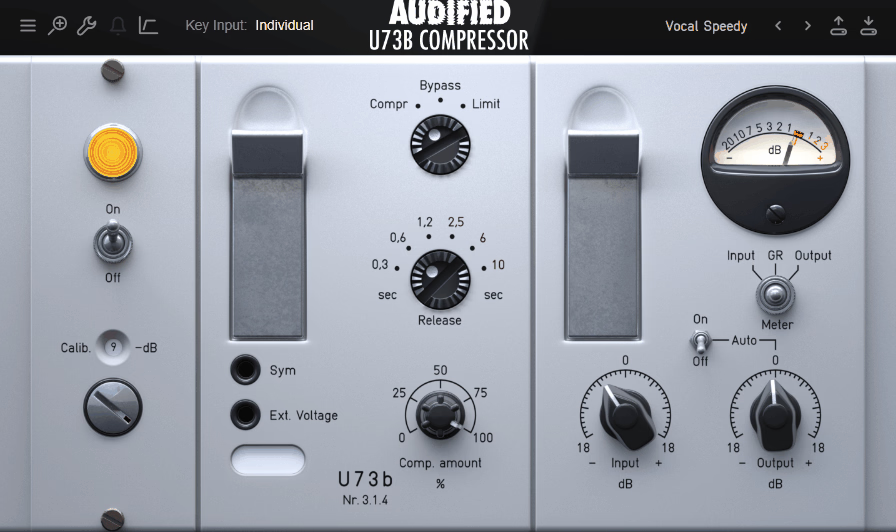
The Telefunken U73 came from German broadcast equipment of the 1950s, and Audified U73b has a noticeably different workflow from the American Vari-Mu designs that dominate the category.
It is particularly suited to buses and mastering-style work when you want controlled gain reduction without a complicated interface. I find the combination of selectable release behavior and the forward-triggered sidechain useful when the timing of the compression matters as much as the amount.
- 3 Operating Modes
U73b provides Compressor, Bypass, and Limiter modes, so you can change the role of the processor without loading another instance.
- 5 Release Settings
In addition to that, plugin gives you five release settings, letting you quickly compare different recovery behaviors and choose the one that best fits the groove of the source.
- Stereo and Dual-Mono Operation
U73b supports stereo and dual-mono operation. I find dual-mono helpful when the two sides contain noticeably different dynamics, while linked stereo operation is better when you want the image to stay stable.
- Forward-Triggered Sidechain
The detection design is forward-triggered, giving the compressor a different relationship with transients from traditional feedback-style Vari-Mu circuits. That can make the gain reduction feel more immediate without abandoning the character of the modeled tube circuit.
- Adjustable Compressor Amount
U73b adds an adjustable compressor amount that was not present on the original hardware. That gives you more direct control over how strongly the Vari-Mu stage reacts.
9. Kazrog True Iron
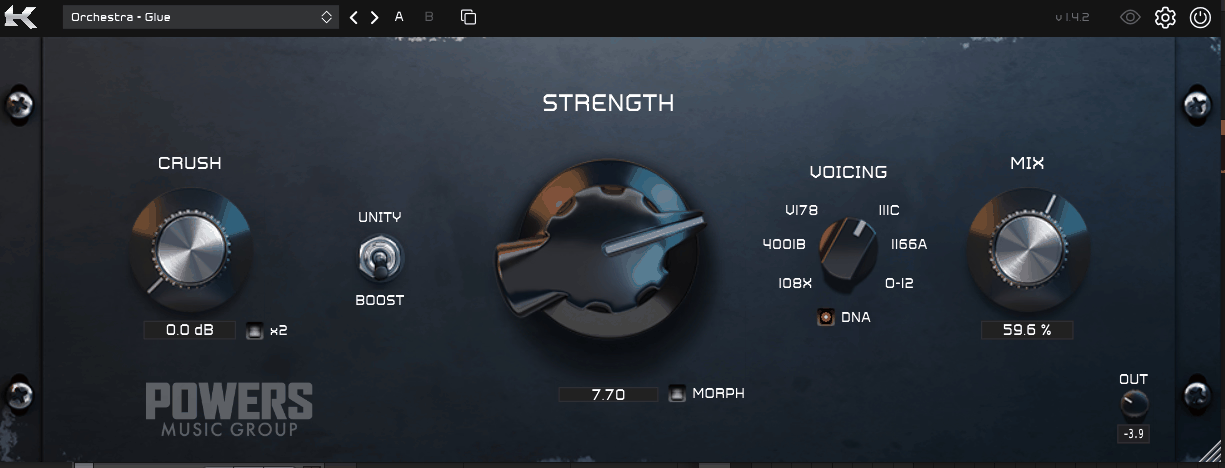
Kazrog True Iron is technically a transformer processor rather than a Vari-Mu compressor, but it fits naturally into this category because transformer saturation is often part of the reason people reach for tube compressors in the first place.
I use it when the compressor is already controlling the dynamics well but the source still feels too clean. Instead of adding more compression, you can use True Iron to add weight, density, and harmonic color around it.
- 6 Transformer Models
True Iron provides six transformer models, each based on different hardware and you can therefore choose between different types of harmonic behavior
- Crush and Crush 2x Modes
Crush and Crush 2x push the transformer much harder, with up to 48 dB of drive available for more aggressive saturation. These modes make the most sense for drums, basses, synths, or creative bus processing
- Auto-Gain Compensation
True Iron automatically compensates the output level as you change the amount of transformer coloration
10. Manley Variable Mu Limiter Compressor
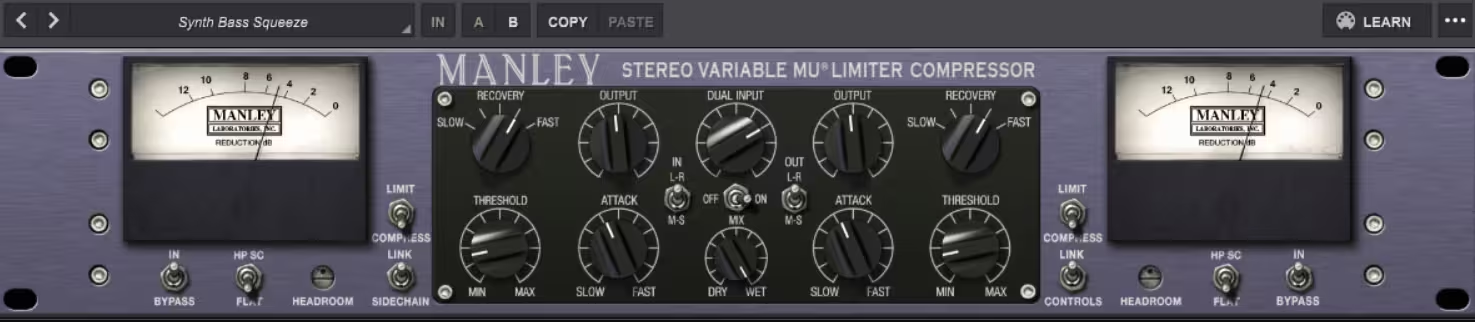
I think I would reach for this one on a mix bus, vocal chain, drum bus, or even a master when I want the processing to feel integrated into the source rather than sitting on top of it.
Manley Variable Mu Limiter Compressor is one of the best-known Vari-Mu designs in modern studio work, and the plugin targets the 6BA6 T-Bar Tube Mod version of the hardware.
Its main strength is still the same basic reason engineers use this type of compressor: smooth gain reduction, density, and cohesion without an obvious pumping sound.
- M/S More Accurate Than the Hardware
The plugin’s Mid/Side processing improves on a phase limitation present in the original hardware. That gives you a more flexible stereo-processing option while keeping the basic character of the Vari-Mu design intact.
- Modeled on One Specific Hardware Variant
The plugin is based on the 6BA6 T-Bar Tube Mod version rather than blending several versions of the hardware into one generic model. That gives the emulation a specific target instead of a generalized version of the Manley circuit.
- Stereo Link Control
The stereo section provides adjustable channel linking. You can keep the channels tightly connected for a stable stereo image or allow more independent behavior when the left and right sides contain different dynamics, and I find the distinction easiest to hear on wide mixes with strong left-right contrasts.
Freebies:
1. Analog Obsession Varimoon
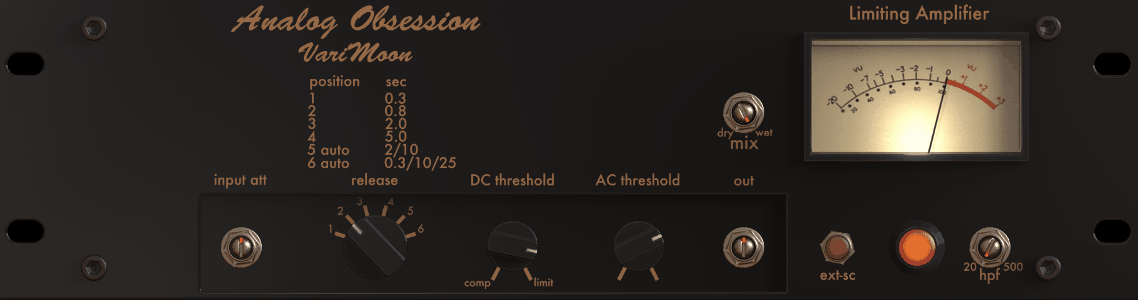
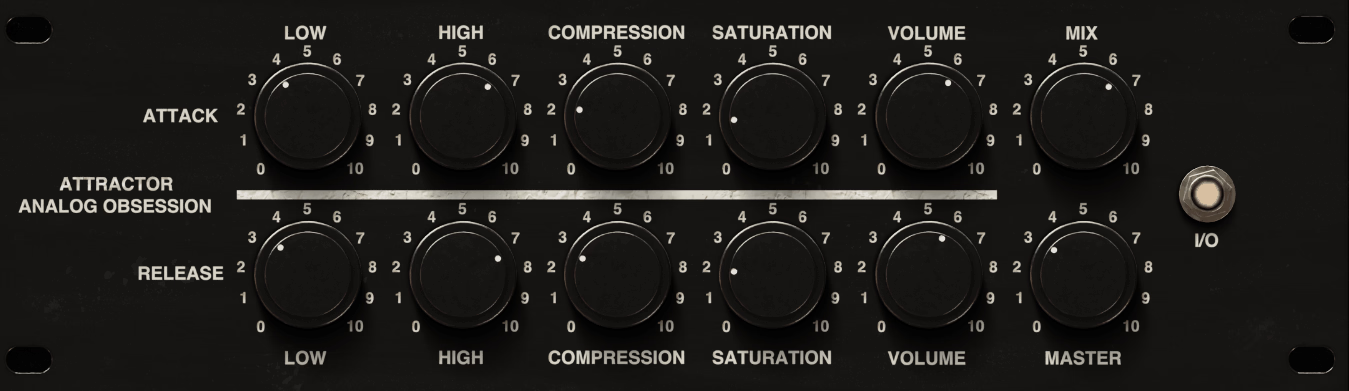
Free Vari-Mu compressors usually simplify the control structure, but Analog Obsession Varimoon does something more unusual with its threshold section. DC Threshold handles one part of the compression behavior, ranging from 2:1 to 10:1, while AC Threshold determines the signal level that drives the compressor.
The result takes a little longer to understand than a conventional threshold and ratio pair. I find that worthwhile once you get used to the relationship because it gives you more control over how the compression responds.
- Split DC/AC Threshold Design
Instead of combining the main compression behavior into one threshold control, Varimoon separates it into DC Threshold and AC Threshold.
That gives you a different way to shape the amount and character of compression.
- Six Release Positions
You get four fixed release settings plus two auto-release curves.
2. Klanghelm MJUC jr.
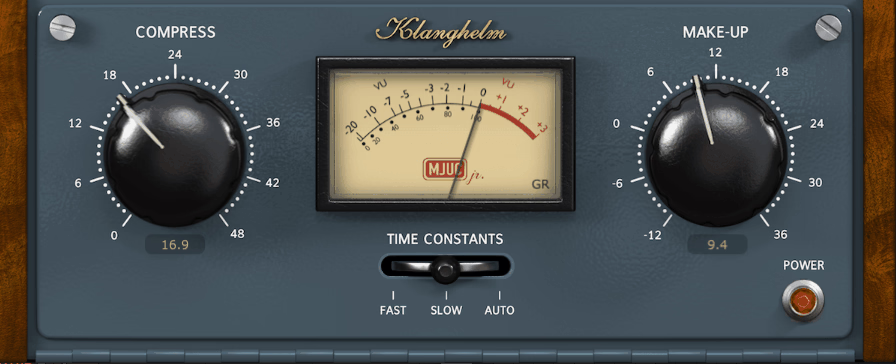
Klanghelm MJUC jr. combines characteristics from two generations of the MJUC design rather than trying to recreate one specific piece of hardware. That gives the free compressor a thicker, more colored character than a lot of basic free dynamics plugins.
For me, the appeal is how quickly it gets into the source. You have very few controls to learn, but the timing control changes both the compression response and the harmonic behavior enough to make different settings feel genuinely different.
- Blended Mk1/Mk2 Circuit
MJUC jr. combines characteristics from two different generations of Vari-Mu-inspired compression into one circuit. That gives you a response that sits between smooth leveling and more noticeable tube coloration, which works particularly well when a clean digital source needs a little cohesion.
- Timing Switch That Changes Tone, Not Just Speed
The three-position timing switch changes both attack and release behavior and the simulated interstage transformer’s response. That means changing the timing also changes the harmonic character, so you can alter the feel of the compression without automatically adding a separate saturation processor.

Hey, I’m Vil, I started this site to help you find the best audio plugins covering various categories including synths, pianos, strings, and effect tools of all sorts as well. I pick these plugins based on various criteria so it best matches the actual topic.