When you purchase through the links on my site, you support the site at no extra cost to you. Here is how it works.
Let’s talk about the best bass and sub bass plugins, since low end is the part of a mix people feel before they actually hear it, and it’s usually the first thing that goes wrong in a track.
Some of these are built purely for surgical low-end control, tightening up 808s or cleaning up a muddy sub, while others are general-purpose synths that just happen to be excellent at building bass sounds from scratch, so I’ll cover both types here.
Here are a few names worth knowing up front I will talk about: FAW Sublab XL, Softube Monoment Bass, Xfer Serum 2, u-he Diva, and Initial Audio 808 Studio 2, plus a handful of free options near the end. Each one solves a slightly different problem depending on whether you’re shaping an existing bass sound or designing one from nothing, and I’ll walk through what makes each worth having so you can figure out what actually fits your setup.
1. FAW Sublab XL
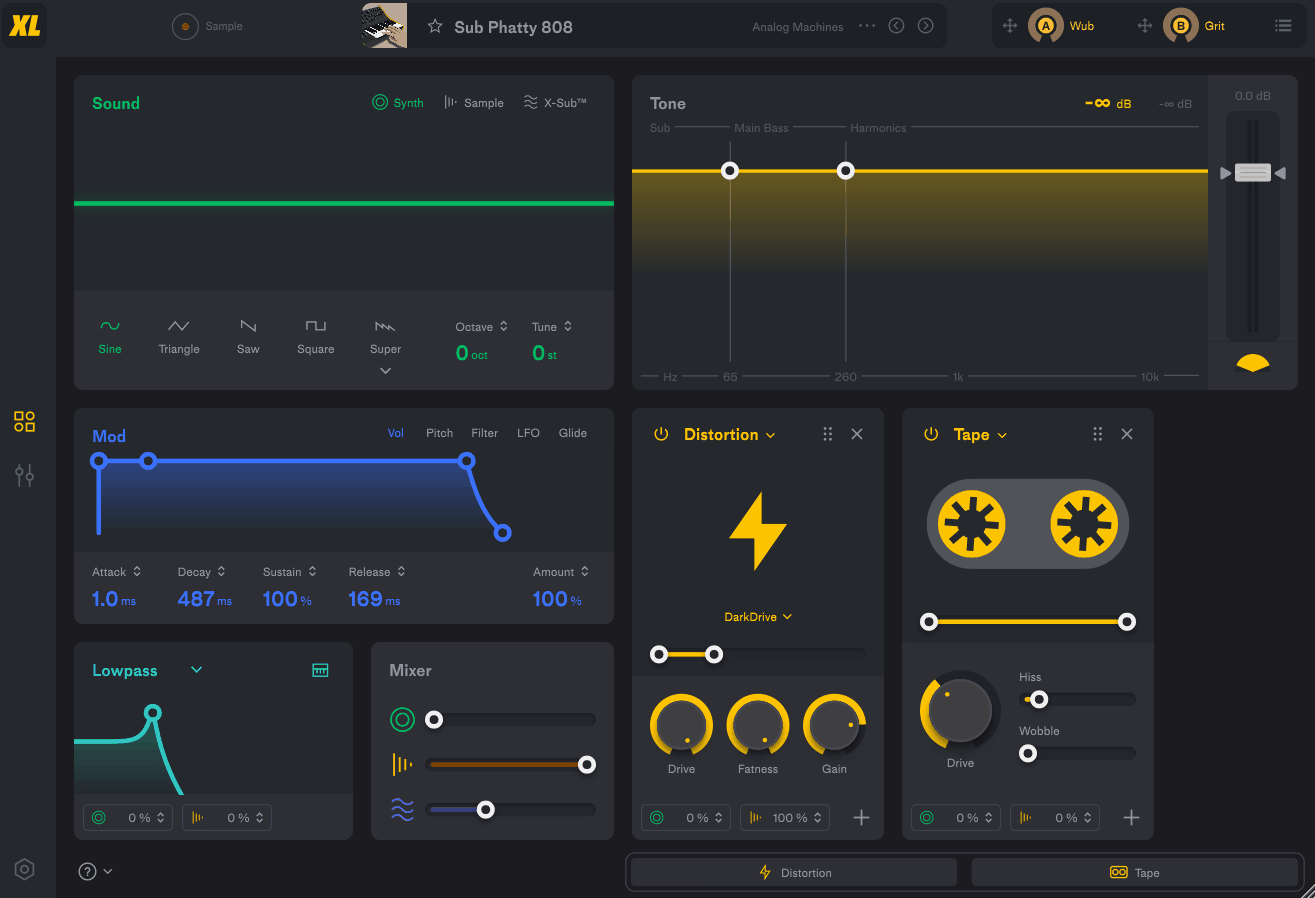
FAW Sublab XL, gives you a synth engine, a sampler, and a psychoacoustic sub-bass oscillator called X-Sub all working together in a single focused plugin. I like that it never tries to be a general-purpose synth, since that focus is honestly what makes it fast to use under deadline pressure.
In addition, Super Oscillator lets you layer saw, triangle, or square waves for thick supersaws, or dial things back for something subtler and moog-like. I found this genuinely fast for going from a clean sub to a buzzy, detuned bass in a matter of seconds.
Other than that, you get:
- Mix and Match FX Chain
Up to four effects can be stacked and rearranged, pulled from six distortion types, a waveshaper, tape, a bitcrusher, and a compressor with auto sidechain. I’d recommend experimenting with the order since the same effects genuinely sound different depending on where they sit.
- 9 Factory Bass Packs
Here, you get 9 signature bass packs and over 100 presets right out of the box, plus 300+ samples pulled from analog drum machines and modular gear. At the very least, that’s enough starting material to get through a session without touching the synth engine at all.
- Modulation with 18 Routing Options
Two parameters can be modulated at once across 18 routing options, which I think is plenty for adding rhythmic movement without turning the sub into something distracting.
2. Softube Monoment Bass
You could argue that bass has become the actual backbone of modern production, carrying more emotional and physical weight than almost any other element in a track.
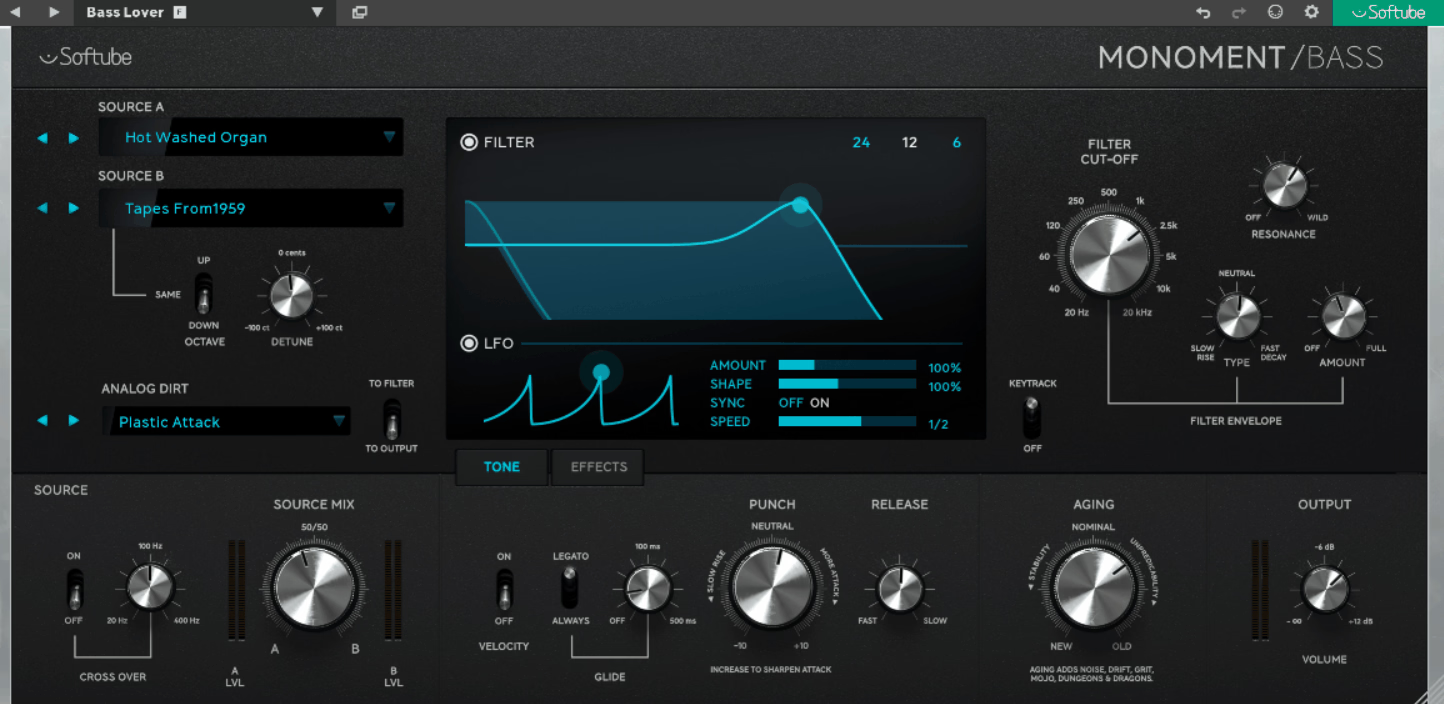
Softube Monoment Bass grew directly out of that idea, built in collaboration with sound designer Tobias Menguser, a well-known collector of rare and boutique synth hardware.
I like that every source sound here was captured in full stereo straight from real analog gear instead of programmed from a stock oscillator, since you can genuinely hear that difference the moment you load a patch. It’s not trying to be a flexible do-everything synth, and I think that narrow focus is exactly the point.
- Two-Layer Stereo Source Architecture
That said, you get two fully stereo source layers, plus a third noise source for extra grit, which I think gives you more organic complexity right at the source than a typical single-oscillator bass synth.
- Aging Knob
The Aging control introduces analog-style drift, noise, and imperfection to the sound, and I’ll admit I was skeptical of gimmicks like this at first, but it genuinely works well here.
- Multiband Compressor and Spatialization
A dedicated multiband compressor and a stereo spatialization tool sit in the effects section, and I think these two specifically are what push the sound toward “mix-ready” rather than just “good in isolation.”
- Modular and Amp Room Compatibility
Beyond the standalone plugin, Monoment Bass includes modules for Softube’s Modular and Amp Room platforms, so you can build your own custom bass chain if the default architecture doesn’t quite cover what you need.
3. Devious Machines Bass Focus
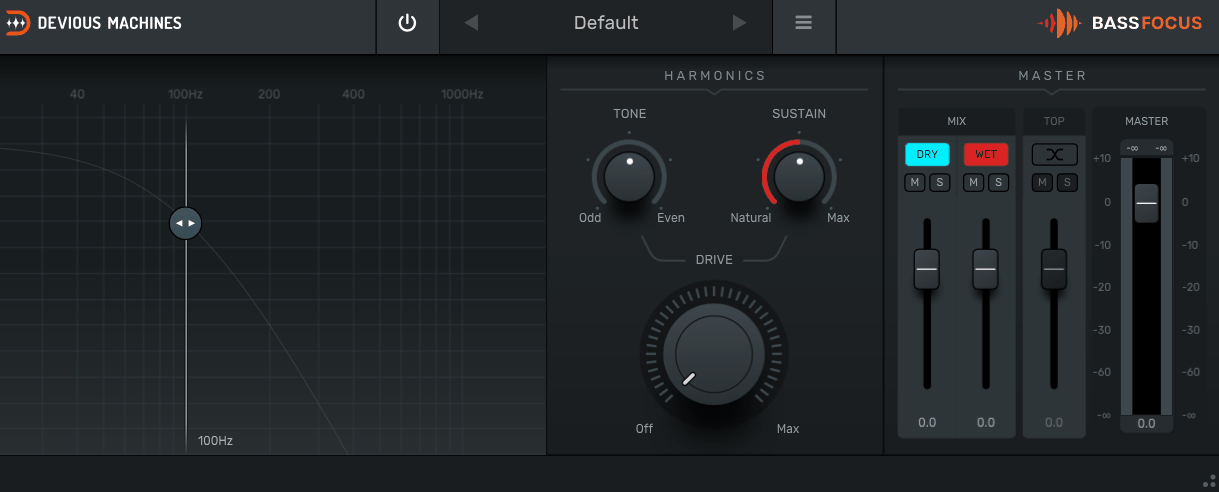
Devious Machines built Bass Focus generates upper harmonics that trick your brain into perceiving low frequencies as louder and fuller, even on speakers that physically can’t reproduce the original bass note. Honestly, once you hear it working through a phone speaker, the whole concept clicks immediately.
You get precise control over the balance between odd and even harmonics, which genuinely changes the character of the added weight from warm and rounded to more aggressive and present.
- Three Independent Output Faders
Clean, harmonic, and top-end signals each get their own output fader, letting you dial in exactly how much of the effect sits under the original sound instead of just a single wet/dry blend.
- Works on Individual Tracks or Full Mixes
You can apply it to a single 808, a kick, a bass guitar, or an entire mix at the mastering stage, and I’d recommend starting subtle since it’s easy to overdo the effect without realizing it until you A/B against the dry signal.
4. Thenatan X-EIGHT 2
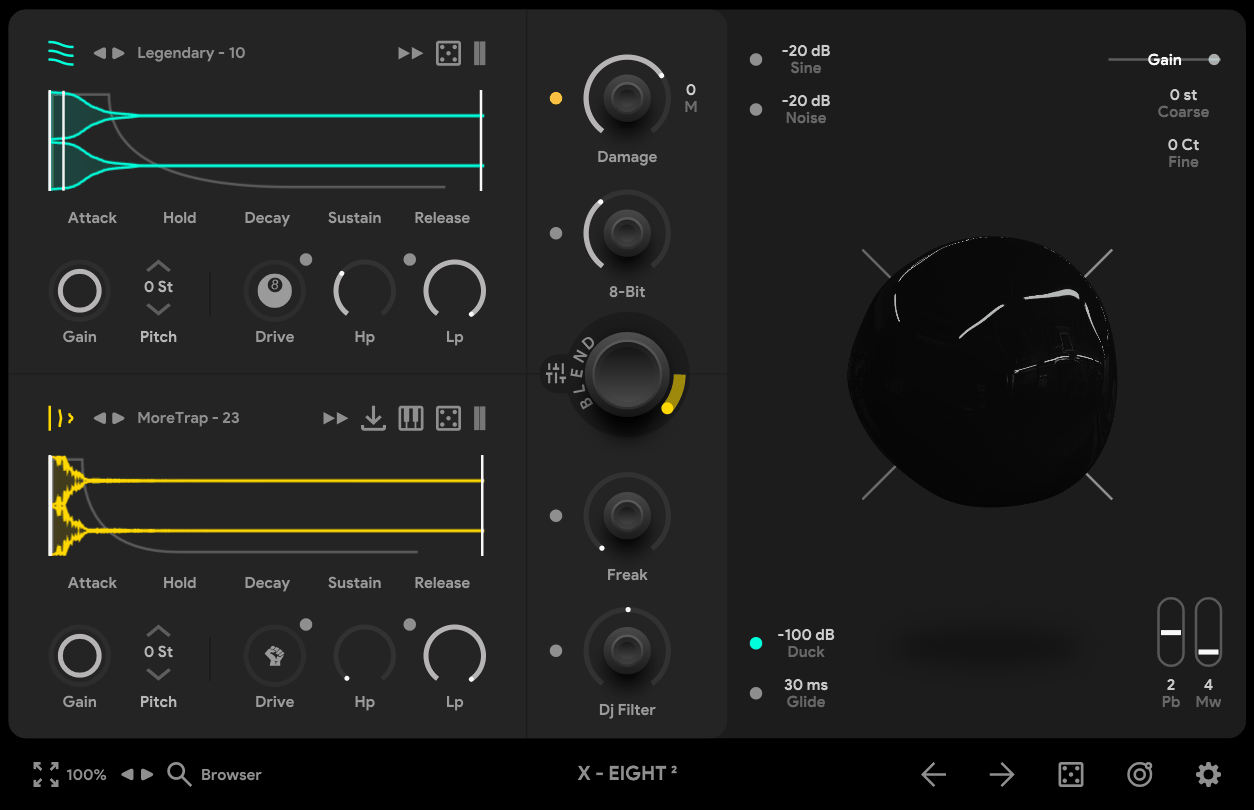
Thenatan rebuilt the whole thing from scratch for version two, and X-EIGHT 2 now carries a genuine synthesis layer underneath its enormous sample library instead of just being a bigger rompler.
I think that shift from more samples to more sound design tools is what actually makes this version worth the upgrade.
That said, library now covers more than 1,342 808 and kick samples, ranging from subtle and deep to heavily saturated and distorted, so you rarely need to layer multiple sounds just to get the right texture.
- BRAIN Randomizer
Also, A built-in randomizer called BRAIN, generates creative modulation across LFOs and envelopes, which I found genuinely useful for finding a variation I wouldn’t have programmed manually.
- Drag-and-Drop Modulation
You can assign modulation sources directly by dragging them onto parameters, which I like a lot more than digging through a traditional mod matrix when you just want to add quick movement.
- Advanced Sequencer With Glide
The built-in sequencer supports overlapping notes for that classic pitch glide effect used heavily in trap music, and I’d recommend spending some time here specifically, since it’s genuinely what separates a static 808 from one that actually moves.
5. Xfer Serum 2
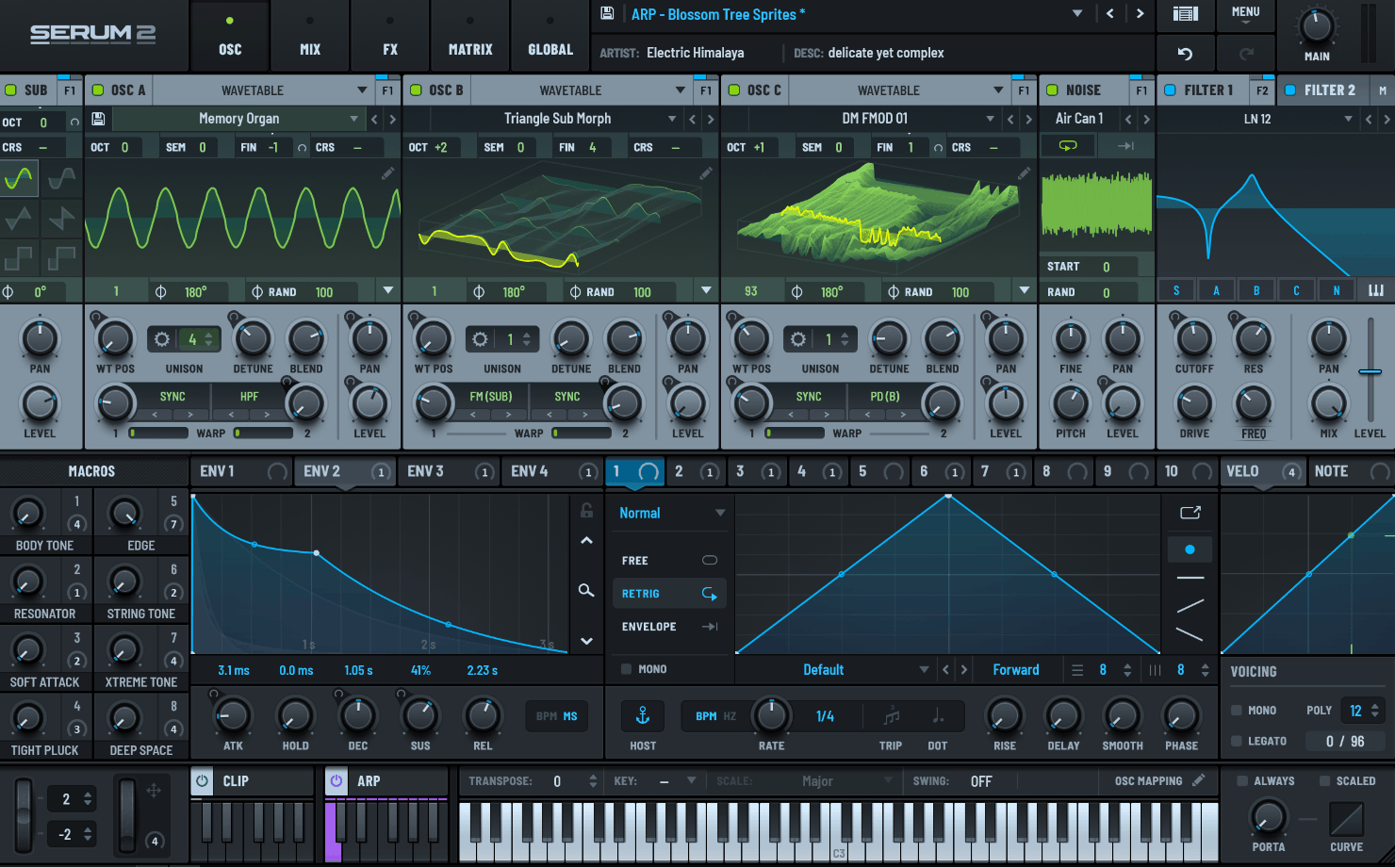
I don’t think there’s a wavetable synth from the last decade that hasn’t been compared to Serum in one way or another, fairly or not. That said, Serum 2 expands the original engine well past wavetables into granular and spectral synthesis.
For bass work specifically, I’ve found the new dual filters and frequency-based FX splitting make it noticeably more capable of building complex, evolving low end than the original ever was.
You’re not just getting new oscillator types but entirely reworked routing system underneath everything.
In addition, you are getting:
- Dual Filter Routing
Two filters can run in series or parallel with independent modes, giving you far more shaping options for a bass patch than a single filter section ever could.
- Massive Preset and Wavetable Library
You get over 626 factory presets and 288 wavetables out of the box, and given how much of the plugin community has built content for Serum over the past decade, third-party bass presets alone could keep you busy for a long time.
There is a LOT more to that, but to keep this list short, let’s continue to next one..
6. Waves Submarine
An EQ boost only works if the frequency you’re trying to bring up actually exists somewhere in the signal. When it doesn’t, which happens more often than you’d expect, you need something that generates new low end rather than just amplifying what’s already there.
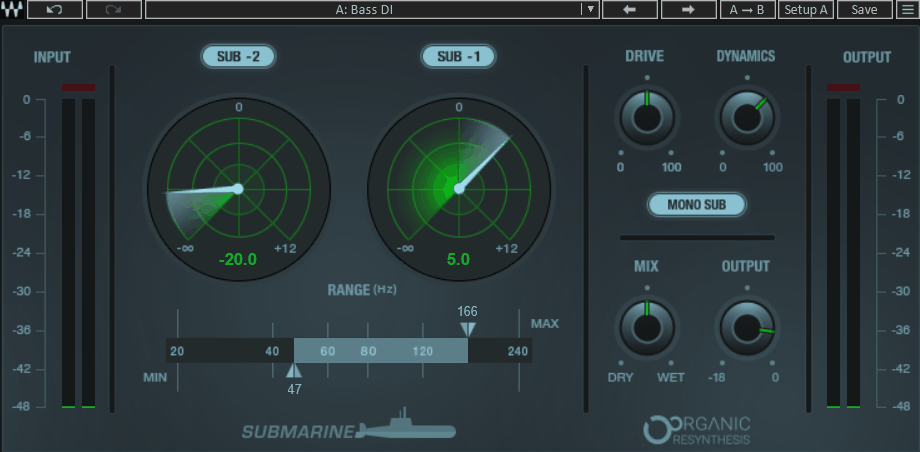
Waves Submarine is using two independent sub-generators to create entirely new subharmonic content up to two octaves below your selected frequency range. I like that it’s honest about not being an EQ, since that clarity actually helps you understand when to reach for it.
- You get Two Independent Sub Generators
You can turn each generator on or off separately, and I like auditioning them individually first, since the one-octave and two-octave layers genuinely behave differently depending on the source material.
- Organic ReSynthesis Technology
Because the engine breaks the input down into carrier, pitch, formant, and envelope before regenerating the sub, the result stays genuinely clean instead of introducing the muddiness or artifacts you’d get from simple pitch shifting.
- 20 to 240 Hz Range Selector
Also, the precise range slider lets you target exactly which frequencies feed the sub generators, which I think makes it possible to add subs surgically to just a kick in a busy mix without touching the snare or anything else.
- Drive and Dynamics Controls
Lastly, Drive adds saturation to glue the generated subs into the rest of your mix, and Dynamics shifts between short transient sub hits and longer, sustained sub notes depending on what you need.
7. Initial Audio 808 Studio 2
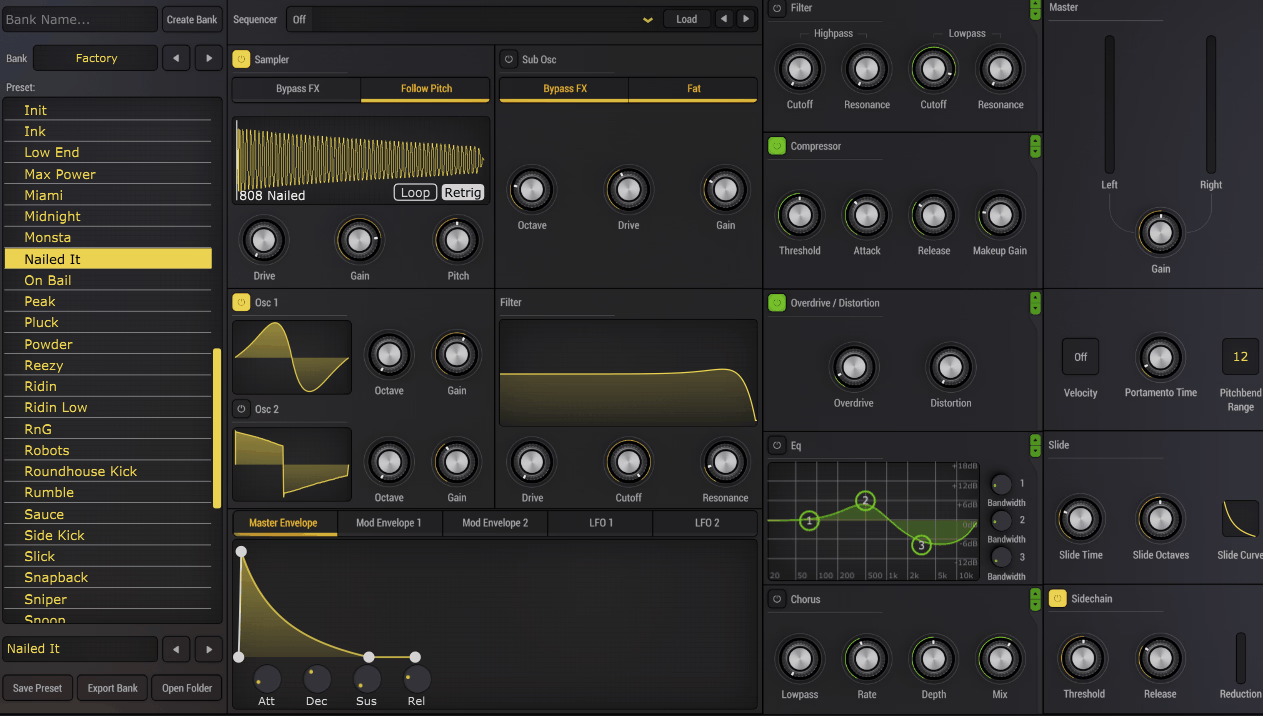
Trap and hip-hop production live and die by the quality of the 808, and I think most producers underestimate how much a genuinely dedicated synth changes that equation compared to just browsing sample packs.
What actually sets this 808 Studio 2 apart from the original, in my experience, is the drag-and-drop modulation system and a sequencer that can overlap notes to create that classic pitch glide you hear constantly in trap beats.
In additon, a dedicated sub oscillator handles the low end with its own fat mode and overdrive, and I like that two additional oscillators bring their own lowpass filters for layering extra character on top.
You get:
- Sample and Synth Hybrid Workflow
You can drag and drop your own samples directly onto the sampler, or pull from the included kick and 808 samples, and combine that with the synth layers for a hybrid sound that’s genuinely your own.
- 80 Presets Across the Effect Rack
You get 80 presets to start from, and a five-unit effect rack covering overdrive, compression, EQ, chorus, and filtering, all of which can be reordered depending on what the sound actually needs.
8. AIR Sub Factory
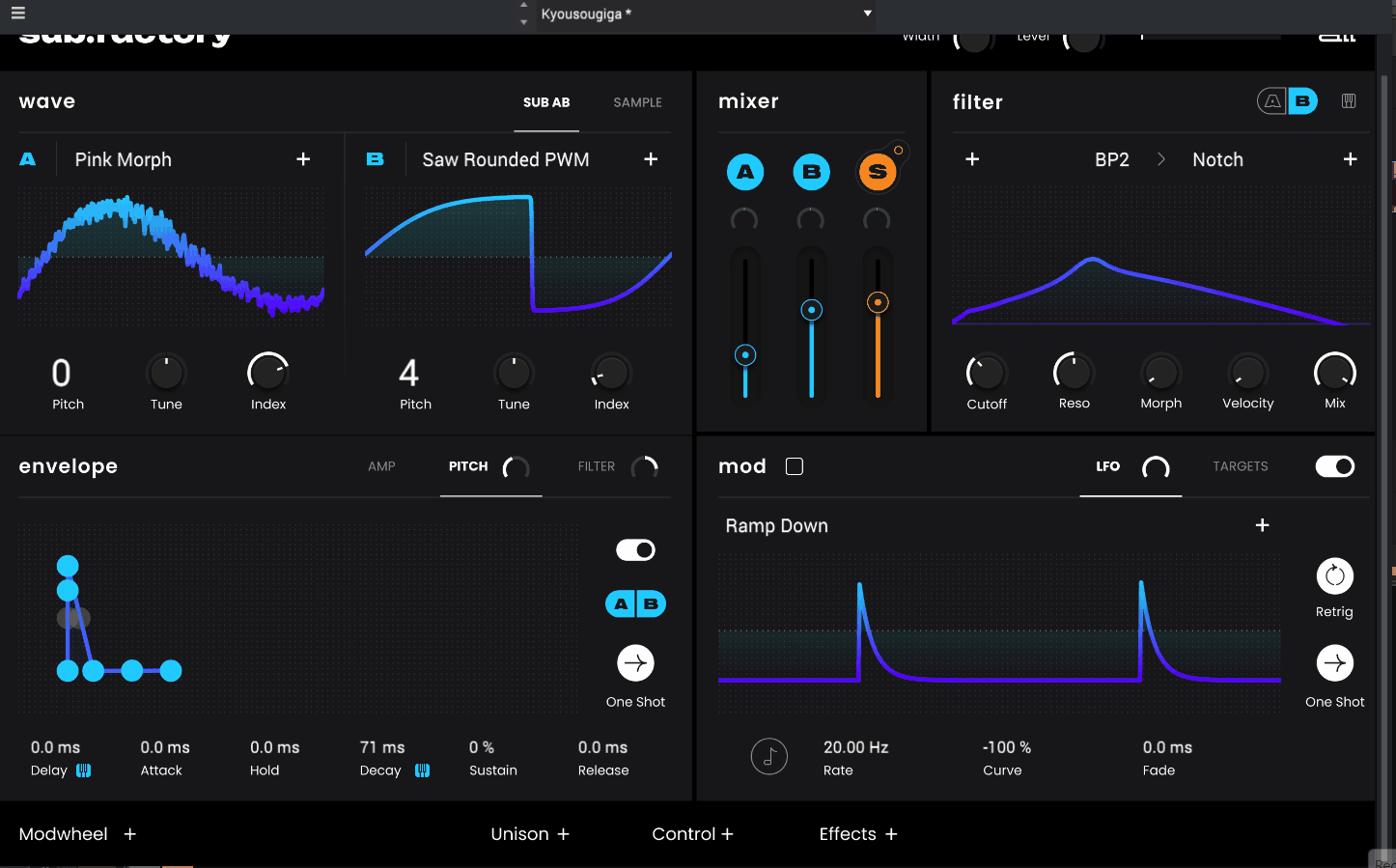
R&B, hip-hop, drum and bass, and pop all lean on bass in genuinely different ways, which is a hard needs list for any single synth to satisfy well. AIR Sub Factory manages it by refusing to lean on just one sound source, combining two full wavetable engines with a dedicated sample engine underneath instead of picking a single approach and sticking with it.
It goes well past the classic 808-preset formula that a lot of competing bass synths still lean on, and honestly that breadth is what makes it worth exploring beyond the factory presets.
- Dual Wavetable Engines
Each wavetable engine offers hundreds of waves and 127 index points, and I think that range covers everything from classic analog shapes to edgy digital and hybrid tones you wouldn’t expect from a bass-focused synth.
- Sample-Based Third Engine
A dedicated sample engine includes kicks, 808 loops, one-shots, noise, and FX samples, each with its own start, delay, reverse, pitch, and filter controls, so you can layer real recorded texture on top of the synthesized layers.
- Comprehensive Filter and Envelope Section
Dedicated pitch controls sit alongside amp and filter envelopes, giving you real shaping depth beyond just picking a wavetable and calling it done.
- Unison, Spread, and Width Controls
On top of effects like ring mod, chorus, drive, and EQ, dedicated unison, spread, and width controls let you fatten a bass patch considerably without it losing focus in the low end.
9. u-he Diva
u-he Diva stands for Dinosaur Impersonating Virtual Analogue, which tells you exactly what it’s going for: models of individual circuit components rather than a rough approximation of how a vintage synth generally behaved.
For bass specifically, I think that component-level modeling is why a Diva sub or growl sits so convincingly next to real hardware in a blind test.
In fact, you choose from 7 oscillator models, 5 filter models, and 4 envelope models, each based on a different piece of classic hardware, and combine them freely to build hybrids that never existed in the real world.
Other than that, you get:
- Trimmers Section for Analog Drift
The Trimmers section lets you introduce detuning, filter cutoff slop, and timing variation across voices, giving you a far wider range of analog imperfection than most competing synths offer.
- Draft and Divine Quality Modes
You can work in the lighter Draft mode while sound designing and switch to full Divine quality for final rendering, which I’d recommend since Diva’s modeling is genuinely CPU-intensive at full quality.
Freebies
Matt Tytel Vital
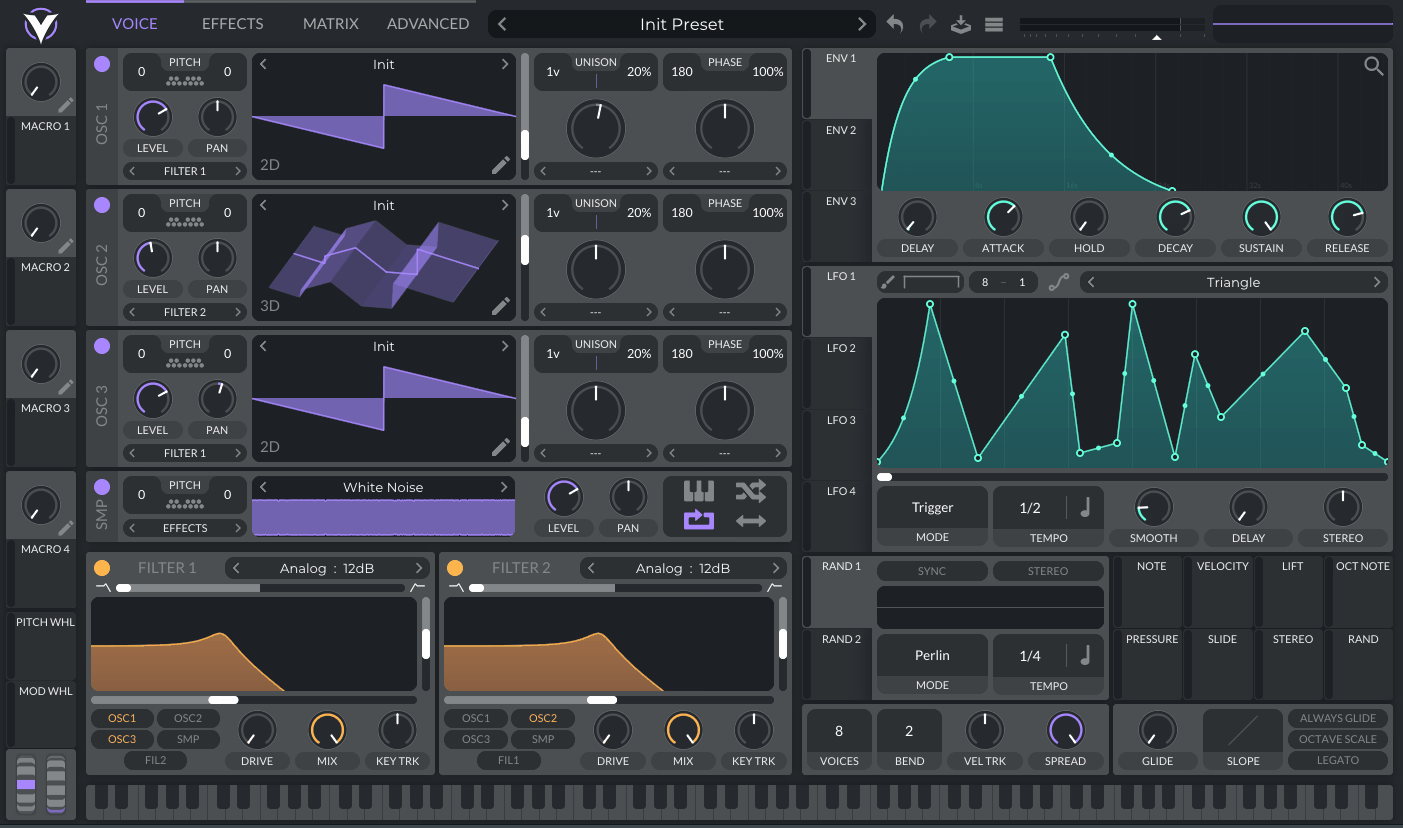
I still remember the first time someone told me a completely free synth could compete with Serum, and I was genuinely skeptical until I actually opened it myself. Vital VST synth was built single-handedly by Matt Tytel, turned out to be spectral warping wavetable synth that goes toe-to-toe with paid competitors. Even the free tier alone, with 75 presets and 25 wavetables, is a great deal!
- Spectral Warping Oscillators
Three wavetable oscillators, each with frequency and wave warping, let you manipulate harmonic content in ways that go well past a standard wavetable synth’s morph controls.
- Drag-and-Drop Modulation
Modulation sources can be dragged directly onto parameters with a live preview before you even make the connection, and I found this made building complex bass patches genuinely fast compared to a traditional mod matrix.
Tone Projects Basslane
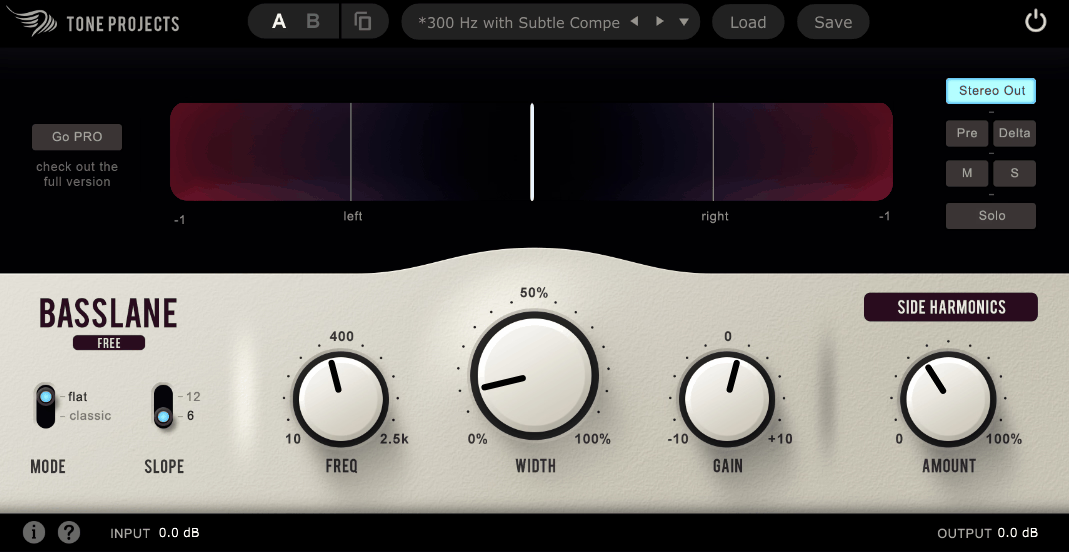
Some freeware plugins get replaced within a year or two by something shinier, and then there’s Basslane, which has quietly stuck around on serious producers’ plugin lists for nearly two decades now.
I think that longevity says more about how genuinely useful it is than any marketing ever could. It narrows the stereo width of frequencies below a threshold you set, keeping your low end centered and translatable across every playback system you throw at it.
- Side Harmonics
Basslane adds upper harmonics to the side channel based on the mono’ed low end, which I like because it gives you stereo width that’s musically related to the bass instead of just adding uncorrelated stereo content down low.
- Flexible Monitoring Modes
You can monitor delta, mid, side, or filter-solo signals independently, making it genuinely easy to hear exactly what the plugin is doing to your bass at any given moment.
- Selectable Filter Slope
A switchable 6 or 12 dB per octave filter slope lets you control how gradually or aggressively the stereo narrowing kicks in below your chosen frequency.
Surge XT
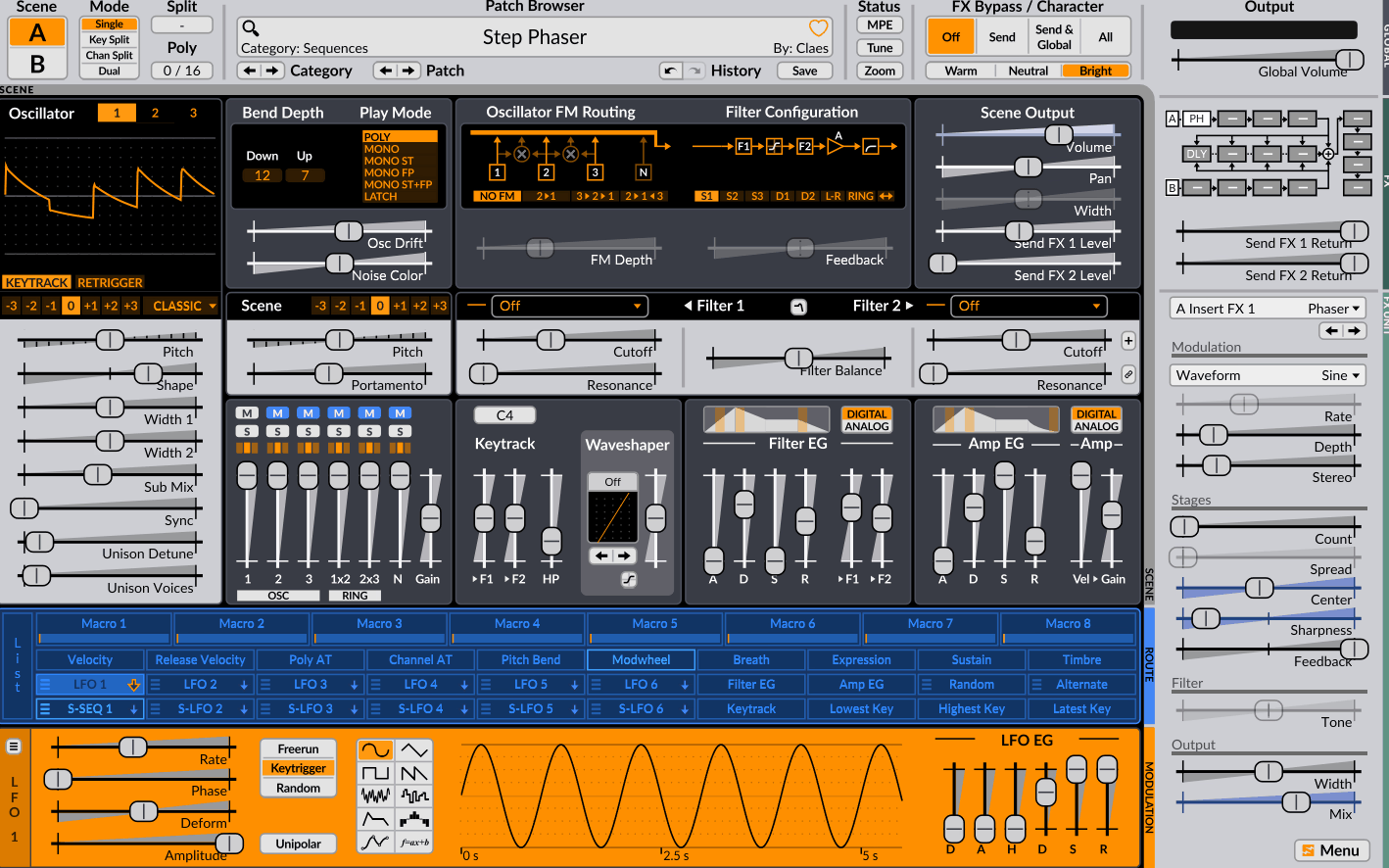
I think Surge XT is one of the clearest examples of open-source software actually outperforming a lot of paid competition. It’s a genuinely full hybrid synth rather than a stripped-down freebie, combining subtractive, wavetable, FM, and even physical-modeling-style oscillators inside one plugin.
But here is what you get:
- Two-Scene Architecture
Each patch holds two full scenes, effectively separate synth engines you can layer or split, each with three oscillators and its own filter block.
- 12 Oscillator Algorithms
Oscillator types range from classic subtractive shapes to wavetables, FM, string waveguide modeling, and a Braids-inspired “Twist” mode, giving you a genuinely huge range of starting points for a bass patch.
- 1,000+ Factory Presets
To wrap this up, you get over 1,000 presets (wow) in the box, and because it’s open source, the community has kept adding new content and features on a rolling basis since the project’s original handoff.
Hey, I’m Vil, I started this site to help you find the best audio plugins covering various categories including synths, pianos, strings, and effect tools of all sorts as well. I pick these plugins based on various criteria so it best matches the actual topic.