When you purchase through the links on my site, you support the site at no extra cost to you. Here is how it works.
Choosing an electric guitar VST can get surprisingly complicated. There are libraries built for deep note-by-note programming, others that are all about getting a convincing part down quickly, and plenty that are really about capturing one specific guitar character.
The right choice depends less on having the most features and more on how you actually like to work. In this guide, I’ve broken down the 13 best electric guitar plugins with that in mind, looking at their sound, workflow and articulation options.
Whether you need tight modern metal, clean funk, vintage jangle, or a quick songwriting tool, the goal is to help you find a guitar that makes your workflow easier rather than getting in the way.
1. Ample Guitar LP
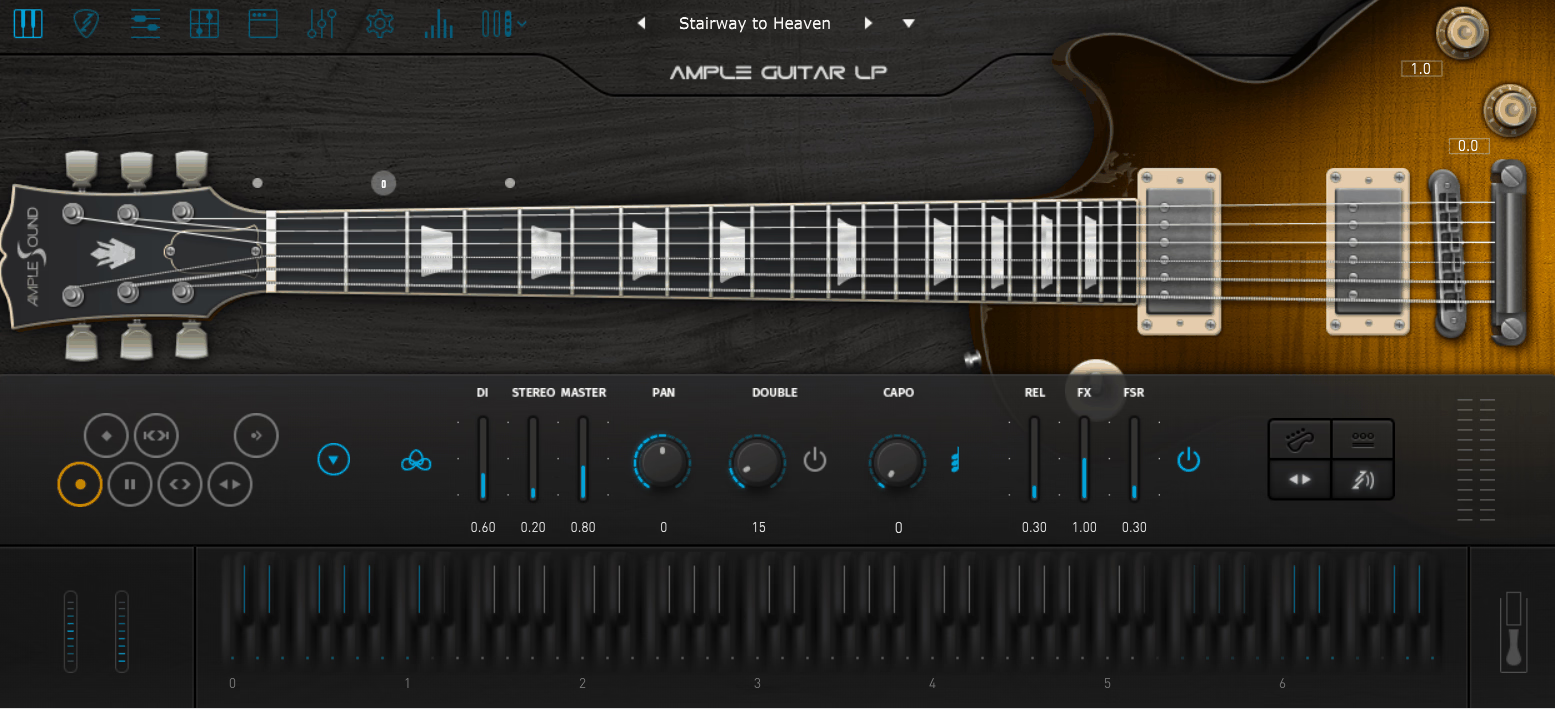
A Les Paul-style guitar is a useful choice when you want a strong, familiar electric guitar sound without giving up control over the performance. Separate pickup options can give you different tonal starting points, while detailed articulation controls let you shape the part after you have written it.
That makes this type of instrument useful for everything from straightforward rhythm parts to more carefully programmed performances. Ample Guitar LP is a strong choice when you want plenty of control while keeping that Les Paul-style character.
I like it when I know roughly what I want the guitar to play but still need to shape the timing, articulation, and feel afterward.
- Four guitar libraries
Neck, Bridge, Both, and Fingerstyle are separate sample libraries, so changing pickup position actually changes the recorded source. I usually start with the combined sound for rhythm parts and move toward the neck when I want something warmer.
- 10 articulations
You get sustain, palm mute, harmonics, hammer-ons and pull-offs, slides, pop, and pinch harmonics. That gives you enough control to fix the things that make programmed guitar sound artificial.
- Riffer 4 and Strum Note
Riffer 4 gives you a guitar-focused way to build and edit parts, while Strum Note lets you treat a chord as one editable object. That saves time because you can change the feel of an entire strum without moving every note separately.
Tab Reader also supports Guitar Pro files, so you can bring existing guitar parts into the instrument instead of rebuilding them by hand.
- Built-in amp section
The internal system includes seven amp heads, eight cabinets, eight microphone options, EQ, compression, delay, and convolution reverb. I find that useful for quickly getting from MIDI to a finished guitar sound, although you can still use your own amp sim later if you prefer it.
Best for: an all-round Les Paul-style guitar with deep MIDI control.
2. NI Session Guitarist Electric Storm Deluxe
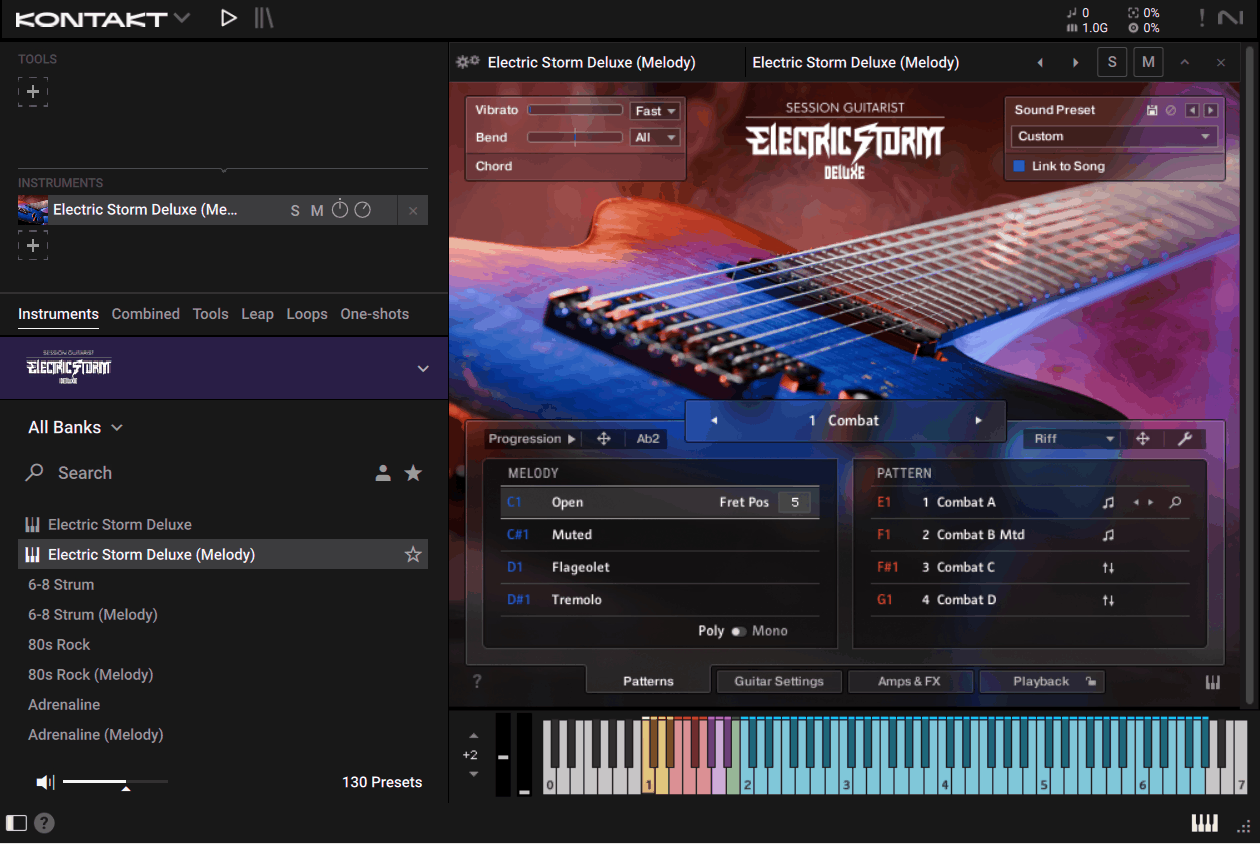
Low-tuned metal needs a guitar sound that stays tight and aggressive without losing definition in the lower register. A useful library also needs to handle the difference between quickly building riffs and writing more specific melodic parts.
Pattern-based playing can make the first stage much faster, while a dedicated melody setup gives you more freedom when you want to take control yourself. Electric Storm Deluxe combines those two approaches around a custom eight-string guitar.
I like that split because you can use it for instant riffs when you need speed, then switch to a more playable setup when you need to write your own line.
The library includes 270 riffs and patterns covering chugs, muted rhythms, fast picking, tapping, sweeps, and other metal-oriented phrases. I like using these as starting points even when I don’t keep the original part.
- Built around an eight-string
The low range is the main reason to use this library. You can get the extended low notes of an eight-string without trying to turn a normal six-string sample into something it was never recorded to do.
- Rhythm and melody in one instrument
The pattern side handles riffs and grooves, while the melody instrument gives you more direct control for leads and single-note parts. I find that useful because rhythm guitar and lead guitar usually need different workflows.
- Separate signal chains
The guitar sources can be processed through separate chains with amps, cabinets, microphones, and effects. That gives you more room to build a thick rhythm sound without simply copying the same guitar track twice.
Best for: low-tuned metal and modern eight-string guitar parts.
Keep in mind: this is a specialist instrument. You won’t get much from it if most of your work is clean pop, indie, or vintage guitar.
3. Solemn Tones Odin III
Some metal guitar libraries are designed to get you to a finished part quickly, while others are aimed at producers who want to control nearly every detail of the performance. That extra control becomes useful when picking direction, fret position, articulation, and small timing differences all affect how convincing the part sounds.
It is especially helpful when you are writing exposed riffs or leads that need to hold up on their own. Solemn Tones Odin III is built for that more hands-on approach.
I’d choose this when realism and editing matter more than getting a finished riff in ten seconds.
- Deep articulation set
You get down- and up-picking, alternate picking, several palm-mute types, slides, hammer-ons, pull-offs, bends, scrapes, harmonics, finger plucks, and more. You won’t need every articulation on every track, but the options are there when a basic sustain or palm mute starts sounding too programmed.
- Human Error
Human Error adds small timing and pitch variations to MIDI. I like this because a little imperfection often does more for realism than another layer of processing.
You just need to keep it under control. Too much variation can make a tight riff sound sloppy.
- Auto Chord Delay
This feature staggers the notes of a chord instead of letting every string sound at exactly the same instant. That is useful when your chord feels too mechanical because a small amount of delay between strings can make it sound much more like a real hand moving across the guitar.
- Auto Slide and Force Vibrato
Auto Slide helps connect overlapping notes, while Force Vibrato adds movement to longer notes. I find both useful for lead parts, especially when I want expression without drawing a large amount of pitch automation.
- Every note across the neck
You can choose where a note is played rather than treating a pitch as a single location. That matters because the same note can sound different depending on the string and fret.
For detailed riff programming, that gives you much more control over attack and tone.
Best for: detailed metal programming and realistic note-by-note performances.
4. NI Session Guitarist Electric Vintage
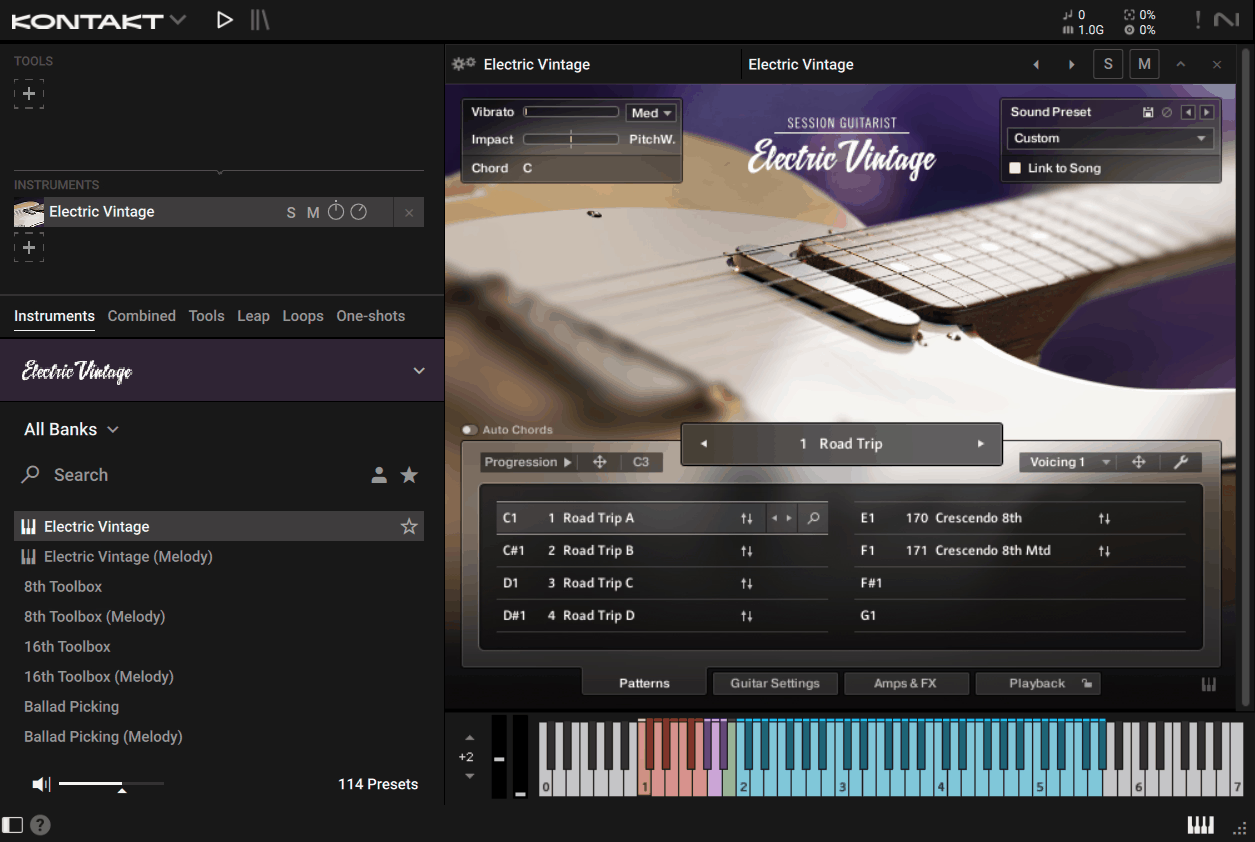
A Telecaster-style guitar can work in much more than country and roots music when the playing library gives you enough rhythmic variety. Strumming, picking, muted notes, and different pattern types can move the instrument naturally into funk, soul, R&B, pop, and rock without losing its basic character.
That makes versatility more important here than locking the guitar into one particular genre. Electric Vintage is particularly useful in that role because it is built around a broad range of playing styles.
The real strength is versatility rather than one specific genre.
- 231 patterns
The library includes strumming, picking, riffs, glissandos, tremolo, dead notes, and reverse patterns. I like this when I need a guitar part to sound played without programming every note myself.
- Pickup and microphone blend
You can blend the two pickups and add the condenser-mic signal for more detail and attack. For cleaner parts, that extra microphone sound can help the guitar feel closer and more present.
- Two playing modes
One instrument handles rhythm patterns, while another is built for melodic playing. That makes arrangement work faster because you can build the rhythm first and add your own line without switching to a completely different guitar.
- Amp and effects
You get five amps, ten cabinets, plus stompbox, modulation, EQ, reverb, and delay processing. I wouldn’t use all of it by default because the guitar already has a strong character.
Best for: funk, soul, pop, Americana, and clean rock.
5. Ample Guitar RB
Some guitar libraries are designed to cover a lot of ground, while others are more useful because they give you a very specific character from the start. A Rickenbacker-style guitar is especially useful when you want bright attack, chiming chords, and a lighter rhythmic texture rather than a generic electric sound.
Those qualities can make a part feel much more distinctive in British pop, jangle, and indie arrangements. Ample Guitar RB is built around that character rather than trying to be a general-purpose rock guitar.
For British pop, jangle pop, and related sounds, that makes it much easier to get the right starting point.
- 11 articulations
The library includes sustain, palm mute, harmonics, hammer-ons and pull-offs, slides, pop, pinch harmonics, dead notes, and mordent. The small details matter here because dead notes and other short articulations can make a jangle part feel rhythmic instead of turning into a wall of sustained chords.
- Riffer 4 and Strum Note
Riffer 4 gives you tab and piano-roll editing, while Strum Note lets you adjust a whole chord without manually moving every MIDI note. I find that particularly useful when a part is technically correct but the strum still feels too stiff.
- Guitar Pro support
Tab Reader can import Guitar Pro files, which is handy if you already work from tabs. You can bring the part in rather than transcribing it again inside the instrument.
- Amp and cabinet section
The internal amp system includes seven heads, eight cabinets, eight microphones, plus EQ, compression, delay, and reverb. For this guitar, I’d keep the tone relatively clean when I want the characteristic jangle to remain obvious.
Best for: British pop, jangle pop, indie, and bright vintage guitar.
Keep in mind: the same character that makes it excellent for those styles makes it less useful as a general-purpose rock guitar.
6. ujam SPARKLE 2
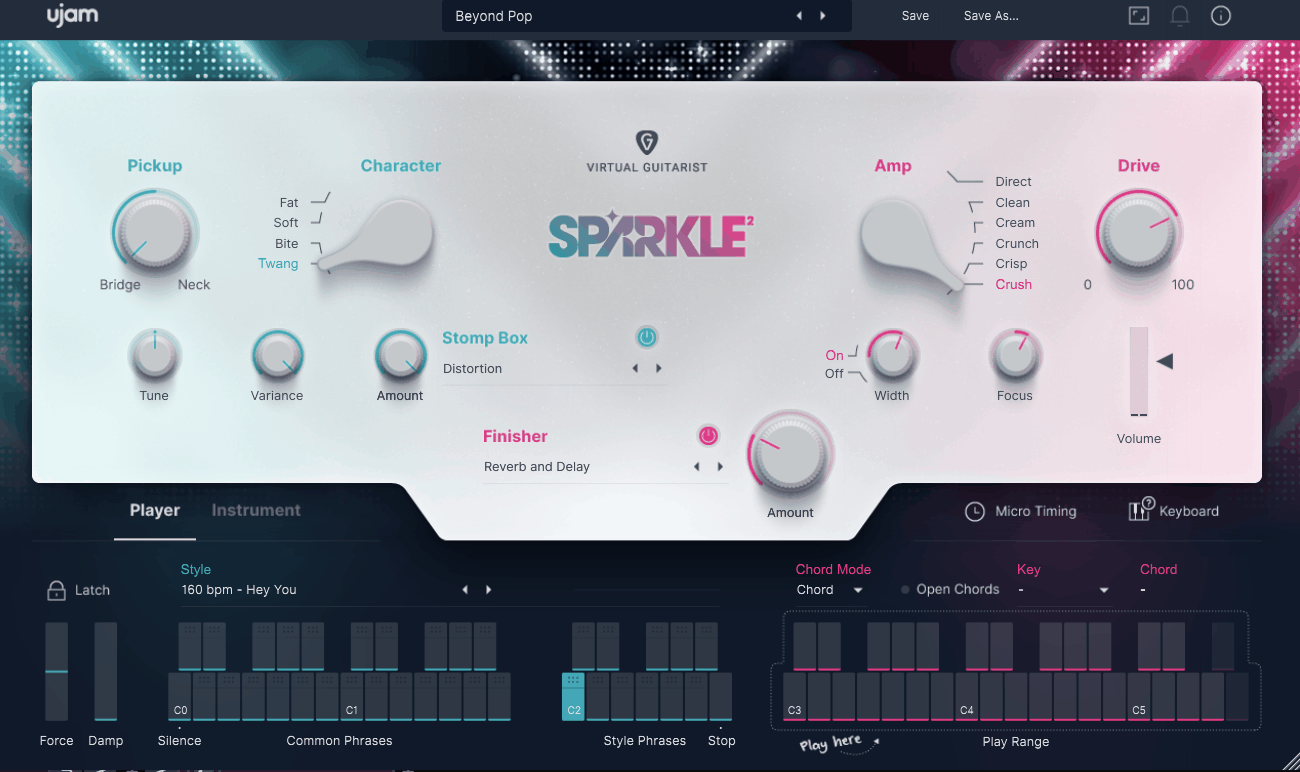
The biggest advantage of a guitar plugin is not always the amount of control it gives you, especially when the goal is to finish a song quickly. Sometimes it is more useful to enter the chords, choose the right feel, and hear a convincing guitar performance without spending time programming every note.
That kind of workflow can be especially helpful in pop, indie, electronic music, and fast songwriting sessions. ujam SPARKLE 2 is the easiest choice here when you want a believable guitar part quickly.
I’d use it when the song needs guitar but I don’t want the guitar programming to become the main job.
- Player Mode and Instrument Mode
Player Mode turns simple chord input into performed guitar parts, while Instrument Mode gives you more direct control when you want to play individual notes yourself. That makes the workflow flexible because you can use the fast mode for rhythm and switch to direct playing when you need a specific line.
- Open chords
The chord voicings are designed around guitar fingering rather than generic keyboard voicings. That matters because a realistic guitar chord isn’t just the right collection of notes.
The spacing and order of the strings affect how the strum feels.
- Stompbox and amp processing
SPARKLE 2 includes stompbox-style effects before the amp and additional processing after it. That makes it easy to move from a clean part into something more processed without building a full chain yourself.
- Finisher effects
The final effects section gives you more space, width, and texture after the amp stage. This is useful when you want the guitar to sit inside a modern production rather than sound like a completely dry amp recording.
Best for: fast songwriting, pop, indie, electronic music, and easy rhythm guitar.
Keep in mind: SPARKLE 2 is about speed and ease. You give up some of the detailed control you get from the deeper sampled instruments.
7. NI Session Guitarist Electric Mint
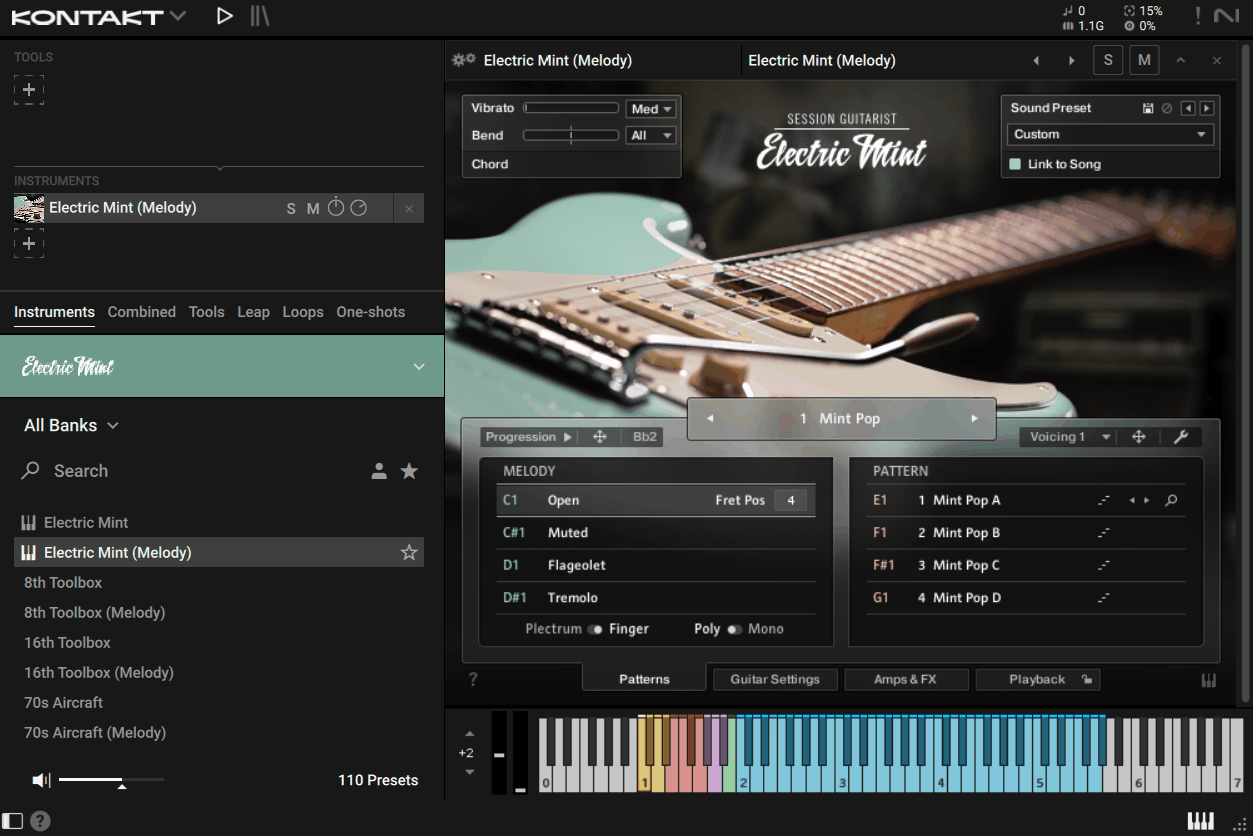
Funk and clean rhythm guitar often depend on tiny performance details that are easy to miss when you program everything from scratch. Tight muting, pickup changes, and the feel of a played groove can make a bigger difference than adding more processing afterward.
A broad pattern library helps you capture those details without manually building every variation yourself. NI Session Guitarist Electric Mint sits somewhere between a specialist guitar and a general-purpose session instrument, which makes it useful across several styles.
I like it when I want one guitar to cover several styles without completely changing the character of the instrument.
- 222 patterns
The library covers a wide range of playing styles, with especially strong options for tight funk rhythms. That is where the library becomes useful because when the guitar is an important part of the groove, the timing and articulation of the performance matter just as much as the chord progression.
- Five pickup combinations
The three pickups give you five usable combinations, so you can move between brighter and softer sounds without changing guitars. You also get tone and volume controls plus stereo widening.
- Supercharger GT and Cry Wah
The compressor and wah-style effects fit naturally with funk and soul parts. I find the wah especially useful when I need the movement of a pedal but don’t want to build the effect from scratch.
- Convolution reverbs
The reverb options help place the guitar in different spaces without immediately sending it through another plugin. I mainly treat these as finishing tools rather than the main reason to use the instrument.
- Drag-and-drop MIDI
You can drag the chord progression or pattern into the DAW as MIDI. That means you can start with a performed phrase and then rewrite the notes, rhythm, or voicing instead of being locked into the original pattern.
Best for: funk, soul, pop, clean rock, and rhythm-heavy parts.
Keep in mind: it’s flexible, but if you need a very specific guitar identity, a more specialized library may fit better.
8. Ample Guitar SC
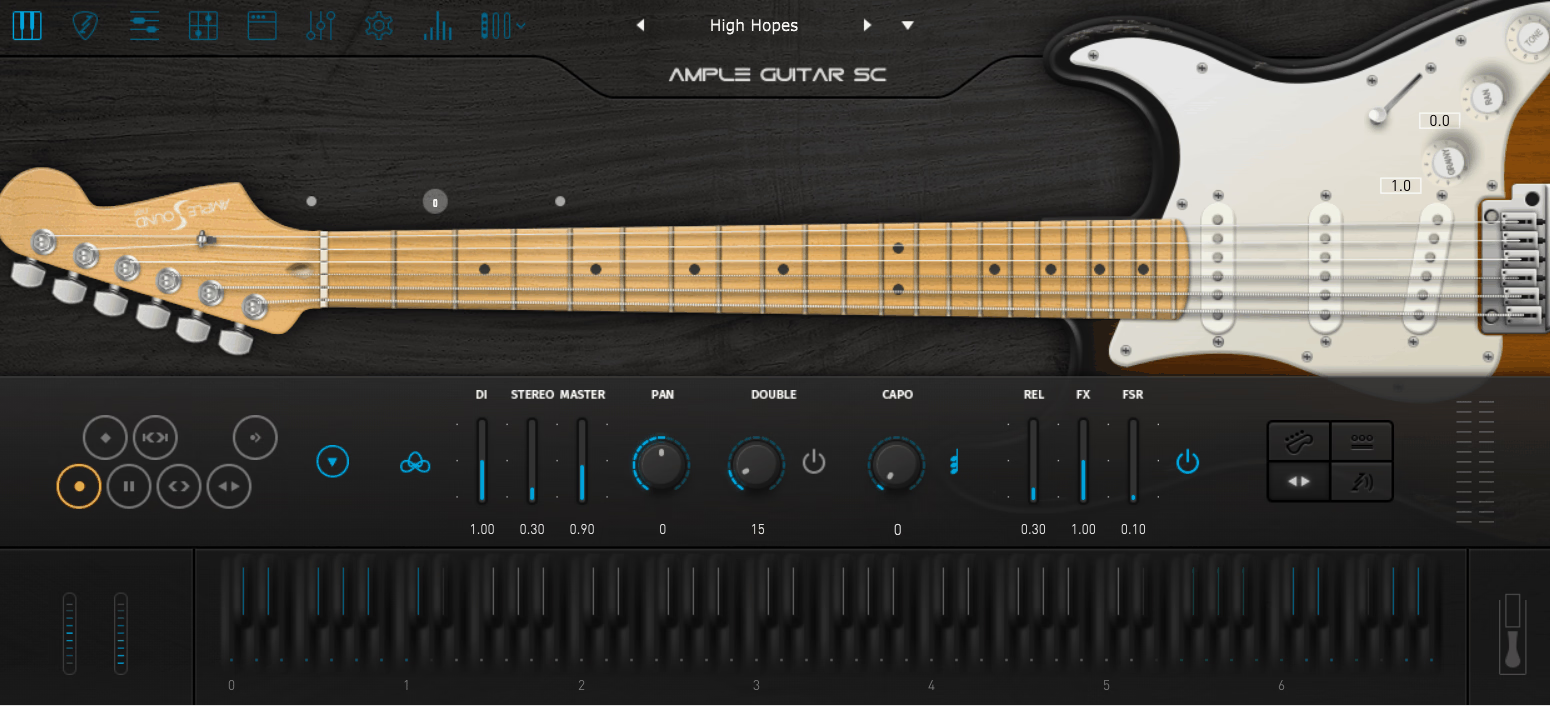
A Strat-style guitar is useful when you need bright clean tones, expressive chord work, or the familiar contrast between different pickup positions. For programmed guitar, separately sampled pickup combinations also give you more ways to vary the sound without relying entirely on EQ and effects.
That can help a rhythm part feel more naturally played across different sections of a song. Ample Guitar SC is the Strat-style option for producers who want that extra control over pickup combinations and articulation.
The middle-plus-bridge option is particularly useful for tighter funk parts.
- Four pickup positions
You get Neck, Neck plus Middle, Middle plus Bridge, and Bridge. Because these are separately sampled positions, changing them gives you a real change in tone rather than just a filtered version of the same recording.
- 11 articulations
Sustain, palm mute, harmonics, hammer-ons and pull-offs, slides, pop, and slide guitar cover the main playing techniques. That is enough for most rhythm and lead work without making the library unnecessarily difficult to program.
- Riffer 4 and Strum Note
The Ample editing system lets you work with tab and piano-roll views, while Strum Note lets you adjust whole chords together. I find that especially useful when I need to tighten a part without making it sound perfectly quantized.
- Built-in amp system
Seven amp heads, eight cabinets, eight microphones, EQ, compression, delay, and convolution reverb are included. You can build the entire tone inside the instrument, or send the guitar elsewhere when you want to use your own amp chain.
Best for: funk, pop, blues, indie, and Strat-style clean or lightly driven guitar.
9. NI Session Guitarist Electric Sunburst Deluxe
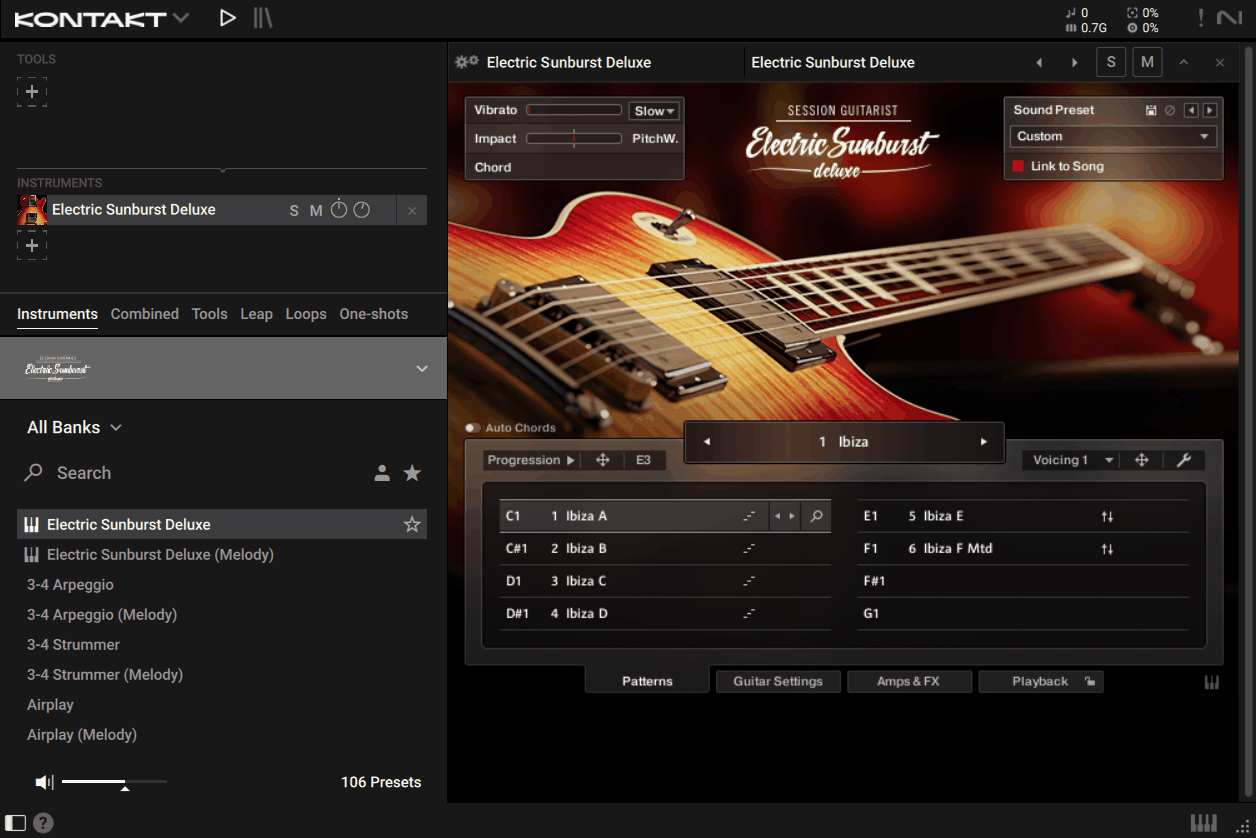
Realistic rhythm guitar can be difficult to program because getting the chord progression right is only the beginning. The voicing, string order, timing, and small performance details all need to feel believable if the guitar is going to sound natural in the mix.
A pattern-based instrument can handle much of that work while still giving you room to edit the part afterward. Electric Sunburst Deluxe is a good middle ground between wanting realistic guitar and not wanting to program a guitarist from scratch.
That makes it particularly useful for songwriting.
- 237 patterns
The pattern library covers picking, strumming, and other rhythmic parts, with plenty of variations to work from. I like starting with a pattern, dragging it into the DAW, and changing what I need instead of trying to write every guitar note from an empty MIDI track.
- Autochord
Autochord is useful when your priority is the chord progression rather than the exact guitar fingering. You can play the harmony naturally on a MIDI keyboard and let the instrument turn it into a guitar performance.
- Melody instrument
A separate instrument handles single-note playing, so you can add leads and hooks without forcing them into the pattern system. That keeps the workflow simple when a song needs both rhythm and lead guitar.
- Humanization controls
Timing, tuning, and humanization controls let you push the performance toward tighter or looser playing. I use these as finishing controls rather than a substitute for editing.
- Effects
The Deluxe edition adds more modulation and delay options to the existing effects chain. Useful, but secondary—the main reason to choose this instrument is the fast guitar-performance workflow.
Best for: realistic programmed rhythm guitar, pop, rock, indie, and songwriting.
10. Ample Guitar TC
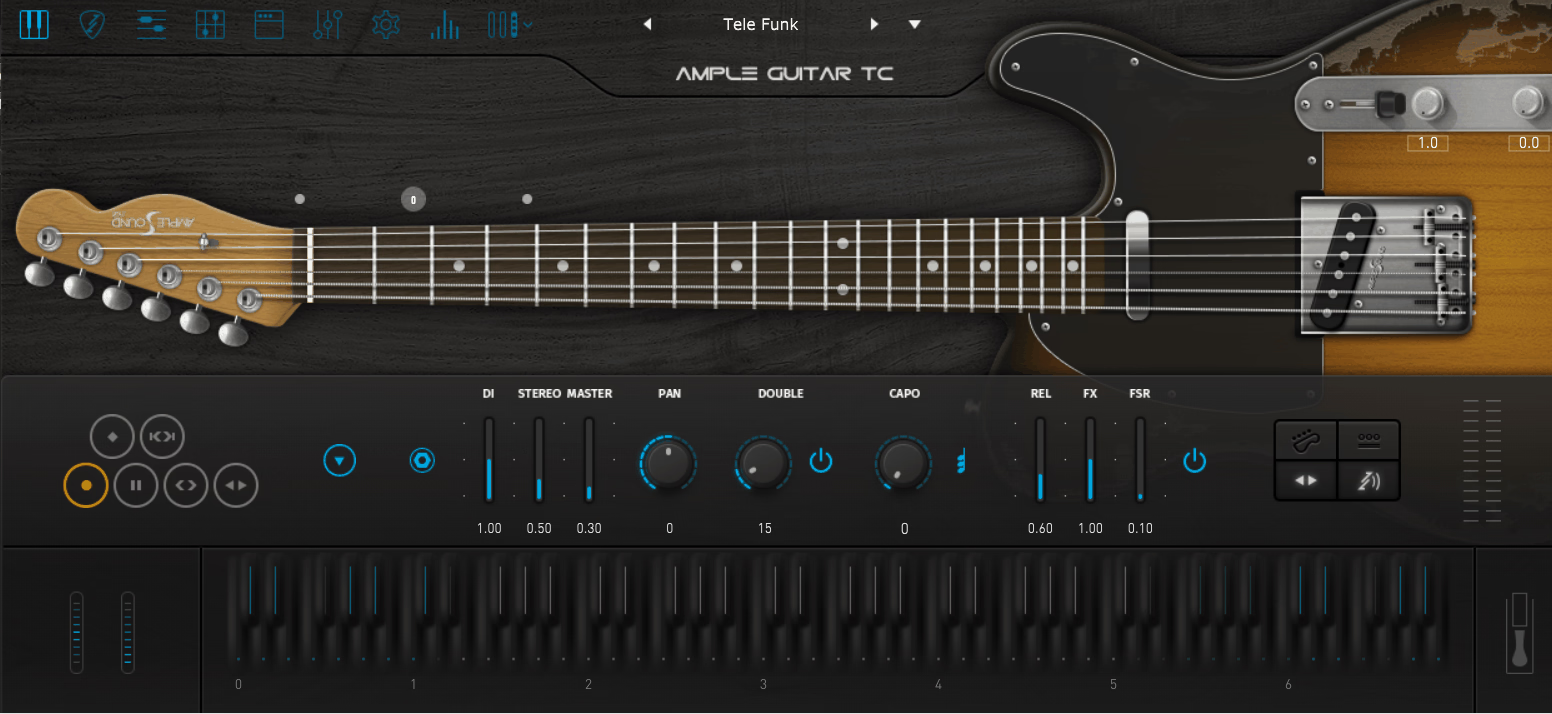
A dedicated Telecaster library makes sense when you want the instrument’s particular attack and pickup character rather than a generic clean electric sound. The neck and bridge positions can play very different roles, from rounder chord work to sharper rhythm parts.
Having separate recordings for those positions also makes it easier to keep the guitar sounding authentic as the arrangement changes. Ample Guitar TC focuses on those two core Telecaster voices.
I’d choose it when I want a Telecaster specifically, not just another clean electric guitar.
- Neck and bridge libraries
The two pickups are separately sampled, so the tonal difference comes from the source itself. The bridge position gives you the sharper attack most people associate with a Telecaster, while the neck works better when you want something rounder.
- 10 articulations
The library covers sustain, palm mute, harmonics, hammer-ons and pull-offs, slides, pop, pinch harmonics, and dead notes. That’s enough for most Telecaster rhythm and lead parts.
- MIDI CC and velocity editing
The built-in editors let you work on several MIDI controls at once and use curve presets for faster automation. I find this more useful for expression than for dramatic sound design because guitar usually sounds better when the changes are small.
- Amp section
Seven amp heads, eight cabinets, and eight microphone options give you plenty of room for clean and driven Telecaster sounds. I’d stay fairly clean at first because once the guitar gets heavily distorted, you lose some of the detail that makes the Telecaster worth choosing.
- Riff library
The included riffs are handy when you need a starting point. I use this kind of content more for getting an idea moving than as finished material.
Best for: country, blues, funk, soul, indie, and Telecaster-style rhythm.
Keep in mind: it is a focused guitar library. That’s useful when you want the Telecaster sound, less so when you want one instrument to cover everything.
11. Ample Guitar PF
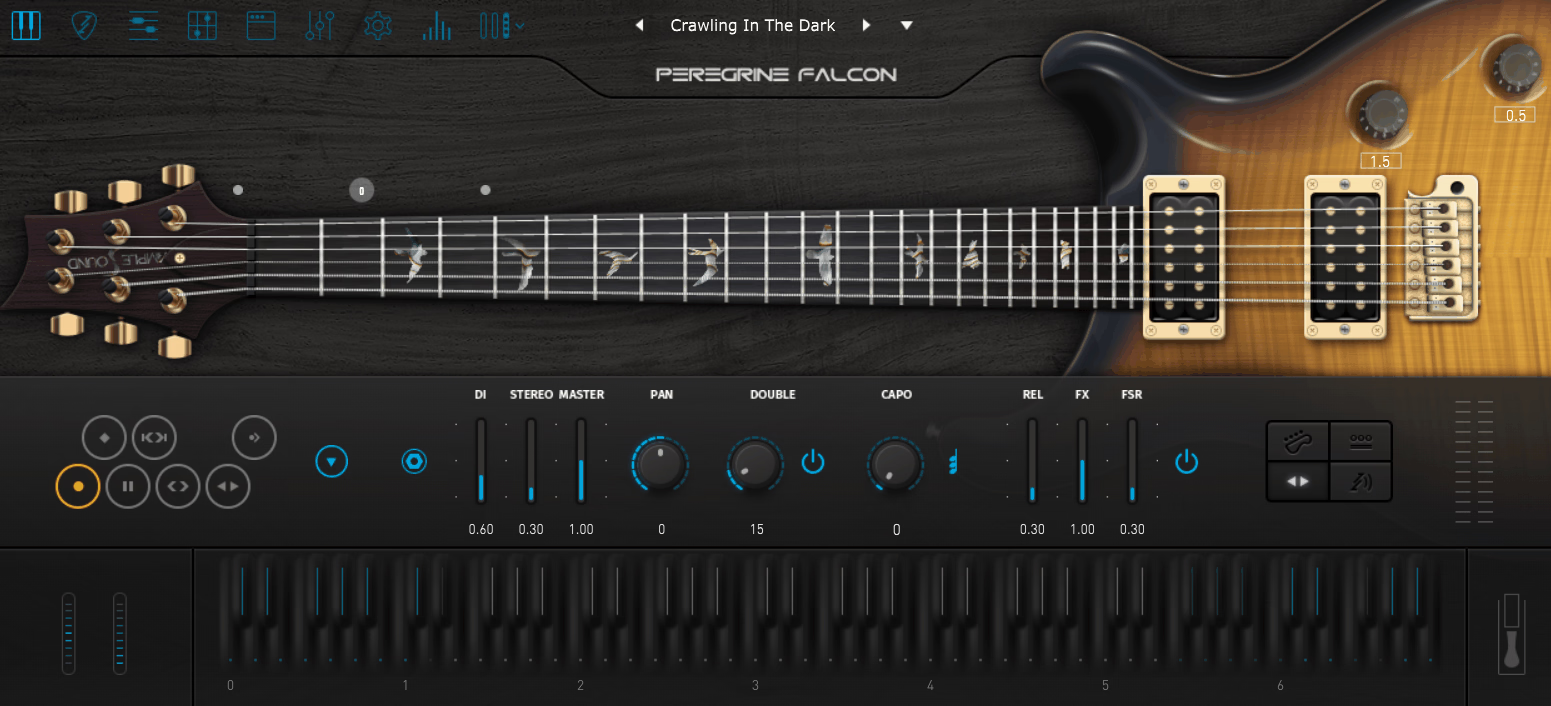
A PRS-style guitar can sit comfortably between Fender-style clarity and Gibson-style warmth, which makes it useful when you need one instrument to cover several kinds of parts. That middle ground works particularly well for fusion, progressive music, pop, and polished clean guitar.
Separate pickup libraries also give you more tonal flexibility without changing to another instrument. Ample Guitar PF is aimed at producers who want that combination of versatility and detailed control.
I find that character useful for fusion, progressive music, pop, and polished clean guitar.
- Three pickup libraries
The neck, bridge, and combined sounds are separately sampled. That gives you real tonal differences rather than one guitar recording with the EQ changed afterward.
- 11 articulations
The library includes sustain, palm mute, harmonics, hammer-ons and pull-offs, slides, pop, and other common techniques. That covers most of the rhythm and lead work you’d expect from this type of instrument.
- Riffer 4 and Strum Note
The same editing workflow found in the other Ample instruments lets you change chord timing and articulation without manually moving every note. I find this especially useful for fusion and progressive parts where the guitar often has more complicated voicings.
- Amp system
The internal amp setup gives you clean through driven sounds without forcing you to use another plugin. For this guitar, I would start clean and add gain only when the arrangement needs it.
- Tab Reader
Guitar Pro support is useful when you already have a part written as tab. You can bring it into the instrument instead of recreating the performance manually.
Best for: fusion, progressive rock, pop, and versatile clean-to-crunch guitar.
Keep in mind: it deliberately sits in the middle. That’s why it’s flexible, but it also means it has less of a single, unmistakable character than some of the other guitars here.
12. NI Session Guitarist Electric Ruby Deluxe
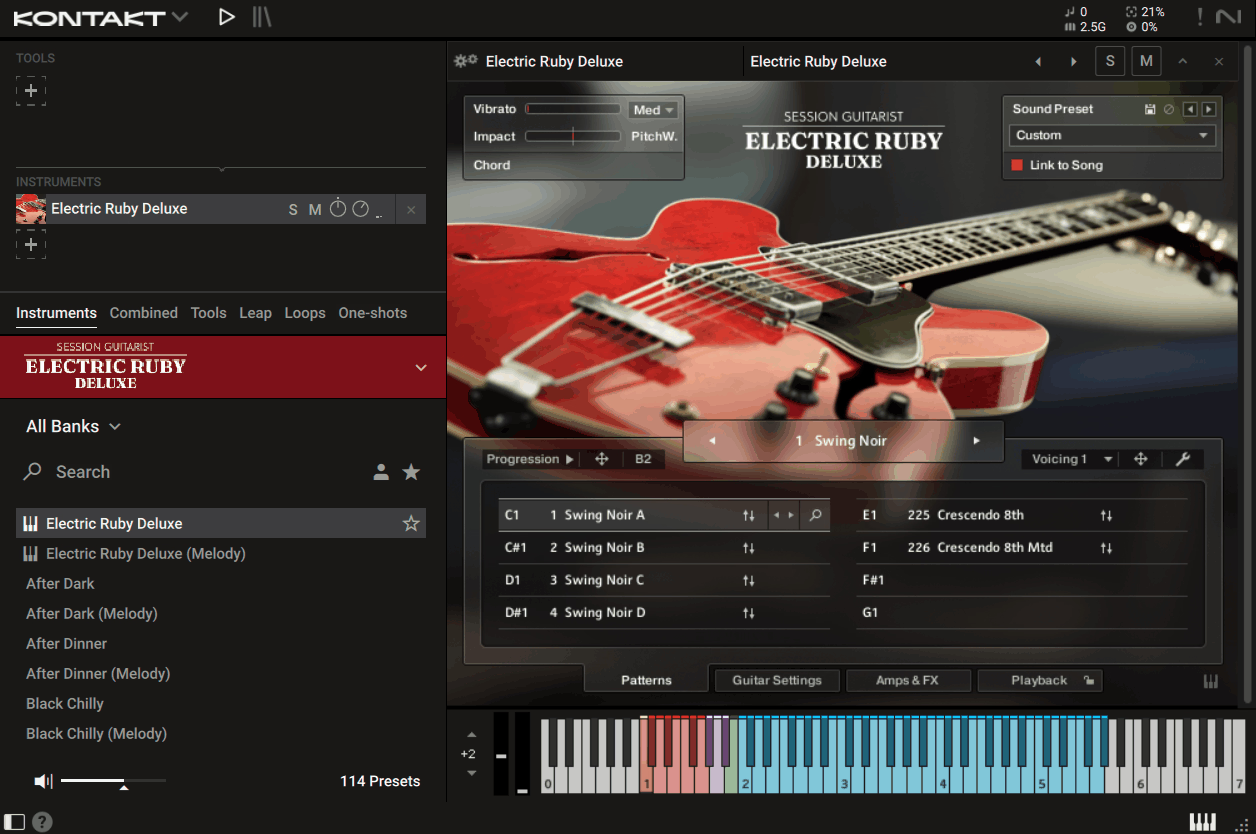
Warmer electric guitar parts often need a different approach from bright solid-body rhythm guitars. Smoother strumming, softer chord voicings, and expressive articulations are more exposed in these arrangements, so the performance needs to feel relaxed and natural.
A semi-acoustic guitar can give you that softer foundation without relying on heavy processing to tame the sound. Electric Ruby Deluxe makes sense when you need that warmer, softer electric guitar character.
I’d reach for it when a normal electric guitar feels too sharp for the arrangement.
- 232 patterns
The pattern library focuses on chordal playing, smoother strumming, and expressive parts. That makes it a better fit for restrained arrangements than for aggressive rock.
- Pattern and melody instruments
You get one instrument for rhythm patterns and another for melodic playing. That means you can build the backing part and lead from the same guitar without changing the overall character.
- Articulations
Slides, muted notes, harmonics, and other expressive techniques help keep the parts from sounding like repeated blocks of chords. Those details matter a lot with softer guitar tones because there is less distortion covering up mechanical playing.
- Pattern browser
The browser lets you search patterns by feel, rhythm, articulation, and style. I find the feel-based approach useful here because you’re often looking for something like “laid back” or “soulful” rather than one specific technical pattern.
- Reverb Delight and Guitar Rig effects
The included amp and effects chain gives you plenty of room to shape the guitar without leaving the instrument. I wouldn’t use this on a heavy rock track because the semi-acoustic character is much more valuable when the arrangement actually needs warmth and space.
Best for: jazz, blues, soul, R&B, and retro pop.
13. Ample Guitar VC
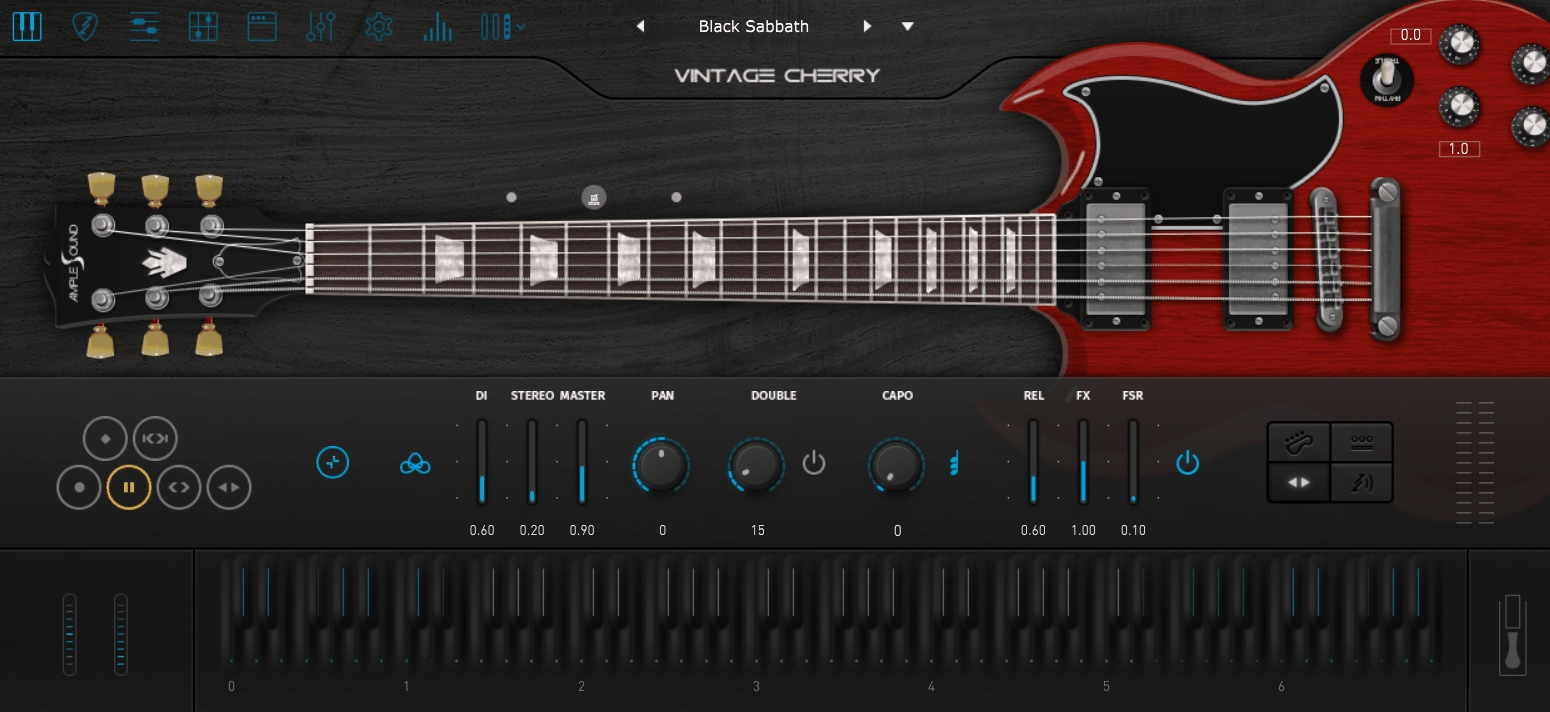
An SG-style guitar is often the right choice when you want strong midrange, sustain, and a classic rock character that stays present under gain. A dedicated sampled version also gives you more of the instrument’s natural response than trying to imitate it with a neutral electric guitar.
The bridge and neck pickups can serve different roles depending on whether you want attack or a softer, bluesier response. Ample Guitar VC is the straightforward choice when you want that SG-style sound.
I find the bridge sound the most useful for classic rock rhythms, where the attack needs to stay clear once the amp starts working hard.
- Neck and bridge humbuckers
The two pickups are separately sampled, so you get a real change in response when you switch between them. The bridge is the natural starting point for heavier rhythm parts, while the neck is more useful when you want a softer or bluesier sound.
- Core articulations
You get the techniques you are most likely to need for classic rock: sustain, palm mute, harmonics, hammer-ons and pull-offs, and slides. It doesn’t try to be everything, and instead focuses on the core playing associated with this guitar.
- Amp system
The built-in amp models cover Fender-, Marshall-, Mesa/Boogie-, and Roland-style tones. That gives you enough range to handle clean parts as well as classic rock crunch without immediately adding another amp plugin.
- Tab player
You can import guitar tabs and export the resulting part as MIDI. That’s useful if you already work from tab or want to experiment with an existing guitar part.
- Riff engine
The included riff presets give you a starting point when you’re stuck. I would use them as ideas rather than finished arrangements because a simple riff becomes much more useful once you reshape it around your own song.
Best for: classic rock, hard rock, blues rock, and SG-style guitar.

Hey, I’m Vil, I started this site to help you find the best audio plugins covering various categories including synths, pianos, strings, and effect tools of all sorts as well. I pick these plugins based on various criteria so it best matches the actual topic.