When you purchase through the links on my site, you support the site at no extra cost to you. Here is how it works.
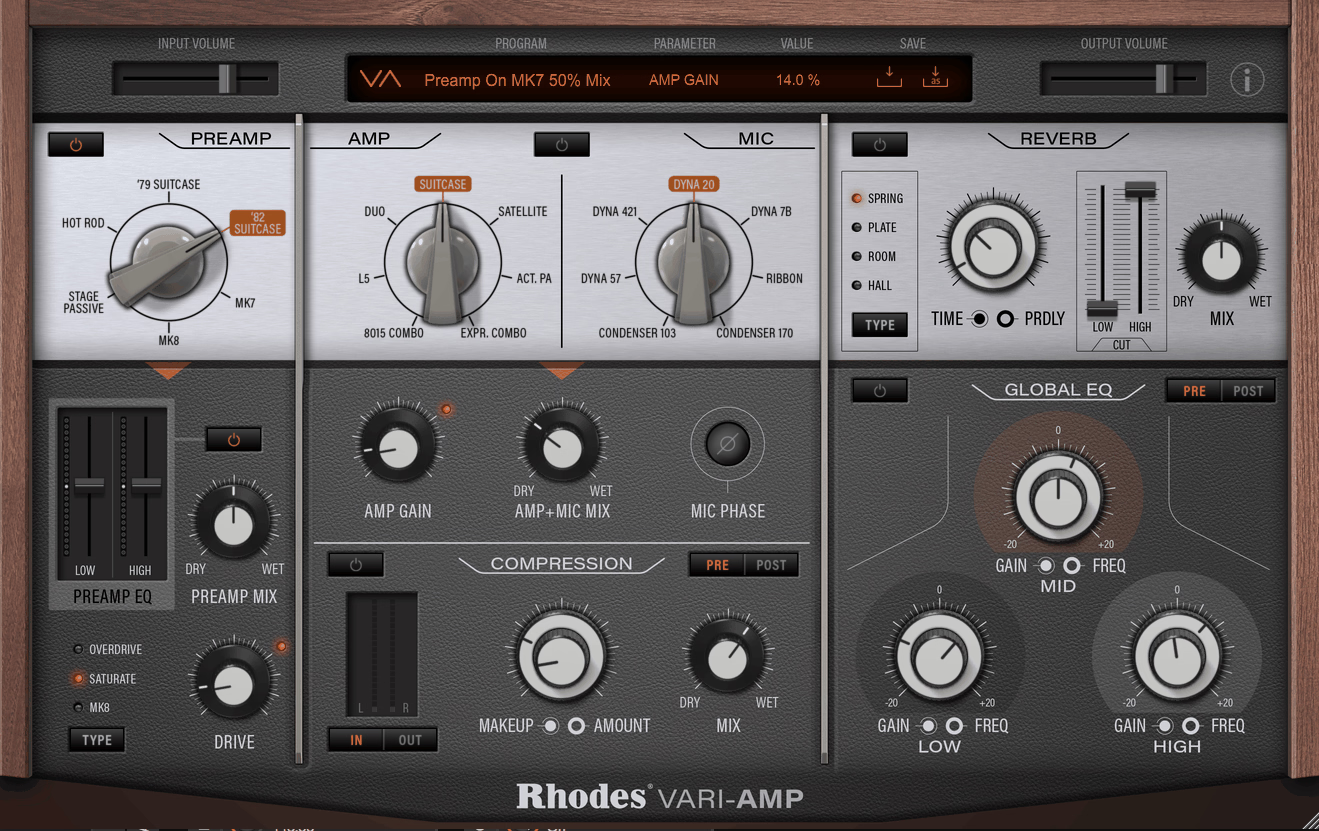
When it comes to a Rhodes, the instrument can sound perfectly good through a DI or direct plugin output, but the amplifier is a big part of what gives it that familiar warmth, compression, and physical presence. Rhodes Vari-Amp focuses on that part of the signal, modeling the amp and speaker behavior that comes after the tines and pickups.
I’ve found it most useful when a Rhodes sounds too clean or flat in a mix. Instead of trying to recreate that character with separate saturation, EQ, and cabinet plugins, you can shape the amplifier response itself and let your playing dynamics do more of the work.
- Integrated amp modeling
Vari-Amp combines preamp, power amp, and speaker behavior, so you are shaping the complete amplifier response rather than adding generic saturation to a finished Rhodes signal.
- Dynamic response
Playing harder changes how the modeled amplifier responds, adding compression and harmonic density that can make velocity-sensitive Rhodes parts feel more natural.
- Microphone placement
You can adjust the virtual microphone position to change focus, brightness, and room character without reaching for EQ immediately.
What Vari-Amp Actually Does
A direct Rhodes signal can be clean and detailed, but it can also lack the compression and tonal shaping you associate with a recorded amp. Vari-Amp recreates that part of the chain through tube amplification, power-amp behavior, and speaker resonance, giving you another stage between the Rhodes source and the final mix.
I notice the difference most on chords and sustained notes. The amplifier reacts to the level coming into it, so playing softly keeps the sound cleaner while harder playing introduces more harmonic density and compression.
That response is useful because the tone changes with the performance instead of staying fixed. As a result, you can get more contrast from the same patch simply by changing how you play it.
Amplifier Configurations
Vari-Amp gives you different amplifier configurations aimed at Rhodes sounds from different eras and playing contexts. Smaller setups work well when you want a tighter, more intimate character, while larger configurations give the instrument more weight and projection.
For jazz and soul, I generally prefer the more restrained options. They keep the Rhodes close and warm without making the amplifier feel like an obvious effect.
R&B and funk can benefit from more authority. When the Rhodes needs to compete with drums, bass, and guitars, a larger amplifier response can help it occupy more space without relying entirely on compression or EQ.
- Smaller configurations
Useful for intimate jazz, soul, and close-miked Rhodes parts where you want the instrument to stay controlled.
- Larger configurations
Better suited to full-band R&B, funk, and more spacious arrangements where the Rhodes needs additional weight and projection.
- Different amplifier characters
The different configurations give you more than one version of the same tone, allowing you to match the amplifier response to the arrangement rather than forcing every part through one setup.
Microphone Placement
The virtual microphone position is one of the controls I would spend time with before reaching for EQ. Moving the mic changes the balance between direct cabinet character and room information, so you can make the Rhodes more immediate or more distant without changing the source itself.
A closer position gives me more focus and midrange presence when the part needs to sit clearly in the arrangement. Pulling the microphone back adds more space and room character, which works better when I want the Rhodes to feel embedded in the track rather than sitting directly in front of the listener. For cinematic or ambient work, that extra room information can be particularly useful. A sustained Rhodes chord with more distance around it can function almost like an atmospheric layer, while a closer position keeps the same instrument much more defined.
Where It Fits Best
Jazz and soul are natural fits because the amplifier character can become part of the performance rather than an obvious effect. I tend to use the warmer settings when I want the Rhodes to feel recorded rather than simply reproduced, especially alongside acoustic drums and vocals.
Funk and R&B benefit from the dynamic response because stronger playing can push the amplifier further. That creates natural variation between softer and harder phrases, which can make a repeated Rhodes part feel less static.
You can also use it for cinematic and ambient work when the room character matters.
On the flip side, I would be more selective with heavily processed electronic sounds, because once the Rhodes is going through aggressive filtering, granular processing, or pitch effects, the details of the amplifier model become less important.
- Jazz and soul
Use the warmer configurations for intimate, rounded Rhodes tones that sit naturally with acoustic instruments.
- R&B and funk
The dynamic amplifier response works well when velocity and playing intensity are important parts of the groove.
- Cinematic and ambient
More distant microphone positions can add space and physical character to sustained chords and background parts.
A Practical Workflow
I would start with the Rhodes source at a sensible level and keep the amplifier fairly restrained. Get the basic cabinet and microphone character right first, because heavy saturation cannot fix a Rhodes source that is already tonally wrong for the track.
From there, play the part at different velocities and listen to how the amplifier responds. I like to find the point where harder notes gain some density without turning the entire performance into an overdriven effect. Once that is working, adjust the microphone distance and amplifier configuration. A change in mic position can often give you the presence or warmth you were about to create with EQ, while still keeping the tone connected to the modeled cabinet.
- Start with the source
Make sure your Rhodes instrument already has good tine, pickup, and velocity behavior, because the amplifier cannot replace a weak source.
- Set the amp before EQ
Find the right amplifier configuration and microphone position before making broad tonal corrections elsewhere.
- Use playing dynamics
Try the part at different velocities and listen for natural compression and harmonic bloom rather than judging the amplifier from a single sustained note.
- Keep processed tones controlled
When you want a cleaner Rhodes, avoid pushing the input too far. The amplifier should add character to the source rather than overwhelm it.
Where It Falls Short
The biggest limitation is its focus. Vari-Amp is designed around Rhodes material, so it is not something I would buy as a general keyboard amplifier for pianos, organs, or unrelated synth sources.
Your source also matters a lot. A detailed Rhodes instrument with good tine and pickup behavior gives the amplifier much more to work with, while a shallow or unrealistic Rhodes source will still sound limited after amplification.
Even though the amplifier modeling can add warmth and character, there is still a point where the processing becomes redundant. If your Rhodes is already heavily saturated, filtered, or processed through other effects, the specific amplifier character may no longer justify another stage in the chain.
Pros and Cons
Pros
- Complete Rhodes amplifier chain
Combining preamp, power amp, and speaker behavior gives you a more connected result than adding generic saturation and cabinet processing separately.
- Responsive to playing
Changes in playing intensity affect compression and harmonic content, which helps velocity-sensitive Rhodes parts feel more natural.
- Useful microphone control
Adjustable placement gives you practical control over focus, warmth, and room character without immediately reaching for EQ.
- Works for subtle and more colored tones
You can keep the amplifier fairly clean or push it further when the Rhodes needs more harmonic density and character.
Cons
- Rhodes-specific
Its design makes most sense for Rhodes instruments, so it has limited value as a general-purpose keyboard amp.
- Depends on the source
A strong amplifier model cannot compensate for a weak Rhodes instrument or poor tine and pickup behavior.
- Not necessary for heavily processed sounds
Once the source is heavily transformed, the subtle differences in amplifier behavior can become much less important.
Verdict
The plugin may look like another amp stage for a Rhodes plugin, but its value comes from what happens after the signal hits that stage. The combination of dynamic power-amp behavior, speaker resonance, and microphone placement can make a clean Rhodes feel warmer, more responsive, and more connected to the physical character of an amplified instrument.
For me, that makes it most useful in jazz, soul, R&B, funk, and cinematic work, where the Rhodes is important enough for its amplifier character to matter. You can keep the processing restrained and still hear a difference, or push it further when the amplifier itself needs to become part of the sound.
I would not treat it as an essential purchase for every Rhodes setup. If your source is already heavily processed, or you need a general-purpose keyboard amp for several unrelated instruments, the extra specialization is harder to justify.
So with all that being said, Vari-Amp makes the most sense when you hear something missing from a direct Rhodes sound and can identify it as amp warmth, dynamic compression, cabinet character, or room interaction. When those are the qualities you’re after, having them in one focused processor is much more useful than trying to recreate them with several generic effects.

Hey, I’m Vil, I started this site to help you find the best audio plugins covering various categories including synths, pianos, strings, and effect tools of all sorts as well. I pick these plugins based on various criteria so it best matches the actual topic.