When you purchase through the links on my site, you support the site at no extra cost to you. Here is how it works.
A good organ plugin should make it easy for you to get the sound you hear in your head without forcing you to fight through unnecessary controls.
Arturia Vox Continental V makes more sense when you need a transistor-organ character, while IK Multimedia Hammond B-3X is aimed squarely at the Hammond experience. Modartt Organteq 2 takes an entirely different route with physical modeling, and UAD Waterfall B3 Organ focuses heavily on the classic Hammond-and-Leslie combination.
For practical use, I look at how each instrument responds when you actually play it, how much control you get over the sound, how quickly you can reach a useful preset, and where the plugin stops being the right tool. That matters more to me than a long specification sheet.
1. Modartt Organteq 2
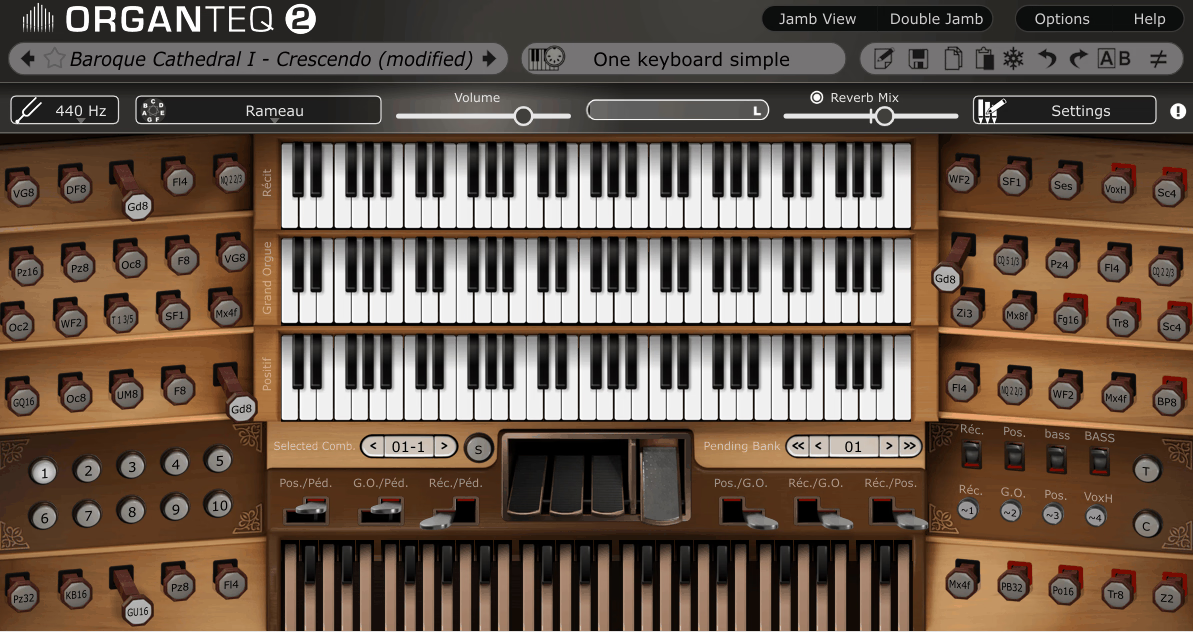
Instead of relying on a large library of recorded pipe samples, Organteq 2 uses physical modeling to generate the instrument’s sound in real time. Modartt describes the model as covering the behavior of the pipes, air movement, reeds, resonances, sound radiation, and room acoustics, with more than 4,000 modeled pipes. The compact installation size is another practical benefit if you work on a machine where disk space matters.
What I find most useful about this approach is that the organ can respond continuously to the way you play rather than simply replaying a recorded attack. Organteq 2 is therefore much more interesting when the organ part needs to feel like an instrument rather than a static sample layer.
Here is what you get:
- 68 Customizable Stops
You get a substantial pipe-organ layout with 68 stops, covering a wide range of pitches and registrations across three five-octave manuals and a 32-note pedalboard. The source material describes the instrument as drawing on a model containing more than 4,000 individual pipes.
- Historical Voicing References
The stop designs reference historical organ-building traditions rather than treating every registration as a variation on one generic sound. Models associated with builders such as Cavaillé-Coll, Silbermann, and Tröst give you different French Romantic and German Baroque starting points.
- 3D Pipe Placement
The pipes are positioned in virtual space according to their divisions and manuals, while the acoustic model takes that positioning into account. That means you can shape the sense of physical placement instead of treating the entire organ as one flat stereo source.
My take: I would use Organteq 2 when the realism and character of a pipe organ are central to the production. I wouldn’t reach for it just to add a generic organ chord behind a pop track.
2. IK Multimedia Hammond B-3X
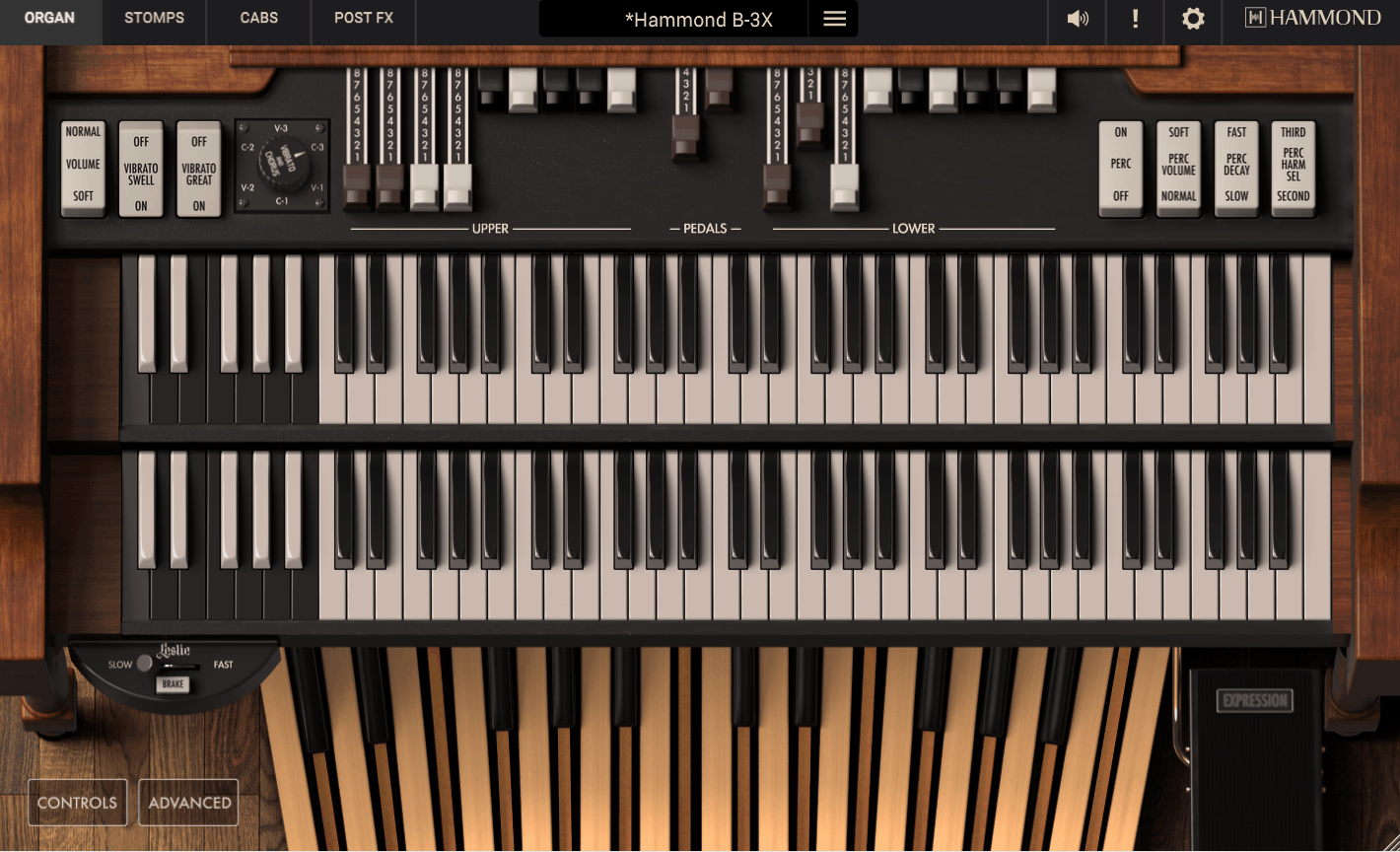
A convincing Hammond part is less about finding the right preset and more about how the entire signal chain reacts when you play. IK Multimedia Hammond B-3X approaches the instrument as a complete Hammond system, from the tonewheel engine through the rotary cabinet and effects.
The source material describes the plugin as having been developed with the Hammond Organ Company and Suzuki Musical Instruments, using measurements from maintained hardware as part of the development process. That gives Hammond B-3X a very specific reference point instead of trying to create an abstract “vintage organ” sound.
- 91 Free-Running Tonewheels
The engine models 91 tonewheels, which are combined in real time according to the keys you play and the drawbar settings you choose. That is much closer to the underlying architecture of a classic Hammond than a simple sample-based organ patch.
- 24 Drawbar Settings Per Preset
Each preset can store 24 separate drawbar configurations, which is especially useful when you perform rather than simply program a single sustained part. You can prepare several registrations and move between them without rebuilding the organ manually every time.
- Leslie Cabinet Modeling
The Leslie section gives you 7 amp models and 5 cabinet options that can be combined independently. That gives you a lot of room to move between cleaner, thicker, more aggressive, and more colored rotary sounds.
- Stompbox and Studio FX Sections
The plugin also includes a 5-unit stompbox section and a separate 3-effect studio section, covering everything from overdrive and wah to modulation, spring reverb, and final processing.
My take: I would choose Hammond B-3X when I want to build the whole Hammond rig inside one instrument rather than assembling the organ, rotary speaker, amp, and effects separately.
3. UAD Waterfall B3 Organ
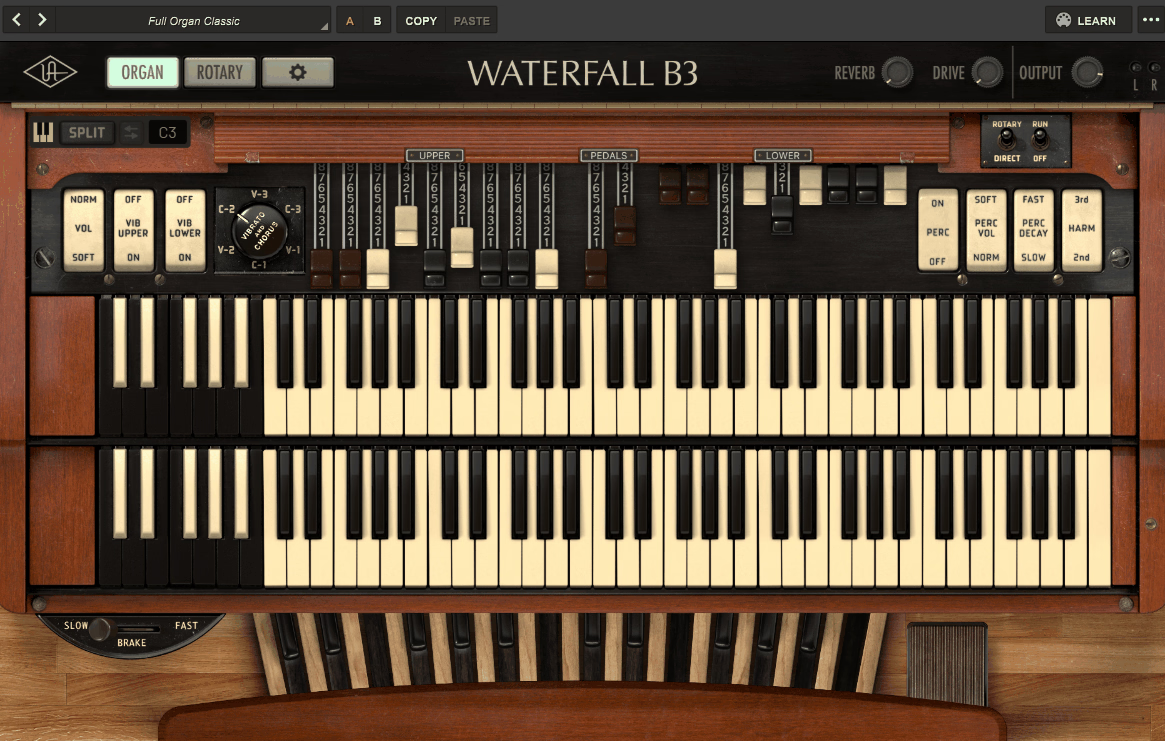
UAD Waterfall B3 Organ puts a lot of its character into that part of the chain, which is why I would judge it in a complete mix rather than by its dry organ tone alone.
The instrument is presented around the classic relationship between a 1958 Hammond-style tonewheel design and a 1974 Leslie 147, with modeling aimed at details such as drawbar interactions, transformer behavior, and rotary-speaker character.
I find that approach useful when I want to load an organ and get into a finished-sounding production quickly. Waterfall B3 Organ is less about endless experimentation and more about making the traditional signal path feel convincing.
- 1974 Leslie 147 Modeling
The rotary section is designed around the Leslie 147, including tube amplification, speaker breakup, and the changing spatial relationship created by the rotating horn and drum.
- Over 70 Hand-Crafted Presets
You get more than 70 presets covering styles such as R&B, soul, rock, hip-hop, and gospel. I would still treat them as starting points rather than finished sounds, because the right drawbar balance depends heavily on what your track is doing.
- Spring Reverb Section
The spring-reverb section is modeled as part of the instrument rather than being treated as an unrelated mix effect. That gives you a simple way to add ambience without immediately sending the organ into a large digital space.
My take: If UAD Waterfall B3 Organ gets me close to the sound I need in the first few minutes, that is a bigger advantage to me than having another fifty advanced controls I may never touch.
4. Arturia Vox Continental V
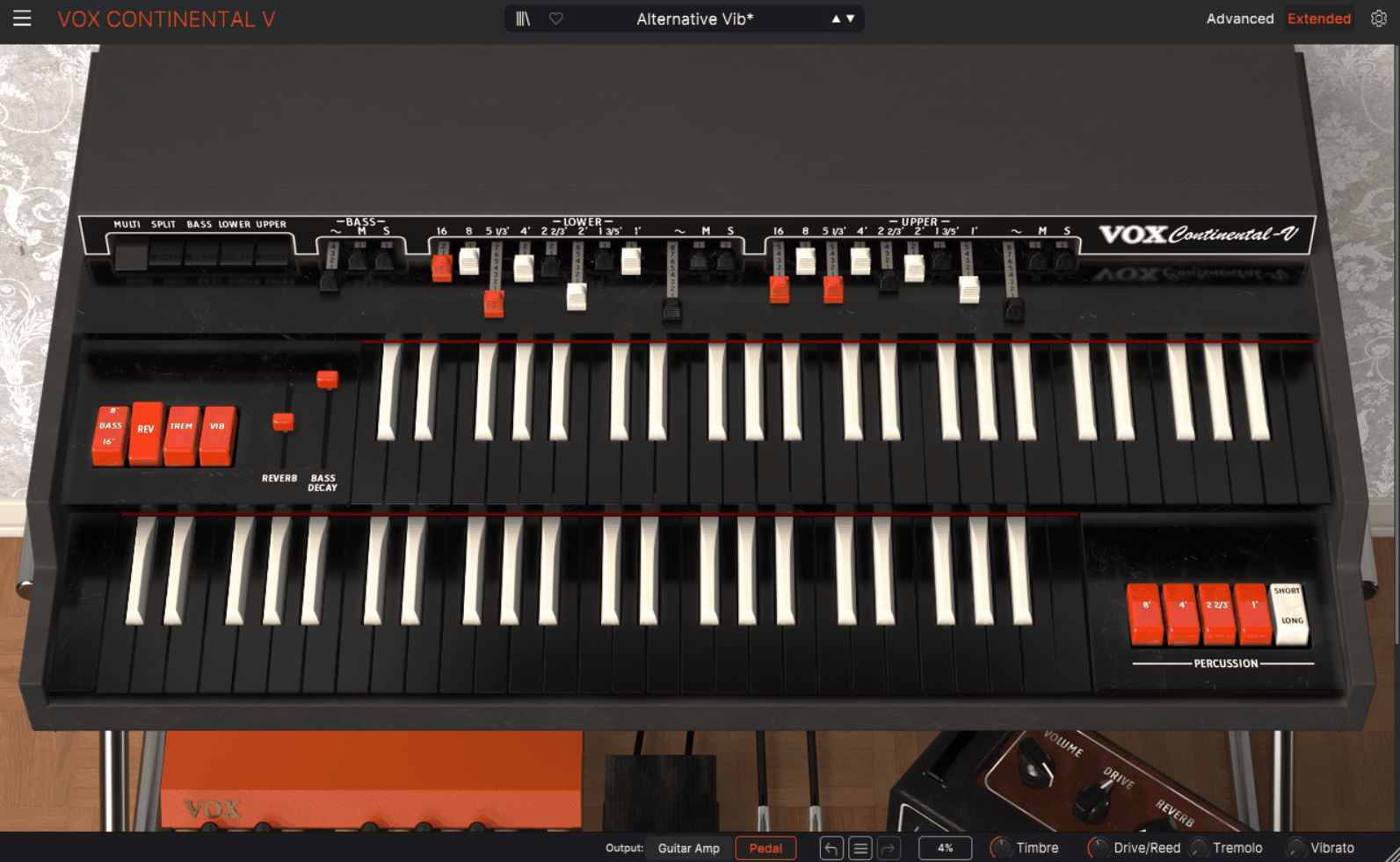
A Hammond is not the answer every time somebody asks for an organ. Sometimes the part needs something sharper, thinner, dirtier, and more immediately associated with 1960s transistor keyboards. It recreates the 1962 VOX Continental 300 and also includes the Jennings J70 engine, giving you two related transistor-organ flavors in one instrument.
What I like most here is that Arturia Vox Continental V doesn’t force you to stop at a historically accurate recreation. You can start with the original character and then deliberately make sounds that the hardware could never have produced.
The reverse-colored keys, oscillator instability, and other imperfections help preserve the character that makes a vintage transistor organ interesting rather than sterile.
- Vintage Stompbox Effects
You get Flanger, Phase, Chorus, Analog Delay, Overdrive, and Wah effects designed to work with the organ’s signal. That is particularly useful when you want a complete garage-rock or psychedelic sound without building a separate effects chain first.
- Guitar Amp and Mic Modeling
The signal chain includes models of Fender Deluxe Reverb, Fender Twin Reverb, Fender Bassman, and Marshall Plexi amplifiers, together with microphone models including the Shure SM57, Sennheiser MD 421, and Neumann U 87.
- Convolution Reverb and Detuning
- Extended Drawbar Mode
Standard mode stays closer to the original harmonic structure, while Extended mode adds eight drawbars per manual and an additional sawtooth waveform. That gives you a much broader sound-design range than the original instrument could offer.
My take: I would choose Vox Continental V for rock, psychedelia, garage, indie, and vintage keyboard parts where a Hammond simply sounds too familiar.
5. AIR Organ
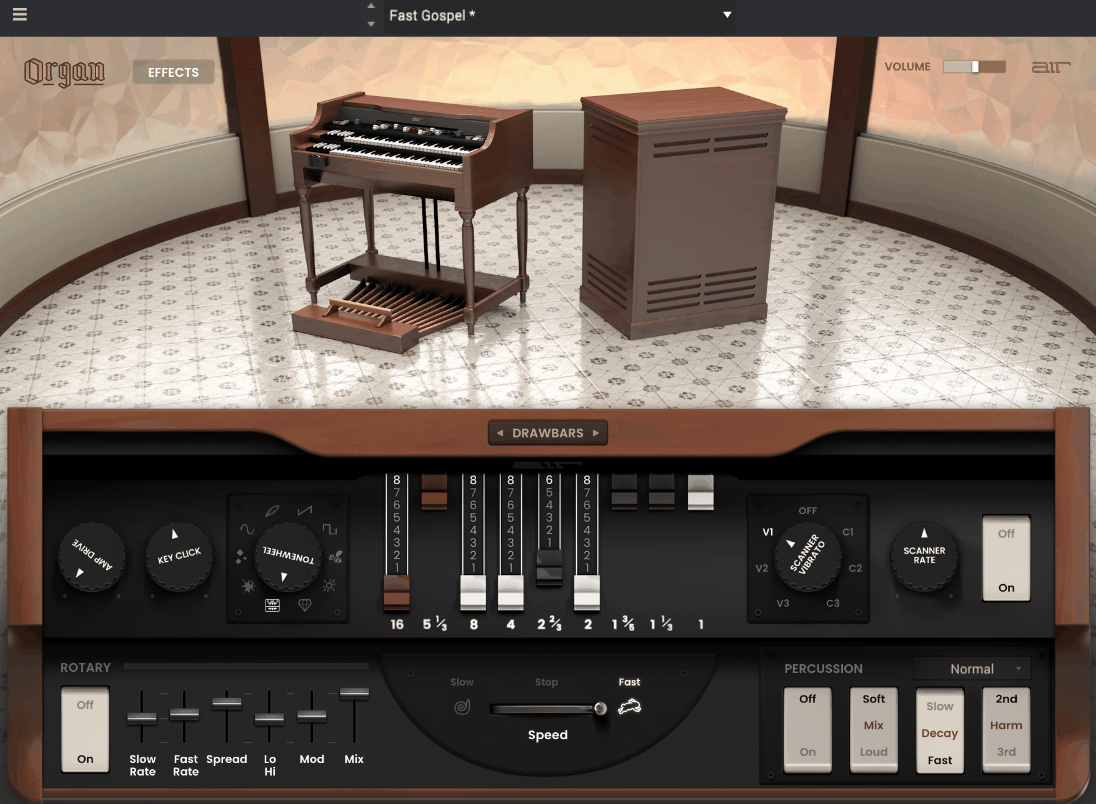
Some producers don’t need a deep study of vintage organ hardware. They need an instrument they can open, set the drawbars, add some drive and keep working. AIR Organ makes sense to me from that perspective.
The instrument gives you the familiar nine-drawbar approach while adding multiple tonewheel sets, rotary simulation, scanner vibrato, drive, key click, delay, and reverb.
The real advantage of AIR Organ is that its controls are easy to understand. If you already know what the drawbars are doing, you can start shaping a sound immediately instead of learning a complex virtual recreation first.
- Nine Drawbars, Ten Tonewheel Sets
You get nine drawbars and ten different tonewheel sets, giving you several starting characters before you touch the detailed controls.
- Amp Drive and Key Click
Separate controls for Amp Drive and Key Click let you add aggression and mechanical attack without needing to reach for additional plugins.
- AIR Rotary Speaker Simulation
The rotary section covers slow and fast speeds with adjustable stereo width, giving you control over how prominently the movement sits in the mix.
- Scanner Vibrato
The scanner-vibrato section is modeled around the characteristic behavior of an organ’s scanner system rather than functioning as a completely generic modulation control.
- Six Reverb Types
You get six reverb types, including Soft, Bright, Studio, Chamber, Hall, and Ambient options, so you can place the organ without immediately adding another effect plugin.
My take: I would use AIR Organ when speed and simplicity matter more to me than recreating every detail of a specific vintage instrument.
6. Cherry Audio Blue3 Tonewheel Organ
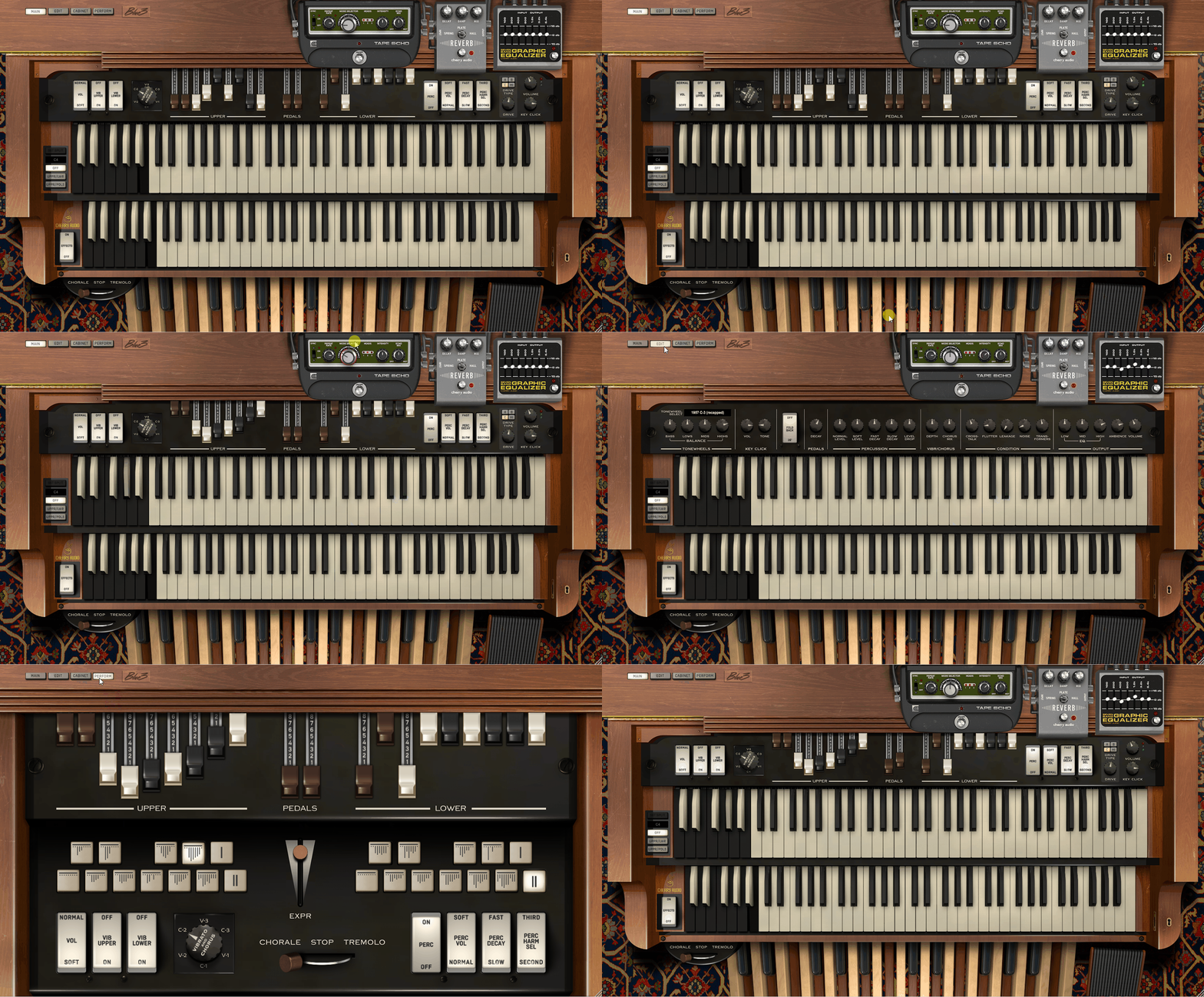
The useful thing about a tonewheel organ is that its imperfections are part of the sound, but you don’t always want the same imperfections. Blue3 Tonewheel Organ gives you enough control to decide how worn, clean, noisy, or unstable the instrument should feel.
The plugin models multiple organ chassis and tonewheel sets rather than presenting one fixed Hammond-style reference. Blue3 Tonewheel Organ includes 31 tonewheel sets, with 91 individually modeled tonewheels used across those configurations.
That variety gives you something I value in production: you can find a starting point that already suits the track instead of trying to force one reference organ into every arrangement.
- 91 Modeled Tonewheels With Phase Sync
The instrument models 91 tonewheels and maintains phase relationships between them as you change the registration. That is an important part of keeping the harmonic behavior coherent.
- Full Polyphony Across Three Manuals
The upper, lower, and pedal manuals receive full polyphony, which becomes particularly useful when you’re actually performing multi-manual arrangements rather than simply playing block chords on one keyboard.
- Condition and Aging Controls
You can adjust crosstalk, flutter, leakage, noise, and transformer characteristics independently
- Six Cabinet Options With Mic Placement
The cabinet section gives you six speaker options plus controls for rotary acceleration, deceleration, microphone spread, and distance. That makes the instrument much easier to fit into a real mix.
My take: I would pick Blue3 when I want a broad range of tonewheel characters and enough control to make the organ fit the track rather than simply loading a factory sound.
7. Arturia B-3 V
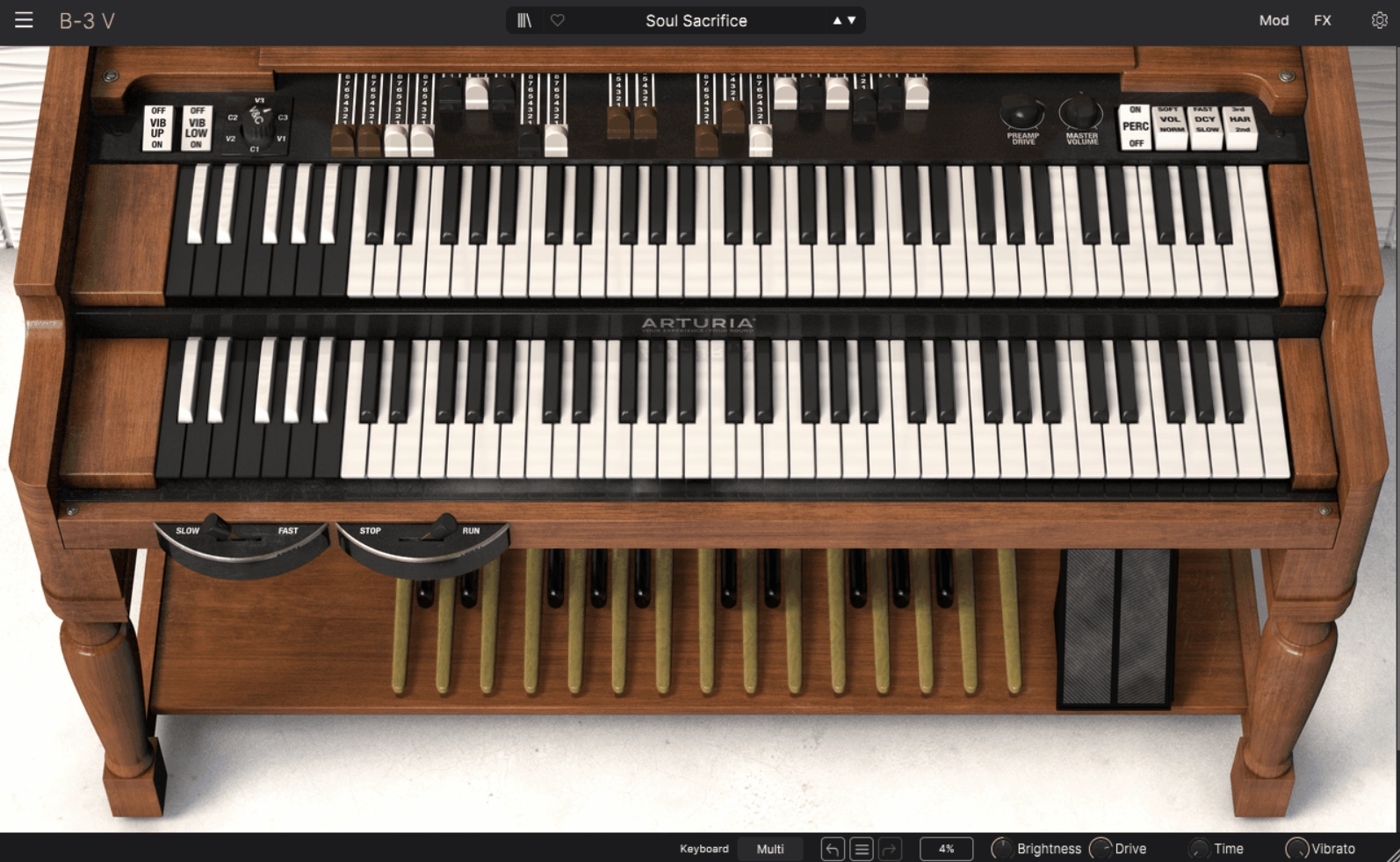
A Hammond-style organ can be a convincing recreation of vintage hardware, but it can also become a synthesizer-like sound source when you start controlling the drawbars over time.
Arturia B-3 V starts with a modeled B-3-style architecture, including 91 tonewheels, nine drawbars per manual, scanner vibrato/chorus, harmonic percussion, and AO28 tube-preamp modeling, but then adds a modulation system that lets you treat those organ components as synthesis destinations.
That makes Arturia B-3 V particularly useful when you want the familiar attack and harmonic structure of a tonewheel organ but don’t necessarily want to reproduce a traditional Hammond performance.
- 91 Tonewheels, Nine Drawbars Per Manual
The modeled organ uses 91 tonewheels and nine drawbars per manual, with independent MIDI channel assignments available for the manuals.
- AO28 Tube Preamp Modeling
The modeled AO28 preamp gives you another stage of filtering and drive before the rotary section, which can be useful when the clean tone is too polite for the arrangement.
- Drawbar Modulator
This is the feature I would load B-3 V for when I’m doing sound design. The modulation section includes LFOs, multistage envelopes, and a step sequencer, and these can be assigned to individual drawbars.
You can therefore create rhythmic harmonic movement that a conventional Hammond player could not physically perform.
- Half-Moon Leslie Switches
My take: I would choose B-3 V when I want the vocabulary of a Hammond but the freedom of a synthesizer.
Which Organ VST Should You Choose?
I wouldn’t try to rank all seven as though they were interchangeable.
Modartt Organteq 2 is the specialist choice when you need a modeled pipe organ. IK Multimedia Hammond B-3X is the strongest fit when you want a detailed virtual Hammond rig with a deep signal chain.
UAD Waterfall B3 Organ makes sense when you want a classic Hammond sound with a strong emphasis on the rotary cabinet and fast results.
For transistor-organ parts, I would go straight to Arturia Vox Continental V. For a simpler drawbar workflow, AIR Organ is the more straightforward choice.
Cherry Audio Blue3 Tonewheel Organ is appealing when you want several tonewheel characters and detailed condition controls, while Arturia B-3 V gives you the most obvious route from traditional organ playing into modern sound design.
| Plugin | Best suited to |
|---|---|
| Modartt Organteq 2 | Realistic modeled pipe organ |
| IK Multimedia Hammond B-3X | Detailed Hammond performances and complete rigs |
| UAD Waterfall B3 Organ | Classic Hammond sounds and fast production workflows |
| Arturia Vox Continental V | Vintage transistor-organ sounds |
| AIR Organ | Straightforward drawbar-organ production |
| Cherry Audio Blue3 Tonewheel Organ | Tonewheel variety and deep customization |
| Arturia B-3 V | Hammond-style sound design and modulation |
The best choice ultimately depends on what you are trying to play. If you need the organ to behave like a real instrument under your fingers, prioritize the playing response and core modeling. If you’re building a mix quickly, pay more attention to the rotary section, presets, effects, and routing. And if you are using the organ as a sound-design source, look at the modulation and customization controls rather than judging the plugin only by its factory Hammond presets.
I would also test the instrument in the kind of session you actually make. A soloed organ can make one plugin sound spectacular, but the more useful question is whether you can place it in your arrangement quickly, hear the part clearly, and get the character you need without adding unnecessary processing.
That is the standard I would use for any organ VST: convincing when you play it, controllable when you shape it, and practical when you put it into a real production.

Hey, I’m Vil, I started this site to help you find the best audio plugins covering various categories including synths, pianos, strings, and effect tools of all sorts as well. I pick these plugins based on various criteria so it best matches the actual topic.