When you purchase through the links on my site, you support the site at no extra cost to you. Here is how it works.
Analog Obsession is one of the most productive and talented solo plugin developers working today. Built by Tunca, every plugin in the collection is completely free and available through the developer’s Patreon page. From console EQs to vari-mu compressors to preamp emulations, the range of ground covered here rivals entire paid catalogs from bigger companies.
I’d say what makes this collection special is that none of it feels like freeware in the traditional sense. Each plugin carries real analog character, thoughtful DSP, and interfaces modeled after specific pieces of classic studio hardware.
In my opinion, if you’re building a mixing or mastering toolkit on a budget, this is where you start.
Here’s what each plugin brings to the table.
1. TheBus
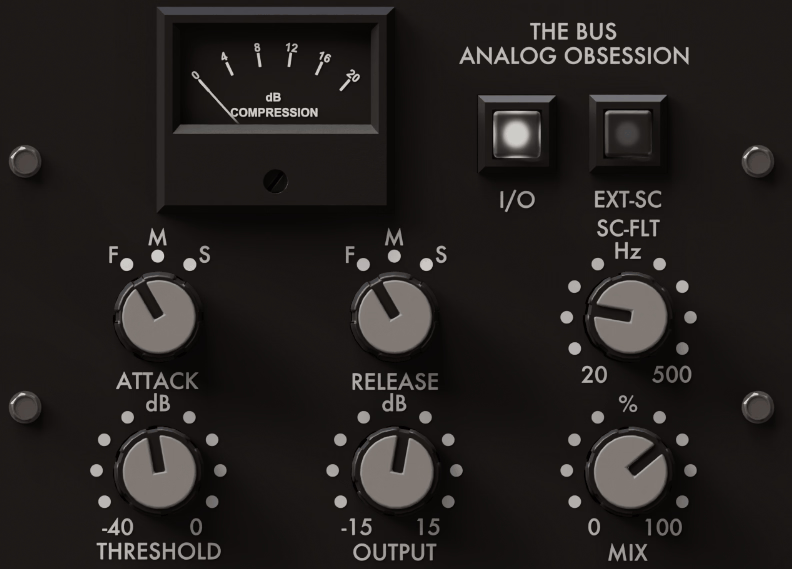
TheBus is a fully custom bus compressor that Analog Obsession designed from scratch.
I have to say, the fact that it’s not modeled after any specific hardware unit is unusual for this developer, and the result is a compressor with its own identity! It has a soft knee, linear frequency response, and a character that leans toward glue and density without coloring things too aggressively.
From what I heard, it performs best on drum buses, percussion groups, and full mixes where you need everything to feel like one cohesive piece. The simplified control set makes it fast to dial in.
- Custom Circuit
Because TheBus is designed from scratch instead of following one specific vintage unit, you get a compressor with its own identity.
That makes it more useful when you already have several hardware emulations and want something that doesn’t sound tied to a familiar circuit.
2. ATTRACTOR
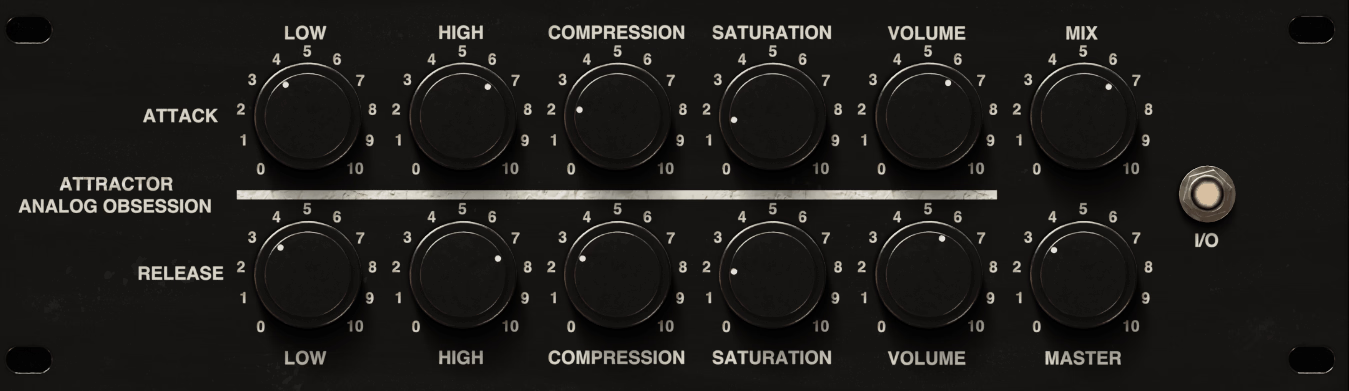
Instead of just boosting or cutting the front edge, with ATTRACTOR you’re shaping the body and the snap as independent elements with their own EQ, compression, saturation, and volume.
Most transient shapers give you a knob for attack and a knob for sustain, and that’s about it. ATTRACTOR splits the incoming signal into two separate paths, one for the attack transient and one for the release/sustain portion, and gives each its own complete processing chain.
- Dual Processing Paths
Plugin separates the attack and release/sustain portions into independent processing paths. Basically, you can work on the punch without automatically changing the body of the sound.
- Per-Section Saturation
Both paths also have their own saturation stages. I like being able to dirty up the sustain while keeping the attack comparatively clean, or reverse that relationship when the transient needs more edge.
3. Room041 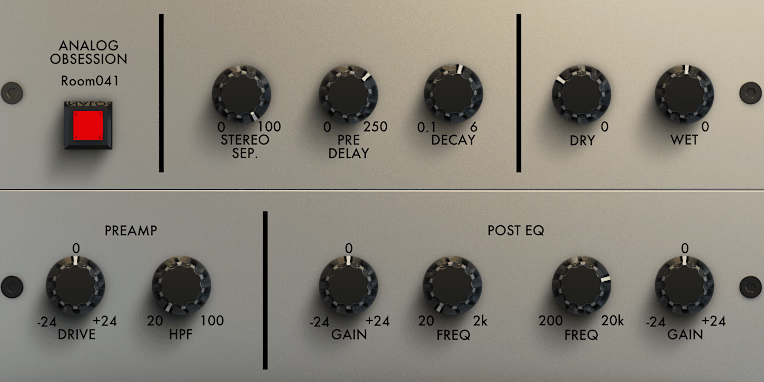
Analog Obsession built over 60 plugins before making a reverb, so when Room041 finally appeared, it carried some weight.
It’s an algorithmic room reverb that borrows characteristics from the EMT 140 plate without directly cloning it. I’d say the result sits somewhere between a tight room and a smooth plate, which makes it surprisingly versatile. It does vocals especially well, with a smooth tail that doesn’t get metallic until you really push the decay.
You get:
- Tube Drive Input
- EMT Inspired Character
Room041 takes cues from the EMT 140 plate, but the result is framed as an algorithmic room reverb rather than a straight hardware copy.
That combination gives you useful middle ground when a tight room feels too dry but a conventional plate sounds too obvious.
- Room To Plate Territory
The character can move from a more intimate room impression toward a smoother, longer tail as you push it, so it can work well on vocals when you want them to stay close in one section and bloom a little more in another.
4. KolinMB
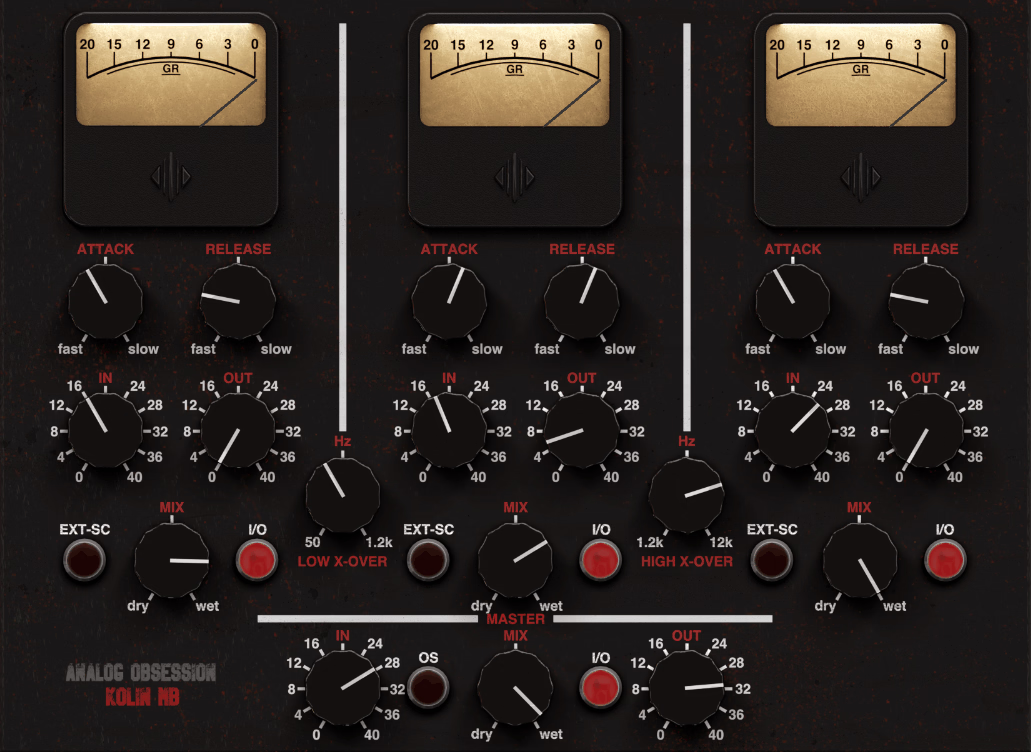
KolinMB takes the beloved Kolin limiting amplifier, which is based on the Collins 26U Vari-Mu hardware, and turns it into a three-band multiband compressor and I must say, the idea of putting vari-mu character into a multiband format is something I haven’t seen anywhere else, free or paid.
In fact, the warmth and color that the Kolin circuit is known for now becomes available per frequency band. As a result, you can compress the low end with that thick, saturated vari-mu tone while keeping the highs lighter, or slam everything for a completely different effect. It works quite well on mix buses and mastering chains.
- Three-Band Vari-Mu
The core idea is the combination of three-band multiband processing with the character of a Collins 26U style vari-mu circuit. I think that’s the real reason to try KolinMB, because the warmth is no longer something you have to apply across the entire spectrum at once.
- Independent External Sidechains
Every band can receive its own external sidechain, which is genuinely unusual for a free multiband compressor. You can make one band react to another source while leaving the other bands alone, and that opens up routing ideas that are normally much more complicated.
- Per-Band Vari-Mu Control
Each of the three bands has its own processing section and bypass behavior
5. BLENDEQ
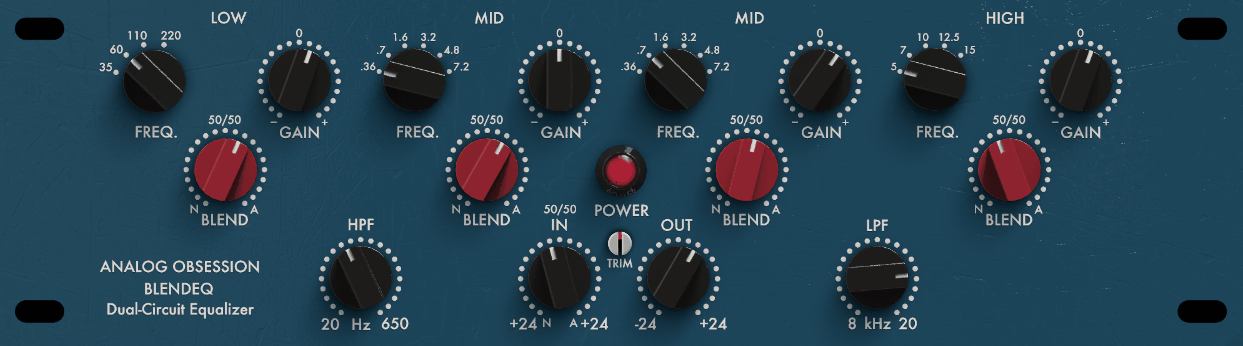
Here’s an EQ concept I find clever as BLENDEQ runs two different equalizer circuits in parallel, an “A” circuit modeled on a famous American EQ and an “N” circuit modeled on a famous Non-American EQ, and lets you blend between them on every single band.
I feel like this solves a problem most people don’t even know they have. Let’s say maybe you want the punchy low end of the American circuit but the silky high-frequency character of the other one. With BLENDEQ, you dial that in band by band and it turns what would normally be a plugin swap into a single knob move.
- Two EQ Circuits
The idea is that BLENDEQ contains two different EQ circuits running in parallel. You can compare two distinct tonal behaviors inside the same processing stage instead of committing to one model from the outset.
- Per-Band Circuit Blend
Each of the four EQ bands lets you blend between the A and N circuits independently. For me, that’s what turns BLENDEQ into more than a dual-EQ novelty, since you can give the lows one character and the highs another.
- Dual Line Amp Blend
The Input section also blends between the two line amp paths, with up to +24 dB available on either side
6. PREDD

Back in the late 1950s, the EMI REDD.51 console helped shape some of the most iconic recordings in history. PREDD brings that tube preamp character into a plugin, modeled after the Chandler Limited REDD.47 recreation of the original Abbey Road mic preamp. I’d say the vintage warmth here is immediate and unmistakable.
What stands out to me is how the saturation responds to input level. Even at moderate drive settings, there’s a thickness and presence that makes sources feel more alive. It’s the kind of plugin that earns a spot at the top of your channel strip.
- REDD.47 Heritage
PREDD is centered around the character of the Chandler Limited REDD.47, which itself traces the Abbey Road REDD lineage. You’re getting a specific tube preamp personality instead of a generic “vintage” saturation effect.
- Gain-Compensated Drive
This one is useful as I can judge the actual saturation and tonal shift without constantly compensating for a level change.
- 14 kHz Air Boost
I found this particularly handy when a source already has the right body but needs a little extra openness after being pushed through the tube stage.
7. MuChild
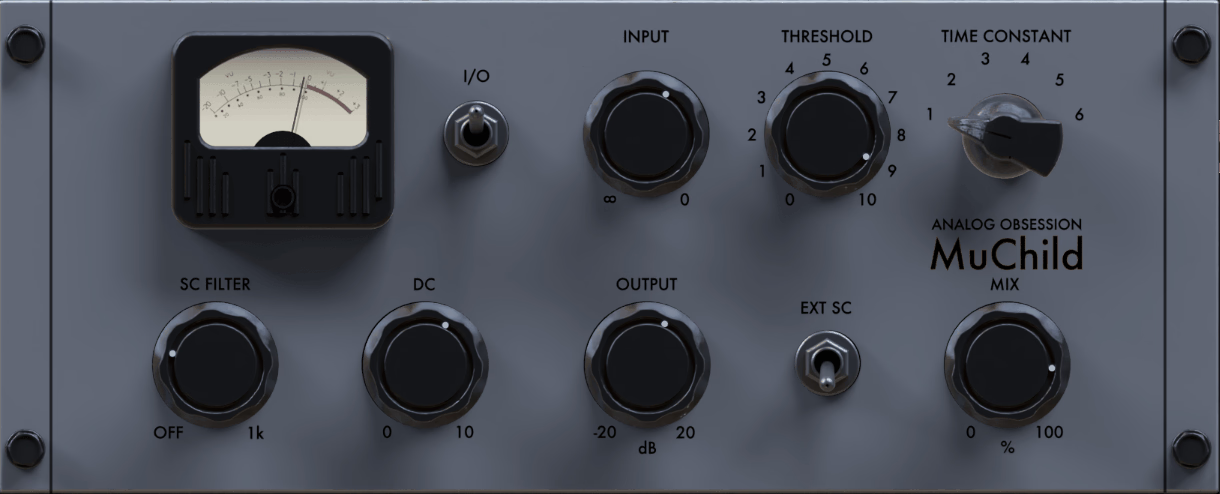
MuChild is Analog Obsession’s take on the Fairchild 660, arguably the most legendary compressor ever built. Instead of component-level modeling, the developer used a black box approach, capturing the circuit’s behavior through SPICE simulation data.
What I noticed right away is the smoothness of the gain reduction. It grabs the signal without any harsh artifacts, and the harmonic saturation that builds as you push the input is the kind of warm, thick distortion that made the original Fairchild so desirable.
Basically, it does what a Fairchild should do: make things feel bigger and more present without squeezing the life out of them.
- Black Box Modeling
This is the first Analog Obsession plugin built with data-driven circuit capture instead of traditional component modeling. I’d say that makes MuChild especially interesting because its behavior is derived from measured circuit data rather than simply recreating a visual approximation.
- SPICE Simulation Data
The design uses SPICE simulation data to capture the Fairchild style behavior
- 1 kHz Sidechain Reach
The sidechain filter extends up to 1 kHz, which is considerably higher than what you normally expect from a compressor sidechain. I found that useful on vocals.
- Fairchild 660 Character
At its core, you’re getting a vari-mu Fairchild 660 style response with the harmonic buildup that comes from driving the circuit.
8. COMPER
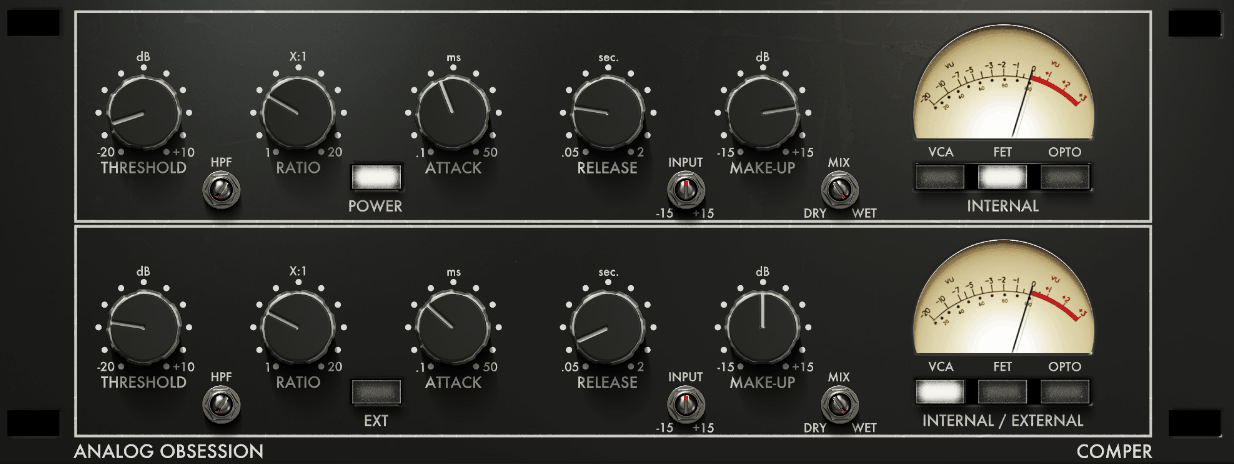
COMPER puts two compressors in series inside a single interface, and each one can switch between VCA, FET, and Opto circuit types.
I feel like the real magic here is in the combinations. Running a fast FET stage into a smooth Opto stage is one of my favorite setups for vocals, because the FET catches the peaks while the Opto adds that program-dependent, musical leveling afterward, so having all six possible topology combinations in one plugin is a massive workflow advantage.
- Dual Topology Stages
As mentioned, each compressor stage independently switches between VCA, FET, and Opto behavior. That’s the central reason COMPER stands out to me
- FET Into Opto
The FET/Opto combination is particularly useful when you need fast peak control followed by smoother leveling. You can let the first stage catch the sharp stuff while the second handles the broader envelope,
- VCA Into FET
I like putting VCA before FET on drums and aggressive instrument buses when the first stage needs to shape the envelope before the FET adds more urgency and bite.
9. INDEQ
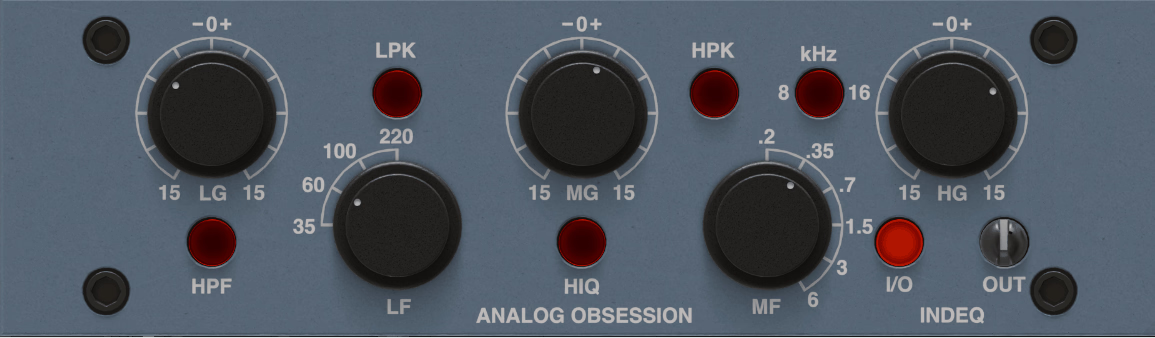
Pure inductor-based equalizers have a particular sound that’s hard to replicate with other topologies, and that smooth, slightly rounded character is exactly what INDEQ delivers. It’s a three-band EQ with a fixed high-pass filter at 80 Hz, and I’d say it belongs on sources where you want musical, broad-stroke shaping without surgical precision.
At a first glance, it looks simple, but what I realized after using it for a while is that the interaction between the shelf and peak modes on the low and high bands gives you a surprising amount of flexibility.
That said, here are some features to mention:
- Inductor-Based Character
The important part of INDEQ is its inductor-style EQ behavior, which gives the shaping a smoother, more rounded response than a surgical digital equalizer. I reach for that kind of response when you want a broad tonal move that still feels natural.
- Low Shelf Or Peak
The low band can switch between shelf and peak behavior meaning, that makes it possible to move from broad low-end weight into a more focused bass emphasis without swapping to another EQ.
- High Shelf Or Peak
The high band gets the same shelf/peak choice, so you’re not locked into a simple treble shelf. I found the peak option useful when a source needs focused presence instead of a full-spectrum brightness lift.
10. SSQ
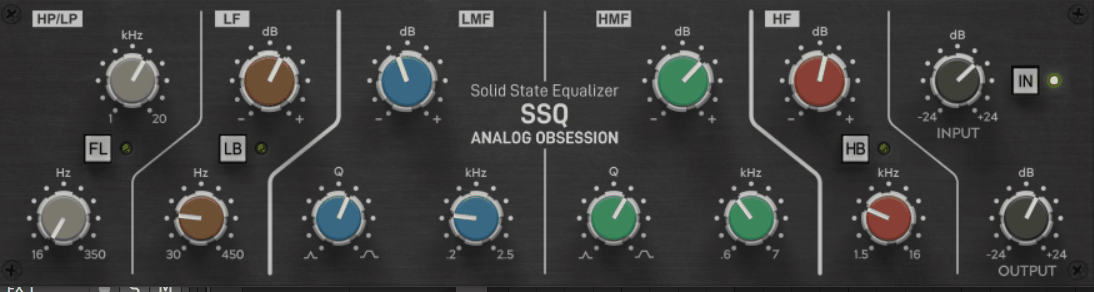
I believe this is one of the most useful EQ plugins in the entire Analog Obsession collection.
If you’ve ever worked on an SSL E-series console, you know the EQ section has a particular speed and directness to it. SSQ captures that workflow beautifully, with a four-band EQ plus high-pass and low-pass filters that make fast tonal decisions feel effortless.
What makes SSQ earn its place is how well it handles the two things most mixes need: cutting mud and adding presence.
The fixed frequency points and the bell/shelf options on the outer bands mean you’re always working within a range that’s musically useful. It doesn’t waste your time with options that don’t matter.
- E-Series Character
SSQ is built around the character of the SSL E-series EQ, giving you that familiar console style of fast, decisive tonal shaping. It’s good when a source needs a musical adjustment without spending ten minutes hunting for the perfect frequency.
- Outer-Band Shape Switching
The low and high bands can move between bell and shelf shapes. This is where I find the EQ particularly flexible because you can switch from broad tonal shaping to a more focused lift or cut without changing processors.
- Console Harmonics
Beyond the EQ curves, SSQ adds subtle console-style harmonic coloration. I noticed that this can give a source a more finished quality even when the actual EQ moves are very small.
11. ReLife
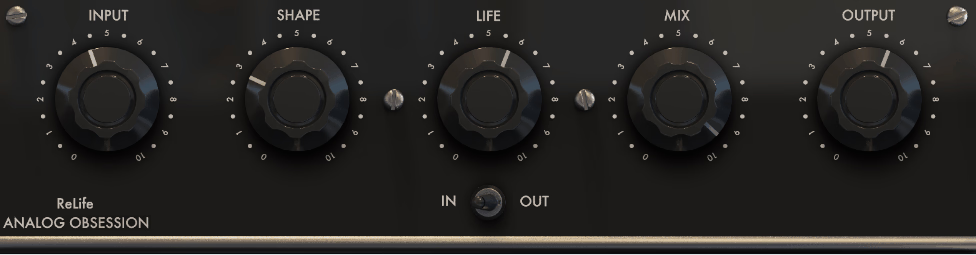
ReLife is unlike anything else in the Analog Obsession catalog.
It’s a dynamic enhancer with just two controls: Life and Shape. I have to say that it adds clarity, presence, and low-end weight in a way that feels like the track just woke up.
What I like about it is that Shape works as a predefined EQ curve that boosts lows and highs while dipping the low mids, and Life acts as a subtle exciter that brings out detail and air.
- Life Enhancer
The Life control works as the dynamic enhancement element, bringing more detail and air into the signal. I like this when a mix sounds technically finished but still feels a little flat.
- Shape Curve
Shape follows a predefined tonal contour that lifts the lows and highs while dipping the low mids. You can therefore change the overall sense of balance without manually building an EQ curve
- Dynamic Bus Sweetening
Because the two controls interact, ReLife can alter both tone and perceived detail at once. In the end, that’s where I think it earns its place on a bus rather than simply acting as another exciter.
12. OAQ
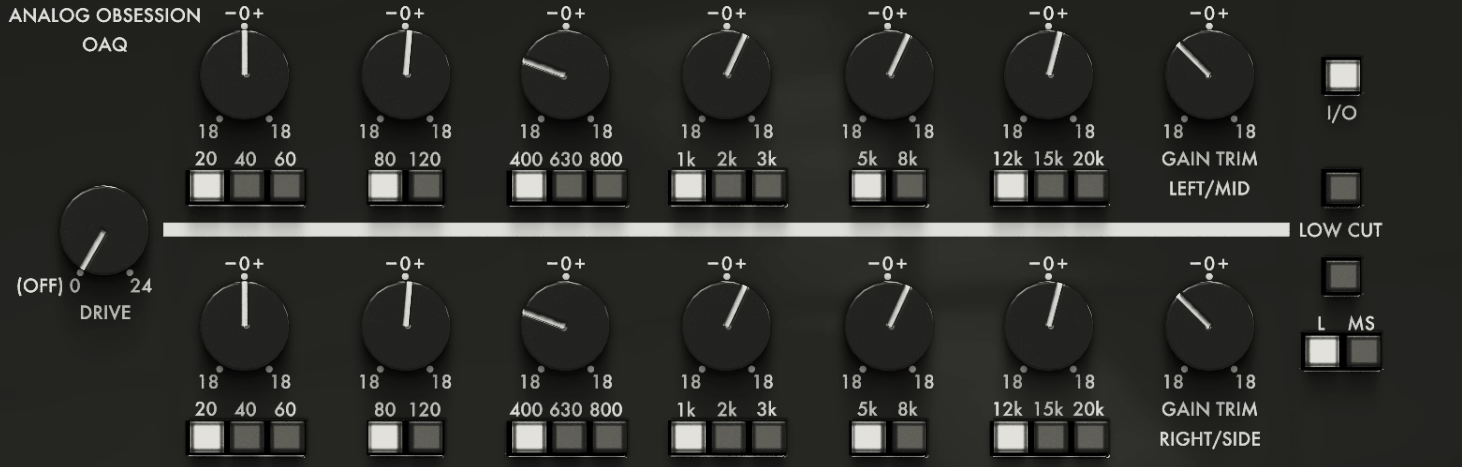
I think what separates OAQ from the other Analog Obsession EQs is the phase coherence under multiple simultaneous moves.
Mastering-grade equalizers need to be transparent, precise, and flexible enough to handle stereo, dual-mono, and mid/side processing without introducing artifacts. OAQ VST delivers on all three, with a six-band EQ, selectable frequencies per band, and a built-in spectrum analyzer with switchable views.
Even when you’re adjusting four or five bands at once, the mix doesn’t fall apart tonally, which is exactly what you need at the mastering stage.
- Three Stereo Modes
OAQ supports stereo, dual-mono, and mid/side processing
- Independent M/S Delinking
The M/S channels can be delinked, allowing the two components to receive different treatment. It’s useful when a problem lives mostly in the sides and you need to correct it without disturbing the center image.
- Full Spectrum Views
The analyzer can display mid, side, or full stereo information which can come in handy
13. dBComp
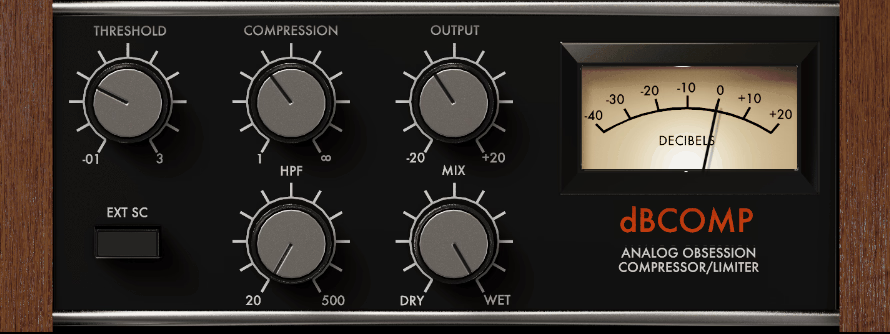
When it comes to hard-knee compression with real snap and punch, the DBX 160 is a studio legend. dBComp brings that character into a plugin with an interface so simple you can have it dialed in within seconds. I feel like this is the go-to choice for anyone who wants drums and bass to hit harder without overthinking it.
It works well specifically on kick drums, snare, bass guitar, and acoustic guitar. The hard-knee behavior adds a percussive edge that softer compressors just can’t replicate. Perhaps the best part is how forgiving it is; even at aggressive settings, it stays punchy without falling apart.
- Hard-Knee Character
The DBX 160-style hard knee creates the immediate grab that gives dBComp its signature snap. I found this is the main reason to reach for it when drums need more impact without the softer envelope of a vari-mu compressor.
- DBX Style Punch
The compression has that familiar tight, percussive VCA character that makes drums and bass feel more assertive. If you want the source to hit harder without adding an obvious saturation effect, this is where I would start.
- Aggressive Bus Behavior
Push dBComp harder and its response becomes much more obvious while retaining that recognizable DBX attitude. I like that when a drum group needs to become part of the production rather than disappearing into the background.
14. CHANNEV
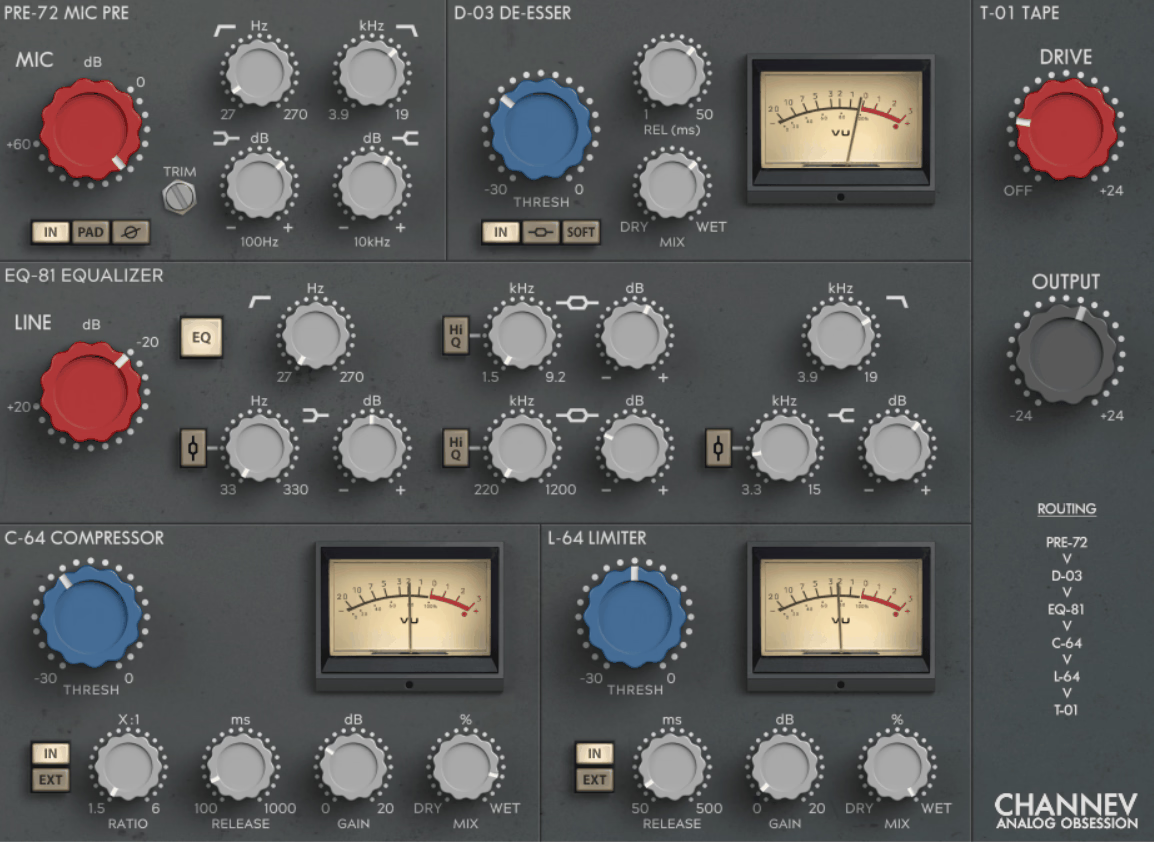
. I must say, having all of that in one plugin with a clear signal routing diagram is impressive.
CHANNEV is the most feature-dense plugin in the entire Analog Obsession lineup. Modeled after the Neve 8028 console, it packs a mic preamp, de-esser, line amp, four-band EQ, compressor, limiter, and tape saturation into a single insert..
What stands out to me is that the compressor and limiter sections are based on the 2264 circuit but operate completely independently, each with its own external sidechain. Sort of like having two Neve dynamics processors stacked in one channel. The tape saturation module at the end adds glue and warmth to the entire signal path.
- 2264-Based Dynamics
Both the compressor and limiter are based on the Neve 2264 circuit, so it gives CHANNEV a much more specific dynamics personality than a generic channel strip.
- Independent Compressor And Limiter
The compressor and limiter operate independently, so you can use them for different jobs instead of treating them as one dynamics stage
- Independent External Sidechains
Each dynamics section has its own external sidechain which is unusually flexible for an integrated channel strip, and you can use one external trigger for compression without forcing the limiter to react in the same way.
- Tape At The End
A dedicated tape saturation stage sits at the end of the signal path, which can tie the preamp, EQ, and dynamics together after all the individual processing decisions have been made.
15. BUSTERse
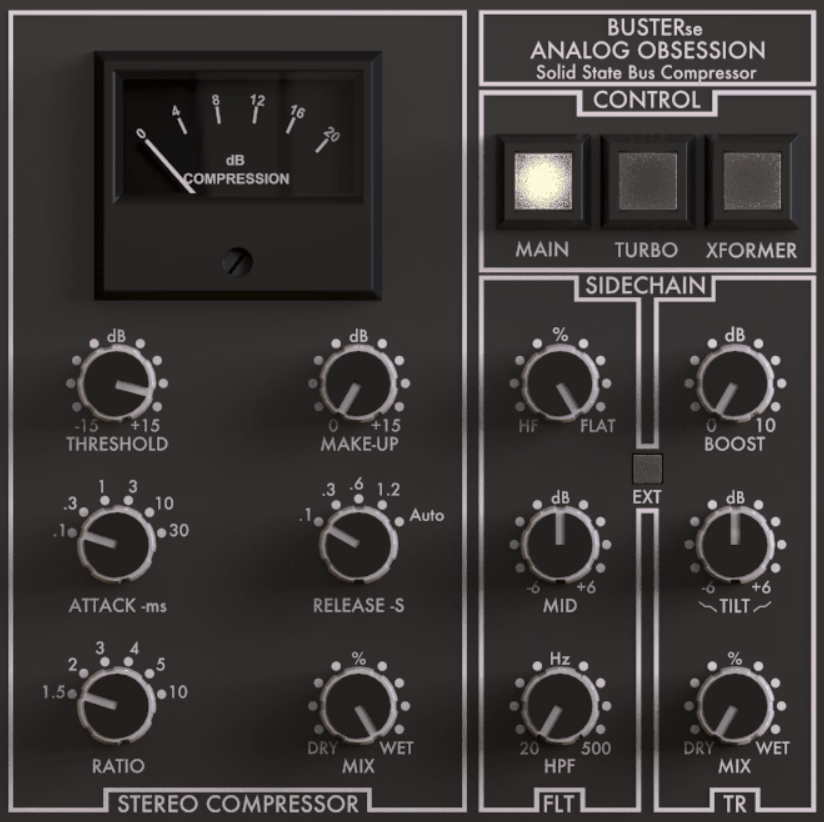
BUSTERse captures that G-series character with a few modern additions that I think improve the workflow.
A lot of mixing engineers keep an SSL G-Master bus compressor loaded on their mix bus from the very start of a session, and for good reason. It’s one of those processors that makes a mix feel finished and cohesive almost instantly.
BUSTERse includes a sidechain high-pass filter and transient controls that the original hardware doesn’t have and I believe the transient shaping is what makes BUSTERse more than just another SSL bus comp clone, because it lets you control how much of the initial attack passes through before the compressor engages.
- Transient Controls
The built-in transient shaping works alongside the compression itself..
- G-Series Character
The compressor is built around the SSL G-series bus compressor sound. I like that familiar behavior when you want a mix to feel more unified without reaching for a compressor with a completely different personality.
- Enhanced Sidechain
The sidechain high-pass filtering gives you more control over what drives the detector than the original hardware approach
16. LOADES
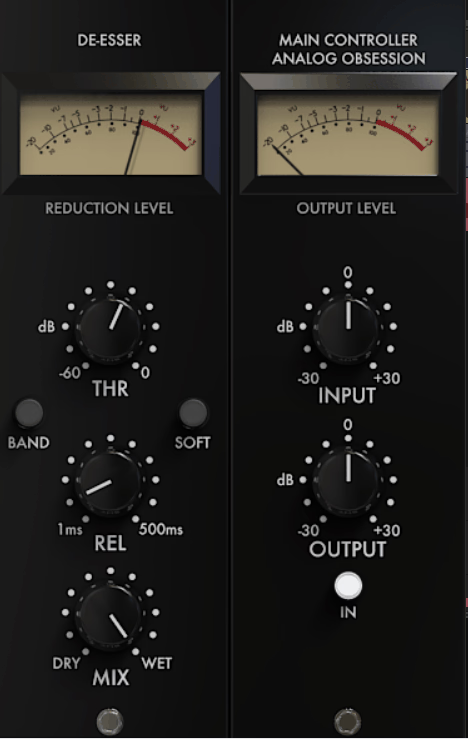
De-essing is one of those tasks that sounds simple but can go wrong quickly if the tool isn’t responsive enough. LOADES handles it with a dynamic approach that I’d describe as a frequency-specific limiter more than a traditional de-esser. It tames sibilance without making vocals sound lispy or dull.
The key is how it responds to the program material. It doesn’t just clamp down on everything above a certain frequency but it reacts dynamically, which means the natural brightness and energy of the vocal stays intact while the harsh peaks get smoothed out.
- Dynamic HF Limiting
LOADES behaves more like a dynamic high-frequency limiter than a conventional fixed-band de-esser. I like this approach because you can control harshness while leaving the source’s general brightness intact.
- Program-Responsive Action
The reduction follows the incoming material instead of simply imposing a static high-frequency cut which makes it easier to tame strong consonants while keeping the rest of a vocal or instrument sounding open.
- Beyond Vocals
LOADES can also work on synths and cymbals, where sharp high-frequency peaks create much the same problem as vocal sibilance. I found that useful because it turns the plugin into a more general harshness-control tool.
17. MythPre
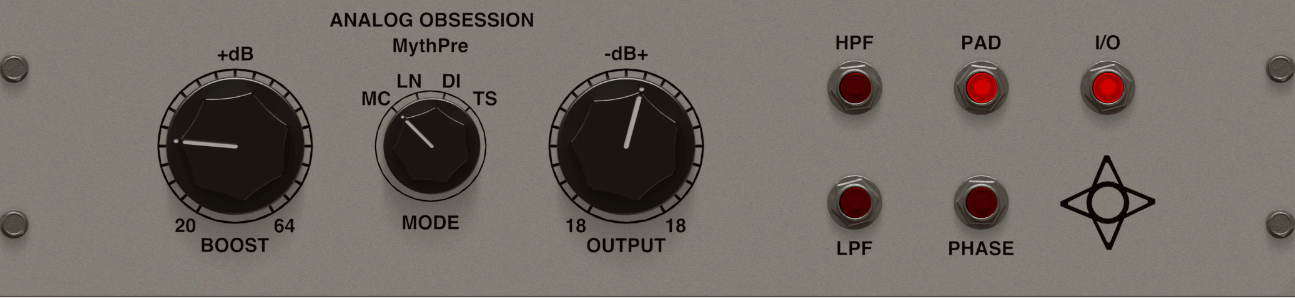
MythPre is a tube preamp built specifically around low-end enhancement. I noticed right away that every input mode is designed with a particular bass emphasis, which makes it useful on sources that need more weight and foundation. It’s a preamp that wants to make things sound bigger from the ground up.
Even though it’s a preamp plugin, I’ve found it works beautifully as a tonal shaping tool anywhere in the chain. The four input modes each deliver a different flavor of low-end warmth, and the pre-boost filtering lets you control exactly which frequencies get pushed through the tube circuit.
In addition you get:
- Four Input Personalities
The four modes are Mic, Line, DI, and Tone Shaper, each with a different approach to low-end emphasis. I think that makes MythPre more useful than a single-purpose tube preamp because you can choose the character around the source.
- Tone Shaper Mode
The Tone Shaper mode is particularly interesting because it is not simply trying to recreate another input stage. For me, it works more like a deliberate low-end coloration circuit when a source needs more foundation.
18. UREQ
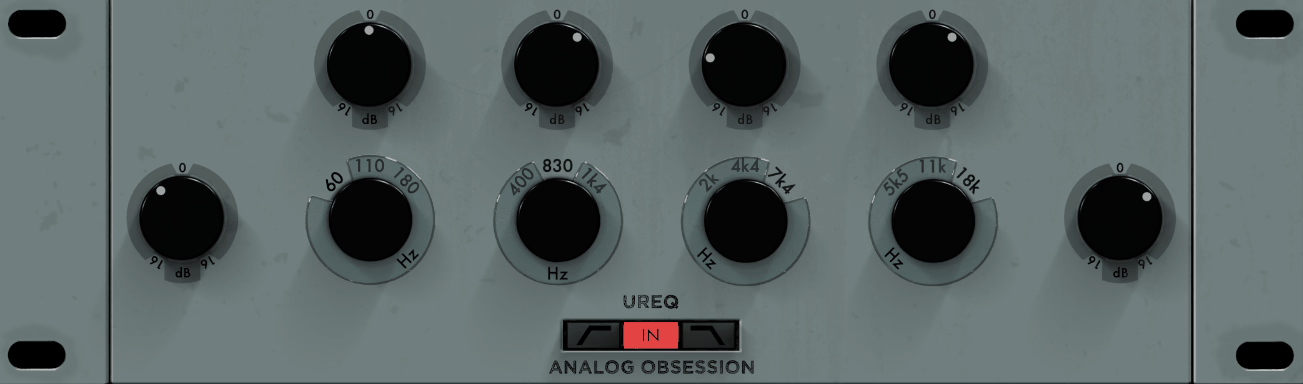
I’d say it’s one of those plugins that works best when you stop thinking and start listening.
Graphic EQs don’t get a lot of love in the plugin world, but the UREI 545 and 546 hardware units were studio staples for decades. UREQ strips the design down to its essentials, giving you a simplified graphic EQ with the warm, musical character of the original hardware.
- UREI 545/546 Lineage
UREQ draws from the UREI 545 and 546 graphic EQ family, which gives it a specific hardware identity.
- Simplified Frequency Layout
The plugin focuses on a selected set of useful frequency points instead of turning the EQ into a massive graphic grid, so you can make broad tonal decisions quickly without getting pulled into microscopic EQ work.
- Graphic EQ Character
The response is designed for musical broad-stroke shaping, which is where I think UREQ is most convincing. When a source needs an overall tonal tilt and you don’t want to start hunting for individual problem frequencies, this approach makes sense.
19. VariMoon
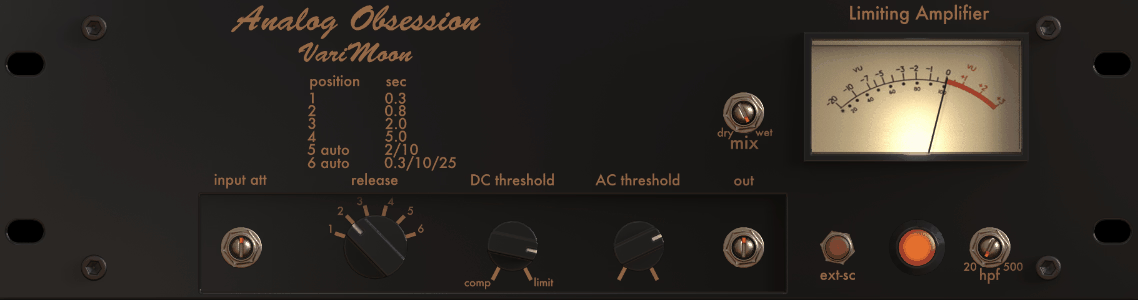
What makes VariMoon especially interesting is its six-position release selector, which includes two auto-release curves that respond to the program material.
In my opinion, positions 5 and 6 (the auto-release options) are where this plugin really comes alive, because the compression becomes truly transparent and musical.
You get:
- Fairchild 660/EAR 660 Heritage
VariMoon is modeled around the Fairchild 660 and EAR 660 lineage, giving it that unmistakable vari-mu compression family. I like this when you want the dynamics to feel more like gentle leveling than a hard clamp.
- Six Release Curves
The six-position release section includes four fixed settings plus two auto-release modes. I found the adaptive options particularly useful when the program changes pace and you want the compressor to stay musical without manually chasing the recovery.
- Dual Threshold Concept
The plugin separates DC Threshold and AC Threshold, giving the Fairchild-style compression behavior a more expanded control structure.
20. REALIZER
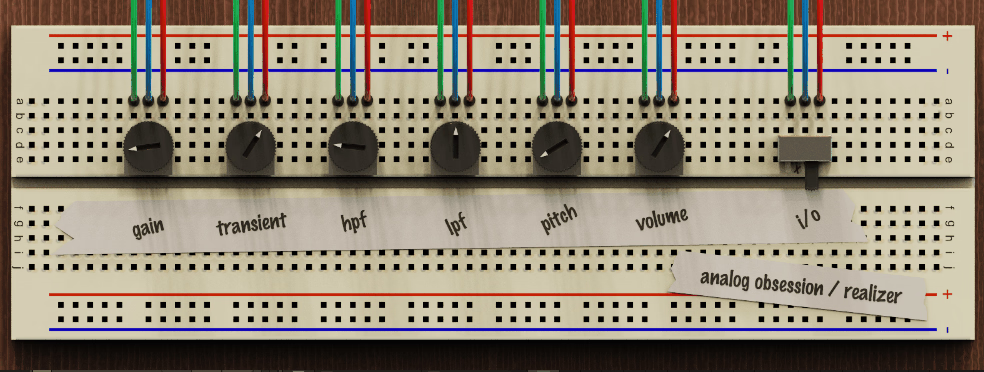
REALIZER is a transient-based random value generator that introduces subtle, controlled randomization to your signal’s parameters. I have to say, the concept sounds strange until you hear what it does to static, lifeless sources!
Basically, it detects transients in the incoming audio and uses them to trigger random variations, mimicking the natural inconsistencies of analog gear and real performances. For static synth patches, sampled drums, and one-shot loops, it adds a human quality that makes things sit in a mix more naturally.
- Transient-Triggered Randomization
REALIZER generates random values from detected transients, so the movement follows the rhythm of the incoming material which keeps the effect feeling connected to the performance instead of creating completely arbitrary modulation.
- Controlled Variation
The randomization is subtle and controlled, rather than simply throwing unstable modulation at the signal. You can use it to add small imperfections to an otherwise perfectly repeated sound
- Analog Imperfection Effect
The concept is designed to recreate the small inconsistencies of analog hardware and real performances
21. N492ME
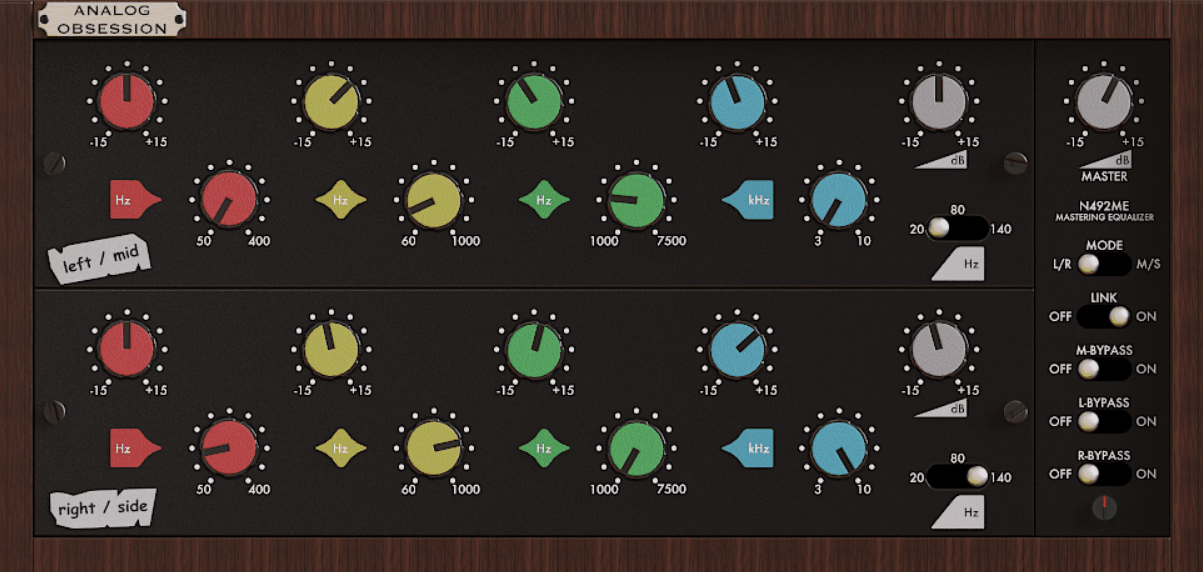
Few equalizers have the reputation of the Neumann W492 for broad, musical tonal shaping, and N492ME captures that character with a four-band design featuring variable gain, sweepable frequency, and an internal Q with a proprietary design that keeps things smooth even at extreme settings.
One thing I’ve noticed is that the low and high bands are technically wide bells, but they behave like shelves in practice. I believe this is one of the reasons the Neumann EQ sounds so good at its extremes: you can boost the sub-bass without the sharp rolloff of a typical bell, and the effect feels more natural and musical.
- Neumann W492 Character
N492ME is based around the Neumann W492 style of EQ, which gives it a very different flavor from the SSL and API inspired options elsewhere in the collection. I like it when you want broad shaping that stays smooth even when the move is substantial.
- Wide Bell Shelves
The low and high bands use very wide bell curves that behave somewhat like shelves. I found this especially useful for extending low-end weight or opening the top without the abrupt character of a conventional shelf.
- M/S And L/R Processing
The plugin includes dual-mono, stereo, and Mid/Side operation, with the ability to work the channels independently. For me, that makes it useful when the center and sides need different tonal treatment instead of one global EQ move.
22. SPECOMP
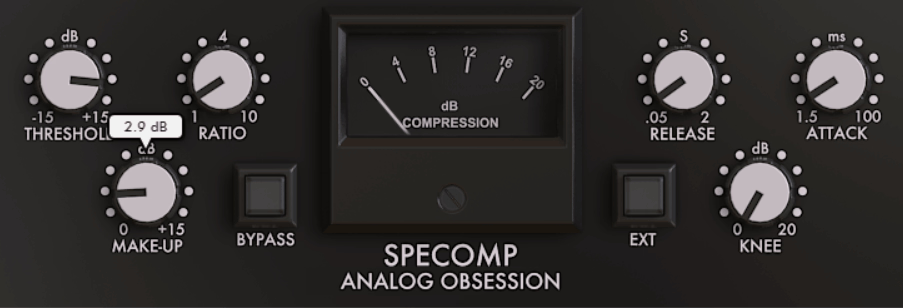
SSL bus compressors are everywhere, but the way SPECOMP approaches the concept is genuinely different. It’s a spectral analog compressor based on the S-Type SSL console compressor, heavily modified to include frequency-aware processing that happens internally alongside the standard compression. I think this is one of those plugins that sounds simple on paper but does something special in practice.
Honestly, the best way I can describe it is that SPECOMP makes mixes click. Everything sits together more cohesively, transients get controlled without losing their impact, and there’s a subtle spectral rebalancing that happens automatically. It’s not just compressing the signal; it’s reshaping how the frequencies relate to each other.
- Spectral Compression
The standout idea is its frequency-aware compression, which works alongside the normal dynamics processing. That said, SPECOMP can manage tonal problem areas and dynamics at the same time instead of making you build the solution from separate EQ and compression stages.
- S-Type Foundation
Underneath the spectral behavior is an S-Type SSL compressor concept. You get the familiar bus-compression foundation, while the spectral layer gives it a different way to respond to crowded material.
23. BXQ
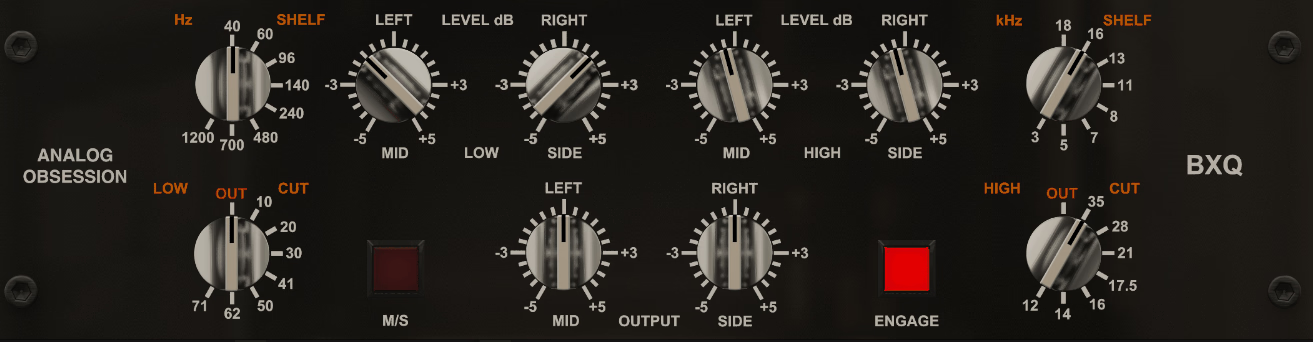
Next one, BXQ, is a Baxandall equalizer with built-in L/R and M/S processing. I feel like Baxandall curves are underrated for mixing work, because their broad, gentle slopes are almost impossible to make sound bad. Every move feels musical, which makes BXQ a great choice for bus processing and mastering.
It doesn’t try to be a surgical tool. but offers wide tonal shifts that shape the overall balance of a mix without drawing attention to themselves. Kind of like adjusting the tone control on a high-end stereo system.
- Baxandall Curves
The EQ uses the broad, gentle response associated with Baxandall tone shaping. I like that because you can make meaningful tonal changes without the narrow, surgical sound of a parametric EQ.
- M/S Tonal Shaping
The Mid/Side mode lets you target the center and sides separately. That’s where BXQ becomes much more interesting on mastering and mix buses because you can make a broad tonal move without treating the entire stereo field identically.
- L/R Independence
You can also work in independent left/right mode as well.
24. ATONE
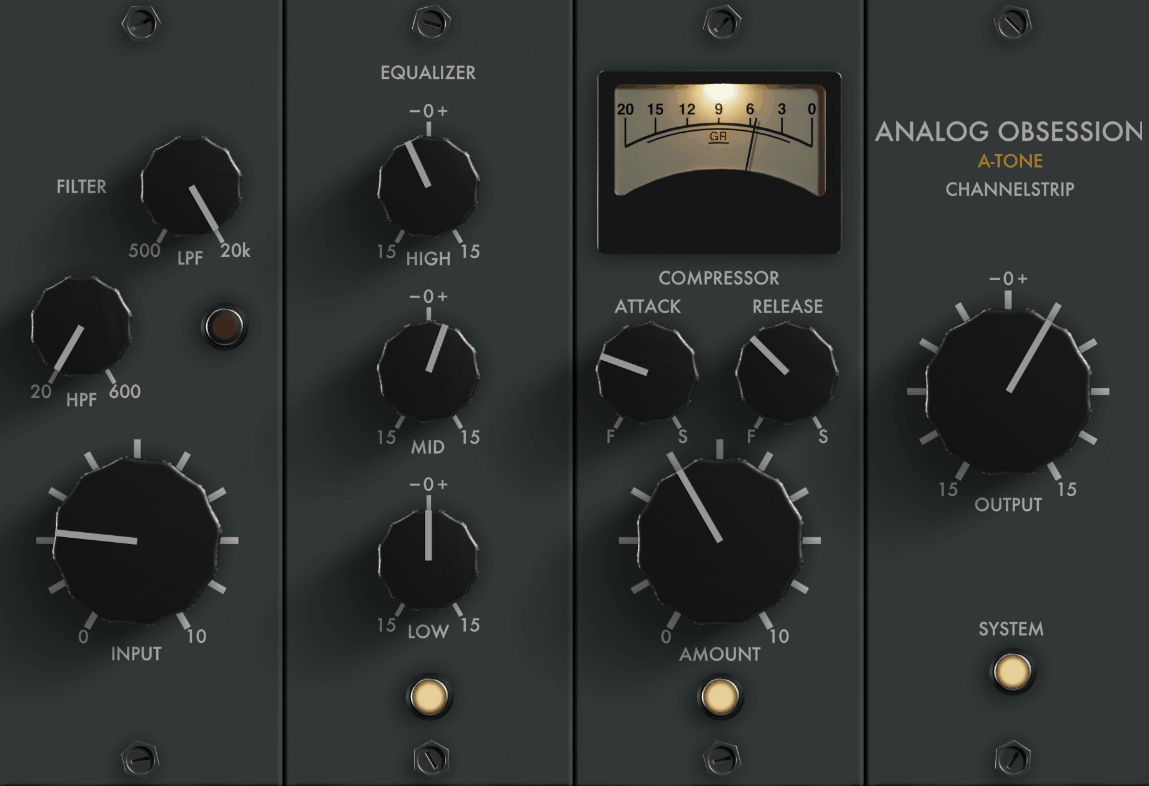
Classic Altec 436 hardware has a particular op-amp driven warmth that sits somewhere between clean and dirty. ATONE brings that into a channel strip format with EQ and dynamics combined, and I’d say the drive path is what defines its character. It makes sources feel physically closer and more anchored in the mix without extra processing.
From my experience, the compressor section uses an AMOUNT-style workflow that pushes you to mix by outcome. You turn the knob until the track feels right, and the plugin handles the technical details behind the scenes. For the most part, this gets you to usable results faster than tweaking individual threshold and ratio controls.
- Altec 436 Heritage
ATONE’s character comes from the Altec 436 inspired circuit, giving the channel strip an old-school op-amp tone which can come in handy when a source needs a little more body and personality before it ever reaches the mix bus.
- Op-Amp Drive Path
The integrated drive path adds grit and thickness as you push the channel, keeping ATONE from feeling like a plain dynamics and EQ strip.
- AMOUNT Compression
The compressor uses an AMOUNT-style control philosophy instead of exposing every technical parameter. I found this makes ATONE faster to shape because you’re listening for the result rather than getting lost in compressor math.
25. LALA
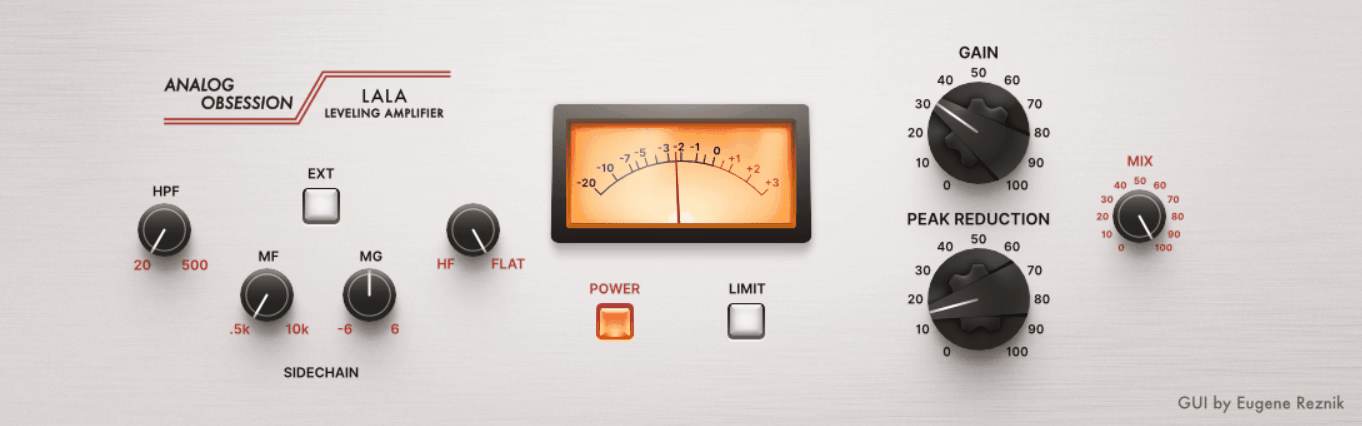
LALA is Analog Obsession’s emulation of the Teletronix LA-2A optical compressor, one of the most iconic dynamics processors in recording history. I think what makes this particular emulation stand out is the sidechain EQ section, which gives you control that the original hardware never had.
To be honest, the smooth, program-dependent compression you get here is hard to beat on vocals and bass. The roughly 10 ms attack and dual-stage release create a leveling effect that sounds effortlessly musical.
- Sidechain EQ Section
The sidechain provides HPF, mid-frequency emphasis, and HF/Flat switching, letting you control which frequencies drive the compressor
- Two-Stage Release
The release uses a dual-stage recovery behavior that contributes to the familiar optical leveling effect. I like that because the compression can settle naturally instead of behaving like a rigid fixed-time dynamics processor.
- Limit Mode
A dedicated Limit mode changes the behavior toward more aggressive peak control. making LALA more flexible than a strictly gentle LA-2A treatment when a source has a few stronger peaks that need attention.
26. HARQULES
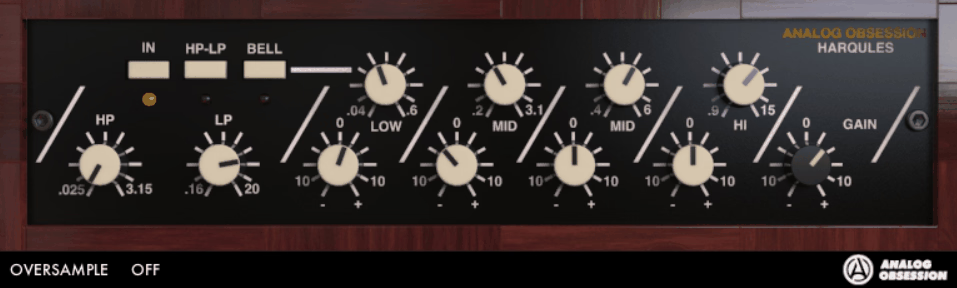
Smooth, silky EQ curves are what the Harrison 32C console was famous for, and that’s exactly the quality HARQULES captures. It’s a four-band EQ with ±12 dB of range, switchable high-pass and low-pass filters at 12 dB/octave, and an auto-adjusting Q that keeps things musical regardless of how much gain you apply.
I’m not gonna lie, the high-frequency response on this plugin is really something! It adds air and shimmer without any of the harshness that cheaper EQ algorithms introduce and can work on vocals, acoustic guitars, and strings when you want your top end to sound more expensive.
- Auto-Adjust Q
The Q narrows automatically as you increase boost or cut
- Harrison 32C Character
HARQULES is built around the Harrison 32C EQ style, giving you that smooth, musical console tone. I like it when a source needs broad shaping that still feels refined at stronger settings.
- Low Bell Mode
The low band can move into a bell shape instead of behaving only like a shelf
27. OSS
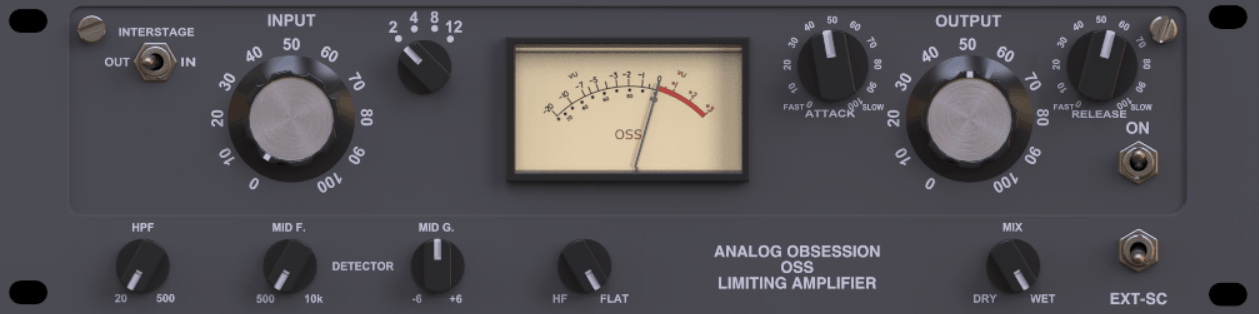
The UA 176 tube compressor is one of the more obscure vintage compressor designs, but engineers who know it swear by its ability to add color, weight, and character. OSS captures that circuit with an expanded sidechain section that goes well beyond what the original hardware offered.
What stands out to me is the multi-band sidechain shaping. You get an HPF (20-500 Hz), a mid-frequency detector (500 Hz-10 kHz) with ±6 dB gain, and an HF detector that can roll off up to 16 dB of high-frequency content from the detection path. Due to the fact that the sidechain is this detailed, you can really sculpt how the compressor responds without changing the compression settings themselves.
- Interstage Transformers
A switchable interstage transformer stage adds harmonic saturation and weight to the signal
- Multi-Band Sidechain
The HPF, mid-frequency, and HF detector sections give you unusually detailed control over what triggers the compressor
- UA 176 Heritage
OSS is based around the character of the UA 176 tube compressor which gives it a useful old-school flavor when you want the dynamics to sound like part of the tone rather than a separate correction stage.
28. MAXBAX
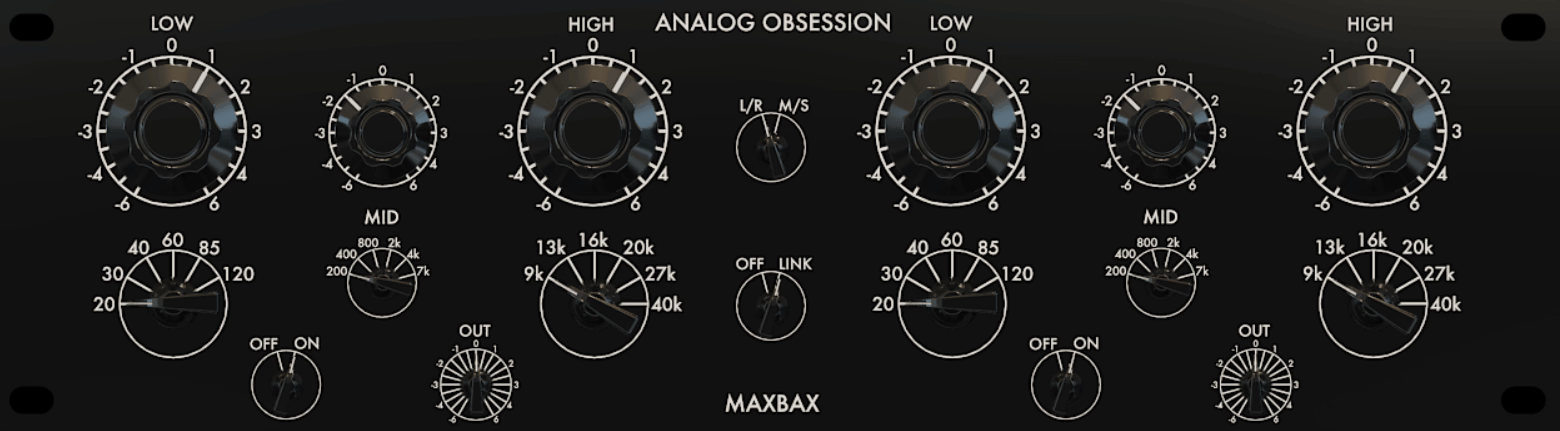
MAXBAX is a fully passive Baxandall EQ modeled after the RJR (Regular John Recording) mastering EQ, with an added mid band that the original Baxandall design doesn’t include. I have to say, the 0.5 dB stepped increments on every control make this one of the most precise EQs in the Analog Obsession lineup.
Personally, I think passive EQ designs have a quality that active circuits can’t quite match. The curves are gentler, the phase response is more natural, and the overall effect feels transparent even when you’re making significant moves. MAXBAX delivers all of that with the added convenience of L/R and M/S processing.
- Fully Passive Design
MAXBAX uses a passive Baxandall architecture, which is a big part of its smooth, broad tonal behavior. I like this when you want mastering moves that feel substantial without sounding surgical.
- RJR Mastering Influence
The EQ is modeled after the RJR mastering EQ, giving it a more specialized identity than a generic Baxandall plugin, making it useful when the bus needs polished tonal shaping instead of corrective surgery.
- Extended 40 kHz Band
The high band reaches up to 40 kHz, while the low band extends down to 20 Hz
- 0.5 dB Recallability
Every gain control moves in 0.5 dB steps, making small mastering adjustments repeatable
29. FIVER
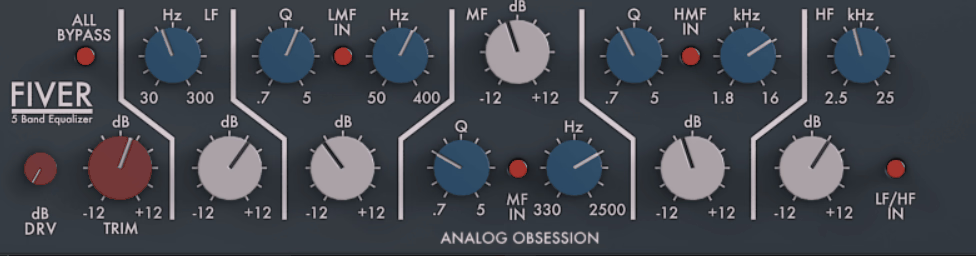
Modeled after the Rupert Neve Designs Portico 5033, FIVER five-band EQ with low and high shelf filters and three mid bands with continuously variable bandwidth.
From what I can see, the variable bandwidth is the standout feature here. Unlike fixed-Q designs, you can sweep from ultra-wide, gentle curves to tight, focused corrections on any band. This makes FIVER equally useful for broad tonal shaping and for surgical problem-solving, which is a rare combination in an analog-style EQ.
- Portico 5033 Heritage
FIVER takes its character from the Rupert Neve Designs Portico 5033. I like that lineage because it gives you a more modern Neve-inspired EQ personality than some of the vintage console designs elsewhere in the collection.
- Variable Mid Bandwidth
All three mid bands have continuously variable bandwidth, allowing you to move from very broad shaping to focused correction
- Five-Band Tonal Architecture
The layout combines low and high shelving with three variable mid bands
30. AHEAD
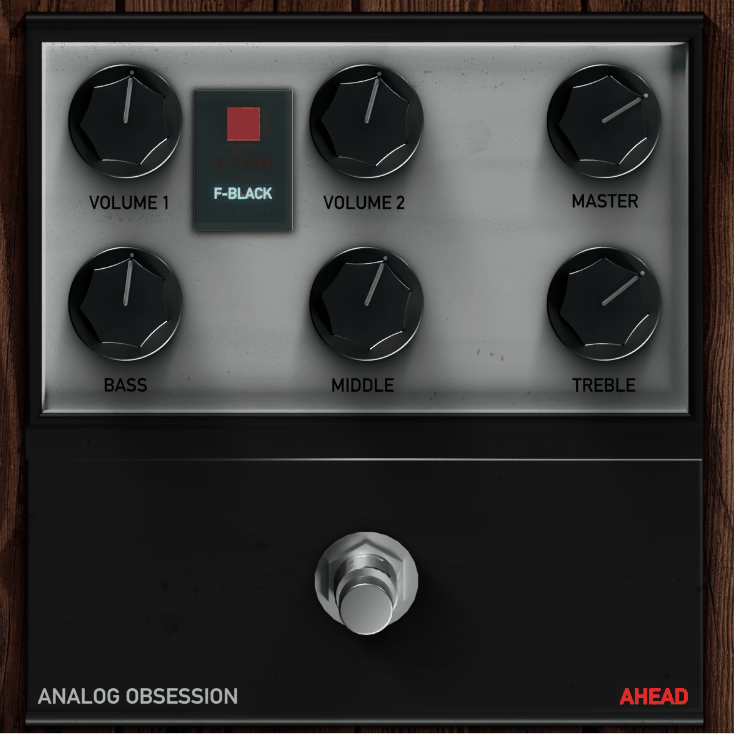
AHEAD combines four amp models into one compact plugin with a straightforward interface. I like how it doesn’t try to be everything; it just gives you four good-sounding amps and gets out of the way.
There’s one M-Type, two F-Type, and a custom design, each with its own volume control, where M-Type with its dedicated tonestack is the most versatile, but the F-Types have a specific growl that works well for blues and classic rock tones.
- Four Amp Voices
You get one M-Type, two F-Type models, and one custom amp design in a single plugin. I like that because you can move between several distinct amp personalities without building a large virtual rig.
- M-Type Tonestack
The M-Type includes a dedicated tonestack, giving it a little more shaping flexibility than the other models, which makes it the most adaptable choice when you need to move beyond the basic character of the amp itself.
- Distinct F-Type Pair
I found that useful for classic rock and blues sounds where a specific growl matters more than having a huge list of amp variations. The two F-Type models provide their own flavors within the collection.
31. POORTEC
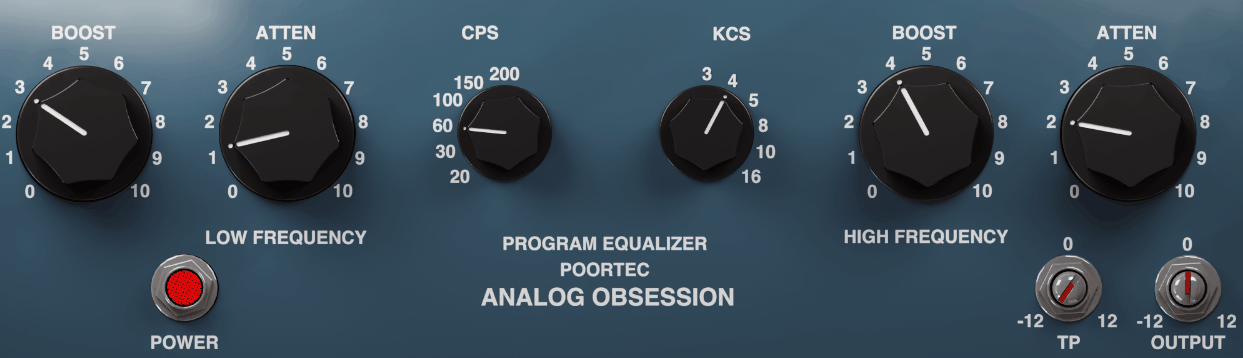
POORTEC uses a simplified passive EQ design without the SRPP gain stage and inductors of the original, replacing them with a Fairchild-style line amplifier to make up the gain. This hybrid approach gives it a character that’s related to the Pultec but not identical.
As a matter of fact, the classic boost-and-cut trick at the same frequency works here just like it does on the hardware. You boost the low end with the shelf, cut at the same frequency with the attenuator, and the result is a boosted low shelf with a tight dip in the low mids that adds weight while reducing mud.
- Fairchild Line Amp
Instead of the original Pultec gain stage, POORTEC uses a Fairchild-style line amplifier.
- Pultec Low-End Trick
The familiar simultaneous boost-and-cut technique remains the main reason to load this EQ
- Extended Frequency Choices
POORTEC includes additional frequency options beyond the classic hardware choices
- Drive Through The Line Amp
The gain stage can be pushed beyond unity to create more musical harmonic coloration. I like that as a way to turn the EQ into a subtle tone box instead of treating it as a purely corrective processor.
32. FetCB
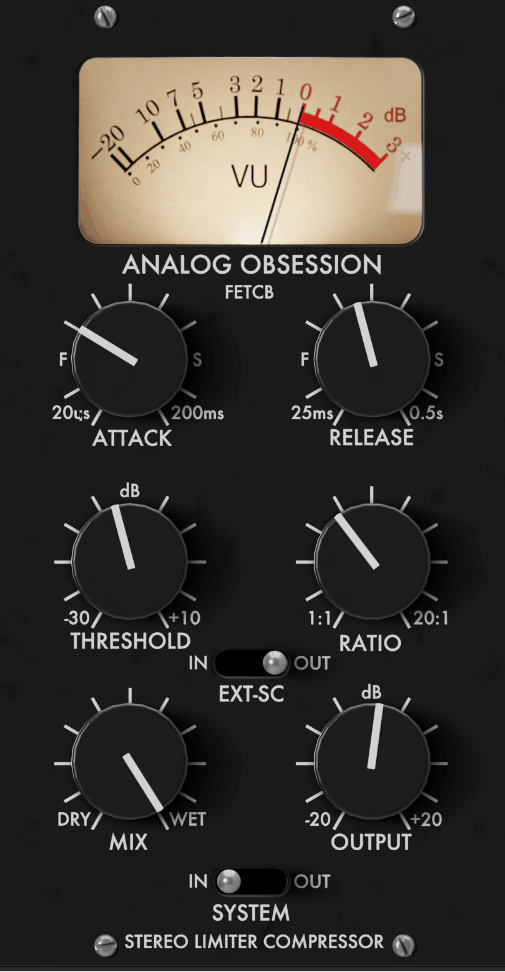
British FET compressors from the 1970s had a particular aggressiveness that American designs didn’t quite replicate, and FetCB captures that energy. Modeled after the Trident CB-9146, it features a continuously variable ratio from 1:1 all the way to 20:1, which is unusual because most FET compressor emulations use stepped ratio positions.
In addition to that, the attack time goes down to an ultra-fast 20 microseconds, which means it can catch even the sharpest transients.
- Trident CB-9146
FetCB is modeled after the Trident CB-9146, giving it a more specific British FET identity than a generic 1176 recreation
33. HLQSE
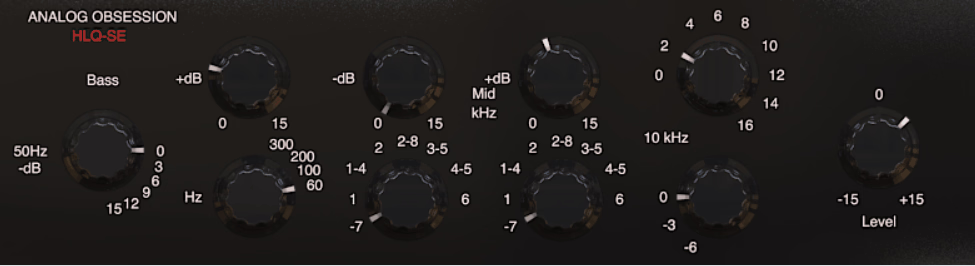
Console EQs from the Helios Type 69 are responsible for some of the most beloved guitar and drum sounds in rock history. HLQSE brings that character into a plugin, and the standout quality is the three-dimensional depth it adds to sources. It doesn’t just change the frequency balance; it changes how the sound sits in space.
From my perspective, the most important difference between HLQSE and the original hardware is that the plugin lets you boost and cut bands simultaneously, which the original console didn’t allow. I’d say this single addition makes it significantly more versatile while preserving the Helios warmth and character that makes it special.
- Helios Type 69 Character
HLQSE is built around the character of the Helios Type 69 EQ, giving you that familiar midrange presence and depth. I like it when guitars, drums, and vocals need tonal shaping that feels more dimensional than a clean digital EQ.
- Simultaneous Boost And Cut
Each of the three discrete bands can be boosted and cut independently at the same time.
- Three-Band Discrete Design
The EQ keeps the focus on three discrete shaping sections rather than a large number of overlapping controls. For me, that keeps the Helios approach fast and decisive while still allowing more flexible moves than the original hardware.

Hey, I’m Vil, I started this site to help you find the best audio plugins covering various categories including synths, pianos, strings, and effect tools of all sorts as well. I pick these plugins based on various criteria so it best matches the actual topic.