When you purchase through the links on my site, you support the site at no extra cost to you. Here is how it works.
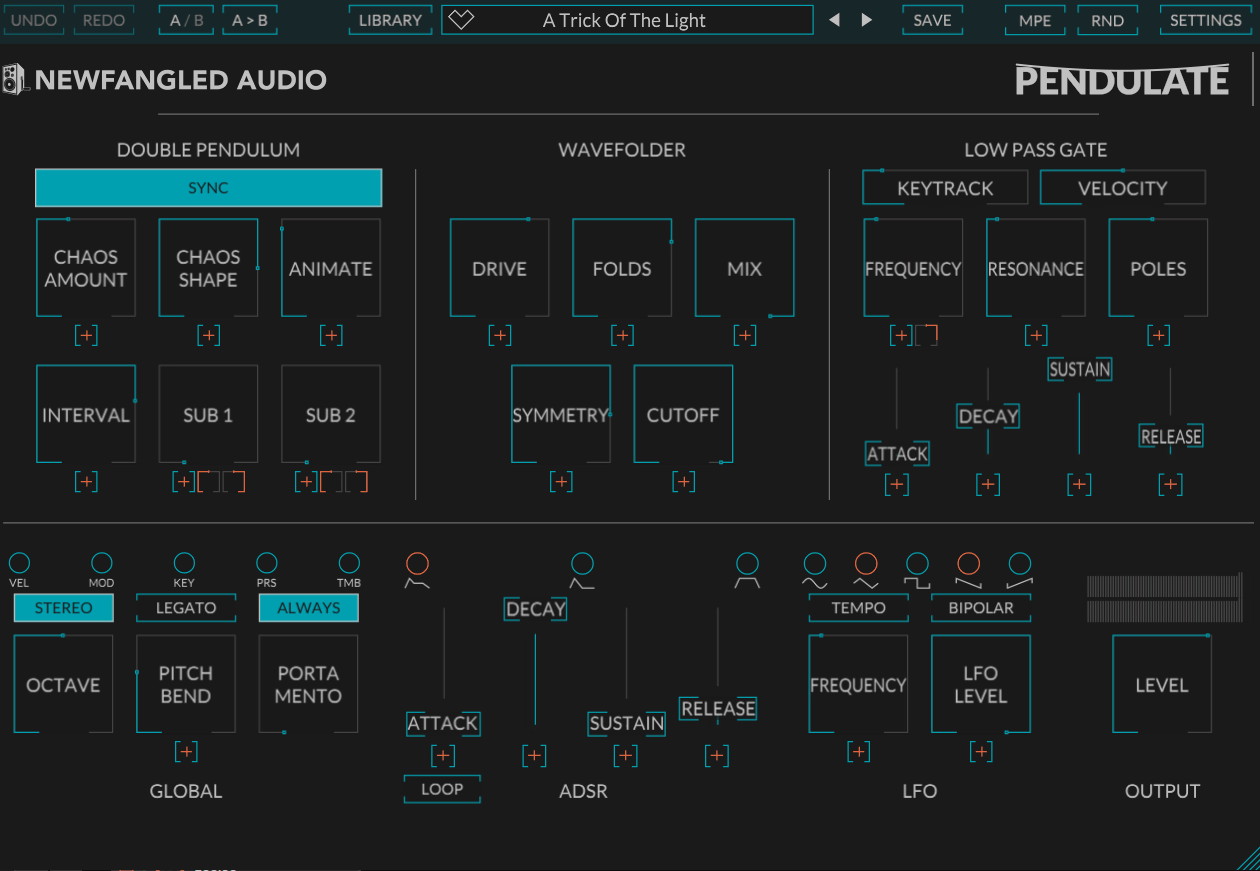
Some synths are built around predictable oscillators and familiar subtractive controls. NA Pendulate takes a different route with a chaotic oscillator based on a simulated double pendulum, giving you a range of tones that can move from relatively stable to increasingly complex and aggressive as you push the controls.
I’ve found it most useful for bass, leads, plucks, and unusual electronic textures, especially when a standard oscillator sounds too clean or predictable. Because the plugin is available with a permanent free license, you can judge it against your own sounds without having to commit money first.
- Chaotic oscillator
The double-pendulum design gives you a continuous range between stable and increasingly chaotic harmonic behavior, so I can move from a relatively conventional bass or lead into much rougher territory by changing a small number of controls.
- Wavefolder and low-pass gate
The wavefolder and low-pass gate give the oscillator more room to develop, adding harmonics, bite, and percussive character that make the synth useful for basses, plucks, and more aggressive electronic sounds.
- Deep modulation
Nearly every control can be modulated, with support for up to 325 modulation routings, while the looping envelope and LFO can interact with each other. I can build movement into the patch itself instead of relying entirely on DAW automation.
How It Sounds
At a first glance, the chaotic oscillator can seem more experimental than practical, but the useful part is how its harmonic structure changes as you increase the amount of chaos. Small adjustments can move a sound from fairly controlled to much more complex without simply turning it into distorted noise.
The wavefolder adds another layer of harmonic shaping. I use it when the basic oscillator tone needs more edge or presence, while the low-pass gate helps turn brighter material into tighter, more percussive sounds.
For me, that combination works especially well on bass sounds, aggressive leads, plucks, and short rhythmic patches. If you need pristine digital tones, wide polyphonic pads, or highly predictable subtractive synthesis, there are better options.
Modulation
Once the basic oscillator is working, the modulation system gives you much more room to shape how the patch behaves over time. Nearly every control can become a modulation destination, so I can create movement in the oscillator, wavefolder, or other parameters without filling a project with separate automation lanes.
The looping envelope and LFO can also interact, which opens up more complex modulation patterns than a conventional one-source setup. I usually start with one obvious movement and add another only when I can hear what it contributes.
- Controlled instability
You can gradually introduce more chaotic oscillator behavior over a note or phrase, which is useful when the sound needs to develop without relying on a conventional filter sweep.
- Wavefolder shaping
I use the wavefolder to add harmonic density and edge when a patch feels too simple or soft.
- Low-pass gate
The LPG helps turn those harmonically rich tones into tighter basses, plucks, and percussive sounds, giving the synth a useful rhythmic side.
Workflow and Presets
Pendulate is a monosynth, which keeps the instrument focused on individual sounds rather than large polyphonic patches. I actually like that limitation when I’m designing basses or leads because I can concentrate on the behavior of one sound without getting distracted by a huge synthesis architecture.
The preset library gives you a quick way to hear what the oscillator can do, but I get more from starting with an initialized patch and adjusting the chaos, wavefolder, and LPG myself. Those three areas explain much of the instrument’s character, so learning them makes preset browsing more useful rather than simply giving you more sounds to scroll through.
You also get MPE support, MIDI Learn, a resizable interface, and animated visual feedback, which makes the instrument easier to use when you are modulating several parameters or experimenting with more expressive performance techniques.
Where I Would Use It
For electronic music, I would reach for Pendulate when I need a bass or lead with some instability and harmonic movement rather than a perfectly controlled tone. It also works well for plucks, percussive synths, and short sound-design parts that need to cut through without becoming another generic subtractive patch.
You can also use it for background textures. A short sequence with modulation can produce material that works underneath a track, while a restrained setting can still deliver a relatively conventional foundation.
Where It Falls Short
The most obvious limitation is polyphony. Pendulate is monophonic, so chords, large pads, and layered polyphonic arrangements are outside its intended role. I would simply reach for another synth rather than trying to force it into a job it was not designed to do.
Its chaotic oscillator can also make precise sound matching less straightforward. You get a lot of character, but not always the kind of predictable response you expect from a conventional oscillator, particularly when you’re trying to recreate a specific patch.
There is also some learning involved because the relationship between chaos, wavefolding, the LPG, and modulation is less familiar than a standard subtractive signal path. Once I understood those interactions, designing sounds became much more predictable.
Pros and Cons
Pros
- Distinctive oscillator
The double-pendulum design provides a genuinely unusual harmonic character, giving you sounds that can move well beyond standard subtractive synthesis.
- Extensive modulation
With up to 325 modulation routings, you can create complex movement without needing a large collection of external modulation tools.
- Useful sound-shaping stages
The combination of chaotic oscillation, wavefolding, and a low-pass gate gives you several ways to turn a simple starting tone into something much more detailed.
- Free to keep
The permanent free license means you can add it to your toolkit and decide whether you actually use it, without needing to justify a purchase first.
Cons
- Monosynth only
You are limited to monophonic sounds, so it cannot cover chordal or wide polyphonic work.
- Less predictable than conventional synthesis
The chaotic oscillator is the attraction, but it can also make precise sound design and patch recreation less straightforward.
- Requires experimentation
The synthesis engine behaves differently from a typical subtractive synth, so getting consistent results takes some familiarity with chaos, wavefolding, LPG behavior, and modulation.
Verdict
Newfangled Audio Pendulate earns its place when you want a compact monosynth with a distinctive harmonic character, particularly for basses, leads, plucks, and sound-design patches that need more movement than a conventional oscillator provides.
I would not use it as my only synth because the monophonic design and less predictable oscillator behavior leave obvious gaps. As a free specialist instrument, though, it gives you enough character and modulation depth to justify keeping it installed, especially if you work with electronic music and regularly need sounds that sit somewhere between controlled synthesis and instability.

Hey, I’m Vil, I started this site to help you find the best audio plugins covering various categories including synths, pianos, strings, and effect tools of all sorts as well. I pick these plugins based on various criteria so it best matches the actual topic.