When you purchase through the links on my site, you support the site at no extra cost to you. Here is how it works.
The amp sim market has become genuinely crowded since Neural DSP started releasing artist-specific plugins, and anything that isn’t keeping pace with that level of modeling quality is getting harder to justify at a premium price. Amp Room Metal Suite is Softube’s answer to that challenge. I’ve spent enough time with it across metal, hardcore, and progressive sessions to have a clear picture of where it holds up and where it doesn’t.
The honest framing upfront: this isn’t the most realistic amp modeling available for metal in 2026. But realistic amp modeling isn’t the only thing that matters in a metal production workflow, and whether Amp Room Metal Suite earns its place depends more on what you actually need from an amp sim than how it benchmarks against the competition in isolation.
What you’re working with
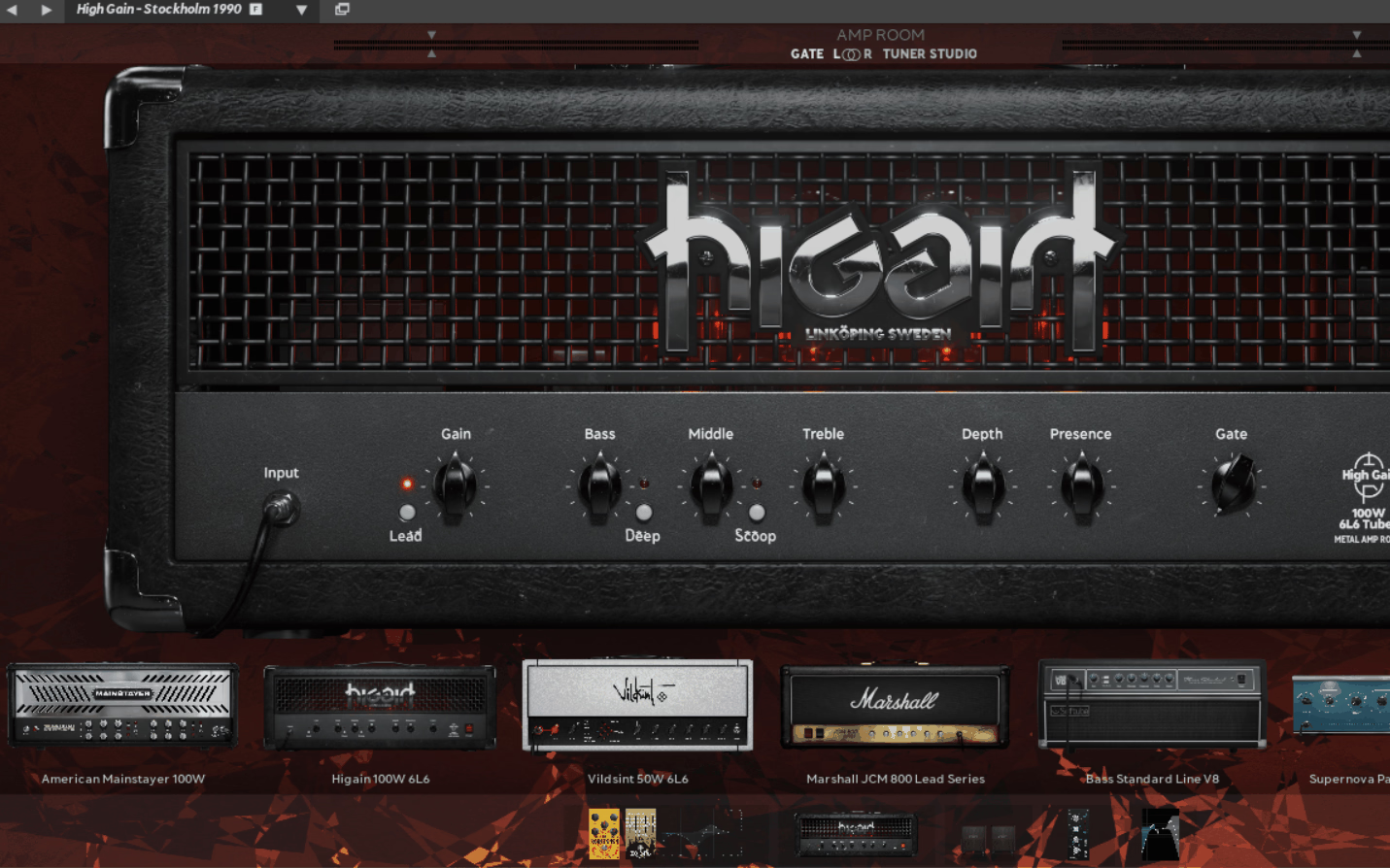
Amp Room Metal Suite gives you access to Softube’s metal-focused amp and cabinet content within their modular Amp Room platform, covering high-gain American and British circuit types alongside the associated cabinet options and a selection of effects.
The amp models include:
- Mesa/Boogie Dual Rectifier style high-gain American circuit covering the tight, compressed lead tones and the looser, more dynamic rhythm character that Rectifier-based production is known for
- British high-gain designs covering the midrange-forward character of Marshall-derived high-gain circuits suited to classic and modern metal rhythm playing
- Metal-specific preamp designs covering modern high-gain production territory including djent and progressive metal where surgical low-end tightness and note definition at extreme gain levels matter
- Cabinet library with multiple microphone options including dynamic, condenser, and ribbon types with adjustable placement and dual mic blending
- Third-party IR loader for loading your own cabinet impulse responses
- Effects chain covering noise gate, compression, overdrive, modulation, delay, and reverb across pre and post-amp positions
The sound
The amp modeling in Amp Room Metal Suite sits in a specific quality tier that I’d describe as consistently good and occasionally excellent. The Rectifier-style models are the strongest in the collection. I’ve used them on rhythm guitar where the low-end tightness and the harmonic density at moderate gain settings produced results I was happy to commit to without extra processing. The transition from the clean to the driven sound as you push the gain has a physicality to it that cheaper digital amp sims don’t produce with the same conviction.
The British high-gain models are strong on rhythm work where the midrange emphasis cuts through a dense arrangement, and to me, I find them most convincing at moderate gain settings where the amp’s own character defines the tone rather than the distortion floor. At extreme gain settings they’re competitive but not exceptional compared to what Neural DSP produces on the same material.
Where I find the modeling less convincing is on very high gain djent territory where the ultra-tight, low-end controlled character that modern progressive metal requires pushes the models into territory they handle adequately but not definitively. If your production lives in that specific space, Neural DSP’s Gojira X or Darkglass Ultimate cover it more convincingly, and I’d be doing you a disservice not to say that directly.
The modular platform advantage
What Amp Room Metal Suite does differently from most dedicated metal amp sims is that it operates within Softube’s modular Amp Room environment, which means you’re not limited to the signal chains the developer pre-built for you. You can place any component anywhere in the chain, run parallel amp paths, insert effects at any point in the signal flow, and expand the platform with additional Softube content.
I find the parallel amp routing the most practically valuable aspect of this architecture for metal production. Running a tight, scooped high-gain amp on one path and a midrange-forward crunch amp on another, then blending them, produces a combined rhythm tone with more complexity and note definition than either amp alone. That’s a workflow that fixed-architecture amp sims don’t support without external routing workarounds, and having it built into the platform makes it genuinely faster to access.
The modular effects chain places noise gate, compression, overdrive, and modulation before the amp, and delay and reverb after the cabinet. The noise gate is more capable than most amp sim noise gates, with a downward expansion behavior that reduces the noise floor gradually and not through abrupt threshold cutting, which matters on high-gain settings where an aggressive gate would cut the natural sustain of low-register notes in ways that would be immediately obvious in the mix.
Cabinet and mic system
The dual microphone system blends 2 microphones per cabinet with independent placement and level control, and the microphone selection covers the types you’d actually use on a real metal guitar session. I use an SM57-style dynamic blended with a condenser at different distances as my standard starting point, with the dynamic providing the midrange focus that metal rhythm guitar needs and the condenser adding the top-end detail that makes the combined tone feel I’d say more dimensional than the dynamic alone.
The IR loader accepts third-party impulse responses, and loading commercial metal-specific cabinet IRs from developers like OwnHammer or Celestion makes a meaningful difference to the realism of the cabinet simulation. I consider the IR loader essential for serious metal recording use and not an optional extra, and the quality gap between the best commercial metal cabinet IRs and the factory models is large enough that I’d recommend loading your own IRs from early in your evaluation of the platform.
What the effects are actually worth
The overdrive pedals in the pre-amp position are more useful here than in most amp sim platforms, and I use the Tube Screamer-style model from time to time on the rhythm amp channel to tighten the low-end response and add midrange focus before the amp stage. That’s not about adding more distortion but about gain structure, and the interaction between the overdrive and the amp input produces a tighter, more controlled low-end on downtuned rhythm playing than driving the amp input directly.
The reverb and delay quality is above average for an amp sim platform, and the spring reverb specifically is convincing enough that I use it on clean channel tones where the reverb is part of the amp sound. For lead tones with more complex reverb or delay requirements, dedicated plugins produce better results, but for most standard metal production applications the internal effects are sufficient.
Pros:
- Modular signal chain
The ability to place any component anywhere in the chain, run parallel amp paths, and build custom signal flow gives you tonal flexibility that fixed-architecture amp sims don’t offer. I find the parallel amp blending specifically produces rhythm tones with more complexity
- Rectifier-style modeling quality
The Dual Rectifier-style models are the strongest in the collection and produce results competitive with dedicated emulations at similar gain settings. On rhythm guitar in modern metal and hard rock, the low-end tightness and harmonic density at moderate gain settings are convincing enough
- Noise gate implementation
The downward expansion behavior produces more transparent noise reduction on high-gain settings than most amp sim noise gates, and on low-register playing where sustain needs to ring out naturally between phrases, that transparency is immediately audible and practical.
Cons:
- Extreme high-gain djent territory
The ultra-tight, low-end controlled character that modern djent and progressive metal production requires is where the models are adequate and not exceptional. If that specific territory is where most of your production lives, Neural DSP covers it more convincingly at a comparable price point, and I’d evaluate both before committing.
- Price versus focused alternatives
The modular platform comes at a higher price than single-purpose metal amp sims that cover specific amp characters more convincingly. If you primarily need one specific high-gain character and don’t need the routing flexibility, a focused Neural DSP plugin produces better results for that specific application at lower cost.
- Factory cabinet quality
The factory cabinets are functional but not the primary strength of the platform. You’ll get meaningfully better results loading commercial metal cabinet IRs, and treating the IR loader as essential and not optional means the platform’s real capability requires an additional investment in third-party IR content.
- Less convincing at extreme gain
The modeling quality drops noticeably at extreme gain settings where the distortion floor becomes the dominant character of the tone
Verdict
To keep things short, yes – Metal Suite by Softube is still worth the investment, but the reasons to choose it have shifted since it launched. The modeling quality on its own is competitive and occasionally excellent, but the primary argument for it now is the modular platform flexibility: parallel amp routing, fully configurable signal chains, and the ability to expand the platform with additional Softube content over time.
If routing flexibility and a platform you can build on matter to your workflow, and you work across the range of metal sub-genres where the amp collection covers the tonal ground you need, the investment makes sense. If you primarily need the most convincing modeling of one specific amp character for a specific type of metal production, I’d say focused Neural DSP plugin delivers that more directly and often at lower cost. Know which of those describes you before buying.

Hey, I’m Vil, I started this site to help you find the best audio plugins covering various categories including synths, pianos, strings, and effect tools of all sorts as well. I pick these plugins based on various criteria so it best matches the actual topic.